

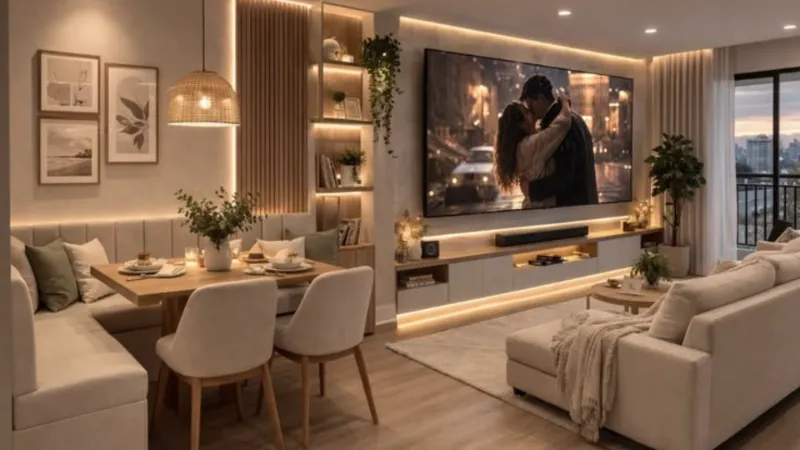
A cramped living room can make even a beautiful home feel smaller than it is. Furniture bumps into doorways, shadows pool in the corners, and every new item feels like it’s stealing floor space. If you’ve ever stood in your living room wondering how to fit a sofa, a media console, and a reading chair without it looking like a storage unit, you’re not alone.
The good news is that small living room decor ideas don’t require a renovation budget or knocking down walls. With the right layout, color choices, and space-saving furniture, a compact room can feel open, organized, and genuinely inviting. This guide walks through practical, designer-backed strategies for transforming a small living room into a space that works as hard as it looks good.
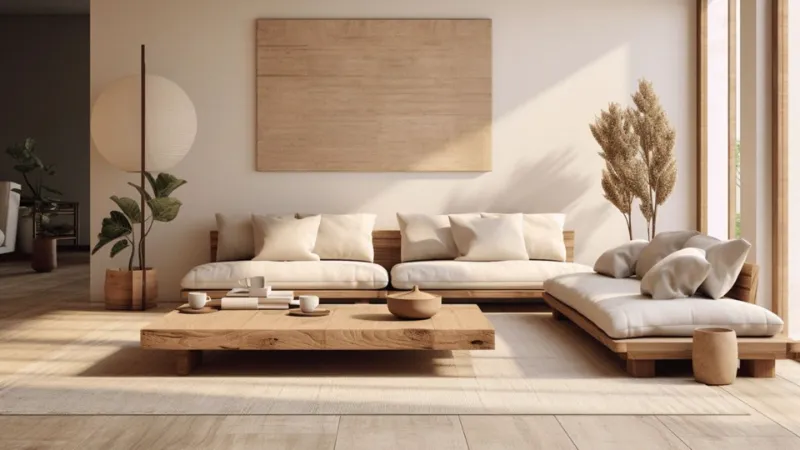
Whether you’re decorating a small apartment living room, a starter home, or a studio, these ideas are built for real life pets, kids, guests, and all. By the end, you’ll have a clear roadmap for a cozy small living room that never feels cramped.
Choose Multi-Functional Furniture with Hidden Storage
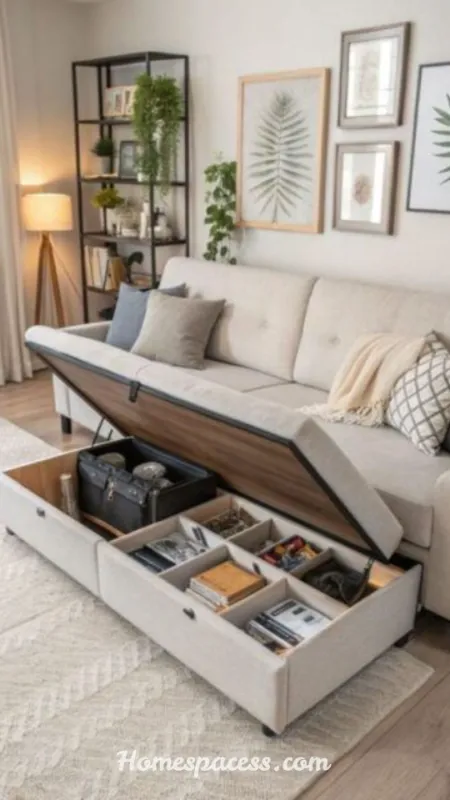
In a small living room, every piece of furniture should earn its spot twice. An ottoman that opens for blanket storage, a coffee table with a lower shelf, or a sofa bed for overnight guests all reduce the need for separate storage furniture. This is one of the fastest ways to cut visual clutter without sacrificing function.
Consider a real-world scenario: a couple in a 350-square-foot apartment replaced their bulky TV stand with a slim console that had two drawers and an open shelf. Remote controls, cables, and board games disappeared from the coffee table into the console, instantly making the room feel 30% larger without moving a single wall.
Multi-functional pieces also support space-saving furniture goals long after move-in day, since they adapt as your needs change a bench that stores shoes today can hold kids’ toys tomorrow.
| Style Note: Choose furniture with legs rather than skirted bases visible floor space beneath a sofa or chair tricks the eye into perceiving more square footage. |
| Pro Tip: Measure your walking paths before buying. Keep at least 30 inches of clearance for main walkways so multi-functional pieces don’t become obstacles. |
Learn more here: Sitting Room Ideas: Stylish Ways to Design a Cozy, Functional Sitting Room
Use a Light, Monochrome Color Palette to Expand Visual Space
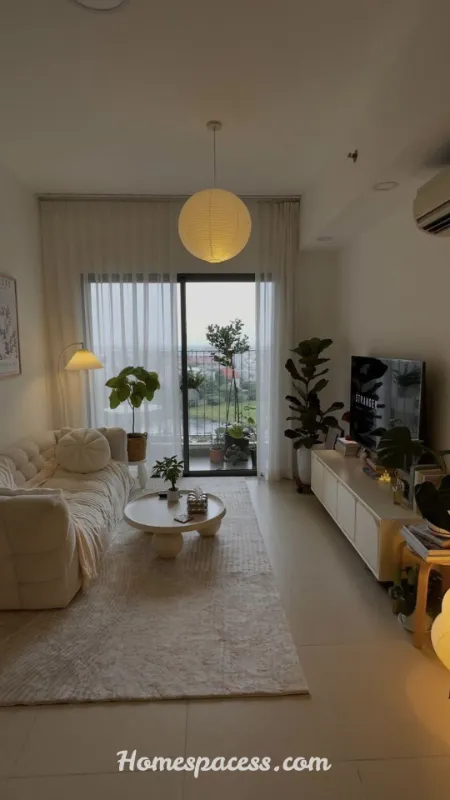
Color has a bigger impact on perceived room size than most people realize. A small living room design built around soft whites, warm greiges, or muted pastels reflects more natural light and removes the visual breaks that dark, contrasting colors create between walls, trim, and furniture.
This doesn’t mean the room has to feel flat or clinical. Layering two or three tones within the same color family for example, oatmeal walls, a cream sofa, and a slightly deeper taupe rug adds depth while keeping the palette cohesive. The result reads as intentional, not empty.
One overlooked trick: painting the trim and ceiling the same color as the walls removes the horizontal line where wall meets ceiling, which can make a low ceiling feel taller and the whole room feel more expansive.
| Style Note: Stick to a 60-30-10 color ratio 60% dominant neutral, 30% secondary tone, and 10% accent color to keep a monochrome scheme from feeling monotonous. |
| Pro Tip: Test paint swatches at different times of day before committing. Small rooms are more sensitive to how morning versus evening light shifts undertones. |
Explore this topic: Coffee Table Decor Ideas That Instantly Upgrade Your Living Room Style in 2026
Add Vertical Storage and Wall-Mounted Shelving
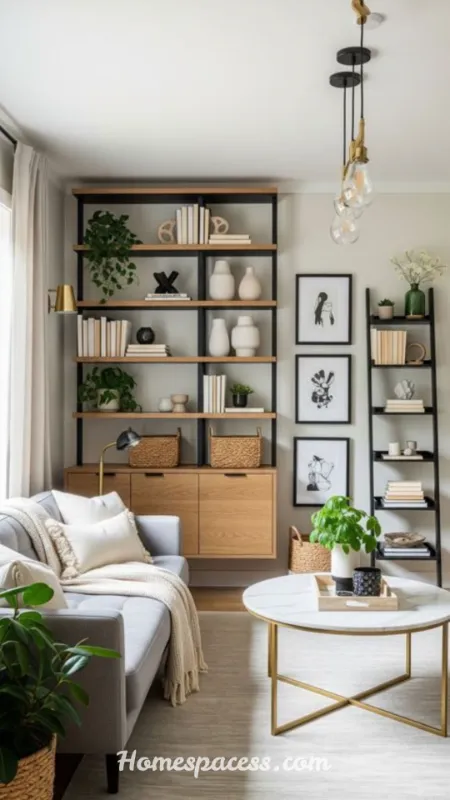
When floor space is limited, the walls become prime real estate. Floating shelves, tall bookcases, and wall-mounted cabinets draw the eye upward, which makes ceilings feel higher while keeping the floor clear for movement. This is one of the most underused strategies homeowners overlook.
A practical mini case study: a renter in a 400-square-foot studio installed three floating shelves above a low console instead of buying a bulky bookshelf. Books, plants, and framed photos moved off the floor entirely, freeing up nearly 12 square feet of usable space while still displaying everything they wanted on view.
Vertical storage also supports better organization habits items placed at eye level are easier to find, which naturally discourages the floor clutter that makes small rooms feel chaotic.
| Style Note: Stagger shelf heights slightly rather than lining them up perfectly it creates a gallery-like rhythm that draws the eye without feeling cluttered. |
| Pro Tip: Anchor shelving into wall studs, not just drywall anchors, especially if you plan to display books or decor with real weight. |
Find out more: Colorful Living Room Ideas That Instantly Transform a Boring Space Into a Stunning One
Place Mirrors Strategically to Amplify Light
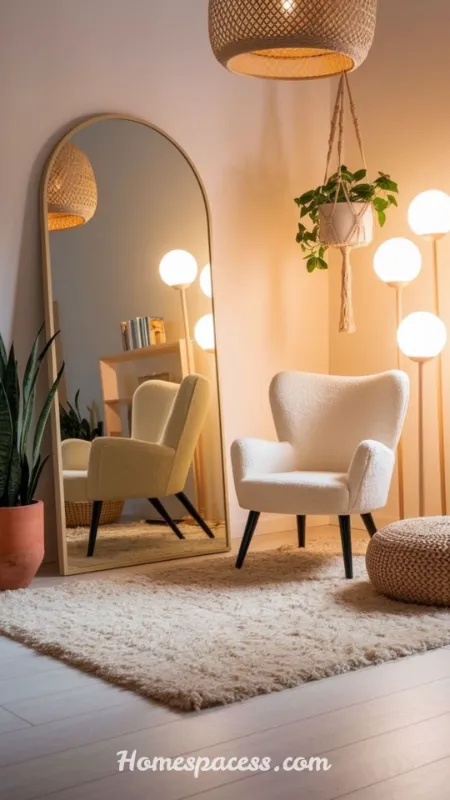
Mirrors remain one of the most effective and affordable small living room decor ideas because they double the perceived light and depth of a room instantly. A large mirror placed opposite a window bounces natural light across the space and creates the illusion of an additional window or doorway.
Placement matters more than size. A mirror angled to reflect a plant, a piece of art, or a light fixture adds visual interest, while one that only reflects a blank wall wastes the effect. Leaning a floor mirror against a narrow wall segment also avoids the commitment of drilling into plaster or tile.
In apartments with limited natural light, pairing a mirror with a warm-toned lamp nearby can simulate the glow of daylight well into the evening, softening the boxed-in feeling many small rooms have after sunset.
| Style Note: Choose a mirror frame that matches your existing metal finishes brass, matte black, or brushed nickel so it feels built-in rather than added on. |
| Pro Tip: Hang mirrors so the reflective surface starts at eye level; too high or too low wastes the light-bouncing benefit. |
See the full breakdown: Stunning Living Room Carpet Ideas: Transform Your Space with Style, Comfort & Expert Insight
Select Scaled-Down Furniture with Visible Legs
Oversized furniture is the number one reason compact spaces feel cramped. A sectional built for a great room simply overwhelms a 12-by-12-foot space. Choosing appropriately scaled pieces a loveseat instead of a full sofa, or armless accent chairs instead of bulky recliners restores breathing room immediately.
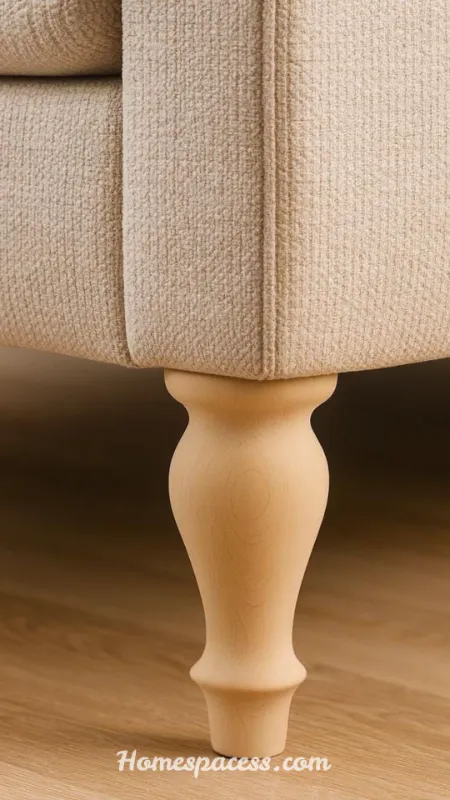
Furniture with exposed, tapered legs (think mid-century or Scandinavian-inspired designs) allows light to travel underneath, which visually lightens the entire room compared to furniture with solid, skirted bases that touch the floor completely.
A homeowner who swapped a deep, overstuffed sofa for a slimmer track-arm version with wooden legs reported the room instantly felt roomier, even though the new sofa was only four inches narrower proof that proportion and legs matter as much as raw dimensions.
| Style Note: Measure your room and sketch furniture placement to scale before shopping it prevents the common mistake of buying pieces that look right in a showroom but overwhelm a compact floor plan. |
| Pro Tip: Leave at least 4 inches of visible floor space beneath every major piece of seating to preserve the airy effect. |
Read our expert tips: Living Room Curtain Ideas for a Cozy and Modern Home Look
Layer Lighting Instead of Relying on One Overhead Fixture
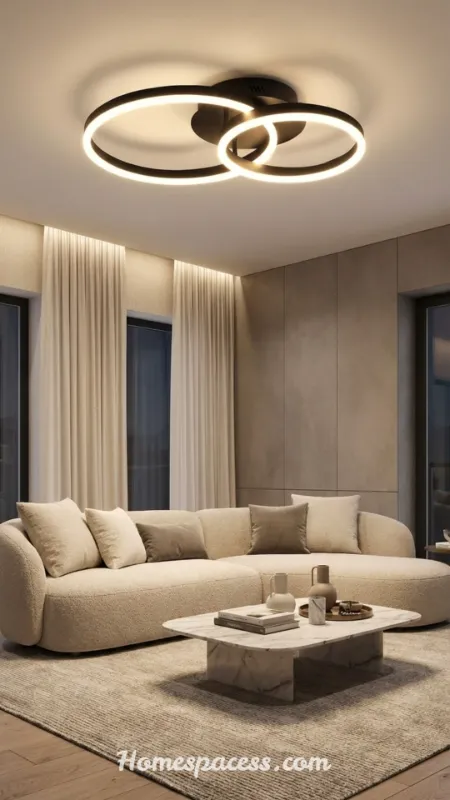
A single ceiling light casts flat, even light that flattens a small room and makes it feel more like an office than a home. Layered lighting a mix of ambient, task, and accent sources adds depth and warmth that a single fixture never can.
Try combining a dimmable overhead light with a floor lamp in a reading corner and a small table lamp near the sofa. This layering creates pools of light and shadow that make the room feel larger by adding dimension, rather than exposing every square inch at once.
Warm-toned LED bulbs (around 2700K to 3000K) are especially effective in small spaces, as cooler, bluish light tends to feel sterile and can make a compact room feel even more confined.
| Style Note: Use lighting to highlight a focal point a piece of art, a plant, or a textured wall rather than lighting the entire room evenly. |
| Pro Tip: Install smart dimmer switches so you can shift lighting mood from bright and functional during the day to soft and cozy in the evening. |
You May Also Like: 22 Living Room Decor Ideas That Transform Any Space
Hang Curtains High and Wide
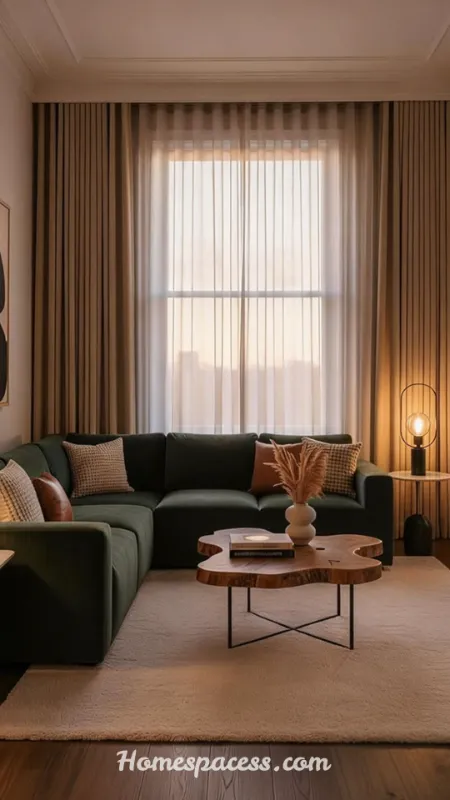
One of the simplest fixes for a compact room is also the most overlooked: curtain placement. Mounting curtain rods close to the ceiling, rather than directly above the window frame, draws the eye upward and makes ceilings appear taller than they are.
Extending the rod several inches beyond the window frame on each side lets curtains hang fully open without blocking the glass, which maximizes natural light a critical factor in any small living room design. This one adjustment can make a window look significantly larger than its actual dimensions.
Lightweight, floor-length fabrics in soft neutrals continue the monochrome strategy mentioned earlier, while heavier or dark-colored drapes can visually shrink the wall they hang against.
| Style Note: Choose curtains that just skim the floor or puddle slightly fabric that stops short of the floor breaks the vertical line and shortens the perceived wall height. |
| Pro Tip: Hang rods 4 to 6 inches above the window frame and extend them 8 to 10 inches past each side for the most dramatic height and width illusion. |
Recommended for You: 11 best Small Home Office Ideas That Interior Designers Swear By in 2026
Zone the Room with a Well-Placed Rug
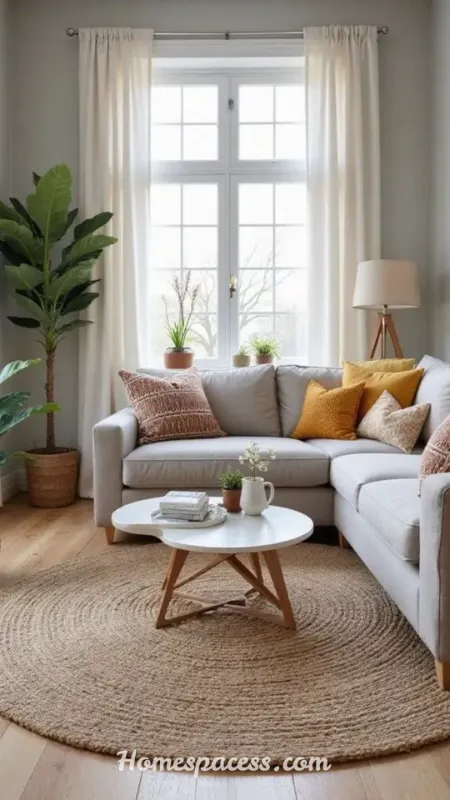
In open-plan homes, a compact seating area often blends into a dining or kitchen zone without clear boundaries. A rug is one of the most effective small living room decor ideas for creating a defined zone without adding walls or furniture that eats into the footprint.
The most common rug mistake in small spaces is choosing one too small a rug that only fits under the coffee table, with furniture legs sitting off the edges, actually makes the room feel choppier and smaller. Instead, size the rug so at least the front legs of every seating piece rest on it.
A real-life example: a studio apartment owner replaced a 4×6 rug with a 6×9 that anchored the sofa, chair, and coffee table together. The living area immediately read as a distinct, intentional space rather than an afterthought next to the kitchen.
| Style Note: Low-pile rugs work best in tight quarters since they don’t add bulk near doorways or under furniture legs, keeping sightlines clean. |
| Pro Tip: When in doubt, size up. A slightly larger rug almost always looks more polished than one that’s too small for the seating arrangement. |
More on This Topic: Baby Boy Nursery Room Ideas That Are Stylish, Practical, and Timeless
Add Built-In or Corner Seating
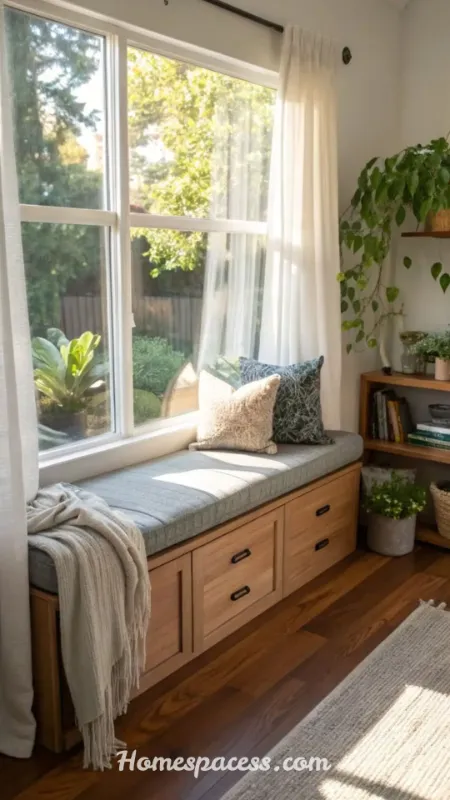
Corners are frequently wasted space in compact rooms, often collecting clutter or standing empty. A built-in bench, a corner daybed, or an L-shaped banquette makes use of that dead zone while adding extra seating without consuming central floor area.
Corner seating also tends to include hidden storage underneath, doubling as a bench for shoes, blankets, or seasonal items. This dual purpose is especially valuable for small apartment living room layouts where closet space is already limited.
For renters who can’t install permanent built-ins, a compact corner chair paired with a small side table achieves a similar effect, softening the sharp angle of the room and making the space feel fully furnished rather than awkwardly empty.
| Style Note: Upholster corner seating in a durable, textured fabric like performance weave or boucle to add tactile interest without needing extra decorative accessories. |
| Pro Tip: Use the corner seat as a secondary storage zone baskets tucked beneath keep blankets accessible but out of sight. |
Explore More: 12 easy Cozy Bedroom Ideas for Creating a Relaxing and Stress-Free Sanctuary
Edit Décor with a One-In, One-Out Rule
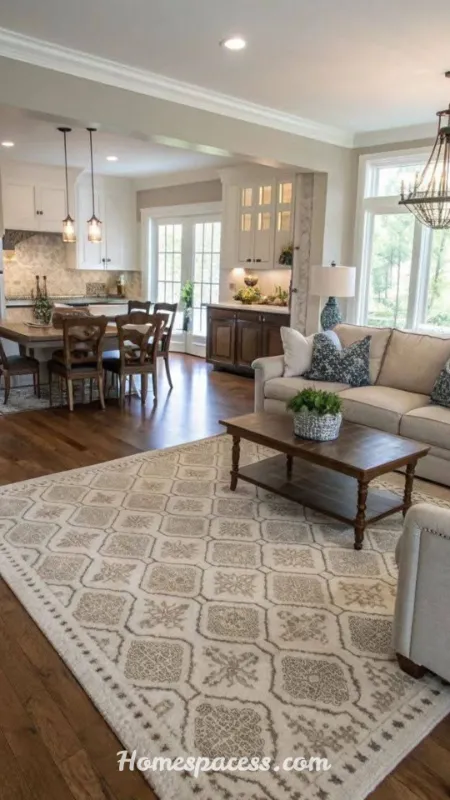
The final and arguably most important idea has nothing to do with furniture or paint it’s discipline. Small rooms show clutter far more obviously than large ones, so a handful of thoughtful, statement decor pieces will always outperform a shelf crowded with knick-knacks.
Adopting a simple one-in, one-out rule whenever a new decorative item enters the room, an existing one leaves keeps surfaces breathable and prevents the slow creep of clutter that undermines even the best small living room decor ideas. This habit is free, sustainable, and arguably more impactful than any single purchase.
Focus on a few pieces with real meaning or visual weight: one large piece of art instead of five small frames, one substantial plant instead of a cluster of tiny succulents. Editing, not adding, is often the missing step in a truly polished small living room.
| Style Note: Group remaining decor in odd numbers (threes work especially well) and vary heights slightly to create a curated, gallery-style vignette instead of a cluttered shelf. |
| Pro Tip: Do a seasonal decor audit every three to four months remove anything that hasn’t been used, noticed, or loved since the last check. |
Conclusion
Small living rooms don’t need less style they need smarter decisions. From space-saving furniture and layered lighting to strategic mirrors and a disciplined approach to decor, these small living room decor ideas prove that square footage isn’t the only thing that determines how a room feels.
A thoughtfully planned small living room design can feel warmer, brighter, and more functional than a much larger space furnished without intention. Start with one or two changes this week a rug swap, a higher curtain rod, or a decluttering pass and build from there.
Small Living Room Trends for 2026 and Beyond
2026 is seeing a clear shift toward what designers call intentional minimalism fewer, better pieces chosen for durability and multi-use rather than trend-chasing. This aligns naturally with small living room decor ideas, since compact spaces have always demanded this kind of editing, and larger homes are now catching up.
Curved furniture silhouettes, warm minimalism (think earthy neutrals instead of stark white), and micro-zoning within open-plan layouts are also gaining traction. Textured, tactile materials like boucle, linen, and natural wood are replacing the glossy, high-contrast looks that dominated the previous decade, softening small rooms visually.
Looking ahead, expect continued growth in modular furniture systems that reconfigure for different needs a sofa that splits into two chairs, or a coffee table that raises into a desk as more people work, relax, and entertain in the same compact footprint.
Expert Insights: What Interior Designers Do Differently in Small Spaces
Professional designers rarely start with furniture shopping they start with a scaled floor plan. Mapping traffic flow, focal points, and negative space on paper (or in a free tool like a room planner app) prevents the costly mistake of buying pieces that don’t fit, which is one of the most common regrets in small-room decorating.
Another expert habit: designers treat the ceiling and floor as part of the color story, not just the walls. A pale rug and a light ceiling color, paired with mid-tone walls, create a subtle gradient that keeps a low-ceilinged room from feeling boxed in a technique rarely mentioned in general decorating advice.
Finally, experienced decorators repeat one piece of advice more than any other: edit ruthlessly before you decorate. Removing what doesn’t serve the room usually creates more visual improvement than adding anything new, especially in a cozy small living room where every object competes for attention.
Sustainability and Long-Term Value in Small Space Design
Because compact rooms require fewer materials and less furniture overall, they offer a natural head start on sustainable decorating. Investing in well-made, multi-functional pieces rather than cheaper items that need replacing every few years reduces both cost and environmental impact over time.
Choosing furniture from FSC-certified wood, recycled metal frames, or GREENGUARD-certified low-emission upholstery adds long-term value without sacrificing style, and these certifications are increasingly easy to find at mainstream price points as demand grows.
There’s also a resale and rental angle worth considering: neutral, well-scaled furniture in a small living room tends to hold resale value better than oversized or highly trend-specific pieces, since it appeals to the broadest range of future buyers or renters.
Future Predictions: Where Small Living Room Design Is Headed
As urban housing continues to shrink in square footage while rents rise, expect furniture brands to invest further in transforming, stackable, and foldable designs specifically engineered for compact living rooms rather than scaled-down versions of large-home furniture.
Smart home integration is also moving from novelty to necessity in small spaces lighting, climate, and even furniture (like motorized wall beds or lifting coffee tables) will increasingly respond to voice or app control, helping one room serve multiple functions throughout the day without manual rearranging.
Augmented reality room-planning apps are expected to become standard shopping tools, letting buyers preview exact furniture dimensions in their actual space before purchasing directly addressing the scale mistakes that currently cause the most regret in small living room decorating.
Common Mistakes to Avoid in a Small Living Room
The most frequent mistake is pushing all furniture against the walls. While it seems logical to maximize open floor space, this actually creates a dead, unused zone in the center of the room. Floating furniture slightly away from the walls, even by a few inches, often creates a more balanced and intentional layout.
Another overlooked issue is inconsistent lighting temperature mixing cool white bulbs with warm ones creates a visually chaotic room that feels smaller and less cohesive. Standardizing bulb temperature throughout the space is a simple, low-cost fix.
Finally, many people underestimate how much visual weight dark, heavy curtains or oversized art can add to a small wall. Balancing scale across furniture, textiles, and wall decor rather than focusing only on furniture size is the detail that separates a professionally styled small living room from one that still feels overcrowded.

Team Home Spacess shares simple, practical design ideas that work for real families. The team focuses on cozy décor, soft colors, and natural textures that make a space feel truly lived-in. From everyday decorating tips to creative home projects, Team Home Spacess is dedicated to helping readers create warm, comfortable, and inviting spaces with a fresh and personal touch.