

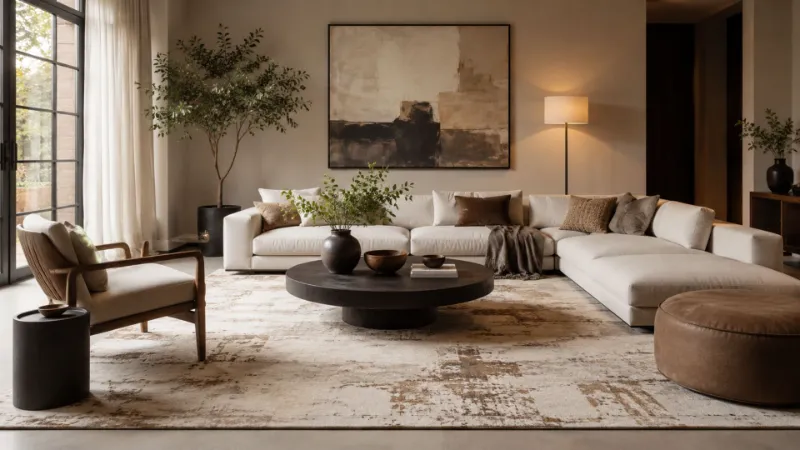
You walk into a beautifully designed living room, and the first thing your feet feel is a plush, warm Living Room carpet beneath them. That single detail immediately changes how you experience the entire room. Yet most homeowners rush through carpet selection treating it like a background decision rather than the design anchor it truly is. A poorly chosen carpet can make an expensive sofa look cheap, or shrink a spacious room. The right living room carpet idea, however, does the opposite: it ties your decor together, absorbs sound, adds warmth, and creates an inviting atmosphere that no other flooring element can replicate.
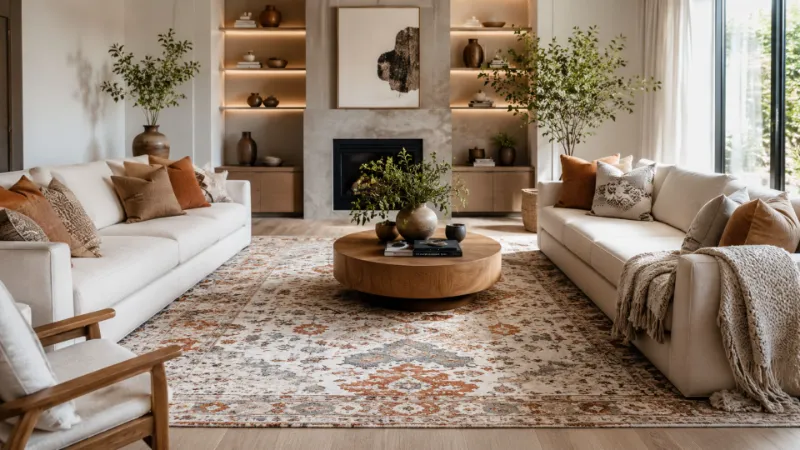
The living room carpet market has evolved dramatically. Today’s options span from sustainable wool blends and noise-cancelling performance textiles to AI-customized patterns and modular tile systems. Whether you are redesigning a family home in Karachi, a modern apartment in Dubai, or a cozy studio in London, the principles of great carpet selection remain universal.
This article gives you 12+ actionable living room carpet ideas backed by interior design expertise, current trend analysis, and future-focused insights that most guides simply overlook.
Classic Neutral Palette Carpet for Timeless Elegance
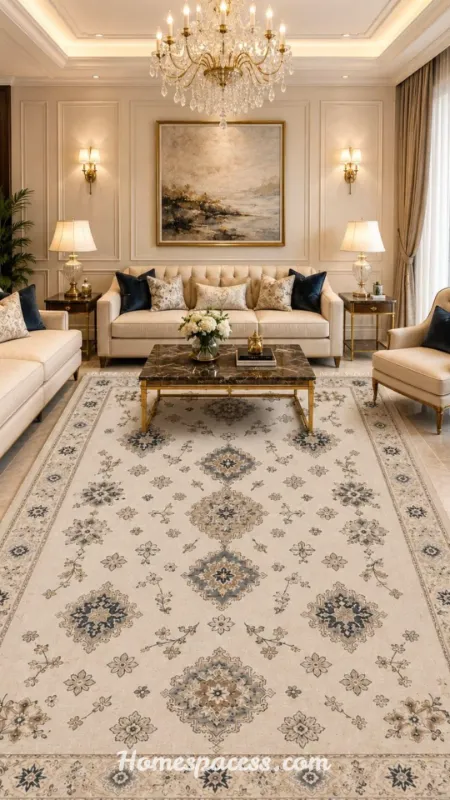
Neutral-toned carpets think warm beige, soft ivory, greige (gray-beige), and creamy white remain the most universally successful choice for living rooms. Why? They act as a visual pause, allowing your furniture, art, and accent pieces to take center stage without competition.
Interior designers consistently recommend neutral carpets because they photograph well, appeal to a broader audience if you plan to sell your home, and they adapt fluidly as your decorating style evolves over the years.
The secret most guides miss is that ‘neutral’ does not mean flat or boring. Look for carpets with subtle texture a low-pile twist or a looped Berber construction in a warm cream tone creates dimension that reads as luxurious in any lighting condition.
Pair this with a jute or sisal area rug layered on top for a designer look that adds depth without overwhelming the room. According to professional stagers, neutral carpet living rooms sell approximately 15% faster in real estate markets proof that this timeless approach holds genuine commercial value beyond aesthetics.
Must Read: Best Gaming Chair Ideas for Comfortable and Stylish Gaming Rooms
Bold Geometric Patterns for a Modern Statement
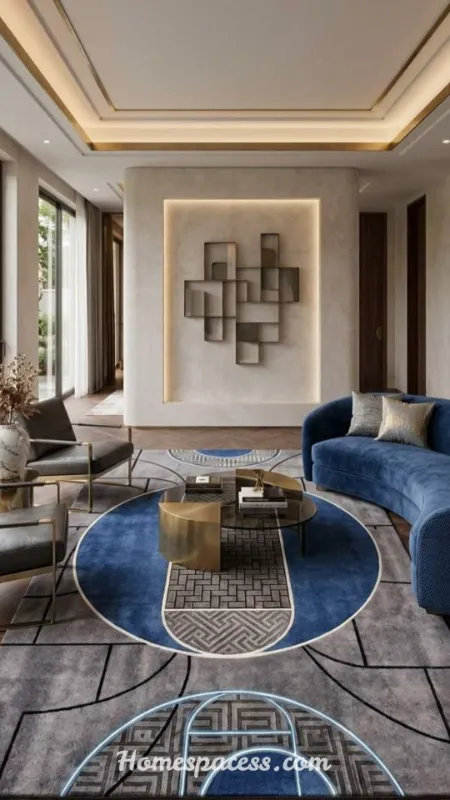
Geometric carpet patterns chevrons, hexagons, diamond lattice, and bold stripe formations have surged in popularity as homeowners move away from minimalism toward what designers call ‘maximalist intentionality.’ A geometric living room carpet does something subtle but powerful:
it creates a visual grid that subconsciously organizes the space. In open-plan living areas especially, a strong geometric carpet pattern defines the seating zone without using walls or dividers.
The key to pulling off geometric carpets is scale matching. A large open living room can handle oversized geometric repeats of 12 inches or more. Smaller rooms benefit from tighter, intricate geometric weaves that suggest complexity without chaos.
Consider navy and gold geometric Kilim-style carpets for a contemporary-global fusion look a trend gaining traction in Pakistan, the Middle East, and South Asia where traditional pattern appreciation meets modern interiors. Always leave at least 18 inches of bare floor between the carpet edge and the wall to prevent the room from feeling enclosed.
Also Read: Cozy Basement Bar Ideas for the Perfect Entertainment Space
Plush High-Pile Shag Carpet for Cozy Living Rooms
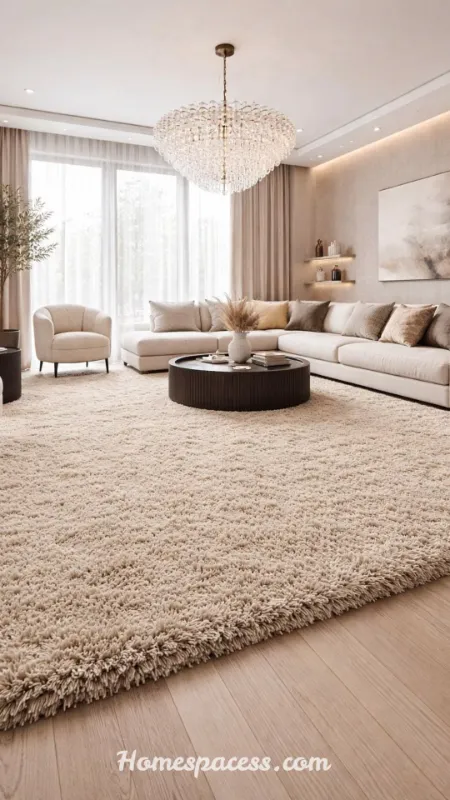
High-pile shag carpets deliver that barefoot-luxury experience that makes living rooms feel genuinely cozy rather than merely decorated. Modern shag carpets have addressed the historic criticism of being hard to maintain today’s options use tightly twisted, stain-resistant fibers that resist matting and are far easier to vacuum than their 1970s predecessors. A well-chosen plush carpet in charcoal, ivory, or dusty blush can make a living room feel 30% warmer in perception without adding a single degree of actual heat.
Interior designers use a simple rule for shag placement: center it under the coffee table with the front legs of all sofas resting on the carpet edge. This grounds the furniture grouping and prevents the shag from feeling like an island floating in the middle of the room.
For families with young children, consider a mid-pile shag (1.5–2 inches) rather than ultra-deep pile (3+ inches) it provides comfort without becoming a debris trap. Wool-blend shag options also offer natural fire resistance, a practical advantage often overlooked in family living rooms.
Reader Favorites posts : Trendy Outdoor Bar Ideas for Modern Patio Makeovers
Natural Fiber Jute and Sisal Carpets for Organic Appeal
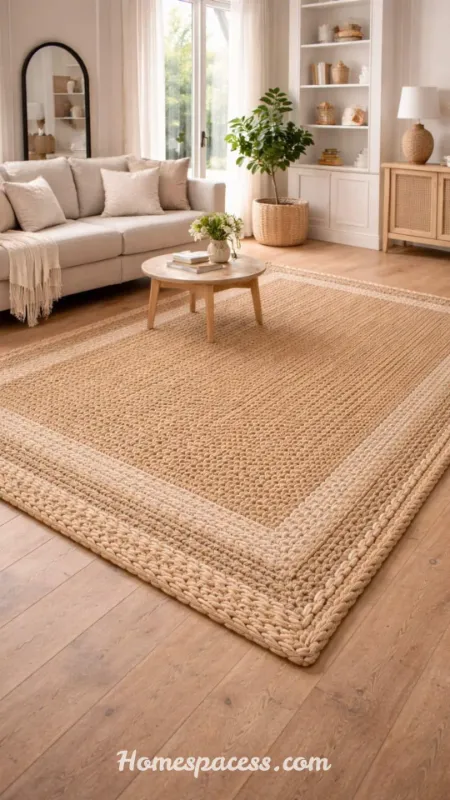
Jute, sisal, and seagrass carpets bring a raw, organic warmth to living rooms that synthetic materials simply cannot replicate. These natural fiber carpets work brilliantly in rooms that lean toward Boho, Coastal, Japandi, or Earthy-Modern aesthetics.
Their inherently textured weave creates visual interest even in a plain neutral color, and because they are made from rapidly renewable plant materials, they represent one of the most sustainable flooring choices available today.
The practical consideration most guides avoid mentioning: natural fiber carpets are moisture-sensitive and not ideal for high-humidity climates or households with frequent drink spills. In humid regions like coastal Pakistan or Southeast Asia, a jute-backed synthetic flat-weave that mimics the look of natural fiber is a smarter investment.
Combine jute with layered area rugs for the best of both worlds the textural base of jute with the softness of a smaller wool rug layered centrally. This double-rug trend has become a signature look in contemporary interior design.
Don’t Miss: Living Room Curtain Ideas for a Cozy and Modern Home Look
Dark Dramatic Carpet for Sophisticated Contrast
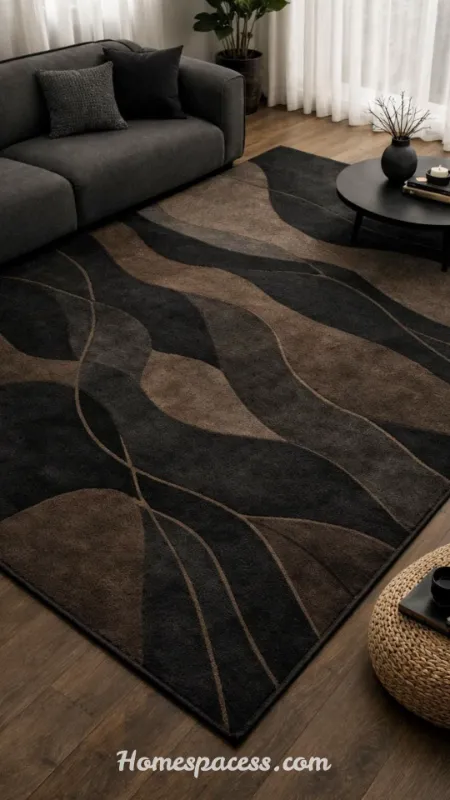
Dark carpets deep charcoal, forest green, inky navy, and even matte black are one of the most underused living room carpet ideas in mainstream design. The fear is that dark carpets make rooms feel smaller or show lint and pet hair more obviously.
In reality, a dark carpet in a living room with adequate natural light creates a sophisticated, grounding effect that makes every other element in the room light walls, colorful cushions, gold fixtures pop with increased vibrancy.
The practical trick with dark carpets is choosing a tone-on-tone or heathered texture (mixed fiber colors within the same hue family) rather than a flat solid color. Heathered dark charcoal, for example, conceals footprints and light debris far better than a flat black carpet.
Dark carpets also thrive in north-facing or cooler-toned living rooms where they balance the bluish quality of indirect natural light. Pair dark carpets with warm-toned wood furniture, brass hardware, and cream-colored walls for a balanced, masculine-elegant room palette.
Related Post: Living Room Decor Ideas That Transform Any Space
Vintage Persian and Oriental Carpet Designs
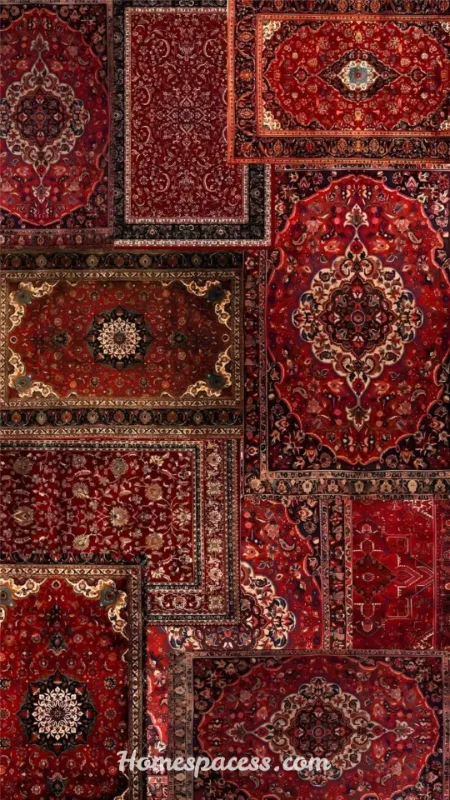
Persian and Oriental-inspired carpets carry centuries of cultural craftsmanship and remain one of the most investment-worthy living room carpet ideas available. Authentic hand-knotted Persian rugs appreciate in value over time rare examples have fetched millions at auction.
But even high-quality machine-made Persian-inspired designs in wool-synthetic blends (available from $200 to $2000) deliver the same visual richness and storytelling depth that makes a living room feel curated rather than merely furnished.
The modern approach to Persian carpets in contemporary living rooms is the intentional mismatch placing a traditional red and navy Tabriz or Heriz pattern in a room with sleek modern furniture. This contrast creates what designers call ‘collected charm,’ suggesting a room assembled thoughtfully over time rather than purchased as a set.
In Pakistan and the broader South Asian market, locally produced Lahori and Kashmiri carpet traditions offer equally rich design options that support regional artisanship while delivering international-quality craftsmanship at competitive prices.
Low-Pile Flatweave Carpet for Easy-Maintenance Spaces
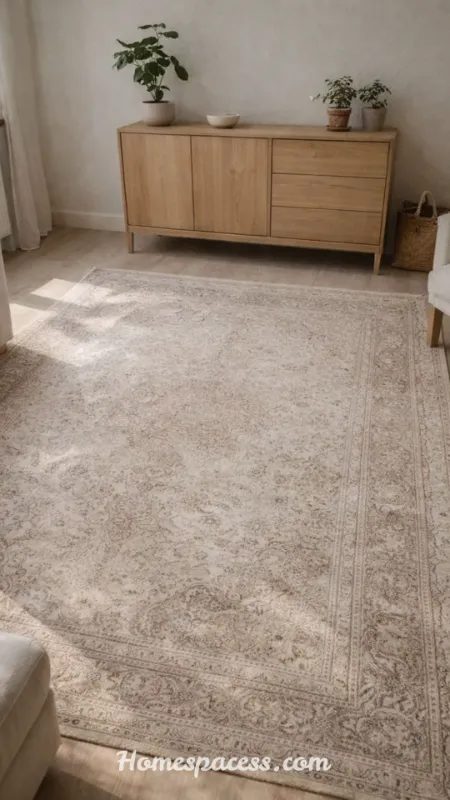
Flatweave and low-pile carpets (under 0.5 inches in pile height) are the unsung heroes of practical living room design. They are the easiest carpet type to vacuum, the most resistant to furniture leg indentation, and crucially the safest option in homes with elderly residents or those using mobility aids, where thicker pile creates trip hazards. Modern flatweave options in geometric kilim patterns, printed dhurrie styles, and textured loop constructions look anything but utilitarian.
A lesser-known advantage of flatweave living room carpets is acoustic performance in specific frequency ranges. While high-pile carpets absorb more overall sound, flatweave carpets are superior at reducing the ‘flutter echo’ that bounces between hard parallel walls in rectangular rooms.
This makes them particularly effective in living rooms where home theater or music listening is a priority. Look for flatweaves with a backing density of at least 28 ounces per square yard for durability that matches higher-pile alternatives.
Layered Carpet and Rug Combinations
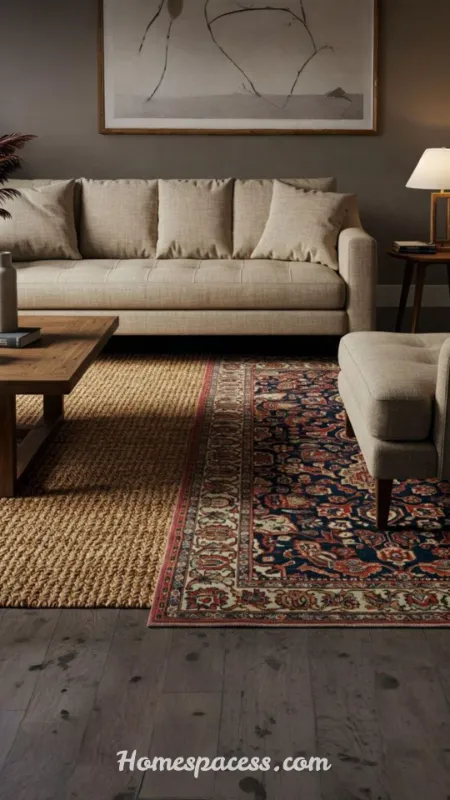
Carpet layering placing a decorative area rug on top of existing wall-to-wall carpet or a base carpet has evolved from a styling trick into a legitimate design approach endorsed by top interior decorators globally. It solves multiple problems simultaneously: it defines zones in open-plan spaces, adds softness and pattern without replacing installed carpet, allows easy seasonal refresh, and creates a rich textural dimension that single-layer floors simply cannot achieve.
The most successful layered carpet combinations follow a simple rule: contrast in both texture and scale. Place a flat-woven or low-pile patterned rug over a plush solid carpet, or a small geometric runner over a large neutral base. Size the layered rug at 60–70% of the base carpet’s visible area for balanced proportions.
For living rooms with wall-to-wall carpet installation (common in Pakistani homes and South Asian markets), a 5×8 ft Persian-style area rug layered over the central seating zone dramatically elevates the room’s design without major renovation costs.
Stripe Carpet Patterns to Visually Alter Room Proportions
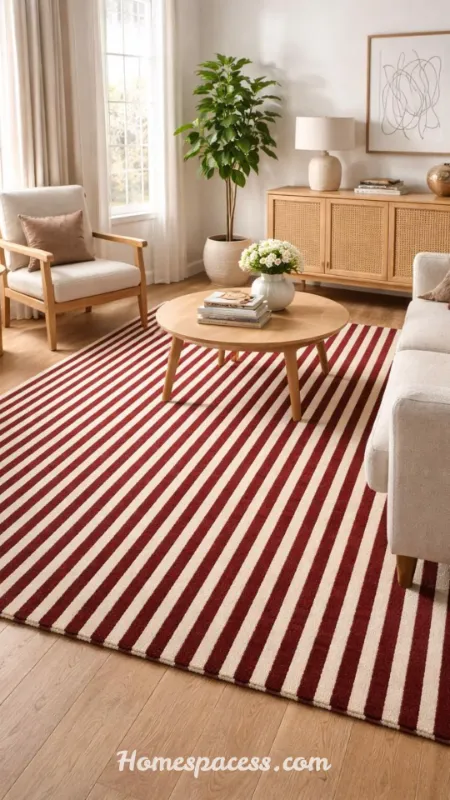
Striped carpets are a designer’s favorite optical illusion tool. Horizontal stripes running parallel to the longest wall of a room visually widen a narrow living room. Vertical stripes running from the entrance toward the far wall elongate a short room, making it feel deeper and more spacious.
This simple principle well-known in fashion but underused in interior design can transform a living room’s perceived dimensions without any structural changes.
The stripe width matters enormously. Wide stripes (4+ inches) create a bold, contemporary statement and work best in modern, uncluttered living rooms with minimal furniture. Narrow stripes (1–2 inches) read as more traditional and sophisticated, harmonizing with classic or transitional decor styles.
Two-color stripe carpets in complementary tones navy and cream, terracotta and ivory, sage and wheat are particularly powerful because they introduce color without the unpredictability of a freeform pattern. Always ensure stripe direction is decided before installation to maximize the optical effect.
Modular Carpet Tiles for Flexible Design
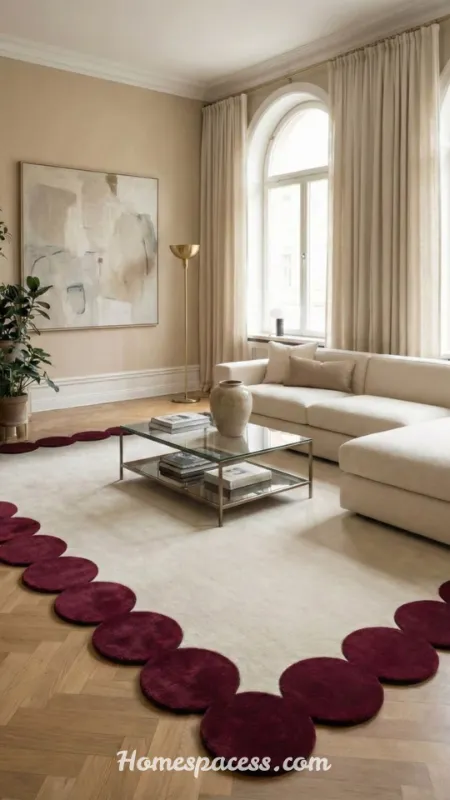
Modular carpet tiles 18×18 or 24×24 inch squares that interlock or simply lay together represent perhaps the most underappreciated innovation in residential carpet design. Originally developed for commercial office environments, carpet tiles now come in stunning residential designs including wool-blend textures, watercolor abstracts, and marble-effect prints. Their true superpower is replaceability: a single stained or worn tile can be swapped without disturbing the entire floor installation.
Interior designers are increasingly specifying modular carpet tiles for living rooms with pets, young children, or frequent entertaining precisely the high-traffic scenarios where conventional carpet suffers most. Creative installation patterns alternating directional tiles (the ‘brick’ or ‘quarter-turn’ method) create subtle geometric texture from plain tiles, while mixing two complementary tile patterns in a checkerboard or border arrangement creates a custom-looking floor at a fraction of the cost of bespoke carpet. For rental properties or temporary setups, peel-and-stick carpet tiles offer the same flexibility with zero adhesive commitment.
Wool Carpet for Premium Comfort and Longevity
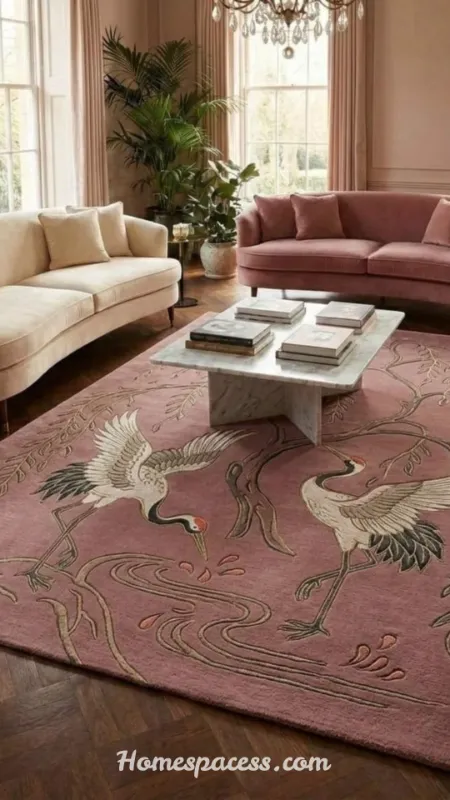
Wool remains the gold standard of carpet fiber and for good reason backed by millennia of use. Natural wool fibers have a complex internal structure (called cortical cells) that makes them inherently resilient, flame-resistant, and moisture-regulating.
A quality wool carpet in a living room will outlast any synthetic alternative by a factor of two to three, often looking better at the 15-year mark than a cheap synthetic looks at five. While the initial cost is higher (typically 2–3x the price of nylon), the cost-per-year of ownership calculation strongly favors wool.
Wool carpets are also natural humidistats they absorb excess moisture from the air in humid conditions and release it when the air is dry, acting as a passive humidity regulator in your living room. This is a significant benefit in climates like Karachi’s coastal humidity or Lahore’s seasonal extremes.
Additionally, wool is naturally hypoallergenic: its fiber scales trap dust and allergens rather than releasing them into the air, making wool living room carpets actively beneficial for allergy sufferers contrary to the common misconception that all carpets worsen allergies.
Oversized Area Carpet for Statement Anchoring
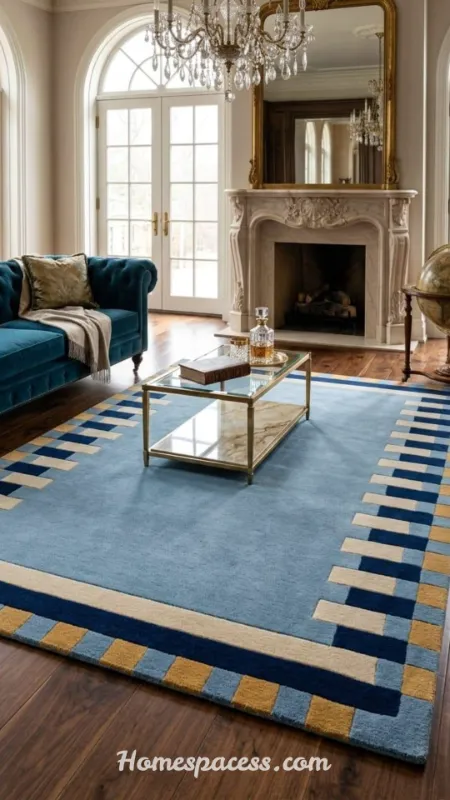
One of the most common living room carpet mistakes (expanded in our Common Mistakes section) is choosing a carpet that is too small. An oversized living room carpet one that extends at least 24 inches beyond the perimeter of the seating group on all sides creates a completely different visual impact than an undersized one.
It anchors the room, unifies the furniture grouping, and signals a confident design hand that small carpets simply cannot achieve. The oversized carpet approach is the single fastest way to make a living room look more professionally designed.
In practice, the correct carpet size for most living rooms is larger than most people initially estimate. A 9×12 ft carpet is the starting point for average living rooms with three-piece sofa sets, while larger open-plan spaces often require 10×14 or even 12×15 ft dimensions.
Custom carpet sizing available from most carpet retailers with minimal lead time eliminates the compromise of standard sizing and delivers a truly tailored result. When budgeting is a constraint, prioritize carpet size over carpet quality: a larger mid-range carpet outperforms a smaller premium carpet in most design outcomes.
Custom Monogram and Bespoke Designed Carpets
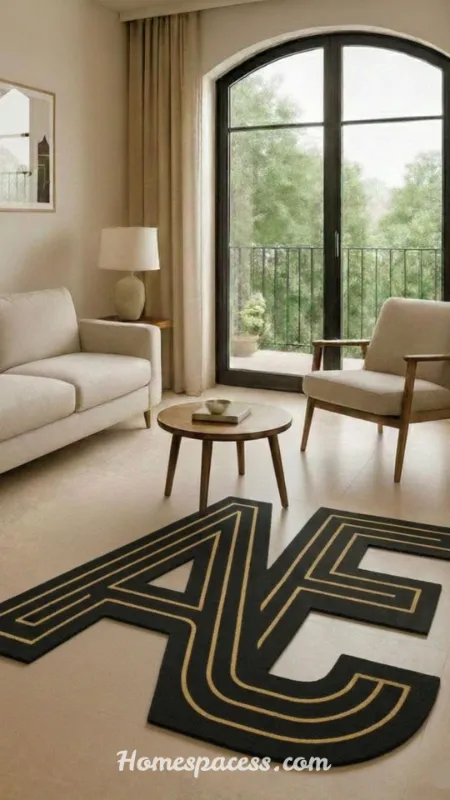
Custom-designed living room carpets where the pattern, colorway, size, and even personal monograms or family crests are specified by the homeowner represent the ultimate expression of personalized interior design. Once accessible only to wealthy estates and luxury hotels, digital weaving technology and direct-to-manufacturer online platforms have brought custom carpet design within reach of motivated homeowners with mid-to-premium budgets. Companies now offer small-batch custom carpet production with design consultation services that guide non-designers through the process.
Custom carpets deliver an irreplaceable authenticity that no mass-produced alternative can offer. They can be sized to millimeter precision for unusual room shapes, designed to incorporate architectural or cultural motifs specific to the homeowner’s heritage, and specified in fiber and pile constructions that exactly match lifestyle requirements.
For homeowners in Pakistan and the broader South Asian region, commissioning a custom carpet from a local master weaver in Lahore or the carpet-producing regions of Khyber Pakhtunkhwa combines the finest traditions of South Asian carpet craft with bespoke personalization creating a living room centerpiece that is genuinely once-of-a-kind.
Conclusion
Choosing the right living room carpet idea is one of the highest-impact design decisions you can make one that affects how your room looks, feels, sounds, and functions for years to come. From classic neutral pile to bold geometric statements, sustainable natural fibers to AI-enabled custom designs, the options available today are richer and more exciting than at any point in interior design history. The key is to match carpet style, fiber, and construction to your specific room, lifestyle, and long-term goals rather than simply following trend headlines.
Apply the expert insights in this guide prioritize underlay quality, test colors under real room lighting, size generously, and think about lifecycle value rather than purchase price alone. Whether you choose a timeless wool Beni Ourain, a performance-grade family carpet, or a bespoke artisan-woven masterpiece, the right living room carpet will reward you with a space that feels genuinely complete. Start with two or three ideas from this list that most excite you, order large samples, and let your living room tell you which one belongs on its floor.
Trend Analysis:
Living Room Carpet Trends in 2026 and Beyond
The living room carpet industry in 2026 is defined by five intersecting macro-trends that are reshaping consumer preferences, manufacturing priorities, and design vocabulary simultaneously. First, the Dopamine Decor movement the deliberate use of bold, mood-elevating color is driving renewed interest in carpet hues beyond safe neutrals. Burnt sienna, cobalt blue, emerald green, and saffron yellow are entering living room floors in ways that would have seemed commercially risky just five years ago.
Second, the Japandi (Japanese-Scandinavian fusion) aesthetic continues its dominance, driving demand for natural-fiber carpets, muted organic tones, and tactile texture over visual pattern. Third, quiet luxury characterized by understatement, material quality, and craftsmanship visibility is elevating the market for wool, hand-knotted, and artisan carpets at the expense of fashion-driven synthetic options. Fourth, health-conscious interiors are driving growth in low-VOC, anti-microbial, and allergen-managing carpet technologies.
Looking toward 2026–2030, three future carpet trends stand above the rest in predicted impact. AI-assisted custom design will become mainstream, enabling homeowners to generate unique carpet patterns using generative design tools and have them woven on demand. Smart carpet technology with embedded sensors monitoring foot traffic patterns, temperature differentials, or even posture analytics will move from prototype to pilot commercial phase. And circular economy carpet systems manufacturer take-back programs where old carpet is completely recycled into new product will become a standard expectation rather than a premium offering in developed markets.
| 2026 Trend Snapshot: Dopamine colors on floors, Japandi textures, Quiet Luxury wool investment pieces, biophilic patterns, and AI-customized designs are the five defining living room carpet trends this year and into 2030. |
Expert Insights:
How to Optimize Your Living Room Carpet Choice
Interior design professionals consistently identify three decisions that separate successful carpet selections from regretted ones: the underlay choice, the fiber specification for lifestyle fit, and the color decision under actual room lighting conditions.
Most homeowners focus almost entirely on the visible carpet face while treating these three factors as afterthoughts a strategic mistake that manifests over years of disappointing performance or premature replacement.
On underlay: a premium carpet underlay (also called carpet padding or cushion) of 10mm rebonded foam or felt-rubber composite does more for the feel and longevity of a carpet than almost any fiber upgrade within the same budget. It absorbs impact stress that would otherwise fatigue the carpet backing, insulates against cold subfloor temperatures (critical in Pakistan’s winter months), adds acoustic absorption, and makes the carpet feel more luxurious underfoot. The rule of thumb from professional installers: spend at least 20% of your carpet budget on the underlay.
On lighting and color: always request carpet samples of at least 12×12 inches (not small swatches) and observe them in your actual room under three different conditions natural morning light, natural afternoon light, and your primary artificial lighting.
Carpet color shifts dramatically between these conditions, and a color that looks perfect in the showroom under standard fluorescent lighting may look completely different in your room’s warm LED ambiance. Spending one full day with large samples in position prevents one of the most common and expensive carpet selection mistakes.
| Pro Tip: Never finalize your carpet order based on showroom samples alone. Get 12-inch minimum samples, live with them for 48 hours in your room under all lighting conditions, and test them against your primary sofa, wall paint, and curtain fabrics before committing. |
Sustainability & Long-Term Value:
Making Carpet Choices That Pay Off
The environmental impact of carpet choice extends far beyond the fiber source. The full lifecycle of a carpet raw material extraction, manufacturing energy, transportation, installation chemistry, in-use maintenance requirements, and end-of-life disposal must be evaluated for a genuinely sustainable choice.
Natural fiber carpets (wool, jute, sisal) score highest on biodegradability and lowest on production-phase energy. Recycled synthetic carpets score highest on diverting existing waste streams. Both represent significant improvements over virgin synthetic carpet, which accounts for 40% of global plastic fiber production annually.
From a long-term financial value perspective, the carpet durability hierarchy strongly favors wool and high-quality nylon over polyester and polypropylene. A study of carpet lifecycle costs (initial price + cleaning costs + replacement frequency) consistently shows that premium natural fiber carpets costing 3x more upfront often deliver 5x longer service life resulting in 40–60% lower total cost of ownership over a 20-year home ownership period. This calculation becomes especially compelling when factoring in the environmental cost of repeated disposal and replacement.
The strategic perspective for homeowners in emerging markets like Pakistan is particularly important: as green building certification (LEED, EDGE, and equivalent local systems) becomes increasingly linked to property valuation and mortgage eligibility, carpet choices that align with these standards represent real financial upside. Specifying certified low-VOC carpets with OEKO-TEX or Green Label Plus certification is not merely an environmental statement it is a property value hedge against tightening regulatory and market standards in the coming decade.
Future Predictions:
The Living Room Carpet of 2030
The convergence of material science, digital manufacturing, and data-driven design is poised to fundamentally transform what a living room carpet can be within the next five years. Thermoresponsive carpet fibers materials that change color or reflectivity in response to ambient temperature are in advanced development phases at several major fiber research institutes. Within 3–5 years, these will enable carpets that shift from lighter tones in summer to richer tones in winter, dynamically adapting to seasonal aesthetics without replacement.
Embedded sensor technology will create carpets that function as passive health monitoring systems. Piezoelectric fibers woven into carpet substrates can detect gait patterns, identify asymmetries that may indicate early-stage joint deterioration, and transmit anonymized data to connected health platforms. For aging-in-place applications a rapidly growing design priority globally and in South Asia’s aging demographics smart carpets that detect falls and alert caregivers could become standard in family living rooms, reframing carpet as health infrastructure rather than mere floor covering.
Digital manufacturing advances will make fully personalized, on-demand carpet production cost-competitive with mass-market alternatives by approximately 2027–2028. This will enable a fundamental shift in the industry: rather than choosing from what manufacturers produce, consumers will input their room dimensions, existing color palette, lifestyle data (pet ownership, children, allergy status), and aesthetic preferences into an AI-assisted design platform, which will generate a unique carpet specification produced on-demand and shipped within weeks. The era of truly personalized living room carpet is approaching faster than most in the industry anticipate.
| Innovation Watch: Thermoresponsive color-shifting fibers, embedded health-monitoring sensors, and AI-generated on-demand custom weaving are the three technologies most likely to transform living room carpet design between 2026 and 2030. |
Common Mistakes & Overlooked Factors in Living Room Carpet Selection
The most frequently observed mistake in living room carpet selection is sizing error specifically, choosing carpets that are too small for the room and furniture grouping. Designers estimate that 70% of homeowners who ‘go it alone’ on carpet selection choose a size that is at least one standard increment too small. The visual consequence is a carpet that looks like it is cowering beneath the furniture rather than anchoring it. The solution is simple but counterintuitive: when in doubt, always size up.
The second most common and costly oversight is ignoring the pile direction (or ‘nap’) of carpet during installation. All cut-pile carpets have a directional quality that affects color and light reflection. Incorrect pile direction relative to the room’s primary light source can make a carpet look patchy, inconsistently colored, or lighter or darker than its specification. Professional installers are trained to orient pile toward the primary light source (usually the main window wall), but homeowners who oversee DIY installations or non-specialist fitters frequently end up with installations that never look quite right.
Underestimating the acoustic impact of carpet choice is another widely overlooked factor. Different carpet constructions absorb sound in fundamentally different ways. A high-pile plush carpet excels at absorbing airborne sound (voices, music, television) but does little for impact sound (footsteps from above). A dense, heavy carpet backed with mass-loaded barrier material addresses both airborne and impact sound transmission. For living rooms in apartments with neighbors above or below an extremely common situation in Pakistani urban housing understanding carpet acoustic properties is essential for realistic expectations about the noise management benefits your carpet choice will deliver.
| Avoid These: Wrong carpet size (too small), ignoring pile direction during installation, underestimating acoustic properties, skimping on underlay, and making final color decisions from small swatches are the five most expensive living room carpet mistakes to avoid. |

Team Home Spacess shares simple, practical design ideas that work for real families. The team focuses on cozy décor, soft colors, and natural textures that make a space feel truly lived-in. From everyday decorating tips to creative home projects, Team Home Spacess is dedicated to helping readers create warm, comfortable, and inviting spaces with a fresh and personal touch.