

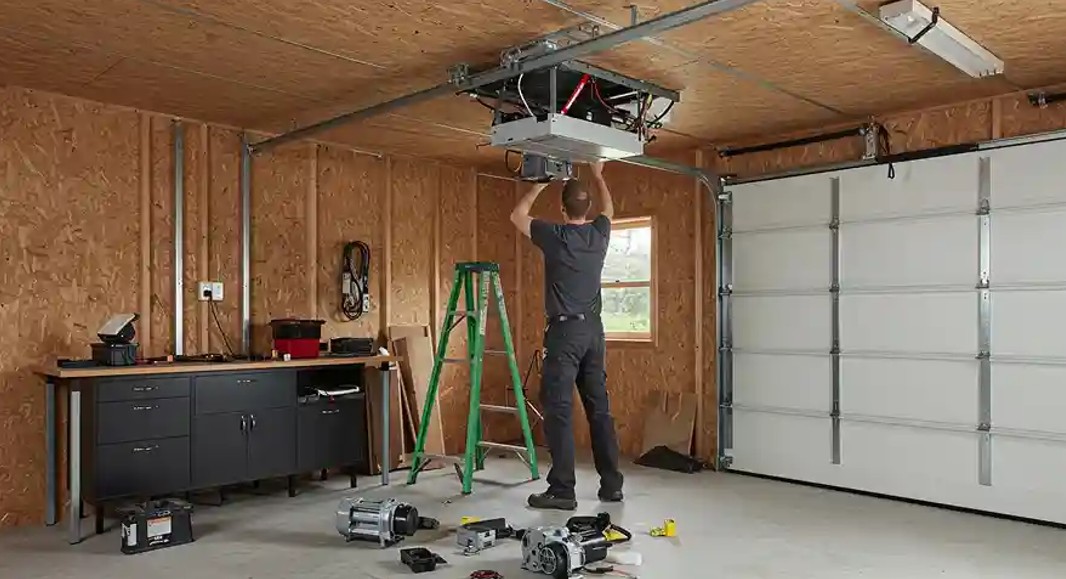
Architectural Value of Custom Garage Door Installation
A well-functioning garage door is crucial for daily convenience, home security, and even your property’s curb appeal. An outdated or failing opener, however, can be a major source of frustration, impacting both function and aesthetics. In Cumberland, MD, homeowners often seek solutions for garage door openers that struggle with the local climate or simply show their age. We understand the importance of a reliable system that operates smoothly and quietly. This guide explores how investing in affordable garage door opener installation can resolve these issues, enhancing your home’s overall functionality, safety, and visual appeal. We will discuss signs of failure, types of openers, and what to expect from a professional installation.
The decision to upgrade your garage door system, particularly with a custom design, is an investment in your home’s future. Beyond mere functionality, a new, architecturally harmonious garage door can dramatically enhance curb appeal, significantly boost property valuation, and contribute to the thermal efficiency and structural integrity of your entire home. Consider the visual impact: the garage door often occupies a substantial portion of a home’s facade, making it a pivotal element in its overall aesthetic. A custom garage door, thoughtfully designed and professionally installed, acts as a statement piece, seamlessly integrating with your home’s architectural style rather than detracting from it.
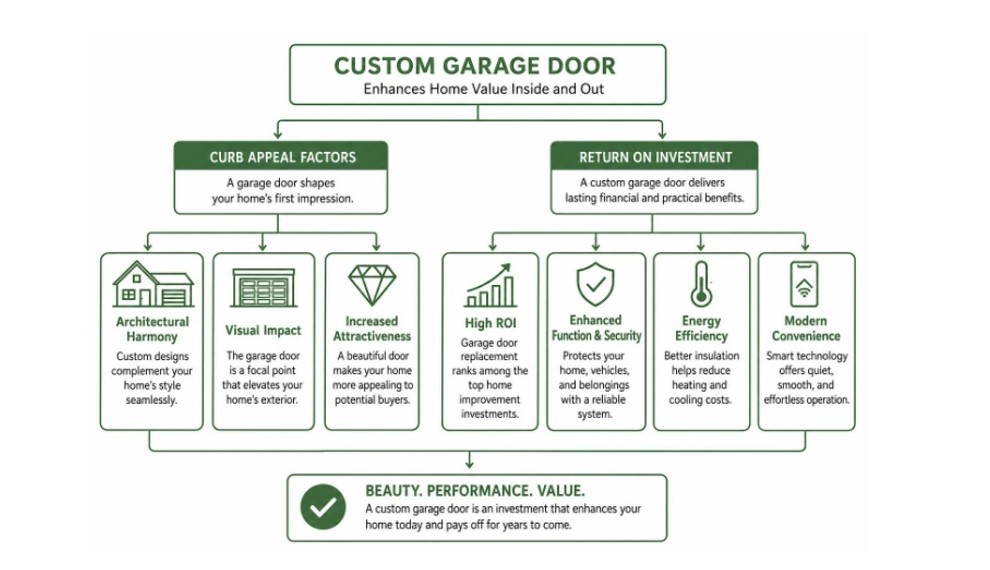
This transformation is not just skin deep. Modern custom garage doors, especially when paired with a robust and well-installed opener, offer tangible benefits. They can reduce heating and cooling costs by providing superior insulation, protect your vehicles and belongings more effectively, and offer unparalleled convenience with smart technology. The return on investment (ROI) for garage door replacement is consistently high, often ranking among the top home improvement projects. This is because it delivers both aesthetic pleasure and practical advantages, making your home more attractive to potential buyers and more comfortable for you.
The garage door is far more than a functional barrier; it is a critical component of your home’s exterior aesthetics, influencing everything from facade proportion to overall architectural harmony. For many homes, the garage door can account for up to 40% of the front-facing exterior, making its design, material, and condition paramount to curb appeal. A custom garage door allows homeowners to transcend generic, mass-produced options and select a design that perfectly complements their home’s unique character and architectural style. Whether your home boasts a modern minimalist look, a rustic farmhouse charm, or a classic colonial elegance, there’s a custom garage door material and style that can elevate its visual presence.
Beyond mere looks, the material durability of a custom door is also a significant factor. High-quality materials and construction mean a door that not only looks good but also withstands the test of time and the elements, maintaining its aesthetic integrity for years to come. This durability, combined with thoughtful design, ensures that your investment in a custom garage door contributes positively to your home’s long-term value and appeal.
Material Selection for Custom Garage Door Installation
When considering a custom garage door, the choice of material is fundamental, impacting both its appearance and performance. Modern options offer a blend of aesthetics, durability, and thermal efficiency crucial for homes in varying climates like Cumberland, MD.
- Polyurethane Insulation: Often integrated within steel or composite doors, polyurethane foam provides excellent thermal barriers. Unlike older single-layer steel doors that offer zero resistance to temperature transfer, insulated doors can dramatically improve energy efficiency. They help maintain more stable temperatures in your garage, reducing heat loss in winter and heat gain in summer, which can lead to noticeable savings on heating and cooling costs if your garage is attached or used as a living space. The R-values of these doors can significantly contribute to your home’s overall energy performance.
- Steel Gauge: For steel doors, the gauge refers to the thickness of the steel. A lower gauge number indicates thicker, heavier, and more durable steel. Heavy-gauge steel doors offer superior impact resistance and security. When combined with a robust finish, they provide excellent corrosion resistance, a vital consideration in areas prone to humidity and temperature fluctuations.
- Natural Wood: For unparalleled warmth and classic appeal, natural wood doors are a premium choice. They offer endless customization options in terms of wood species, stain, and panel design. While beautiful, wood requires more maintenance to protect against moisture and UV damage, and its natural insulation properties vary.
- Composite and Wood-Overlay: These options offer the aesthetic appeal of natural wood without the intensive maintenance. Composite doors are typically made from a durable, weather-resistant material, often with a wood-grain finish. Wood-overlay doors feature a steel core with real wood veneers or composite overlays, providing the look of wood with enhanced durability and insulation. These materials are less prone to warping, cracking, or rotting, making them a practical choice for long-term aesthetic appeal.
The local Cumberland climate, with its extreme temperature swings and periods of high humidity, plays a significant role in material performance. Materials that offer good thermal barriers and corrosion resistance will fare better, ensuring your custom door remains beautiful and functional for many years. Choosing the right material is not just about aesthetics; it’s about engineering a complete mechanical system that stands up to environmental challenges.
Engineering and Sizing for Non-Standard Openings
Custom garage doors often mean custom openings, which present unique engineering and sizing challenges that standard installations don’t. Achieving a perfect fit and smooth operation for non-standard openings requires meticulous attention to detail and specialized expertise. Factors like headroom clearance, sideroom dimensions, and backroom depth are critical measurements that dictate the type of track system and, consequently, the suitable garage door opener.
For instance, a low-headroom garage might require a specialized track radius to allow the door to open fully without interfering with the ceiling or support beams. Without proper headroom, backroom, and sideroom measurements, the door’s operation can be compromised, leading to premature motor failure or track misalignment. Our process includes a thorough site inspection to assess framing, clearance, and floor levelness, ensuring that every aspect of the installation is tailored to your specific garage. This precision is essential for the long-term durability and reliable performance of your custom garage door and its opener.
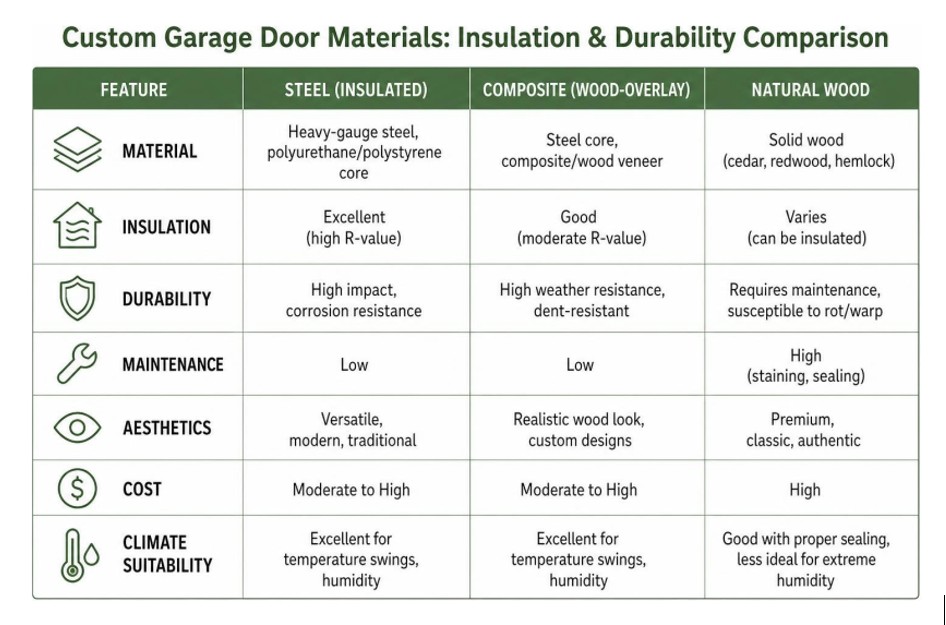
Feature Steel (Insulated) Composite (Wood-Overlay) Natural Wood Material Heavy-gauge steel, polyurethane/polystyrene core Steel core, composite/wood veneer Solid wood (cedar, redwood, hemlock) Insulation Excellent (high R-value) Good (moderate R-value) Varies (can be insulated) Durability High impact, corrosion resistance High weather resistance, dent-resistant Requires maintenance, susceptible to rot/warp Maintenance Low Low High (staining, sealing) Aesthetics Versatile, modern, traditional Realistic wood look, custom designs Premium, classic, authentic Cost Moderate to High Moderate to High High Climate Suitability Excellent for temperature swings, humidity Excellent for temperature swings, humidity Good with proper sealing, less ideal for extreme humidity.
Essential Mechanics and Opener Integration
The seamless operation of a custom garage door, particularly one that is heavier or larger than standard, hinges on the precise integration of its mechanical components with a robust opener system. The garage door opener doesn’t lift the entire weight of the door; rather, it provides the power to move a door that has been carefully counterbalanced by its spring system. This distinction is vital, especially when considering the engineering required for custom doors.
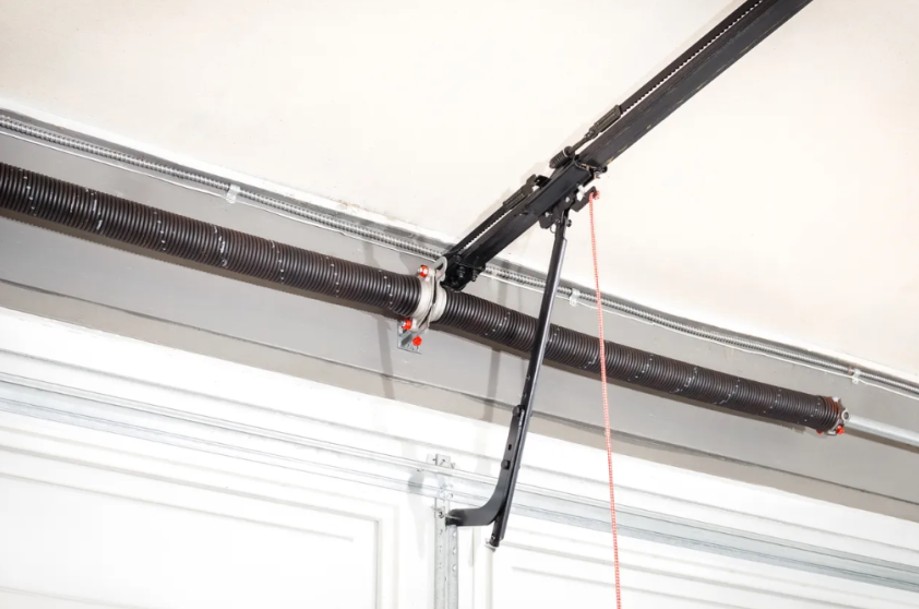
At the heart of this system are the counterbalance mechanics, primarily torsion springs. These springs store lethal amounts of kinetic energy and must be wound with specialized tools and exact torque calculations to perfectly offset the door’s weight. When correctly balanced, the door should feel almost weightless, allowing it to be lifted manually with minimal effort. This proper balance is what prevents premature motor failure in the opener, regardless of the door’s size or material.
For custom doors, particularly those made of heavy-gauge steel, solid wood, or with extensive insulation, matching the motor horsepower to the door’s weight and balance is paramount. An underpowered opener will strain, leading to frequent repairs and a shortened lifespan. Modern openers come in various types, including chain-drive (durable, economical), belt-drive (quiet, smooth), and screw-drive (fewer moving parts). Belt-drive systems are often preferred for their quiet operation, a desirable feature for garages attached to living spaces.
Beyond brute strength, contemporary openers integrate advanced safety features. These include infrared safety sensors, which must comply with strict safety standards, and auto-reverse mechanisms. These features prevent the door from closing on objects or people, significantly reducing the risk of injury. Professional installation ensures these safety features are correctly calibrated and tested.
The Cumberland climate can also impact opener performance. Extreme temperature swings can affect gear brittleness and lubricant performance within the opener, potentially leading to issues like a door that won’t open on a cold morning. This highlights the importance of choosing a quality opener designed for durability and ensuring that its installation and maintenance address these environmental factors. For comprehensive solutions, from custom garage doors to expert repairs, understanding the intricate relationship between your door’s mechanics and its opener is key. When seeking affordable garage door opener installation in Cumberland, MD, it’s not just about the price tag, but the value of a system that works harmoniously and safely.
Key Steps in the Professional Installation Process
A professional garage door opener installation is a multi-step process designed to ensure safety, efficiency, and longevity. It goes beyond simply mounting a motor; it involves meticulous site preparation, precision leveling, structural reinforcement where necessary, and careful mechanical balance. For homeowners in Cumberland, MD, understanding what to expect from this process can help appreciate the value of expert service.
The typical installation of a new garage door opener is completed in approximately 2–4 hours, including programming and safety tests. However, if it’s part of a larger custom garage door installation, the overall timeline can extend, especially if structural modifications or extensive track adjustments are required. Our approach guarantees a thorough and efficient service, integrating the opener seamlessly with your new or existing custom door.
Structural Assessment and Site Preparation
Before any new opener or custom door is installed, a critical first step involves a comprehensive structural assessment and site preparation. This initial phase is crucial for identifying any underlying issues that could compromise the installation’s integrity or the door’s long-term performance.
We begin by verifying the structural integrity of the header and jambs—the wooden or metal framing around the garage door opening. For older homes common in Cumberland, MD, technicians often discover rot in jambs or weakened headers, necessitating structural repair before the door can be installed. Older historic homes, in particular, may require structural reinforcement before modern, heavier insulated doors can be safely mounted.
Once the structural elements are sound, precision leveling techniques are employed. Heavy-duty tracks are installed using laser levels to ensure precise alignment. This step is non-negotiable, as track misalignment can lead to excessive wear on rollers, motor strain, and an unevenly operating door. Proper track anchoring is also vital to withstand the daily stresses of door operation, especially for heavier custom doors. This meticulous site preparation ensures that the foundation for your new custom garage door and its opener is robust and perfectly aligned, guaranteeing smooth, reliable operation for years to come.
Safety Calibration and Custom Garage Door Installation Testing
Following the physical installation of the garage door and opener, the process culminates in rigorous safety calibration and comprehensive testing. This phase is critical to ensure that the entire system operates not only smoothly but also safely, meeting all modern safety standards.
One of the most crucial steps is spring tensioning. The torsion springs, which counterbalance the door’s weight, must be balanced with exact torque calculations. This ensures that the door is neither too heavy for the opener nor prone to slamming shut. Proper spring tensioning is vital for the longevity of the opener and the safety of anyone using the garage.
Next, the photo-eye calibration takes place. These infrared sensors, positioned near the bottom of the door tracks, are designed to detect obstructions in the door’s path. They must be precisely aligned and tested to ensure they trigger the auto-reverse mechanism instantly if an object breaks the beam. The downward force of the door is also adjusted and tested; if the door encounters an obstruction, it should automatically reverse without exerting excessive force.
Finally, cycle testing is performed, running the door through several open and close cycles to confirm consistent and reliable operation. This includes verifying remote control functionality, keypad access, and any smart home integrations.
Here is a list of critical post-installation safety verifications:
- Photo-Eye Sensor Alignment: Confirming the infrared beam is unbroken and triggers reversal when obstructed.
- Auto-Reverse Mechanism: Testing that the door reverses upon contact with an object on the floor.
- Downward Force Setting: Ensuring the door reverses easily with minimal resistance, preventing injury.
- Manual Release Function: Verifying the emergency release cord disengages the door from the opener for manual operation.
- Limit Switch Settings: Checking that the door stops precisely at its fully open and fully closed positions.
- Balance Test: Confirming the door stays in place when manually lifted halfway, indicating proper spring tension.
These meticulous checks are fundamental to any professional affordable garage door opener installation in Cumberland, MD, providing homeowners with peace of mind regarding their system’s safety and reliability.
Frequently Asked Questions About Custom Garage Door Systems
Homeowners often have questions when considering a new custom garage door and opener system. Here, we address some of the most common inquiries, providing insights into the installation process, durability, and compatibility.
How long does a custom garage door installation take?
The timeline for a custom garage door installation can vary depending on several factors, including the complexity of the door design, whether structural modifications are needed, and the type of opener being installed. A standard single- or two-car garage door replacement, including the removal and haul-away of the old door and hardware, is typically completed in a few hours. When an opener installation is part of the project, it usually adds an estimated 2–4 hours for setup, programming, and safety tests.
However, if your project involves custom framing preparation for a non-standard opening, extensive track alignment, or the integration of advanced smart home features with your opener synchronization, the overall process might extend. We always provide a clear timeline after an on-site assessment, ensuring you know what to expect.
How does climate impact custom garage door durability?
The climate in Cumberland, MD, with its distinct seasons and often extreme temperature fluctuations, significantly impacts the durability and performance of garage door systems. Extreme temperature swings cause metal components to expand and contract, leading to metal fatigue in garage door mechanisms over time. High humidity accelerates rust on unsealed steel tracks and hinges, while freezing temperatures can make plastic gears brittle or cause lubricants to seize, leading to opener strain or failure.
Custom doors, especially those with advanced insulation, are designed to mitigate some of these effects by providing better thermal barriers and reducing thermal bridging. However, proper weatherstripping, regular maintenance, and selecting materials with high corrosion resistance are crucial for extending the lifespan of both the door and its opener in this environment. Proactive reinforcement can also be a cost-effective way to prevent catastrophic failures during severe wind and storm damage, which can also be a factor in Western Maryland.
Can custom heavy doors utilize standard opener systems?
While a custom garage door can significantly enhance your home’s curb appeal, its weight and size often mean that standard opener systems may not be sufficient. The key lies in matching the opener’s horsepower to the door’s weight and ensuring proper spring counterbalance.
A heavy custom door, such as one made of solid wood or insulated heavy-gauge steel, requires a robust opener with adequate horsepower to operate reliably without motor strain. If the springs are not correctly tensioned to counterbalance the door’s weight, even a powerful opener will struggle, leading to premature wear and potential failure. This is why professional assessment is critical. We evaluate the door’s specifications and recommend an opener that can handle the load efficiently, ensuring long-term performance and avoiding frequent repairs. Selecting the right opener is a vital part of providing affordable garage door opener installation in Cumberland, MD, as it prevents costly issues down the line.
Conclusion
Investing in a custom garage door system, complete with a professionally installed opener, is a decision that pays dividends in both aesthetics and functionality for your Cumberland, MD home. From the initial visual transformation that enhances curb appeal and property value to the long-term durability and improved home performance, the benefits are clear. We’ve explored how careful material selection, precise engineering for non-standard openings, and the essential mechanics of opener integration all contribute to a superior system.
The professional installation process, encompassing meticulous structural assessment, site preparation, and rigorous safety calibration, ensures that your custom garage door operates flawlessly and safely for years to come. By addressing common concerns about installation timelines, climate impact, and opener compatibility, we aim to empower homeowners with the knowledge needed to make informed decisions. The goal is to provide not just a product, but a complete, precision-engineered mechanical system that stands the test of time and enhances your daily living. When considering affordable garage door opener installation in Cumberland, MD, true value comes from expert service that ensures safety, efficiency, and lasting quality.

Team Home Spacess shares simple, practical design ideas that work for real families. The team focuses on cozy décor, soft colors, and natural textures that make a space feel truly lived-in. From everyday decorating tips to creative home projects, Team Home Spacess is dedicated to helping readers create warm, comfortable, and inviting spaces with a fresh and personal touch.