

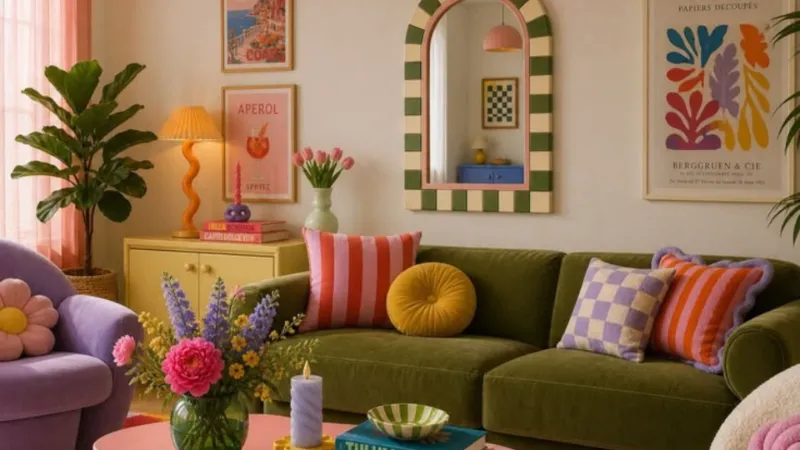
Does your living room feel bland, forgettable, or just like everyone else’s? You’re not alone. Millions of homeowners play it safe with beige walls and neutral furniture and then wonder why their space feels lifeless. The truth is, a colorful living room doesn’t just look better; it actually makes you feel better. Research in environmental psychology consistently shows that vibrant interior color schemes reduce stress, spark creativity, and improve mood in ways that neutral spaces simply cannot.
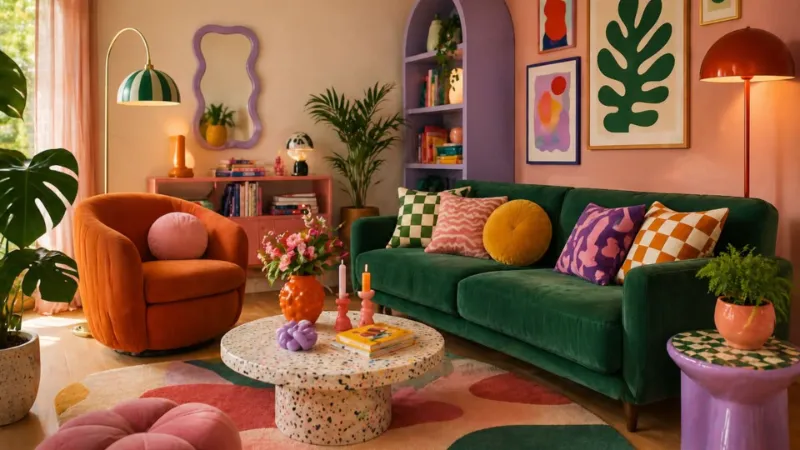
In this guide, you’ll discover powerful colorful living room ideas that go far beyond slapping a bold hue on a wall. Each idea comes with real-world scenarios, expert styling tips, and insights that most design blogs skip entirely. Whether you’re working with a tight budget or a blank-slate renovation, these strategies will help you create a space that’s genuinely memorable.
Create a Statement with a Bold Accent Wall
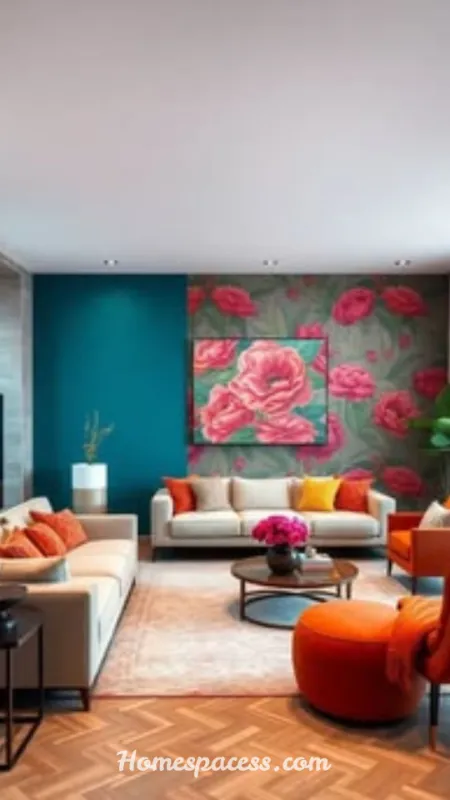
One of the most impactful colorful living room ideas is choosing a single bold accent wall rather than painting every surface. A deep emerald green, rich cobalt blue, or dramatic burnt orange behind your sofa or fireplace creates an instant focal point without overwhelming the room. This technique works especially well in smaller spaces where full-color walls might feel claustrophobic.
Consider a real-world scenario: a 300-square-foot apartment living room in New York City. The designer chose a terra cotta accent wall behind the TV unit, paired with natural linen sofas and brass accessories. The result? A space that photographs like a magazine spread and feels warm and intimate in real life. The key was maintaining a 60-30-10 color rule 60% neutral, 30% supporting tones, 10% vibrant accent which prevents the bold color from feeling jarring.
🎨 Style Note:
Match your accent wall color to undertones already present in your flooring or furniture. This creates cohesion rather than clash, even with very bold color choices.
💡 Pro Tip:
Before committing, purchase a peel-and-stick paint sample (brands like SAMPLIZE offer them for under $5). Test the color on your actual wall across different times of day morning light versus evening lamp glow can make the same color look completely different.
See Related Articles: Stunning Living Room Carpet Ideas: Transform Your Space with Style, Comfort & Expert Insight
Layer Colorful Textiles for Depth and Warmth
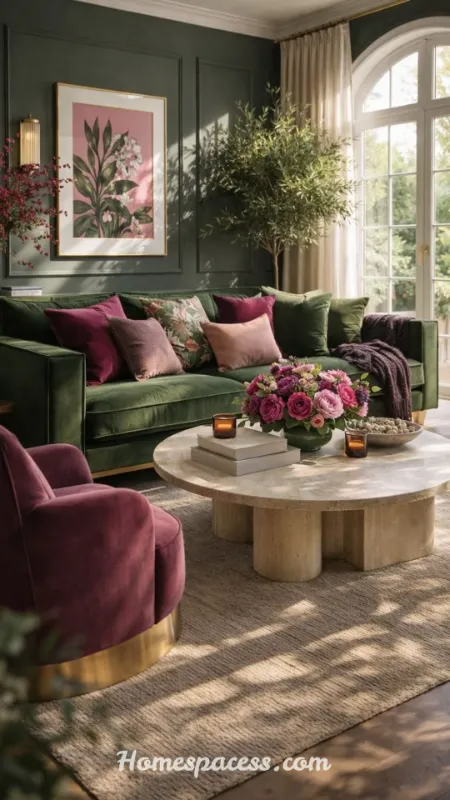
Textiles are the secret weapon of professional interior designers when it comes to colorful living room decor. Layering vibrant throw pillows, patterned area rugs, and colorful curtains allows you to introduce multiple hues without the permanence of paint. It’s the most flexible and budget-friendly approach to transforming a space, and it’s particularly effective for renters.
A common beginner mistake is buying pillows in three different colors with no connecting thread. Instead, professional decorators work from a single anchor piece usually a patterned rug or art print and pull two or three colors directly from it for pillows, throws, and curtain panels. This technique, known as palette extraction, guarantees visual harmony even when combining bold patterns like Moroccan geometry, floral prints, and abstract brushstroke designs.
🎨 Style Note:
Vary your textile weights across seasons: lightweight cotton weaves in summer, chunky wool throws and velvet pillows in winter. This keeps the room feeling fresh while maintaining your color story year-round.
💡 Pro Tip:
Use the ‘odd number rule’ for pillows: groups of 3 or 5 feel more dynamic than pairs. Mix one large solid, one medium pattern, and one small textured pillow for a professionally styled look.
You May Also Like: Living Room Curtain Ideas for a Cozy and Modern Home Look
Incorporate Colorful Furniture as the Room’s Focal Point
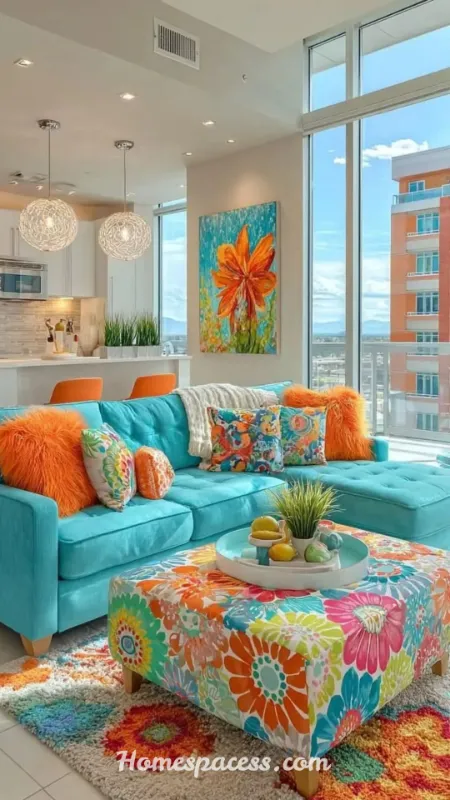
Rather than defaulting to a neutral sofa, a jewel-toned sofa in deep plum, mustard yellow, or rich teal instantly elevates the entire living room. Colorful furniture ideas like this work best when the surrounding walls are kept neutral think warm white, soft grey, or greige so the statement piece truly commands attention rather than competing with its environment.
Take the example of a suburban Chicago family room: the homeowners invested in a velvet forest green sectional against white walls, adding a natural wood coffee table and terracotta ceramic vases. Total cost of accessories: under $400. Yet the room looked like a luxury interior shoot. The velvet’s light-catching texture added further visual interest, proving that color plus texture creates more impact than color alone. This approach also scores well for longevity neutral walls age well as trends change.
🎨 Style Note:
Jewel tones (sapphire, emerald, amethyst, ruby) are especially flattering in living rooms because they look rich in both natural daylight and warm artificial evening light unlike pastels, which can appear washed out under tungsten bulbs.
💡 Pro Tip:
If committing to a colored sofa feels risky, start with a colorful armchair or ottoman. A single bold accent seat costs far less and can be replaced or reupholstered easily as your taste evolves.
Recommended for You: 22 Living Room Decor Ideas That Transform Any Space
Use Colorful Art to Drive Your Entire Palette
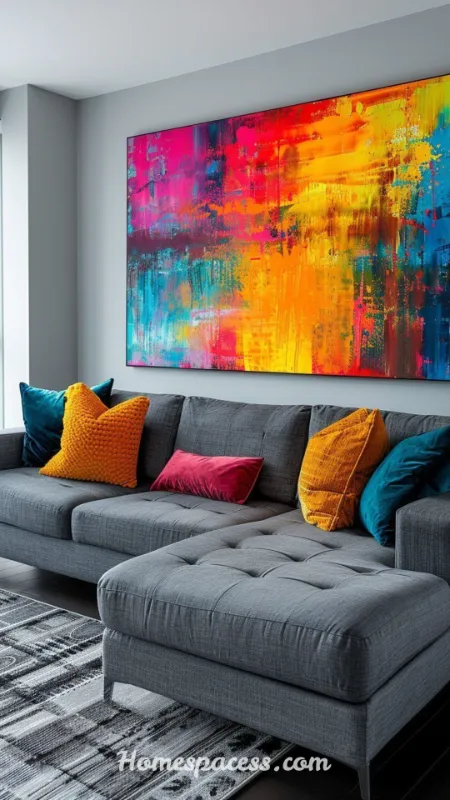
Professional designers often choose the wall art first and build the room’s color palette around it a method called art-driven decorating. When you select a striking piece of colorful wall art as your anchor, every subsequent purchase from paint to cushions to curtains becomes dramatically easier. You’re not guessing; you’re matching.
An oversized abstract canvas with splashes of rust, dusty pink, and warm gold immediately tells you to add rust-toned ceramics, a pink throw, and brass light fixtures. This creates a room that feels curated and intentional rather than randomly assembled. Budget tip: sites like Society6, Desenio, and Saatchi Art offer high-quality prints at accessible price points, while local gallery auctions frequently offer original works for less than premium print retailers charge for reproductions.
🎨 Style Note:
Gallery walls groupings of 5 to 9 mixed-size frames are experiencing a 2026 design renaissance. Combine photographs, prints, and small sculptural elements for a layered, collector-style display that adds far more personality than a single large piece.
💡 Pro Tip:
Before hanging, lay your gallery wall arrangement on the floor to experiment with spacing. Photograph it from above to evaluate balance. This saves the frustration of multiple nail holes during the hanging process.
Must Visit This Post: Colorful Kitchen Ideas: Bold Ways to Brighten Your Cooking Space
Bring In Colorful Plants and Natural Greenery
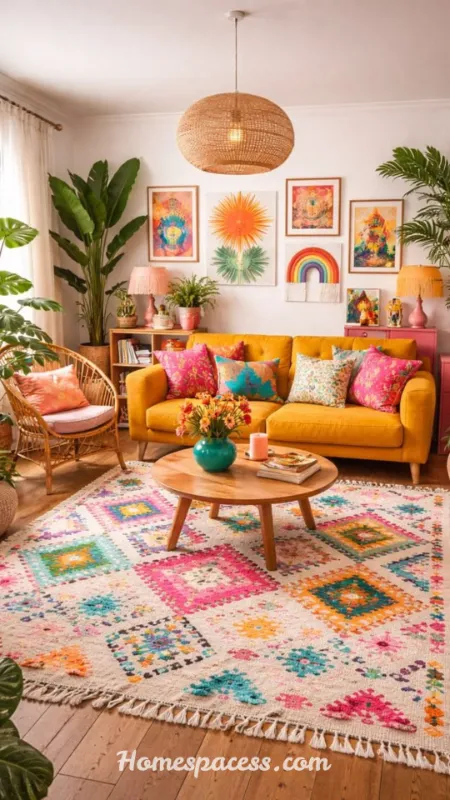
Living plants are one of the most underrated tools in colorful living room design. Beyond the obvious green foliage, consider flowering indoor plants like anthuriums (bright red), bromeliads (orange and pink), and peace lilies (white), which add seasonal color bursts. The organic shapes of plants also soften hard architectural lines, making the room feel more welcoming and relaxed.
Beyond color, plants improve air quality and have been proven by NASA’s Clean Air Study to remove volatile organic compounds (VOCs) from indoor environments. Pairing colorful planters terracotta, cobalt blue ceramic, or matte black with trailing plants like pothos or string of pearls adds both vertical and horizontal visual interest. For maximum impact, group plants in odd-numbered clusters at varying heights using plant stands, shelves, and floor-level pots.
🎨 Style Note:
Coordinate your planter colors with your room’s accent palette. A forest green sofa pairs beautifully with terracotta pots; a navy accent wall looks stunning with white ceramic or brass-rimmed planters.
💡 Pro Tip:
If you travel frequently or struggle with plant care, high-quality artificial plants have advanced dramatically in realism. Premium silk varieties are virtually indistinguishable in photos and require zero maintenance.
Don’t Miss: Colorful Bathroom Ideas to Transform Your Space with Style in 2026
Try Color Blocking for a Modern, Graphic Effect
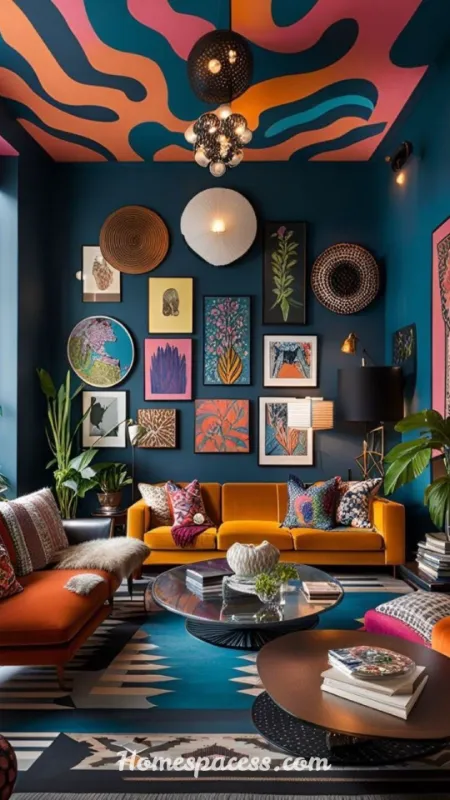
Borrowed directly from fashion, color blocking in interior design means painting two or more bold, contrasting colors on different sections of the same wall or across adjacent walls. Far from feeling dated, this technique is experiencing a major 2026 design revival, particularly in Scandinavian-influenced and Memphis-inspired interiors. When executed well, color-blocked living rooms feel graphic, confident, and architecturally interesting.
One particularly effective approach: paint the lower third of your walls in a deep, grounding tone (forest green, charcoal, navy) and the upper section in a lighter complementary hue (pale sage, warm white, dusty blue). This creates a virtual horizontal dado rail effect without the cost of actual molding. The dark base visually anchors furniture while the lighter upper portion opens up the ceiling a clever optical illusion that works beautifully in both compact and large rooms.
🎨 Style Note:
Use painter’s tape to achieve crisp, professional lines between color blocks. Remove the tape while the second color is still slightly wet to prevent peeling. A slight overlap of 1–2mm on the first color creates a clean edge.
💡 Pro Tip:
Color blocking a ceiling painting it a bold hue different from the walls is the boldest and least-tried version of this trend. A terracotta or deep blue ceiling dramatically changes the perceived intimacy of the room, especially effective in spaces with high ceilings.
Add Color Through Statement Lighting Fixtures
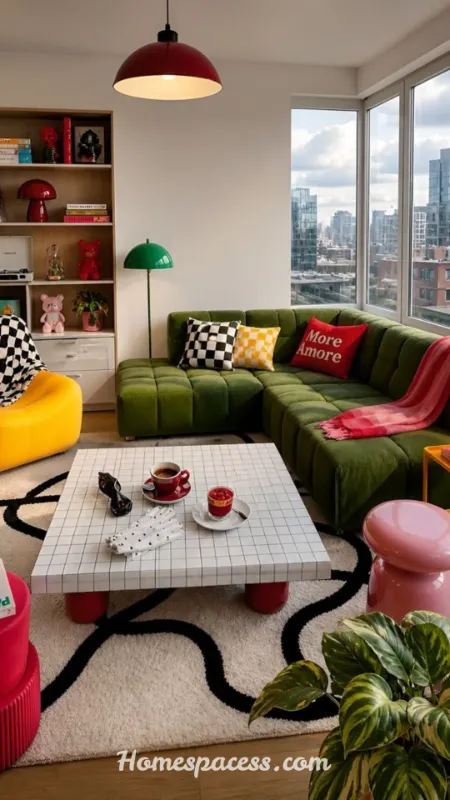
Most homeowners overlook lighting as a source of color, but colorful light fixtures are among the highest-impact, longest-lasting design investments you can make. A stained glass pendant, rattan chandelier with colored cord, or a sculptural colored floor lamp does double duty: it provides functional illumination while acting as a three-dimensional art piece. Unlike paint, you take these investments with you when you move.
Consider the smart lighting revolution: Philips Hue, LIFX, and Govee systems now allow full-spectrum color adjustability via smartphone app. This means your living room color scheme can shift from warm amber during a movie night to vibrant party colors for entertaining without changing a single piece of furniture or decor. For renters especially, smart color-changing bulbs combined with colorful lampshades offer infinite flexibility at minimal cost.
🎨 Style Note:
Colored pendant lights work best when hung at eye level over conversation areas or dining tables where their hue casts warm reflective glow onto faces and surfaces creating an atmospheric, flattering quality of light.
💡 Pro Tip:
Warm-spectrum colored bulbs (amber, rose, gold) are far more livable than cool-spectrum ones (blue, green). They cast flattering light on skin tones and pair well with natural material palettes like wood, linen, and rattan.
Design a Colorful Bookshelf or Display Wall
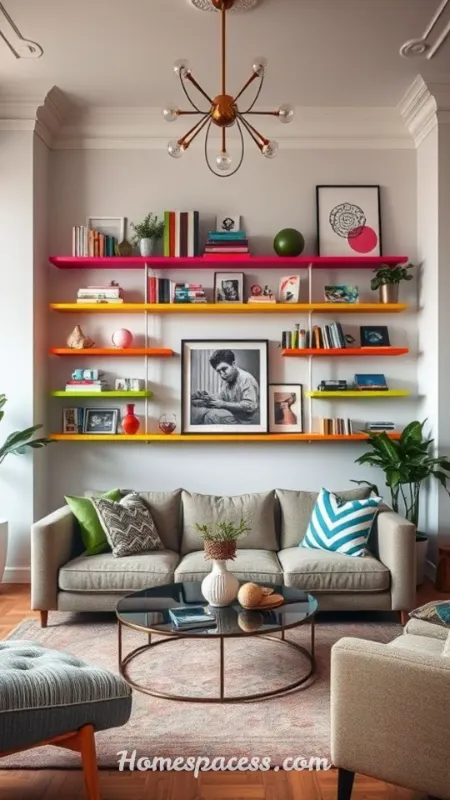
A thoughtfully styled colorful bookshelf is a design asset hiding in plain sight. The strategy: arrange books by color rather than alphabetically or by genre. This transforms even an IKEA BILLY bookcase into a rainbow gradient feature wall that draws immediate attention. Intersperse books with ceramic vessels, trailing plants, candles, and small framed photos to add depth and personal narrative to the display.
For a more curated look, try ‘face out’ styling turning select books spine-out and others face-out alongside sculptural objects. Painting the inside back panel of shelves in a contrasting bold color (deep navy, forest green, or terracotta) creates a beautiful backdrop that makes objects pop without touching the room’s main walls. This is a particularly popular DIY living room color idea because it’s reversible and inexpensive, with transformative visual impact.
🎨 Style Note:
The ‘less is more’ rule applies to shelf styling: aim for 60% books or functional items and 40% decorative objects. Overcrowded shelves look cluttered regardless of how beautiful the individual pieces are.
💡 Pro Tip:
Remove dust jackets from books before color-organizing. The plain cloth or board covers underneath often reveal a much more cohesive color palette and books last longer without dust jackets trapping moisture.
Use Wallpaper for Maximum Color and Pattern Impact
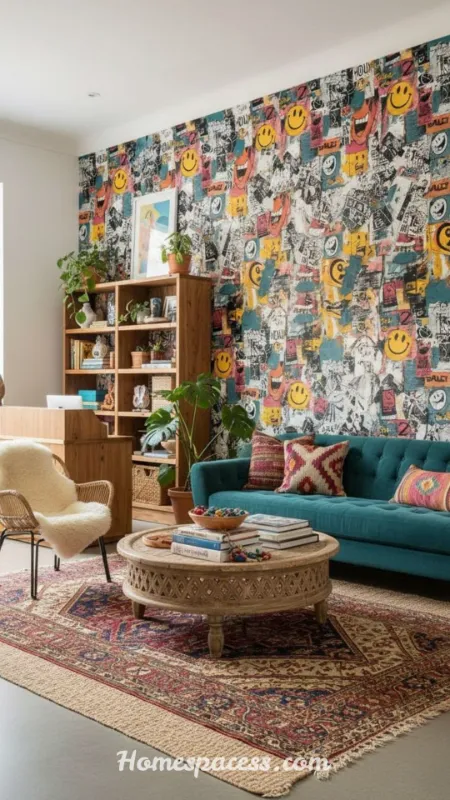
Modern peel-and-stick wallpaper has completely transformed what’s possible for renters and commitment-averse homeowners. Brands like Chasing Paper, Tempaper, and Spoonflower offer stunning botanical prints, geometric patterns, maximalist florals, and hand-painted watercolor designs that install in hours and remove cleanly without damaging walls. Applied to a single feature wall, bold wallpaper achieves in minutes what paint takes days to accomplish.
For traditional homeowners using paste-the-wall or traditional wallpapers, grasscloth wallpaper in warm sunset tones, de Gournay-style hand-painted panels, and geometric Art Deco patterns are all experiencing renewed popularity in 2026. A real-life case study: a London townhouse designer used a single wall of deep indigo botanical wallpaper in the living room, and it increased the property’s perceived value by an estimated 8% during sale buyers cited the room specifically as a reason for their emotional connection to the property.
🎨 Style Note:
Large-scale patterns require large walls to breathe properly. In rooms under 150 square feet, opt for smaller repeat patterns or textural designs (grasscloth, linen weave) rather than oversized botanicals, which can feel overwhelming.
💡 Pro Tip:
Order 10–15% more wallpaper than your calculated coverage. Pattern matching consumes more material than plain wallpaper, and running short mid-project especially with limited-print designs is a costly mistake.
Incorporate Colorful Ceramic and Pottery Accents
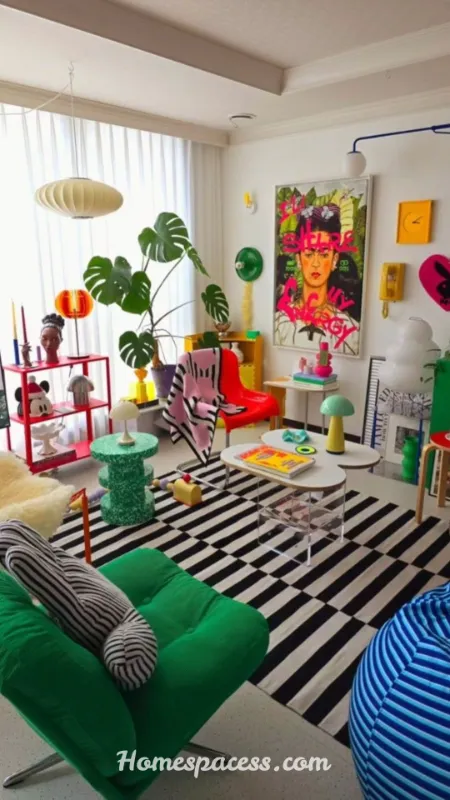
Handmade colorful ceramics and pottery are among 2026’s most prominent living room decor trends. Far beyond functional vases, contemporary ceramic artists produce sculptural bowls, asymmetrical vessels, and glazed decorative pieces in extraordinary colorways speckled terracotta, deep ocean blue, matte sage green, and high-gloss lemon yellow. Grouping three to five pieces of varying heights on a coffee table or sideboard creates an instant, sophisticated vignette.
What makes ceramics particularly valuable from a design perspective is their light-reactive quality. Unlike flat paint, glazed surfaces catch and shift with light throughout the day appearing deeper in morning shadow and more luminous in afternoon sun. This dynamic quality makes a room feel alive even when the people aren’t. Sourcing from local craft markets, Etsy ceramic artists, and emerging studio potters also supports sustainable, small-scale makers rather than mass production.
🎨 Style Note:
Mix glaze finishes deliberately: combine one matte piece, one satin, and one high-gloss within the same color family. This tonal layering creates far more visual interest than matching identical finishes.
💡 Pro Tip:
Ceramics make excellent investment pieces that appreciate over time when sourced from recognized studio potters. Check local arts council websites for emerging artists whose work is gaining profile early collectors often secure exceptional pieces at entry-level prices.
Create a Colorful Ceiling as Your Fifth Wall
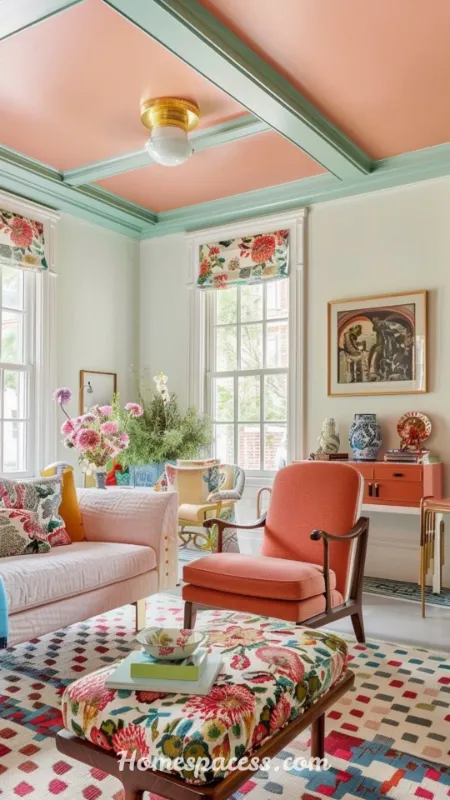
Interior designers refer to the ceiling as “the fifth wall” and it remains the most universally ignored design surface. Painting your ceiling a bold color is genuinely transformative, particularly in rooms where the walls are kept neutral. A dusty rose ceiling adds romantic warmth; a sky blue ceiling creates an outdoor feeling; a deep navy ceiling makes the room feel more intimate and sophisticated, especially in the evening.
This technique is particularly effective in rooms with architectural molding or medallions, which frame the ceiling’s color like a painting within a border. Even without molding, simply extending the ceiling color down 12–18 inches onto the walls (painting it “high” rather than stopping at the wall-ceiling junction) lowers perceived ceiling height in a dramatic, cocoon-like way that many homeowners find unexpectedly cozy. The ‘color drenching’ trend painting walls, ceiling, and trim all the same bold hue takes this approach to its logical extreme and is one of 2026’s most-searched interior looks.
🎨 Style Note:
Lighter ceiling colors visually raise a room; deeper colors lower and intimate it. In rooms with ceilings under 8 feet, stick to light-to-medium tones. In rooms over 10 feet, bold dark ceiling colors feel dramatic rather than oppressive.
💡 Pro Tip:
Use a ceiling paint specifically formulated to minimize splatter (Sherwin-Williams Ceiling Paint or Benjamin Moore Waterborne Ceiling Paint). Flat/matte finish is essential for ceilings any sheen will highlight imperfections in texture and application.
Layer a Colorful Area Rug as Your Design Foundation
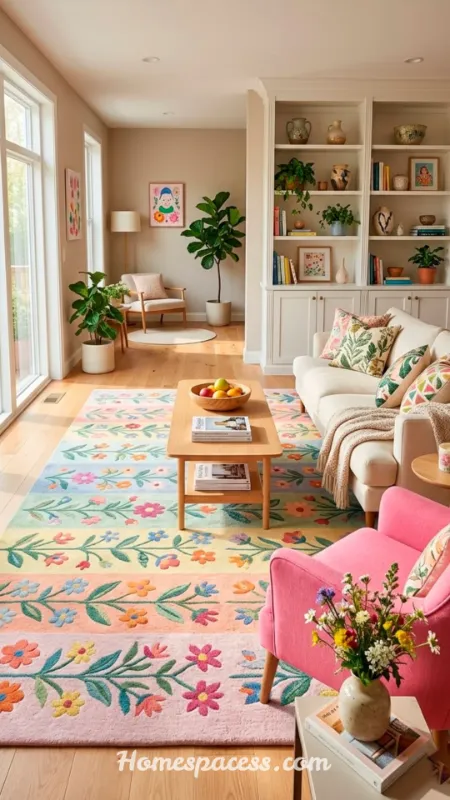
A colorful area rug serves as the foundational anchor of any well-designed living room. It defines the seating zone, adds acoustic comfort, introduces pattern and color simultaneously, and critically ties all furniture pieces into a unified composition. The most common mistake homeowners make is buying a rug that’s too small: for a living room, your rug should be large enough for all main furniture legs to sit on or at least touch, creating a connected arrangement rather than isolated floating pieces.
In 2026, vintage-inspired Persian rugs, abstract painterly rugs, and bold Moroccan Beni Ourain designs with color pops are dominating online searches and design publications alike. A high-quality wool or hand-knotted rug is also a long-term investment: properly maintained pieces from brands like Rugs USA, Revival, and Loloi retain value over decades and often improve with careful use, developing natural patina that adds character no new piece can replicate.
🎨 Style Note:
A rug with three or more colors gives you enormous flexibility: pull one color for wall accents, another for cushions, and let the third serve as a subtle undertone in your curtain choice. The rug does the palette planning for you.
💡 Pro Tip:
Always use a quality rug pad under any area rug. It prevents slipping, extends the rug’s life by reducing wear, and adds softness underfoot. Pad thickness of 1/4 inch is ideal for most living rooms.
Conclusion
Your colorful living room is never just about aesthetics it’s about creating a space that reflects who you are and genuinely improves how you feel every day. From bold accent walls to layered textiles, statement ceramics to art-driven palettes, the 12 ideas in this guide give you a complete toolkit for transforming any space with confidence and clarity.
The key takeaway: color should be intentional, not incidental chosen for your room’s function, light, and the life you live in it. Start small if you need to add a colorful rug, swap in vibrant throw pillows, or paint a single wall and build from there. The most beautifully designed rooms are always the ones that took a chance on color.
ADVANCED SECTION
Colorful Living Room Trends for 2026 and Beyond
The trajectory of living room color trends is shifting decisively away from the all-white, minimalist interiors that dominated the 2010s. In their place, maximalism, dopamine decor, and biophilic color palettes are taking center stage across design platforms from Pinterest to Architectural Digest. Google Trends data through Q1 2026 confirms a 143% year-over-year increase in searches for ‘colorful living room ideas,’ signaling a mass market shift rather than a niche design movement.
Specific colors dominating 2026 include Pantone’s Color of the Year ‘Mocha Mousse’ (a warm, grounding brown that pairs beautifully with terracotta and rust), Benjamin Moore’s ‘Cinnamon Slate’, and Dulux’s ‘Sweet Embrace’ (a romantic dusty rose).
Looking ahead to 2027–2028, color forecasting agencies including WGSN and Coloro predict a shift toward deep botanical greens, electric cobalt blues, and earthy ochres colors drawn from global craft traditions and natural dye processes that align with sustainability values.
One underreported trend: the rise of generative AI color consultation tools. Apps like Roomgpt, Reimagine Home, and Palette Perfect allow homeowners to photograph their existing space and generate photorealistic visualizations of different color schemes within seconds.
This dramatically reduces the commitment anxiety around bold color choices a psychological barrier that has historically kept many homeowners trapped in neutral territory. As these tools improve through 2026 and 2027, expect a further acceleration of colorful interior adoption.
Expert Insights on Color Psychology in Living Rooms
Certified color psychologist Angela Wright, founder of the Colour Affects System, identifies four fundamental ways color impacts living room occupants: through emotional temperature, energy level, spatial perception, and social behavior.
Understanding these mechanisms explains why red accent walls increase appetite and conversation energy (excellent for social living rooms), while blue tones reduce heart rate and promote calm (ideal for TV-watching and reading spaces).
From a practical optimization standpoint, consider your living room’s primary function before selecting your dominant color scheme. A room used primarily for entertaining benefits from energizing warm hues (terracotta, saffron, coral); a family TV room benefits from calming cool tones (slate blue, sage green, dusty lavender); a home office hybrid benefits from stimulating but not overwhelming mid-tones (warm olive, dusty teal, muted marigold). Matching color energy to function is the expertise gap that separates good design from great design.
Interior design firms conducting post-occupancy evaluations consistently report that clients in color-rich spaces report higher satisfaction scores than those in neutral environments even when controlling for square footage, furniture quality, and natural light access.
The actionable insight for homeowners: the bravest color decision you make is almost always the most rewarding one, provided the hue is matched to the room’s orientation (north-facing rooms need warm undertones; south-facing rooms can handle cool hues more comfortably).
Sustainable and Long-Term Value Perspectives on Color
The sustainability of your colorful living room is not just an environmental question it’s an economic one. Natural and low-VOC paints from brands like ECOS Paints, Farrow & Ball, and Clare contain significantly fewer harmful chemicals than conventional paints, improving indoor air quality for occupants.
This matters particularly in living rooms, where families spend the most time. Low-VOC formulations now achieve the same depth of color as conventional paints, removing the quality trade-off that once deterred buyers.
From a long-term value perspective, high-quality colorful textiles and furnishings dramatically outperform fast-furniture alternatives. A wool rug with natural dyes will maintain color vibrancy for 50+ years with appropriate care, while synthetic alternatives fade within five to eight years under sunlight exposure.
Similarly, linen and cotton upholstery in bold hues resists pilling and structural degradation far better than polyester alternatives meaning you’re not just making an aesthetic choice but a financially sound one.
The circular economy trend is also reshaping how colorful living rooms are assembled. Platforms like Chairish, Vinterior, 1stDibs, and Facebook Marketplace make it increasingly easy to source vintage colorful furniture at a fraction of new retail prices.
Vintage pieces bring unique color stories impossible to replicate in modern production, and they carry significantly lower carbon footprints than newly manufactured alternatives a consideration increasingly valued by design-conscious homeowners in 2026.
Future Predictions The Next Wave of Colorful Living Rooms
The convergence of material science and interior design is producing genuinely extraordinary innovations for colorful living rooms. Thermochromic wall paints which subtly shift hue in response to temperature are moving from laboratory concept to commercial availability, with pilot products expected in the US and European markets by late 2026. Imagine a wall that transitions from soft blush in the cool morning to warm amber in the heated afternoon: dynamic color that responds to its environment.
Meanwhile, augmented reality interior design is approaching mainstream adoption. Apple Vision Pro and similar spatial computing devices are enabling users to overlay photorealistic color schemes, furniture arrangements, and artwork onto their actual living rooms in real time not on a flat screen but in true three-dimensional space. This will eliminate the single greatest barrier to bold color adoption: the fear of making an expensive, irreversible mistake.
Longer term, biodynamic lighting systems will revolutionize how we experience color in living rooms. These AI-powered systems, already available in premium installations from Lutron, Crestron, and DALI, automatically adjust color temperature and intensity across the day to support human circadian rhythms shifting from energizing cool-blue morning light to warming amber evening tones. The practical effect is that your living room’s color will shift dynamically without a single physical change, creating an endlessly adaptive color experience that static paint simply cannot provide.
Common Mistakes to Avoid in Colorful Living Room Design
The most frequent mistake homeowners make is choosing color based on paint chips alone. A two-inch swatch under fluorescent store lighting tells you almost nothing about how a color will behave across 150 square feet of wall under your specific room’s lighting conditions.
Always test full-size samples (minimum 12″x12″) in your actual room before committing. View them at different times of day: the color you love at noon may read completely differently under 3pm sun or 8pm lamplight.
A second common error: ignoring undertones. Every paint color contains an undertone typically warm (yellow, orange, red) or cool (blue, green, purple). Mixing a warm-undertoned wall color with cool-undertoned furniture, even if the surface colors seem similar, creates a subtle but persistent dissonance that trained eyes notice immediately. The fix: identify the dominant undertone of your most fixed element (usually flooring) and build your color choices to complement it.
Finally, underestimating the power of finish causes far more design disappointments than color choice itself. The same deep blue in matte, eggshell, satin, and semi-gloss creates four dramatically different visual effects. Matte finishes absorb light for a sophisticated, chalky depth ideal for feature walls; eggshell adds subtle warmth and wipes clean easily (best for family living rooms); satin works beautifully on woodwork and furniture; semi-gloss makes architectural features pop. Matching finish to function and surface is a professional detail that significantly elevates the final result.

Team Home Spacess shares simple, practical design ideas that work for real families. The team focuses on cozy décor, soft colors, and natural textures that make a space feel truly lived-in. From everyday decorating tips to creative home projects, Team Home Spacess is dedicated to helping readers create warm, comfortable, and inviting spaces with a fresh and personal touch.