

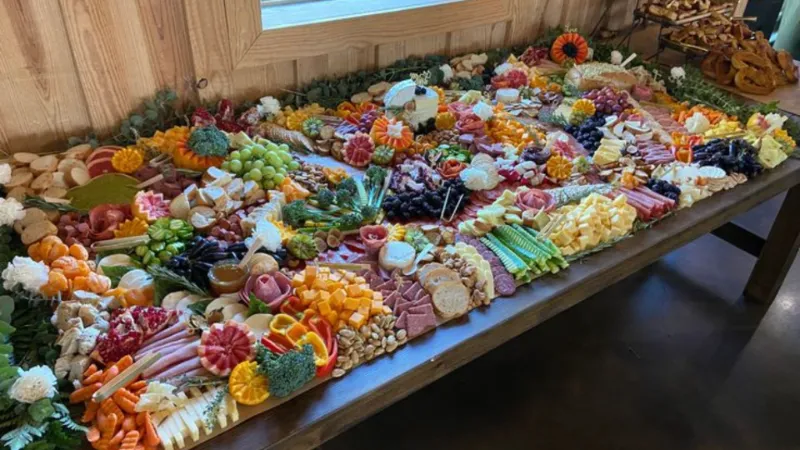
Planning a party and dreading another boring snack platter? A grazing table solves that problem instantly. Unlike a single tray of cheese and crackers, a well-built grazing table turns food into the centerpiece of the room, inviting guests to graze, chat, and linger.
This guide walks through nine practical grazing table ideas, along with styling notes, pro tips, and real-world scenarios you can copy for your next event. Whether you’re hosting a birthday, wedding, or casual get-together, these ideas will help you build a spread that looks professional without a caterer’s budget.
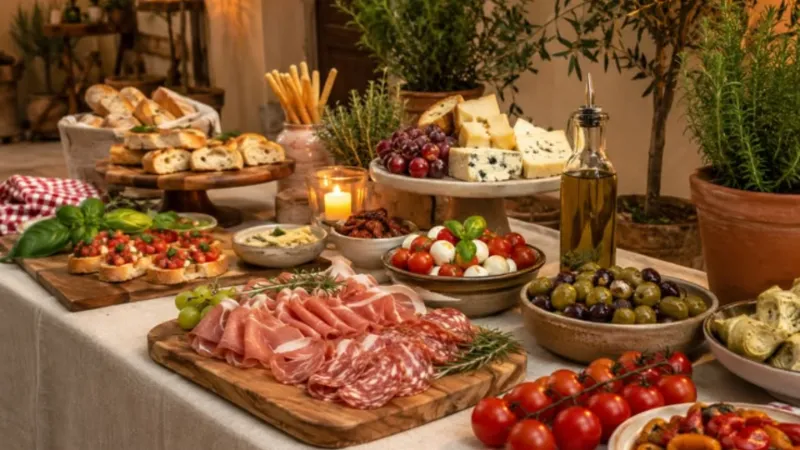
By the end, you’ll know exactly how to layer textures, balance colors, and manage food safety for a grazing table setup that keeps people talking long after the party ends.
Classic Charcuterie-Style Grazing Table
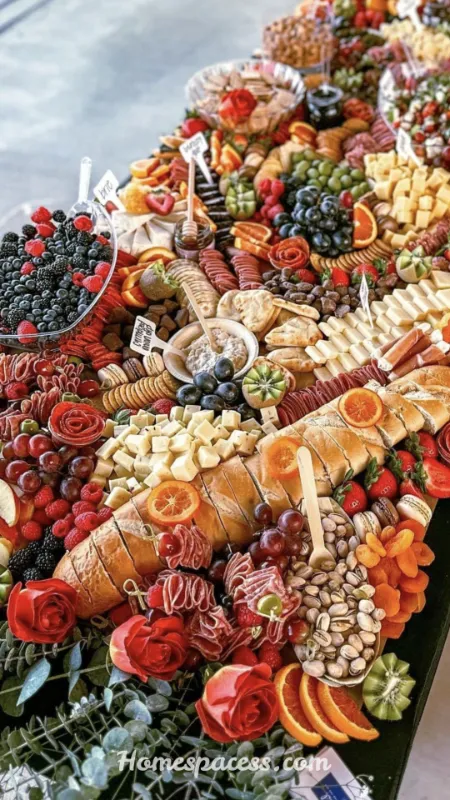
The charcuterie-style spread remains one of the most requested styles for a reason. Cured meats, aged cheeses, and crusty bread form a base that feels indulgent yet familiar. For example, a host planning a 20-person anniversary dinner might layer prosciutto, salami, and soppressata around wedges of brie and manchego for instant visual contrast.
Balance is key: pair salty meats with something sweet, like fig jam or honeycomb, so every bite feels complete. A board built this way rarely needs extra explanation from the host, since guests instinctively know how to build their own plate.
Consider a mini case study: a corporate holiday party swapped a plated appetizer course for this charcuterie-style spread and reported guests stayed 40 minutes longer near the food area, simply because the spread encouraged mingling instead of sitting down to eat.
| Style Note: Use wooden boards or slate slabs as your base layer, then build height with small risers so the table doesn’t look flat from a distance. |
| Pro Tip: Buy cheese and meat the day before, but don’t slice everything until two hours before guests arrive to keep edges from drying out. |
See Related Articles: Front Door Decor Ideas to Instantly Boost Your Curb Appeal
Sweet Dessert Grazing Table for Celebrations
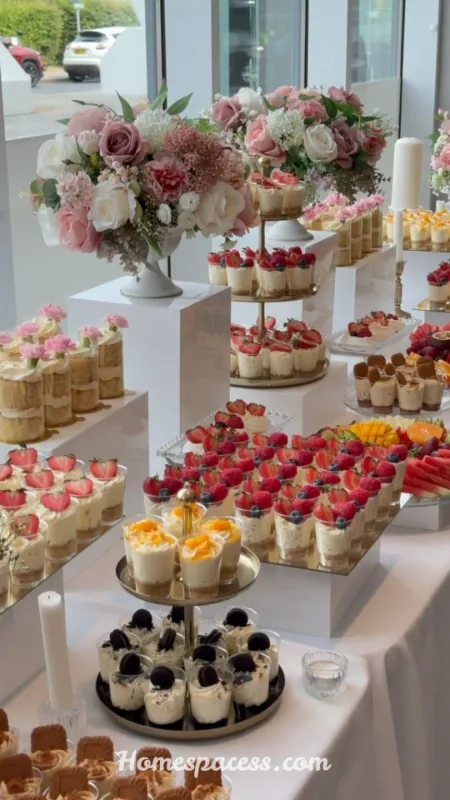
A dessert board works beautifully for birthdays, baby showers, and bridal events. Instead of one cake, guests choose from mini tarts, macarons, chocolate-dipped fruit, and bite-sized brownies. This variety means picky eaters and adventurous ones both leave happy.
For instance, a baby shower host once arranged a pastel-themed dessert display with meringue kisses, sugar cookies, and fresh berries, matching the nursery color scheme exactly. Guests photographed the spread more than the gifts, which extended the event’s reach on social media.
Keep portion sizes small on this sweet spread so guests feel comfortable sampling several items instead of committing to one large dessert. This small-bites approach also reduces food waste at the end of the night.
| Style Note: Group desserts by color rather than type, since a rainbow gradient effect photographs far better than items scattered randomly. |
| Pro Tip: Place a small chalkboard label near allergen-heavy items like nuts or gluten so guests with dietary restrictions can graze with confidence. |
You May Also Like: Under Stairs Storage Ideas: Smart Ways to Transform Wasted Space into Functional Storage
Breakfast and Brunch Grazing Table
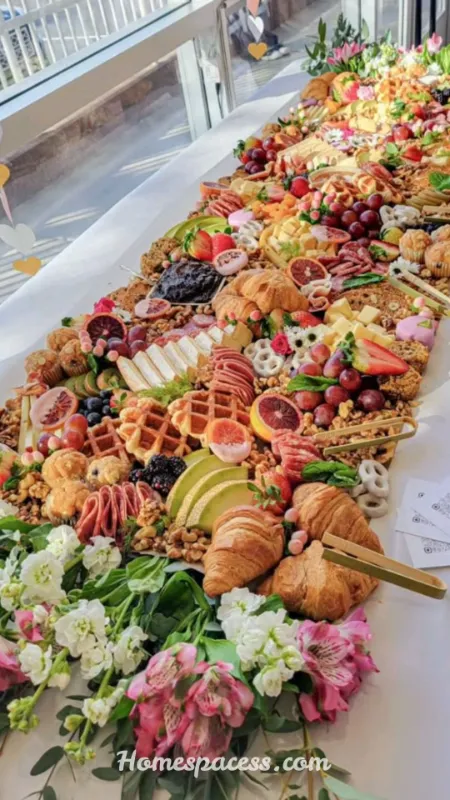
A brunch spread replaces the standard buffet line with a relaxed, help-yourself display. Think mini pastries, fresh fruit, yogurt parfaits, and a small waffle station. This format suits bridal showers, holiday mornings, or weekend gatherings where guests arrive at different times.
One real-life scenario: a family hosting a Mother’s Day brunch built their spread around a make-your-own mimosa bar, surrounded by croissants, smoked salmon, and deviled eggs. Because nothing required plating from the kitchen, the host actually got to sit and enjoy the meal too.
This style also handles staggered arrival times well, since a breakfast board stays appealing even if guests trickle in over an hour instead of arriving all at once.
| Style Note: Use tiered stands for pastries to save table surface area and create visual movement across the display. |
| Pro Tip: Keep hot items like mini quiches on a warming tray at the edge of the table so the rest of the spread stays cool and fresh longer. |
Recommended for You: Front Door Entryway Ideas: Stunning Ways to Create a Welcoming Home Entrance
Mediterranean-Inspired Grazing Board
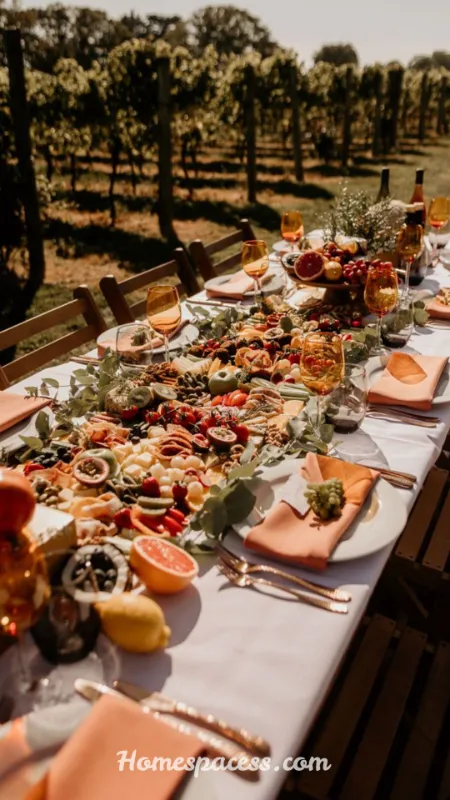
A Mediterranean-inspired board leans on hummus, olives, roasted peppers, and warm pita for a lighter, herb-forward alternative to heavy cheese boards. This option appeals to guests looking for vegetarian-friendly or lighter fare without sacrificing flavor or presentation.
For example, a book club hosting a themed dinner built their spread around a central bowl of tzatziki, surrounded by stuffed grape leaves, marinated artichokes, and fresh cucumber slices. The color palette of greens, purples, and creams created a naturally elegant look with almost no extra styling effort.
Because most Mediterranean ingredients hold up well at room temperature, this idea is especially forgiving for outdoor events or long cocktail hours.
| Style Note: Use small ceramic bowls nested into the board for dips, which keeps sauces contained while still feeling integrated into the overall spread. |
| Pro Tip: Drizzle olive oil and sprinkle fresh herbs just before guests arrive, since this simple step makes the entire board look freshly prepared. |
Discover More: Inspiring Yoga Room Ideas to Create Your Perfect Sanctuary at Home
Seasonal and Holiday-Themed Grazing Tables
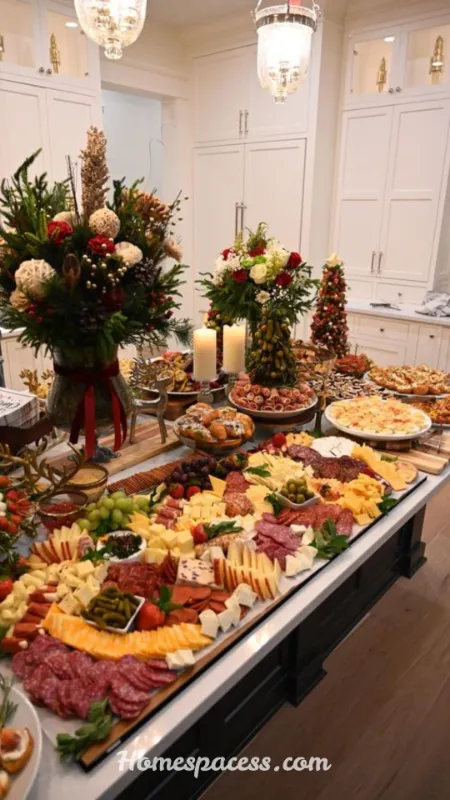
Tying a themed spread to a season or holiday instantly elevates the party without extra cost. A fall gathering might feature roasted squash, pomegranate seeds, and spiced nuts, while a summer party leans into watermelon, berries, and fresh mint.
A mini case study worth noting: a neighborhood Halloween party used an all-orange-and-black display with cheddar cubes, black olives, and candy corn grapes arranged in stripes. The visual gag became the most talked-about detail of the entire party, proving that theme execution often matters more than ingredient cost.
Seasonal ideas also make grocery shopping easier, since in-season produce tends to be fresher, cheaper, and more flavorful than out-of-season substitutes.
| Style Note: Match linens and small props (pumpkins, ornaments, flowers) to the season, but keep them off to the side so they don’t compete with the food itself. |
| Pro Tip: Choose one seasonal color as an accent rather than three or four, since a single strong color reads as intentional rather than cluttered. |
More on This Topic: Indoor Plants Ideas to Bring Life, Color, and Freshness to Your Home
Kid-Friendly Grazing Table
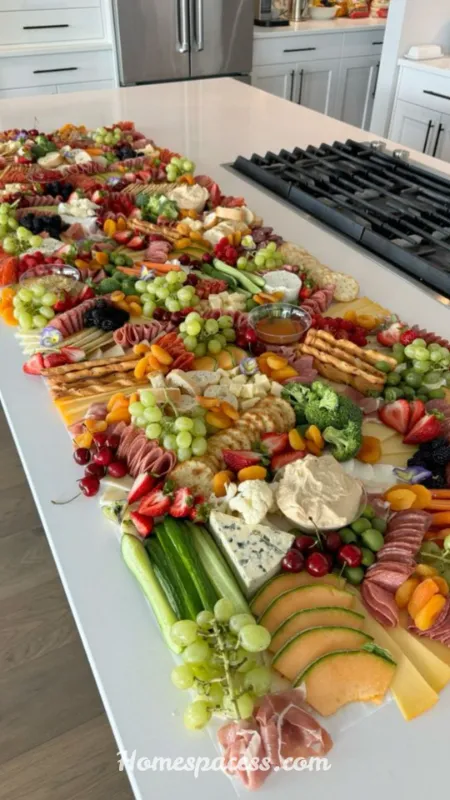
A kid-friendly spread trades sharp cheeses and cured meats for familiar favorites like mini sandwiches, fruit skewers, popcorn, and cheese cubes shaped with cookie cutters. Familiar shapes and mild flavors mean children actually eat from the spread instead of ignoring it.
For example, a birthday party host built a dinosaur-themed display using green grapes as ‘dino eggs’ and pretzel sticks as ‘bones,’ which turned snack time into part of the entertainment. Parents appreciated that the setup kept kids occupied without needing constant supervision.
Because children graze in smaller, more frequent bites, keeping portions bite-sized on this type of board reduces mess and food waste significantly.
| Style Note: Use bright, primary-colored plates and napkins to signal ‘this section is for kids,’ which naturally separates it from the adult spread. |
| Pro Tip: Skip anything with small hard candies or choking hazards for parties with toddlers, and always label items containing common allergens like peanuts. |
See Also: Cozy Basement Bar Ideas for the Perfect Entertainment Space
Wedding and Formal Event Grazing Table
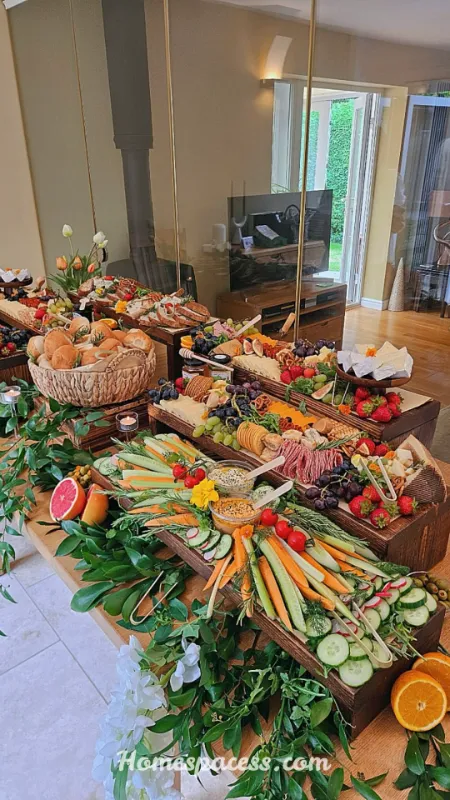
A wedding-day spread replaces or supplements a plated appetizer course with an elevated, self-serve display. Think aged cheeses, truffle honey, fresh figs, and delicate crackers arranged with florals that echo the wedding’s color scheme.
One real-world scenario: a couple planning an outdoor autumn wedding used their spread as both catering and décor, saving on separate centerpiece costs. Guests described it as one of the most memorable parts of the reception, since it doubled as a conversation piece during cocktail hour.
For formal events, portion control still matters. A well-planned display should account for roughly two to three ounces of food per guest during a cocktail hour to avoid running short.
| Style Note: Incorporate fresh flowers directly onto the board using floral picks in water tubes, which keeps blooms fresh without touching the food. |
| Pro Tip: Hire or assign someone to restock the table every 45 minutes during long receptions, since a half-empty spread photographs poorly in candid shots. |
Must Read This Article: Bedside Table Ideas That Make Every Bedroom Feel More Luxurious
Budget-Friendly Grazing Table for Small Gatherings
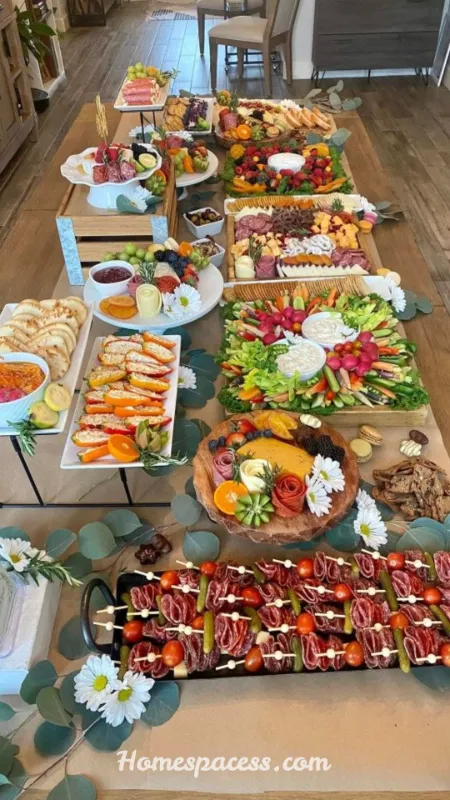
You don’t need an elaborate spread to create an impressive budget-friendly display. Focus on two or three quality items, like a good cheese, a seasonal fruit, and a homemade dip, then fill in with pantry staples like crackers, nuts, and pretzels.
For instance, a college roommate group hosting a game night built a spread for under $30 using store-brand cheese, grapes, and a jar of salsa alongside chips. Thoughtful arrangement, not ingredient cost, made the spread look far more expensive than it actually was.
This approach proves that this kind of idea doesn’t require luxury ingredients, only intentional layout, color contrast, and a few fresh garnishes like herbs or citrus slices.
| Style Note: Use a large cutting board or clean baking sheet lined with parchment paper as a free alternative to a specialty grazing board. |
| Pro Tip: Buy filler items like crackers and nuts in bulk, since these stretch further and cost less per serving than meat and cheese. |
Don’t Miss This Topic: Smart Library Office Room Ideas to Design a Beautiful and Functional Reading Space
Interactive DIY Grazing Table Stations
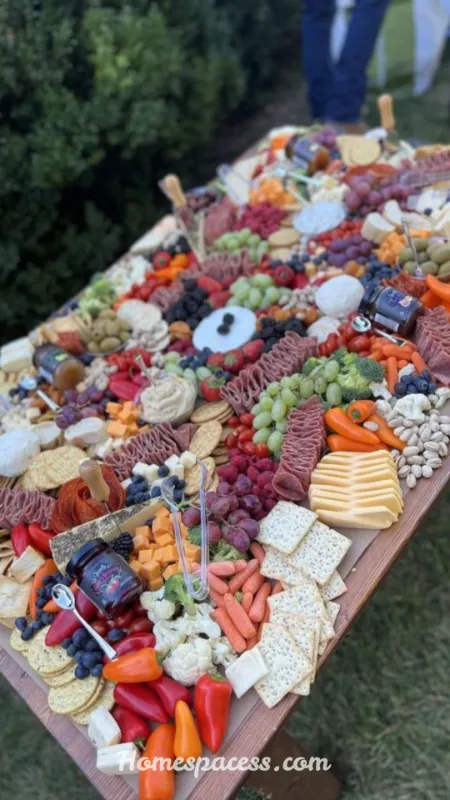
An interactive food station invites guests to build their own combinations, such as a taco bar, pizza board, or build-your-own skewer station. This format works well for casual parties where engagement matters as much as the food itself.
A mini case study: a backyard summer party set up a DIY skewer station beside the main spread, with skewers, grilled vegetables, and dipping sauces guests assembled themselves. The activity gave guests something to do with their hands, which reduced awkward small talk during the early part of the event.
Interactive station ideas also cut down on food waste, since guests only take what they’ll actually assemble and eat, rather than piling a plate with pre-made items.
| Style Note: Label each station clearly with small signage so guests understand what to do without needing verbal instructions from the host. |
| Pro Tip: Keep raw and cooked components on separate boards at DIY stations to avoid cross-contamination, especially with meat or seafood skewers. |
Conclusion
A great grazing table is really about balance: color, texture, portion size, and a little personality from the host. From classic charcuterie to budget-friendly spreads, these ideas prove that an impressive display doesn’t require a professional caterer or a huge budget. The real takeaway is simple: start with a theme, layer textures intentionally, and refill often. Try one of these ideas for your next gathering, and watch how quickly it becomes the centerpiece everyone remembers.
Grazing Table Trends for 2026 and Beyond
In 2026, grazing table trends are shifting toward smaller, personalized ‘grazing boxes’ for individual guests, driven by post-pandemic hygiene awareness. Instead of one communal spread, hosts increasingly offer single-serve boxes styled like a mini board, giving guests the same visual appeal with less shared surface contact.
Another rising trend is the fusion spread, blending cuisines like Korean-Mediterranean or Mexican-charcuterie combinations. This reflects a broader shift in event catering toward global flavors rather than the traditional European cheese-and-meat format that dominated the last decade.
Sustainability-conscious hosts are also driving demand for locally sourced ingredients on their setup, with farmers’ market produce replacing imported specialty items as a way to reduce cost and environmental impact simultaneously.
Expert Tips for Optimizing Your Grazing Table Setup
Professional caterers recommend building a spread in layers, starting with large anchor items like cheese wheels or bread loaves, then filling gaps with smaller items like berries and nuts. This layered approach, sometimes called the ‘landscaping method,’ prevents awkward empty spaces and creates natural visual flow.
Temperature control is often overlooked. Perishable items on a board should not sit at room temperature for more than two hours, according to general food safety guidance, so experienced hosts stagger the table’s setup and refill smaller portions throughout the event instead of laying everything out at once.
Another expert insight: odd numbers create more visual interest than even ones. Arranging three or five cheese varieties instead of two or four gives a spread a more organic, professionally styled look without any added cost.
Sustainability and Long-Term Value of Grazing Tables
A well-planned spread can actually reduce food waste compared to traditional catering, since guests serve themselves in smaller portions and only take what they intend to eat. Reusable wooden boards, ceramic bowls, and cloth napkins also cut down on single-use plastic compared to individually plated courses.
From a cost perspective, this kind of setup often delivers better long-term value than hiring a full-service caterer for casual events, since boards, risers, and serving pieces can be reused for future gatherings. This makes the initial investment in quality serving pieces pay off across multiple events.
Choosing seasonal, local ingredients for a board also supports smaller producers and typically costs less than imported specialty items, aligning budget-friendly hosting with more sustainable sourcing practices.
Future Innovations in Grazing Table Design
Looking ahead, expect this kind of party planning to incorporate more modular, tech-assisted tools, such as apps that calculate exact quantities per guest based on event type and duration. This reduces both over-ordering and the awkward experience of running out of food mid-event.
Sustainable packaging innovations, like edible garnish cups and compostable risers, are also likely to replace plastic display pieces currently used to add height to a spread. This shift aligns with broader catering industry moves toward zero-waste event styling.
Some caterers are already experimenting with modular spread kits that ship pre-portioned ingredients with reusable boards, letting home hosts recreate professional-level spreads without specialized training or bulk grocery runs.
Common Mistakes to Avoid When Building a Grazing Table
The most common mistake is overcrowding the spread with too many similar items, which flattens visual interest and overwhelms guests with choice. A better approach limits the spread to a handful of standout ingredients supported by simple fillers like crackers, nuts, and fresh herbs.
Many hosts also underestimate quantities, especially for a board serving as a full meal replacement rather than an appetizer. As a general guideline, plan for four to six ounces of food per guest for a meal-length event, adjusting based on the surrounding menu.
Finally, skipping food safety basics is a frequent oversight. Leaving perishable items out too long, failing to label allergens, or placing raw and cooked foods too close together can turn a beautiful spread into a health risk if not managed carefully.

Team Home Spacess shares simple, practical design ideas that work for real families. The team focuses on cozy décor, soft colors, and natural textures that make a space feel truly lived-in. From everyday decorating tips to creative home projects, Team Home Spacess is dedicated to helping readers create warm, comfortable, and inviting spaces with a fresh and personal touch.