

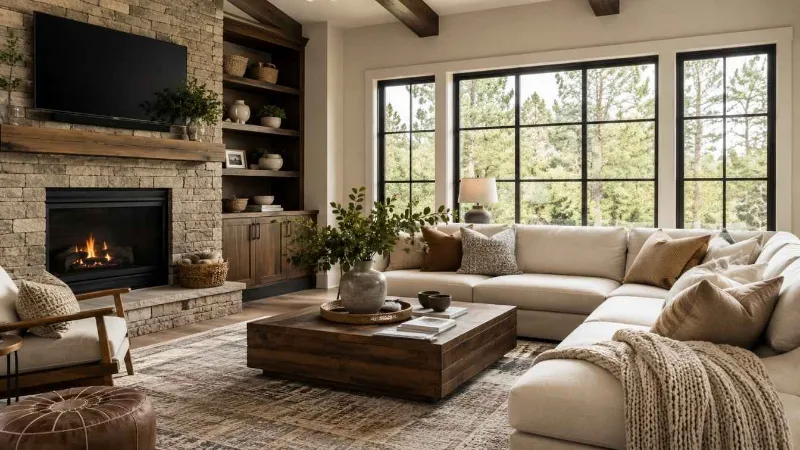
Here’s a problem most homeowners face: the family room is supposed to be the heart of the home but instead it becomes a dumping ground for toys, tangled cords, mismatched furniture, and years of impulse purchases. It’s the room everyone uses, but rarely the room anyone loves.
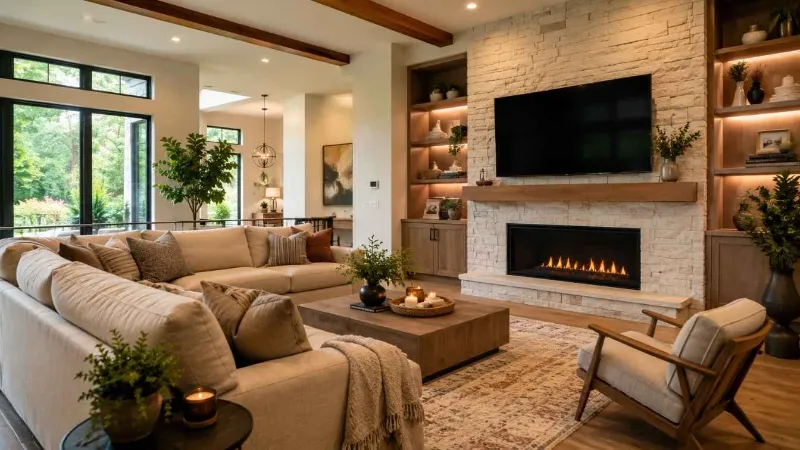
This guide changes that. Whether you’re starting from scratch or refreshing a tired space, these 8 family room ideas offer real, actionable direction grounded in current design principles, practical living needs, and the style trends shaping 2026 and beyond. No fluff, no filler. Just ideas that genuinely work.
Create a Flexible, Multi-Zone Layout
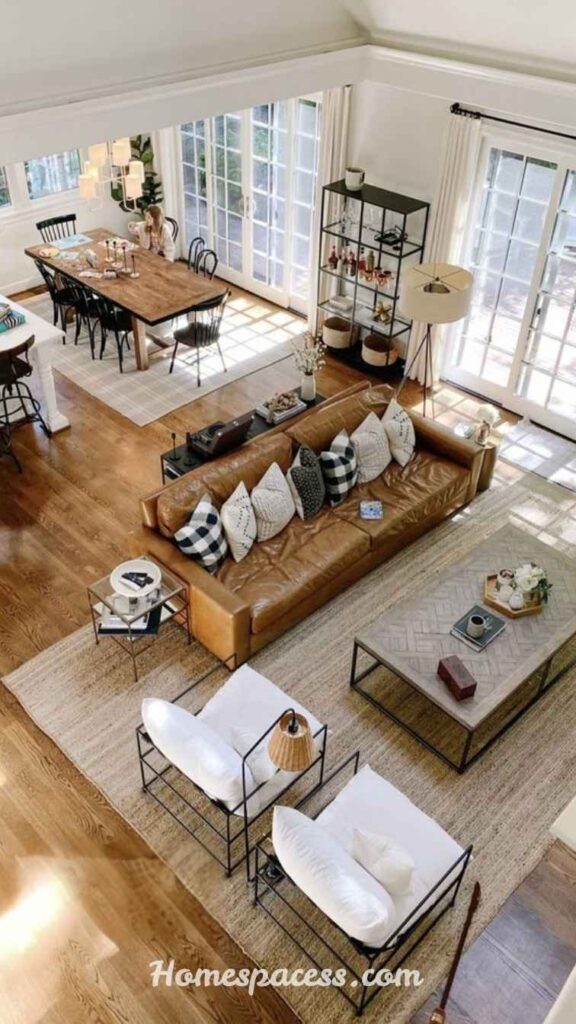
The biggest mistake in family room design is treating it as a single-purpose space. A well-designed family room actually contains multiple zones a conversation area, a media zone, perhaps a reading nook each serving a distinct function without feeling chaotic. This “zoning” approach is the foundation of every great family room layout, and it works equally well in small apartments and large open-plan homes.
The key is defining each zone using furniture placement rather than walls. A sofa angled slightly away from the TV creates a natural conversation pit. A floor lamp and an armchair tucked near a window signals a reading zone without needing a divider. Area rugs are particularly powerful here a 8×10 rug under the seating group anchors the main living zone, while a smaller rug beneath a games table defines a secondary activity area.
Mini-scenario: Imagine a 14×18 ft family room shared by two parents and three kids. By placing a large sectional sofa facing the TV and a low bookshelf perpendicular to the room’s edge, they created a natural homework-and-games corner behind the sofa visible to parents, but quietly separate from screen time. No renovation required.
Expert tip: When zoning, maintain at least 36 inches of clear walking pathway between any two furniture groups. This prevents the “furniture maze” effect that makes rooms feel cramped even when they’re large.
Must Read: Trending Basement Family Room Ideas for Comfortable Home Living
Invest in a Statement Sofa With Durable Fabric
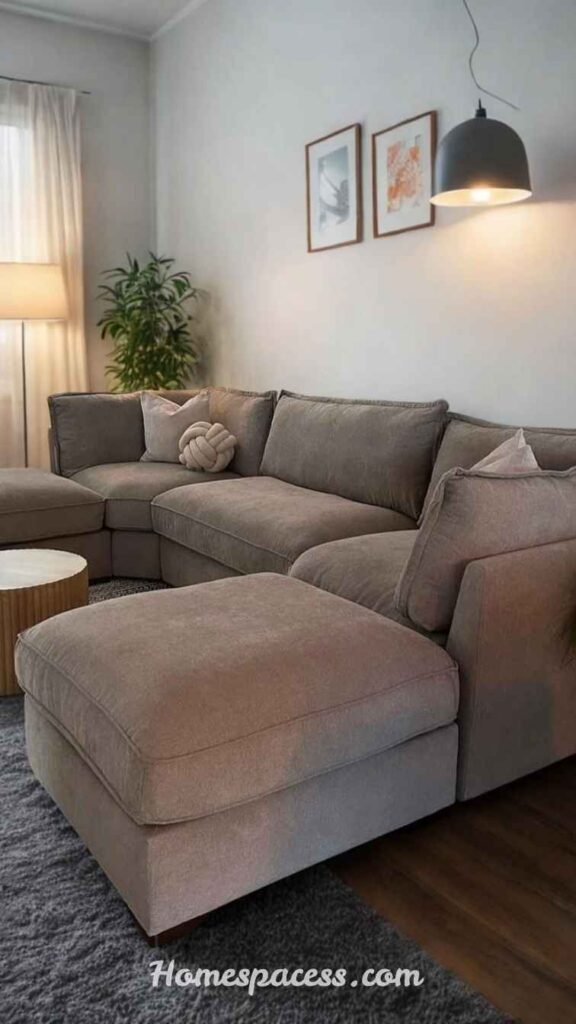
In a family room, the sofa is not just furniture it’s infrastructure. Families with children or pets often learn this lesson the hard way, replacing budget sofas every few years because the fabric pilled, the foam compressed, or the cushions lost their shape. Investing once in a high-quality sofa with performance fabric is both the smarter and more economical choice over a five-year horizon.
Look for sofas with kiln-dried hardwood frames and high-resilience foam rated at 1.8 lb/cubic foot or higher. For fabric, performance weaves like Crypton, Sunbrella, or double-rub fabrics rated above 30,000 double rubs offer genuine stain and wear resistance not just a marketing claim. Neutral tones like warm greige, slate blue, or deep olive also give you the most flexibility as your décor evolves over the years.
From a design standpoint, a statement sofa doesn’t need to mean loud. A generous, well-proportioned sectional in a textured natural linen weave makes an equally strong statement through quality and scale. Pair it with slim-leg coffee tables to keep the visual weight balanced, and choose leg finishes (brass, black steel, walnut) that you can echo in other room elements for cohesion.
Expert tip: Before buying, ask for a fabric sample and rub it with a damp cloth, then a dry cloth. If it pills or fades, it won’t survive family life. The best performance fabrics barely show the treatment.
Read More: Stunning Staircase Decor Ideas for Small Spaces and Narrow Halls
Build a Smart, Hidden Storage System
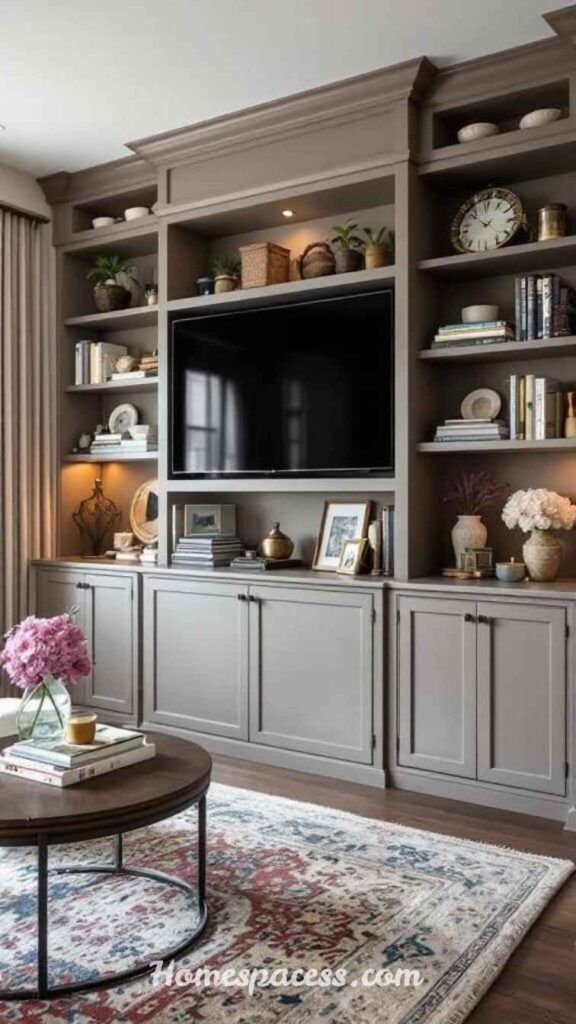
Clutter is the number one enemy of a beautiful family room and the number one cause of clutter is insufficient or inconvenient storage. The most effective family room storage systems share two qualities: they’re generous enough to hold everything the room generates, and they’re hidden enough to maintain visual calm. This usually means thinking beyond the standard bookshelf.
Built-in cabinetry flanking a fireplace or TV wall remains the gold standard. Floor-to-ceiling units with closed lower cabinets (for toys, games, cables) and open upper shelves (for books, plants, and decorative objects) give you the best of both worlds. For those who can’t renovate, a media credenza with interior shelving, an upholstered ottoman with a hidden storage compartment, and a set of woven baskets that double as décor can replicate much of the same effect at a fraction of the cost.
Mini-scenario: A family of four replaced their open entertainment unit with a custom media cabinet featuring a lift-top TV compartment and deep lower drawers. Result: the room went from “organized chaos” to genuinely tidy without getting rid of a single toy or game.
Cable management deserves special mention. Visible power cords and HDMI cables are the interior design equivalent of leaving dishes in the sink a small thing that ruins the overall impression. Use in-wall cable kits, cable raceways, or furniture with integrated cord management to keep technology invisible when it’s not in use.
Read Also: Bathroom Mirror Ideas to Create a Spa-Like Feel in Your Bathroom
Layer Lighting for Mood and Function
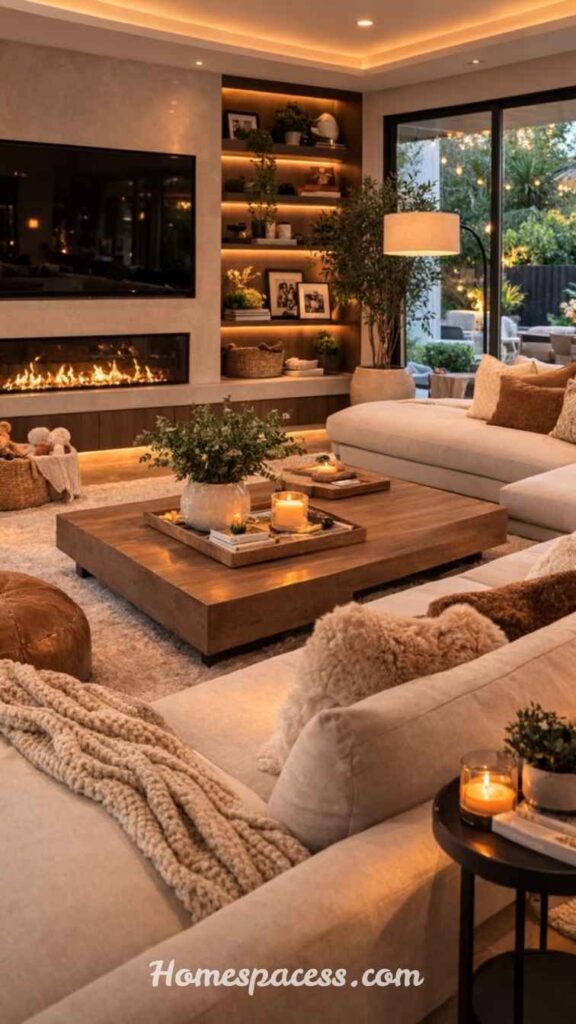
Effective lighting design works in three layers. Ambient lighting (recessed ceiling lights or a flush-mount fixture) provides overall brightness and is used during cleaning and busy mornings. Task lighting (table lamps, floor lamps, under-cabinet strips) supports reading, homework, and focused activities. Accent lighting (picture lights, LED strips behind the TV, shelf lighting) creates atmosphere in the evenings and draws the eye to decorative focal points. Each layer should operate on its own switch or dimmer for maximum flexibility.
Smart bulbs and dimmer switches which now cost less than $30 per outlet are a genuinely transformative upgrade. Being able to shift a room from 100% brightness during a Saturday afternoon board game to 30% warm light during a Sunday evening movie represents a quality-of-life improvement that every family notices immediately. Aim for bulbs in the 2700K–3000K range for a warm, welcoming ambiance in the evening hours.
Expert tip:
The ideal placement for a reading floor lamp is slightly behind and to the side of the reader’s shoulder never directly in front, which creates glare. Position table lamps so the bottom of the shade is roughly at eye level when seated.
Don’t Skip: Smart Backyard Bar Ideas to Create a Perfect Outdoor Hangout Spot
Add Texture With Rugs, Cushions, and Curtains
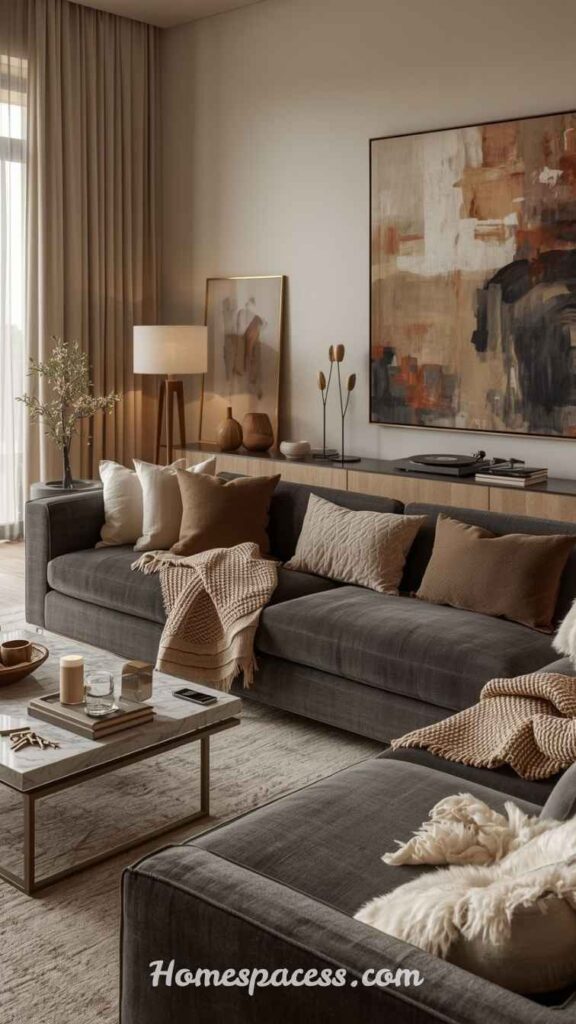
Texture is what separates a room that looks designed from a room that looks assembled. In a family room, layering different tactile materials creates visual depth and warmth that no single piece of furniture can achieve alone. Think of it as a recipe: you need varied ingredients some soft, some rough, some woven, some smooth to produce a finished result that feels complete.
A large area rug is the starting point. It grounds the seating group, defines the zone, and adds acoustic warmth by absorbing sound a significant benefit in open-plan homes. Wool and wool-blend rugs remain the most durable and the most visually rich option for high-traffic spaces. Layer this with cushions in two or three complementary fabrics (a velvet, a boucle, and a printed cotton, for example), and add curtains that extend from ceiling to floor. Curtains hung at ceiling height visually raise the room’s proportions one of the oldest designer tricks and still one of the most effective.
Don’t overlook harder textures either. A reclaimed wood side table, a ceramic lamp base, a wicker tray on the coffee table these introduce organic, tactile variety that makes a space feel genuinely lived-in rather than showroom-staged. The goal is intentional eclecticism: varied enough to feel interesting, unified enough to feel curated.
Design a Kid-Friendly Corner That Blends In
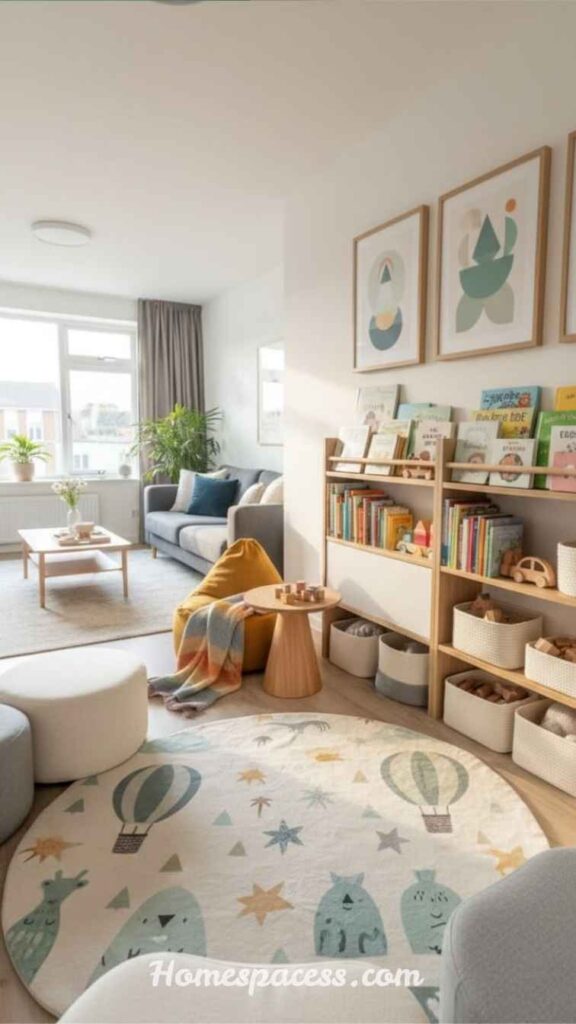
One of the most common parenting compromises is surrendering the family room’s design to primary-colored plastic storage bins and garish toy organizers. The reality is that a well-designed, kid-friendly corner can be both genuinely practical for children and visually harmonious with the broader room aesthetic you just need to think about it more intentionally from the start.
Choose toy storage in neutral or earth-tone finishes rather than bright primaries. Deep rattan baskets, linen-covered cube organizers in charcoal or natural, and low wooden shelving units all serve the same storage function while blending into an adult-designed space. A small table in a natural wood finish and two child-scaled chairs look design-forward, not nursery-adjacent. A low, wipeable art station with supply drawers keeps creative activity contained and the rest of the room protected.
Mini-scenario:
One family integrated their toddler’s play corner by sourcing a Montessori-style low wooden shelf (painted in the same sage green as their curtains), three rattan baskets for toy rotation, and a foam mat in ivory. Visitors regularly commented on the room without realizing there was a dedicated kids’ area until a small hand reached into a basket.
Expert tip:
Apply rounded-edge corner protectors to coffee tables and low shelves they’re now available in clear silicone that’s almost invisible, removing the compromise between safety and aesthetics.
Bring Nature Indoors With Biophilic Elements
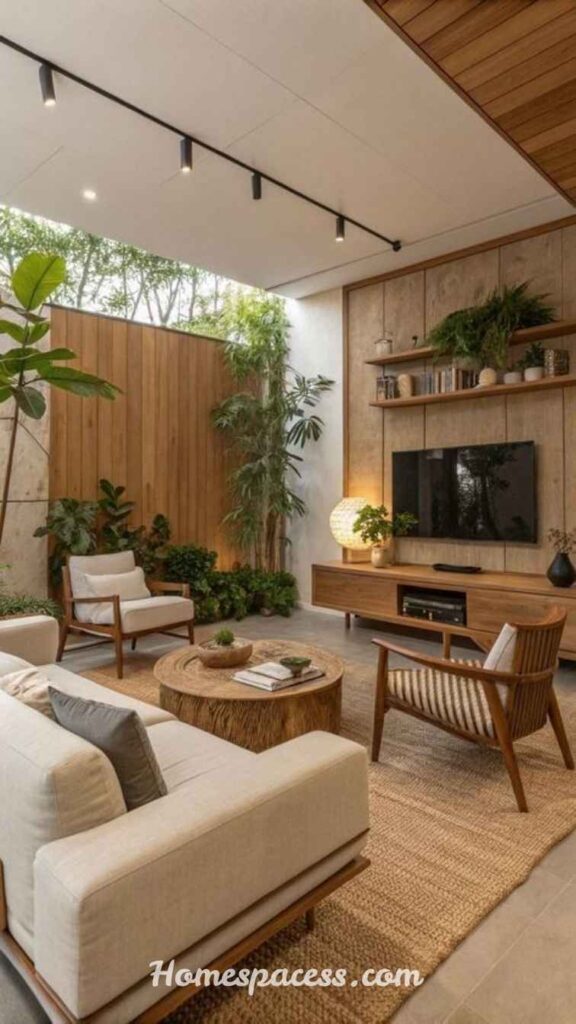
Biophilic design the practice of integrating natural elements into built spaces has moved firmly from academic theory to mainstream interior design, and for good reason. Research consistently shows that access to natural materials, plants, and natural light reduces cortisol levels and improves mood and concentration. For a space where families spend large portions of their waking hours, these effects are genuinely significant.
The most accessible biophilic additions to a family room are live plants, natural wood surfaces, and maximized natural light. A large fiddle-leaf fig or a trailing pothos requires minimal care but creates a dramatic visual impact. Where possible, remove heavy window treatments that block daylight and replace them with sheer linen panels that diffuse light without blocking it. Natural wood whether it’s a live-edge coffee table, exposed ceiling beams, or even a well-chosen wood-effect floor tile grounds a space in organic warmth that synthetic materials simply can’t replicate.
Beyond plants and wood, consider natural stone accents (a marble side table, a stone-look fireplace surround), jute or sisal rugs, and nature-inspired color palettes drawn from forest floors, coastal shorelines, or desert landscapes. These elements work together to create what designers call “restorative environments” spaces that actively refresh and recharge the people who use them.
Use a Neutral Base With Bold Accent Colors
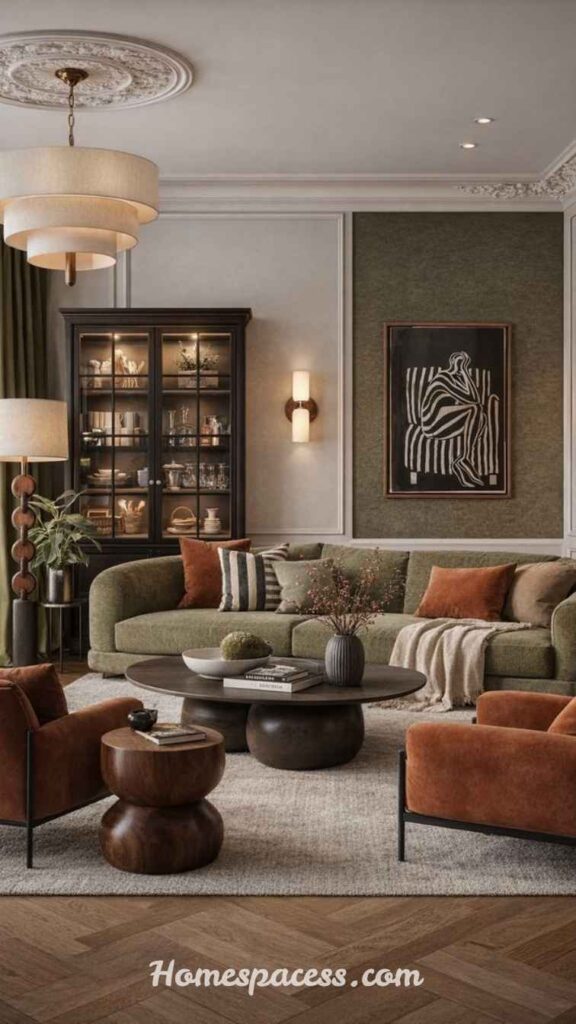
Color is one of the most powerful tools in a designer’s kit and one of the most frequently misused in family rooms. The classic mistake is choosing a single “statement” wall color and stopping there resulting in a room that feels one-dimensional. The better approach is to build from a sophisticated neutral base and introduce deliberate, well-placed color through accents: cushions, artwork, a single upholstered chair, or a painted bookcase back.
The best neutral bases for family rooms in 2026 are warm, not cold. Think greige tones (a grey-beige hybrid), soft terracotta-tinged whites, warm taupes, or deep sage green for walls. These warm neutrals are far more forgiving in artificial evening light than cool greys or stark whites, and they serve as a more harmonious backdrop for the natural textures that family rooms accumulate over time.
For accent colors, think in terms of a 60-30-10 split: 60% of the room in your neutral base, 30% in a secondary tone (perhaps warm wood tones and soft linen), and 10% in genuine accent color this is where you can be bold. Deep terracotta, dusty teal, forest green, and aged gold are particularly strong accent choices for 2026 because they feel both trend-forward and timelessly grounded. The advantage of the 60-30-10 rule is that updating the room when trends shift costs you a few cushion covers, not a full renovation.
Conclusion
Ponytail Hairstyles are simple, stylish, and perfect for every age and hair type. You can wear them for school, office, parties, workouts, or daily life. From sleek ponytails to messy and curly looks, there are many ways to match your style. These hairstyles also save time and make your hair look neat and beautiful.
Trying different Ponytail Hairstyles can give your whole look a fresh change without much effort. You can add braids, waves, clips, or scarves for more style and personality. The best thing is that ponytails work well for both casual and formal events. With the right idea, Ponytail Hairstyles can make you feel more confident, trendy, and comfortable every day.
Trend Analysis
Trends, Strategy & Future Design
The defining trend of 2026 in family room design is what industry insiders are calling “Quiet Luxury” a shift away from obvious branding, fast-furniture aesthetics, and trend-chasing toward pieces with substance, provenance, and longevity. This means fewer mass-produced accent tables and more considered investments in locally crafted furniture, heirloom-quality upholstery, and materials that age gracefully. For families, this also aligns with practicality: a well-made piece withstands years of daily use far better than a style-driven impulse buy.
Curved furniture rounded sofas, arched mirrors, pill-shaped ottomans is consolidating its position as a lasting design language rather than a passing fad. The psychological logic is sound: curved lines feel softer, more approachable, and less institutional than right angles, making them a natural fit for spaces designed around human comfort and family life. Expect curves to remain relevant through at least 2027, particularly in combination with earthy palette choices.
Looking toward 2026, the most significant emerging trend is multi-sensory design: rooms designed not just for visual appeal but for acoustic comfort, scent layering, and tactile richness. Acoustic panels disguised as wall art, essential oil diffusers integrated into furniture, and materials specifically chosen for their touch feel are all moving from hospitality design into residential interiors. For families, this often starts simply: adding soft textiles to absorb noise, introducing a citrus or sandalwood room fragrance, and ensuring the furniture fabric choices reward the sense of touch as much as sight.
Practical Expert Insights: What Most Guides Miss
Most family room guides focus on aesthetics the right sofa color, the right rug pattern but the practical decisions that determine whether a room actually works for a family are usually ignored. Here are the expert-level insights that separate rooms that look good in photos from rooms that work well in real life.
Traffic flow is more important than furniture arrangement. Before placing a single piece of furniture, walk through the paths your family uses every day: from the kitchen to the sofa, from the front door to the TV, from the play corner to the hallway. Every furniture placement decision should preserve these paths, not obstruct them. A beautiful room that disrupts natural movement patterns will generate daily frustration that no amount of decorative pillows can fix.
Plan for acoustics, not just aesthetics. Open-plan family rooms with hard floors and high ceilings are notoriously loud echo and reverberation make conversations exhausting and TV volume creep upward. A large area rug reduces floor reflection by 40–60%. Upholstered furniture, layered cushions, curtains, and bookshelves all contribute additional sound absorption. This isn’t a nice-to-have; in homes with young children or remote-working parents, acoustic comfort is a daily quality-of-life factor. Aim to cover at least 30% of floor area and 20% of wall area with soft, absorbent materials.
Build in “reset rituals.” The families with the most consistently tidy family rooms aren’t the most disciplined they’ve designed the room so that tidying takes under five minutes. Every item in the room should have a specific, easily accessible home. The 15-minute nightly reset (cushions straightened, toys in baskets, remotes in tray, throws folded) becomes effortless when the storage system is both sufficient and convenient. Design for the five-minute reset, and the room will stay beautiful 90% of the time.
Sustainability, Long-Term Value & Strategic Design Thinking
The most environmentally and financially intelligent approach to family room design is also, paradoxically, the most beautiful: buy less, but buy better. The fast-furniture industry characterized by low prices, short lifespans, and significant material waste is increasingly understood as both an environmental problem and a long-term financial liability. A $300 sofa replaced every four years costs more over a decade than a $900 sofa that lasts fifteen.
When evaluating furniture for long-term value, look for: solid wood or plywood frames (not particle board or MDF, which swell and fail over time), natural fiber upholstery or certified performance fabric, replaceable cushion covers, and manufacturers who offer repair services or replacement parts. Brands with transparent supply chains and certifications like FSC (for wood), GREENGUARD (for low chemical emissions), or B Corporation status are generally more likely to produce genuinely durable goods. This matters particularly for families with young children, for whom low-VOC materials are a genuine health consideration, not just a marketing preference.
From a strategic perspective, think of family room design in two timescales. The five-year horizon calls for investment in structural, hard-to-change elements: quality flooring, well-positioned lighting circuits, built-in storage, and a sofa that can survive childhood. The one-to-two year horizon governs soft furnishings and accessories cushions, throws, artwork, rugs which can be updated affordably as your style evolves or as children’s needs change. This two-timescale thinking prevents the expensive mistake of over-investing in trend-dependent pieces that feel dated within a year.
Future Predictions
How Family Rooms Are Evolving
The family room of 2028–2030 will be fundamentally different from what most homeowners have today, driven by three converging forces: the continued evolution of hybrid work culture, rapid advances in home technology, and a growing prioritization of wellness in residential design. Understanding these shifts now allows today’s design decisions to age more gracefully and positions families to adapt without expensive renovations.
The biggest structural shift is the blurring of the boundary between family room and workspace. As hybrid working becomes entrenched for a large portion of the workforce, family rooms will increasingly need to function as professional spaces during daytime hours and social spaces in the evenings. Designers are already responding with “stealth office” furniture console desks that close like credenzas, monitor arms that retract behind cabinetry, and acoustic panels that double as wall art. Expect this category to explode over the next three to four years as manufacturers recognize the scale of demand.
On the technology side, ambient computing where smart home technology becomes invisible infrastructure rather than visible gadgetry will transform family room design. Voice-activated lighting, embedded speakers in furniture, motorized window treatments, and AI-driven climate control are already available; by 2028, they’ll be standard in new-build homes and increasingly retrofittable in existing ones. The design implication is that rooms need fewer visible technology artifacts fewer remotes, fewer visible cable runs, fewer device docks freeing up visual space for more intentional design choices. For those designing or renovating family rooms today, futureproofing with in-wall conduit runs and smart-switch electrical work is one of the highest-ROI investments available.
Common Mistakes
Overlooked Factors in Family Room Design
Choosing a rug that’s too small: The most common family room error. A rug should be large enough for all front legs of the sofa and chairs to rest on it. When in doubt, go larger a rug that’s too big reads as generous; one that’s too small reads as an afterthought.
Placing all furniture against the walls: Counterintuitively, pulling furniture slightly away from walls (even by 6–12 inches) makes a room feel larger and more intimate. Floating furniture creates defined zones and improves conversation dynamics significantly.
Hanging artwork too high: Gallery-standard practice is to hang the center of artwork at 57–60 inches from the floor roughly eye level when standing. Most people hang artwork 6–8 inches too high, which disconnects it visually from the furniture below it.
Ignoring natural light direction when choosing colors: A warm grey paint color that looks beautiful in a south-facing showroom can turn an icy, lifeless purple-grey in a north-facing family room. Always test paint samples at different times of day in your specific room before committing.
Designing for the “ideal” version of your family, not the real one: The deepest and most expensive design mistake is creating a space that requires constant tidying or delicate handling to maintain. Design for how your family actually lives, not how you hope it might. A room that genuinely works for real family life is always more beautiful than a room that looks good only in photographs.

Team Home Spacess shares simple, practical design ideas that work for real families. The team focuses on cozy décor, soft colors, and natural textures that make a space feel truly lived-in. From everyday decorating tips to creative home projects, Team Home Spacess is dedicated to helping readers create warm, comfortable, and inviting spaces with a fresh and personal touch.