

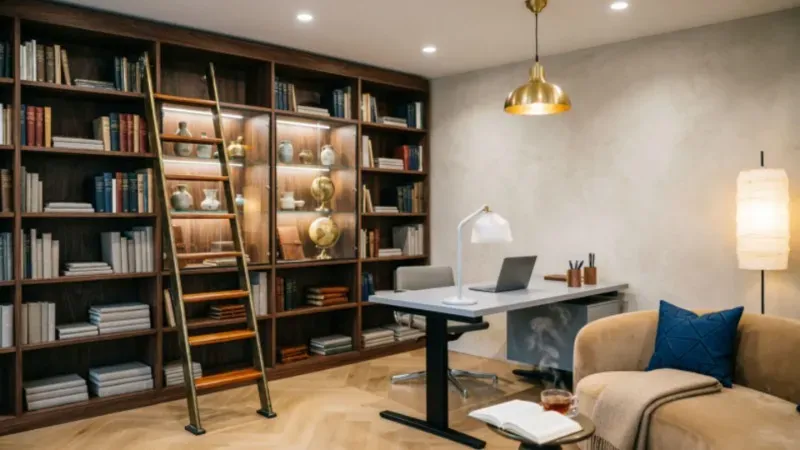
Staring at a bland desk in a beige room does nothing for your focus or your love of books. If your home office feels sterile and your bookshelves are scattered across the house, you are missing one of the most rewarding home design trends: the library office room.
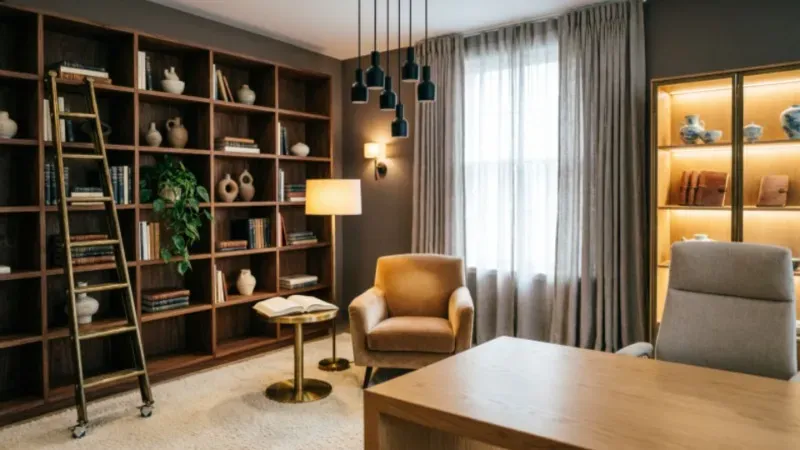
This guide solves that problem. You will find practical library office room ideas that mix classic home library design with modern workspace function, plus expert insights, sustainability tips, and future trends most articles skip entirely.
Whether you have a spare bedroom, a cramped corner, or an entire wall to work with, these ideas will help you build a home office library that looks polished, feels calm, and actually helps you get work done. Let’s turn that empty wall into your favorite room in the house.
Built-In Bookshelves for a Seamless Library Office
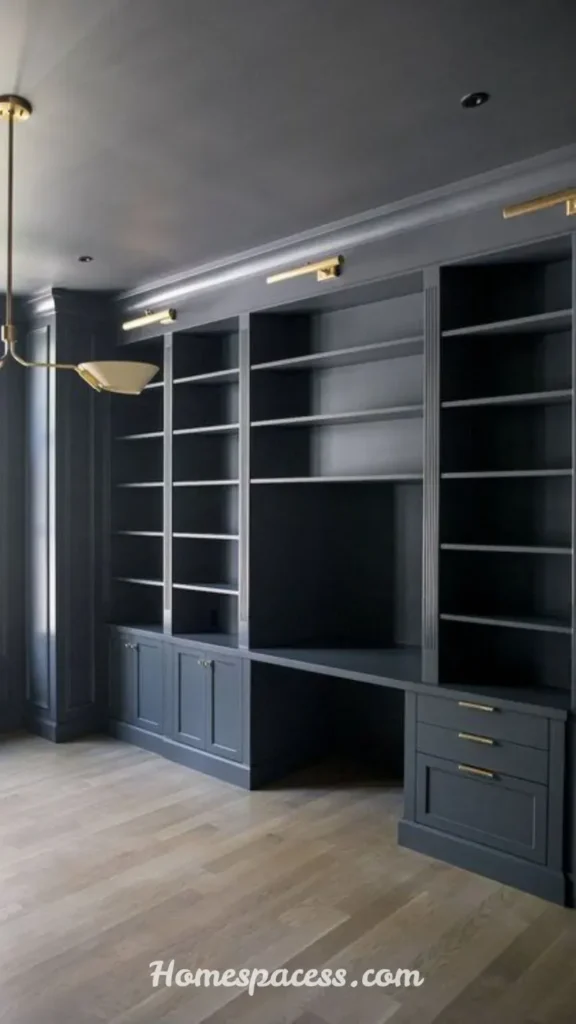
Built-in bookshelves are the backbone of any serious library office room idea. Unlike freestanding units, built-ins run floor to ceiling and hug the wall, so every inch of vertical space becomes useful storage instead of dead air above a short shelf.
Picture a home office where one wall disappears into a wraparound bookcase framing the desk like a stage set. A client in a 900-square-foot condo did exactly this: custom millwork turned an awkward alcove into a floor-to-ceiling home library that also hid a printer and filing drawers behind matching panel doors.
Because built-ins are permanent, they also boost resale value more than portable furniture ever will, making this one of the smartest long-term investments in library office design.
| Style Note: Paint built-in shelving the same color as the wall for a quiet, gallery-like look, or choose a contrasting rich tone like navy or forest green to make the bookshelf design the room’s focal point. |
| Pro Tip: Ask your carpenter to build adjustable shelf pins every 32mm instead of fixed shelves, so you can rearrange spacing as your book and binder collection grows. |
See Related Articles: 27 Library Room Ideas to Transform Any Space Into a Dream Home Library
Cozy Reading Nook With a Statement Armchair
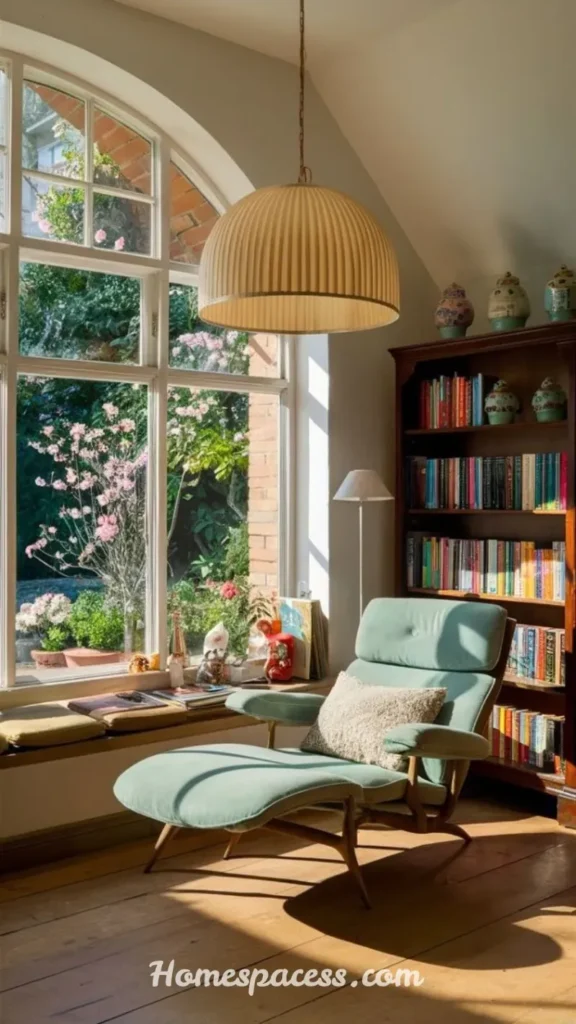
Every great library office room needs a reading nook separate from the desk. A single oversized armchair, angled toward a window or the shelves, gives your brain a clear signal to switch from focused work to relaxed reading.
Think of a bay window corner outfitted with a worn leather wingback chair and a small round side table. This tiny footprint, often under 20 square feet, does more to make a room feel like a true home library than any amount of shelving alone.
The trick is contrast: if your desk chair is modern and sleek, choose a reading chair with texture and warmth, like boucle fabric or aged leather, so the eye immediately understands the room has two distinct moods.
| Style Note: Choose a chair in a bold accent color, such as burnt orange or deep teal, to break up rows of neutral book spines and add personality to the library décor. |
| Pro Tip: Add a slim floor lamp with a warm 2700K bulb directly beside the chair. Overhead lighting alone creates harsh shadows for reading and undercuts the cozy effect you’re going for. |
Recommended for You: Bedroom Bookshelf Ideas | Smart, Stylish & Space-Saving Ideas to Transform Your Bedroom
Dual-Purpose Desk and Library Table
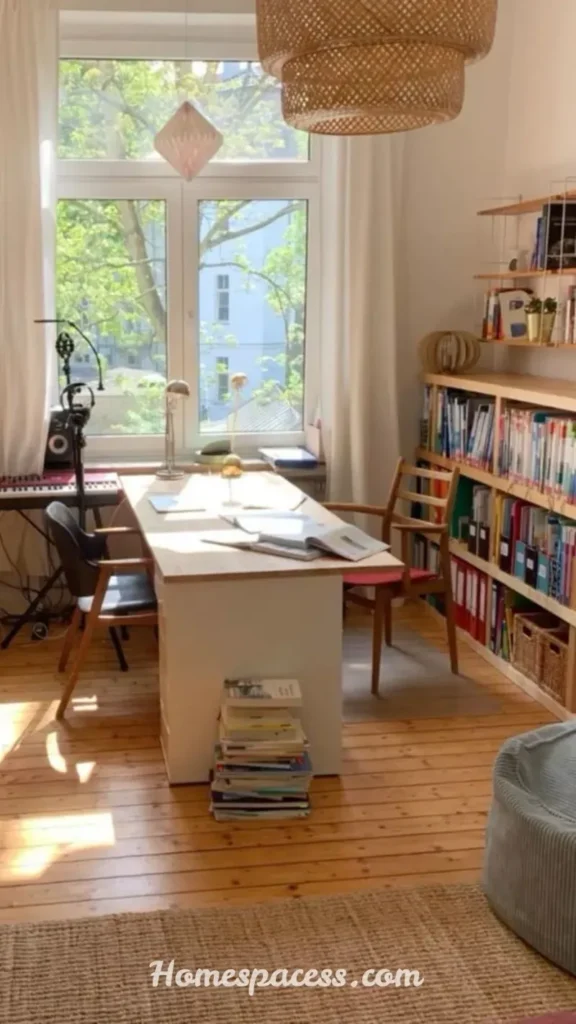
A library table is a wide, sturdy surface that historically doubled as a reading table and a work desk. Reviving this piece of furniture is one of the smartest home office library ideas because it handles laptops, spread-out reference books, and video calls equally well.
For example, a long antique writing table placed perpendicular to a bookshelf wall lets you glance up mid-task and grab a reference book without leaving your seat, cutting the small daily frictions that break concentration.
Unlike a narrow modern desk, a library table’s extra depth means you can stack folders on one side while keeping a clear laptop zone on the other, which is especially useful for anyone juggling paperwork and screen work at once.
| Style Note: A dark walnut or mahogany library table pairs beautifully with brass hardware and green banker’s lamps for a timeless, scholarly feel. |
| Pro Tip: Measure twice before buying. A comfortable library office desk depth is at least 30 inches, giving enough room for a keyboard, notebook, and a stack of books without feeling cramped. |
You May Also Like: 20 Home Office Ideas to Boost Productivity in 2026
Rolling Ladder for Tall Bookshelves
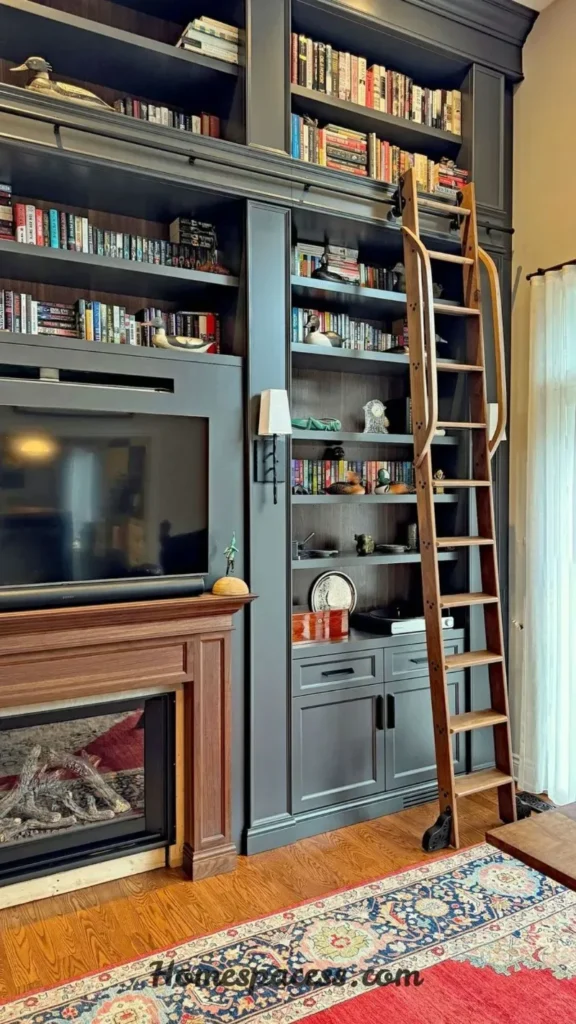
If your built-in bookshelves reach the ceiling, a rolling library ladder is not just decorative; it is genuinely functional storage access, and it instantly signals a serious, well-loved book collection.
In one real-world scenario, a home office with 11-foot ceilings used a sliding brass ladder track to reach the top three shelves, which were reserved for reference books and archival boxes rarely needed day to day.
Beyond function, the ladder itself becomes a design anchor. Its diagonal line breaks up the visual monotony of stacked horizontal shelves, giving the whole library office room a sense of movement and craftsmanship.
| Style Note: Match the ladder’s metal finish, such as matte black or antique brass, to your other hardware including drawer pulls and light fixtures for a cohesive home library design. |
| Pro Tip: If ceiling height doesn’t justify a full ladder track, a small two-step library stool achieves a similar vintage charm at a fraction of the cost and installation effort. |
Discover More: Bookshelf Decor Ideas to Add Personality and Charm to Any Space
Warm Ambient Lighting With Floor and Task Lamps
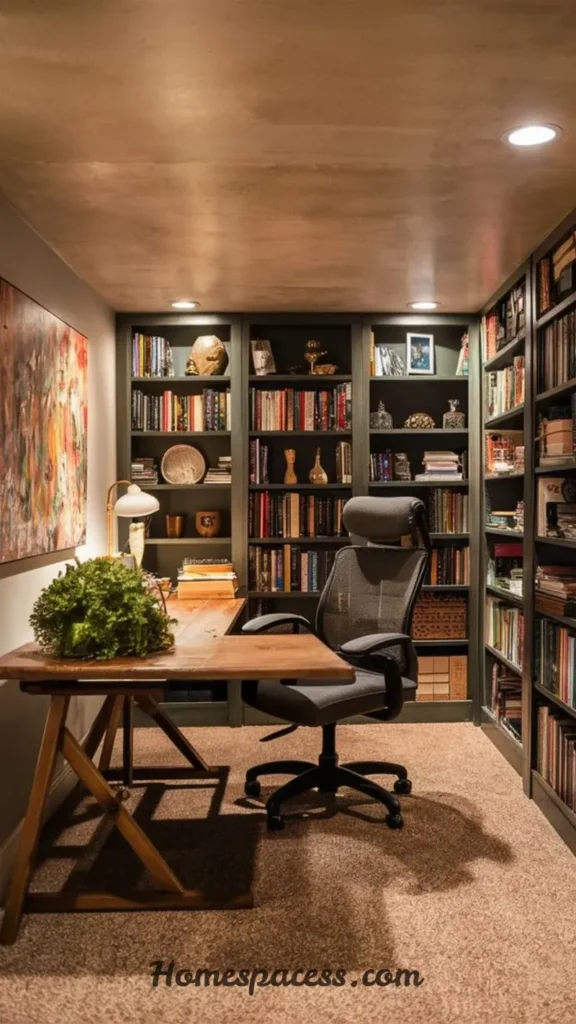
Library office lighting should never rely on a single overhead fixture. Layering ambient, task, and accent light sources is what separates a flat, office-supply-store feel from a rich, inviting home library atmosphere.
Consider a desk with a brass banker’s lamp for task lighting, a tall arc floor lamp for ambient fill, and small picture lights mounted above framed art or shelves. Together, these three layers eliminate harsh shadows during video calls and evening reading sessions alike.
Warmer color temperatures, generally between 2700K and 3000K, flatter wood tones and leather-bound books far better than the cool white bulbs common in standard offices.
| Style Note: Choose lamp shades in cream, amber, or soft gold to cast a warm glow that makes wood shelving and bookshelf styling look richer in the evening. |
| Pro Tip: Put your ambient lights on a smart dimmer switch. Bright, cool light works for focused daytime tasks, while dimmed, warm light instantly shifts the room into relaxed reading mode after hours. |
Rich Wood Tones and Classic Wainscoting
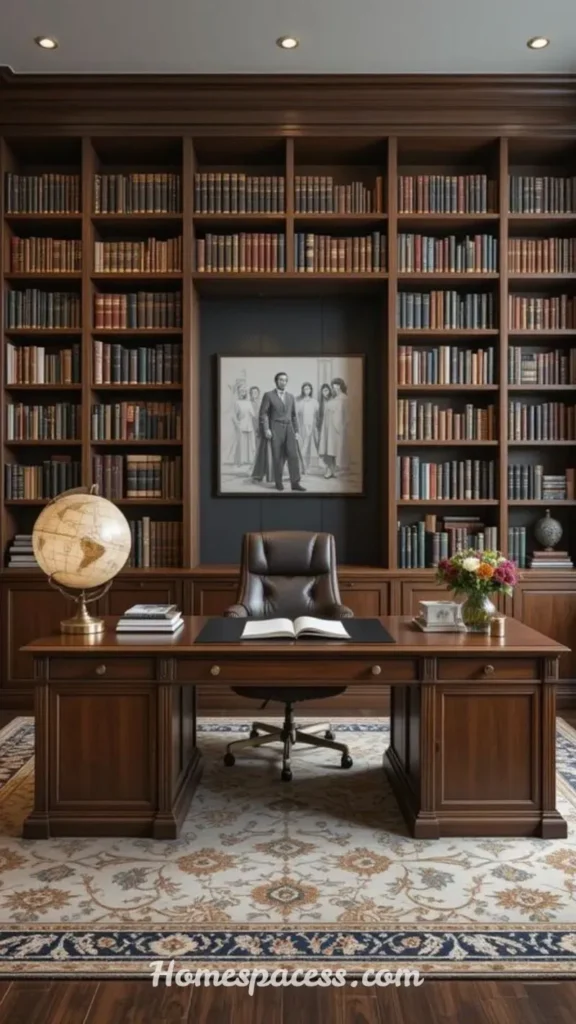
Wood paneling and wainscoting are shorthand for the traditional home library look, and they remain one of the most requested finishes among clients renovating a spare room into a study.
A real-world example: a converted guest bedroom got chair-rail wainscoting painted a deep hunter green on the lower half, with matching green-and-gold spines lining the shelves above, creating an intentional, curated color story rather than a random mismatched collection.
Wood tones also age gracefully, meaning a library office room finished this way rarely looks dated the way trend-driven paint colors or laminate finishes can within just a few years.
| Style Note: If full wood paneling feels like too large a commitment, peel-and-stick wainscoting panels or a painted faux-panel treatment deliver 80% of the visual impact at a fraction of the cost. |
| Pro Tip: Seal wood paneling with a matte or satin finish rather than high gloss. Gloss finishes reflect overhead light and can create distracting glare on video calls. |
Glass-Front Cabinets for Rare Book Collections
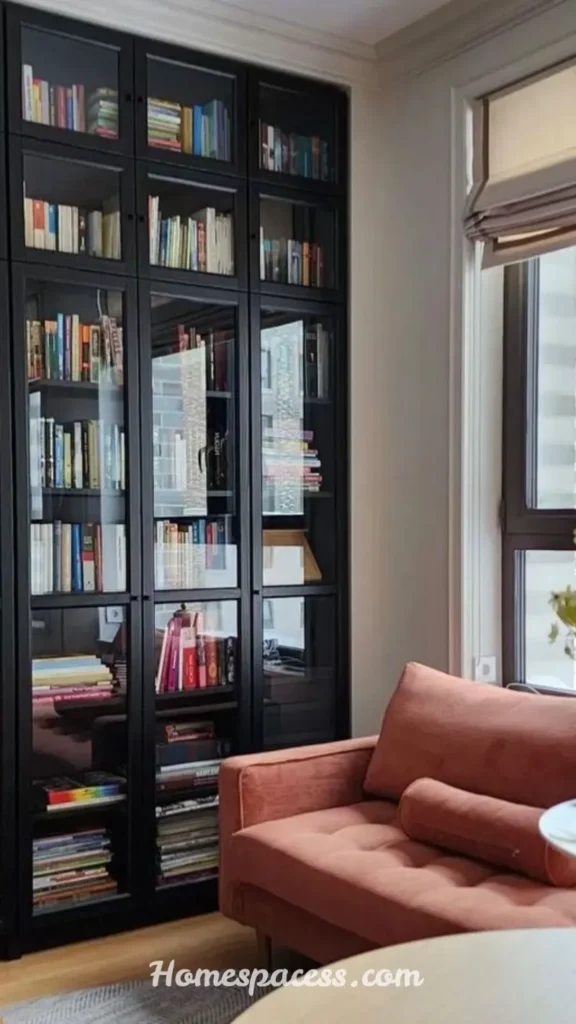
Glass-front cabinets protect valuable or sentimental books from dust while still putting your collection on display, which is exactly the balance a working library office needs between function and showcase.
For instance, a homeowner with a collection of first-edition novels used a single glass-front hutch as the room’s centerpiece, reserving open shelving nearby for everyday reference books and current reading material.
This combination approach, some open shelving and some enclosed cabinetry, also solves a practical problem: not every book needs to be dust-protected, so mixing both keeps the room from feeling overly formal or museum-like.
| Style Note: Add interior cabinet lighting behind glass panels to spotlight a rare book collection, turning it into a genuine design feature rather than just storage. |
| Pro Tip: Choose cabinets with UV-filtering glass if any shelving sits near a window. Direct sunlight fades book spines and dust jackets faster than most people expect. |
Layered Area Rugs to Define the Library Zone
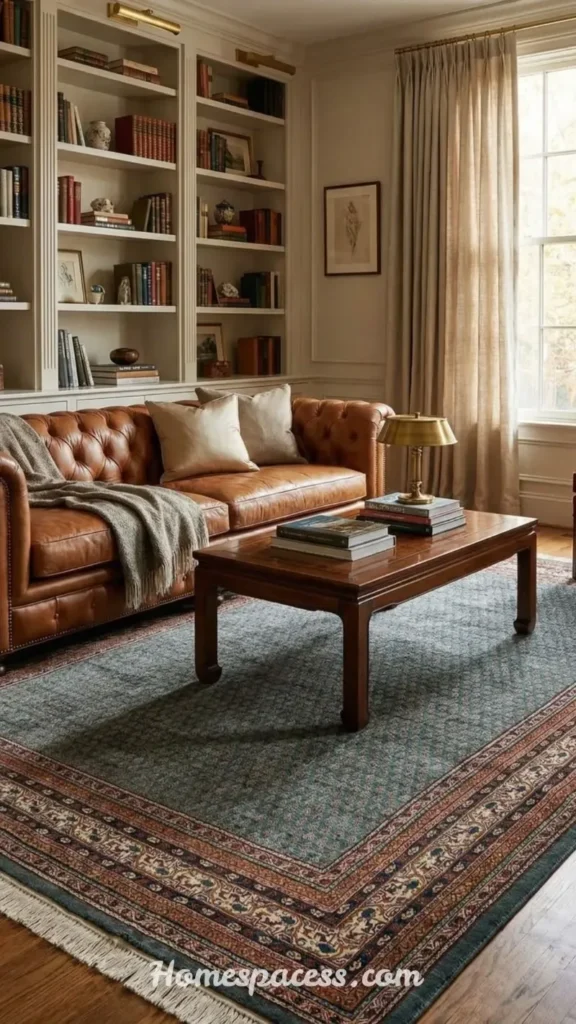
In an open-plan home, a well-chosen area rug visually separates the library office room from adjoining living space without needing a wall, which is especially useful in smaller homes and apartments.
A layered approach, such as a jute rug topped with a smaller patterned wool rug under the reading chair, adds texture underfoot and further defines the reading zone as distinct from the desk area.
This zoning trick also helps acoustically. Rugs absorb sound that would otherwise bounce off hardwood floors and stacked bookshelves, noticeably reducing echo during video calls in a room full of hard surfaces.
| Style Note: Pick a rug pattern that echoes a color already in your book spines or wainscoting so the flooring feels intentional rather than an afterthought. |
| Pro Tip: Size your rug so the desk chair sits fully on it even when pushed back. A rug that only covers half the chair’s rolling range will bunch and wear unevenly within months. |
Gallery Wall of Art Above the Bookshelves
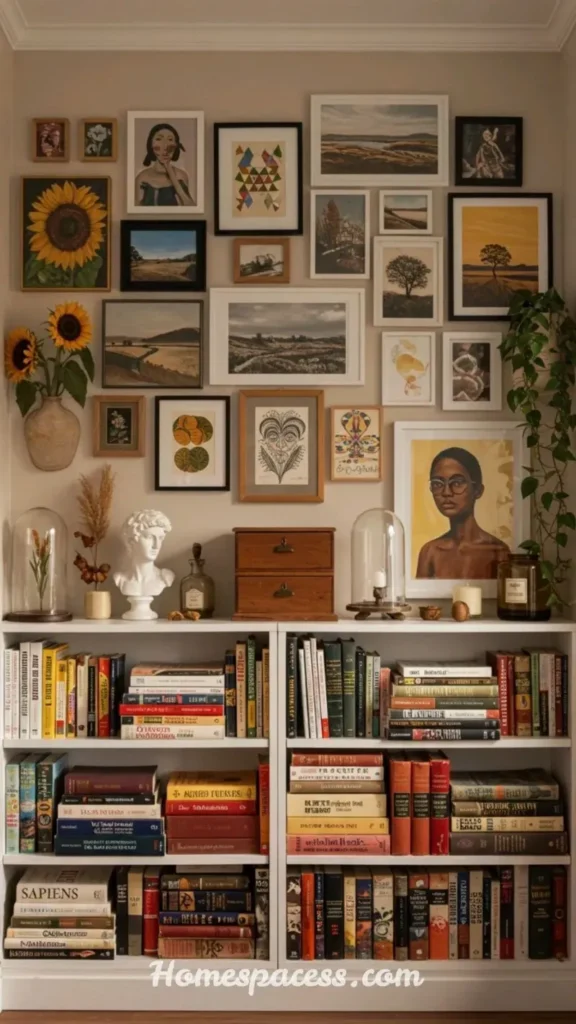
Once shelves are full, the wall space directly above them is easy to forget, yet a small gallery wall of framed art, maps, or family photos finishes the room and keeps it from feeling like a plain storage unit.
One effective real-life layout used a row of antique botanical prints above eye-level shelving, tying the greenery theme from a nearby indoor plant into the overall library décor scheme.
Gallery walls also give you flexibility over time. Swapping two or three frames refreshes the whole room seasonally without touching the furniture or investing in a full redesign.
| Style Note: Keep frame finishes consistent, such as all matte black or all warm brass, so a busy gallery wall reads as curated rather than cluttered against a library office backdrop. |
| Pro Tip: Hang the bottom of your gallery frames roughly 6 to 8 inches above the top shelf. Too much gap makes the wall feel disconnected from the bookcase below it. |
Hidden Storage Behind Bookcase Doors
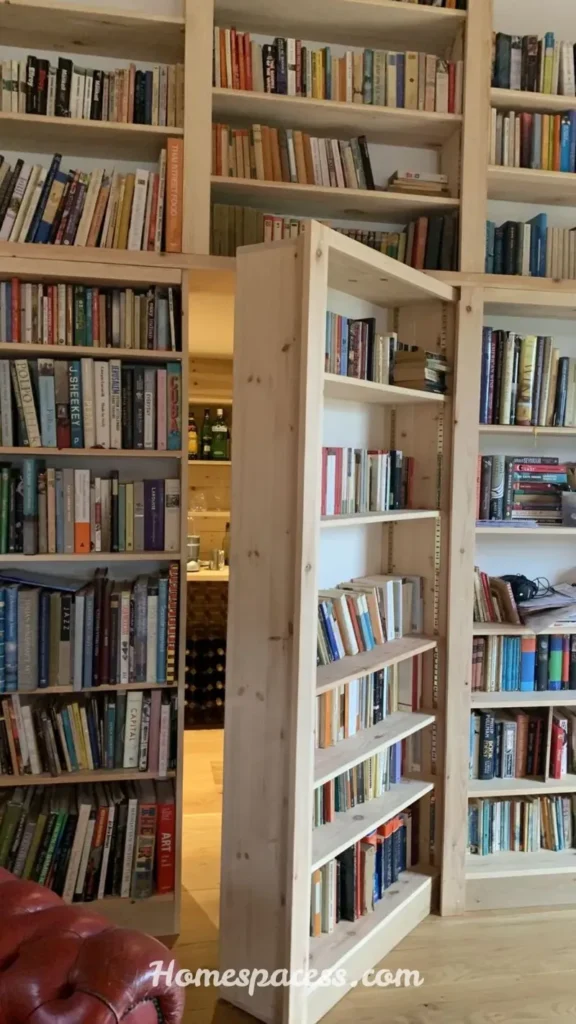
A hidden bookcase door or a bookshelf with a concealed cabinet panel adds a playful, almost secret-room quality to a library office, while quietly solving the very real problem of hiding cables, chargers, and office supplies.
In practice, a homeowner used a single hinged shelf section to hide a small printer, spare paper, and a shredder, keeping the visible shelving purely for books and décor rather than clutter.
This idea also appeals strongly to buyers if you ever sell your home, since hidden storage is consistently flagged in real estate listings as a premium, memorable feature.
| Style Note: Use full-height false book spines on the hidden panel door so the illusion holds up even on close inspection, rather than an obviously blank board. |
| Pro Tip: Choose soft-close hinges for any hidden cabinet door. Standard hinges tend to swing and slam given the heavier weight of a book-covered panel. |
Multi-Functional Window Seat With Built-In Shelving
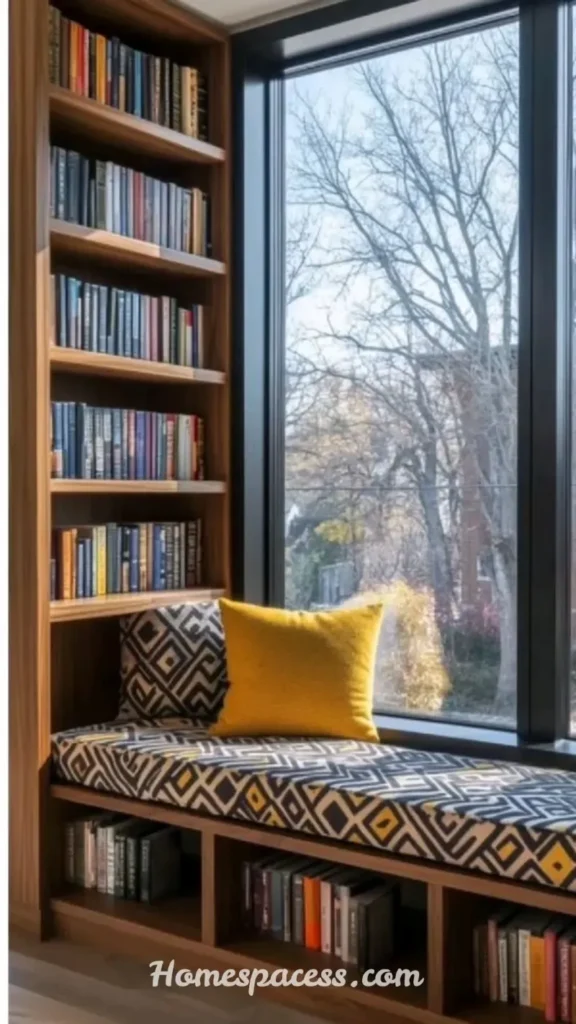
A window seat flanked by short bookshelves turns an underused window wall into extra seating, extra storage, and one of the coziest library office room ideas on this list, all in a single built-in unit.
For example, a narrow home office with a single large window gained a cushioned bench seat with drawer storage underneath and two flanking shelf towers, effectively adding a reading spot without sacrificing any floor space for a separate chair.
Because the bench sits below the window, natural daylight becomes the primary light source for reading during the day, cutting down on electricity use and creating one of the brightest corners in the entire room.
| Style Note: Add a fitted bench cushion in a durable performance fabric so the window seat holds up to daily use as both a reading spot and casual overflow seating for guests. |
| Pro Tip: Build drawers into the bench base rather than a lift-up lid. Drawers are far easier to access daily without unloading cushions every time you need something inside. |
Conclusion
A great library office room doesn’t need a mansion or a massive budget, just thoughtful shelving, layered lighting, and a cozy reading corner alongside a functional desk. From built-in bookshelves to hidden storage and warm ambient lighting, these library office room ideas prove that a workspace can be both productive and deeply personal. Pick two or three ideas that fit your space and budget, start there, and let the room grow into your favorite corner of the house.
Trend Analysis: Library Office Design in 2026 and Beyond
In 2026, library office room ideas are shifting away from purely traditional, dark-wood studies toward what designers call “warm minimalism.” Homeowners still want the comfort of surrounded bookshelves, but they are pairing them with lighter oak tones, matte finishes, and fewer ornate details than the heavy Victorian-style libraries of the past decade.
Another clear shift is the rise of the hybrid library office, a space designed equally for video calls and quiet reading. This means acoustic panels disguised as fabric-wrapped art, ring-light-friendly lighting layouts, and desks positioned so bookshelves form a flattering, branded-feeling video call background.
Sustainability-driven material choices are also growing fast. FSC-certified wood shelving, reclaimed timber library tables, and low-VOC paint finishes are now common requests, reflecting a broader home design trend toward responsibly sourced materials in every room, not just kitchens and bathrooms.
Expert Insights: Practical Tips for Optimizing Your Library Office
Interior designers who specialize in home offices consistently point to one overlooked detail: shelf depth. Standard shelving is often built at 10 to 12 inches deep, which works for paperbacks but leaves oversized art books and binders sticking out awkwardly. Planning at least one 14-to-16-inch-deep shelf section solves this before it becomes a daily annoyance.
A second expert insight involves acoustics. A room lined with hard-cover books actually absorbs sound reasonably well, but glass cabinet doors and hard flooring can undo that benefit. Balancing hard and soft surfaces, rugs, upholstered chairs, fabric lampshades, keeps the library office room quiet enough for calls without feeling stuffy.
Finally, real-world experience from remote workers shows that separating “focus zones” from “reading zones” within the same room, even using nothing more than a rug or a change in lighting, measurably improves how long people can concentrate at the desk before needing a break.
Sustainability and Long-Term Value in Library Office Design
Unlike trend-driven furniture that gets replaced every few years, a well-built home library is inherently sustainable. Solid wood shelving, unlike particleboard versions, can be refinished, repainted, or repaired for decades rather than landfilled when styles change.
From a resale perspective, real estate agents frequently note that a dedicated library office room or built-in home office space adds tangible value, particularly in markets where remote and hybrid work remain common. Buyers increasingly view a functional home office as a near-essential room rather than a luxury extra.
Choosing energy-efficient LED bulbs in warm color temperatures, secondhand or vintage furniture pieces, and durable natural fiber rugs also reduces the room’s long-term environmental footprint while, ironically, often producing a richer, more characterful look than buying everything new.
Future Predictions: What’s Next for the Library Office
Expect smart lighting integration to become standard rather than a luxury add-on. Circadian-rhythm lighting systems that automatically shift from cool, energizing light in the morning to warm, relaxed tones in the evening are already appearing in home office renovations and will likely become a default feature within a few years.
Modular and reconfigurable shelving systems are also gaining traction, allowing a library office room to physically adapt as a homeowner’s book collection, work needs, or family situation changes, rather than committing to a single fixed built-in layout for the life of the house.
Longer term, expect more integration between physical libraries and digital ones. Smart shelving with embedded NFC tags for cataloguing personal book collections, paired with app-based inventory tools, is moving from niche hobbyist projects toward mainstream home design products.
Common Mistakes to Avoid in Your Library Office
The most frequent mistake is over-filling shelves edge to edge, leaving no breathing room for décor objects or negative space. Designers recommend keeping shelves around 80% full at most, leaving room for small sculptures, plants, or simply visual rest between books.
A second common error is choosing desk placement without considering window glare. Facing a monitor directly toward or away from a bright window creates eye strain during the day; positioning the desk perpendicular to the main window is almost always more comfortable for extended work sessions.
Finally, many homeowners underestimate weight load when planning built-in bookshelves, resulting in sagging shelves within a year or two. Always confirm shelf material and support spacing can handle fully loaded hardcover books, which can weigh far more than most people initially estimate.

Team Home Spacess shares simple, practical design ideas that work for real families. The team focuses on cozy décor, soft colors, and natural textures that make a space feel truly lived-in. From everyday decorating tips to creative home projects, Team Home Spacess is dedicated to helping readers create warm, comfortable, and inviting spaces with a fresh and personal touch.