

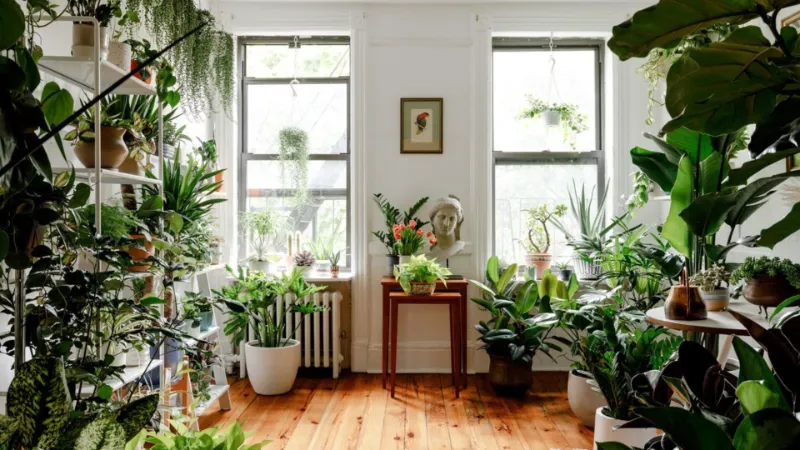
You’ve rearranged your furniture. You’ve repainted the walls. But somehow, your space still feels cold, empty, or uninspiring. The missing element isn’t another throw pillow or a new lamp it’s living greenery. Indoor plants are the single most powerful, affordable way to completely transform the energy, air quality, and aesthetic of any room. Yet most homeowners either don’t know where to start or fall into the trap of buying plants that die within weeks.
The truth is, the indoor plant market has exploded into a $21 billion global industry, and for good reason. Scientific studies consistently show that houseplants reduce cortisol levels, boost focus by up to 15%, and can lower indoor air pollutants like benzene and formaldehyde by significant margins. Whether you’re decorating a small apartment, a home office, or a spacious living room, there’s a plant styling idea that will work perfectly for you.
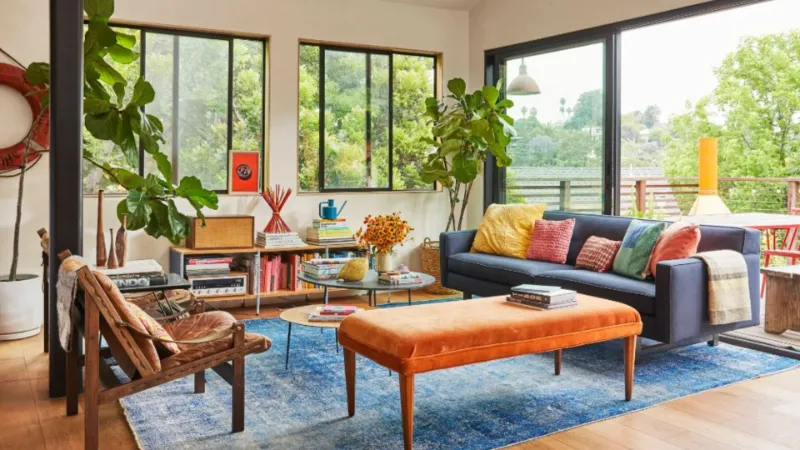
In this expert guide, you’ll discover of the best indoor plant ideas each one carefully selected for visual impact, ease of care, and long-term value. These aren’t generic suggestions. These are real, actionable ideas backed by horticultural expertise, interior design principles, and the latest biophilic design trends. Let’s turn your space into the green sanctuary it was always meant to be.
💡 Pro Tip:
Before choosing any plant, assess your space’s natural light. Light is the #1 factor in plant survival not water, not fertilizer. A quick light meter app on your phone can save you from months of disappointment.
Statement Floor Plants for High-Impact Living Rooms
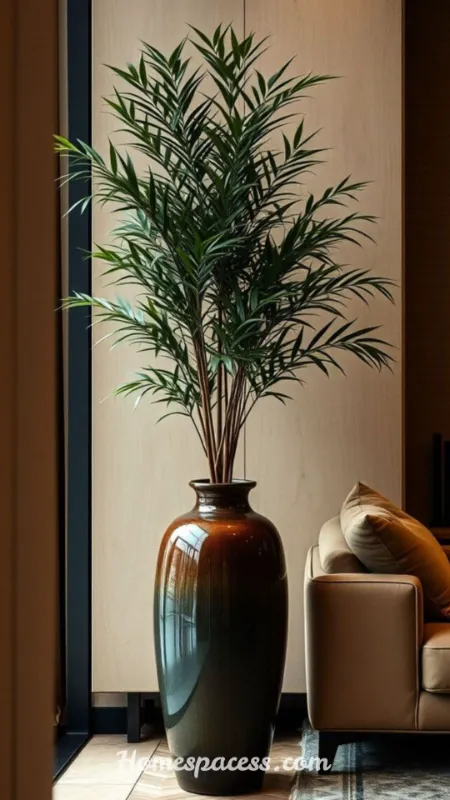
If you want a single indoor plant idea that delivers maximum visual drama, choose a statement floor plant for your living room. Think Fiddle Leaf Fig, Bird of Paradise, or a towering Monstera Deliciosa. These large, architectural plants create an instant focal point that no piece of art or furniture can replicate. Placed near a bright window or in an empty corner, they anchor the room and give the entire space a curated, intentional feel.
The key to styling large indoor plants successfully is choosing the right pot. Opt for neutral ceramic planters, woven seagrass baskets, or matte black containers to complement modern interiors, while terracotta pots with distressed finishes work beautifully in bohemian or Mediterranean-inspired rooms. Elevating the plant on a wooden platform or low stool adds another layer of visual interest and makes watering easier by improving airflow beneath the pot.
What competitors rarely mention is the importance of rotating your statement plants every two weeks. Because these plants grow toward the light source, rotating them ensures balanced, symmetrical growth. A Bird of Paradise, for example, can develop a striking, even canopy within 6 months with consistent rotation. It’s the difference between a plant that looks wild and one that looks intentionally sculptural a detail that separates amateur indoor gardeners from true plant stylists.
💡 Pro Tip:
Place a Bird of Paradise at least 3–4 feet from a south-facing window. Too close to direct sun can scorch its large paddle-shaped leaves, causing irreversible brown edges.
See Related Articles: Simple Garden Decor Ideas for a Clean and Modern Outdoor Style
Hanging Planters and Trailing Vines for Vertical Green Space
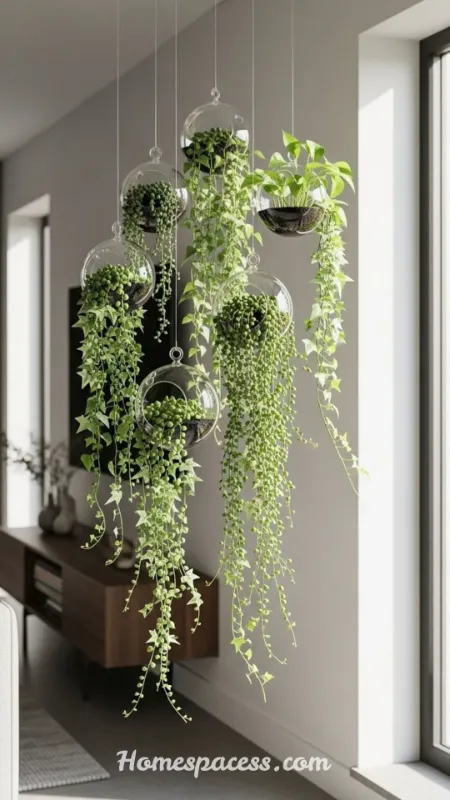
One of the most underutilized strategies in indoor plant decoration is thinking vertically. Hanging planters and trailing indoor vines like Pothos, String of Pearls, Heartleaf Philodendron, and Tradescantia draw the eye upward, making ceilings feel higher and rooms feel larger. This is a particularly brilliant strategy for small apartments and studio spaces where floor real estate is precious.
The styling secret lies in layering heights. Instead of hanging a single planter at one level, suspend three to five trailing plants at staggered heights in a window alcove or along a curtain rod bracket. This creates a living green wall effect without the cost or complexity of a true vertical garden installation. For the most lush, cascading look, choose fast-growing varieties like Golden Pothos, which can trail up to 10 feet in optimal indoor conditions.
A tip that most indoor plant guides overlook: always use swivel ceiling hooks when hanging your planters. Standard fixed hooks force you to detach the planter for watering, which is both inconvenient and hard on the plant. Swivel hooks let you rotate each planter toward the light source every few days a simple habit that results in beautifully balanced, full-canopy growth over time.
💡 Pro Tip:
String of Pearls is notoriously drought-tolerant but root-rot prone. Use a terracotta hanging pot rather than ceramic the porous clay wicks away excess moisture, dramatically improving survival rates.
You May Also Like: 20 Stunning Flower Garden Ideas to Transform Your Outdoor Space
Creating a Bedroom Plant Sanctuary for Better Sleep
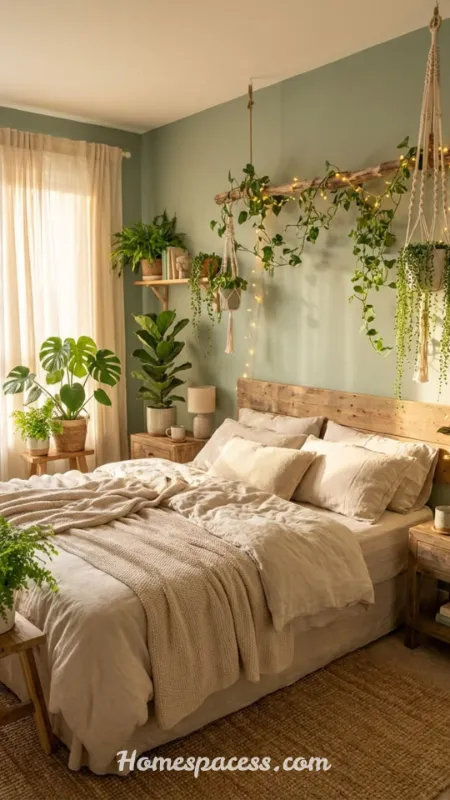
The bedroom plant idea is one of the most searched concepts in home décor and for excellent reasons. Studies published by NASA and various universities confirm that certain air-purifying plants like Snake Plants (Sansevieria), Peace Lilies, and Aloe Vera actually release oxygen at night, making them ideal bedroom plants for better sleep. Unlike most plants that switch to CO2 release after dark, these species continue photosynthesizing through a special metabolic process called Crassulacean Acid Metabolism (CAM).
For a truly immersive bedroom plant sanctuary, cluster three to five plants of varying heights on a dedicated bedside console table or floating shelf. Mix a tall Snake Plant on the floor with a medium Peace Lily on a nightstand and a small Succulent arrangement on a floating shelf above. This layered plant styling technique creates visual depth while maximizing the air-purifying surface area in your sleep environment.
However, it’s important to be selective. Avoid highly fragrant flowering plants like Jasmine or Gardenia in the bedroom, as their intense scent can disrupt sleep for sensitive individuals. Also steer clear of toxic plants if you have pets or young children popular choices like Pothos and Peace Lily are mildly toxic when ingested. The ASPCA toxic plant database is a reliable resource for cross-checking safety before placing any plant in a room with vulnerable occupants.
💡 Pro Tip:
Place a single Lavender plant (technically a houseplant in warm climates) on your nightstand. Its scent has been clinically proven to lower heart rate and blood pressure before sleep the plant equivalent of a sleep supplement.
Recommended for You: Garden Party Ideas That Will Wow Every Guest
Kitchen Herb Gardens for Functional and Beautiful Greenery
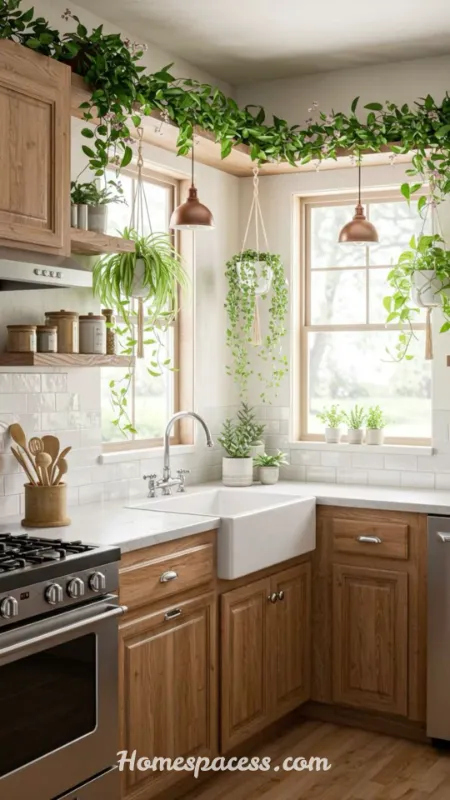
A kitchen herb garden is one of those rare indoor plant ideas that delivers both aesthetic beauty and everyday utility. Growing fresh herbs indoors like Basil, Rosemary, Mint, Thyme, and Chives on a bright windowsill or under a grow light transforms your kitchen from a purely functional space into something warm, alive, and deeply personal. The sensory experience of snipping fresh herbs directly into your cooking elevates even the simplest meal.
The smartest approach to a kitchen herb garden is to use a uniform container system. Individual terracotta pots in matching sizes, arranged in a bamboo tray or on a tiered wooden herb rack, create a cohesive look that photographs beautifully and stays organized. Label each pot with handwritten ceramic tags or embossed copper stakes these small details elevate the entire display from functional to editorial, something you’d see in an aspirational lifestyle magazine.
The critical detail most indoor herb garden guides miss: herb rotation. Because kitchen herbs are harvested frequently, they deplete nutrients fast. Maintain two sets of pots one actively growing under a full-spectrum LED grow light and one in use on the counter. Rotate them every 2–3 weeks to give each set time to regenerate. This simple succession growing strategy ensures you always have lush, productive herbs rather than sad, half-harvested stubs.
💡 Pro Tip:
Never let Basil flower (bolt). The moment you see flower buds forming, pinch them off immediately. Flowering signals the plant to stop leaf production keeping it in a vegetative state ensures a far more generous harvest throughout the season.
Also Read this Articles: Front Garden Ideas for Every Style From Classic to Modern Homes
Bathroom Plants That Thrive in Humidity and Low Light
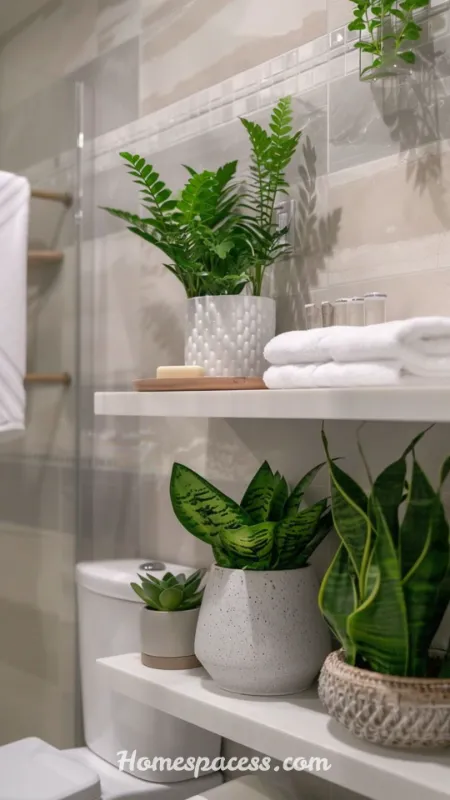
Most people overlook the bathroom as a plant styling opportunity, yet it’s arguably the most plant-friendly room in the house. The naturally high humidity levels found in bathrooms typically 50–70% closely mimic the tropical conditions that many popular houseplants evolved in. Choosing bathroom-appropriate plants like Boston Ferns, Orchids, ZZ Plants, and Cast Iron Plants creates a spa-like atmosphere that makes daily routines feel luxurious.
For a truly elevated bathroom plant display, think beyond the windowsill. A hanging Boston Fern near the shower absorbs steam and releases fresh oxygen. A small Orchid placed on the edge of the bathtub provides a burst of color in an otherwise neutral palette. A cluster of air plants (Tillandsia) mounted on a piece of driftwood above the towel rail requires no soil at all, just an occasional mist making it the ultimate low-maintenance bathroom plant idea.
Lighting is the primary challenge in most bathrooms, especially those with frosted windows or no natural light at all. In these situations, invest in a small full-spectrum bathroom grow light that can be mounted under a shelf or integrated into the vanity lighting. Several stylish, waterproof LED plant grow bars are now available that look like premium bathroom fixtures, so they blend seamlessly into contemporary bathroom design while keeping your plants thriving.
💡 Pro Tip:
ZZ Plants are genuinely indestructible in low-light bathrooms. Their waxy, rhizome-based root system stores water for weeks. This is the perfect plant for forgetful caretakers or frequently traveled homes.
Learn More: Stunning Staircase Decor Ideas for Small Spaces and Narrow Halls
Home Office Plants That Boost Focus and Productivity
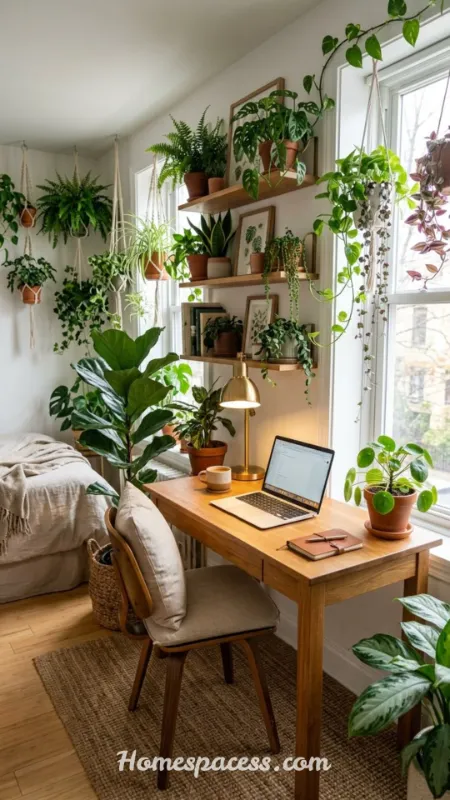
The home office plant trend is one of the most data-supported design movements of the past decade. Research from the University of Exeter found that introducing plants in a workspace increases employee productivity by 15% and reduces stress-related sick days significantly.
For remote workers and freelancers, who lack the psychological separation between work and personal life that office environments provide, a well-curated home office plant setup creates a professional, focused atmosphere that anchors the work mindset.
The most effective desk plants for focus are compact varieties that don’t visually overwhelm the workspace. Succulents, small cacti, Lucky Bamboo, and a Pothos cutting in a glass vase are excellent choices. For a more premium look, a single bonsai tree on the corner of a desk communicates intentionality and cultivates mindfulness qualities that directly support deep work and creative thinking. Pair this with a larger air-purifying plant like a Spider Plant or Rubber Tree in the corner behind you for video call backgrounds that instantly elevate your professional presence.
One insight that competitors rarely cover: the scent dimension of office plants matters enormously. Rosemary placed near your monitor releases 1,8-cineole, a compound that multiple studies link to improved memory retention and cognitive speed. Peppermint is another research-backed choice for sustained mental alertness. Treating your office plant selection as a cognitive tool rather than pure decoration gives you a meaningful, compounding edge over time.
💡 Pro Tip:
Avoid overwatering desk plants. Busy professionals tend to neglect watering, leading to a compensatory overwatering habit. Use a self-watering pot with a water level indicator it removes guesswork and prevents the #1 killer of office plants: root rot from inconsistent watering.
Must Read This Post: Trending Home Decoration Ideas to Upgrade Your Home Instantly
Minimalist Plant Styling for Modern and Scandinavian Interiors
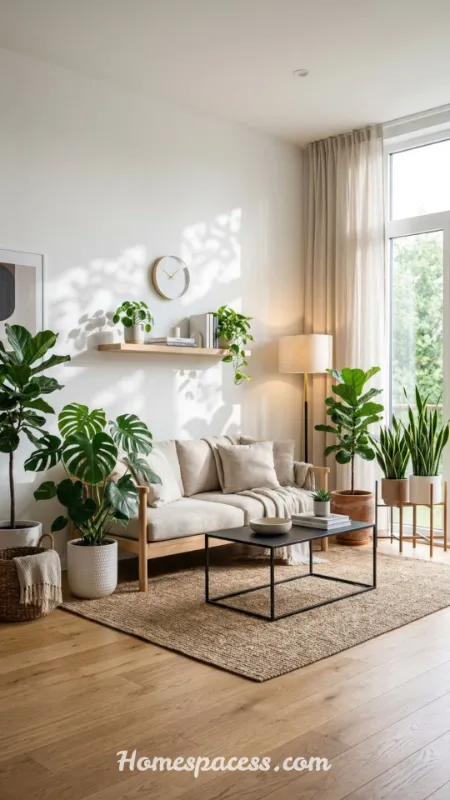
The minimalist plant aesthetic is one of the fastest-growing interior design trends of 2026, particularly among homeowners who love Scandinavian, Japandi, or modern minimalist design styles. The philosophy here is restraint with intention: one perfect plant, in one perfect pot, placed in one perfect spot.
Rather than filling every surface with greenery, the minimalist approach selects a single architectural indoor plant such as a Fiddle Leaf Fig, a Rubber Tree, or a sculptural Euphorbia and allows it to be the room’s defining feature.
Container choice is everything in minimalist plant styling. Opt for matte ceramic pots in white, warm grey, or earthy sage colors that complement but never compete with the plant itself. The pot’s texture should contrast subtly with its surroundings: a smooth matte planter against a raw plaster wall, or a tactile linen pot cover beside smooth concrete countertops. This tactile contrast principle is the hallmark of professionally styled interiors and the detail that makes a single plant look like a carefully curated art installation.
The Japandi approach a design hybrid of Japanese and Scandinavian aesthetics adds a philosophical layer to plant curation. Choose plants that embody wabi-sabi: beauty in imperfection. An asymmetrically branched Olive Tree in a pot, or a weathered bonsai Ficus with exposed surface roots, perfectly captures this principle. These are plants that tell a story of time and growth the antithesis of the generic, mass-produced aesthetic and a powerful expression of personality in any home.
💡 Pro Tip:
For true minimalist impact, never use decorative moss, pebbles, or other ‘pot toppers’ unless they serve a functional purpose (like moisture retention). Let the plant and pot speak for themselves decorative additions often undermine the clean, intentional look minimalist styling aims for.
Terrariums and Glass Garden Displays for Small Spaces
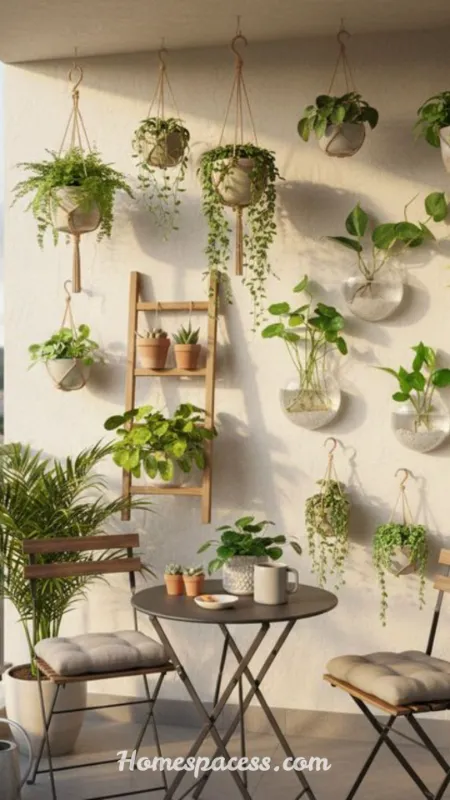
A terrarium is one of the most ingenious indoor plant ideas for small spaces it’s essentially a miniature ecosystem contained within a glass vessel. Open-top terrariums work brilliantly for succulents and cacti, while closed terrariums (sealed glass containers) create a self-sustaining, low-maintenance micro-garden that can go weeks without any attention at all. The closed terrarium’s internal water cycle evaporation, condensation, and reabsorption makes it one of the few truly self-sufficient indoor plant displays available to busy homeowners.
The design possibilities with terrarium styling are extraordinary. Use a geometric glass terrarium for a modern, angular look on a coffee table. Repurpose a large apothecary jar for a Victorian botanical feel on a bookshelf. For children’s rooms, a fairy garden terrarium complete with miniature figurines and moss creates a magical, living storybook that educates and enchants simultaneously. The key to a beautiful terrarium is layering: drainage gravel, activated charcoal, quality terrarium soil, and then plants graduated in height from back to front.
What most terrarium guides fail to mention is the long-term maintenance protocol. Closed terrariums require pruning every 3–4 months to prevent overcrowding and moisture imbalance. Use long, narrow scissors (bonsai tools are ideal) to trim overgrown plants without disturbing the closed environment. If condensation becomes excessive and the interior fogs up persistently, briefly open the lid for 1–2 hours to release moisture. This micro-management approach keeps your terrarium thriving for years even decades rather than collapsing within months.
💡 Pro Tip:
Add a single piece of activated charcoal from aquarium supply stores to your terrarium’s drainage layer. It acts as a natural filter, absorbing toxins and preventing the bacterial buildup and ‘swampy’ smell that plagues many long-term terrariums.
Propagation Stations as Living Art and Décor
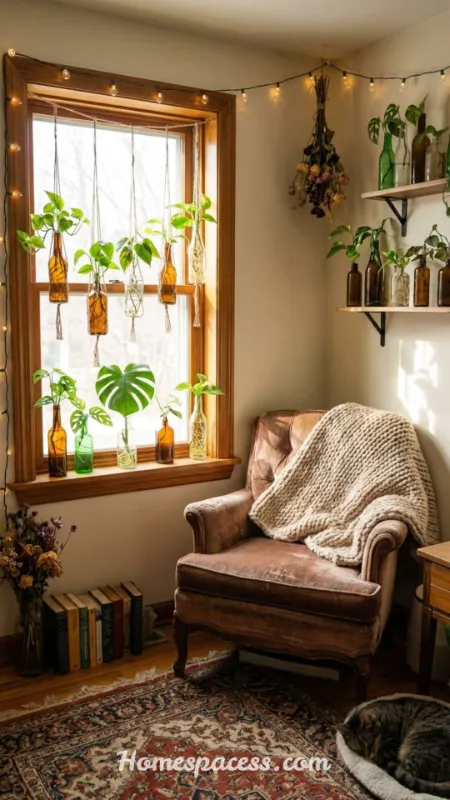
One of the most exciting indoor plant trends to emerge in recent years is the propagation station a curated display of plant cuttings rooting in glass vases, test tubes, or bud vases filled with water. Beyond being a cost-free way to expand your plant collection, a propagation wall or shelf is a genuinely stunning living art installation that showcases the biology of growth in real-time. Watching roots emerge and extend in clear glass over days and weeks creates a connection to the natural world that no static artwork can replicate.
The most visually striking propagation stations use uniform vessels matching chemistry test tubes mounted on a wooden wall panel, or a row of identical clear bud vases on a floating shelf. Placing your propagation display near a window allows light to filter through the water and roots, creating a luminous, jewel-like quality that’s particularly beautiful in morning light. The best plants for water propagation include Pothos, Tradescantia, Impatiens, Coleus, and virtually any variety of Begonia all of which root vigorously in plain tap water.
The economic dimension of a propagation station is compelling but often unspoken. A single Monstera Deliciosa cutting in a propagation vase can retail for $15–$40 at plant markets once it develops roots. By propagating from your existing collection, you not only decorate your home for free you build a perpetual supply of plants for gifting, swapping, or selling. In the growing plant community culture of the 2020s, propagation is both an art form and a legitimate micro-economy.
💡 Pro Tip:
Change the water in your propagation vessels every 5–7 days to prevent algae buildup and maintain optimal oxygen levels for root development. A small drop of liquid seaweed fertilizer in the water can accelerate root growth by 30–40%.
Biophilic Design with Moss Walls and Living Art
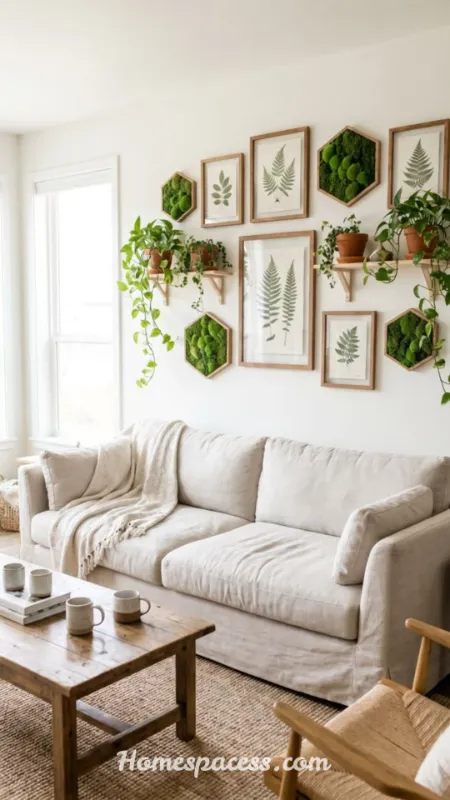
At the premium end of indoor plant ideas sits biophilic design the architectural philosophy of intentionally incorporating natural elements into built environments to support human wellbeing. Preserved moss walls and living plant walls represent the most immersive expression of this philosophy available for residential interiors. A preserved moss panel requires zero maintenance no watering, no light yet delivers the visual and psychological impact of a lush, living forest wall, permanently.
For homeowners who want living plant walls, the technology has advanced dramatically. Modern modular plant wall systems like the Naava One or DIY pocket felt systems allow anyone to create a vertical garden on virtually any wall without structural modification.
These systems use felt pocket panels that wick moisture upward from a bottom reservoir, creating a semi-self-watering system that dramatically reduces maintenance. The ideal plants for a living wall panel are compact, trailing species: Ferns, Peperomia, Nerve Plants, and String of Turtles.
What makes biophilic plant installations especially compelling from an ROI perspective is their measurable impact on property value. According to real estate staging professionals, a well-executed living or preserved moss wall can increase the perceived value of a property listing’s photography by a significant margin, leading to faster sales and better offers. In the era of Instagram home tours and Airbnb listing photography, a moss wall is one of the highest-impact, most photographable features a homeowner can install.
💡 Pro Tip:
For preserved moss walls, avoid direct sunlight and high-humidity rooms (like bathrooms). Preserved moss is treated glycerin it will reabsorb moisture in humid environments, becoming sticky and losing its texture over time. A cool, dry living room or bedroom wall is the ideal location.
Low-Maintenance Plants for Busy Professionals and Beginners
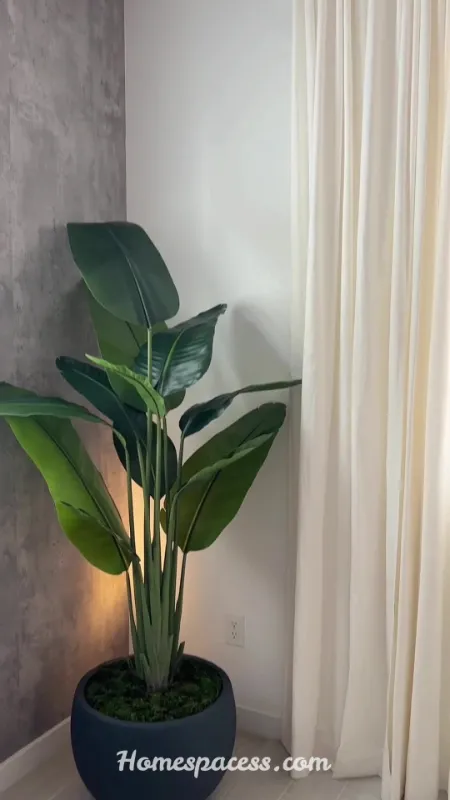
The number one reason people give up on indoor plants is the same: they chose the wrong plant for their lifestyle. High-maintenance species like Fiddle Leaf Figs or Calatheas require consistent humidity, indirect light, and careful watering schedules that busy working professionals simply can’t maintain.
The solution isn’t to give up on plants it’s to choose low-maintenance houseplants that are biologically engineered for resilience. The ZZ Plant, Pothos, Cast Iron Plant, and Sansevieria can survive weeks without water, thrive in low light, and bounce back from near-total neglect.
For true beginner indoor gardeners, the drought-tolerant plant family offers the gentlest learning curve. Succulents and cacti can go 2–4 weeks between waterings, require only a sunny windowsill, and come in an extraordinary variety of shapes, colors, and textures.
A curated tray of 8–10 matching succulent varieties in uniform terracotta pots is one of the most visually impactful and virtually unmissable indoor plant displays you can create. Varieties like Echeveria, Haworthia, Aloe, and Sempervivum together create a rich tapestry of organic forms.
A groundbreaking development that many plant care guides haven’t fully addressed yet: smart self-watering planters with built-in sensors and app connectivity. Products like the Lua Smart Planter or Parrot Pot now monitor soil moisture, light levels, and fertilizer needs in real time, sending notifications to your phone when your plant needs attention.
This technology essentially removes the guesswork from plant care entirely, making it possible for even the most absent-minded plant owner to maintain a thriving, lush indoor plant collection with zero expertise.
💡 Pro Tip:
If a Pothos or Sansevieria’s leaves begin to yellow, overwatering is almost always the culprit. Before adding any water, always insert your finger 2 inches into the soil. Water only when it feels completely dry at that depth this single habit eliminates 80% of beginner plant failures.
Seasonal and Rotating Plant Collections for Year-Round Color
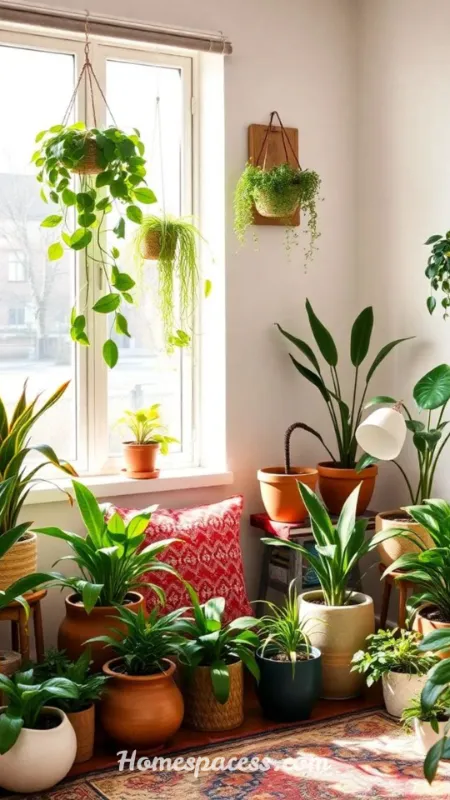
The most sophisticated indoor plant enthusiasts treat their plant collections the way a curator treats an art gallery: with intentional rotation and seasonal refresh. Rather than committing to a fixed plant arrangement, they maintain a rotating seasonal plant collection that evolves through the year.
In spring, flowering indoor bulbs like Amaryllis, Hyacinths, and Paperwhites take center stage. Summer welcomes vibrant Anthuriums and Bromeliads. Autumn calls for warm-toned Crotons and Begonias, while winter features Amaryllis and Christmas Cacti in festive bloom.
This seasonal plant rotation strategy keeps your interiors feeling fresh and intentional throughout the year and it prevents the visual monotony of a static arrangement that slowly fades into the background. The practical approach is to maintain a plant nursery corner in a bright utility room or spare bedroom where off-display plants rest, recover, and grow between their feature periods. This backstage area concept is borrowed directly from professional interior plant styling agencies that rotate plants between commercial clients on a monthly basis.
The economic efficiency of seasonal rotation is also worth highlighting. A single Amaryllis bulb purchased in winter can be reflowered for 5–7 consecutive years with simple aftercare. An Orchid that finishes blooming can be reflowered in as little as 8–12 weeks by cutting the spike above a node and placing the plant in a bright, slightly cooler location at night. This approach transforms what most people see as disposable seasonal plants into long-term, valuable members of a curated indoor plant collection.
💡 Pro Tip:
After a Christmas Cactus finishes blooming, give it a 6-week ‘dry rest’ in a cool (55–60°F), dark location with watering reduced to once every 3 weeks. This cold, dark rest triggers the hormonal response that sets the bud for the next season’s bloom cycle skipping this step is why most Christmas Cacti only bloom once.
Conclusion
Transforming your home with indoor plants is one of the most rewarding, scientifically supported, and visually impactful investments you can make in your living environment. From statement floor plants and hanging vine displays to biophilic moss walls and smart self-watering systems, the ideas in this guide cover every room, lifestyle, and design aesthetic. The key is to start with your space’s specific light and humidity conditions, then choose plants that match your maintenance capacity not just your aesthetic ambition.
The most important takeaway is this: there is no ‘wrong’ way to bring plants into your home, as long as you understand the plant’s needs and give it an environment where it can thrive. A single, healthy, well-positioned indoor plant will always outperform a dozen struggling, neglected ones. Start with one idea from this guide, master it, then build from there.
Ready to green your space? Pick one idea from this guide and try it this weekend your home (and your wellbeing) will thank you.
Advanced Sections
2026 Indoor Plant Trends & Future Forecast
The indoor plant industry in 2026 is no longer a passive décor category it has evolved into an active, technology-driven lifestyle sector. The dominant trend of the year is plantscaping as wellness architecture: the deliberate, room-by-room integration of specific therapeutic plants based on a space’s psychological function.
Sleep hygiene plants for bedrooms, focus-enhancing plants for offices, and conversation-stimulating plants for social spaces are all being specified by a growing class of certified interior plantscapers a profession that barely existed a decade ago.
The rare and exotic houseplant market continues to surge, driven by social media plant communities and the cultural cachet of owning a coveted species. Variegated Monstera, Philodendron Pink Princess, and Hoya Kerrii still command premium prices, but the trend is democratizing as tissue-culture propagation makes rare varieties more accessible.
In parallel, the air-purifying plant category has gained renewed scientific attention following pandemic-era indoor air quality awareness, and we’re seeing a significant uptick in demand for formaldehyde-absorbing and VOC-filtering species like Bamboo Palm, Peace Lily, and English Ivy.
Looking forward to 2027–2030, the indoor plant future is being shaped by three converging forces: bioengineering (lab-grown plants optimized for specific air pollutants), AI-assisted plant care (apps that use computer vision to diagnose plant health from photos), and plant-integrated architecture (buildings where plants are structural, not decorative).
The Neom TROP City project in Saudi Arabia and various European green building standards are already mandating a minimum biophilic density in new commercial builds a precedent that will inevitably migrate to residential standards.
Expert Insights and Real-World Plant Optimization
Professional interior plant stylists and biophilic design consultants consistently emphasize one principle that amateur guides ignore: the plant-to-space ratio. Research from Wageningen University in the Netherlands suggests that the optimal biophilic density for measurable wellbeing benefits is approximately one medium-to-large plant per 9 square meters of living space. Below this threshold, the psychological impact is negligible. Above it, the maintenance burden can outweigh the benefits for most non-professional caretakers.
Another insight from professional practice: grouping plants of similar water requirements dramatically simplifies care and reduces failure rates. Create dedicated plant care zones a tropical corner of moisture-loving Ferns and Calatheas near a humidifier, a drought-tolerant shelf of succulents and cacti on the sunniest windowsill, and a low-light zone of ZZ Plants and Pothos in the darker corners. This microclimate zoning strategy mirrors how professional botanical gardens are organized and results in far healthier plants with less effort.
For rapid transformation of a space, experienced plant stylists recommend the Rule of Three: never place a single plant in isolation. Group three plants of different heights, textures, and leaf shapes together on any surface. A tall, architectural plant, a medium bushy plant, and a trailing or ground-level plant together create a miniature landscape that feels intentional and rich far more impactful than any single specimen, however beautiful, placed alone. This principle is the foundation of professional plant display design and consistently produces results that outperform any single-plant placement.
Sustainability, Air Quality & Long-Term Value of Indoor Plants
The sustainability story of indoor plants is compelling and frequently underrepresented. Unlike almost any other form of home decoration, a healthy houseplant actively improves its environment over time rather than degrading. As plants mature, their biomass and surface area increase, meaning their air-purifying capacity, their ability to regulate humidity, and their visual impact all grow with them. A Rubber Tree that cost $15 as a seedling can grow into a 6-foot architectural specimen worth over $150 in retail, representing a 1000% return on investment over 3–5 years.
From an environmental perspective, choosing ethically sourced houseplants matters. Look for plants grown by certified sustainable nurseries that use peat-free compost, recycled plastic pots, and chemical-free propagation practices. The growing availability of tissue-cultured rare plants is also positive from a conservation standpoint it removes pressure from wild plant harvesting, which has historically decimated certain orchid, cycad, and cactus populations in their native habitats. Supporting responsible plant vendors is a meaningful way to participate in the plant conservation movement.
The long-term value of indoor plants extends beyond personal benefits to measurable property value impact. A 2024 UK study by Rightmove found that properties with visible indoor plant styling in listing photographs sold faster and at higher prices than comparable properties without visible greenery. Biophilic design features including indoor plants, moss walls, and living walls are now recognized by top real estate professionals as legitimate value drivers, particularly in urban markets where buyers are hungry for any connection to nature.
Future Predictions & Upcoming Innovations in Indoor Planting
The next decade will fundamentally transform what indoor plants are capable of. In 2024, MIT researchers announced the successful development of nanoparticle-enhanced houseplants capable of detecting environmental toxins and signaling their presence through fluorescent leaf glow effectively turning a houseplant into a living air quality sensor.
While this technology remains in research phases, its commercial deployment within this decade is widely anticipated and would represent the most significant evolution in indoor plant functionality since the NASA Clean Air Study.
On the design frontier, AI-powered plant recommendation platforms are already emerging that analyze a home’s floor plan, window orientation, humidity levels, and lifestyle data to generate a fully optimized, personalized indoor plant placement map.
These tools some of which integrate with smart home systems represent the convergence of horticulture, interior design, and machine learning. Platforms like Planta AI and Smart Plant are early iterations, but within 3–5 years, expect fully integrated biophilic design AIs that specify plants, containers, placement, and care schedules with the precision of a professional consultant.
Perhaps most exciting is the emerging field of bio photonic plant walls installations that combine living plants with embedded LED systems that respond to the plant’s bioelectric signals. These symbiotic plant-light systems change color and intensity in response to the plant’s growth cycles and environmental stress responses, creating a living, breathing art installation that is simultaneously decorative, functional, and biologically interactive. Several European design studios have already debuted commercial versions, and residential availability is projected within the next 3 years.
Common Mistakes and Overlooked Factors in Indoor Plant Care
The most damaging mistake in indoor plant care is also the most common: watering on a schedule rather than on need. Plants don’t operate on a calendar they respond to temperature, humidity, light levels, pot size, and growth stage.
Watering every Sunday regardless of conditions is a prescription for either root rot (overwatering in winter) or chronic drought stress (underwatering during a summer heatwave). The correct approach is always moisture-based watering: check the soil before watering every time, without exception.
The second most overlooked factor is pot selection and sizing. Many beginner plant owners assume that a larger pot is always better, when in fact overpotting placing a plant in a container far larger than its root ball is a leading cause of root rot and poor growth.
Excess soil volume holds moisture far beyond what the plant’s roots can absorb, creating perpetually wet conditions at the pot’s base. Always upgrade pot size incrementally no more than 1–2 inches larger in diameter than the previous container and ensure every pot has adequate drainage holes.
Finally, the most consistently overlooked dimension of indoor plant health is dust management. Indoor plant leaves, particularly large-leafed species like Monsteras and Rubber Trees, accumulate a significant layer of household dust on their surfaces within weeks.
This dust layer blocks the stomata (the tiny pores through which plants exchange gases and absorb CO2) and reduces light absorption by up to 30%. Simply wiping leaves gently with a damp cloth every 2–3 weeks can dramatically improve a plant’s photosynthetic efficiency, growth rate, and air-purifying performance and it costs nothing.

Team Home Spacess shares simple, practical design ideas that work for real families. The team focuses on cozy décor, soft colors, and natural textures that make a space feel truly lived-in. From everyday decorating tips to creative home projects, Team Home Spacess is dedicated to helping readers create warm, comfortable, and inviting spaces with a fresh and personal touch.