

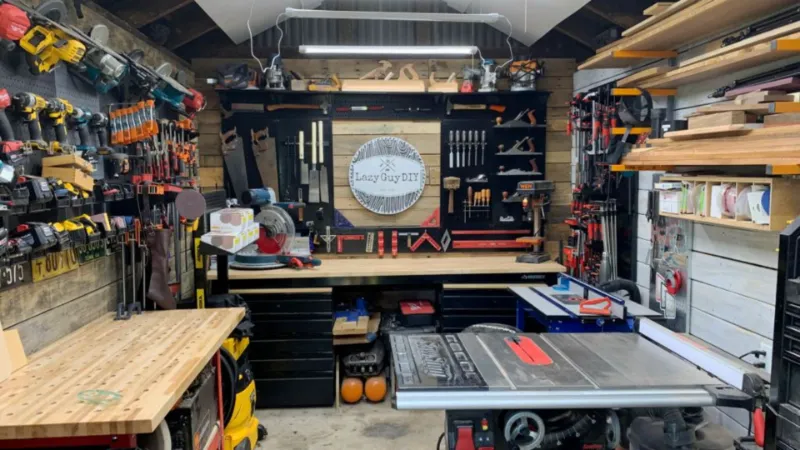
Most home workshops fail for one reason: they were never actually designed they just happened. Tools pile up wherever there’s an open surface, cords snake across the floor, and every project starts with ten minutes of searching before any real work begins. If that sounds familiar, the problem isn’t your skill level. It’s your layout.
The good news is that smart workshop design ideas can turn even a cramped garage corner into a space that works with you instead of against you. This guide walks through practical, tested workshop layout strategies from workbench design and tool organization to lighting, flooring, and ventilation so you can build a home workshop that’s safer, faster to work in, and genuinely enjoyable to spend time in.
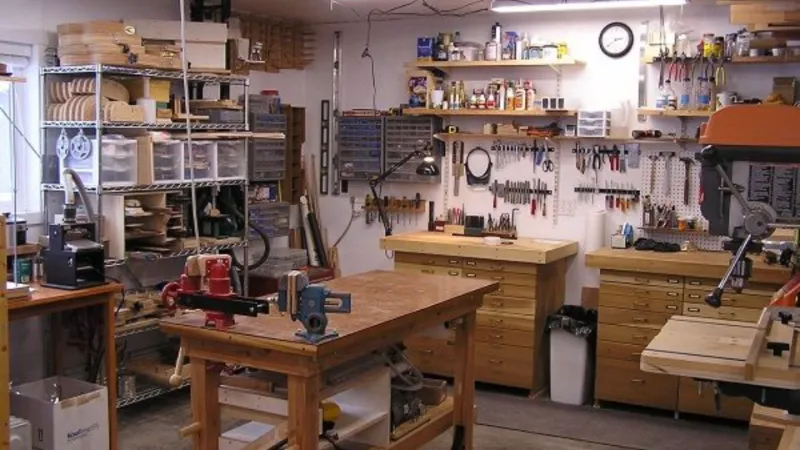
Whether you’re planning a full garage workshop renovation or optimizing a small shed, these ideas are built around real-world use, not just Pinterest-perfect photos. Let’s get into the details.
Zone-Based Workshop Layout for Maximum Efficiency
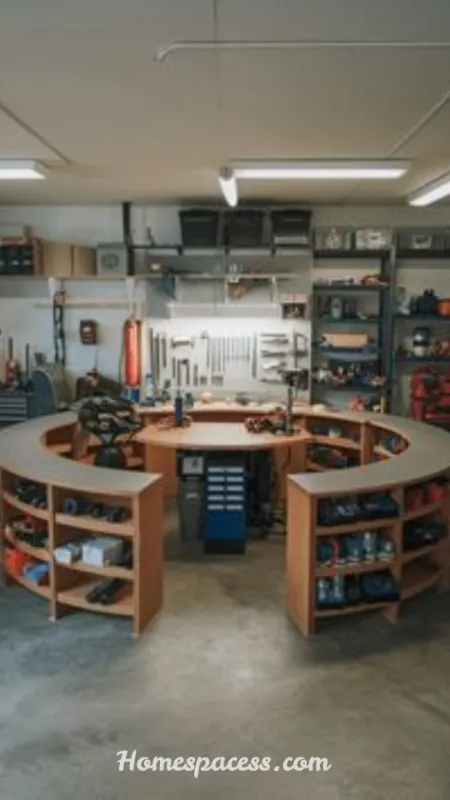
The single biggest upgrade you can make to any workshop design is dividing the space into functional zones: a cutting zone, an assembly zone, a finishing zone, and a storage zone. Instead of one chaotic work area, each zone has its own tools, surfaces, and airflow needs which means less walking, less backtracking, and far fewer misplaced items.
For example, a woodworker who used to carry lumber across a 400-square-foot garage every time she needed to rip a board redesigned her space into three zones along one wall. Cutting time dropped noticeably simply because materials, tools, and dust collection were all within arm’s reach of each other.
This kind of workshop layout planning also scales down beautifully. Even a one-car garage can support a mini cutting zone and a mini assembly zone if you use vertical dividers or rolling carts to define the boundaries without permanent walls.
Style Note:
Use different flooring mats or floor tape colors to visually separate zones it’s a subtle design choice that also reinforces safe workflow habits.
Pro Tip:
Sketch your zone layout on paper first and walk through your three most common projects mentally. If you cross your own path more than twice, rearrange before you build anything permanent.
Recommended for You: 27 Salon Interior Design Ideas That Turn Clients Into Loyal Fans
Multi-Level Wall Storage Systems
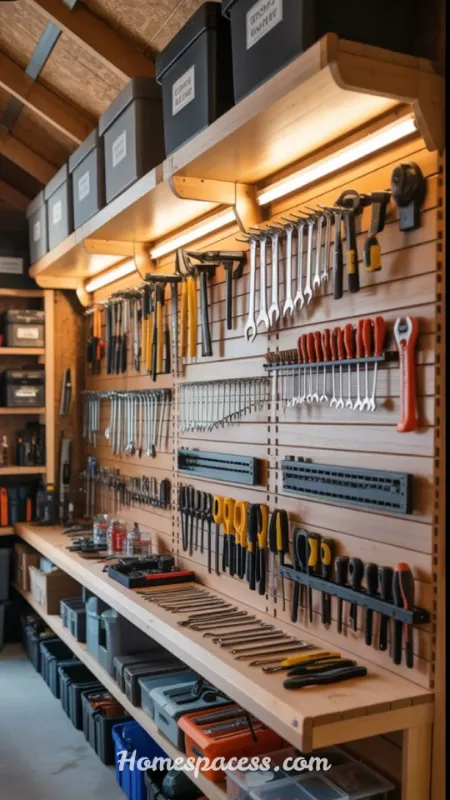
Floor space in a workshop is precious, which is why wall storage should always be your first instinct before buying another cabinet. A multi-level system combining a lower shelf for bins, a mid-level pegboard, and upper shelving for bulk items can hold three times the tools of a single flat wall without eating into your walking space.
Consider a small-shed workshop where the owner installed a floor-to-ceiling wall grid system. What used to be a cluttered 8×10 shed suddenly had room for a full workbench because nearly every tool moved to the wall. This is one of the most overlooked workshop storage solutions, largely because people assume vertical space doesn’t matter as much as it actually does.
Style Note:
Paint wall storage panels a slightly darker shade than the surrounding wall to make tools stand out visually, which speeds up identification.
Pro Tip:
Outline each tool’s silhouette on the wall storage panel. It cuts search time dramatically and instantly reveals when something hasn’t been returned.
More on This Topic: BBQ Patio Ideas That Transform Your Outdoor Space
Mobile and Modular Workbenches
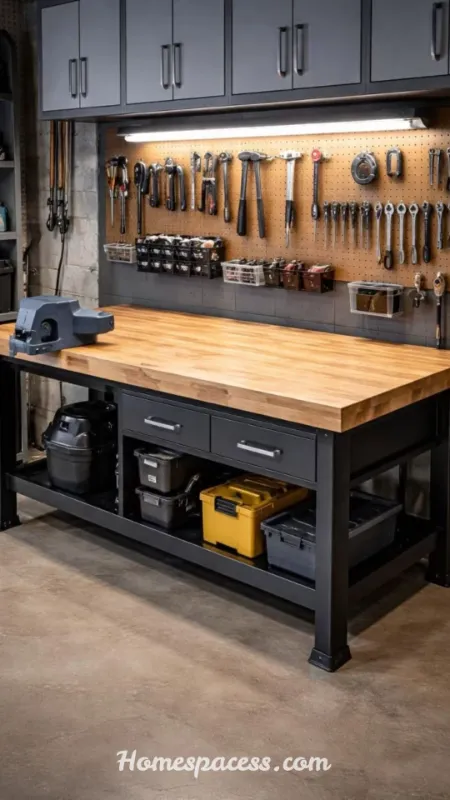
A workbench design built on locking casters gives you the flexibility of a large workshop even in a small footprint. Instead of one fixed bench, modular rolling benches can be pushed together for large projects or separated for multiple simultaneous tasks a huge advantage in shared garages.
One common real-life scenario: a homeowner sharing a garage with a parked car built two modular benches on wheels. During weekday evenings, both benches roll against the wall, freeing the floor for the vehicle. On weekends, they roll out and lock together into one 8-foot assembly surface.
This approach also protects your investment long-term, since modular components can be reconfigured as your projects and tools change, rather than being replaced entirely.
Style Note:
Choose a consistent wood tone or matte black hardware across all modular pieces so the workshop feels cohesive even when benches are rearranged.
Pro Tip:
Add locking casters rated for at least twice your bench’s loaded weight undersized casters are a leading cause of tipping accidents in mobile setups.
You May Also Like: Inspiring Yoga Room Ideas to Create Your Perfect Sanctuary at Home
Pegboard and Slat-Wall Tool Organization
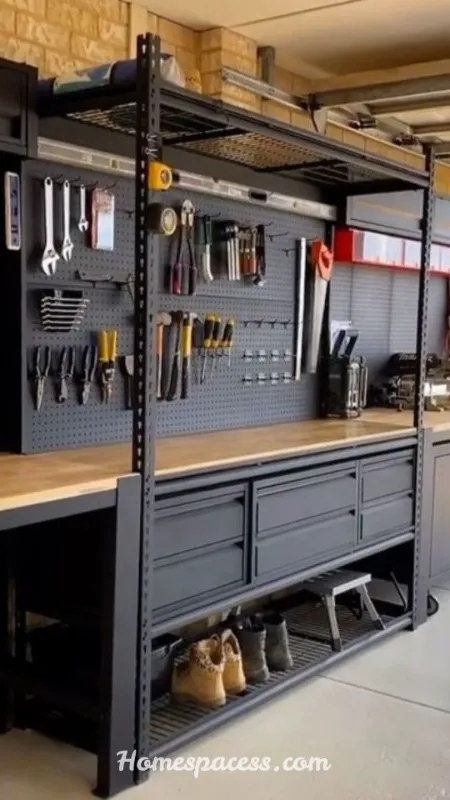
Pegboards remain one of the most efficient tool organization systems because they’re endlessly reconfigurable. Slat-wall systems take this further with heavier-duty hooks, bins, and shelf brackets that can support power tools, not just hand tools.
A practical mini case study: an electrician converting his garage into a side-business workshop mounted slat-wall panels above his bench and color-coded hooks by trade red for electrical tools, blue for plumbing, yellow for general hand tools. He reported cutting his daily setup time by roughly a third simply from not hunting for tools.
Style Note:
Group tools by project type rather than tool type it mirrors how you actually work, not how a hardware store organizes inventory.
Pro Tip:
Leave 15–20% of your pegboard empty when you first install it. New tools and jigs accumulate faster than most people plan for.
See Related Articles: Gaming Desk Ideas: Stylish and Functional Setups for Every Budget
Dedicated Dust Collection and Ventilation Zones
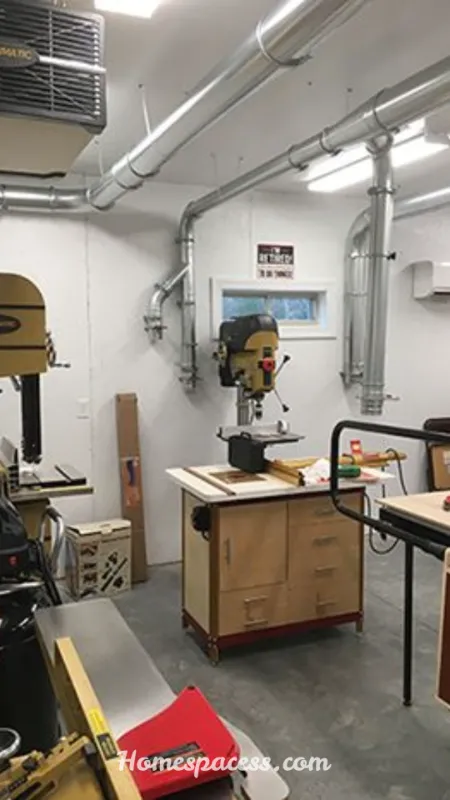
Good workshop ventilation isn’t just about comfort it directly affects tool longevity, air quality, and safety around finishing chemicals. A dedicated dust collection zone near saws and sanders, paired with a separate ventilated area for staining or painting, keeps airborne particles from spreading across the whole space.
For instance, a small-scale furniture builder installed a central dust collector with flexible ducting to three stations. Instead of a fine layer of sawdust settling on every surface including his lungs the collector captured most particulates at the source, and his ambient dust levels dropped enough that he stopped needing a respirator for routine cuts.
Style Note:
Route ducting along the ceiling rather than the floor whenever possible; it keeps walkways clear and visually declutters the workshop.
Pro Tip:
Position your finishing area near an exterior wall so you can add a through-wall exhaust fan cross-ventilation matters far more than a single open door.
Explore More: Backyard Design Ideas to Create Your Dream Outdoor Space
Overhead Storage for Seasonal and Bulky Items
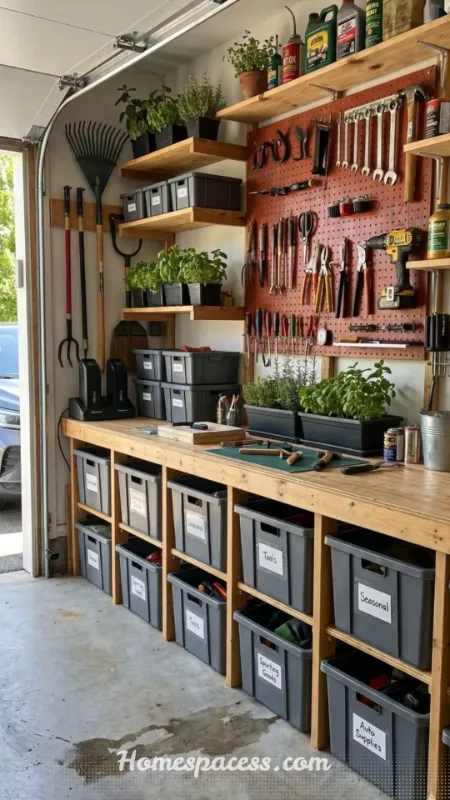
Overhead storage racks are an underused strategy for keeping bulky or seasonal items holiday decorations, extra lumber, rarely used equipment out of prime working space without losing access entirely. This frees ground-level and wall storage for daily-use tools.
A homeowner with a two-car garage workshop reclaimed nearly 60 square feet of usable floor space by installing ceiling-mounted racks for items used only a few times a year. The workshop itself didn’t get bigger, but it functioned like it did.
Style Note:
Use clear or labeled bins on overhead racks so contents are identifiable from the ground, avoiding unnecessary climbing.
Pro Tip:
Keep overhead racks at least 12 inches below ceiling joists and confirm weight ratings before loading many failures come from mounting into drywall instead of structural framing.
Discover More: Apartment Balcony Ideas to Turn Your Tiny Outdoor Space Into a Cozy Retreat
Task-Specific Lighting Design

General overhead lighting is rarely enough for detailed work. A well-planned workshop lighting design layers ambient ceiling lights with focused task lighting over the workbench, saw table, and finishing area, reducing shadows exactly where precision matters most.
Consider a hobbyist who struggled with uneven cuts for months before realizing his single center-mounted fixture was casting a shadow directly across his cutting line. Adding an adjustable LED bar above the saw angled to eliminate that shadow solved an accuracy problem he had misdiagnosed as a tool issue.
Style Note:
Choose LED fixtures around 4000K–5000K color temperature; it renders wood tones and paint colors more accurately than warmer bulbs.
Pro Tip:
Install task lighting on a separate switch from ambient lighting so you can adjust brightness by activity without rewiring anything.
Epoxy and Rubber Flooring Solutions
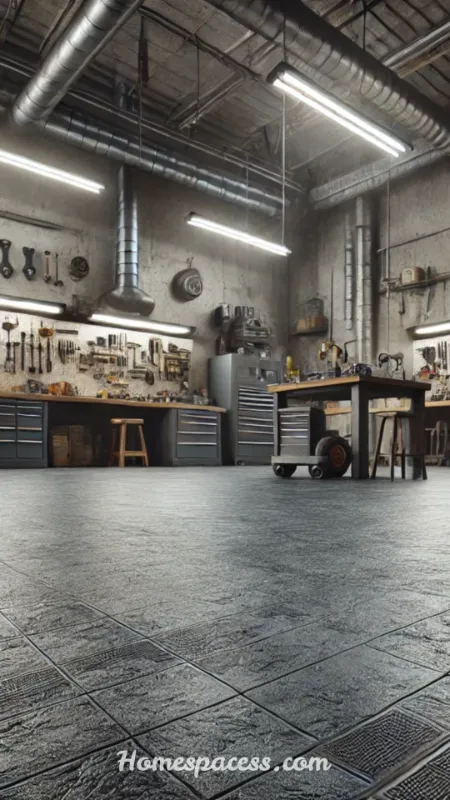
Workshop flooring takes constant abuse from dropped tools, rolling carts, and spilled finishes, which is why bare concrete rarely holds up well long-term. Epoxy coatings resist stains and are easy to clean, while interlocking rubber tiles add cushioning that reduces fatigue during long stretches of standing work.
A metalworker who switched from bare concrete to anti-fatigue rubber tiles near his workbench reported noticeably less lower-back strain after full-day sessions a small design change with an outsized comfort payoff.
Style Note:
Use a two-tone flooring layout epoxy in cutting and finishing zones, rubber tiles at standing workstations to reinforce your zone-based layout visually.
Pro Tip:
Let epoxy cure fully (often 5–7 days) before rolling in heavy equipment; rushing this step is a common cause of premature peeling.
Compact Workshop Ideas for Small Garages
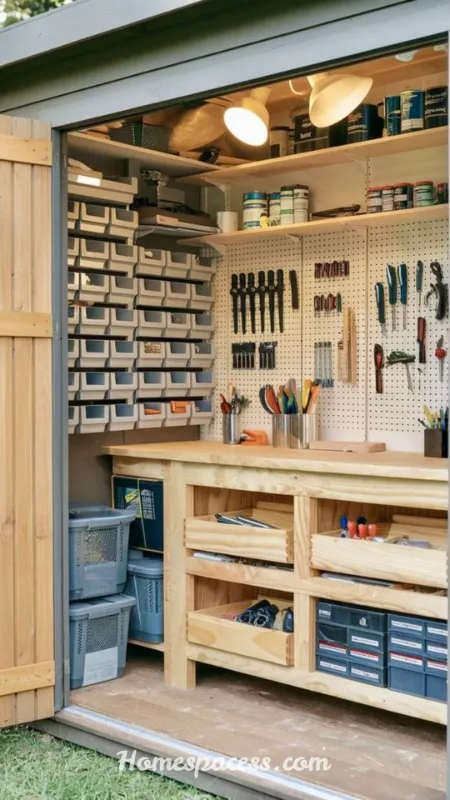
A small workshop doesn’t have to mean a limited one. Fold-down workbenches, wall-mounted tool cabinets, and stackable storage bins let a single-car garage support serious project work while still parking a vehicle overnight.
One renter with no permanent garage access built an entire compact workshop into a 4-foot-wide closet using a fold-out bench and slim pegboard walls. It’s proof that thoughtful workshop design ideas matter more than square footage.
Style Note:
Light, neutral wall colors make small workshops feel more open and help tools stand out against the background.
Pro Tip:
Prioritize fold-away or wall-mounted tools over floor-standing versions whenever your footprint is under 150 square feet.
Safety-First Electrical and Outlet Planning
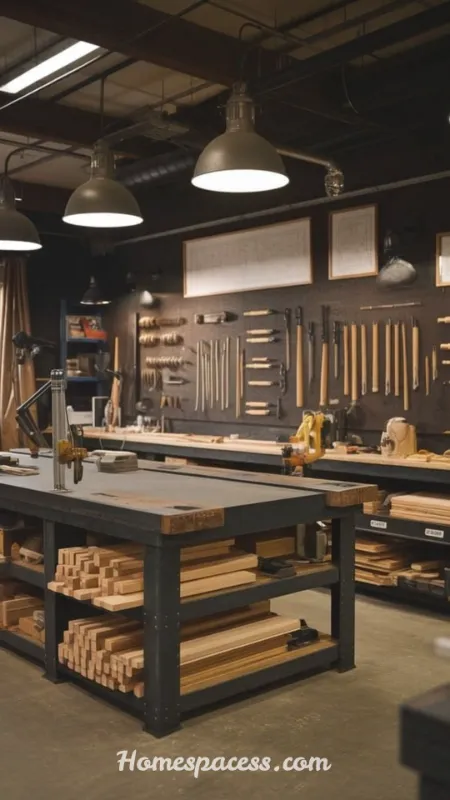
Electrical planning is one of the most overlooked parts of workshop design, yet it’s central to both safety and convenience. Placing outlets every 3–4 feet along workbench height, rather than relying on extension cords, reduces trip hazards and keeps power tools running on dedicated circuits.
A common real-life scenario involves a workshop that tripped its breaker constantly because a table saw, dust collector, and air compressor all ran off one 15-amp circuit. Splitting these onto separate 20-amp circuits solved the problem permanently and reduced fire risk in the process.
Style Note:
Use color-coded outlet covers or labels to indicate circuit groupings a small detail that pays off during troubleshooting.
Pro Tip:
Install a GFCI-protected circuit near any finishing or washing station; moisture and electricity are a combination worth over-engineering for.
Personalized Workshop Corners for Hobbies
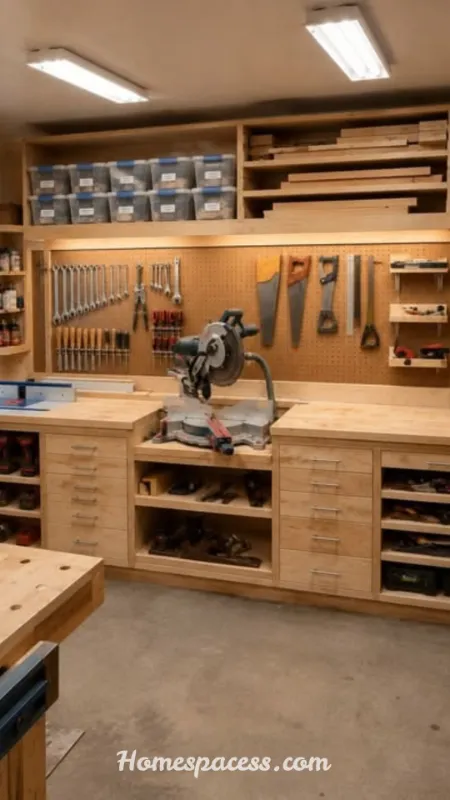
Not every workshop is purely functional many double as a creative retreat. Carving out a personalized corner for a specific hobby, whether it’s leatherwork, model building, or small-engine repair, keeps specialty tools organized while giving the space a sense of identity.
For example, a retired machinist dedicated one corner of his garage workshop to restoring vintage radios, complete with a dedicated soldering station and labeled parts drawers, separate from his general woodworking area. The separation kept delicate components from getting buried under sawdust.
Style Note:
Add a small shelf for finished projects or memorabilia in personalized corners it reinforces motivation and pride of ownership.
Pro Tip:
Keep hobby-specific corners at least a few feet from dust-heavy zones to protect sensitive materials and electronics.
Final Thoughts
Great workshop design ideas come down to one principle: build the space around how you actually work, not how it looks in a photo. From zone-based workshop layout planning to smart storage, lighting, and ventilation, small deliberate choices add up to a space that saves time and reduces frustration on every project.
Start with just one or two changes better wall storage or task lighting is a great place to begin and build from there. Your workshop design doesn’t need to be perfect on day one; it just needs to keep improving alongside your projects.
Going Deeper: Expert Perspectives on Workshop Design
Trend Analysis: Workshop Design in 2026 and Beyond
In 2026, workshop design ideas are increasingly shaped by hybrid use spaces that serve as both a traditional workshop and a home office, fitness corner, or side-business hub. This shift is pushing more homeowners toward modular furniture and mobile storage that can be reconfigured within minutes rather than fixed layouts built for a single purpose.
Smart tool tracking is also gaining traction, with Bluetooth tags and app-based inventory systems helping workshop owners locate tools instantly instead of relying purely on wall silhouettes. This trend pairs naturally with the multi-level wall storage strategies covered earlier, adding a digital layer to a physical organization system.
Compact urban living continues to drive demand for small workshop solutions, with fold-away and vertical designs becoming mainstream rather than niche. Expect manufacturers to keep expanding modular product lines specifically built for garages under 200 square feet.
Expert Insights: Practical Tips for Real-World Workshops
Experienced workshop builders consistently point to one habit that separates functional spaces from cluttered ones: a five-minute reset at the end of every session. Tools returned to their outlined spots and surfaces cleared take far less time than a full weekend reorganization later.
Another practical insight from professional shop designers is to plan electrical and lighting layouts before finalizing furniture placement, not after. Retrofitting outlets around an already-built workbench design is consistently more expensive and disruptive than planning power access first.
Finally, many experts recommend testing a layout with cardboard mockups of major equipment before committing to permanent placement. It’s a low-cost way to catch workflow problems like a saw blade throwing sawdust toward a walkway before they become permanent inconveniences.
Sustainability and Long-Term Value in Workshop Design
Sustainable workshop design isn’t just an environmental choice; it’s a long-term value strategy. Choosing durable materials like solid wood workbenches, steel-frame storage, and repairable modular components reduces replacement costs over a decade compared to cheaper particleboard alternatives that warp or break down.
Energy-efficient LED workshop lighting, motion-sensor switches, and well-planned ventilation also lower ongoing utility costs while improving air quality a combination that pays for itself within a few years for workshops used regularly.
Repurposing materials is another overlooked strategy: reclaimed lumber for shelving, salvaged cabinets for storage, or upcycled industrial carts for mobile workbenches all reduce cost and environmental impact while often adding character that off-the-shelf furniture can’t match.
Future Predictions: Where Workshop Design Is Headed
Looking ahead, expect workshop design ideas to increasingly incorporate smart sensors for dust levels, humidity, and air quality, automatically triggering ventilation systems before conditions become unsafe rather than relying on manual checks. This shifts safety from a periodic task to a continuous background process.
Modular, prefabricated wall storage panels arriving pre-wired for lighting and outlets are also likely to become more common, cutting installation time significantly compared to today’s piecemeal approach of mounting pegboards, outlets, and lighting separately.
Longer term, expect tighter integration between physical tool organization and digital inventory apps, where scanning a QR code on a wall storage bin instantly shows what’s inside, how much is left, and when it was last used turning static storage into a genuinely smart system.
Common Mistakes and Overlooked Factors in Workshop Design
One of the most common mistakes is designing a workshop layout around ideal conditions rather than actual habits planning a pristine finishing area, for instance, while ignoring that most projects generate constant dust nearby. Design for how you actually work, not an idealized version of it.
Another frequently overlooked factor is ceiling height and door clearance. Tall equipment, extended ladders, or long lumber can become unusable if door swing or ceiling height wasn’t measured before purchase, a mistake that’s expensive and frustrating to correct afterward.
Finally, many workshop owners underinvest in workshop ventilation and overinvest in tools, prioritizing the exciting purchase over the less visible infrastructure. A powerful table saw means little if dust buildup eventually damages both your lungs and your equipment’s motor over time.

Team Home Spacess shares simple, practical design ideas that work for real families. The team focuses on cozy décor, soft colors, and natural textures that make a space feel truly lived-in. From everyday decorating tips to creative home projects, Team Home Spacess is dedicated to helping readers create warm, comfortable, and inviting spaces with a fresh and personal touch.