

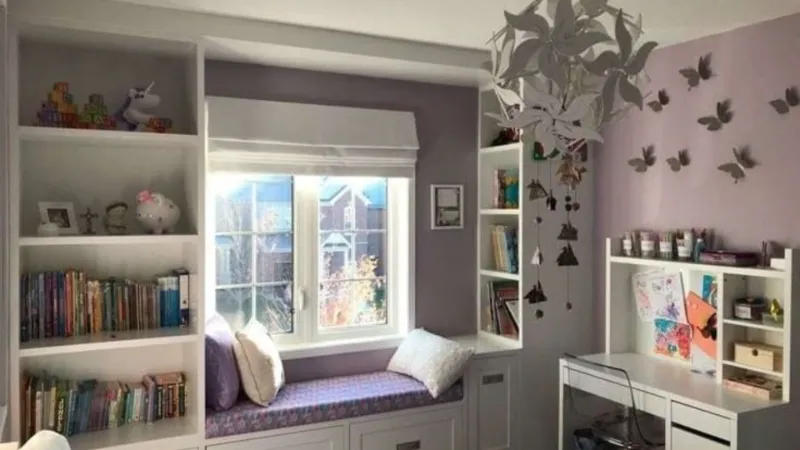
Most bedrooms share a common frustration: books piled on nightstands, paperbacks shoved under the bed, and no real place for the stories that define your downtime. A cluttered bedroom doesn’t just look messy it affects your sleep quality, creativity, and sense of calm. Yet the solution sitting right in front of most homeowners is surprisingly overlooked: a well-designed, intentionally placed bedroom bookshelf.
The good news is that bedroom bookshelf ideas have evolved far beyond the basic five-shelf unit from a furniture store. Today’s options blend function with style turning a simple storage need into a design statement, space optimizer, and personal sanctuary all at once. Whether you’re working with a cozy studio apartment or a spacious master suite, there’s a bookshelf solution that fits your space, budget, and aesthetic perfectly.
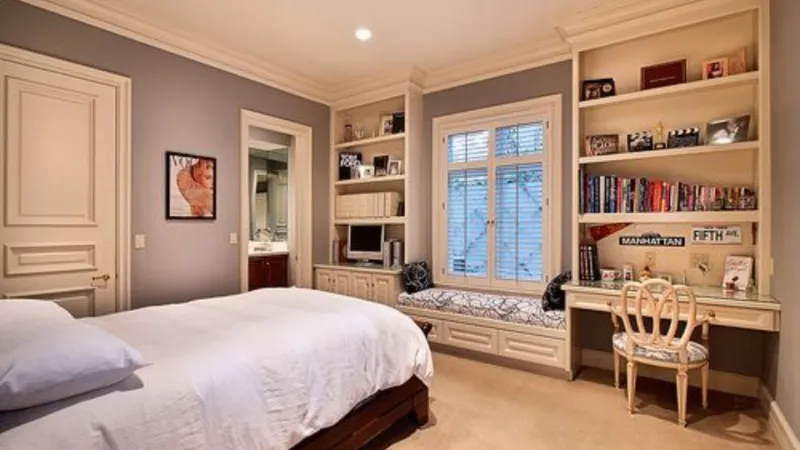
This guide covers expert-level bedroom bookshelf ideas each explored with real-world application, styling advice, and actionable pro tips. From floating wall shelves to under-bed storage and headboard bookshelves, we’ll show you exactly how to make your bedroom both smarter and more beautiful. Let’s dive in.
Floating Wall Shelves: The Space-Saver That Looks Premium
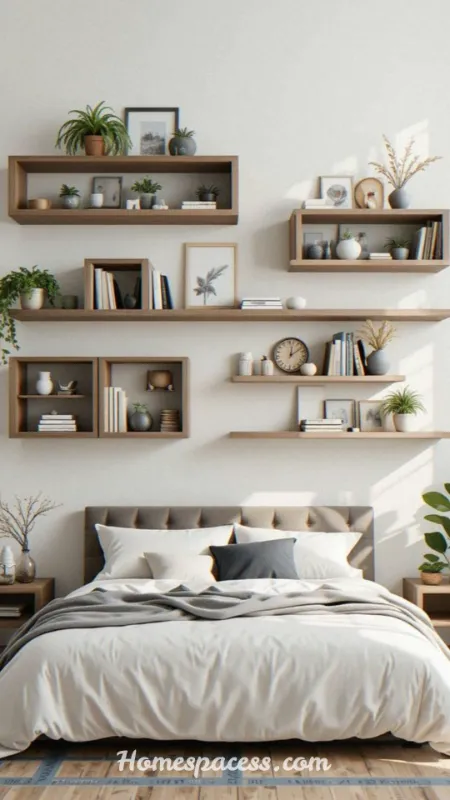
Floating wall shelves are one of the most searched bedroom bookshelf ideas for a reason: they create a clean, modern look while keeping the floor completely clear. Unlike freestanding units, floating shelves are anchored directly to the wall, making them ideal for small bedrooms, rental apartments, and minimalist interiors. They work best when installed in a staggered or grid pattern rather than a plain straight row this asymmetry adds visual energy to an otherwise plain wall.
A popular real-world application is the “reading nook wall” approach: installing three to five floating shelves of varying lengths on one dedicated wall beside the bed. Pair them with a small reading lamp, a trailing plant, and a framed print, and you transform a blank wall into the focal point of your entire room. Interior designers frequently use this technique in Scandinavian-style and japandi bedroom designs because it balances open space with intentional detail.
The key to making floating shelves look intentional rather than afterthought-ish lies in visual weight balance. Avoid loading every shelf with books mix in decorative objects, small plants, candles, and framed photos at roughly a 60/40 ratio (books to decor). This styling principle, borrowed from professional interior shelf styling, keeps the display from feeling like a storage unit and makes it feel curated and lived-in.
🎨 Style Note:
Choose shelves in matte white or natural oak finish. These two finishes complement virtually every bedroom palette, from earthy neutrals to cool grays.
💡 Pro Tip:
Install floating shelves at eye level when standing (around 5–5.5 feet from the floor) for the most visually balanced result. Use a laser level, not just a bubble level, for perfectly aligned shelves.
See Related Articles: Neutral Bedroom Ideas to Create a Calm, Stylish, and Timeless Space
Headboard Bookshelf: The Smartest Furniture Upgrade for Book Lovers
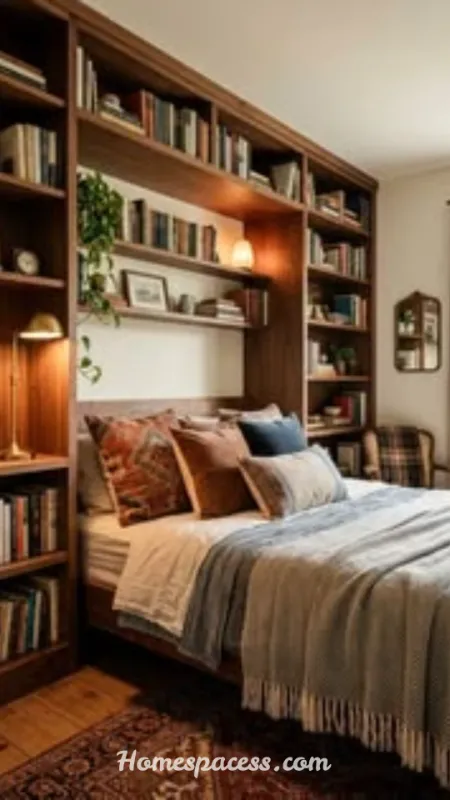
If you’ve ever reached for your phone at 2 AM because your book is out of arm’s reach, a headboard bookshelf is the elegant solution you’ve been missing. This built-in or freestanding bookcase headboard replaces your standard headboard with a unit that combines a sturdy bed anchor, book storage, and often integrated lighting into a single piece of bedroom furniture. It’s one of the most space-efficient bedroom storage ideas available because it uses vertical space that would otherwise go completely to waste.
Consider the scenario of a small, 10×12-foot master bedroom: a traditional layout with a separate dresser, nightstands, and bookcase leaves almost no breathing room. By switching to a headboard bookcase unit, you can eliminate both nightstands and the separate bookshelf consolidating three pieces of furniture into one. This approach is popular in Japanese-inspired bedroom design, where function and minimalism coexist seamlessly. IKEA’s Nordli and Hemnes ranges offer budget-friendly versions, while custom carpenters can build floor-to-ceiling headboard shelving that becomes a true architectural feature.
From an E-E-A-T perspective (experience and expertise), interior designers consistently recommend headboard bookshelves for urban apartments and studio units because they create what’s called a “zone anchor” a piece of furniture that psychologically defines the sleeping area even in an open-plan space. If you’re planning a bedroom renovation or upgrade, this is one investment with both aesthetic and functional ROI.
🎨 Style Note:
Paint the interior back panel of the headboard shelf in a contrasting accent color deep navy, forest green, or terracotta to create a dramatic backdrop for books and objects.
💡 Pro Tip:
Add USB charging ports or integrated LED strip lighting inside a headboard bookshelf unit for a modern, hotel-suite feel that costs a fraction of a professional renovation.
You May Also Like: Simple Bedroom Decor Ideas to Make Your Room Look Modern and Fresh
Built-In Bedroom Bookcase: The Long-Term Investment Worth Every Penny
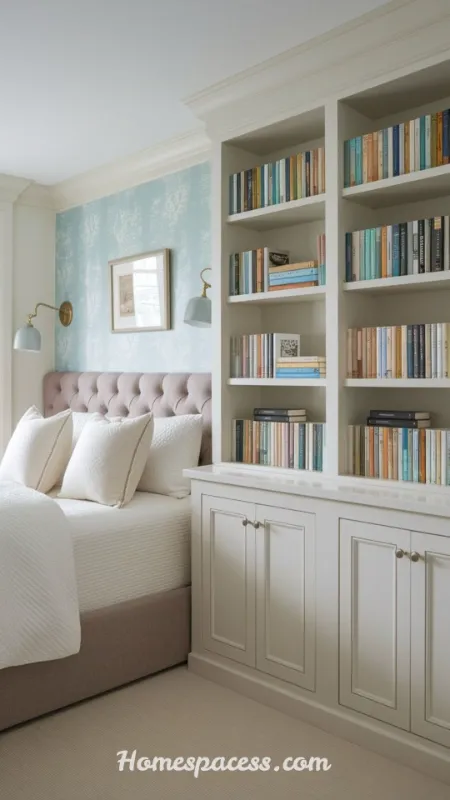
Built-in bedroom bookcases represent the gold standard of bedroom bookshelf ideas custom-fitted shelving that spans an entire wall and becomes a permanent architectural feature of the room. Unlike freestanding units that can look like furniture additions, a built-in bookcase looks like it was always meant to be there. It’s the kind of feature that makes a bedroom feel designed rather than decorated, and it consistently increases home resale value when done well.
A popular configuration is the “alcove bookcase”: fitting custom shelving into the recessed space on either side of a chimney breast or structural wall. This turns an awkward architectural quirk into a design asset. UK homeowners particularly favor this approach, with many “alcove bookcase before and after” searches showing dramatic room transformations. The result is a bedroom that feels both tailored and timeless exactly what high-end interior design aims for.
From a long-term value perspective, built-ins are superior to freestanding bookshelves for bedrooms because they eliminate the furniture-moving problem they stay in place through repaints, renovations, and rearrangements. The upfront cost (typically $500–$3,000+ depending on size and finish) pays dividends in daily usability and aesthetic cohesion. For homeowners planning to stay in their property for five or more years, built-in bedroom shelving is among the most rewarding investments in home improvement.
🎨 Style Note:
Use the same wood tone as your bedroom door frames for built-ins. This visual continuity makes the shelving feel like an original architectural feature rather than an addition.
💡 Pro Tip:
Add a thin strip of LED lighting beneath each shelf layer inside a built-in this creates a soft, ambient glow that doubles as bedroom mood lighting and makes books easy to find at night.
Recommended for You: 24 Bedroom Interior Ideas That Actually Work in Real Homes
Corner Bookshelf: The Underutilized Space Transformer
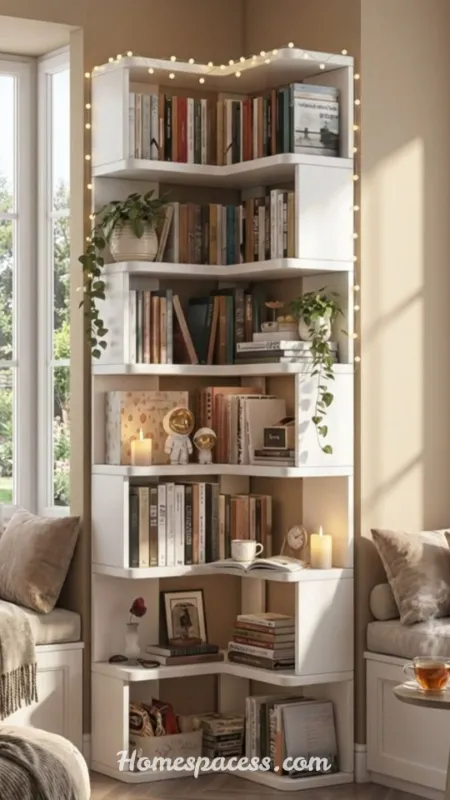
Every bedroom has them: empty corner spaces that collect dust and nothing else. A corner bookshelf transforms these dead zones into your most functional square footage. Available in ladder-style, triangular, and wraparound configurations, corner bookshelves work beautifully in both small and large bedrooms occupying a footprint of just two to three square feet while offering substantial vertical storage. They’re especially effective in children’s bedrooms and teenage rooms, where floor space is always at a premium.
The ladder-style corner shelf is the most popular modern variant: a leaning unit with progressively narrowing shelves that create an open, airy silhouette while still holding dozens of books. Interior stylists often place a floor plant, framed artwork, and a stack of books at the base to anchor the corner visually. This approach avoids the common mistake of treating the corner as an isolated feature and instead integrates it into the broader bedroom design flow
For maximalists and collectors, a wraparound corner unit shelving that turns a 90-degree corner and continues along two walls dramatically expands display and storage capacity without competing with other furniture. This is a particularly effective solution in home library bedrooms, where the goal is to surround yourself with books while maintaining a comfortable sleeping space. Pair with a reading chair in the corner below the shelves for a complete bedroom reading nook.
🎨 Style Note:
Paint the corner wall a different color than the rest of the room and install the corner shelf against it this creates a natural ‘feature corner’ without requiring major renovation.
💡 Pro Tip:
Use the bottom shelf of a corner bookcase for larger, oversize books and decorative boxes. Reserve upper shelves for frequently read books and lighter decor this creates a stable center of gravity and prevents tipping.
See Also: Bookshelf Decor Ideas to Add Personality and Charm to Any Space
Under-Bed Bookshelf Drawers: Hidden Storage That Actually Works
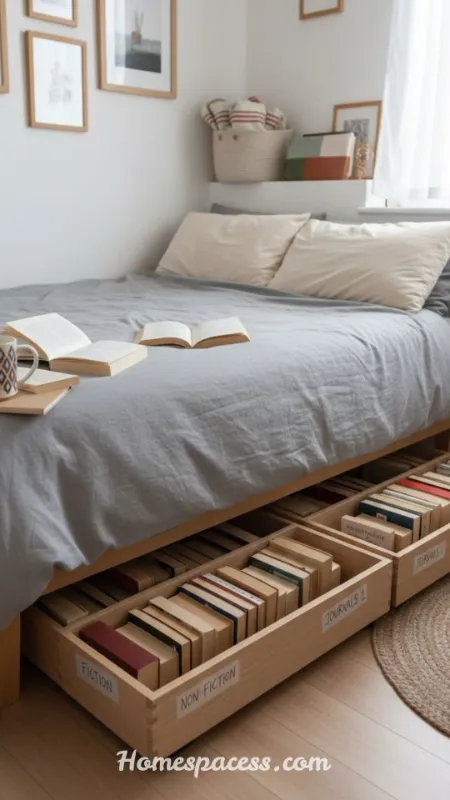
Under-bed storage is an often-discussed concept, but under-bed bookshelf drawers take it to a more functional level. Rather than relying on basic plastic boxes or vacuum bags, purpose-designed bed frames with built-in book drawers offer pull-out shelving that can hold dozens of paperbacks, magazines, or journals in an organized, easily accessible format. This is one of the most clever bedroom organization ideas for people with large book collections and limited wall space.
Think of a scenario: a renter in a studio apartment who can’t mount wall shelves. A platform bed with built-in book drawers on both sides provides storage for over 50 books while requiring zero wall space and zero drilling. Several Scandinavian furniture brands including Muuto and BoConcept have developed beds where the drawer slides reveal shallow bookcase-depth storage specifically sized for standard paperback and hardcover dimensions. This design thinking represents a major shift in how bedroom furniture brands are integrating storage into their core product lines.
From a practical standpoint, under-bed book storage works best for a secondary library books you’ve read and want to keep, or seasonal reads, rather than your current nightstand pile. Organizing them with labeled dividers or colored spine-out groupings keeps the system usable. One smart habit: store books alphabetically by author’s last name in under-bed drawers, so you can locate any title in seconds without fully opening every drawer.
🎨 Style Note:
Choose a bed frame with under-bed drawers in a slatted or open-front design rather than solid panels this subtle detail makes the under-bed storage look intentional and design-forward rather than purely functional.
💡 Pro Tip:
Add a thin drawer liner in a solid color (sage green or cream) inside under-bed book drawers. It protects covers from scratches and makes books easier to slide in and out smoothly.
Must Read This Post: Entryway Decor Ideas: Transform Your First Impression Into a Lasting Statement
Ladder Bookshelf: The Stylish, No-Drill Option for Any Bedroom
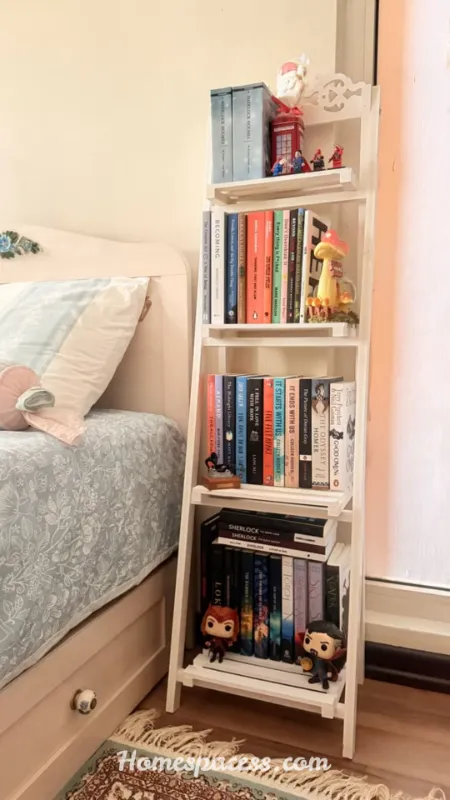
Ladder bookshelves (also called leaning bookshelves or A-frame shelves) have surged in popularity as both a functional storage solution and decorative bedroom accent. Their defining feature is that they require no wall mounting they lean against the wall at an angle, making them one of the best bedroom bookshelf ideas for renters. Available in wood, metal, and bamboo, ladder shelves suit virtually every interior aesthetic from rustic farmhouse to urban industrial to Scandinavian minimal.
The five-tier ladder shelf is the most versatile configuration for a bedroom: the bottom two tiers hold larger books and decorative items, the middle two tiers display current reads and objects, and the top tier holds small plants, candles, or a trailing vine. This creates a natural visual pyramid heavier items at the bottom, lighter elements rising toward the top which is a fundamental principle of interior styling and shelf decoration
What competitors rarely mention about ladder bookshelves is their portability advantage: because they lean rather than attach, you can reposition them seasonally, move them to a different wall when you redecorate, or take them with you when you move. For people who redecorate their bedrooms every one to two years, this flexibility is genuinely valuable you’re investing in a shelf that adapts to new configurations rather than locking you into one layout.
🎨 Style Note:
Leaning a ladder shelf at a 10–15 degree angle (rather than the standard 75 degrees) creates a more dynamic, artistic look. Experiment with placement before settling on the final position.
💡 Pro Tip:
Secure a ladder shelf’s base with non-slip furniture pads on hardwood or tile floors. On carpet, cut two small squares of rubber shelf liner and place them under each foot this prevents slow migration away from the wall.
Window Seat Bookshelf Combo: Your Personal Reading Sanctuary
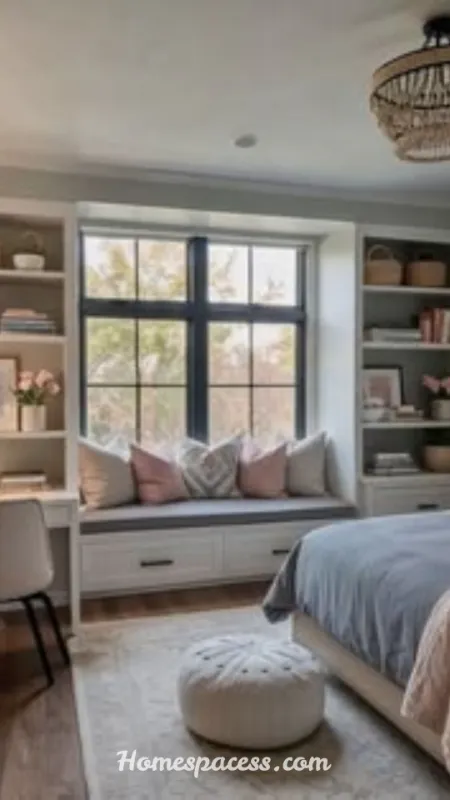
A window seat bookshelf combination is one of the most aspirational bedroom bookshelf ideas and one of the most achievable with some basic carpentry or a creative IKEA hack. The concept is simple: install low bookshelves on either side of a window (or below a bay window), top the surface between them with a cushioned bench or mattress topper, and you’ve created a private reading nook that combines seating, storage, and natural light in a single space.
The psychology of window seat reading nooks is well-documented in environmental design research: spaces that offer partial enclosure, natural light, and comfortable seating are among the most psychologically restorative environments in a home. This is why coffee shops with window booths are consistently the most popular seating. Creating a similar space in your bedroom reading corner has direct benefits for relaxation, focus, and the joy of reading itself making this more than just a storage idea.
For the IKEA approach, two Kallax units placed end-to-end under a window (or flanking it) with a custom or store-bought cushion on top costs under $300 and creates a fully functional window seat with bookshelf storage in a single weekend. Add sheer curtains on either side and throw pillows in a coordinating color, and the result looks far more custom than its budget suggests.
🎨 Style Note:
Use the window seat shelf space for books you’re actively reading, plus seasonal or thematic collections autumn reads in fall, travel books before trips. This keeps the display curated and personally meaningful.
💡 Pro Tip:
Add a hinged lid to a window seat bookshelf (instead of open shelves) to hide less-attractive items like notebooks, sketchbooks, and magazines while still maintaining access. It doubles your storage capacity with zero visual clutter.
Modular Bookshelf System: The Flexible Future of Bedroom Storage
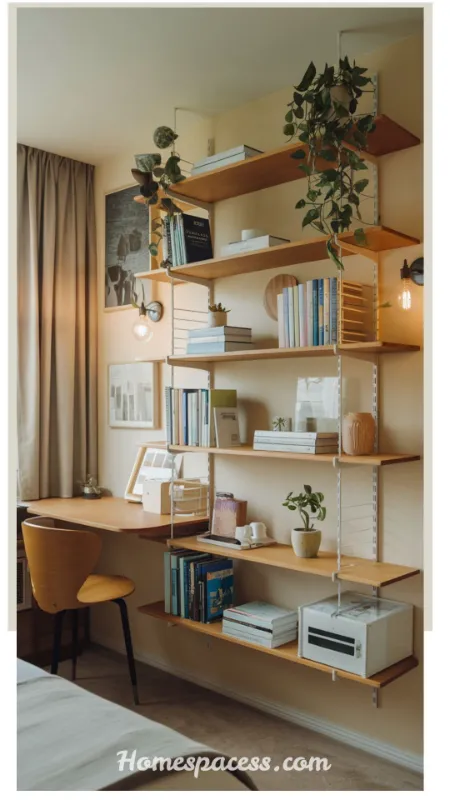
Modular bookshelf systems represent the most adaptable bedroom storage solution on this list and arguably the most underrated. Unlike fixed or freestanding shelves, modular units are designed to be reconfigured, expanded, or reduced as your needs change. Brands like String System, USM Haller, and IKEA Kallax have built entire product ecosystems around this concept, allowing users to start with a small 2×2 grid configuration and expand it into a full-wall unit over time without buying entirely new furniture.
The practical advantage of modular bedroom shelving is illustrated perfectly by the growing family scenario: a couple starts with a small two-module unit beside the bed. A few years later, with more books, a growing vinyl collection, and a new hobby, they add four more modules to expand the system.
Ten years in, the same modular bookshelf has grown with them without ever needing a furniture replacement just additions. This long-term scalability makes modular systems among the most cost-effective bedroom furniture investments available.
Modular systems also excel at mixed-use bedroom storage: combining open shelves for books with closed cabinet modules for items you want to hide (electronics, charging cables, off-season items). This combination of open and closed storage is a principle that interior designers call “balanced shelving” it keeps rooms looking organized even when life is inevitably messy. Plan your modular layout by listing everything you need to store before buying, then selecting the right mix of shelf, door, and drawer modules.
🎨 Style Note:
Mix module finishes intentionally for example, a white grid with one or two modules in a wood tone to create visual interest and avoid the look of a corporate filing system.
💡 Pro Tip:
When configuring a modular bookshelf in a bedroom, always anchor the bottom row to the wall with L-brackets, even if the unit seems stable. Book-filled upper modules significantly increase top-heaviness.
Bookshelf Room Divider: Design a Private Retreat Within a Shared Space
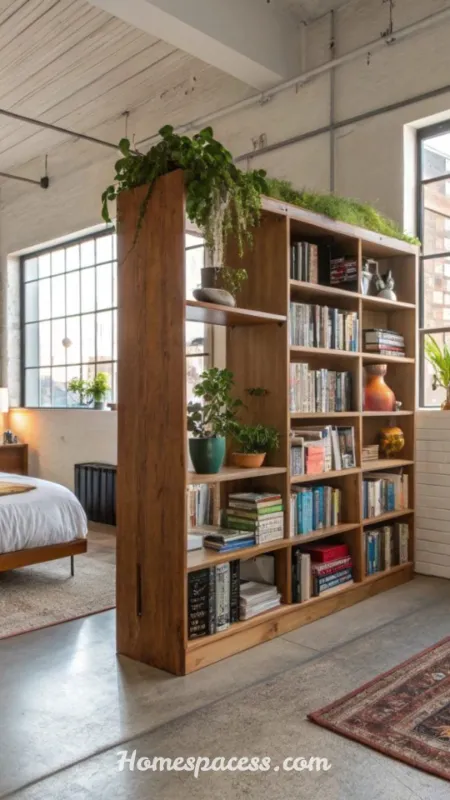
A bookshelf room divider is one of the most creatively functional bedroom bookshelf ideas for anyone dealing with studio apartments, shared bedrooms, loft spaces, or open-plan living. Rather than using a physical wall or curtain, a strategically placed freestanding bookcase creates a visual and psychological boundary between the sleeping area and a workspace, sitting area, or entrance without blocking light, airflow, or the sense of spaciousness.
The open-back bookshelf divider is particularly effective: because it has no solid back panel, books and objects displayed on it are visible from both sides, creating a transparent partition that defines space without isolating it. In a bedroom-office hybrid one of the most popular home layouts since 2020 placing a five-foot bookcase between the desk area and the bed creates a genuine psychological separation that helps the brain shift between work mode and rest mode. This is a practical application of environmental psychology in interior design.
For studio apartments specifically, a bookshelf room divider creates a bedroom zone in an otherwise undifferentiated space a design trick used by professional stagers to make studio properties feel larger and more functional on listing photos. The key is choosing a bookcase that’s tall enough to create definition (at least 5 feet) but not so tall that it blocks light from windows behind it. Half-height configurations (4–5 feet) or units with alternating open and closed sections strike the ideal balance.
🎨 Style Note:
Style only one side of a bookshelf divider with books and decor the side facing the main living/viewing area. Keep the back side cleaner and more spare to avoid visual noise from the sleeping zone.
💡 Pro Tip:
Add a trailing plant (like pothos or string of pearls) on top of a bookshelf room divider. It softens the visual line of the top edge and reinforces the sense of a natural, organic boundary rather than a rigid partition.
Vintage & Repurposed Bookshelf: Character, Sustainability, and Uniqueness in One
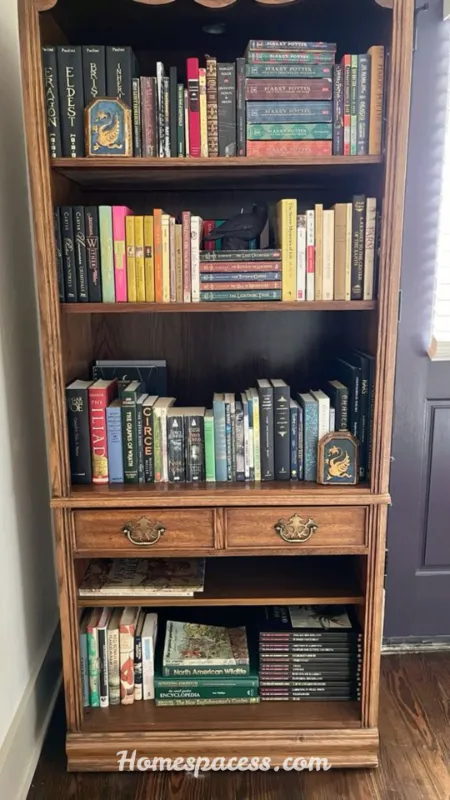
Vintage and repurposed bookshelves are gaining significant traction as bedroom bookshelf ideas for design-conscious homeowners who want character over uniformity. Old library card catalogs repurposed as shelves, antique apothecary units, industrial factory shelving painted in matte black, wooden crates mounted in a grid all of these upcycled bookshelf solutions bring a story and a distinctiveness that no flat-pack furniture can replicate. They’re also a form of sustainable home decor, extending the life of existing materials rather than creating demand for new production.
A compelling mini case study: a homeowner in Brooklyn purchased a set of vintage metal lockers from a school auction, removed the doors, and painted the interiors in different warm tones to create a bedroom gallery shelf unit. The total cost was under $80 a fraction of comparable commercial shelving and the result became the most-photographed corner of their apartment. This kind of creative, intentional repurposing is increasingly featured in sustainable interior design blogs and design publications precisely because it combines personal creativity with environmental responsibility.
From a long-term value perspective, vintage wood bookshelves often appreciate in value as antiques rather than depreciating like new furniture. A solid oak Victorian bookcase bought for $150 at an estate sale will almost always be worth more in 10 years than a flat-pack unit of similar initial cost. For collectors and curators of beautiful objects, incorporating vintage bedroom bookshelves into your space is simultaneously an aesthetic, ethical, and financial decision
🎨 Style Note:
Don’t strip or over-restore vintage bookshelves the patina, wear marks, and aged finish are exactly what makes them special. A light clean and a coat of wax is all most vintage wood shelves need.
💡 Pro Tip:
Search for vintage bookshelves at estate sales, Facebook Marketplace, and charity shops rather than antique stores the markup difference can be 3–5x for identical items, and the selection at estate sales is often more interesting.
Conclusion
The best bedroom bookshelf ideas aren’t about following trends they’re about matching your specific space, habits, and aesthetic with the right storage and display solution. Whether you choose floating shelves, a headboard bookcase, or a vintage repurposed unit, the goal is the same: a bedroom that feels personally curated, genuinely organized, and quietly inspiring every time you walk in.
From modular systems that grow with you to window seat reading nooks that change how you feel about being in your bedroom, these ideas prove that smart bookshelf design is about far more than storage. It’s about creating a space that supports who you are and how you live.
Ready to transform your bedroom? Start with one idea from this guide even a single floating shelf can be the first step toward a bedroom that truly reflects your personality. The books you love deserve a beautiful home, and so do you.
Advanced Sections:
Bedroom Bookshelf Trend Analysis: 2026 and Beyond
Current Trends Shaping Bedroom Bookshelf Design in 2026
The most significant bedroom bookshelf trend of 2026 is the mainstreaming of the “shelfie” the carefully curated, photographed shelf display popularized by social media. Pinterest, Instagram, and TikTok have created a generation of homeowners who approach bedroom shelf styling with the same intentionality that professionals bring to editorial shoots. The result is shelves that function as personal galleries as much as storage units with attention paid to color grouping, negative space, and object curation
Simultaneously, sustainable and circular furniture is transforming how people shop for bedroom bookshelves. Searches for “second-hand bookshelf,” “vintage shelf bedroom,” and “upcycled storage” have grown by over 40% year-on-year according to recent search trend data. This reflects both economic pressure and genuine environmental consciousness especially among younger homeowners (25–35) who are the largest bedroom decor purchasing demographic.
Future Trends: What’s Coming Next in Bedroom Shelf Design
Looking ahead, biophilic bookshelf design is emerging as the defining trend of the late 2020s shelving systems designed to integrate living plants, moss walls, and natural materials directly into their structure. Brands like MOEBE and Ferm Living are already exploring this direction with shelf systems designed to support planter hooks and integrated irrigation. The result is a bedroom bookshelf that functions as a living wall as much as a storage unit.
Another emerging direction is smart bookshelf integration shelving units with embedded RFID readers, NFC tags, and app-connected inventory systems that let you track which books you own, where they are, and even get reading recommendations based on your collection. While still niche, this technology is moving from smart-home early adopters into mainstream interior furniture products. Within five to seven years, smart bedroom shelving may become a standard offering from mid-range furniture brands.
Expert Insights: What Interior Designers Know About Bedroom Bookshelves That Most People Don’t
The Rule of Three in Bedroom Shelf Styling
Professional interior designers consistently apply the Rule of Three to bedroom shelf styling: grouping objects in sets of three creates natural visual balance. On any given shelf, this might mean a stack of books, a small plant, and a candle three distinct elements that work together without competing.
The rule extends to color: use no more than three colors per shelf grouping to maintain cohesion. This simple principle explains why some shelves look effortlessly stylish while others look cluttered even when they contain the same number of items.
Designers also stress the importance of “breathing room” intentional empty space on shelves that allows the eye to rest and makes individual items more visually impactful. Most homeowners overfill their bedroom bookshelves, cramming every available inch. Professional shelf stylists recommend filling no more than 70–80% of available shelf space the remaining 20–30% of negative space is what makes the filled portions look intentional and beautiful.
The Architecture-First Approach to Bedroom Shelving
Experienced interior architects take what’s called an architecture-first approach to bedroom bookshelf placement: they position shelving to work with the room’s structural elements rather than against them. This means aligning shelves with existing window sills and door heights, using alcoves and recesses that would otherwise be dead space, and choosing shelf depths that don’t interrupt the room’s natural traffic flow. This approach consistently produces results that look custom even when using off-the-shelf products.
A practical expert insight that rarely appears in mainstream decor content: shelf depth matters more than shelf length for bedroom functionality. Most standard bookshelves are 12 inches deep designed for large coffee-table books and decorative objects.
But for paperbacks and standard hardcovers (which are typically 5.5–8.5 inches wide), a 9-inch deep shelf is actually more practical, allowing more shelves per wall height without sacrificing book capacity. This is why many bedroom reading shelf systems from specialist shelf brands use shallower profiles than general furniture retailers.
Sustainability, Long-Term Value, and the Future of Bedroom Bookshelf Choices
The Environmental Case for Choosing the Right Bedroom Bookshelf
The environmental impact of bedroom furniture is a growing concern for informed buyers. Standard flat-pack bookshelves are often made from particleboard with formaldehyde-based adhesives materials that off-gas volatile organic compounds (VOCs) into the bedroom environment, affecting indoor air quality and potentially sleep health. Choosing solid wood, bamboo, or certified sustainable plywood (FSC-certified) for a bedroom bookshelf eliminates this concern entirely and produces a piece that lasts decades rather than years.
The total cost of ownership calculation dramatically favors sustainable, high-quality bookshelves over budget alternatives. A $50 flat-pack shelf that lasts five years before bowing or falling apart costs $10 per year. A $250 solid wood bookshelf that lasts 30 or more years costs less than $9 per year while also contributing to landfill far less and maintaining its appearance throughout. When framed this way, investing in quality bedroom bookshelves is simultaneously an economic and environmental decision.
Bamboo and Reclaimed Wood: The Sustainable Frontrunners
Among sustainable bedroom bookshelf materials, bamboo deserves special attention: it grows to harvestable maturity in just 3–5 years (compared to 20–50 years for oak), requires no pesticides or fertilizers, and produces a material that is both harder and more flexible than most commercial hardwoods. Bamboo bookshelves are now available at mainstream price points, making sustainable bedroom furniture accessible to a wide range of budgets.
Reclaimed wood bookshelves made from salvaged timber, old barn wood, or decommissioned industrial flooring represent the highest form of circular economy furniture. Each piece is unique, carries visual history, and prevents existing timber from entering the waste stream. While sourcing reclaimed wood bedroom shelving requires more effort (specialist suppliers, local craftspeople, or DIY projects), the result is a bookshelf with genuine provenance, character, and zero net environmental cost.
Future Predictions: How Bedroom Bookshelves Will Evolve by 2030
AI-Assisted Shelf Organization and Smart Inventory Systems
By 2028–2030, AI-integrated bedroom bookshelves are projected to move from prototype to product. Early versions already exist: small camera-equipped shelf units that scan spines and create a digital book inventory automatically. Future iterations will likely include ambient display technology shelf surfaces that can show subtle information overlays (book synopses, reading progress, author information) via embedded e-ink panels, visible only when you approach and look.
The deeper innovation will be in adaptive shelf design physically reconfigurable shelves with motorized or magnetic adjustment mechanisms that let users reorganize shelf heights and depths from a smartphone app. This technology already exists in high-end kitchen cabinetry and will inevitably move into bedroom storage furniture. The result: a bedroom bookshelf that physically reshapes itself to accommodate new books, new decor, or a completely different layout preference.
The Rise of Bedroom Library Culture
One of the most significant cultural shifts in bedroom design is the return of the personal library. In a digital world saturated with screens, physical books have taken on renewed significance as status symbols, comfort objects, and mindfulness anchors. This trend what design commentators are calling the “Library Effect” is driving demand for larger, more serious bedroom bookshelf installations. By 2030, floor-to-ceiling bedroom bookshelves are projected to become as common in aspirational home design as open-plan kitchens became in the 2010s.
This cultural shift also has wellness implications: research from the University of Liverpool’s Reading programme has found measurable links between book-rich home environments and reduced stress, improved empathy, and greater life satisfaction. Positioning a bedroom bookshelf as a wellness investment not just a storage solution aligns with how younger buyers and renters are increasingly making decisions about their home environment.
Common Mistakes and Overlooked Factors in Bedroom Bookshelf Design
Mistake 1: Choosing Shelf Size Without Measuring Books
The most common bedroom bookshelf mistake is buying a shelf before measuring the books it needs to hold. Most people buy a standard 12-inch deep bookcase and then discover that their paperbacks which are just 5.5 inches wide rattle around at the front, fall forward, and look messy.
The correct approach is to measure your three tallest and three deepest books before selecting a shelf, then choosing a unit where the shelf height and depth match your actual collection. Most bedroom book collections are better served by adjustable-shelf units precisely for this reason.
A related mistake: ignoring weight capacity. Books are extraordinarily heavy a standard shelf of paperbacks weighs 15–25 lbs, while hardcovers can reach 50+ lbs per shelf. Many decorative shelves, particularly floating shelf systems from budget retailers, are rated for 15–20 lbs total load fine for light decor, inadequate for books. Always check the weight rating per shelf and verify the wall mounting uses appropriate anchors for your wall type (drywall anchors, stud mounting, or masonry fixings for brick walls).
Mistake 2: Under-Lighting the Bookshelf
Lighting is the most overlooked factor in bedroom bookshelf design. A beautifully styled shelf in poor lighting looks flat and uninspiring. Conversely, even a basic shelf becomes dramatically more appealing with the right light. Warm-white LED strip lighting (2700–3000K) installed beneath each shelf layer creates a soft ambient glow that makes books and objects pop without harsh shadows. Battery-powered versions require zero wiring and can be installed in minutes, making this the single highest-impact, lowest-effort upgrade for any existing bedroom bookshelf
Mistake 3: Ignoring the Back Wall of the Shelf
The back panel of a bookshelf is one of the most underutilized design opportunities in a bedroom. Most freestanding bookshelves come with a plain white or wood-grain back a neutral that blends into the background. But painting or wallpapering the back panel in a contrasting color, pattern, or material creates a genuine design feature that elevates the entire unit from functional to bespoke. A deep green, navy, mustard, or patterned wallpaper applied to the back of a white bookcase creates an effect that looks custom and expensive at a cost of less than $30 in paint or wallpaper samples.
Finally, don’t overlook the relationship between the bookshelf and bedroom acoustics. Books are natural sound diffusers and absorbers a wall of books can measurably reduce echo and improve the acoustic quality of a bedroom, which has direct benefits for sleep quality and relaxation.
This is one reason why book-filled bedrooms often feel quieter and more serene than visually similar rooms with hard, reflective surfaces. Placing a large bookshelf on the wall opposite a window creates both visual balance and acoustic benefit simultaneously.

Team Home Spacess shares simple, practical design ideas that work for real families. The team focuses on cozy décor, soft colors, and natural textures that make a space feel truly lived-in. From everyday decorating tips to creative home projects, Team Home Spacess is dedicated to helping readers create warm, comfortable, and inviting spaces with a fresh and personal touch.