

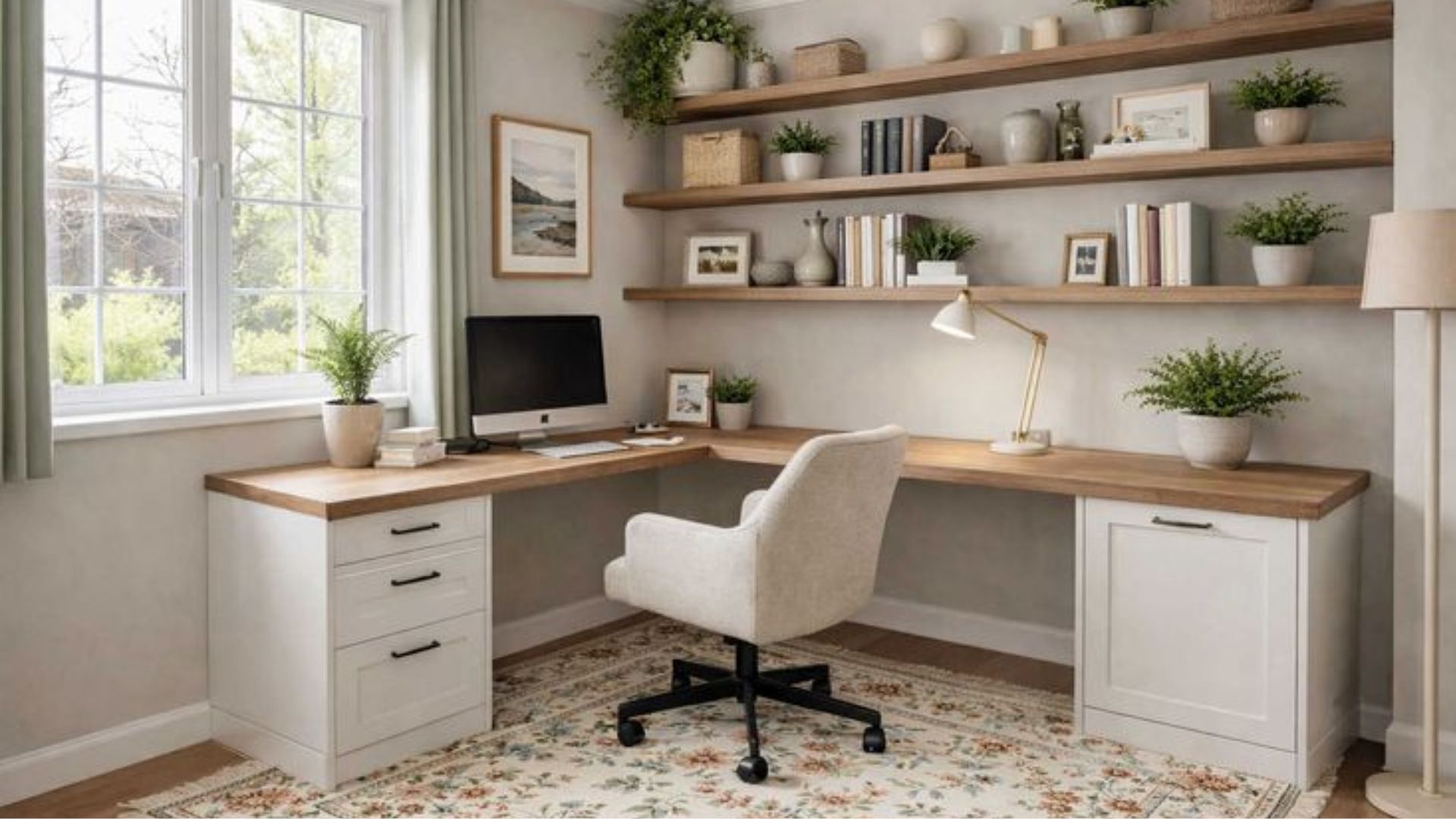
A Small Home Office helps you create a productive workspace in a limited area. Smart furniture, good organization, and proper lighting improve comfort and efficiency. Simple layouts reduce clutter and support daily work. Every design choice helps maximize space while maintaining style and functionality.
A Small Home Office turns even the smallest corner into a comfortable and efficient workspace. Smart planning, compact furniture, and organized storage create a neat environment that supports focus, improves productivity, and makes everyday work feel easier without using extra room at home.
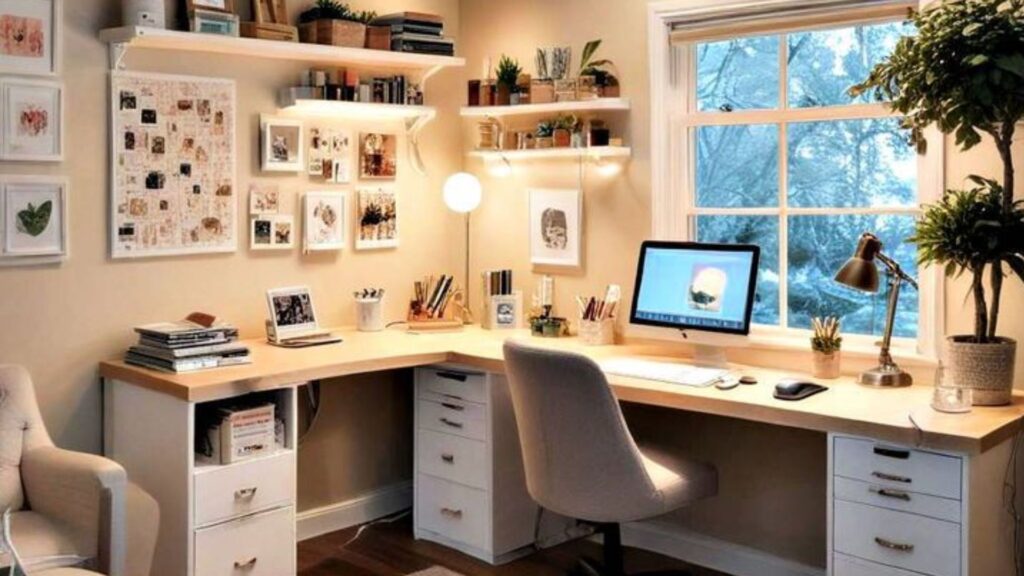
Small Home Office Ideas focus on making every inch useful. Floating desks, vertical storage, and space-saving furniture keep the area organized. Natural light adds comfort and improves the atmosphere. Clean décor and practical layouts create a workspace that remains functional, stylish, and easy to maintain.
Choose a Multi-Functional Corner Desk
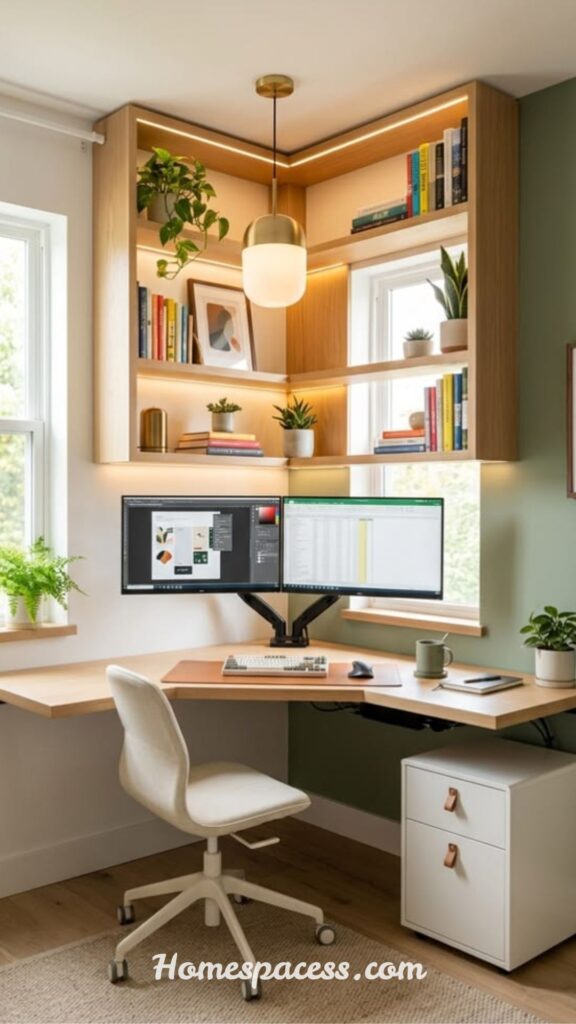
A corner desk is one of the smartest small office layout solutions because it uses dead space that most people ignore. Instead of placing a desk against a flat wall, angling it into a corner instantly frees up floor space for storage, a chair, or walking room. This is especially useful in studio apartments or shared bedrooms.
Style Note:
Choose a light-colored, glass-top, or slim-profile desk to keep the corner from feeling boxed in.
Pro tip:
Add a small monitor arm instead of a stand it clears desk surface and improves posture without adding bulk. A freelance graphic designer we studied reclaimed nearly 30% of her desk space simply by mounting her monitor and switching to a corner unit.
Use Vertical Storage to Free Up Floor Space
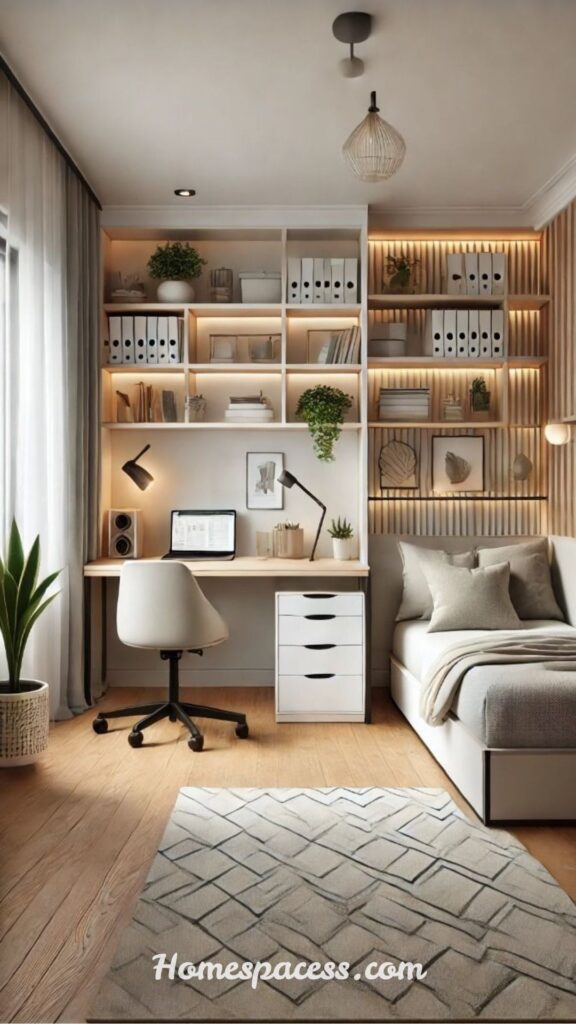
When floor space is limited, the walls become your best friend. Vertical storage solutions like floating shelves, pegboards, and wall-mounted file organizers keep supplies within reach without eating into your workspace footprint. This is a core principle of compact home office design.
Style Note:
Stick to open shelving above the desk and closed cabinets below to balance visual openness with clutter control.
Mini scenario:
A remote accountant converted an unused hallway wall into a filing and supply station using three floating shelves freeing her actual desk for client video calls with a clean background.
Discover more: Home Office Ideas to create a productive and stylish workspace.
Repurpose a Closet as a “Cloffice”
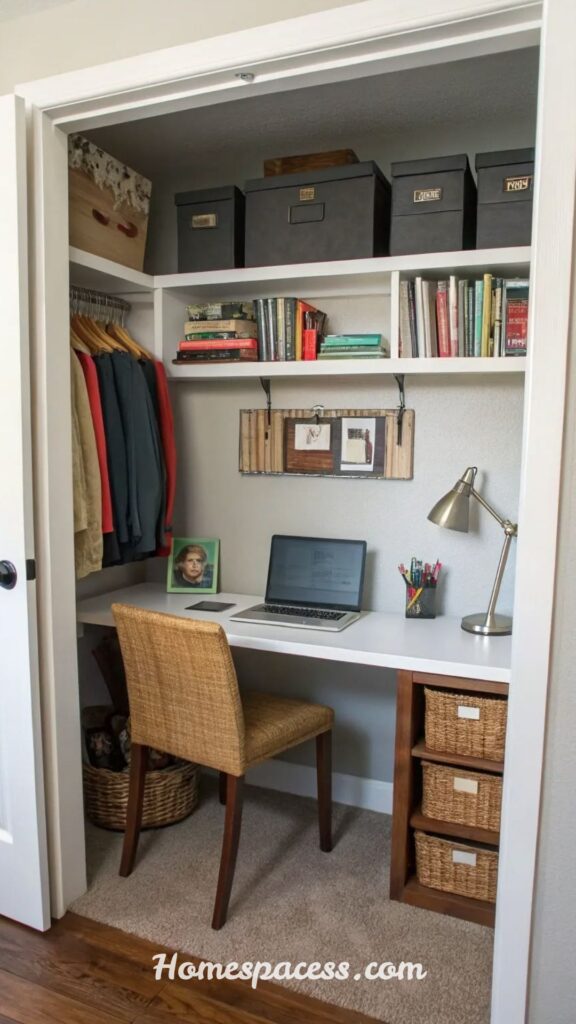
The cloffice (closet + office) trend has become one of the most popular small home office ideas for people without a spare room. Removing closet doors or replacing them with sliding barn doors turns unused storage into a fully functioning workstation that can be closed off after hours.
Style Note:
Add battery-powered LED strip lighting inside the closet frame since these spaces often lack natural light.
Pro tip:
Keep the closet’s original shelving on one side for supplies and install a slim desk on the other. This preserves the room’s original function if you ever need to convert it back.
Invest in a Fold-Down or Murphy Desk
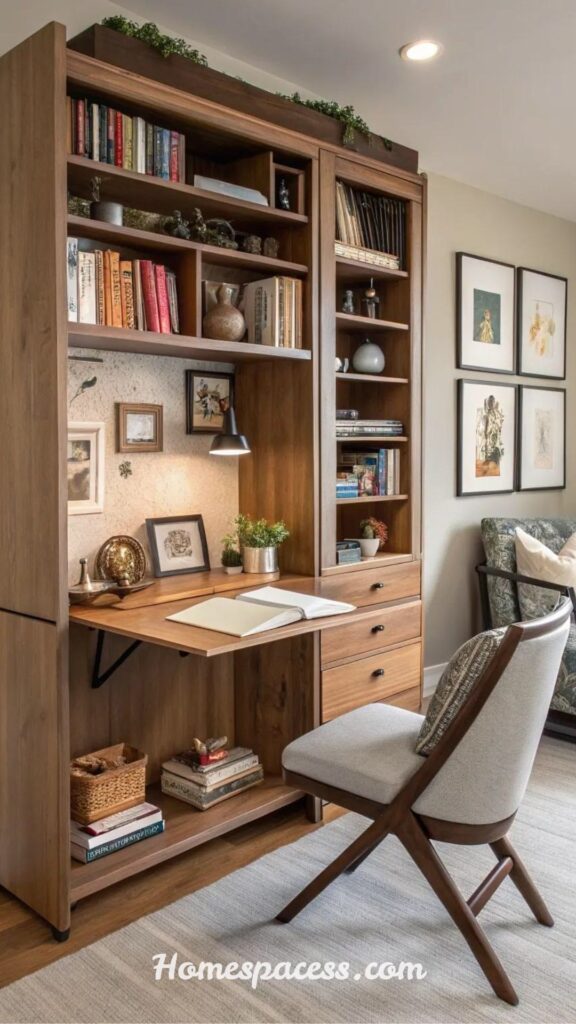
For true multi-purpose room situations like a guest room or living room corner a fold-down desk (also called a Murphy desk) is a game-changer. It mounts flush against the wall and folds away completely when not in use, making it ideal for renters or small apartments.
Style Note:
Match the desk’s exterior panel to your wall color so it blends in like built-in furniture rather than standing out as office equipment.
Real-life example:
A couple sharing a one-bedroom apartment installed a fold-down desk in their living room; it stays hidden during the evening and transforms the space into a workstation each morning in under 10 seconds.
Make the most of every corner with: Library Office Room Ideas for smart dual-purpose spaces.
Maximize Natural Light and Sightlines
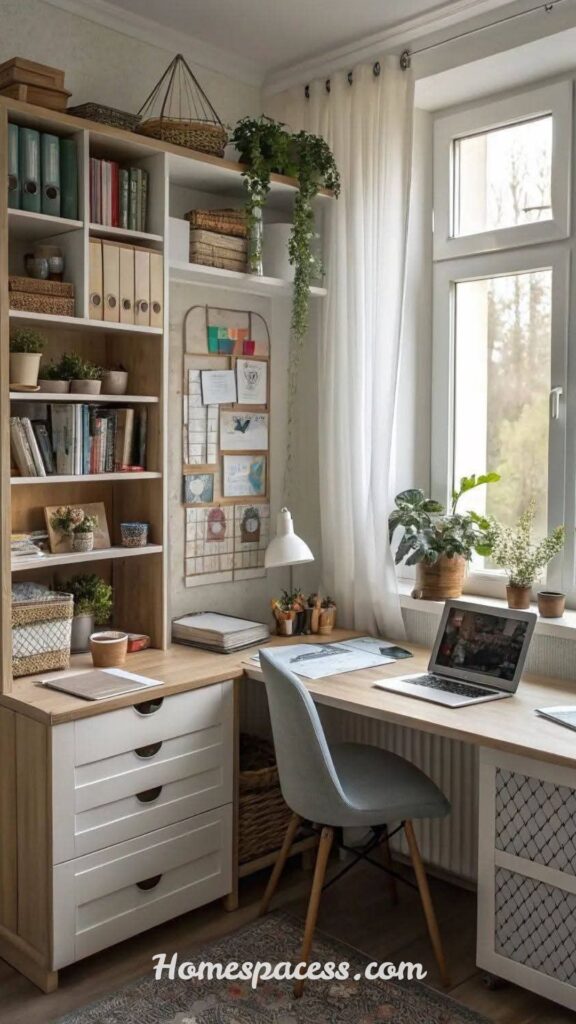
Positioning your desk near a window isn’t just about aesthetics natural light reduces eye strain and has been linked to improved mood and focus during long work sessions. In small spaces, this also creates the illusion of a larger, airier room.
Style Note:
Avoid facing the desk directly into the window (glare on screens); instead, position it perpendicular to the light source.
Pro tip:
If natural light is limited, a daylight-mimicking LED desk lamp (5000K–6500K color temperature) is the closest substitute and helps regulate your circadian rhythm during video calls.
Go Wall-Mounted With a Floating Desk
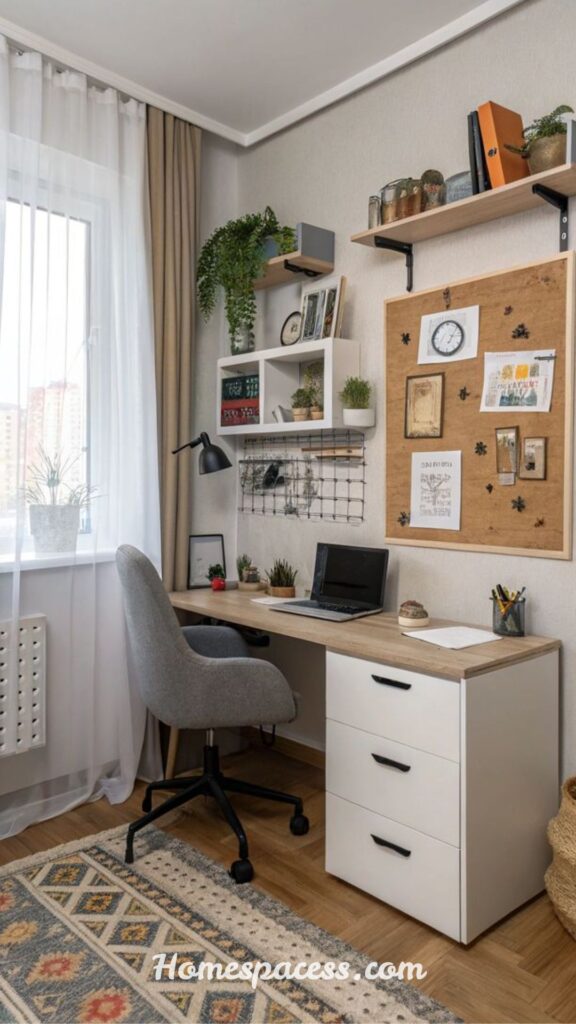
A floating desk mounted directly to the wall with no legs is one of the most space-efficient small office furniture choices available. Because it has no legs, you can push a chair completely underneath when not in use, making the room feel larger.
Style Note:
Choose a floating desk with a built-in cable channel to avoid a tangled-wire look, which is a common complaint in small spaces.
Mini case study:
A software developer working from a 90-square-foot studio installed a floating desk with a rolling stool, allowing the entire setup to tuck away and double the room’s usable floor space during off-hours.
Need more storage? Explore these Bookshelf Decor Ideas to keep your office neat and organized.
Create Zone Separation With Rugs or Lighting
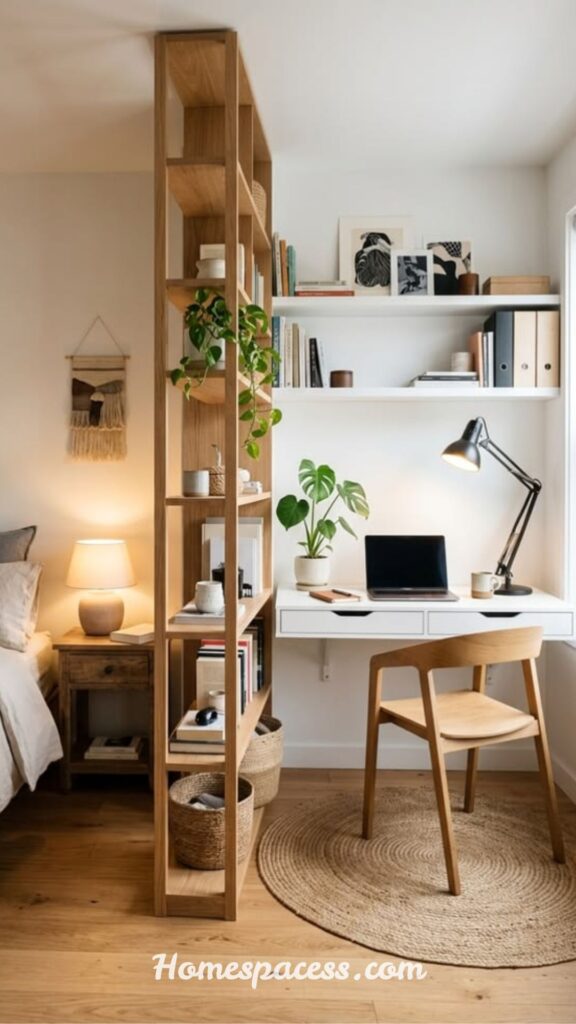
In multi-purpose room setups, visually separating your “work zone” from your “living zone” helps your brain switch into focus mode faster. A simple area rug, a room divider, or a distinct lighting fixture over the desk can create this psychological boundary without any construction.
Style Note:
Use a rug with a different texture or color than the rest of the room to define the workspace clearly.
Pro tip:
Behavioral studies on remote work show that consistent visual cues (like always sitting under the same lamp) help train your brain to associate that spot with productivity a low-cost trick most guides overlook.
Choose Compact, Ergonomic Furniture
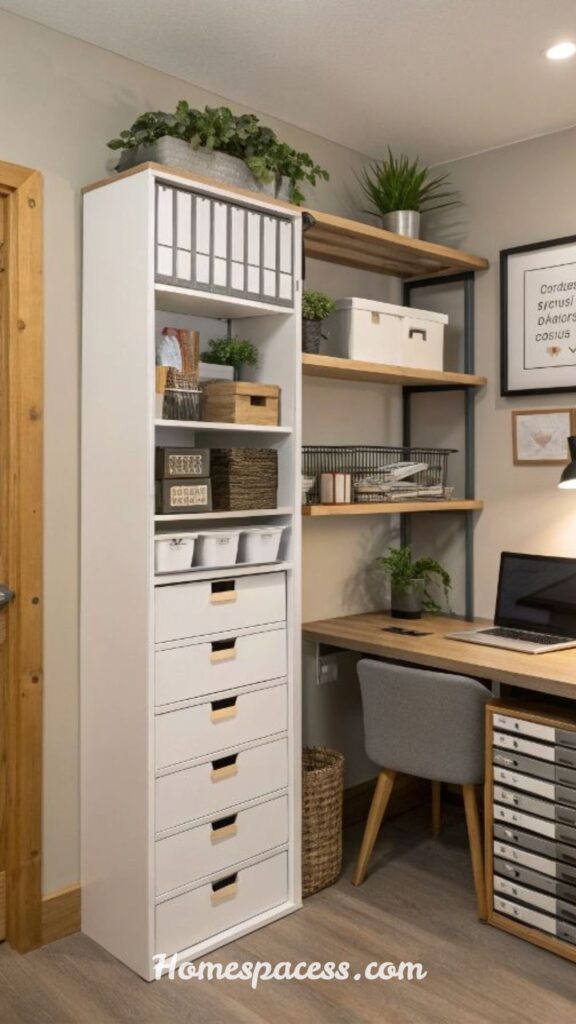
Not all small furniture is created equal. Look for ergonomic chairs designed specifically for compact spaces many modern models fold flat or have a narrower base without sacrificing lumbar support. Combine this with a desk no deeper than 24 inches to keep the footprint tight.
Style Note:
Neutral tones (white, oak, matte black) make small furniture feel less bulky than dark, heavy wood finishes.
Pro tip:
Test chair depth before buying a chair that’s too deep for a small desk forces poor posture, which negates any ergonomic benefit the chair claims to offer.
Create a comfortable setup with: Gaming Desk Ideas that work just as well for home offices.
Add Personal Touches Without Clutter
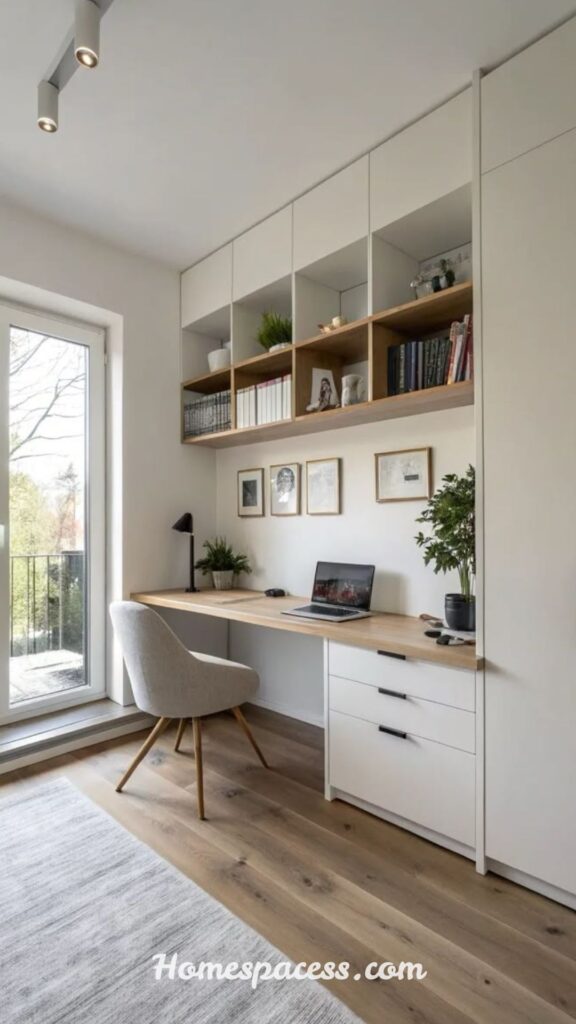
A small home office still needs personality to feel inspiring, but clutter is the enemy of small spaces. Choose one or two meaningful decor pieces a plant, a piece of art, or a motivational print rather than filling every inch of wall space.
Style Note:
A single trailing plant (like a pothos) on a shelf adds life and improves air quality without taking up desk real estate.
Real-life example:
A content writer added just one framed print and a small desktop plant to her cloffice setup; she reported feeling noticeably more motivated compared to her previous bare, purely functional setup.
Use a Room Divider to Carve Out a Micro-Office
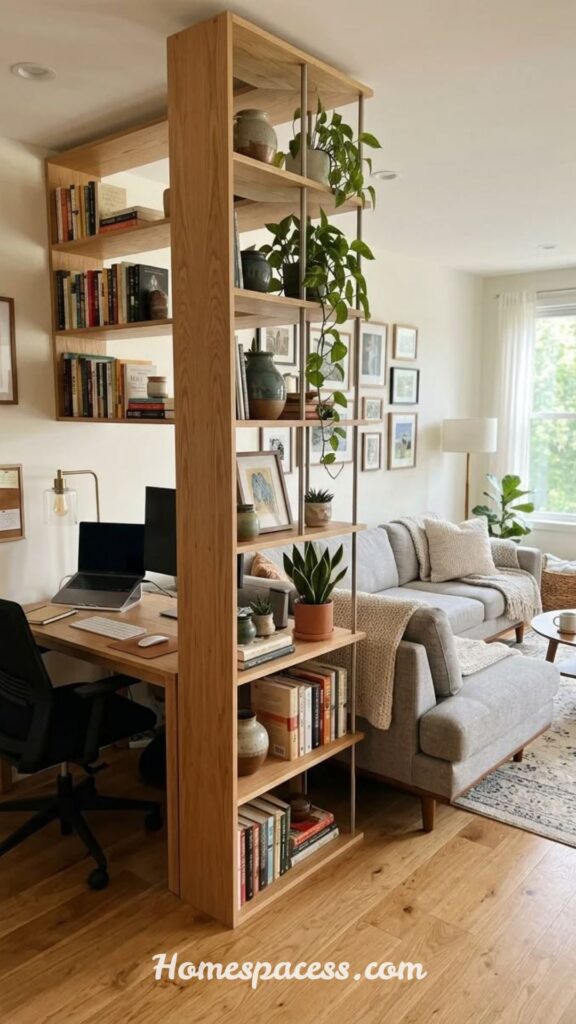
If you don’t have a spare corner at all, a freestanding room divider can create an instant micro-office inside a bedroom or living room. Folding screens, bookshelf dividers, or curtain panels section off a small work zone without any construction, making this one of the most flexible small home office ideas for renters.
Style Note:
Choose a divider with slim vertical slats or an open-shelf design so the small space still feels airy rather than boxed in.
Pro tip:
Position the divider so your desk faces into the room rather than a wall this keeps the micro-office from feeling isolating and lets in more ambient light from the rest of the room.
Add a Pegboard Command Center Above the Desk
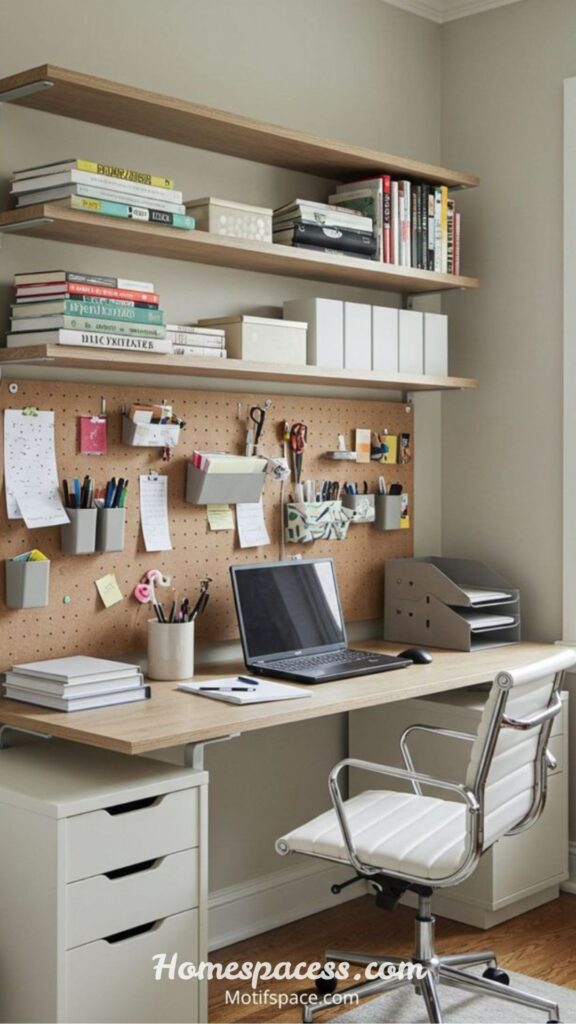
A pegboard organizer mounted above the desk is one of the most underrated small office storage solutions because it’s fully customizable and takes up zero floor or desk space. Hooks, small shelves, and baskets can hold everything from headphones to notebooks, keeping the desktop clear for actual work.
Style Note:
Paint the pegboard to match your wall color for a built-in look, or choose a contrasting shade to make it a design feature.
Mini scenario:
A part-time student working from a dorm-sized desk used a single pegboard to relocate chargers, stationery, and a small planner off her desk, instantly doubling her usable workspace without buying any new furniture.
Trend Analysis: Small Home Office Design in 2026 and Beyond
The home office trends 2026 data shows a clear shift toward hybrid-friendly, multi-purpose spaces rather than dedicated rooms. As companies continue hybrid work models, more people are optimizing small nooks instead of converting entire rooms, driving demand for foldable and modular furniture.
Another growing trend is biophilic design incorporating plants, natural materials, and organic textures into compact workspaces to reduce stress during long screen hours. Additionally, “quiet luxury” aesthetics (minimal color palettes, high-quality but understated materials) are replacing the maximalist home office trends of recent years.
Looking ahead, expect AI-integrated furniture desks with built-in charging sensors, posture reminders, and app-connected lighting to become mainstream in compact office setups, blending smart technology with space-saving design.
Practical Tips and Expert Insights for Small Office Optimization
Interior designers consistently recommend the “triangle rule” for small offices: keep your monitor, storage, and lighting within an arm’s reach triangle to minimize unnecessary movement and maximize focus during the workday. This small adjustment can save several minutes per task over a full workday.
Another overlooked strategy is acoustic optimization. Small spaces often have hard surfaces that amplify sound, which is distracting during video calls. Adding a small rug, fabric-covered noticeboard, or curtain can meaningfully reduce echo without any major renovation.
Pro tip from professional organizers: Do a “reset” of your desk at the end of each workday clearing surfaces takes under two minutes but prevents small offices from feeling chaotic the next morning, a habit that compounds significantly over weeks.
Sustainability and Long-Term Value in Small Office Design
Choosing sustainable home office furniture isn’t just an environmental choice it’s a financial one. Investing in solid-wood or modular pieces designed to be reconfigured (rather than particleboard furniture built for one specific layout) means your setup can adapt as your needs, apartment, or career change.
Energy-efficient LED lighting and low-power monitors also reduce your home office’s long-term electricity costs, which matters more as remote and hybrid work becomes permanent for many households. Small offices, because of their size, are actually easier and cheaper to make energy-efficient than full rooms.
Strategic insight: Renters should prioritize furniture that requires no wall drilling (like tension-mounted shelves or freestanding dividers), preserving security deposits while still achieving a polished, semi-permanent office feel.
Future Predictions: What’s Next for Compact Home Offices
Over the next few years, expect modular office pods small, soundproofed, foldable structures that fit inside a bedroom or living room to become more affordable and common, especially in urban apartments where dedicated rooms aren’t an option.
Smart home integration will also deepen: voice-activated lighting, desks that auto-adjust height based on scheduled meetings, and AI-powered virtual backgrounds that reduce the need for a “camera-ready” physical space are all early-stage innovations gaining traction.
Finally, space-sharing furniture design desks that convert into dining tables or vanity stations will likely become a defining feature of small home office ideas for micro-apartments and multi-generational households alike.
Common Mistakes to Avoid in Small Home Office Setups
One of the most common mistakes is oversized furniture buying a desk or chair sized for a large office and forcing it into a small space. This creates cramped movement and undermines the entire point of a compact layout. Always measure your space before purchasing anything.
Another overlooked factor is poor cable management. Tangled cords are especially noticeable in small spaces since there’s less room for them to hide, making the office feel messier than it actually is. A simple cable tray or clips under the desk solves this in minutes.
Finally, many people neglect task lighting, relying only on overhead light. In a small room, this creates harsh shadows and eye strain. Layering a desk lamp with ambient lighting is a quick, low-cost fix that dramatically improves comfort during long work sessions.
Conclusion
Designing a productive workspace doesn’t require a big room it requires smart choices. These small home office ideas, from cloffices to floating desks, prove that comfort, function, and style can fit into even the tightest corners. The key takeaway: prioritize multi-functional furniture, good lighting, and clutter-free zones over square footage. Ready to transform your space? Pick one idea from this guide and start your small home office makeover today.

Team Home Spacess shares simple, practical design ideas that work for real families. The team focuses on cozy décor, soft colors, and natural textures that make a space feel truly lived-in. From everyday decorating tips to creative home projects, Team Home Spacess is dedicated to helping readers create warm, comfortable, and inviting spaces with a fresh and personal touch.