

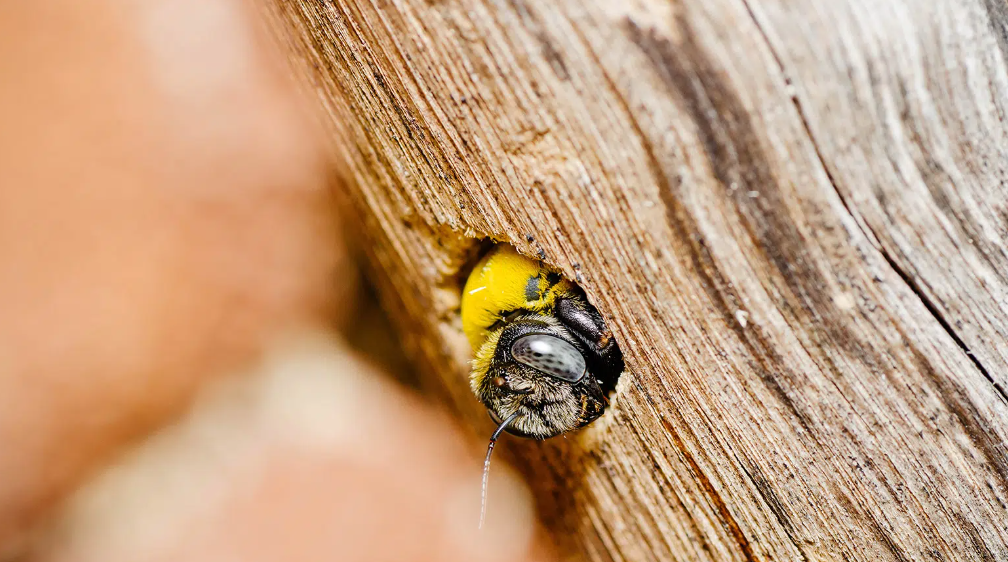
A perfectly round hole in a porch rail appears one spring morning, and a large, glossy bee hovers nearby as though guarding it. Most people assume the worst. Carpenter bees tend to cause more alarm than harm, though they do deserve attention, because repeated nesting in the same lumber adds up over the years. Roswell homes offer plenty of appealing surfaces, from weathered decks to cedar trim, and warm springs bring the bees out in force. The sections below describe where they settle, how nesting differs from real damage, what risk they pose to people, and which warning signs matter most.
Where Carpenter Bees Target Wood Around Roswell Homes
Carpenter bees prefer bare or weathered softwood, so they gravitate toward whatever on a house has lost its protective finish. Fascia boards and eaves are common targets because they sit high, stay dry, and are rarely touched. Deck rails and porch ceilings draw them too, especially where the underside of the wood faces down and the bees can work unseen.
Fences, pergolas, and trim around windows and doors follow the same logic. A pergola built from untreated cedar or pine, with horizontal beams and shaded undersides, can host several nesting sites in a single season. Pressure-treated and painted surfaces see less activity, though they are not immune. Bees often return to the same board year after year, because existing tunnels are easier to extend than new ones are to start. Walking the property in spring and looking at the underside of horizontal surfaces tends to reveal where activity is concentrated.
Nesting Behavior Versus Actual Wood Damage
Carpenter bees do not eat wood. Females chew a perfectly round entrance hole, roughly the diameter of a finger, then turn and tunnel along the grain to create a gallery. Inside, they lay eggs in separate cells stocked with pollen and nectar. Homeowners who type are carpenter bees dangerous roswell into a search bar are usually asking two questions at once, one about stings and one about structural harm, and the answers differ.
A single tunnel causes limited damage. The trouble builds over time. Bees reuse and extend galleries, new generations dig their own, and woodpeckers sometimes tear into the wood to reach the larvae, which makes the damage worse. Moisture then enters the tunnels and encourages rot and fungus. Nesting is the behavior, and damage is the cumulative result. A one-season visitor rarely compromises a beam, while a decade of repeated use in the same railing might. Seeing the difference helps homeowners respond in proportion.
How Much Risk Carpenter Bees Pose to People
Most of the drama comes from males. They hover near the nest, dart at passing people, and sometimes bump into them, which looks aggressive. Males have no stinger, so the display is harmless. Females can sting, but they are docile and generally do so only when handled or trapped.
Compared with wasps or hornets, carpenter bees rarely defend a nest with force. The practical risk to people is low, and the concern lies mostly with the wood. A person with a known bee-sting allergy should still take precautions near active nests, and children should be kept from poking at holes. The most common injuries come not from the bees but from homeowners swatting at them or working on ladders near the fascia. Staying calm, avoiding sudden movements, and leaving the bees alone unless treatment is planned keeps the situation uneventful.
Warning Signs Worth Watching For
Several clues point to carpenter bee activity before serious damage develops:
- Round holes about half an inch wide in exposed wood, often on the underside of a rail or beam
- Coarse, sawdust-like debris called frass on the ground or on surfaces below the holes
- Yellowish or brown streaks on boards beneath the opening, caused by bee waste
- Males hovering repeatedly around the same corner, eave, or post
- ya A faint rasping or buzzing sound from inside the wood
Hovering by itself proves little, since bees may be passing through. The combination of holes, frass, and persistent presence suggests an established nest. When homeowners wonder are carpenter bees dangerous roswell, this evidence is what moves the answer from a general reassurance toward a specific concern, because multiple holes and repeated seasons indicate structural wear. Photographing the holes and noting their locations helps track whether activity is growing, and a professional can confirm whether a nest is still active.
Reducing Attraction and Repairing Existing Damage
Prevention begins with the wood itself. Painting or staining exposed surfaces makes them less appealing, and sealing the ends and undersides of rails and beams covers the places bees favor. Hardwoods and treated lumber offer more resistance than untreated softwood. Replacing badly weathered boards on a regular schedule also removes the soft, attractive surface that invites nesting.
Existing holes call for care and timing. Filling them while bees are still inside traps developing larvae and can encourage them to chew a new exit. Late summer or fall, once activity quiets, is a better time to treat tunnels, then plug them with wood filler or dowels and refinish the surface. Replacing a heavily damaged board is sometimes simpler than repairing it. Keep an eye out for woodpecker damage, which often signals a larger population than the visible holes suggest.
Final Analysis
Carpenter bees are more a maintenance matter than a safety emergency. The males that hover and dart cannot sting, females rarely do, and the main concern is the slow accumulation of tunnels in exposed wood. Look for round holes, frass, stains, and repeated hovering. Protect surfaces with paint or sealant, repair damage at the right time of year, and replace boards that have deteriorated. Acting early costs far less than repairing years of galleries, and it keeps a pleasant spring from turning into a recurring chore.

Team Home Spacess shares simple, practical design ideas that work for real families. The team focuses on cozy décor, soft colors, and natural textures that make a space feel truly lived-in. From everyday decorating tips to creative home projects, Team Home Spacess is dedicated to helping readers create warm, comfortable, and inviting spaces with a fresh and personal touch.