

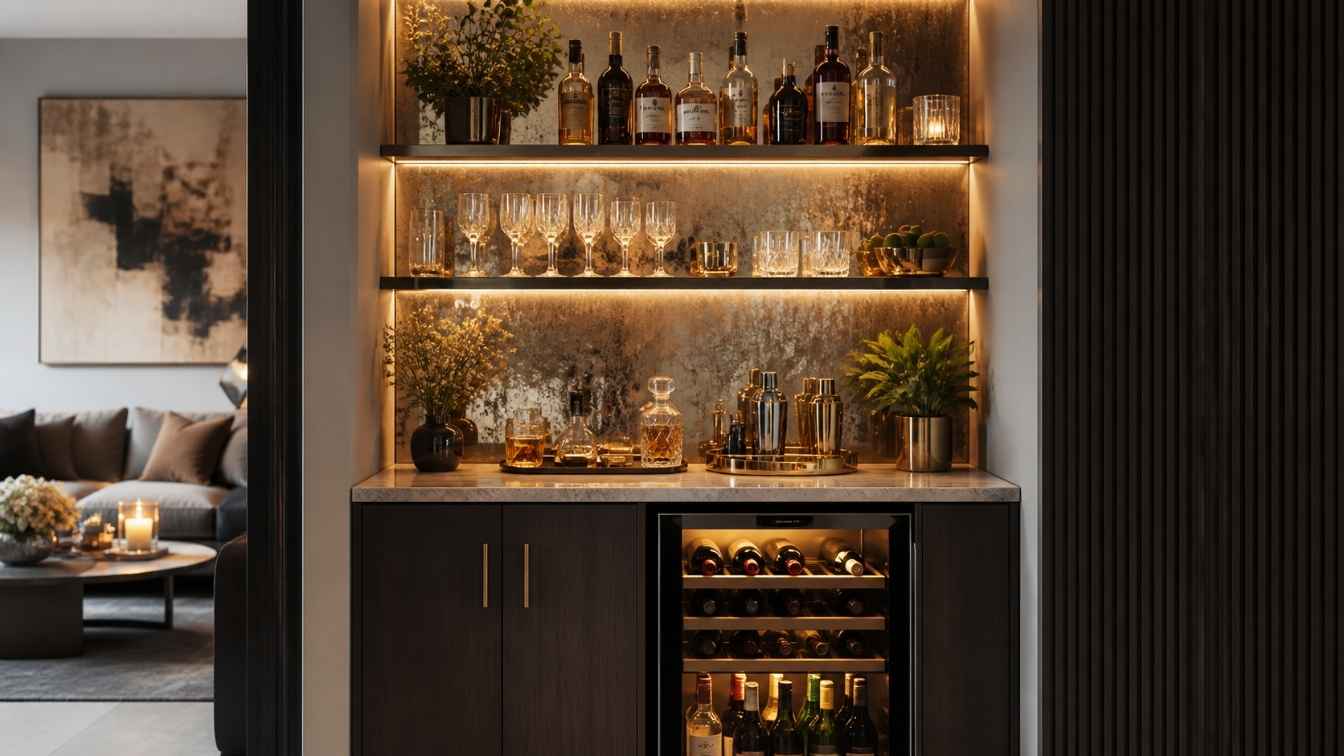
Most people buy a nice bottle of whiskey, leave it on a kitchen counter, and call it a day. But a well-designed mini bar does something entirely different it creates a ritual, a destination, a moment. Whether you’re hosting friends on a Friday evening or pouring yourself a quiet nightcap, the space you drink in shapes how the experience feels.
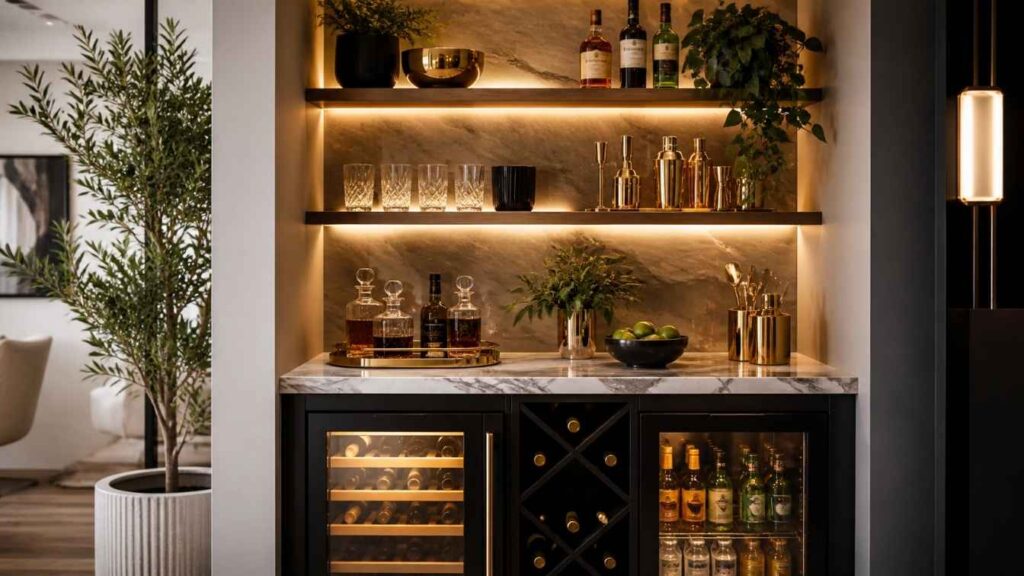
The good news? You don’t need a dedicated room, a massive budget, or professional carpentry skills. The best home mini bars are born out of clever thinking a repurposed bookshelf, a rolling cart, an unused hallway nook. This guide covers 11 creative mini bar ideas that work across different spaces, styles, and budgets, plus expert insights on what competitors usually overlook: the psychology of bar design, sustainability, and where home bars are heading next.
A mini bar isn’t just furniture. It’s an experience you build into your home one that signals intention, hospitality, and personal taste.
Bar Cart
Portable Elegance on Wheels
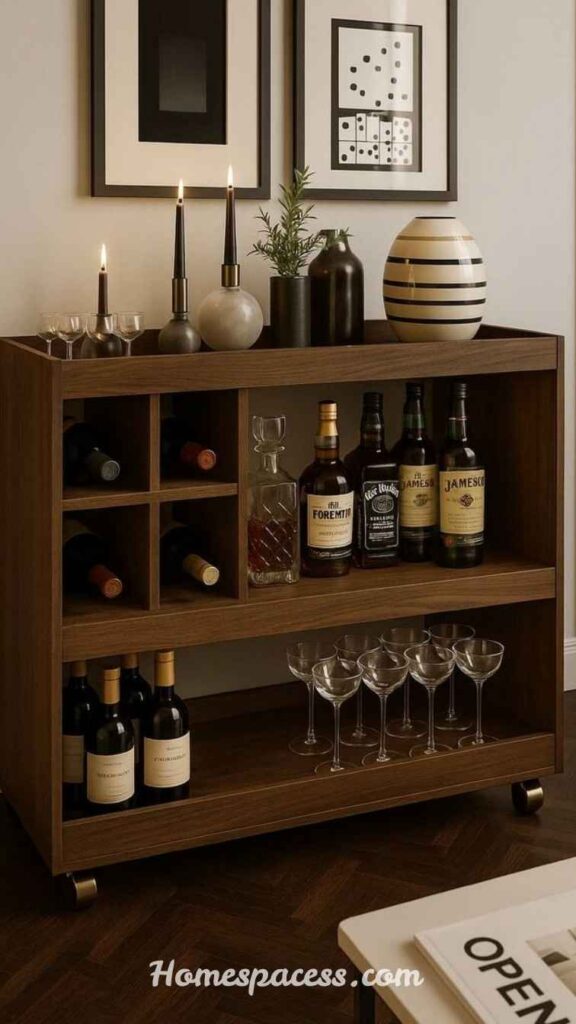
The bar cart remains one of the most versatile mini bar ideas precisely because it commits to nothing. You can roll it to the living room for movie night, push it onto the balcony for summer evenings, or tuck it behind the sofa when company isn’t expected. A two-tier brass cart with open shelving gives you visibility of your bottles while keeping a low footprint in small apartments.
What most bar cart guides miss is the power of intentional styling. The top tier should function as your active workspace shaker, muddler, and two glasses at most. The bottom tier is storage: bottles, a small ice bucket, and a folded linen. Keeping it deliberately curated rather than cluttered makes the cart feel like a design feature rather than a trolley. Aim for an odd number of bottles (three or five), as asymmetry reads as style rather than randomness.
For renters, a bar cart is unmatched. No holes in walls, no permanence, no landlord issues. Mid-century modern gold-toned carts (easily found under $120) pair beautifully with both Scandinavian and maximalist interiors. Add a small trailing plant or a vintage decanter to give it personality.
Pro Tip
Lock the wheels when styling photos or when stationed in a high-traffic area an unlocked cart is a spill waiting to happen.
Must Read: Simple Outdoor Kitchen Ideas for Easy Backyard Cooking Setup
Repurposed Bookshelf Bar
Hidden in Plain Sight
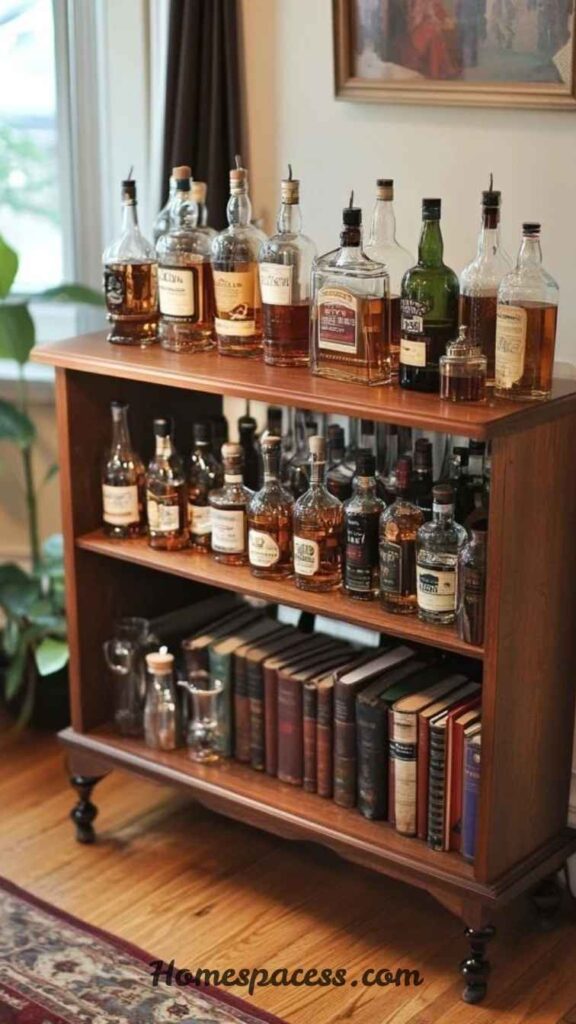
Transforming a standard bookshelf into a home mini bar is one of the smartest space-design moves available to apartment dwellers. The concept works because bookshelves already have the structural depth, shelf adjustability, and visual weight needed to anchor a proper bar setup. A Billy shelf from IKEA, lined with contact paper in a dark walnut finish and fitted with LED strip lighting underneath each shelf, costs under $80 and looks like a custom built-in from six feet away.
The key design secret is zone separation. The top shelf should be your display tier: one or two statement bottles, a pair of coupes, and a small art object or plant. The middle shelf is your active bar: a few workhorses (gin, rum, whiskey), a small cutting board, and your mixing tools. The bottom shelf handles utility: extra glasses, cocktail books, and mixers stored in small decorative crates. This layered approach creates visual rhythm rather than a cluttered warehouse of bottles.
If you own a bookshelf that’s already in service, consider dedicating just two shelves. You don’t need to sacrifice your entire book collection a hybrid shelf with books and bar elements actually adds warmth and signals a host who’s both well-read and well-poured.
Insight
Dark-backed shelves (painted or lined) make bottles pop forward visually, doubling the perceived depth of your display.
Read More: Baby Room Ideas That Make Small Nurseries Look Bigger and Brighter
Reclaimed Wood Wall Bar
Industrial Character
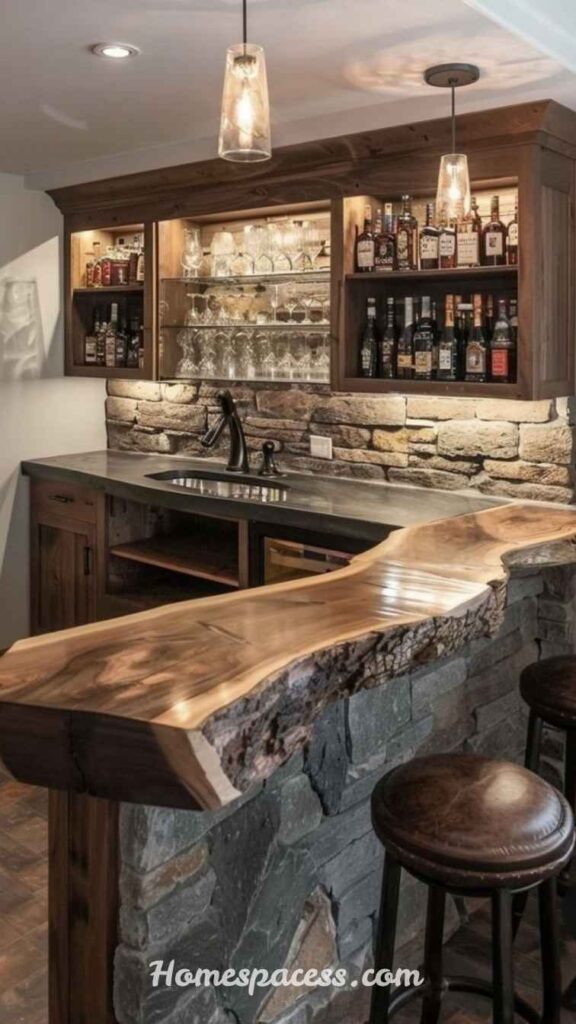
A floating wall bar built from reclaimed or rough-sawn timber is the mini bar idea that photograph best and age most beautifully. The appeal is tactile: weathered wood carries texture, imperfection, and history that no laminate can replicate. A single plank mounted at counter height (roughly 36 inches from the floor) with simple black pipe brackets creates a bar shelf that looks like it belongs in a Brooklyn cocktail bar for under $100 in materials.
The less-discussed advantage here is sensory atmosphere. Bare reclaimed wood subtly absorbs sound, making the corner feel warmer and more intimate. Pair it with exposed Edison bulb lighting overhead, a small chalkboard sign listing your house cocktail, and a row of mismatched vintage bottles, and you’ve created a vignette that genuinely tells a story. This approach works particularly well in lofts, open-plan spaces, and homes with exposed brick.
From a practical standpoint, seal your wood with a food-safe finish before use. Spilled spirits can stain and warp raw timber quickly. A simple beeswax paste or clear polyurethane coat protects the wood while preserving the raw aesthetic everyone is going for.
Pro Tip
Source reclaimed wood from local demolition salvage yards it’s cheaper than craft stores and comes with genuine character.
Also Read: Outdoor Patio Ideas That Turn Any Backyard Into a Relaxing Escape
Corner Cabinet Bar
Turning Dead Space Into Drama
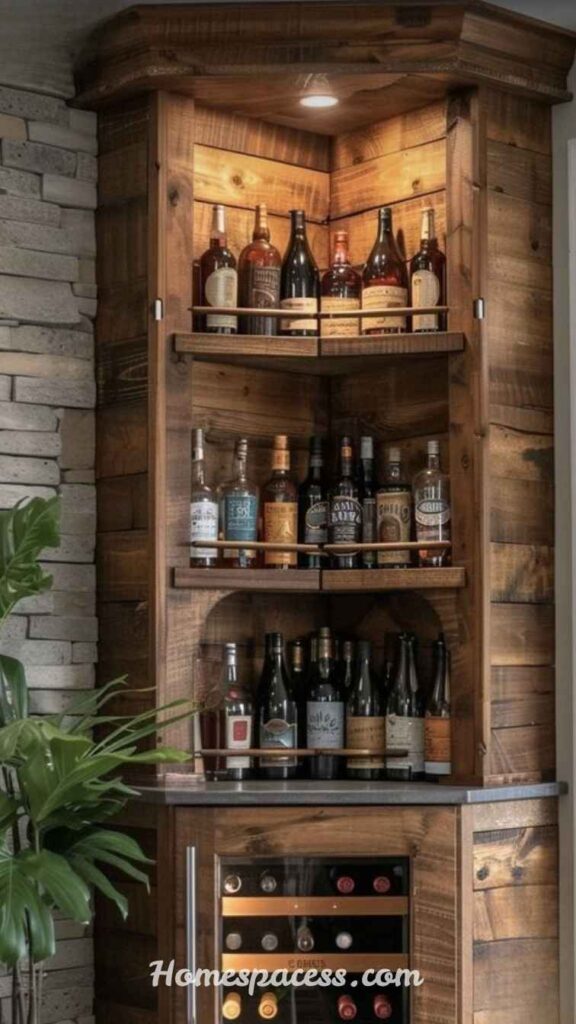
Corner spaces are the most underutilized real estate in the home. A dedicated corner bar cabinet whether freestanding or built-in transforms that awkward angle into a genuine focal point. Corner units with glass-fronted doors create the display effect of a traditional bar without requiring full wall commitment. Units with internal lighting feel almost theatrical when opened, and that visual drama turns even a modest selection of bottles into a curated collection.
The smartest corner bar setups include a pull-out or fold-down work surface. Many dedicated bar cabinets now include this feature, and it’s worth prioritizing over aesthetics alone. Without a prep surface, you’re constantly reaching for a separate table and that friction gradually turns your beautiful bar into a display-only fixture that nobody actually uses. Function must lead design, especially in compact homes.
For interior styling, mirror-lined cabinet backs are a nearly universal upgrade. They double the visual depth of your bottle collection, bounce light around the interior, and make even a modest six-bottle lineup look like a proper spirits selection. Dark-painted exterior cabinetry with brass hardware finishes the look with old-world elegance.
Space Trick
A corner cabinet that reaches floor-to-ceiling also provides hidden storage in the lower section great for wine bottles laid horizontally.
Don’t Skip: Wall Painting Ideas That Make Your Home Feel Warm and Inviting
Dedicated Bar Room
Going Full Speakeasy
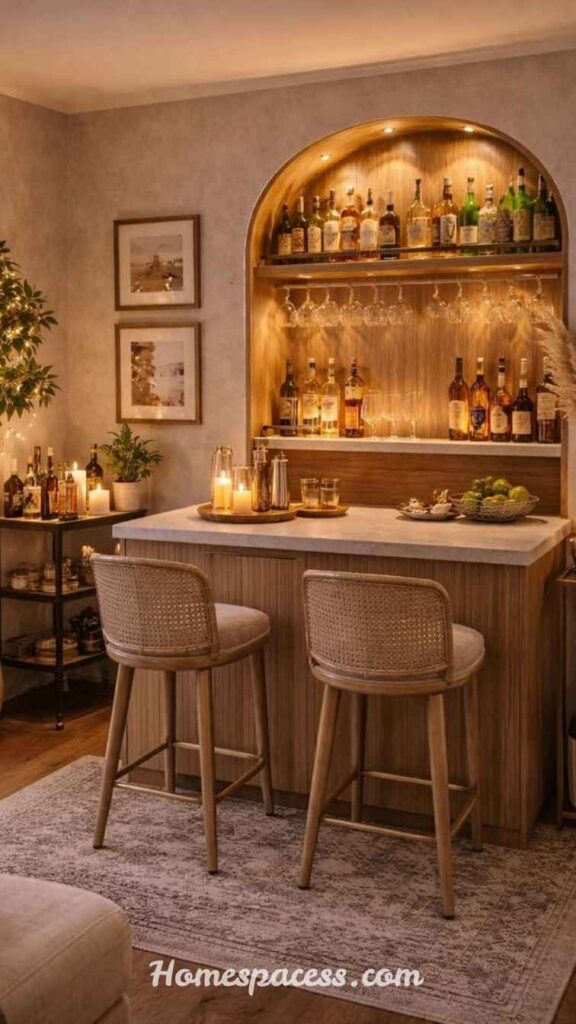
For those with a spare room, basement, or large garage space, a dedicated home bar room represents the pinnacle of the mini bar idea spectrum. The difference between a good home bar and a great one usually comes down to acoustic design and lighting control two elements most DIY guides completely skip. A room-length bar top in butcher block or concrete, bar stools at correct ergonomic height (28–30 inches for a standard counter), and dimmable overhead lighting sets the stage. But adding sound dampening panels behind the bar (disguised as decorative artwork) and a proper Bluetooth sound system elevates the experience from “cool hobby room” to “place everyone wants to be.”
Thematically, the most memorable home bar rooms commit to a strong concept. A dark and moody whiskey den with leather seating, wall-mounted antlers, and amber lighting feels completely different from a bright coastal tiki bar with rattan furniture and neon signage. Neither is wrong but commitment to a concept is what separates a home bar from a garage with shelves. Pick your aesthetic and pull every design decision through it.
Practically, a dedicated bar room benefits enormously from a small under-counter refrigerator for mixers, garnishes, and white wine, plus a separate ice machine if the budget allows. These aren’t luxuries they’re the functional infrastructure that determines whether your bar gets used regularly or only for special occasions.
Expert Insight
Install your bar lighting on a dimmer circuit from day one. Ambient warmth at 2700K is the secret ingredient in every great bar atmosphere.
Vintage Dresser or Sideboard Bar
Unexpected Elegance
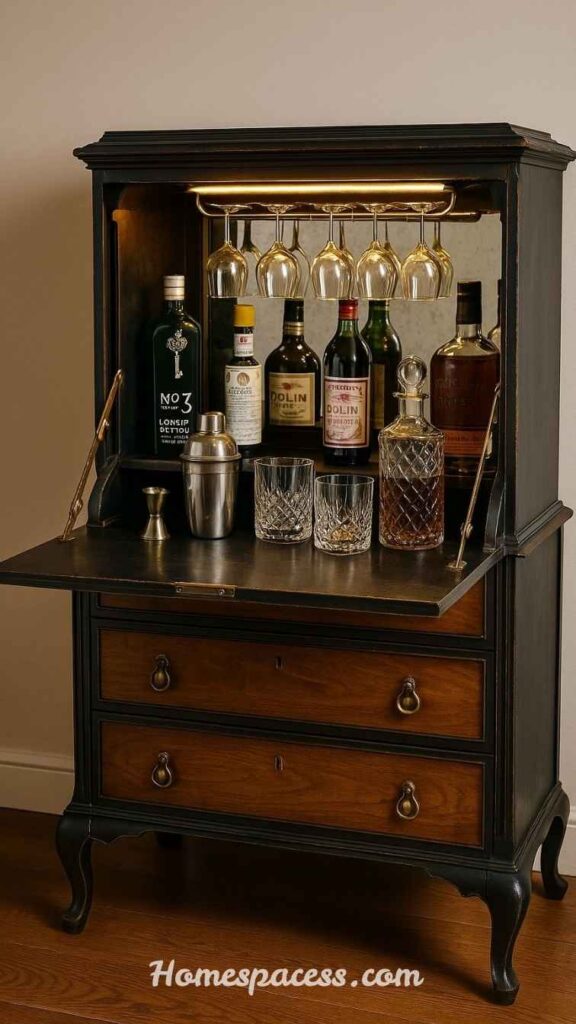
Repurposing a vintage dresser or sideboard as a mini bar is the idea that consistently surprises people most because the result looks expensive and intentional when done well, and costs almost nothing when sourced secondhand. A mid-century teak sideboard with hairpin legs can be found at thrift stores or estate sales for $40–$150. Remove the drawer hardware, replace it with brass pulls, clear out the interior for bottle storage, and lay a white marble or slate tray on top as the bar surface. The transformation takes a single afternoon.
The genius of the sideboard bar is its camouflage. In a dining room, it reads as a buffet. In a living room, it looks like a media console. In an entryway, it functions as a statement arrival piece. Only when you open the doors or look closely does the bar reveal itself and that element of discovery delights guests in a way that a clearly labeled “BAR CABINET” never quite manages.
Functionally, the top surface of a sideboard gives you far more prep space than a typical bar cart or floating shelf. Use one end for bottle display, the center for active mixing, and the other end for glassware. This horizontal layout mirrors how professional bars are organized, and it dramatically improves the efficiency of cocktail-making at home.
Sourcing Tip
Search Facebook Marketplace for “sideboard,” “buffet,” or “credenza” these undervalued terms often reveal pieces that beat anything at retail price.
Smart Mini Bar with Temperature Control
The Modern Upgrade
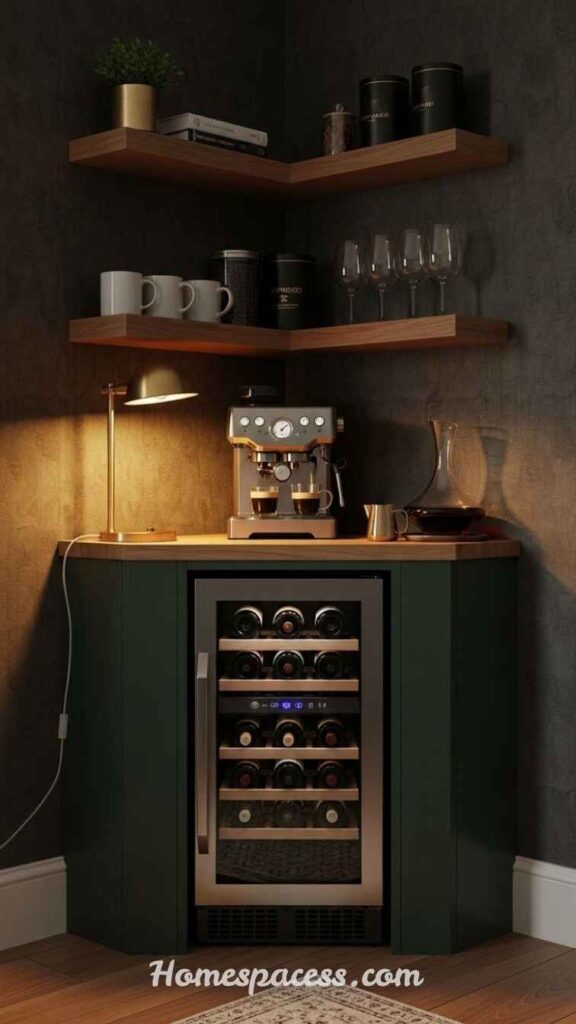
The emergence of compact smart appliances has created a category of mini bar setup that didn’t exist five years ago: the temperature-controlled home bar. Small wine coolers (12-bottle capacity), countertop spirits chillers, and smart refrigerator drawers can all now be integrated into a mini bar setup without commercial-grade installation. Certain spirits particularly white rum, gin, and vodka genuinely benefit from cold storage, and serving a chilled cocktail from a properly temperature-controlled system signals a level of care that guests notice immediately.
Smart integration goes further. Wi-Fi-enabled LED strips under bar shelves can be programmed to shift color temperature by time of day warm amber in the evening, brighter white during afternoon use. Voice-controlled lighting and music through integrated smart home systems (Alexa or Google Home) means guests can adjust the atmosphere without hunting for a remote. These aren’t gimmicks they’re friction-removal tools that make the experience feel effortless.
For the true enthusiast, smart cocktail dispensers like Bartesian or the Drinkworks system can be integrated into a bar setup, automating the mixing of perfectly measured cocktails. While these don’t replace craft bartending skills, they’re genuinely useful when hosting large groups or when consistency matters more than creativity. Think of them as the espresso machine equivalent for the home bar.
Tech Pick
A 15-bottle dual-zone wine cooler doubles as a spirits chiller left zone for white wine at 45°F, right zone for gin and vodka at 55°F.
Kitchen Counter Bar Nook
Maximum Use of Minimum Space
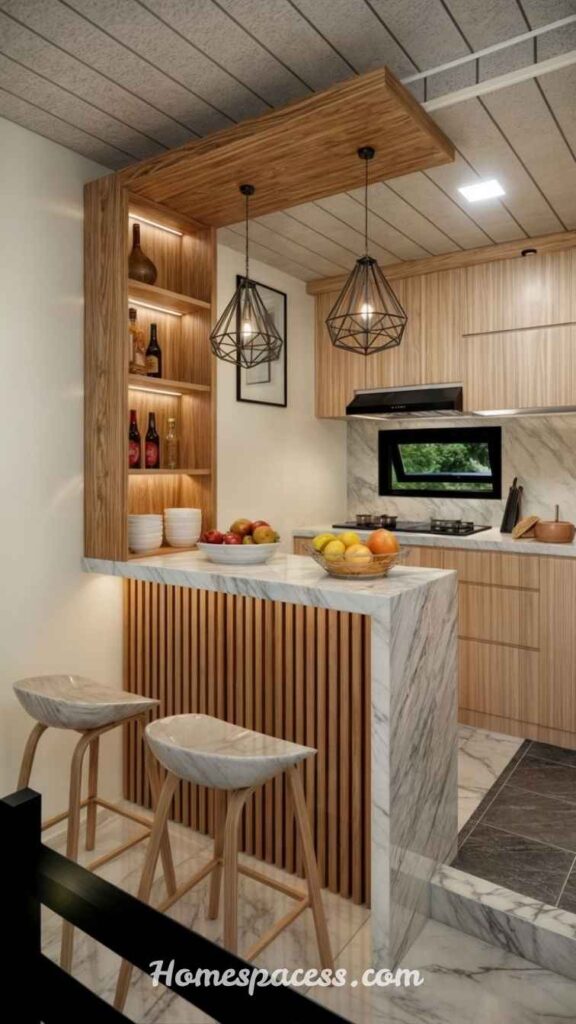
For studio apartments and open-plan kitchens, carving out a dedicated bar nook on the existing counter is the most space-efficient mini bar idea available. The concept involves claiming 18–24 inches of counter space as a permanent bar zone, marked by a decorative tray or butcher block insert. A wall-mounted magnetic bottle rack above, a small glass rack hanging from the upper cabinet, and a compact cocktail tool roll kept in a drawer creates a fully functional bar setup with zero additional furniture.
The psychological trick here is the tray. A tray with a clear perimeter signals “this area has a purpose” to both residents and guests. Without it, the same collection of bottles looks like kitchen clutter. The tray transforms the same objects into a curated bar setup and that shift in perception changes how the space is used. People reach for things more deliberately when there’s a defined zone.
Vertical space is the underutilized resource in kitchen bar nooks. Peel-and-stick bottle holders on cabinet doors, magnetic spice racks repurposed for bitters bottles, and a mounted bar tool strip (like those used for knives) create significant storage without claiming additional counter real estate. In a 400-square-foot apartment, every surface needs to earn its keep and a kitchen bar nook earns its through daily use.
Space Hack
A wooden or marble “lazy Susan” on the counter lets you access back bottles easily crucial when you’re working with a 12-inch-deep counter zone.
Outdoor Bar Setup
The Al Fresco Experience
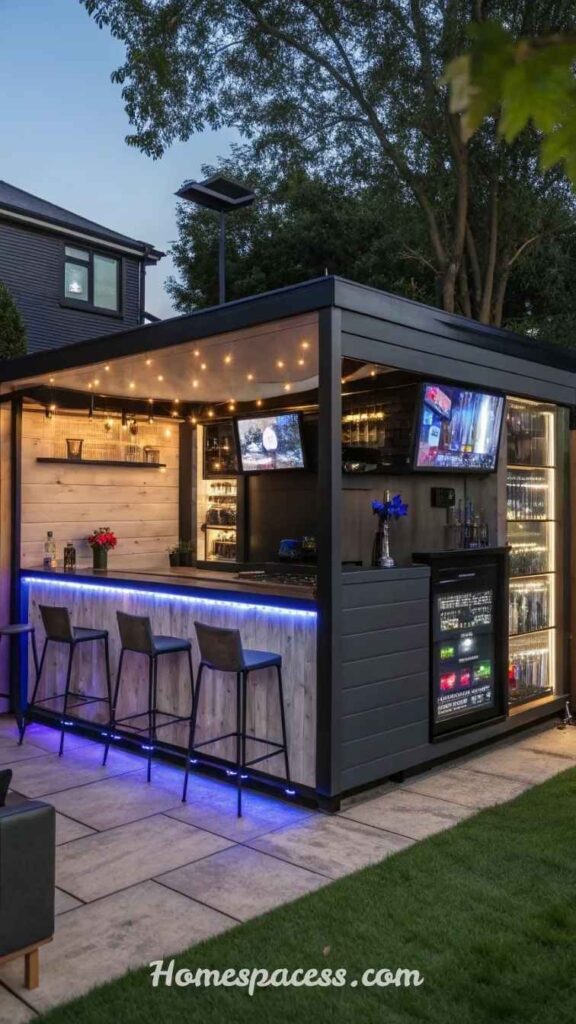
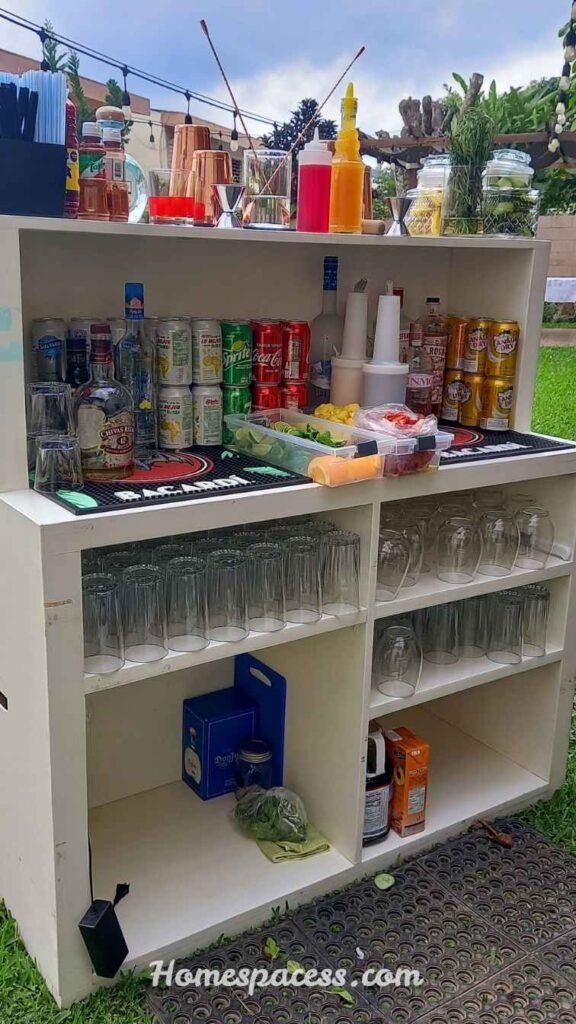
The outdoor mini bar is perhaps the fastest-growing category in home entertaining design, driven by a widespread post-pandemic shift toward outdoor living. A dedicated outdoor bar station whether a freestanding weatherproof unit, a repurposed potting bench, or a custom built-in along a garden wall transforms a backyard or terrace into a true second living room. The outdoor bar’s greatest design challenge is weather durability: teak, powder-coated metal, and marine-grade stainless steel are your material pillars.
What most outdoor bar guides overlook is the sunlight problem. Direct afternoon sun destroys spirits faster than almost anything else UV light degrades color, flavor compounds, and aroma in as little as a few weeks of consistent exposure. An outdoor mini bar should be positioned in shade, fitted with a lid or cover when not in use, or stocked only with spirits that will be consumed quickly. A small outdoor bar refrigerator (weatherproof-rated) solves the storage problem elegantly.
Pergola-mounted bars with a string-light canopy, a built-in sink connected to a garden hose, and a small herb planter nearby (for garnishes) represent the pinnacle of outdoor bar design. Growing your own mint, rosemary, and basil within arm’s reach of the bar is both practical and visually spectacular and it’s the kind of detail that makes guests feel like they’re at a restaurant rather than someone’s backyard.
Outdoor Rule
Never leave glass bottles outside unattended use covered storage or a dedicated locked cabinet rated for exterior conditions.
Cocktail Ingredient Bar
Organized by Flavor Profile
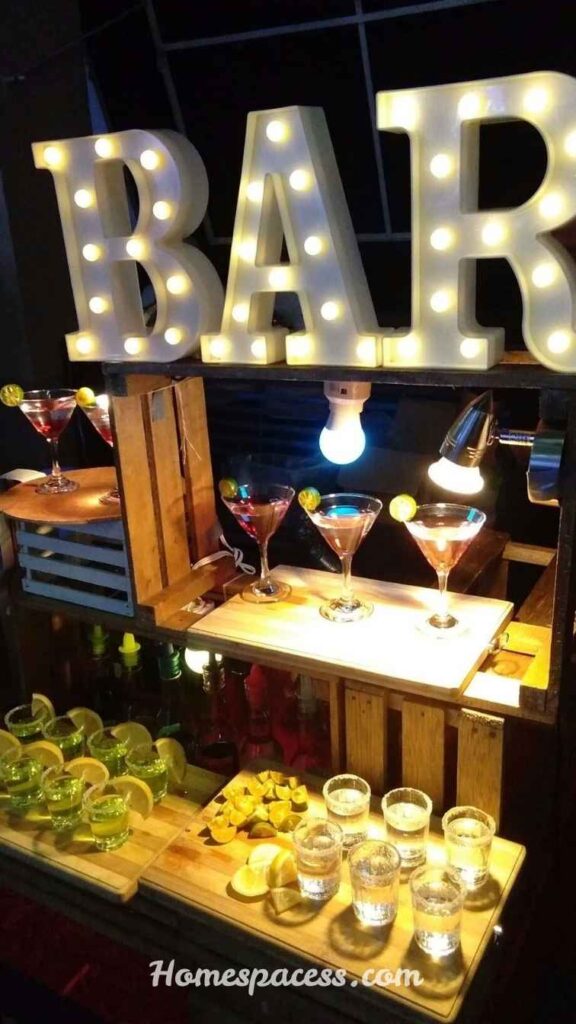
Rather than organizing your mini bar by spirit type (all the whiskey together, all the gin together), a flavor-profile organization system transforms how you mix and how guests engage with your bar. Group bottles by their dominant character: citrus-forward spirits together, earthy and smoky selections as a cluster, light and floral spirits in their own section. This approach, borrowed directly from professional bartenders, makes building cocktails intuitive rather than prescriptive you reach for what the drink needs rather than mechanically following a recipe.
This concept extends to mixers, bitters, and garnishes as well. A small dedicated drawer or section for bitters (organized from bright to bitter to savory), a labeled citrus station with a hand juicer and zester, and a garnish box in the refrigerator transforms your setup from a collection of bottles into a functioning mise en place. Serious home bartenders know that the prep before the pour is what separates a good cocktail from a great one.
From a display perspective, grouping by flavor profile also creates more visually interesting arrangements than alphabetical or spirit-type organization. Bottles of different heights, shapes, and colors cluster naturally into striking vignettes when their contents share a flavor family. It’s both functional and beautiful the dual standard that every great design decision should meet.
Bartender Secret
Label your bitters bottles with their dominant flavor note (citrus, aromatic, tropical) with a small washi tape tag it speeds up drink building significantly.
Zero-Waste Cocktail Bar Sustainable Sipping
The zero-waste mini bar isn’t a compromise it’s a design and philosophical statement that increasingly impresses environmentally conscious guests. The concept is built on three pillars: sourcing spirits from distilleries with transparent, sustainable production; eliminating single-use plastics from the bar setup entirely; and creatively using ingredients that would otherwise be discarded. Citrus peels become candied garnishes or infused syrups. Overripe fruit is muddled into cocktails rather than discarded. Spent vanilla beans are dried and used to stir drinks.
From a design standpoint, the zero-waste bar naturally gravitates toward glass, ceramic, and natural fiber materials all of which are visually warmer and more elegant than plastic alternatives anyway. Glass straws in a small ceramic holder, linen cocktail napkins, beeswax-sealed spirit bottles, and a compost pot for citrus waste create a bar aesthetic that looks thoughtful because it actually is. The sustainable bar is, ironically, often the most beautiful bar in the room.
For the spirits selection itself, the craft distillery market has expanded enormously. Local and regional producers now cover virtually every spirit category, often with superior flavor profiles to their mass-market counterparts and far greater transparency about their sourcing and production. Building a mini bar around local spirits is sustainable, supports small producers, and gives you genuinely unique things to share with guests bottles they can’t find at the supermarket.
Quick Win
Make a batch of citrus oleo(oil)-Saccharum (genus of sugarcane plants) every time you juice it lasts a week in the fridge and elevates any cocktail instantly.
Conclusion
Mini Bar Ideas can turn any empty corner into a warm and stylish spot. You do not need a big space or high budget to start. Small shelves, carts, or cabinets can work perfectly in any home. Choose colors and designs that match your room. Add soft lights, clean glasses, and simple decor for a cozy feel. Keep your setup neat and easy to use every day. Good Mini Bar Ideas help create a space where you can relax and enjoy time with family or friends at home.
In the end, Mini Bar Ideas are about comfort, style, and smart planning. You can mix modern and simple looks to match your taste. Use available space wisely and avoid clutter. Even a small mini bar can look elegant with the right items and layout. Try new ideas and adjust them to your needs. With the right Mini Bar Ideas, your home can feel more inviting, stylish, and perfect for everyday enjoyment.
Trend Analysis
Mini Bar Trends Shaping 2026 and Beyond
The home bar category has shifted from a post-pandemic novelty into a mature design discipline. In 2026, the dominant forces reshaping how people design mini bars at home are the normalization of non-alcoholic spirits, the rise of the “aperitivo hour” ritual borrowed from European culture, and the growing influence of hospitality design principles applied to residential spaces. These aren’t fleeting aesthetics they reflect deeper cultural shifts in how people socialize and invest in their homes.
Non-alcoholic and low-ABV spirits have moved from health-trend fringe to genuine bar staple. Products like Seedlip, CleanCo, and Lyre’s have convinced a generation of hosts that a well-stocked mini bar must now include a considered no-alcohol section not as an afterthought but as a category with its own glassware, garnishes, and mixing logic. The most forward-thinking home bar setups dedicate an entire shelf or section to this, creating a bar experience that is genuinely inclusive rather than silently exclusionary.
Circular Bar Design
Repurposed furniture and zero-waste cocktail practices gaining mainstream traction.
Smart Lighting Systems
Scene-based LED control tied to music and time-of-day for atmosphere.
Botanical Mixology
Fresh herb stations and homemade tinctures replacing mass-market syrups.
No/Low ABV Spirits
Now a standard section in design-conscious home bars, not a specialty corner.
The aperitivo movement that Italian tradition of light pre-dinner drinks centered on bitter, botanical flavors is directly influencing how mini bars are stocked and presented. Campari, Aperol, Lillet, and vermouths are moving from specialty items to everyday essentials. This shift also changes the glassware conversation: the large aperitivo wine glass, the Nick & Nora coupe, and the balloon glass are replacing the standard rocks glass as the go-to residential barware. Hosting culture is becoming more European in its pacing and intentionality, and mini bar design is following suit.
Expert Insights
Practical Tips Most Home Bar Guides Miss
“The biggest mistake home bartenders make is buying too many bottles before understanding their preferences. Start with six spirits that represent different flavor families, and build from there.” principle echoed by professional bartenders across the industry.
The lighting temperature above your bar matters more than most people realize. Bars and restaurants universally use warm-toned lighting (2700K to 3000K) for a specific reason: it makes amber spirits glow, deepens red wine colors, and creates the feeling of evening regardless of the clock. A bar lit with cool white LED strips (5000K and above) looks clinical and feels uninviting, no matter how beautiful the bottles are. If you take one lighting lesson from this guide, it’s this: always install your bar lights on a warm-tone setting and add a dimmer.
The height of your bar surface is a frequently overlooked comfort factor. The standard kitchen counter height of 36 inches is slightly too low for comfortable standing bar use, which is why most residential bar carts and commercial bars use a counter height of 38–42 inches. If you’re building or customizing a bar surface, this small adjustment makes extended hosting feel dramatically more comfortable and it subtly changes the body language of guests, encouraging them to stand and mingle rather than slump over the counter.
Glassware selection is where many home bars fall down. Rather than owning twelve of one glass type, invest in four each of four different styles: a highball for long drinks, a rocks glass for neat spirits and lowballs, a coupe for up drinks, and a wine glass for aperitivo-style drinks. This small portfolio covers 95% of cocktail service needs and creates visual variety on your bar that signals sophistication without requiring a commercial glass collection.
Sustainability & Long-Term Value
Building a Mini Bar That Pays for Itself Over Time
A well-built home mini bar is one of the few home investments that generates genuine long-term value both financially and socially. The average cocktail at a mid-range bar now costs $14–$18 in most major cities. A home mixed drink using quality spirits costs $2–$4. For a household that entertains once a month and might otherwise spend $150–$200 at a bar, the home mini bar pays for itself within 12–18 months in many cases. The financial case is straightforward; the emotional case having a space that becomes the heart of your social life is even stronger.
Sustainable bar building starts with material choices. Solid wood, glass, ceramic, and metal components last decades. MDF, laminate, and plastic alternatives begin showing their age in 3–5 years. This is the rare area in home design where spending more upfront on materials is genuinely the economical choice over a 10-year horizon. A $200 solid teak bar cart will still look excellent in 2035. A $60 plastic-and-MDF alternative will not. Buy once, buy better.
From a spirits-investment perspective, the growing secondary market for aged whiskey and rare spirits means that a well-curated spirits collection can appreciate in value. Limited-edition bottles from craft distilleries, allocated products, and defunct brand expressions have seen significant value increases over the past decade. This doesn’t mean treating your mini bar as a financial instrument but it does mean that thoughtful collecting and preservation (away from light and heat) can produce a bar that becomes more valuable simply by being maintained well.
Future Predictions
Where Home Bar Design Is Heading Next
2026–2027 AI-assisted cocktail recipe apps that scan your bar inventory and suggest drinks based on what you have, your mood input, and guest dietary restrictions become mainstream tools for home hosts.
2027–2028 Modular bar furniture systems designed specifically for home use with interchangeable components begin to appear from major furniture brands, replacing the current DIY-dominant market.
2028–2030 Fermentation-integrated home bars become a niche but growing category, with home kombucha, kefir, and tepache stations sitting alongside traditional spirits as part of the complete beverage station concept.
2030+ Printed and programmable cocktail dispensing systems already emerging at the commercial level find consumer-grade versions that allow precise, repeatable cocktail creation at home without manual measuring.
Perhaps the most significant upcoming shift is the integration of home bars with broader smart home ecosystems. The ability for your bar lighting to automatically shift when your music playlist changes to a lounge mode, or for your smart home to suggest a cocktail based on the outdoor temperature and your calendar (recognizing that tonight is a party night), represents a genuinely different relationship between technology and hospitality. The bar becomes less a static piece of furniture and more a responsive, context-aware system.
The biophilic design movement the integration of natural materials, plants, and living elements into interior spaces will increasingly influence bar design. Living herb walls adjacent to bar areas, moss art panels that serve as acoustic dampening, and hydroponic garnish systems that produce bar herbs year-round are already appearing in high-end residential designs. By 2028, these elements will likely appear in mainstream home design media as expected components of an ambitious home bar setup rather than extraordinary luxury additions.
Common Mistakes
Mini Bar Mistakes That Kill the Vibe (And How to Avoid Them)
- Ignoring light direction: Backlighting bottles creates drama. Overhead downlights cast unflattering shadows across labels. Always light from behind or below, not above.
- Overcrowding the space: A bar with 30 bottles looks impressive on paper but overwhelming in person. Curate down to 8–12 regularly used bottles and store the rest. Rotation is a feature, not a failure.
- No dedicated waste solution: Without a small bin or discreet waste bin nearby, citrus peels, bottle caps, and used napkins accumulate on the bar surface immediately. A hidden waste point is non-negotiable for a functional bar.
- Forgetting glassware storage: Glasses displayed on the bar surface look beautiful but gather dust. Inverted glasses on a shelf or in a cabinet stay cleaner and are actually easier to grab during service.
- Heat exposure for spirits: Positioning your bar near a radiator, south-facing window, or kitchen stove can degrade spirits in weeks. Cool, dark, and stable temperature not decorative positioning should dictate bottle placement.
- Skipping the ice solution: Ice is the single most overlooked element in home bar planning. A dedicated ice bucket, a silicone large-cube tray in the freezer, and clear ice (made using a directional freezing container) together cost under $30 and transform every drink you serve.

Team Home Spacess shares simple, practical design ideas that work for real families. The team focuses on cozy décor, soft colors, and natural textures that make a space feel truly lived-in. From everyday decorating tips to creative home projects, Team Home Spacess is dedicated to helping readers create warm, comfortable, and inviting spaces with a fresh and personal touch.