

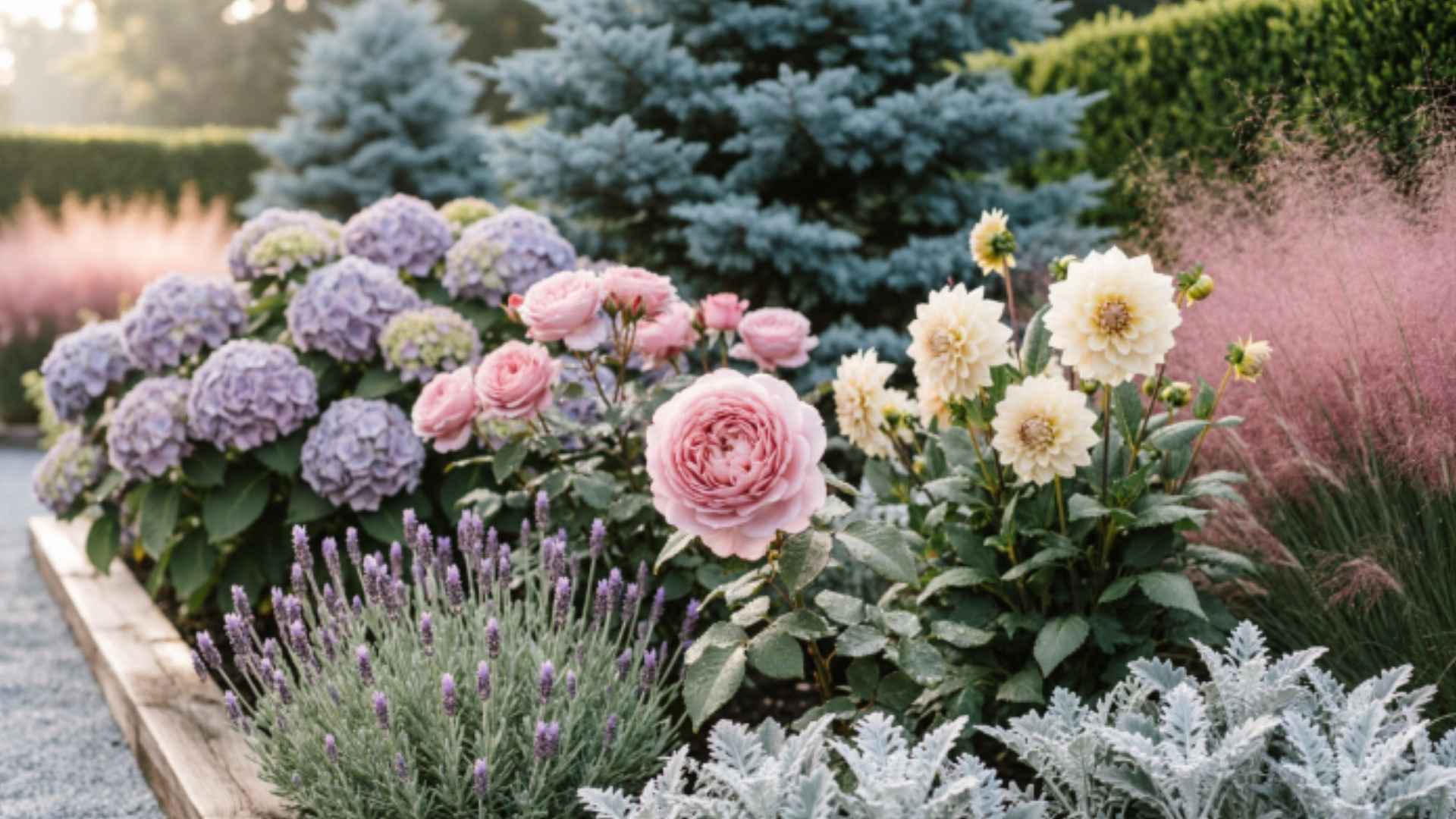
A flower garden is more than a patch of color it’s a living, breathing ecosystem that shapes how you feel every time you step outside.
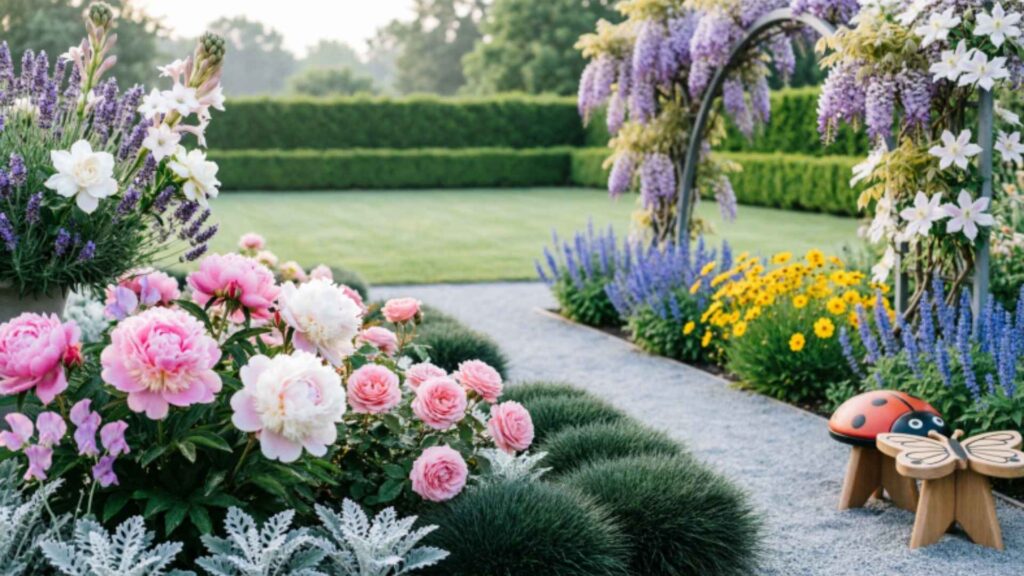
Whether you’re working with a sprawling backyard or a narrow balcony, the right flower garden design can triple your curb appeal, attract pollinators, and become the most rewarding project you’ve ever taken on. In this guide, we go beyond the obvious beyond “plant some petunias and hope for the best” and give you 20 deeply researched, visually inspiring ideas that actually work in the real world.
We’ve blended landscape design principles, soil science, seasonal planning, and current 2026 gardening trends into one comprehensive resource. Each idea comes with practical advice, specific plant suggestions, and real-world context. Let’s dig in.
The Cottage Garden:
Organized Chaos That Always Works
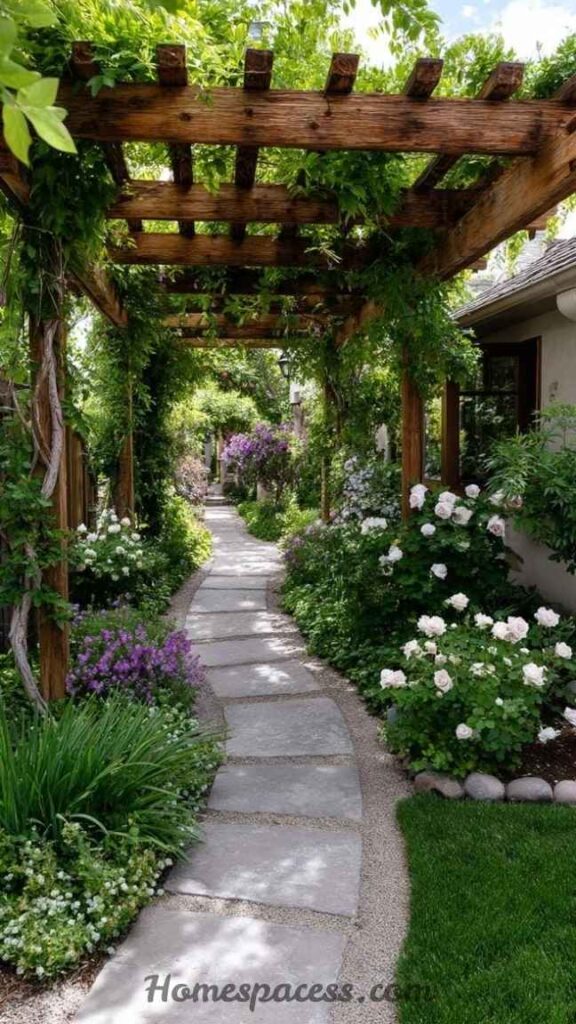
Cottage gardens are experiencing a massive resurgence and for good reason. The style mimics a natural meadow feel while remaining intentionally designed. The key is layering: tall foxgloves and delphiniums at the back, mid-height roses and lavender in the middle, and low edging plants like alyssum or violas at the front. This creates a sense of lush abundance without feeling unkempt.
What most gardeners miss is the intentional color blocking within the “wild” look. Group three to five of the same flower together rather than planting one of each this avoids the chaotic “grocery bag of seeds” effect. Stick to a palette of three to four colors max (think soft purples, whites, and blush pinks) for a cohesive aesthetic that still feels effortlessly natural.
Best plants: Foxglove, echinacea, sweet pea, lavender, hollyhock
Must Read: BBQ Patio Ideas That Transform Your Outdoor Space
The Monochromatic Border:
One Color, Infinite Depth
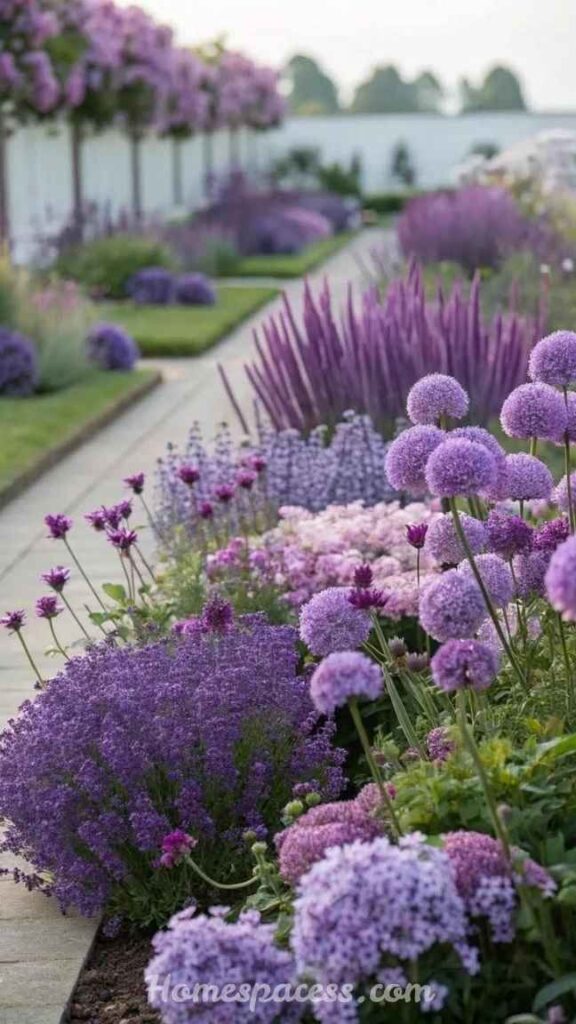
Choosing a single color family and working entirely within it sounds limiting but it produces some of the most visually sophisticated gardens in the world. The White Garden at Sissinghurst Castle in England is the most famous example. By working only in whites, creams, and silvers, the garden creates a sense of luminosity and serenity that multi-colored gardens rarely achieve.
You don’t have to go all-white. An all-yellow border with rudbeckia, helenium, and achillea can feel like sunlight captured in plant form. An all-purple border using salvia, agapanthus, and catmint looks like a painting. The trick is varying texture and height within the single color glossy vs. matte leaves, spiky vs. round blooms to prevent visual flatness.
Pro tip: Vary leaf texture, not just bloom color, for real depth
Don’t Skip: 26 Media Wall Ideas That Transform Any Living Space in 2026
Raised Bed Flower Gardens:
Drainage, Depth & Design Control
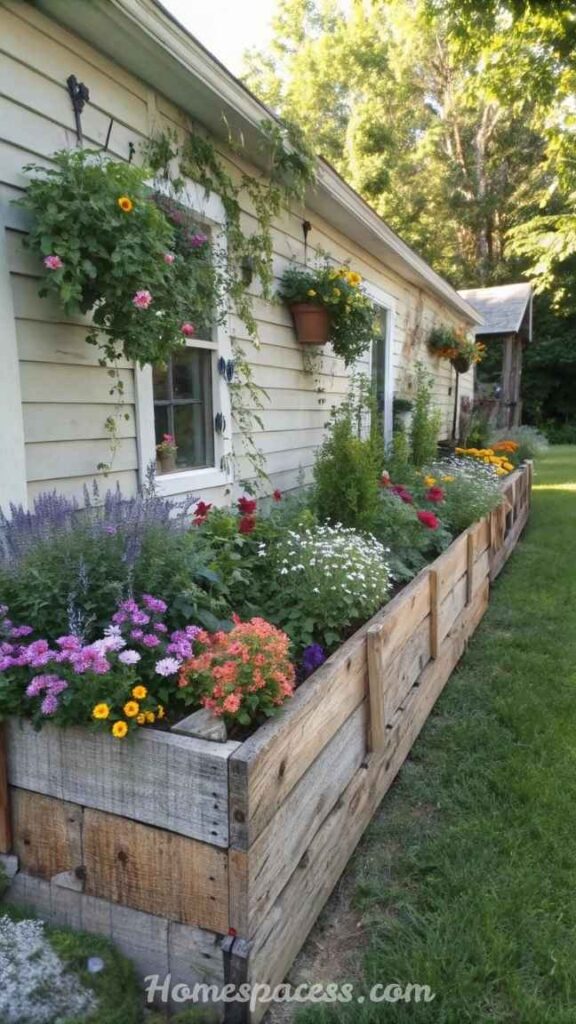
Raised beds aren’t just for vegetables. When used for flowers, they offer three game-changing advantages: superior drainage, better soil control, and a natural visual frame that makes even sparse plantings look intentional and designed. Cedar raised beds are the gold standard they’re rot-resistant and beautiful. Corten steel is the modern choice for an industrial-meets-natural aesthetic.
Fill your raised beds with a custom mix of topsoil, compost, and perlite (roughly 60-30-10). This gives flowering plants the nutrient-rich, well-draining environment they thrive in. Layer bulbs at different depths dahlias near the top, alliums in the middle so you get successive waves of bloom from spring through fall from a single bed.
Best for: Small yards, renters, clay-heavy or poor native soil areas
Read More: 22 Living Room Decor Ideas That Transform Any Space
Native Wildflower Meadow:
The Zero-Input Dream Garden
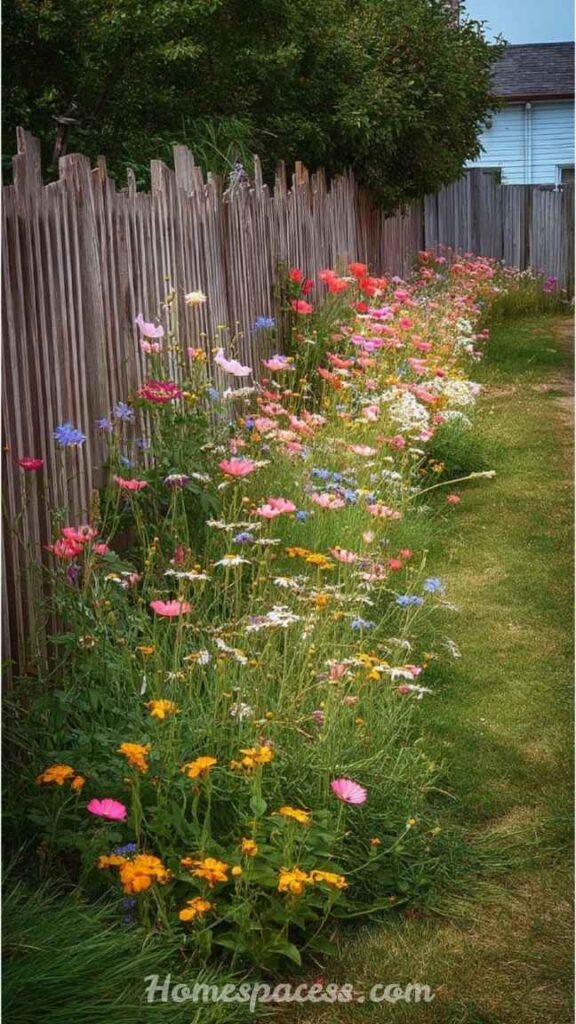
Native wildflower meadows are, arguably, the most intelligent flower garden design you can create in 2026. Once established which typically takes one to two full seasons they require almost no watering, no fertilizing, and minimal maintenance. They evolve naturally with your local ecosystem, attracting a far wider range of pollinators than any traditional border planting.
The critical mistake most gardeners make is skipping soil preparation. Before sowing wildflower seeds, you must remove existing grass and weeds completely either by solarizing (covering with clear plastic for 6–8 weeks in summer) or by using a no-till method with cardboard sheet mulching. A poorly prepped meadow will be dominated by aggressive grasses within one season, smothering your wildflowers before they establish.
Attracts 3–5x more pollinators than traditional ornamental beds
More Info: 15 Baby Nursery Ideas That Are Beautiful, Safe & Built to Grow With Your Child
The Cutting Garden:
A Living Flower Shop in Your Backyard
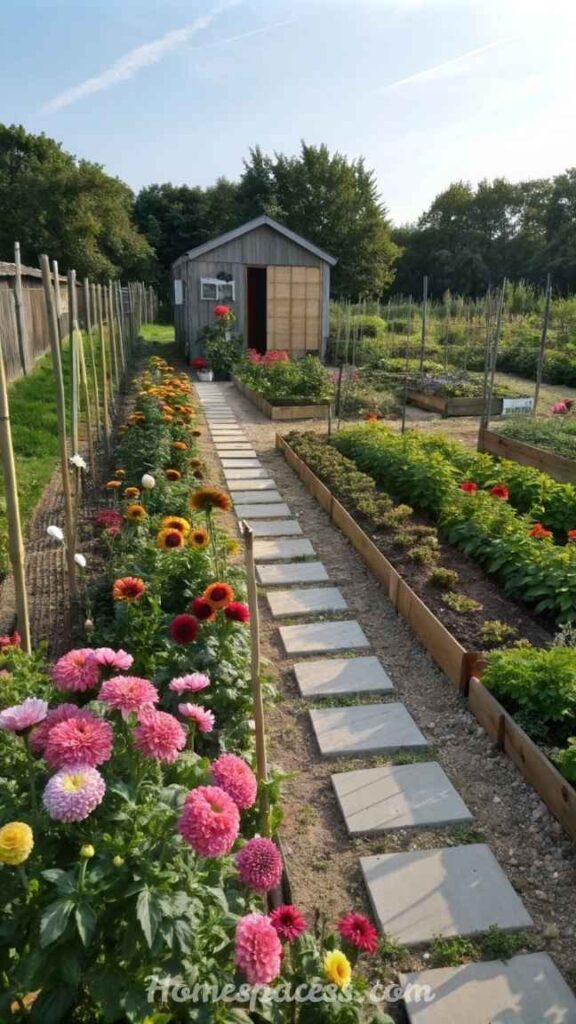
A dedicated cutting garden is the most practical flower garden you’ll ever plant. Its purpose is simple: grow flowers specifically for bringing indoors. When designed well, it continuously produces fresh stems from late spring through first frost. The layout prioritizes function over form plants are often grown in rows like vegetables, making harvesting efficient and succession planting straightforward.
The selection strategy is everything. Combine fast producers like zinnias (which bloom just 6 weeks from seed) with mid-season stars like dahlias and lisianthus, and long-season foliage plants like dusty miller or eucalyptus for texture. Harvest stems in the early morning when flowers are most hydrated, and cut at a 45-degree angle immediately placing them in water. This simple step can extend vase life by 40–60%.
Key plants: Zinnias, lisianthus, dahlias, snapdragons, cosmos
Vertical Flower Walls:
Maximum Color, Minimum Ground Space
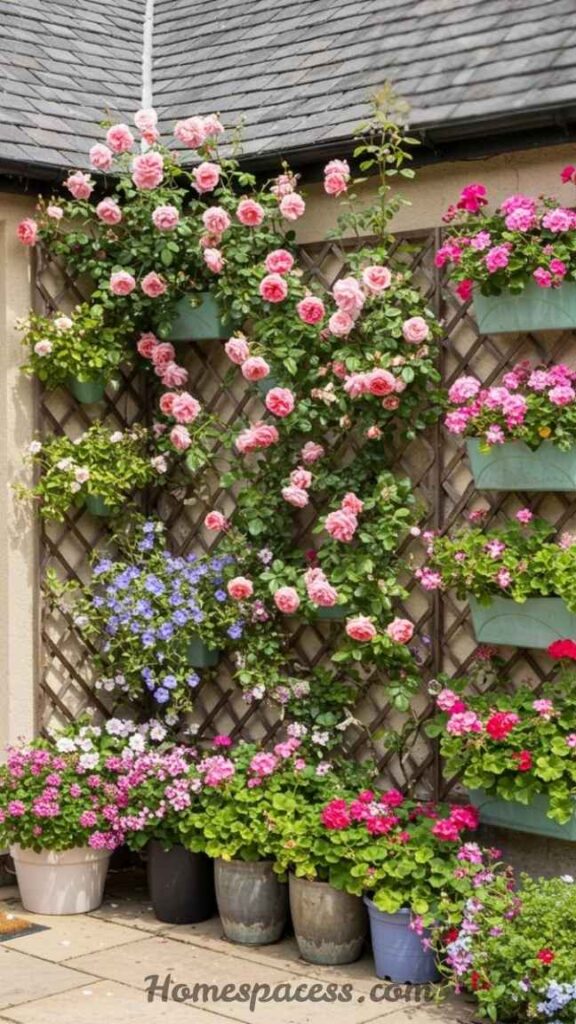
Vertical gardening has evolved far beyond basic trellises. Modern vertical flower gardens use modular planting panels, repurposed pallets, living wall systems, and even custom steel structures to turn bare fences and walls into vertical canvases of color. For small urban gardens, a well-planted vertical flower wall can provide more visual impact than an entire traditional garden bed.
The most durable vertical plantings combine trailing types (like calibrachoa or trailing petunias) that cascade downward with upright bloomers (like impatiens or begonias) that fill gaps with density. Irrigation is the non-negotiable vertical planters dry out twice as fast as ground-level beds. Invest in a simple drip system on a timer from day one, and you’ll avoid the constant wilting that kills most vertical garden attempts.
Perfect for: Balconies, courtyards, and privacy screening
The Four-Season Flower Garden:
Bloom from January to December
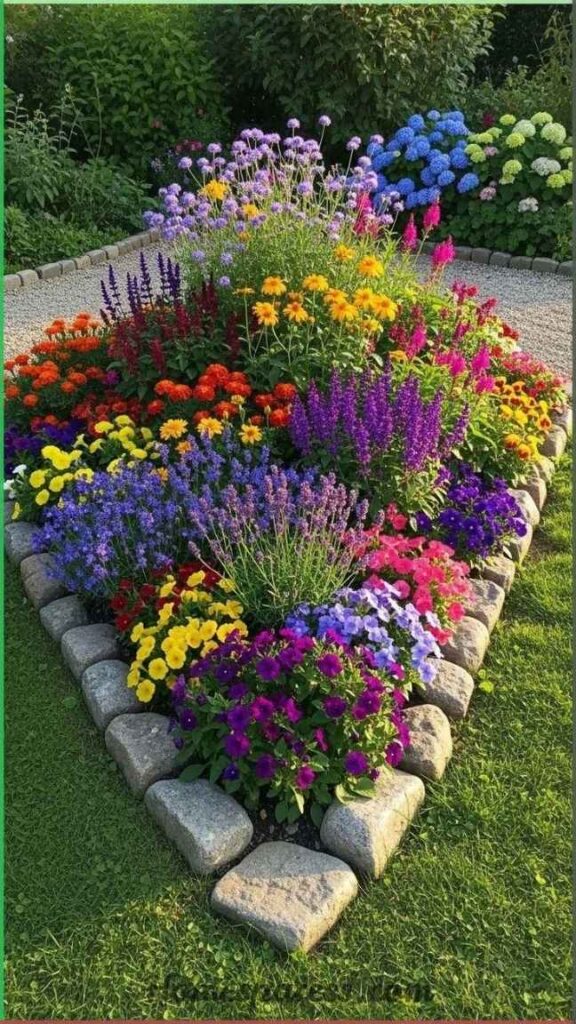
Most gardens look spectacular in summer and dead in winter but this is entirely avoidable with intentional four-season planning. The strategy involves selecting plants with different bloom times and ensuring there’s at least one species flowering in every month of the year. In colder climates, this may mean relying on winter-interest plants like hellebores, witch hazel, or ornamental grasses that hold their structure under snow.
Map your planting plan on paper or in a garden app before buying anything. For each season, aim for at least three different plants in bloom simultaneously. Spring: tulips + forget-me-nots + alliums. Summer: roses + echinacea + rudbeckia. Fall: sedums + asters + dahlias. Winter: hellebores + snowdrops + ornamental kale. This structured approach transforms your garden from a one-act show into a year-round performance.
Moon Garden:
The Sensory Experience of White Flowers at Night
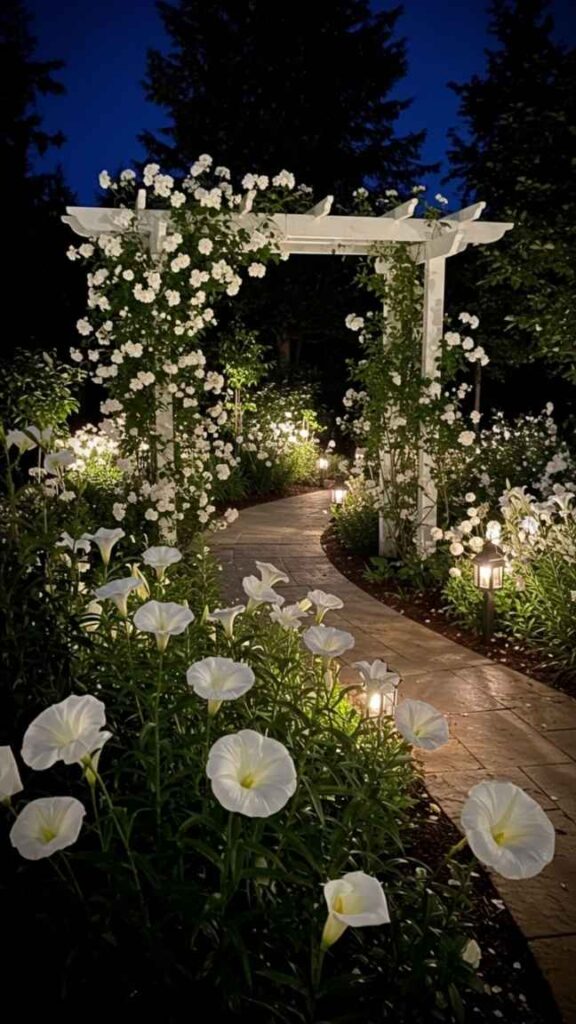
A moon garden is designed to be experienced after dark. It uses predominantly white and pale-colored flowers that reflect moonlight and artificial lighting, combined with night-fragrant plants that release their scent as temperatures drop in the evening. This is a deeply underutilized garden concept especially for people who work all day and only get to enjoy their garden in the evenings.
Cornerstone plants include white nicotiana (incredibly fragrant at dusk), moonflower vines (which open at night), white phlox, four o’clocks, and pale roses. Pair these with silver-leafed plants like lamb’s ears and artemisia, which shimmer in low light. Strategically placed solar lanterns or low-voltage path lighting amplifies the effect without overpowering the natural luminosity of the white blooms.
For evening gardeners or those with small daytime schedules
Edible Flower Garden:
Beauty You Can Actually Eat
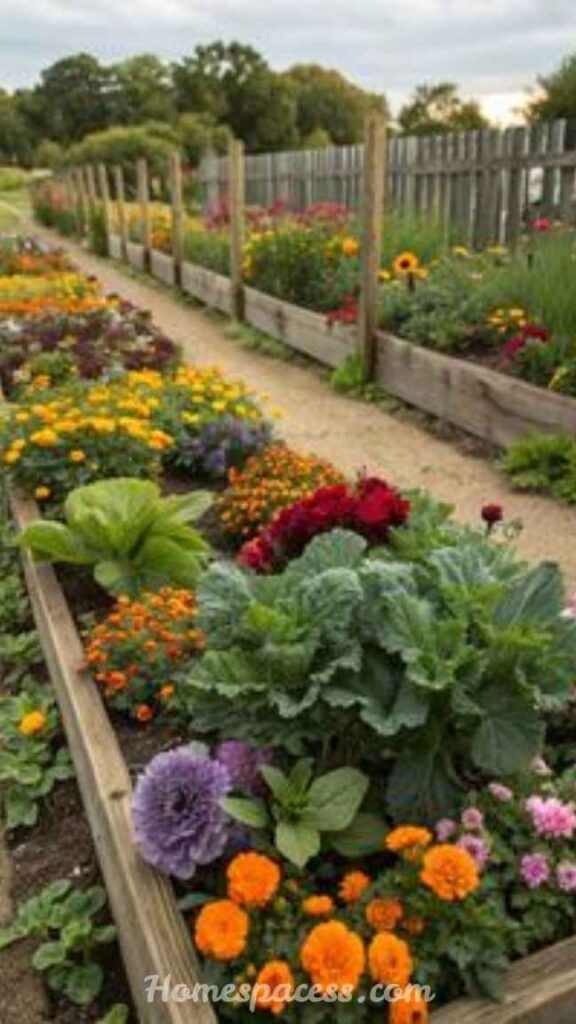
Edible flower gardens blur the line between ornamental and functional gardening and they’re far more sophisticated than just scattering nasturtiums in a salad. A thoughtfully designed edible flower garden produces blooms for cooking, garnishing, infusing into cocktails, and drying for herbal teas. The design can be just as beautiful as any purely ornamental bed, with the added satisfaction of direct harvesting.
Reliable edible flowers include calendula (slightly spicy, great for soups), borage (cucumber flavor, perfect for drinks), violas (mild, lovely in desserts), and rose petals (intensely fragrant for jams and infusions). One important note: always grow edible flowers organically, or source seed from suppliers specifically labeled for edible use some ornamental plant varieties are treated with pesticides that make consumption unsafe.
Borage, calendula, violas, nasturtiums, lavender are the most versatile
The Pollinator Paradise:
Engineer a Thriving Ecosystem
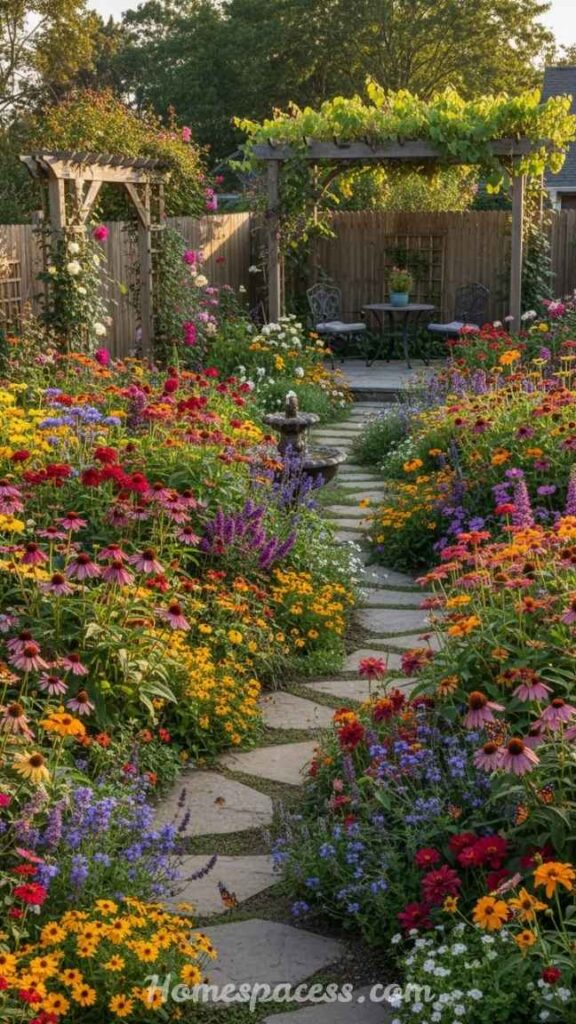
Pollinator gardens have shifted from niche concept to mainstream priority and the science behind why matters. Research shows that diverse plantings of native flowering species can support local bee and butterfly populations more effectively than any single “pollinator mix” seed packet. The goal is continuous bloom across the season, providing nectar and pollen sources from early spring through late fall.
Design your pollinator garden in drifts of five to seven plants of the same species this is how bees naturally forage, and it makes your garden far more efficient as a food source than scattered single specimens. Include plants with different flower shapes: tubular flowers (salvia, penstemon) for hummingbirds and long-tongued bees, open daisy-type flowers (rudbeckia, asters) for smaller bees, and composite flowers (fennel, dill) for beneficial wasps and hoverflies.
Aim for 10+ species to support 20+ different pollinator types
Container Flower Gardens:
Portable Beauty for Any Space
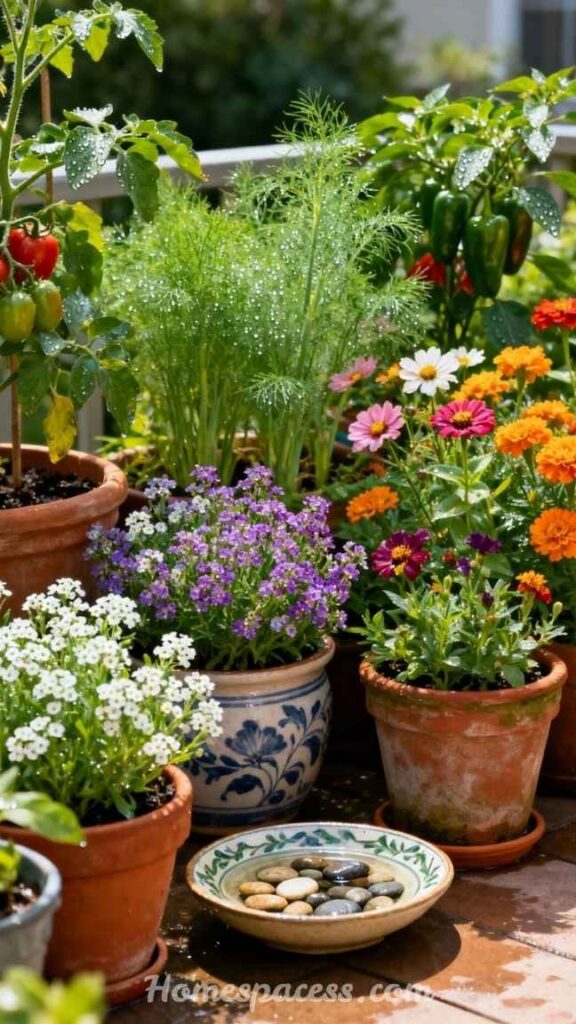
Container gardening has reached new heights with the rise of patio culture and urban living. A thoughtfully curated container flower garden can rival any in-ground planting for visual impact and it gives you total flexibility. You can rearrange containers seasonally, overwinter tender plants by moving them indoors, and completely reinvent your outdoor space without digging a single hole.
The “thriller, filler, spiller” formula remains the gold standard for container planting: a tall, dramatic center plant (the thriller), bushy mid-height plants that fill the container (the fillers), and trailing plants that cascade over the edges (the spillers). But go beyond the formula layer in unexpected foliage plants like dark-leafed cannas or variegated grasses to give your containers a designer look that standard annual combinations rarely achieve.
Upgrade: Self-watering containers reduce maintenance by 70%
The Sensory Garden:
Design for Touch, Smell, and Sound
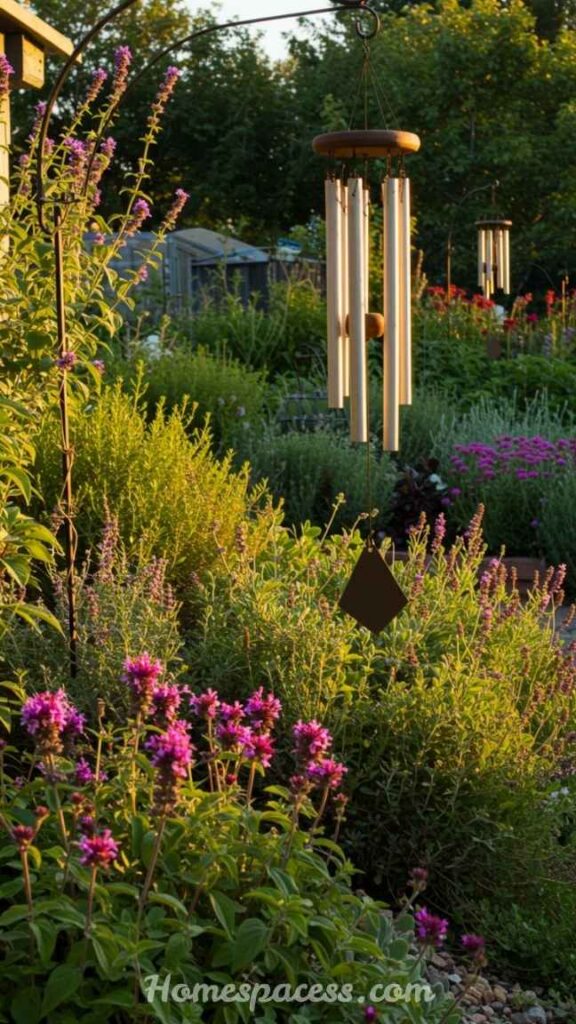
A sensory flower garden deliberately engages all five senses not just sight. This approach has its roots in therapeutic horticulture, but it creates a garden experience that is profoundly more immersive and restorative than a visually-only designed space. Every plant choice is made with the full sensory experience in mind: how does it smell? How does the breeze move through it? What texture does it offer to touch?
Scent plants are the foundation: rosemary, lavender, sweet peas, and jasmine provide layers of fragrance that shift as you move through the space. Grasses like miscanthus or Pennisetum create sound as wind moves through them. Lamb’s ears, stachys, and velvety sage invite touch. Bright, high-contrast colors engage vision and including bird-attracting plants adds an audio dimension of birdsong that no landscaping budget can buy.
Ideal for: Therapeutic spaces, children’s gardens, mindfulness-focused yards
The Rain Garden:
Turn Poor Drainage Into a Feature
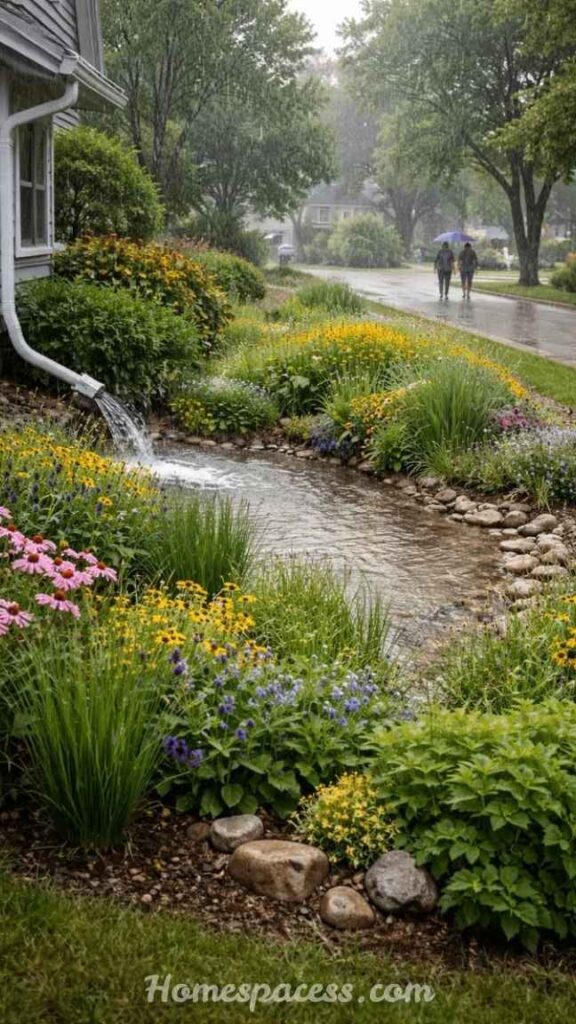
If part of your yard collects standing water after rain, you likely see it as a problem. A rain garden reframes that liability as an asset. Rain gardens are shallow, deliberately designed depressions planted with water-tolerant flowering plants that capture, filter, and slowly absorb stormwater runoff. They reduce erosion, filter pollutants before they reach groundwater, and create a uniquely lush microhabitat.
The planting strategy prioritizes moisture-tolerant natives: Louisiana irises, cardinal flower (Lobelia cardinalis), blue flag iris, joe-pye weed, and swamp milkweed all thrive in intermittently wet conditions while also tolerating dry periods. The center of the rain garden handles the wettest conditions; plant the most moisture-tolerant species there and move to more drought-tolerant choices toward the edges where water drains first.
Can reduce residential stormwater runoff by up to 30%
Drought-Tolerant Flower Garden:
The Water-Wise Revolution
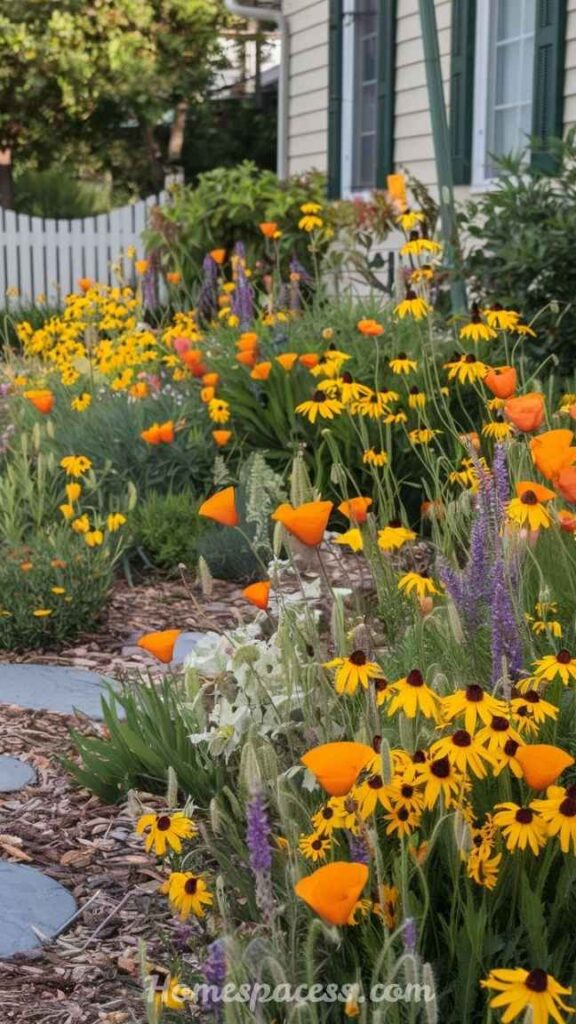
As water costs rise and droughts become more frequent across major growing regions, drought-tolerant flower gardening has stopped being “settling for less” and started being the smart, sophisticated choice. The palette of drought-tolerant flowering perennials has expanded dramatically in recent years, including varieties that look lush and spectacular even in dry conditions challenging the outdated assumption that water-wise gardens must look scrubby or sparse.
Mediterranean-style plantings are leading this shift. Lavender, salvia, agapanthus, catmint, and ornamental alliums collectively create a garden that peaks in late spring and early summer exactly when water is most scarce in many regions. Layer in silver and grey-leafed plants (artemisia, santolina, stachys) which naturally reflect sunlight and reduce transpiration. Mulch deeply at least 3 inches to retain soil moisture between rainfall events.
Can reduce garden water use by 40–60% vs. traditional plantings
Japanese-Inspired Flower Garden:
Restraint as Artistry
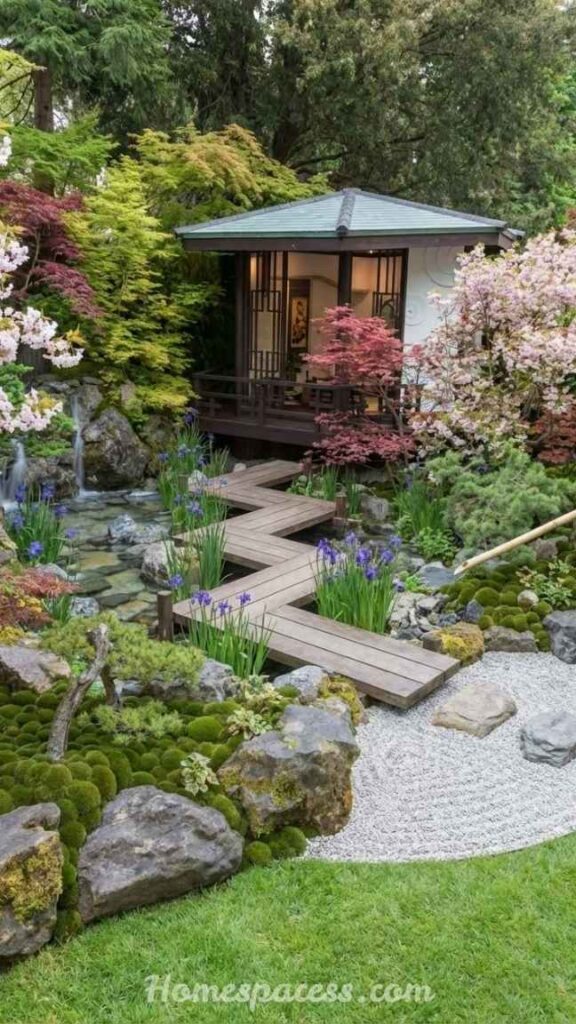
Japanese garden philosophy treats every plant as a deliberate sculptural element. Rather than filling space, it curates it using negative space, asymmetry, and the beauty of individual specimens to create a contemplative, refined outdoor environment. When applied to flowering plants, this philosophy produces gardens that feel intentional and calming rather than busy or overwhelming.
Cherry blossoms are the iconic image, but the principles extend to all seasons. In spring: azaleas and camellia. In summer: Japanese anemones and lotus. In autumn: chrysanthemums and Japanese maples underplanted with colchicum. The hardscaping matters equally: raked gravel, stepping stones, moss, and bamboo screens frame the flowers as if each is a painting, not just a plant in a bed.
Key principle: Every plant must earn its space through form, not just flower
Children’s Flower Garden:
Fast, Big, and Magical
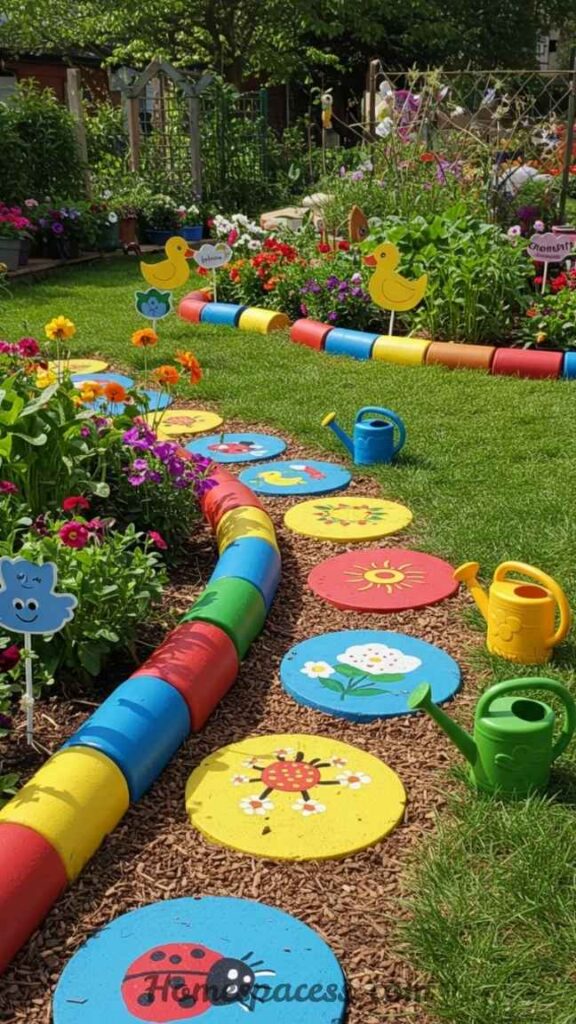
A flower garden designed for children prioritizes three things: fast germination (so results come before interest is lost), dramatic scale (giant sunflowers and outsized blooms create wonder), and sensory engagement (fragrant, touchable, edible plants that make the garden feel alive). Sunflowers are the legendary starter germinating in under a week, reaching head height in weeks, and producing a bloom so large it feels almost impossible.
Build a “secret garden” enclosure using tall sunflowers or corn planted in a circle, leaving a small entrance gap. Inside, plant fast-growing annuals: marigolds, zinnias, cosmos, and morning glories. Add a bean teepee (bamboo poles tied at the top, covered with climbing beans) which becomes a magical playhouse. Include one or two “sensory” plants like lamb’s ears (ultra soft) or scented geraniums (different varieties smell like lemons, roses, or mint).
Sunflowers, marigolds, and nasturtiums: germinate fastest for young gardeners
Colour Wheel Garden:
Use Design Theory for Maximum Impact
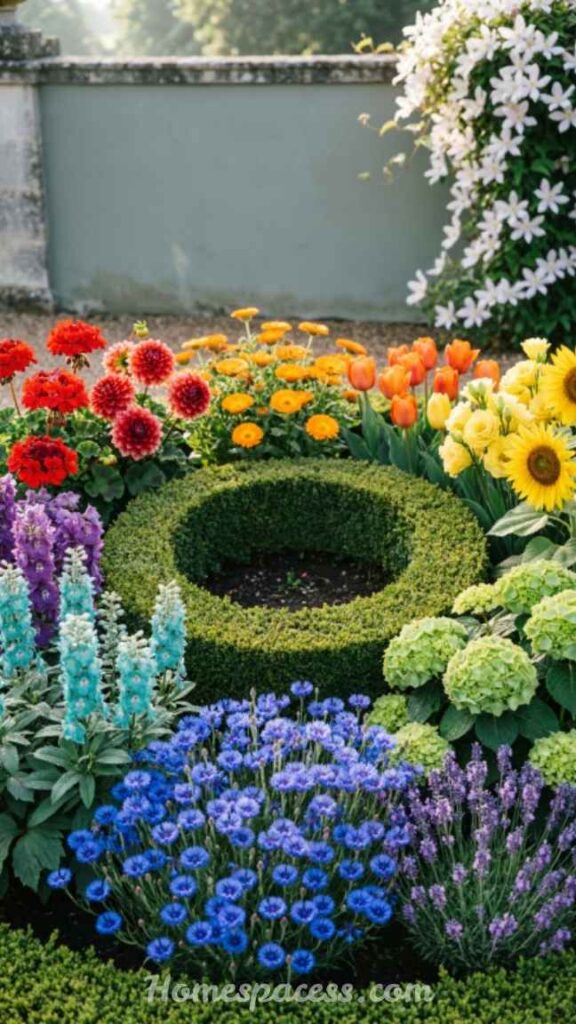
Most gardeners choose plants based on what’s available, what they love, or what happens to be on sale without considering color relationships. Applying basic color theory transforms a pleasant garden into a visually strategic one. Complementary color pairings (colors opposite on the wheel, like purple and yellow, or orange and blue) create electric visual contrast. Analogous pairings (neighboring colors like pink, red, and orange) create flowing, harmonious warmth.
For high-impact complementary planting, try yellow rudbeckia with purple salvia, or orange marigolds with blue anchusa. For softer analogous schemes, pair coral roses with pink echinacea and deep red dahlias. The intensity of the effect depends on saturation: bright, fully saturated colors paired as complements create drama; softer, more pastel versions of the same pairs create serenity. Neither is better choose based on the mood you want to create.
Purple + Yellow = most visually dynamic pairing in any flower garden
Herb and Flower Companion Garden:
Beauty With Purpose
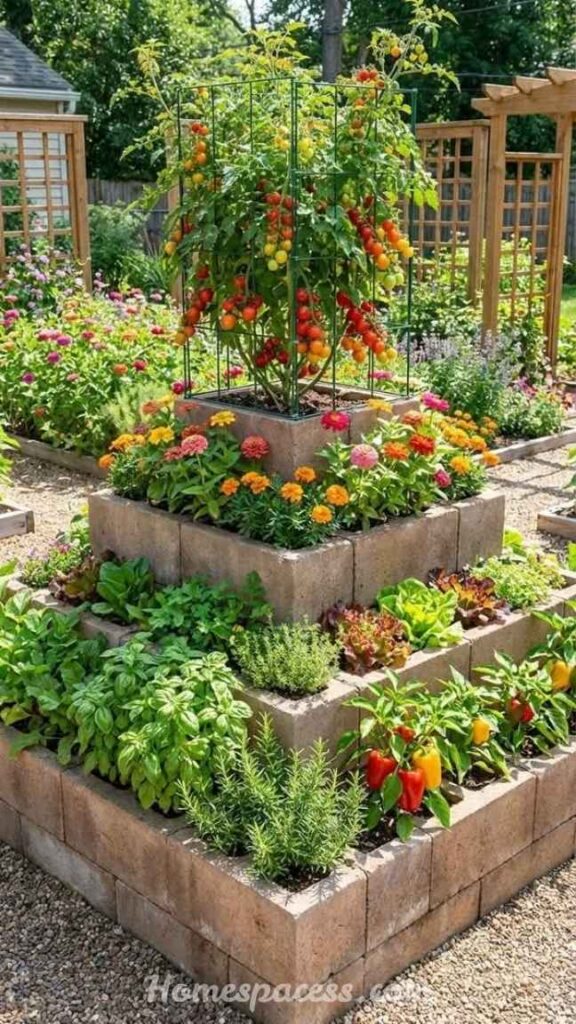
Companion planting growing flowers and herbs together for mutual benefit has a deep scientific foundation that most decorative gardeners ignore. Nasturtiums deter aphids from neighboring plants. Marigolds secrete a root compound toxic to nematodes, protecting everything planted nearby. Borage repels tomato hornworms. These aren’t old wives’ tales many have been validated by university horticultural research.
A well-designed companion garden integrates flowering plants and herbs so seamlessly that visitors rarely realize the planting is functional as well as beautiful. Interplant lavender and rosemary (both flowering and aromatic) among roses to deter pests. Weave nasturtiums through vegetable beds. Grow alliums (ornamental onions) near roses and fruit trees to protect them naturally. The result: a productive, low-chemical garden that looks like a professional border planting.
Marigolds + any vegetable = instant pest management upgrade
Fragrance-First Flower Garden:
Designing for Smell, Not Just Sight
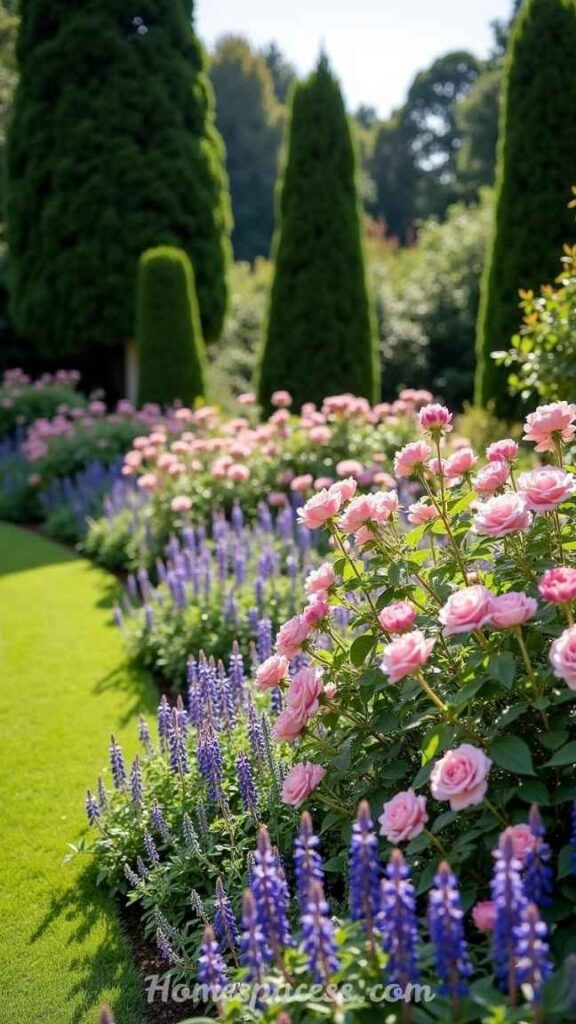
The sense of smell is the most memory-linked of all senses yet most gardens are designed purely for visual impact. A fragrance-first flower garden inverts this priority, selecting plants primarily for their scent and arranging them along paths and near seating areas where their fragrance is most accessible. A well-planned fragrance garden can be transformative in a way that a purely visual garden cannot.
Layer fragrances by height and season: low-growing thyme and sweet alyssum for ground-level scent released when stepped on; mid-height lavender, roses, and jasmine for nose-height fragrance; and tall night-flowering plants like white nicotiana for evening scent that drifts across the garden. Avoid clustering all your fragrant plants together spread them throughout the space so each area of the garden has its own distinct scent identity.
Most fragrant: old rose varieties, sweet peas, lilies, freesias, stock
The Formal Parterre:
Geometry Meets Abundance
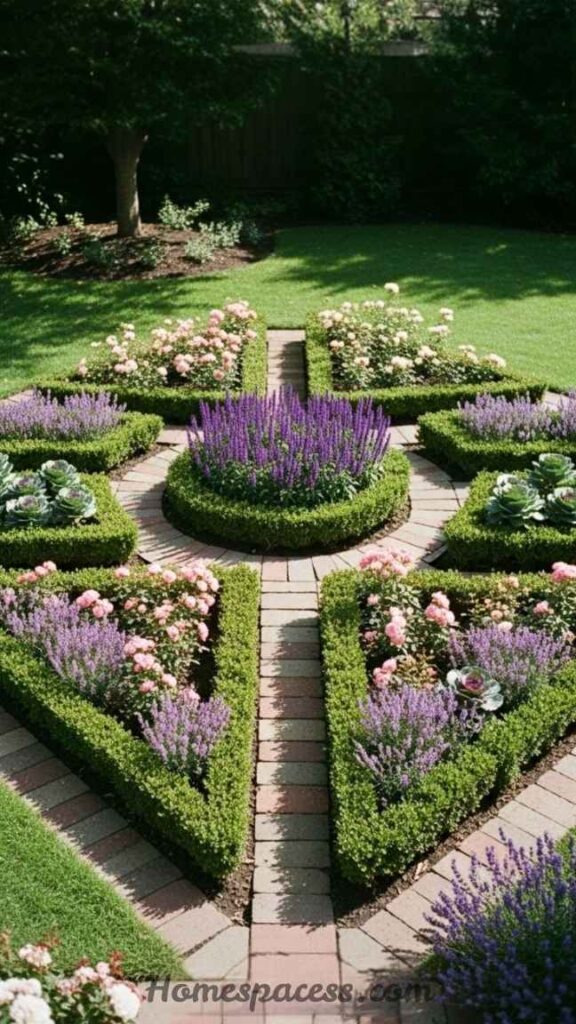
Parterre gardens are among the oldest formal garden styles a French tradition of precisely edged beds arranged in geometric patterns, typically viewed from above. The modern interpretation doesn’t require a château. Even a small front garden can incorporate the parterre principle: low boxwood or lavender hedges defining geometric shapes filled with seasonal flowering plants, creating a structured, elegant look that always appears “designed” rather than planted randomly.
The key to a successful modern parterre is simplifying the geometry and reducing the maintenance demand of traditional styles. Instead of high-clipped boxwood (increasingly vulnerable to box blight), use dwarf lavender, Nepeta, or even ornamental grass as the structural edge. Fill the geometric spaces with mass plantings of a single annual (tulips in spring, petunias in summer, ornamental kale in fall) for a look that’s both formal and seasonally dynamic.
Replace traditional boxwood with disease-resistant Ilex crenata for longevity
💡Expert Insight
The single most common mistake in flower garden design is choosing plants before choosing a style. Define your aesthetic first cottage, formal, wildflower, contemporary and then select plants that serve that vision. Inconsistent plant selection is why most home gardens look “busy” rather than beautiful.
Conclusion
A flower garden doesn’t have to be large, expensive, or complicated to be transformative. What it does have to be is intentional. Every one of the 20 ideas in this guide works whether you’re starting with a single raised bed or redesigning an entire property because they’re grounded in proven design principles rather than guesswork.
The single most important decision you’ll make is choosing your garden’s purpose and style before selecting a single plant. Are you creating a cutting garden for fresh flowers indoors? A pollinator haven for ecological impact? A sensory retreat for evening relaxation? Each purpose has a different set of ideal plants, design principles, and maintenance rhythms. Start with purpose, and the rest of the decisions become much easier.
Beyond the ideas themselves, remember that great gardens are built over time, not in a single season. Every year brings more knowledge about what works in your specific microclimate, what your soil needs, and what brings you the most joy. Keep notes. Experiment without fear. A flower that fails is information, not failure. The most beautiful gardens you’ve ever seen were built by gardeners who kept showing up and so will yours.
Trend Analysis
2026–2027 Flower Garden Trends: What’s Dominating and What’s Coming Next
Rewilding and “Designed Naturalism” Is Replacing Traditional Borders
The single biggest shift in residential garden design since 2023 is the move away from rigid, high-maintenance traditional borders toward what landscape designers are calling “designed naturalism.” This isn’t simply letting your garden go wild it’s the deliberate curation of plants that look wild but are intentionally chosen and placed. Think Piet Oudolf-style planting design trickling down from botanical gardens into suburban backyards. Grasses, seedheads, and structural perennials like veronicastrum, persicaria, and sanguisorba are replacing the traditional bedding plants that dominated garden center sales for decades.
For homeowners, this trend offers a practical advantage: designed naturalism gardens require dramatically less deadheading, less staking, and less replanting than traditional annuals-heavy beds. Perennials are planted once and improve with age. The garden looks beautiful in every season including winter, when frosted seedheads and skeletal flower stems provide structure and wildlife habitat simultaneously. Expect this trend to accelerate through 2026 as climate pressures make high-maintenance gardening less appealing and less sustainable.
Climate-Adaptive Planting: Gardening for the Weather of Tomorrow
A growing number of professional gardeners and landscape architects are now explicitly planning for climate change rather than planting for current conditions. In practice, this means incorporating drought-tolerant plants from Mediterranean and South African climates into gardens in temperate zones, selecting cultivars rated two USDA hardiness zones above your current zone to build in resilience against increasingly unpredictable winters, and choosing plants with extended bloom windows that can handle erratic spring temperature swings without losing their flowers to late frosts.
The market is responding: major plant breeders are specifically developing varieties with extended heat tolerance and improved drought resistance. ‘Endurascape’ verbenas, ‘Unplugged’ salvias, and the entire ‘Easy Care’ perovskia series are examples of cultivars bred specifically for conditions that will become increasingly common across gardening zones through 2030. These aren’t just “tough” plants they’re genuinely beautiful, well-designed varieties that happen to also be climate-resilient.
+38%
Rise in native plant searches in 2024 vs. 2022
2.4x
Faster growth in pollinator garden category vs. ornamental
#1
Dahlias: most-searched flower garden plant globally in 2024
Expert Insights
Practical Expert Tips: What Professional Gardeners Do Differently
The Soil-First Philosophy That Changes Everything
Professional gardeners and horticultural experts unanimously agree on one principle that most beginners skip: invest in your soil first, your plants second. Most garden failures poor flowering, leggy growth, disease-prone plants trace back to inadequate soil preparation rather than wrong plant selection. The investment in quality compost, mycorrhizal fungi inoculants, and an initial soil test pays dividends for decades. Healthy soil grows healthy root systems; healthy root systems produce abundant flowers with minimal intervention.
A professional soil preparation protocol for a new flower bed looks like this: remove existing vegetation, add 4–6 inches of compost and work it in to 12 inches depth, test pH and adjust (most flowering plants prefer 6.0–7.0), add a quality organic slow-release fertilizer, and allow the bed to settle for two to three weeks before planting. This is more effort upfront, but eliminates the frustrating cycle of replanting underperforming plants that have been struggling in poor soil from day one.
Succession Planting: The Professional’s Secret to Non-Stop Blooms
The most underutilized technique in home flower gardening is succession planting staggering your planting of the same species every two to three weeks to create continuous harvest and continuous bloom rather than one peak followed by decline. Professional cut flower growers use this religiously: rather than planting all their zinnias on one date, they plant a third each week for three weeks, ensuring flowers are ready for cutting over a six-week window rather than a two-week rush.
For the home gardener, succession planting works beautifully with fast annuals: sunflowers, marigolds, cosmos, and nasturtiums. Sow a small batch of seed every three weeks from last frost date through midsummer, and you’ll have fresh blooms continuously until fall. It also works with bulbs planting tulips every two weeks from October through November creates a spring display that lasts four to six weeks rather than two. The extra planning effort is minimal; the impact on your garden’s season length is enormous.
- Always deadhead spent flowers to redirect the plant’s energy toward new blooms rather than seed production
- Water deeply and infrequently (2–3 times per week) rather than shallowly every day this trains roots to grow deep and withstand drought
- Stake tall-growing plants before they need it, not after they’ve already flopped prevention is far easier than correction
- Feed flowering plants with a low-nitrogen, high-phosphorus fertilizer too much nitrogen produces leaves at the expense of flowers
- Keep a garden journal noting what bloomed when, what failed, and what exceeded expectations two seasons of records transforms your planning ability
Sustainability & Long-Term Value
Building a Sustainable Flower Garden: Design Principles for the Long Game
Perennial-First Design: Plant Once, Enjoy for Decades
The environmental and financial case for perennial-heavy flower garden design is now overwhelming. Unlike annuals, which must be purchased and planted each year, perennials establish root systems that deepen and strengthen over time producing more impressive displays with each successive season. A well-chosen perennial planting often hits its stride in years three through five, when most gardeners have moved on from the bed and stopped intervening. The garden improves on its own.
A sustainable flower garden design targets 70–80% perennials and just 20–30% annuals for seasonal color. The perennial backbone echinacea, rudbeckia, salvia, asters, helenium provides structure and returns reliably. The annual layer provides adaptable color that you can change from year to year based on preference. This approach reduces cost dramatically over five years and reduces the carbon footprint of your garden (annuals require new seed production, packaging, and transport every single year).
Water Sustainability and Garden Resilience
Water-smart flower gardening is no longer optional in many regions it’s a genuine environmental responsibility. Beyond plant selection, the infrastructure decisions you make have the biggest impact: collecting rainwater in barrels (even a 200-liter barrel can supply a border through several weeks of dry weather), installing soaker hoses or drip irrigation under a mulch layer (reducing water evaporation by up to 50% vs. overhead sprinklers), and grouping plants by water need so you’re never over-irrigating drought-tolerant species to keep water-hungry ones alive.
Mulching deserves special emphasis as the single highest-return sustainability practice. A three-inch layer of organic mulch (wood chips, leaf mold, or straw) reduces water requirements, suppresses weeds, moderates soil temperature, feeds soil organisms as it breaks down, and prevents the compaction that makes soil increasingly difficult to work. Applied in early spring and refreshed in fall, mulch essentially does the work of regular watering, weeding, and soil amendment combined a remarkable return for minimal effort and cost.
Future Innovations
The Future of Flower Gardening: What’s Coming in 2026 and Beyond
AI-Powered Garden Planning and Smart Plant Monitoring
Artificial intelligence is entering the home garden in meaningful ways that will fundamentally change how we design and maintain flower gardens. AI garden planning tools now exist that can analyze your specific garden conditions climate zone, sun exposure, soil type, and existing plants and generate customized planting plans with succession schedules, maintenance reminders, and companion planting recommendations. Within two to three years, expect these tools to integrate directly with smart irrigation systems, automatically adjusting watering schedules based on real-time soil moisture sensors and local weather forecasts.
Smart plant monitors (small wireless sensors pushed into the soil beside plants) already exist and provide real-time feedback on soil moisture, nutrient levels, and light exposure. The next generation will add species-specific care recommendations: not just “this plant needs water” but “this specific dahlia cultivar in this specific location is showing pre-stress drought indicators irrigate within four hours.” This level of proactive plant care data will allow home gardeners to achieve professional-level results without professional-level experience.
Bioengineered and CRISPR-Developed Flower Varieties
CRISPR gene editing technology is beginning to produce flower varieties that were previously impossible to breed through conventional methods. In 2023, Japanese researchers used CRISPR to produce the world’s first true blue chrysanthemum a color that doesn’t exist naturally in the species. Similar work is underway to create roses with the blue pigmentation gene, dahlias with black blooms that don’t fade, and petunias with enhanced fragrance compounds. These aren’t genetically modified organisms in the traditional regulatory sense CRISPR edits existing genetic material rather than inserting foreign DNA which is opening regulatory pathways that traditional GMO plants faced as barriers.
For home gardeners, the practical impact will be transformative: disease-resistant rose varieties that don’t need weekly spraying, fragrant modern tulips (currently, most modern hybrid tulips have little scent), and perennial versions of currently annual-only flowers. Breeders are also working toward extended bloom periods using gene editing varieties of lavender that bloom from spring through fall rather than for six weeks. Expect the first commercially available CRISPR-bred garden flowers to reach retail markets between 2026 and 2028.
Common Mistakes
10 Flower Garden Mistakes That Silently Undermine Your Success
- Planting too close together: Crowded plants compete for light, water, and nutrients. Always follow the mature spread size on the label, not the transplant size.
- Ignoring pH: Most flowering plants fail not from lack of fertilizer but from soil pH outside their optimal range, which locks nutrients away even when present.
- Overwatering seedlings: More new plants are killed by overwatering than underwatering. Soggy roots rot. Let the top inch dry between watering for established plants.
- Planting in straight lines: Rows belong in vegetable gardens. Flowers planted in organic drifts and irregular clumps look vastly more natural and intentional.
- Neglecting foliage: Beautiful leaves provide 80% of the garden’s visual impact between blooms. Choose plants with interesting or attractive foliage, not just flowers.
- Single-species beds: Monocultures are disease magnets. Mixed plantings naturally limit pest and disease spread while providing greater visual interest and ecological value.
- Forgetting height variation: A flat garden all the same height loses dimension and drama. Aim for three distinct height layers in every bed.
- Planting sun-lovers in shade (and vice versa):Check sun requirements on every label. A full-sun plant in shade produces spindly growth and rarely blooms; a shade plant in full sun burns and wilts.
- Skipping the hardscape: Paths, edging, and structure make or break a garden’s year-round appearance. Flowers are seasonal; well-laid hardscape looks good in every month.
- Buying cheap, generic seed mixes:“Wildflower meadow in a can” products often contain invasive or short-lived species. Invest in curated, regionally-appropriate seed mixes from specialist suppliers.
The Overlooked Factor: Right Plant, Right Place
Every garden problem poor growth, pest attacks, disease, failure to flower can almost always be traced back to a mismatch between a plant’s actual requirements and the conditions you’ve placed it in. Before buying, research your site conditions (sun, soil type, drainage, wind exposure) and then find plants that naturally match don’t try to modify your site to fit the plant you want.

Team Home Spacess shares simple, practical design ideas that work for real families. The team focuses on cozy décor, soft colors, and natural textures that make a space feel truly lived-in. From everyday decorating tips to creative home projects, Team Home Spacess is dedicated to helping readers create warm, comfortable, and inviting spaces with a fresh and personal touch.