

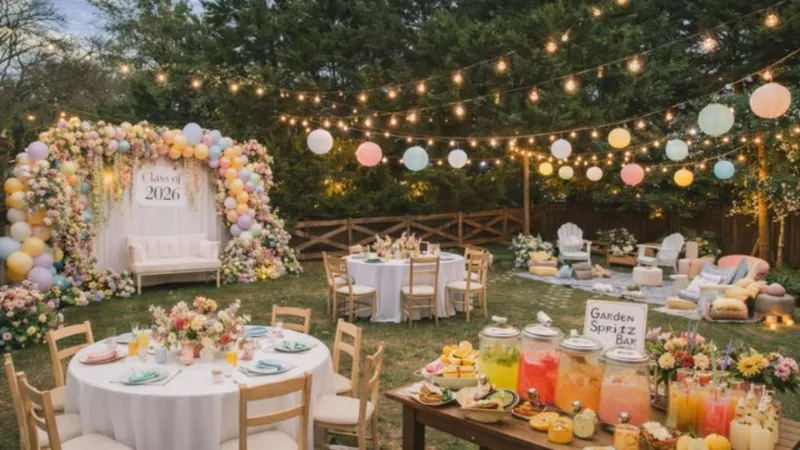
Planning a garden party but struggling to make it feel special? This expert guide covers 12 stunning, practical ideas from décor to dining so your outdoor celebration becomes a memory guests talk about for years.
Most garden parties end up looking like every other outdoor gathering plastic chairs, a folding table, and some wilting sandwiches. The real opportunity? Your backyard or garden has the potential to become a genuinely magical event venue. You just need the right framework.
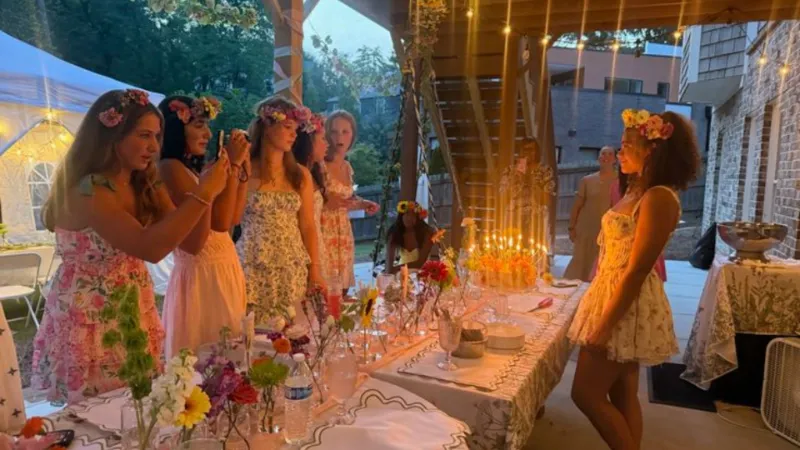
Whether you’re hosting 10 guests or 100, this guide gives you 12 high-impact garden party ideas built around real-world execution.
Botanical Garden Aesthetic
High Visual Impact
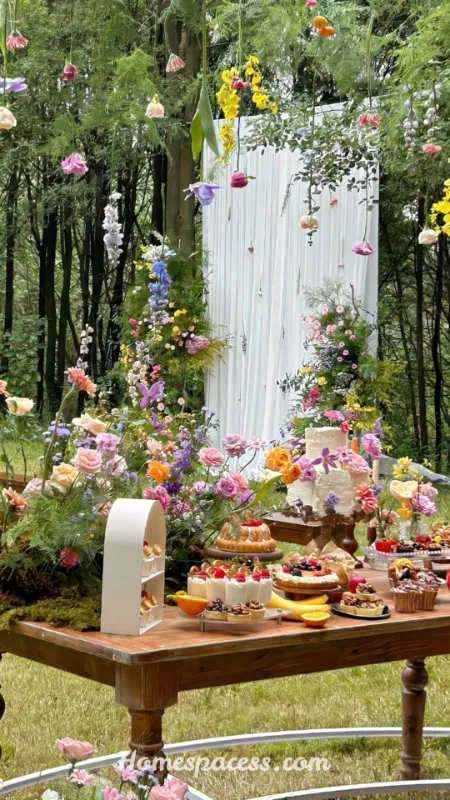
The botanical garden party idea transforms your outdoor space into a lush, immersive display that looks professionally staged. The secret isn’t expensive floristry it’s strategic layering. Use varying heights of plants: tall olive trees or bamboo as anchors, mid-level potted ferns or geraniums as fillers, and low ground-cover arrangements around table bases. This vertical diversity creates the illusion of abundance even in compact garden spaces.
For tables, lean into dark green linens with white ceramic serveware and brass-toned cutlery. Label plates and glasses with seed-packet-style name cards tied with twine this thoughtful detail signals to guests that every element was intentional. Botanical themes work exceptionally well for birthday parties, bridal showers, and afternoon garden parties where natural elegance is the mood.
Here’s what competitors often miss: scent is equally important as visuals. Incorporate fragrant herbs like rosemary, lavender, and mint into centerpieces. These herbs serve double duty as décor and bar garnishes, which reduces waste and adds a multi-sensory dimension most parties completely overlook.
💡Pro Tip:
Rent potted plants from a local nursery instead of buying. This cuts costs by up to 60% and means plants go back to good homes rather than being discarded after one use.
Learn More: Simple Garden Decor Ideas for a Clean and Modern Outdoor Style
Whimsical Fairy Light Soirée
Evening Ambience
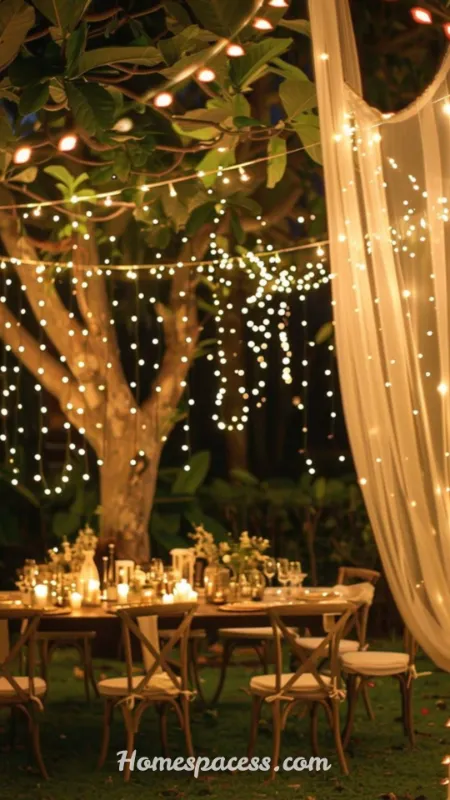
Fairy lights are an outdoor party staple but most hosts use them incorrectly. Simply hanging a strand of bulbs over a patio creates flat, uninspiring lighting. The technique that professionals use is called “layered lighting zones.” String warm Edison bulbs at canopy level for ambient light, add battery-operated fairy light jars at table level for intimacy, and use solar path lights to define walkways. These three light layers working together create genuine magic.
For the fairy light soirée theme, everything hangs from above. Think draped fabric panels between trees, lanterns suspended at varying heights, and curtain-light backdrops for photos. Mushroom and butterfly decorations woven into the light installation give the space a storybook character particularly effective for garden parties celebrating milestone birthdays, engagements, or anniversary celebrations.
Timing is a strategic consideration most guides skip. Schedule your fairy light garden party to start at 5 PM in summer. The first two hours happen in daylight for food and socializing, then around 7–8 PM the lights gradually take center stage as dusk falls creating a built-in “wow moment” that requires zero additional planning or expense.
💡Pro Tip:
Use a smart plug timer so all lights turn on simultaneously at a specific time creating a synchronized lighting reveal that genuinely surprises guests who haven’t noticed the setup.
You May Also Like: Stunning Flower Garden Ideas to Transform Your Outdoor Space
Farm-to-Table Feast in the Garden
Food-Forward
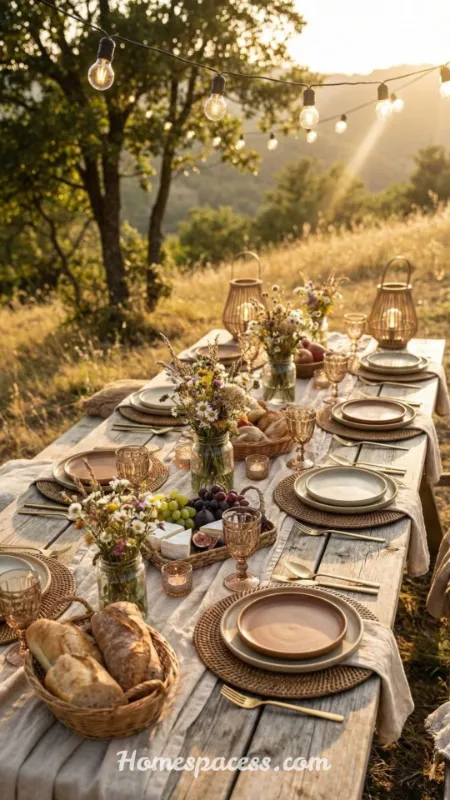
The farm-to-table garden party isn’t just a food trend it’s a complete party philosophy that turns the menu into the main event. The idea is simple: every dish features seasonal, locally sourced ingredients, and guests know exactly where the food comes from. Create a handwritten chalkboard menu that lists the origin of key ingredients. For example, “Heirloom tomato salad from Green Valley Farm, 12 miles away.” This kind of transparency builds connection and makes eating feel meaningful rather than perfunctory.
Set up the food in a long grazing-table format using wooden boards, rattan platters, and terracotta serving bowls. Avoid uniformly arranged platters instead, let items overflow naturally, with herb sprigs and edible flowers tucked in between. This styled abundance looks gorgeous in photos and encourages guests to graze and return to the table repeatedly, which keeps energy high throughout the event.
The real differentiator for this garden party idea is a live element: a small herb-potting station where guests assemble their own herb bundles as a take-home favour. Pots of basil, thyme, and mint sit on a rustic table with kraft paper bags and seed labels. Guests take home something living, which extends the memory of your garden party for weeks.
💡Pro Tip:
Contact your local farmers’ market vendor one week ahead. Many will offer a small bulk discount and can prepare a curated seasonal selection specifically for your garden party theme.
Don’t Miss: Inspiring Yoga Room Ideas to Create Your Perfect Sanctuary at Home
Vintage English Tea Party
Classic Elegance
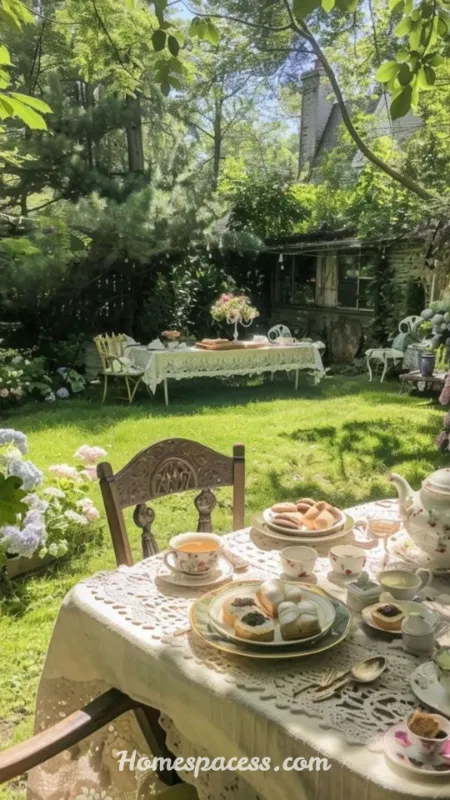
A vintage English garden tea party is one of the most timeless garden party ideas, and it remains effective because the aesthetic is inherently cohesive. The foundation is mismatched vintage china deliberately mismatched, not accidentally so. Visit charity shops and thrift stores to collect teacups, saucers, and tiered cake stands in complementary floral patterns. The eclectic mix creates a collected-over-time charm that no matching set can replicate.
Food at an English tea party follows a strict three-tier hierarchy: finger sandwiches at the bottom (cucumber-cream cheese, smoked salmon, egg and cress), scones with clotted cream and jam in the middle, and petite pastries or macarons at the top. This structure isn’t just tradition it’s a conversation piece that gives guests a clear and delightful eating experience. Serve a selection of loose-leaf teas brewed in proper teapots, and label each with a small handwritten tag.
Add croquet hoops or a giant Jenga set to the garden lawn as a nod to traditional English lawn games. This gives guests something to do between courses and encourages guests who don’t know each other to interact. A garden party where people are actively playing, laughing, and competing has a fundamentally better atmosphere than one where everyone simply sits and eats.
💡Pro Tip:
Set up a “tea cocktail” bar alongside the traditional teas Earl Grey gin, chamomile vodka, or iced hibiscus spritzers. This modernizes the classic garden tea party and appeals to guests who don’t drink tea.
Also Read: Smart Boys Bedroom Ideas: Cool & Modern Designs for Kids
Tropical Escape Garden Party
Bold & Vibrant
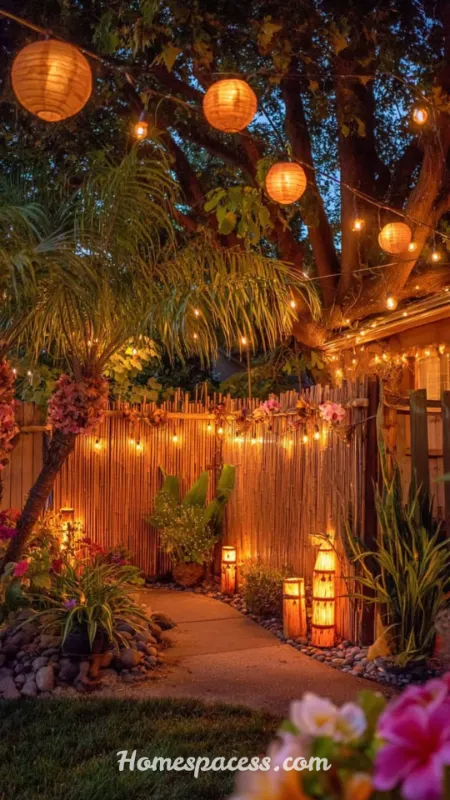
Tropical-themed garden parties offer an escape-in-your-backyard fantasy that guests genuinely love, especially in urban environments. The key is committing to the palette: deep greens, coral, terracotta, banana yellow, and turquoise. Avoid diluting it with neutrals.
Monstera leaves (real or high-quality faux) form the backbone of every centerpiece, tablecloth, and backdrop. Layered on rattan furniture and bamboo serving trays, this theme transforms even a modest garden into something that feels like a resort destination.
The tropical escape garden party thrives on its drink station. Build a tiki-bar corner using bamboo poles, a grass-skirt bar front, and colourful cocktail umbrellas. Serve fresh coconut water in actual coconuts, build a pitcher of passion fruit punch, and offer a mango mocktail for non-drinkers.
Drinks served in novelty containers (pineapples, coconut shells, hollowed-out melons) create shareable moments that guests photograph and post effectively becoming free marketing for your event.
Music is underrated in most garden party planning guides. For the tropical escape theme, curate a playlist that blends Brazilian bossa nova, Jamaican reggae, and modern tropical house. Set the volume low enough for easy conversation but rhythmic enough that guests feel the mood. Research shows that tempo-matched music to dining pace can increase guest satisfaction scores significantly a small detail with measurable impact.
💡Pro Tip:
Use outdoor heat lamps disguised with palm fronds to extend the tropical party well into the evening even in temperate climates without breaking the aesthetic.
Related Reads: Front Garden Ideas for Every Style From Classic to Modern Homes
Wildflower Meadow Gathering
Natural & Relaxed
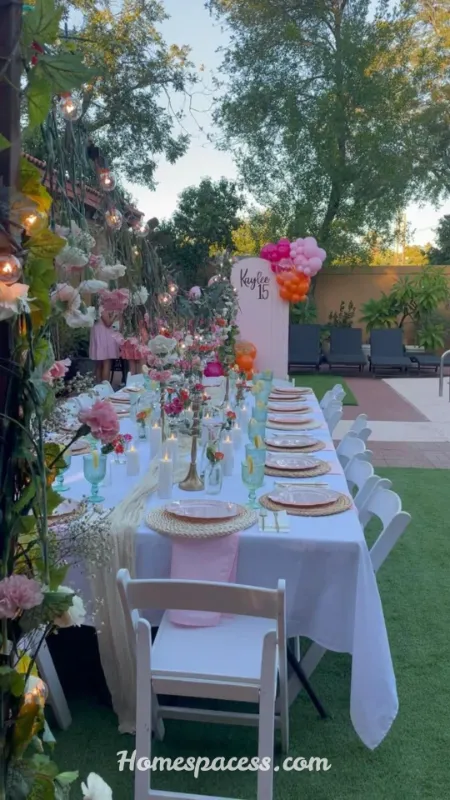
The wildflower meadow garden party idea captures the relaxed, organic beauty that formal party setups often miss. Rather than manicured arrangements, you lean into abundance and imperfection. Use large galvanized buckets or recycled tin cans filled with mixed wildflowers poppies, cornflowers, daisies, sweet peas as centerpieces.
The more variety and the more seemingly random the arrangement, the better it looks. This approach is also dramatically cheaper than structured floristry while achieving greater visual impact.
For seating, skip standard garden chairs and opt for picnic-style: oversized outdoor blankets layered with cushions, low wooden crates used as side tables, and wicker baskets holding cutlery and napkins. This picnic-meets-garden-party format encourages guests to sit closer together, lower physical barriers, and creates a more convivial atmosphere. It also photographs beautifully with a flatlay camera angle from above.
The wildflower theme connects powerfully to a mindfulness angle that modern guests appreciate. Add a small “slow corner” a shaded spot with a hammock or swinging chair, some books or poetry cards, and a pitcher of still water with cucumber and mint. This quiet zone gives introverted guests permission to step back and recharge, which actually makes them stay longer and enjoy the garden party more overall.
💡Pro Tip:
Sow wildflower seed mixes 6–8 weeks before your event date for a genuinely blooming garden setting. Many varieties germinate quickly and provide an authentic meadow look at minimal cost.
Must-Read Articles: Birthday Party Ideas for a Personal and Creative Touch
Interactive Garden Games Party
High Energy
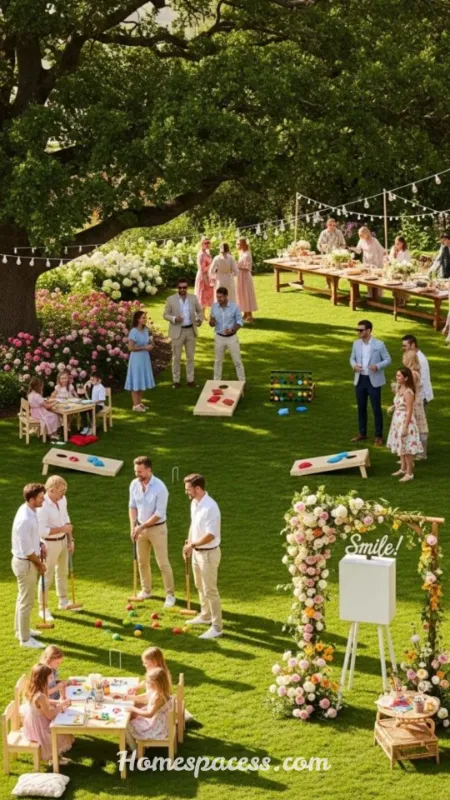
Most garden party guides treat games as an afterthought. This idea puts outdoor games at the absolute center of the concept. The difference between a garden party with some lawn games and a garden games party is intentionality every element, from the layout to the food, supports active play.
Create a tournament structure with a printed bracket, assign teams, offer small prizes (packets of seeds, jam jars, potted succulents), and appoint a lighthearted “games host” who keeps energy high between rounds.
The best garden games for mixed-age groups include giant Jenga, bocce ball, ladder toss, badminton, and a bean bag toss (cornhole). Set these up across different zones of your garden so there are always multiple games running simultaneously.
This prevents bottlenecks and ensures guests at all energy levels find something appropriate gentle bocce for older guests, high-energy badminton for younger ones. Space the stations far enough apart that players have room to move but close enough for cross-game banter.
Food at a garden games party should be entirely hand-held hot dogs, mini burgers, loaded fries in paper cones, and skewers. This enables guests to eat while moving between games without needing to sit at a table. Set up a self-serve drinks cart with labeled pitchers so people can refuel quickly. The elimination of formal dining structure accelerates mingling and creates an atmosphere that feels like an actual celebration rather than a scheduled meal.
💡Pro Tip:
Create a DIY trophy from a charity-shop cup glued to a painted wooden block. Award it ceremonially with a short speech. This seemingly small gesture becomes the highlight guests remember and retell most vividly.
Fresh Updates: Terrace Design Ideas: 10 Expert Ways To Create Your Perfect Outdoor Space
Sunset Cocktail Garden Party
Sophisticated
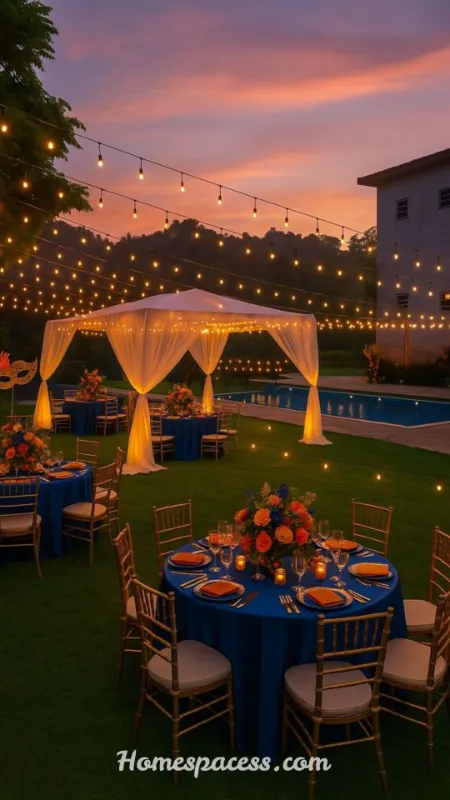
The sunset cocktail garden party is perfectly engineered for adults seeking a sophisticated outdoor event that doesn’t require the logistical complexity of a formal dinner. It typically runs 6–9 PM, captures golden hour, and focuses on exceptional drinks and small-plate food.
The guest experience is designed around movement guests circulate, discover different drinks stations, and encounter surprise elements as the evening progresses. This dynamic format naturally facilitates networking and introduces guests to each other without awkward icebreakers.
Curate three distinct cocktail stations rather than a single bar. For example: a garden spritz station (elderflower, prosecco, cucumber), a whisky smash station (bourbon, mint, honey, lemon), and a non-alcoholic botanical station (herb-infused tonics, shrub sodas).
Hiring a mixologist for even two hours elevates the experience dramatically and gives guests something to watch, learn, and discuss. Many local bartenders offer private event packages that are more affordable than people assume.
Lighting is the make-or-break factor for a sunset cocktail garden party. At 6 PM, rely on the natural light. By 7:30 PM, shift to warm Edison bulbs and candles. By 9 PM, only candles and dim string lights remain creating an intimate, romantic atmosphere that makes guests reluctant to leave. This intentional lighting progression is what transforms a nice outdoor gathering into an experience guests describe as “magical.”
💡Pro Tip:
Serve charcuterie boards at 6:30 PM and a surprise hot small plate (mini lamb cutlets, prawn skewers) at 8 PM. This unexpected second food wave re-energizes the party at exactly the moment energy typically drops.
Kids’ Enchanted Garden Party
Family-Friendly
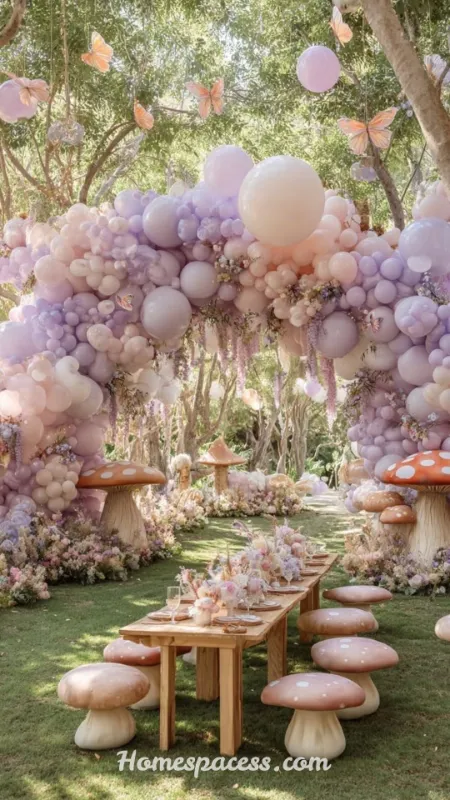
Children’s garden parties have one non-negotiable requirement: wonder. The enchanted garden concept delivers this through a combination of sensory surprise, child-scale design, and imaginative storytelling. Start with a narrative: the garden is a fairy kingdom, and guests have received a special invitation.
Invitations can be scroll-style notes “left by the fairies.” On the day, decorate paths with painted mushroom stones, hang butterfly mobiles from trees, and set up a small fairy-door installation at the base of a tree trunk. Children spend surprisingly long periods investigating these small details.
Activity stations are essential for managing children’s energy and attention spans at garden parties. Offer four or five stations that rotate: a flower crown making table, a bug-hunt with magnifying glasses, a seed-planting station (each child takes home a pot), a nature watercolor painting corner, and a fairy-tale story circle.
Food at a children’s enchanted garden party should look magical without being complicated. Use butterfly-shaped sandwiches (basic cookie cutters), fruit skewers that look like flower bouquets, and “fairy cakes” (cupcakes with edible flower toppings).
A lemonade bar where children make their own drinks with flavored syrups and fruit additions is both interactive and photogenic parents love it, children feel proud, and it reduces the chaos of multiple drink requests at the same time.
💡Pro Tip:
Set a designated “fairy post box” where children can write wishes and drop them in. Read three or four aloud at party end (anonymously) this creates a collective, memorable closing moment that children and parents both love.
Sustainable Zero-Waste Garden Party
Eco-Conscious
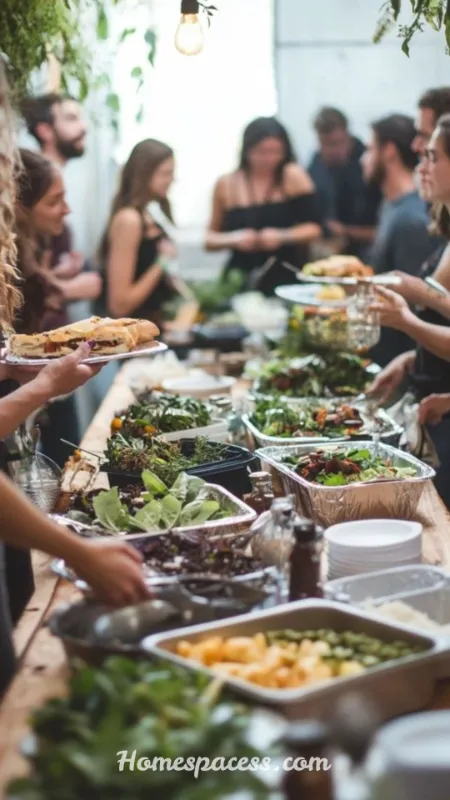
The zero-waste garden party has shifted from niche to mainstream, and the best hosts now use sustainability as a selling point, not a compromise. The framework is simple: everything used at the party either already exists, can be reused, or can be composted.
This means renting or borrowing tableware instead of buying disposables, using cloth napkins instead of paper, and choosing seasonal food that doesn’t require heavy packaging or long-distance shipping. Importantly, communicating your zero-waste intent to guests via the invitation or a small sign at the entrance generates engagement and appreciation rather than skepticism.
Décor for a zero-waste garden party uses the garden itself as the primary resource. Arrange branches, pinecones, stones, and existing garden flowers into centerpieces. Use chalkboard signs instead of printed menus. Create an informal garland from dried citrus slices and herb bundles strung on twine.
All of these decompose naturally after the event, meaning post-party cleanup is dramatically reduced and guilt-free. The overall aesthetic reads as rustic and intentional, which aligns perfectly with current design sensibilities.
Set up a visible compost and recycling system three labeled buckets (compost, recycling, landfill) in a prominent location. Research consistently shows that when sorting options are visible, clear, and close to where food is consumed, actual waste diversion rates increase by 30–40% compared to general waste bins. At the end of the event, guests who helped sort waste feel invested in the party’s environmental outcome a shared value experience that strengthens social connections.
💡Pro Tip:
Offer seed packets made from recycled paper as take-home favours. Include a QR code linking to growing instructions. This costs under £1 per guest and creates a living, months-long reminder of your garden party.
Night Garden Candlelight Party
Moody & Intimate
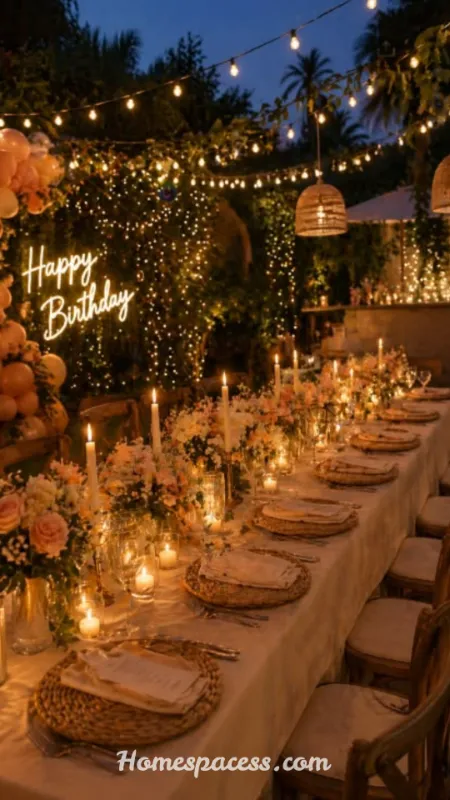
The night garden candlelight party is designed for smaller, more intimate gatherings of 8–20 guests where depth of connection matters more than broad social energy. The entire lighting scheme relies on candles: pillar candles on mirrors, tea lights inside glass votive holders clustered across surfaces, and lanterns hanging from trees or set along pathways.
The absence of artificial overhead lighting creates an atmosphere that is simultaneously dramatic and deeply comfortable. Conversation naturally deepens in low, warm light.
Menu design for a night garden party follows a tapas or sharing-plates format that encourages lingering. Slow-roasted meats, warm dips with artisan bread, charcoal grilled vegetables with herb oils, and a cheese board that remains on the table throughout the evening.
The food should be substantial enough that guests feel genuinely fed but spread out enough in timing to anchor them to the table for two to three hours. This extended, unhurried meal structure is the defining experience of the night garden party concept.
Incorporate ambient sound deliberately. The sound of a small water feature (a simple solar fountain costs very little) adds a layer of natural white noise that makes the garden feel more secluded and private than it actually is. Background music at very low volume acoustic guitar, classical guitar, or slow jazz fills silences without competing with conversation. These sensory layers together create a multi-dimensional experience that guests describe as “restorative” rather than merely “nice.”
💡Pro Tip:
Place flameless LED candles in locations where real flame is unsafe (near fabric, on uneven surfaces, in breezy spots). At night, guests rarely notice the difference, and you eliminate fire risk without sacrificing ambience.
Community Potluck Garden Party
Community-First
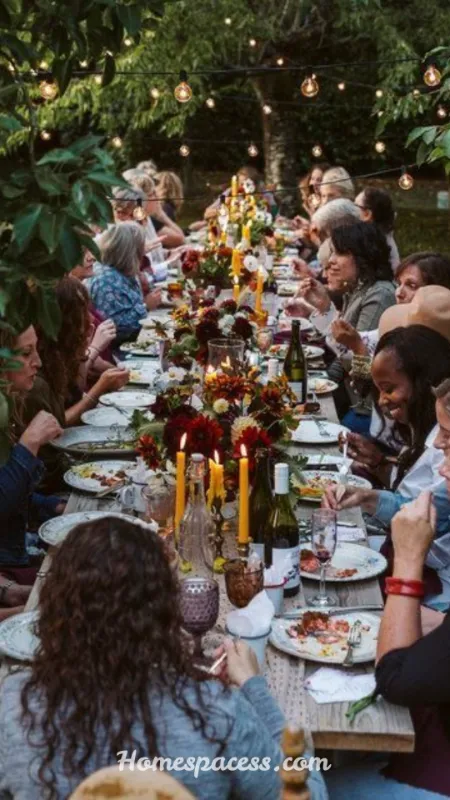
The community potluck garden party is uniquely powerful because it distributes creative ownership across all guests, making every attendee a co-host rather than a passive consumer of someone else’s effort. The host provides the garden space, core drinks, and a structural dish (a large paella, barbecue, or roast). Guests bring a dish that represents something meaningful — a family recipe, a cultural specialty, or a dish they’ve been perfecting. This structure generates conversations that would never happen at a catered garden party: food becomes the entry point into stories, memories, and identities.
Use a shared Google sheet or a simple messaging group to coordinate the potluck so you avoid ending up with 12 salads and no mains. Assign loose categories (starters, mains, sides, desserts, drinks) but don’t dictate specific dishes the element of surprise is part of the experience. Set up a “food story card” at each dish so guests know what they’re eating and who made it. These cards invite questions and spark connections between guests who might otherwise struggle to find common ground.
The community garden party also presents an opportunity for skill-sharing. Ask guests to briefly explain their dish (one to two minutes) at a loosely structured “dishes and stories” moment mid-party. This gentle ceremony takes 15–20 minutes, focuses collective attention beautifully, and gives shy guests a structured way to participate. \Several event designers and social scientists note that shared meals with storytelling consistently outperform standard garden parties in terms of reported guest satisfaction and depth of social connection.
💡Pro Tip:
Compile the recipes from the evening into a shared digital cookbook and email it to all guests afterward. This simple follow-up extends the connection, gives guests something to take home, and makes them far more likely to reciprocate with their own garden party invitation.
Conclusion
A truly memorable garden party comes down to three things: a clear theme that you commit to fully, sensory details that guests notice without realizing why, and a well-timed flow that keeps energy high from arrival to farewell. With 12 distinct garden party ideas in this guide from botanical feasts to candlelit night gatherings you now have both the inspiration and the practical knowledge to create something genuinely special.
Whether you’re planning an intimate evening for eight or a summer celebration for sixty, the ideas here scale to any size, any budget, and any garden. The most important step is simply to start planning with intention. Pick the concept that excites you most, apply the expert insights in this guide, and trust the process.
Garden Party Trends for 2026 and Beyond
The garden party landscape is undergoing a genuine cultural shift. Where 2026 and 2027 were defined by maximalist floral excess and pastel palettes borrowed from Pinterest wedding boards, 2030 is firmly in the era of intentional design.
The dominant aesthetic direction is what interior designers call “cultivated wild” controlled abundance that looks effortless but is carefully considered. Think terracotta tones, dried botanicals, architectural plants, and hand-thrown ceramics rather than mass-produced centrepieces.
Two emerging garden party trends are reshaping how hosts plan events. First, multi-generational design creating experiences that genuinely work for guests aged 8 to 80 simultaneously, rather than defaulting to “adult party with a kids’ corner.”
Second, sensory intentionality designing every sensory channel (sight, sound, smell, taste, touch) rather than focusing solely on visual aesthetics. Hosts who master both of these dimensions consistently receive significantly higher guest feedback scores and more repeat invitations.
Looking toward 2026 and 2027, three trends are gaining momentum. Interactive food theatre (guests assembling, finishing, or customizing dishes at the table) is growing rapidly.
Technology-light events deliberately no-phone zones, printed menus, analog entertainment are becoming a genuine selling point as people seek authentic disconnection. And nature-immersive garden parties, which involve guided foraging, plant identification walks, or wellness elements, are transitioning from high-end retreat experiences into mainstream garden party formats.
🌿 Cultivated Wild Aesthetic
Natural imperfection is now the desired look dried flowers, terracotta, and architectural plants replacing perfect floristry.
📵 Tech-Light Events Rising
Deliberate “no-phone” or “phone-away” zones are becoming a premium party feature guests actively request.
👨👩👧👦 Multi-Generational Design
Smart hosts now design for guests aged 8–80 simultaneously rather than treating children as an add-on.
🍃 Sensory Intentionality
Top events now design scent, sound, and texture as carefully as visuals creating truly immersive experiences.
Expert Insights: What Actually Makes Garden Parties Work
Event designers who work on hundreds of outdoor events annually identify the same root causes behind parties that underwhelm: inadequate shade planning, underestimated food quantities, and no contingency for weather. Shade is the most commonly overlooked logistical element in garden party planning.
Even on mild days, two hours of direct sun makes guests uncomfortable and shortens how long they stay. A combination of natural tree coverage, market umbrellas, and lightweight fabric sails (which can be sourced affordably online) solves this problem comprehensively.
Food quantity is where most first-time garden party hosts under-plan. The reliable formula used by professional caterers: for a three-hour garden party, estimate 12–15 canapé portions per person, 200–250g of main per person, and 100–150g of dessert. For drinks, plan for 2 drinks in the first hour and 1 drink per hour thereafter.
These numbers feel like overestimation but consistently match actual consumption. Running out of food or drinks is the single fastest way to deflate a garden party atmosphere having slightly too much is always preferable.
The expert insight that most articles miss entirely is flow management. The spatial arrangement of your garden party where food is placed, where the bar is, where seating is determines whether guests circulate and mingle or cluster in static groups. Professional event designers use a deliberate technique.
Position the bar and food at opposite ends of the party space. This simple choice forces guests to traverse the entire space multiple times throughout the event, naturally encountering other guests and sustaining the social energy across the full duration.
Sustainability & Long-Term Value in Garden Party Planning
Sustainable garden party planning is not simply an environmental choice it is increasingly a strategic one. Guests in 2025 notice and discuss sustainability choices at events. A host who explains that the centrepieces will be replanted in the community garden, or that leftover food will go to a local shelter, creates a shared narrative that significantly elevates how guests perceive the entire event. This is what branding professionals call “values alignment” and it applies as powerfully to private garden parties as it does to corporate events.
The economic case for sustainable garden parties is compelling. Renting rather than buying décor, choosing seasonal local food over imported ingredients, and borrowing tableware from friends reduce per-event costs by 20–35% on average while simultaneously improving the aesthetic quality.
Plastic disposables are both environmentally damaging and visually cheap eliminating them saves money and improves the look of the event simultaneously. This is a rare case where the sustainable choice is also the economically rational one.
Long-term garden party hosting for hosts who entertain multiple times per year benefits enormously from building a reusable toolkit: a set of linen napkins, a collection of glass votives, a set of wooden serving boards, and six to eight potted plants that return from party to party.
This toolkit pays for itself after two to three events and creates a consistent aesthetic signature that guests associate with your hosting identity. Building this toolkit gradually over a year or two is more sustainable than purchasing everything for one event and storing or discarding it afterward.
Future Innovations in Garden Party Experiences
The integration of technology into outdoor entertaining is accelerating in ways that don’t compromise natural aesthetics. Smart outdoor lighting systems already used in commercial outdoor dining are becoming consumer-accessible at reasonable price points.
By 2026, garden party hosts will routinely use app-controlled lighting that transitions through preset “scene sequences” across an evening, automating the expertly timed lighting progression that currently requires manual intervention. Similarly, AI-powered event planning tools are emerging that can generate entire garden party themes, shopping lists, timelines, and vendor recommendations from a single prompt.
Food technology will reshape garden party menus significantly within the next three to five years. Edible flowers, already popular, will be joined by fermented botanical ingredients, hyper-local foraging, and personalized dietary accommodation that goes far beyond today’s standard “vegetarian option.”
Guests will increasingly arrive with highly specific dietary requirements not just allergies but preference-based and values-based choices and the hosts who build flexible, modular menu systems (rather than fixed menus) will be able to accommodate this gracefully.
Perhaps the most interesting future development is the “garden party as service” model emerging in urban areas. Startups in London, New York, and Amsterdam are testing subscription-based garden party packages a monthly box delivering seasonal décor, curated recipes, and an event concept that enable busy professionals to host high-quality garden parties without spending significant planning time. This model suggests that the appetite for beautiful outdoor entertaining is strong and growing, but the barrier of planning complexity is where the market is actively looking for solutions.
Common Garden Party Mistakes Most Guides Don’t Warn You About
The most significant and avoidable garden party failures consistently come from the same set of overlooked factors. Understanding these in advance allows you to build mitigation strategies into your planning timeline rather than scrambling on the day.
❌ No weather contingency plan: Assuming good weather for an outdoor event without a plan B even a partial shelter plan is the single highest-risk oversight in garden party planning. A 3x3m gazebo or a set of large patio umbrellas, installed the day before, can save an event that would otherwise be cancelled or ruined.
❌ Underestimating setup time: Garden parties consistently take 40–60% longer to set up than hosts estimate. Items that seem quick in isolation hanging lights, arranging centrepieces, setting up chairs compound into hours of work. Begin setup the morning of at minimum, the previous evening for more complex parties.
❌ Ignoring insect management: Wasps, ants, and mosquitoes can derail an otherwise perfect garden party. Place citronella candles strategically, set wasp traps 24 hours before the event (away from the party zone), and serve sweet drinks in covered jugs or use lidded cups. These small preventive steps eliminate the most common guest complaints about outdoor parties.
❌ No designated host or coordinator: When the host is simultaneously cooking, managing setup, greeting guests, and solving problems, guest experience suffers because every interaction feels rushed. Designate a trusted friend or hire a part-time assistant for the event day someone who can manage logistics while you enjoy being present with guests.
❌ Starting too late in the day: Summer garden parties that begin at 4 PM often run into the “golden dip” the energy low that hits guests around 6–7 PM, particularly if alcohol has been involved, before the magical evening atmosphere develops. Starting at 2–3 PM means guests peak socially during golden hour and the evening carries its own natural energy through to a satisfying 9–10 PM finish.

Team Home Spacess shares simple, practical design ideas that work for real families. The team focuses on cozy décor, soft colors, and natural textures that make a space feel truly lived-in. From everyday decorating tips to creative home projects, Team Home Spacess is dedicated to helping readers create warm, comfortable, and inviting spaces with a fresh and personal touch.