

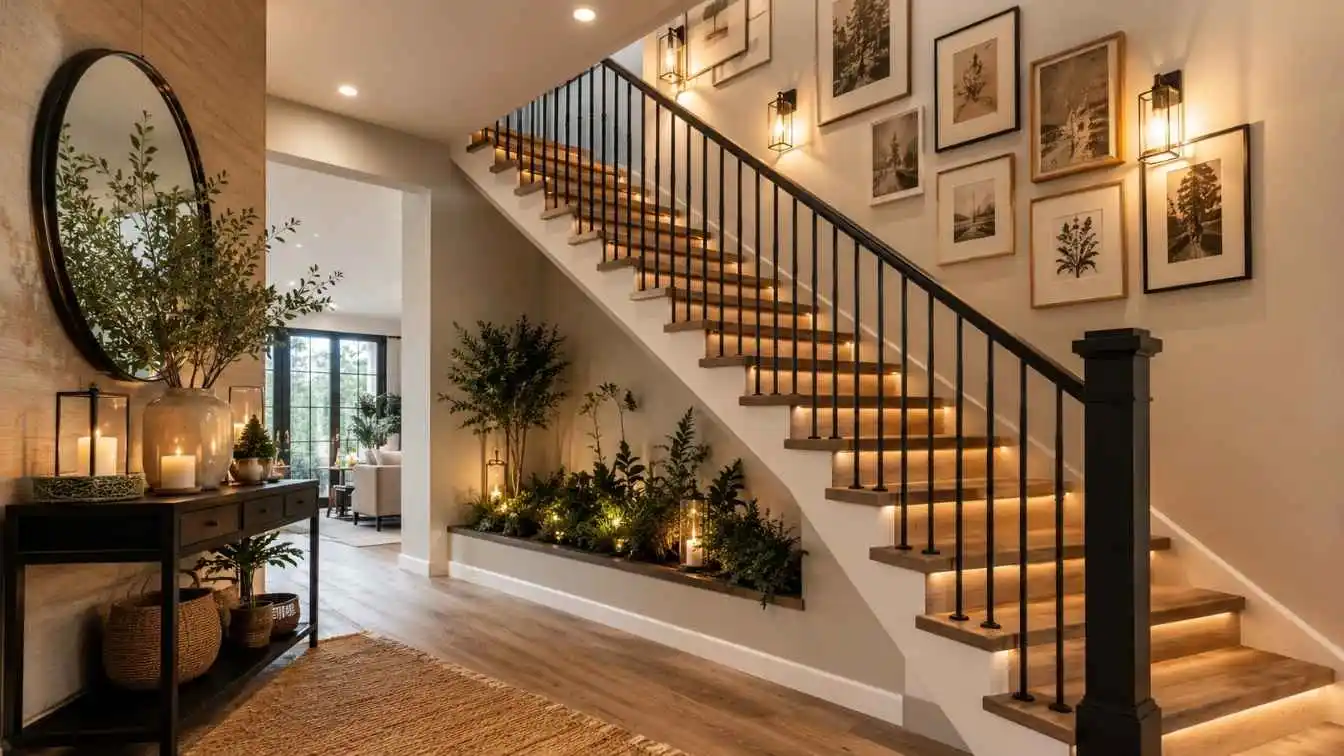
Your staircase is not just a functional structure it is the architectural spine of your home. It is the first thing guests notice when they walk through your door, and it silently shapes how the rest of your interior feels. Yet most staircase decor guides stop at “hang some photos.” That is not good enough.
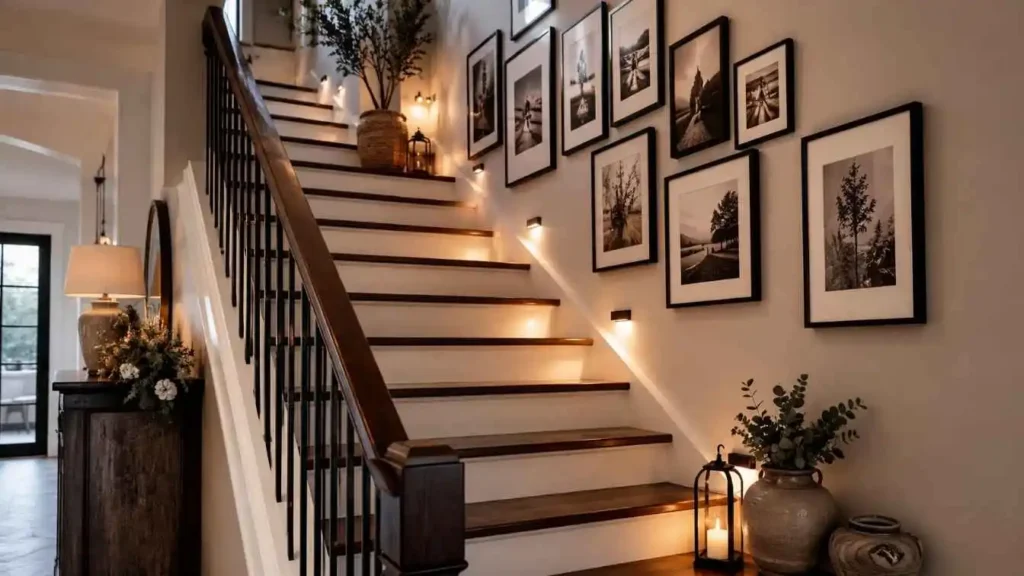
This article goes deeper. Whether you live in a compact townhouse or a sprawling multi-level home, these staircase decor ideas will help you treat your stairway as a design statement not an afterthought. From tactile textures and dramatic lighting to clever under-stair storage and future-forward materials, every idea here is practical, beautiful, and built to last.
Create a Gallery Wall That Tells Your Story
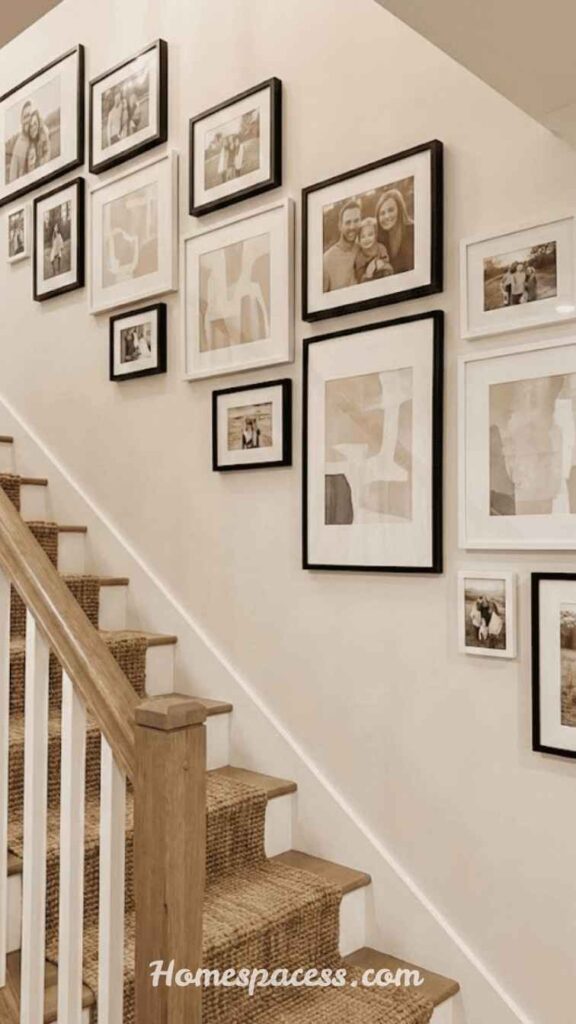
A gallery wall along a staircase is one of the most timeless and deeply personal staircase decor ideas you can execute. The sloped nature of a staircase wall gives you a naturally dynamic canvas one that invites the eye to travel upward, creating a sense of visual rhythm. Unlike a flat living room wall, the diagonal arrangement of a staircase gallery feels inherently energetic and layered.
The key to making this work is intentional curation. Avoid randomly hanging frames of different sizes without a plan. Instead, choose a cohesive theme whether that is black-and-white family photography, framed botanical prints, or a mix of abstract art pieces in a unified color palette. Use paper templates taped to the wall before hammering any nails to preview the arrangement. This prevents costly mistakes and saves hours of frustration.
💡 Expert Insight
Interior designers recommend keeping the bottom edge of your gallery frames aligned along an imaginary line that follows the staircase angle typically 60–65 cm from each step. This creates visual consistency even when frame sizes vary dramatically.
For a modern upgrade, mix in three-dimensional elements like small wall-mounted shelves, ceramic wall art, or macramé pieces alongside framed artwork. This adds depth and texture that flat photographs simply cannot achieve. The result is a gallery wall that feels curated, not cluttered one that rewards every climb with something new to notice.
Mus Read: Bathroom Mirror Ideas to Create a Spa-Like Feel in Your Bathroom
Stair Runner Rugs Function Meets Elegance
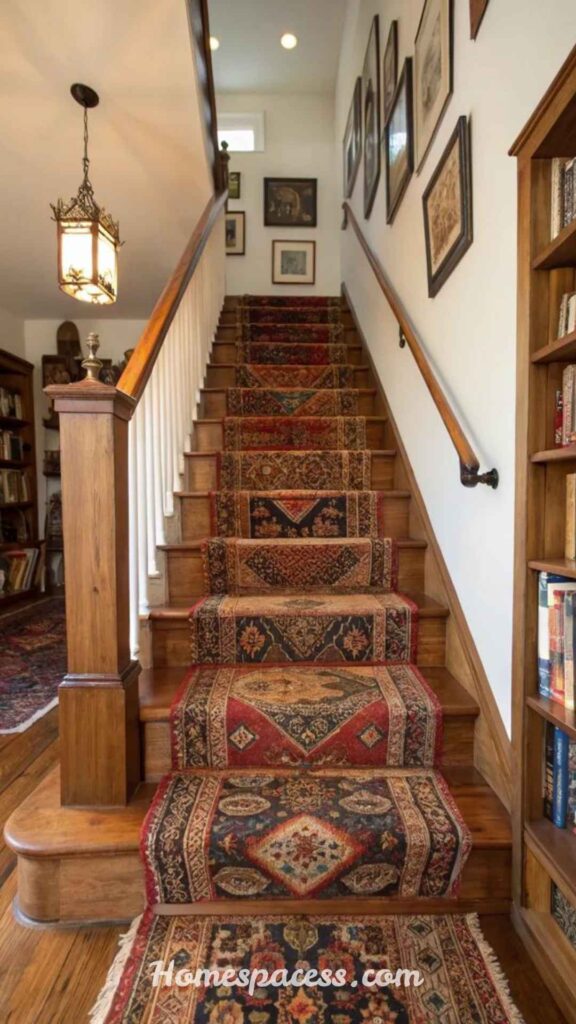
A stair runner is one of the few staircase decor ideas that is equally functional and beautiful. On hardwood or tile stairs, a runner adds grip, reduces noise, and protects the tread surface from daily wear all while becoming one of the most visually striking elements in your entire home. The right runner can anchor a room’s colour story and create a seamless visual flow between floors.
Material matters enormously here. Wool runners are the gold standard they are durable, naturally stain-resistant, and age beautifully. Synthetic alternatives like polypropylene work well in high-traffic homes with children or pets. Pattern-wise, geometric prints are trending in 2025, but a classic herringbone or Persian-inspired runner adds heritage depth that never goes out of style. Always choose a runner that is 60–70% of your stair width, leaving a visible border of wood on each side for a tailored look.
Installation is often overlooked in staircase decor planning. You have two options: a waterfall installation (where the runner flows continuously over each tread and riser) or a Hollywood installation (where the runner is pulled tightly into each step for a fitted appearance). The Hollywood method is preferred by professional designers because it showcases more wood and gives the staircase a crisp, architectural quality.
Read More: Smart Backyard Bar Ideas to Create a Perfect Outdoor Hangout Spot
Painted Stair Risers The Boldest Low-Budget Upgrade
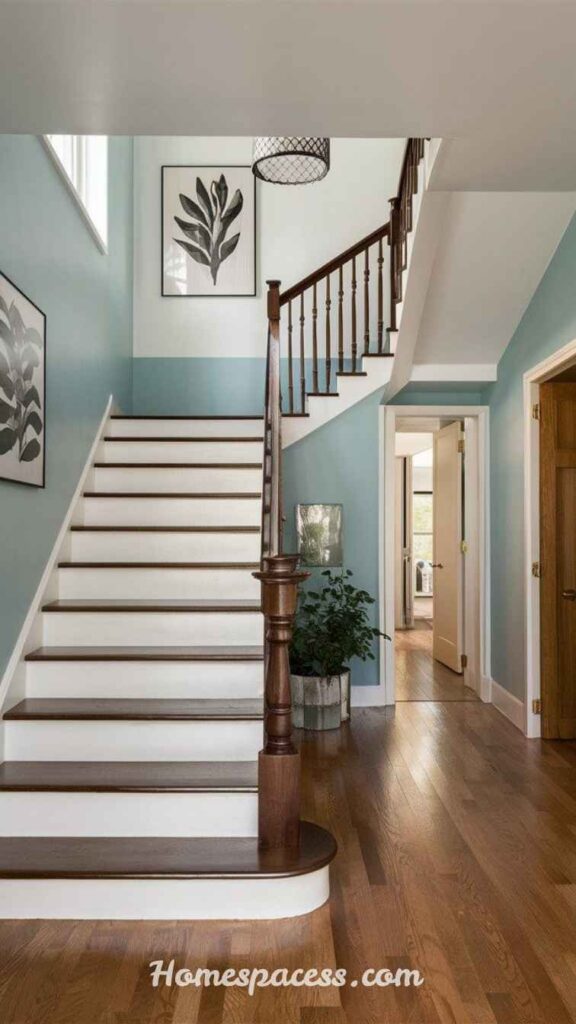
If you are searching for staircase decor ideas that deliver maximum visual impact at minimal cost, painted stair risers belong at the top of your list. The riser the vertical face of each step is a blank canvas hiding in plain sight. Most homes leave it white or match it to the wall, which is a missed opportunity. A coat of contrasting paint or hand-painted pattern transforms the staircase into a piece of functional art.
Popular approaches include alternating two complementary paint colours across the risers, applying a folk-art motif (such as Portuguese tile-inspired patterns), or stencilling a geometric repeat in a single accent colour. If you are artistically inclined, each riser can feature a different botanical illustration, creating an ascending garden effect. For renters, peel-and-stick riser decals offer the same visual drama without any commitment to permanent paint.
💡 Pro Tip
Always use floor-grade enamel or porch paint on risers standard wall paint chips within weeks under foot traffic. Two coats with a light sanding between applications ensures a finish that lasts years.
Painted risers also work brilliantly as a cohesive element when your home has an open-plan ground floor. The colour you choose for the risers can echo an accent in your living room or kitchen palette, creating a subtle visual thread that ties the whole space together without feeling forced or overly designed.
Read Also: Trendy Baby Nursery Ideas for Boys That Make Your Room Look Amazing
Plants and Greenery A Biophilic Staircase Experience
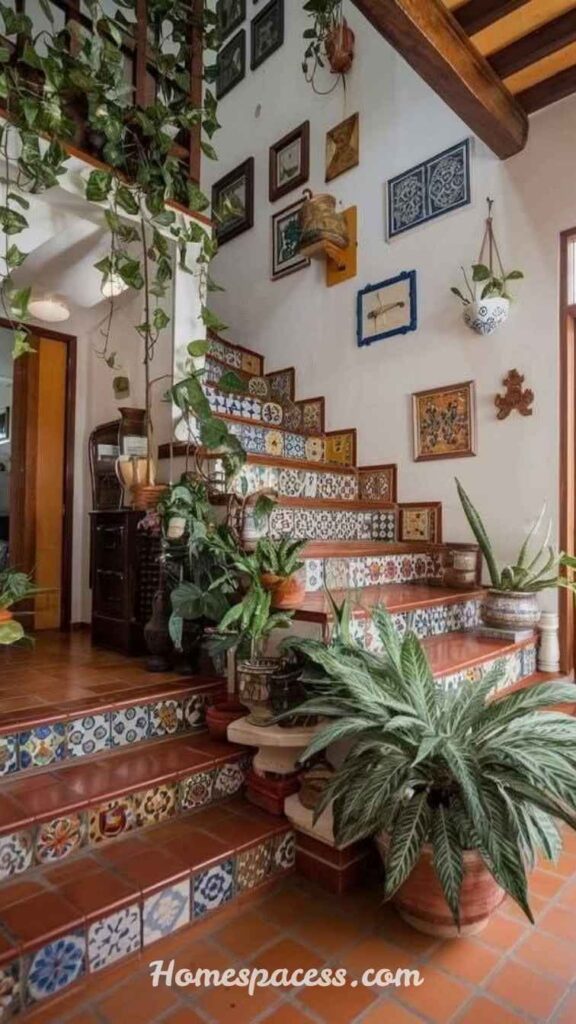
Biophilic design the practice of bringing nature into interior spaces has moved from design theory into mainstream home décor, and the staircase is one of its most striking applications. Trailing plants like pothos, string of pearls, or heartleaf philodendrons placed on upper landings or stair shelves cascade beautifully downward, creating an organic, living curtain effect that no other staircase decor idea can replicate.
For staircases with natural light from a nearby window, you have the luxury of experimenting with a wide variety of species. For darker or enclosed staircases, stick to low-light tolerant varieties like snake plants, ZZ plants, or peace lilies. A well-chosen plant does more than add visual softness it actively improves indoor air quality, regulates humidity, and creates a calming sensory experience every time you use the stairs.
An emerging approach in 2025 is the “step-planter” concept where custom-fitted troughs or vintage crates are attached to wall-mounted brackets at stair height, creating a terraced garden effect. This is particularly powerful in modern, minimalist homes where the juxtaposition of raw organic texture against clean architectural lines creates a dramatic and memorable visual tension.
Don’t Miss: Top Dining Table Decor Ideas to Make Your Dining Area Look Amazing
Statement Lighting Illuminating the Architecture
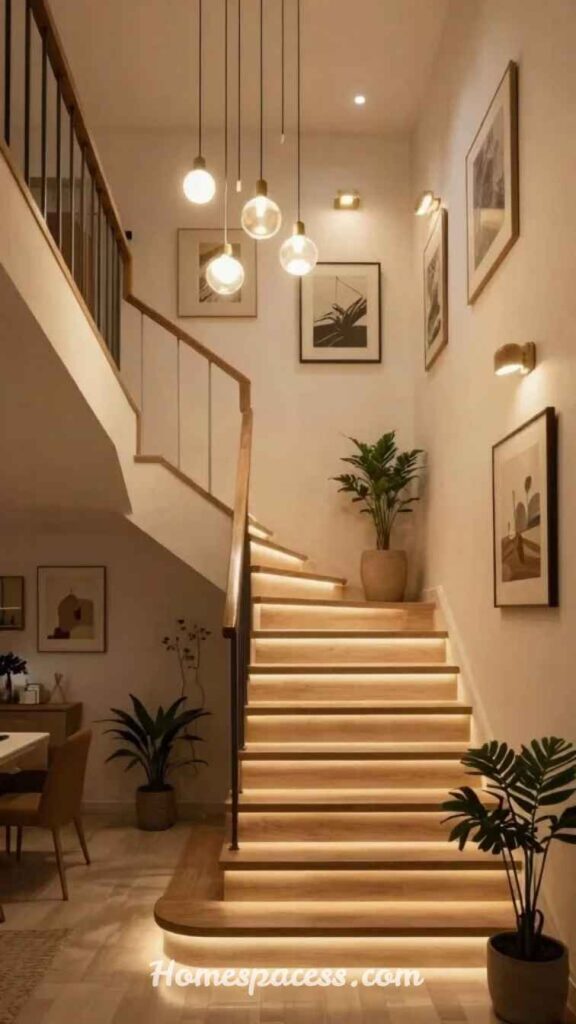
Lighting is the single most underutilised element in staircase decor, and it is arguably the most transformative. A staircase that looks ordinary in daylight can become a breathtaking architectural feature at night with the right lighting strategy. The goal is not simply to illuminate the stairs for safety it is to sculpt the space with light and shadow in a way that emphasises form and creates atmosphere.
For high-ceilinged staircases, a dramatic pendant chandelier or a cluster of statement pendants hung at varying heights creates an installation-like quality. This works particularly well in entryway staircases visible from the front door. For more intimate or compact staircases, recessed LED step lights embedded directly into each riser provide a soft, functional glow that guides the eye upward while eliminating dark spots and trip hazards.
💡 Smart Home Integration
Pairing stair lighting with motion sensors and smart dimmers means your staircase lights activate automatically at night at low brightness preserving your night vision, reducing electricity use, and adding a premium, hotel-like quality to the experience.
Wall sconces placed along a staircase wall at regular intervals are another underused approach. When selected thoughtfully, they function as both art objects and functional fixtures, adding points of visual interest between artwork or architectural details. The rule of thumb from interior lighting designers: aim for three light sources at varying heights on any staircase longer than eight steps.
Bold Wallpaper Where Risk Becomes Reward
If there is one room in the home where bold wallpaper choices feel justified, it is the staircase. Unlike a bedroom or living room, the staircase wall is viewed in passing you move through it, you do not live in it. This transient quality means you can be far more adventurous with scale, colour, and pattern than you would dare to be elsewhere. A large-scale botanical, a dramatic scenic mural, or an oversized geometric repeat that would overwhelm a sitting room feels perfectly proportioned on a staircase wall.
In 2025, the leading wallpaper trends for staircases include nature-inspired murals (forests, cloud landscapes, and ocean scenes), maximalist floral repeats in jewel tones, and textured grasscloth papers that add tactile warmth without relying on pattern. Peel-and-stick wallpaper has also reached a quality level where it is now a viable alternative to traditional paste papers, making staircase wallpapering accessible to renters and DIY enthusiasts alike.
One technique that designers use is “feature wall” wallpaper applying a bold paper only to the wall that faces you as you ascend, leaving adjacent walls in a complementary solid colour. This approach creates focused impact without visual chaos, and it is far easier to install and replace than papering every surface in a stairwell.
Railing Upgrades The Skeleton of Staircase Style
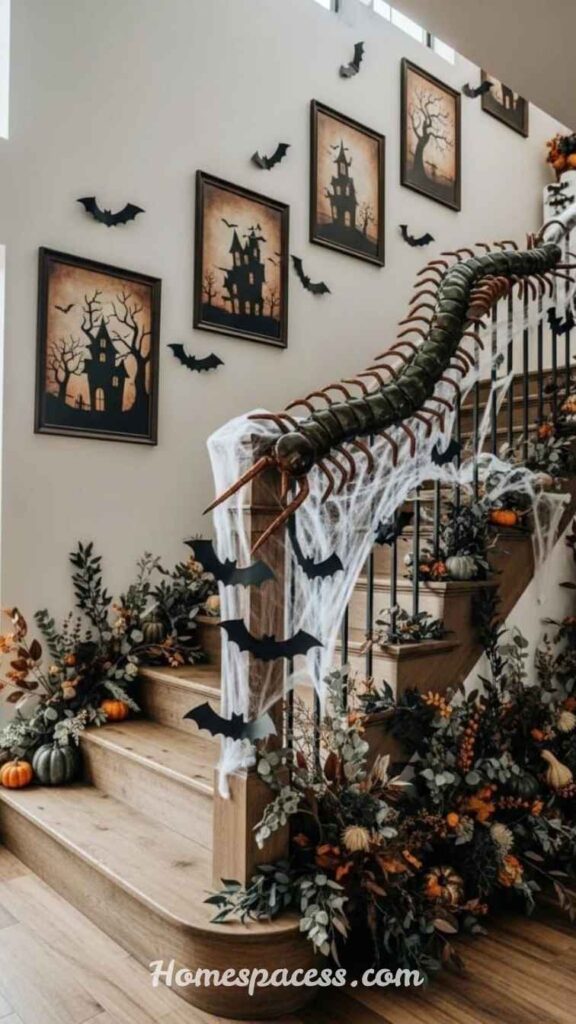
The railing system comprising balusters, newel posts, and the handrail is the structural skeleton of any staircase, and it communicates design intent more powerfully than most homeowners realise. An outdated oak spindle railing can make an entire staircase feel dated regardless of what else you do around it. Conversely, even a modest staircase with a well-chosen railing upgrade feels considered and contemporary.
The most impactful modern upgrade is replacing traditional turned wooden spindles with cable railing, glass panels, or thin metal balusters. Cable railing creates an open, airy quality that is particularly effective in smaller homes where maintaining sightlines between floors is important. Glass panel railings maximise light flow and create an almost seamless visual connection between levels, making them ideal for contemporary architecture. Flat iron balusters available in a vast range of geometric patterns offer a more affordable middle ground between traditional and modern aesthetics.
Do not overlook the handrail itself. Replacing a painted timber handrail with a solid walnut or oak one introduces natural warmth and tactile satisfaction that transforms the experience of using the staircase every day. For a genuinely unique detail, consider a leather-wrapped handrail a bespoke touch that adds a luxurious quality associated with high-end residential design.
Under-Stair Space Turning Dead Space Into Design Gold
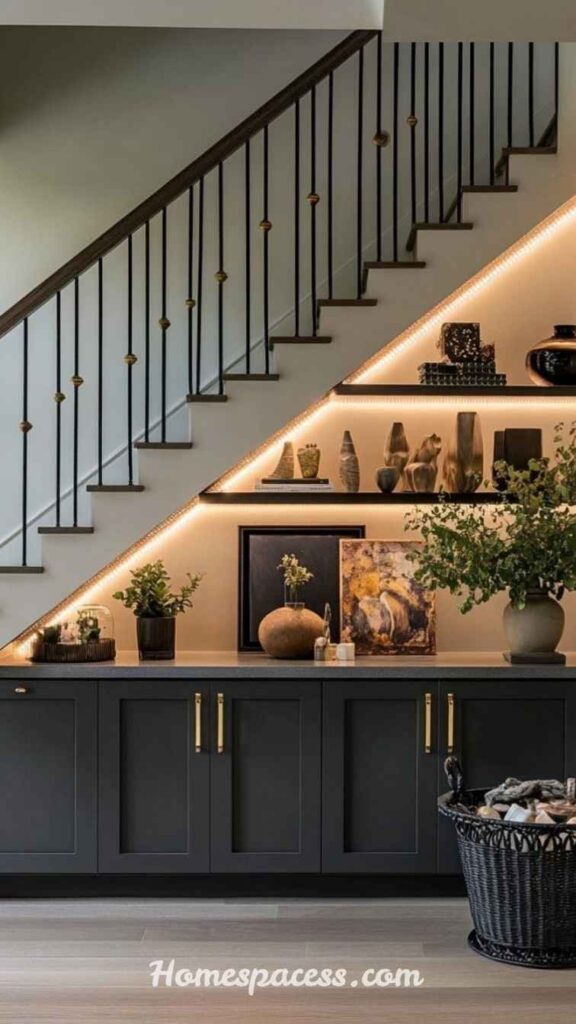
The void beneath a staircase is one of the most frequently wasted architectural features in any home. In typical homes, it becomes a dumping ground for shoes, cleaning equipment, and forgotten storage boxes. But treated with intentionality, this triangular space becomes one of the most compelling staircase decor opportunities available and it adds real, tangible value to your property.
The most versatile approach is built-in storage with custom cabinetry that follows the slope of the stairs. When painted the same colour as surrounding walls and fitted with recessed handles, this cabinetry becomes virtually invisible storage that disappears into the architecture. Alternatively, open shelving styled with books, plants, and decorative objects creates a library nook effect that looks intentional and designed rather than improvised.
💡 Unique Idea
One of the most Instagram-worthy under-stair designs of recent years is the “pet nook” a custom-fitted, arched alcove with a padded interior used as a cosy reading corner or a pet sleeping area. This design detail surprises guests, solves a real functional need, and photographs beautifully.
💡 Expert Insight
Interior designers like Mason Morfit recommend keeping the bottom edge of your gallery frames aligned along an imaginary line that follows the staircase angle typically 60–65 cm from each step. This creates visual consistency even when frame sizes vary dramatically.
For those with the budget, converting the under-stair space into a compact home office complete with a desk, shelving, and pinboard is one of the highest-return staircase decor investments you can make. A well-executed under-stair office adds considerable appeal to buyers in the current property market where dedicated work-from-home space is highly valued.
Wood and Natural Textures The Warmth of Authenticity
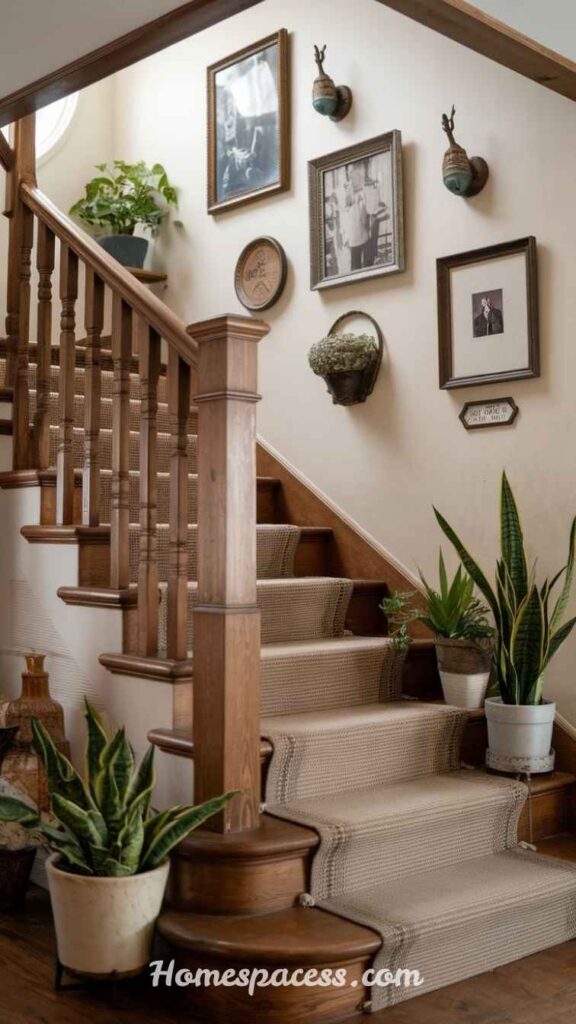
In an era of synthetic surfaces and digitally printed everything, natural wood and organic textures on a staircase feel genuinely luxurious. Exposed timber treads whether original hardwood sanded and refinished or reclaimed wood carefully installed carry a warmth and character that no laminate substitute can truly replicate. The grain pattern, the subtle tonal variation, the way the light moves across the surface at different times of day: these are qualities that age gracefully rather than deteriorating.
Beyond solid wood treads, consider introducing natural texture through other materials: woven seagrass wall panels applied in sections, stone or slate insets on a feature landing, or raw linen stair risers as an alternative to painted ones. The concept of “wabi-sabi” the Japanese aesthetic that finds beauty in imperfection and impermanence is increasingly influential in 2025 interior design, and the staircase is a perfect place to experiment with it.
A particularly effective detail is mixing wood species thoughtfully. Using a darker wood like walnut for the treads against a lighter oak baluster and handrail creates tonal contrast that is sophisticated without being jarring. This kind of material layering is a hallmark of high-end interior design and can be achieved at mid-market price points with careful sourcing and planning.
Monochrome Minimalism The Power of Restraint
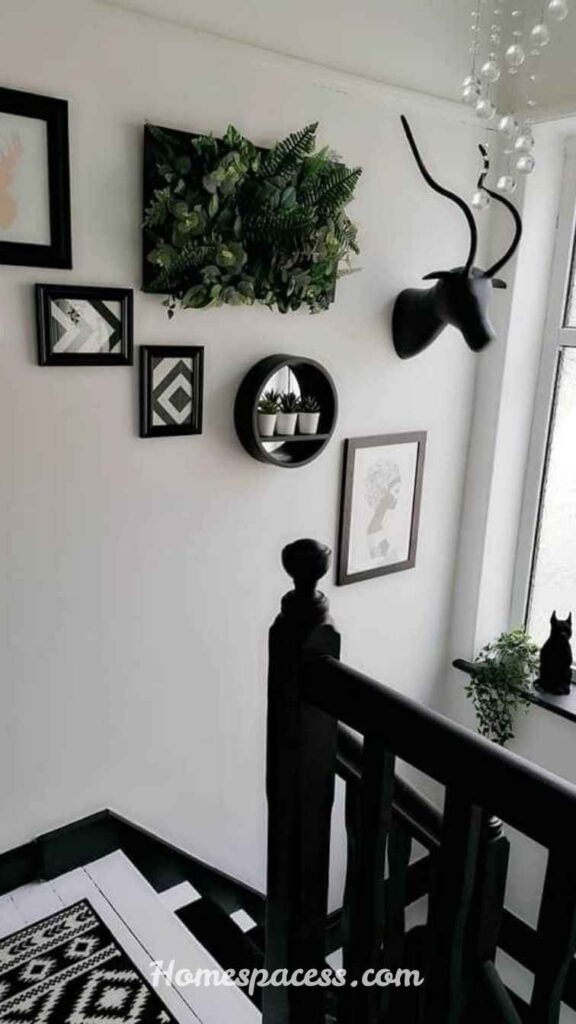
Not every staircase decor idea needs to be bold, layered, or visually complex. Sometimes the most striking result comes from absolute restraint from committing fully to a monochromatic palette and letting architecture do the talking. A staircase decorated entirely in tonal whites, off-whites, and creams, or executed in a single deep charcoal from wall to baluster to riser, communicates confidence and sophistication that maximalist approaches often fail to achieve.
Monochrome staircase design demands attention to texture because colour contrast is removed from the equation. In a white-on-white staircase, for example, the interest must come from the difference between matte-painted walls, the slight sheen of gloss risers, the tactile grain of unpainted timber treads, and the rough plaster or subtle wallpaper texture on the adjacent wall. Every material choice becomes amplified and deliberate.
This approach works exceptionally well in modern, architect-designed homes or Victorian terraces where the original detailing is strong enough to stand on its own. In these contexts, a coat of Farrow & Ball Elephant’s Breath or Dulux Chic Shadow applied consistently across all staircase surfaces walls, skirting, spindles, and risers creates a cohesive, gallery-like quality that feels contemporary while respecting the architecture’s inherent character.
Conclusion
Staircase Decor Ideas can make your home feel warm, stylish, and more welcoming. Small changes like wall art, lights, plants, and runners can give your staircase a fresh look. You do not need a big budget to make your space look beautiful and modern. Simple details can create a big difference in any home.
These Staircase Decor Ideas work well for both small and large spaces. You can choose modern, farmhouse, rustic, or simple styles that match your home. Try ideas that fit your taste and make your staircase feel special. A well-decorated staircase can improve the full look of your home.
Trend Analysis
Staircase Decor Trends in 2025 And What’s Coming Next
Curved Staircases Return
Straight-flight stairs dominated the 2010s. Curved and helical staircases are back in residential design, favoured for their sculptural quality.
Japandi Aesthetics
The fusion of Japanese minimalism and Scandinavian warmth is influencing staircase palettes raw oak, muted sage, warm ash tones prevail.
Terrazzo Accents
Terrazzo tiles on stair risers and landings are trending as an alternative to plain paint durable, patterned, and pleasingly retro-modern.
Limewash Walls
The textured, aged look of limewash plaster on staircase walls is replacing flat emulsion, offering depth without relying on pattern.
Looking beyond 2025, several macro forces will shape staircase design in the next decade. As open-plan living becomes slightly less dominant (driven by the renewed demand for acoustic privacy post-pandemic), staircases are increasingly being positioned as focal points of semi-enclosed entryways curated transition zones between public and private domestic spaces. This will accelerate demand for bespoke railing systems and custom lighting installations.
The rise of 3D printing and parametric design tools is quietly beginning to enter residential interiors. Within five years, homeowners will be able to order custom-designed baluster patterns algorithmically generated, structurally tested, and locally fabricated at a price point comparable to today’s off-the-shelf options. This will fundamentally change what “custom staircase” means for the average homeowner.
Expert Practical Insights
Real-World Tips Interior Designers Actually Use
One insight that professional interior designers consistently apply but rarely appears in standard home décor guides is the concept of “staircase as a compression-release sequence.” Designers intentionally make staircase landings feel slightly enclosed (lower lighting, tighter palette) so that the arrival at the upper level feels expansive by contrast. This psychological play with spatial compression is what gives well-designed homes their sense of narrative and journey.
Another overlooked professional technique is acoustic treatment disguised as decoration. Soft furnishings upholstered stair runners, fabric wall art, and textile panels are frequently recommended by designers not only for their visual appeal but because they significantly reduce noise transmission between floors. In terraced houses and apartments, this dual-purpose approach to staircase decor addresses a real quality-of-life issue while simultaneously improving the space aesthetically.
Finally, designers frequently advise clients to approach staircase decor as a “slow edit” rather than a one-time project. Rather than executing everything at once, the most successful staircase transformations happen gradually starting with paint or wallpaper, then adding a runner, then layering artwork over months and years. This organic accumulation of objects and materials creates a staircase that feels lived-in and personal rather than showroom-staged and impersonal.
Sustainability & Long-Term Value
Sustainable Staircase Decor Investing in Beauty That Lasts
The most sustainable staircase decor decisions are those that improve over time rather than degrade choices where quality of material and craftsmanship means you replace less, repair more, and live more comfortably in between. Solid hardwood treads, natural wool runners, and quality paint finishes all fall into this category. They cost more upfront, but their lifecycle cost per year of enjoyment dramatically undercuts cheaper alternatives that need replacing every three to five years.
Reclaimed materials are having a significant moment in staircase design, and not only for their environmental credentials. Reclaimed timber salvaged from old barns, factories, and demolished Victorian buildings carries a warmth and patina that new timber simply cannot replicate. Using it in stair treads or as a feature wall panel adjacent to the staircase introduces authentic history into contemporary spaces in a way that feels genuinely unique. No two pieces of reclaimed timber are identical, which means your staircase becomes, by definition, a one-of-a-kind installation.
From a property investment perspective, staircase upgrades consistently deliver strong returns. Estate agents and property valuers in the UK and US markets regularly identify the staircase as one of the features buyers notice most powerfully during viewings precisely because it is encountered immediately upon entering. A staircase that has been thoughtfully decorated signals attention to detail throughout the home, raising the perceived quality of the entire property. Research from home improvement consultancies suggests that a well-executed staircase renovation can return 50–80% of its cost in added property value.
Future Innovations
The Future of Staircase Design Innovations on the Horizon
Smart materials are beginning to enter residential staircase design in ways that will become mainstream within a decade. Thermochromic paint which changes colour in response to temperature is already being used in commercial architecture and will soon be available in consumer-grade formulations. Imagine stair risers that shift subtly from a warm amber to a cool slate blue as the house heats and cools through the day, creating a living, responsive staircase environment without any digital components.
Integrated technology will redefine staircase functionality fundamentally. Beyond the smart lighting already discussed, future staircases will incorporate pressure-sensitive tread systems that can identify family members by footstep pattern and automatically adjust floor temperature, lighting, and even music preferences as they move through the space. These systems already in prototype in luxury residential developments will filter down to the mainstream market as component costs fall in the coming years.
The concept of the “staircase as wellness feature” is emerging from cutting-edge design research. Studies in environmental psychology consistently demonstrate that natural materials, dynamic lighting, and sensory variety in transitional spaces reduce stress hormones and improve cognitive performance. Design studios are now deliberately engineering staircases to exploit these findings combining natural material textures, circadian lighting rhythms, and plant integration to create ascending corridors that function as de-stressing interludes within the daily domestic routine. This is where biophilic design, smart home technology, and evidence-based wellness research are converging.
Common Mistakes
7 Staircase Decor Mistakes That Undermine Great Design
Even the best staircase decor ideas can be executed poorly. Understanding the most common mistakes many of which are rarely discussed in mainstream décor guides is as important as knowing what to do. Here are the pitfalls professionals see again and again:
- Hanging artwork too high. Most people hang frames at eye level for a standing adult, but on a staircase, the correct reference point changes with each step. The result: artwork that feels disconnected from the person ascending. Fix: Use the mid-stair height as your reference point
- Ignoring the underside of the staircase. The soffit (the sloped ceiling beneath open stairs) is almost always left plain, despite being the most visible surface from certain angles. Fix: Paint it an accent colour or add recessed lighting
- Overcrowding the space. More is not always more on a staircase. Too many objects, frames, plants, and lighting elements create visual noise rather than curated interest. Fix: Apply the “one edit rule” remove one item from every styled surface
- Neglecting the landing. The landing at the top or middle of a staircase is a design opportunity treated as a mere functional platform. Fix: Add a console table, a mirror, or a statement plant to anchor the space
- Using the wrong paint finish. Flat emulsion on a staircase wall is impractical scuff marks appear within weeks and cannot be wiped clean. Fix: Always use eggshell or satin finish in high-traffic areas
- Mismatching scales. Small artwork frames on a tall, wide staircase wall look lost and timid. Large-scale pieces on narrow staircases feel claustrophobic. Fix: Proportion artwork to the wall at least 60% of the wall width it occupies
- Forgetting about safety. Decorative objects placed on stair treads, loose runner edges, or pendant lights hung too low across the stairwell are genuine safety hazards. Fix: Conduct a safety audit before finalising any staircase decor plan

Team Home Spacess shares simple, practical design ideas that work for real families. The team focuses on cozy décor, soft colors, and natural textures that make a space feel truly lived-in. From everyday decorating tips to creative home projects, Team Home Spacess is dedicated to helping readers create warm, comfortable, and inviting spaces with a fresh and personal touch.