

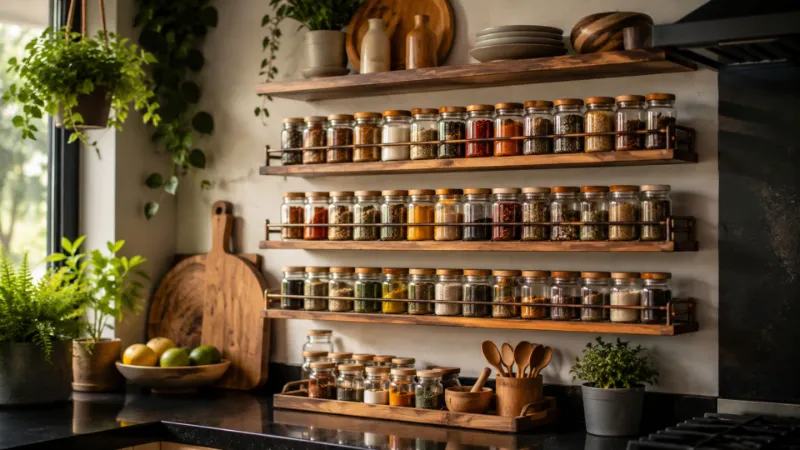
From Chaotic cabinet to perfectly organized seasonings discover smart stylish and spaces saving solution for every kitchen. You reach for the cumin, but grab cayenne instead. You buy a third jar of paprika because the first two are buried at the back of a crowded shelf. If this sounds familiar, your kitchen is silently crying out for a proper spice rack.
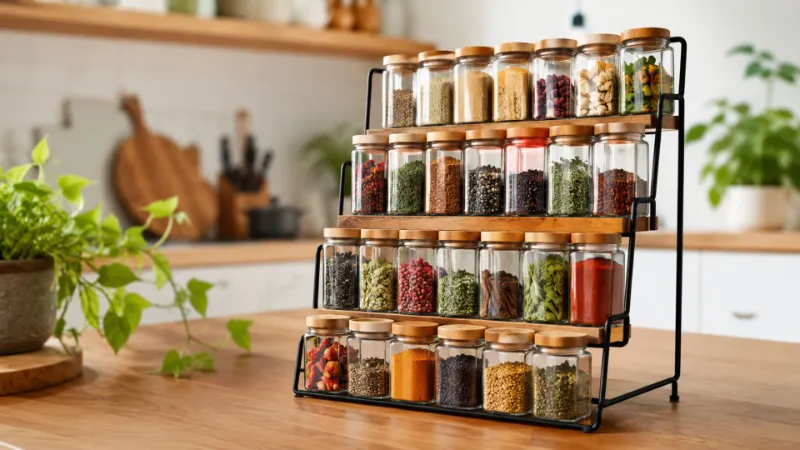
The right spice rack ideas don’t just organize your pantry they save money, reduce cooking frustration, and actually make your kitchen look beautiful. This guide covers the 10 best spice rack ideas tailored for modern kitchens in 2026, complete with expert insights you won’t find anywhere else.
Wall-Mounted Magnetic Spice Racks
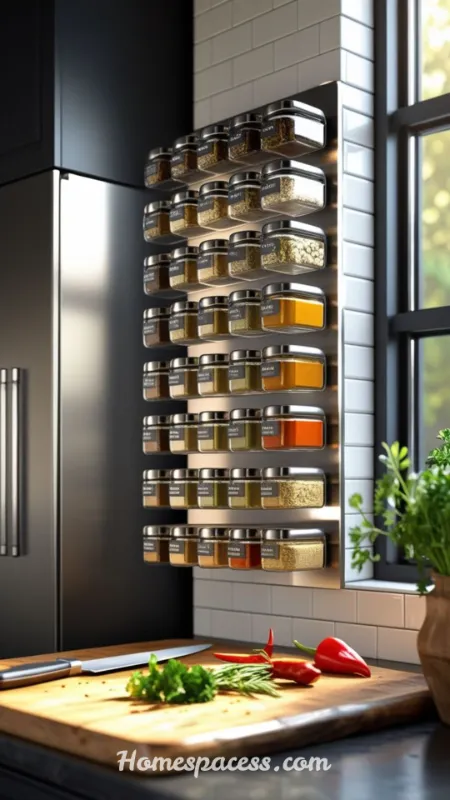
Magnetic spice racks have surged in popularity because they solve the single biggest kitchen complaint: dead wall space. By affixing flat magnetic tins directly to your fridge, backsplash, or a magnetic panel, you free up precious counter and cabinet space instantly. Each tin holds approximately 4–6 oz of spice, and the transparent lids mean you never have to pull one down to know what’s inside.
The real advantage most homeowners overlook is airflow. Unlike tightly packed cabinets, magnetic wall racks keep spices away from heat sources and moisture, which dramatically extends their potency. Brands like Wallniture and SpiceMate now offer stainless steel and matte black options that double as decorative kitchen features rather than purely functional storage.
For renters, adhesive magnetic boards installed with removable command strips offer the same benefits without damaging walls. This is one of the few spice rack ideas that works equally well in a 500 sq ft studio and a sprawling farmhouse kitchen it scales perfectly to the space available.
Pro Tip:
Label tins on the lid and the side so you can read them both when mounted and when browsing at eye level. Use a Brother P-Touch label maker for a uniform, professional look.
See Related Articles: Kitchen Lighting Ideas to Create a Cozy and Modern Cooking Space
Drawer Insert Spice Organizers
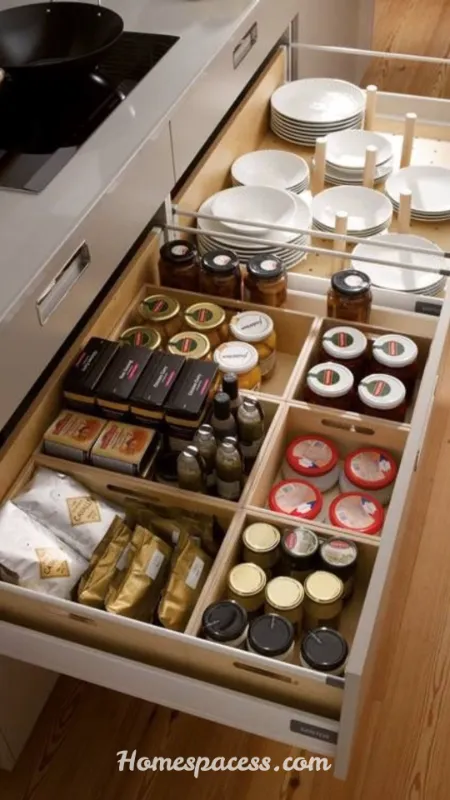
The drawer insert method is beloved by professional chefs and kitchen designers alike because it brings spices down to a horizontal, easily readable position. When spice jars lie flat in angled drawer inserts, you can read every label at once a game-changer compared to stacking jars three deep in a cabinet. Bamboo and acrylic inserts are the most popular materials, fitting into standard 12-inch or 18-inch kitchen drawers.
What competitors rarely mention is the cognitive benefit of this layout. Studies in kitchen ergonomics show that horizontal storage reduces decision fatigue during cooking because all options are visible simultaneously. You spend less time searching and more time creating. This is why high-end kitchen brands like Hettich and Hafele include pull-out spice drawers as a standard premium feature in European-style kitchens.
When selecting drawer inserts, measure your jar heights carefully. Most standard spice jars are 2.5–3 inches tall, but artisan or bulk spice jars can run 4+ inches. Modular adjustable inserts from brands like Lynk Professional offer the flexibility to accommodate any jar size, making them a smarter long-term investment than fixed-slot versions.
Pro Tip:
Angle your drawer insert at 15–20 degrees toward the front edge so labels face upward for at-a-glance reading. This single adjustment makes the whole system 3x more functional than flat storage.
You May Also Like: Kitchen Nook Ideas: Transform Dead Corners Into Cozy, Functional Spaces
Over-the-Door Spice Rack Panels
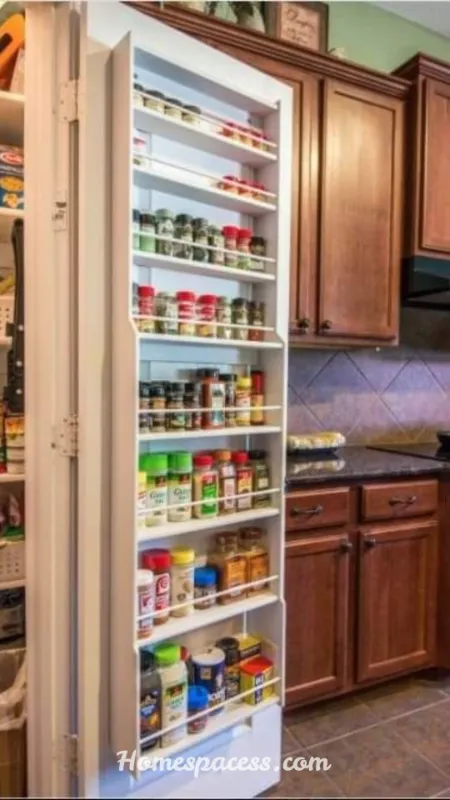
Over-the-door spice racks turn completely unused vertical space into highly functional storage. The back of a pantry door, kitchen cabinet door, or even a broom closet door can accommodate 20–40 spice jars without claiming a single inch of counter or shelf space. These racks typically use adjustable wire or acrylic pockets that hold standard-sized jars securely even when the door swings open and closed repeatedly.
The key design consideration most buyers miss is door clearance. Before purchasing an over-the-door rack, measure the gap between the back of your door and the nearest shelf when the door is fully closed. A rack that protrudes 3 inches will hit interior shelves if your cabinet isn’t deep enough. Always verify this clearance measurement a mistake here means an expensive return.
For maximum organization efficiency, categorize spices by cuisine or frequency of use across the door’s vertical panels. Place everyday spices (salt, pepper, garlic powder, cumin) at eye level in the middle rows, with specialty or rarely-used spices toward the top or bottom. This micro-optimization alone can shave 30–60 seconds off every cooking session.
Pro Tip:
Add a small cork or foam bumper to the door frame if your over-the-door rack rattles when closed. A $2 adhesive pad prevents years of annoying noise and potential jar breakage.
Recommended for You: Kitchen Decor Ideas That Transform an Ordinary Kitchen Into a Space You Actually Love
Pull-Out Cabinet Spice Systems
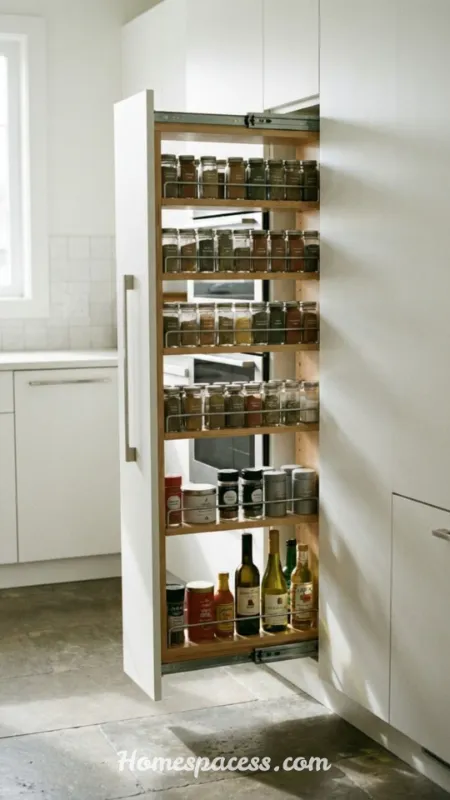
Pull-out cabinet spice systems are the gold standard of built-in kitchen organization. Installed inside existing cabinets, these systems feature narrow pull-out trays that extend fully, revealing multiple layers of spice storage accessible from the front. Unlike static shelving where back-row items are invisible, pull-out systems ensure every jar is immediately reachable without moving anything else.
The ROI on pull-out spice systems is often underestimated. When integrated during a kitchen renovation, they add measurable resale value according to the National Kitchen and Bath Association (NKBA), kitchens with pull-out storage systems sell faster and at higher prices than those with standard cabinet layouts. Even as a retrofit addition, pull-out systems from brands like Rev-A-Shelf pay for themselves by reducing wasted spices (an estimated $30–50/year in discarded expired jars).
For narrower cabinet gaps, the 6-inch wide pull-out spice organizer is a remarkable space utilizer. These ultra-slim pullouts fit between standard cabinets or beside appliances where nothing else would fit, making them ideal for galley kitchens or compact apartment layouts where every centimeter counts.
Pro Tip:
Pair pull-out spice systems with uniform glass jars and a label maker. Visual uniformity not only looks stunning but makes restocking faster because you can see quantities at a glance.
Discover More: Small Kitchen Ideas: 18 Expert Transformations That Actually Work
Tiered Countertop Spice Rack Stands
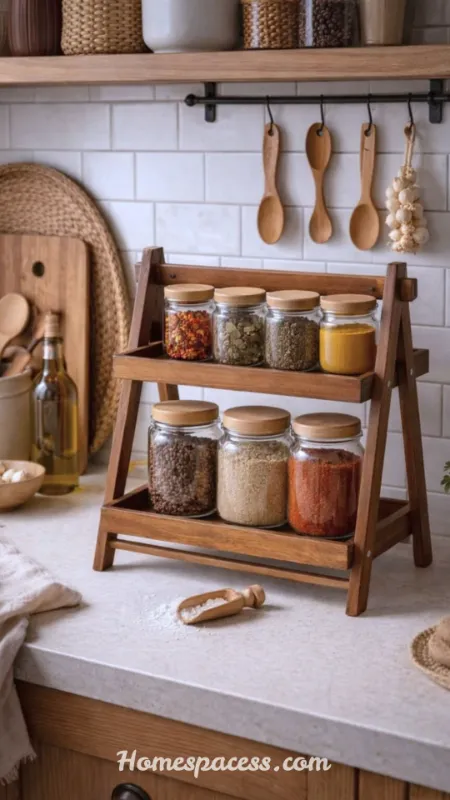
Tiered countertop spice racks are the most accessible solution no installation required, no tools needed, and immediately movable when you want to clean or rearrange. A good two- or three-tier rack creates a staircase effect where every jar is visible from the front, eliminating the “hidden row” problem of flat shelves. Bamboo, acrylic, wire, and powder-coated steel are the most popular materials, each with distinct aesthetic and durability characteristics.
What separates a great countertop spice rack from a mediocre one is depth and spacing. Racks with at least 3 inches of depth per tier accommodate standard spice jars without tipping, while 4-inch depth handles larger specialty jars. Shelves spaced 4–5 inches apart vertically ensure taller jars don’t block the tier behind them. Most budget racks compromise on these dimensions measure before buying.
In 2026, rotating tiered racks have become especially popular in South Asian and Middle Eastern households where 30–50 spice varieties are used regularly. A spinning 4-tier lazy-susan style rack offers 360-degree access without moving jars, which significantly improves cooking flow when working with complex spice blends like garam masala or ras el hanout.
Pro Tip:
Place your tiered spice rack on a silicone mat to prevent sliding and protect your countertop. Non-slip mats also make the entire rack easier to pick up and move for deep cleaning.
Also Read: Bathroom Tile Ideas That Transform Any Space (2026 Guide)
Pegboard Spice Wall Systems
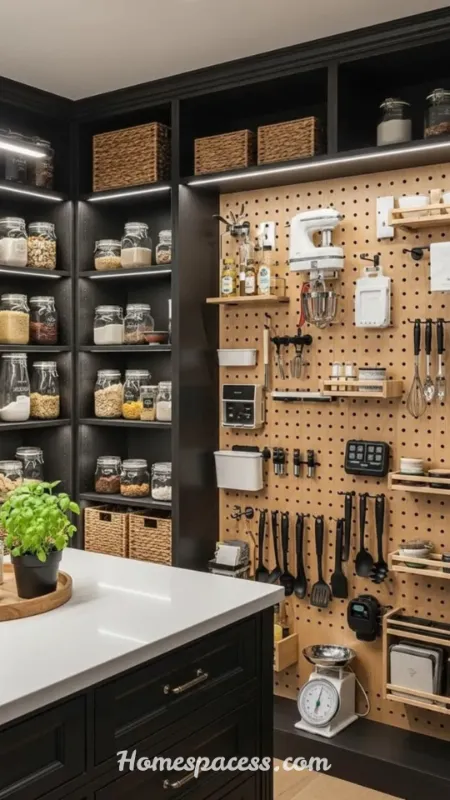
Pegboard spice walls are arguably the most versatile and customizable spice storage solution available. A pegboard panel mounted on a kitchen wall accepts interchangeable hooks, shelves, baskets, and jar holders that can be repositioned infinitely without tools. This means your storage system can evolve as your spice collection grows from 12 jars today to 60 jars a year from now without replacing anything.
Interior designers favor pegboard walls because they transform functional storage into visual art. Painted in a kitchen’s accent color, fitted with uniform labeled jars and mixed with potted herb clips, a pegboard spice wall becomes a focal point rather than a utility fixture. This approach has been widely adopted in Scandinavian-style kitchens where the philosophy of “functional beauty” drives design decisions.
IKEA’s SKÅDIS system and similar modular pegboard solutions now offer powder-coated steel options that are more durable and kitchen-appropriate than the traditional tan wood pegboard. These systems have pre-drilled pegboard at 1-inch intervals, ensuring accessories always align and never wobble a major improvement over older pegboard designs that often led to sagging or crooked holders.
Pro Tip:
Leave a 0.5-inch gap between the pegboard and the wall using standoff screws or foam spacers. This allows peg hooks to insert correctly and prevents trapped moisture behind the panel.
Must Read This Post: Beach Bedroom Ideas That Actually Feel Like the Coast
Under-Cabinet Hanging Spice Racks
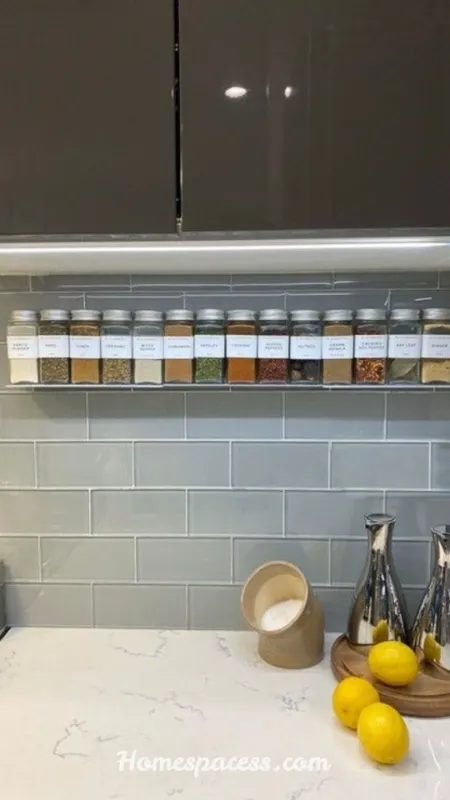
Under-cabinet spice racks exploit one of the most overlooked spaces in any kitchen the zone between the countertop and the bottom of upper cabinets. By screwing a rail, strip, or small shelf directly to the underside of upper cabinets, you can store 12–20 spice jars completely out of the way while keeping them at eye level and arm’s reach from the prep area. This is especially powerful in small kitchens where countertop space is a constant battleground.
The most innovative under-cabinet designs in 2026 use tension-mounted rails that require no screws at all, fitting between two adjacent cabinet bases using friction alone. These are particularly popular in rental apartments where permanent modifications aren’t permitted. Stainless steel rails with jar magnetic caps or clip-on rings create an almost industrial-chic aesthetic that suits modern and transitional kitchen styles.
A key insight professionals share: position under-cabinet spice racks above your primary prep zone, not above the stove. Heat and steam from cooking degrade spice potency rapidly. The prep zone typically adjacent to the stove rather than above it gives the same easy access without the damaging heat exposure that shortens a spice’s usable life by weeks or even months.
Pro Tip:
Use screw-on lids with flat tops for under-cabinet hanging systems the lid screws into the rail, and the jar hangs below. Fill jars from the bottom and screw the lid back on for a clean, professional setup.
Explore More: Garden Party Ideas That Will Wow Every Guest
Lazy Susan Turntable Spice Organizers
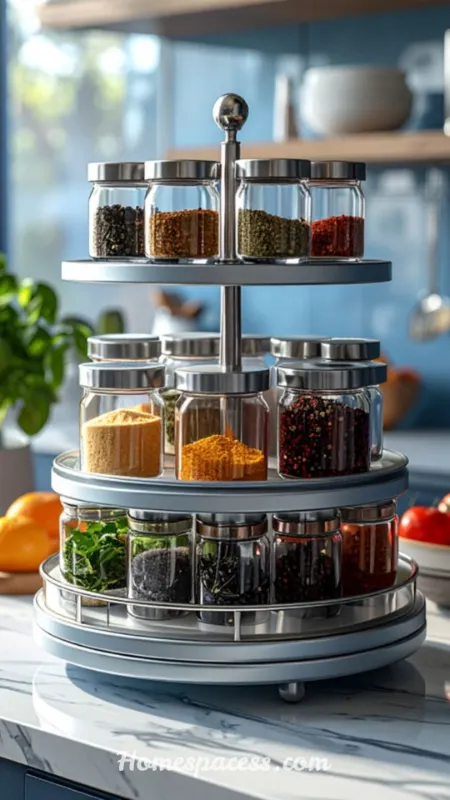
The Lazy Susan spice organizer is a timeless solution that has found fresh relevance in the corner cabinet problem. Corner cabinets are notoriously difficult to organize items placed at the back become permanently inaccessible. A double- or triple-tier Lazy Susan turntable converts this dead zone into the most accessible storage spot in the kitchen, allowing a single rotation to bring any spice to the front.
Modern Lazy Susans have advanced significantly from the wobbly plastic versions of the past. Heavy-duty stainless steel or tempered-glass turntables with ball-bearing bases rotate smoothly even when fully loaded, supporting weights of 25–30 lbs without strain. Some premium versions feature sectioned dividers that prevent jars from tipping when spun a detail that seems minor until a jar of turmeric rolls off and shatters.
For small pantries, a stacked Lazy Susan system where two independent rotating tiers share the same spindle can double the capacity in the same footprint. Stackable Lazy Susans are ideal for holding not just spices but also oils, vinegars, and small sauce bottles, creating a comprehensive flavor station in a single organized footprint.
Pro Tip:
Apply a strip of non-slip shelf liner to each Lazy Susan tier before loading jars. This prevents jars from sliding outward during spinning and keeps everything firmly in place.
Built-In Spice Niche Storage
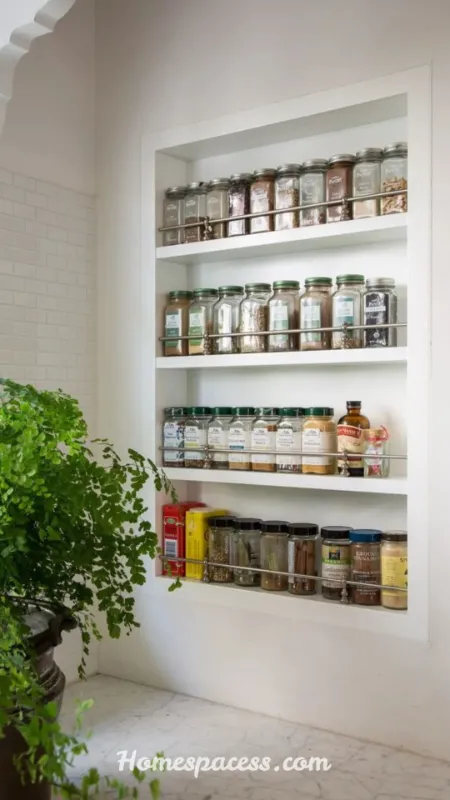
A built-in spice niche is a recessed shelf cut into the wall typically between wall studs in a kitchen or pantry creating flush, permanent spice storage that disappears seamlessly into the architecture. This approach is most common in new construction or major kitchen remodels, and it represents the pinnacle of integrated kitchen organization. A standard stud bay (14.5 inches wide, 3.5 inches deep) holds an impressive number of standard-size spice jars when fitted with 2–3 internal shelves.
The depth of 3.5 inches limited by stud width actually matches spice jar depth almost perfectly, which is why this solution looks so intentional and architectural. Adding LED strip lighting inside the niche creates a warm glow that makes the spice display both functional and genuinely beautiful. Ceramic tile, painted drywall, or even a small mirror as the niche backwall adds a designer touch that elevates the entire kitchen aesthetic.
For those concerned about load-bearing walls, it’s worth noting that most kitchen exterior walls in newer homes have non-structural interior sections where a small niche can be safely created. Always consult a contractor before cutting any wall, but the structural concern alone shouldn’t dismiss this idea it’s achievable in most kitchens with proper planning and can add $500–$2,000 in perceived home value per niche.
Pro Tip:
Install adjustable shelf clips in your niche rather than fixed shelves. As your spice jar sizes change over time, adjustable shelving lets you optimize the space without any renovation work.
Floating Shelf Spice Display Racks
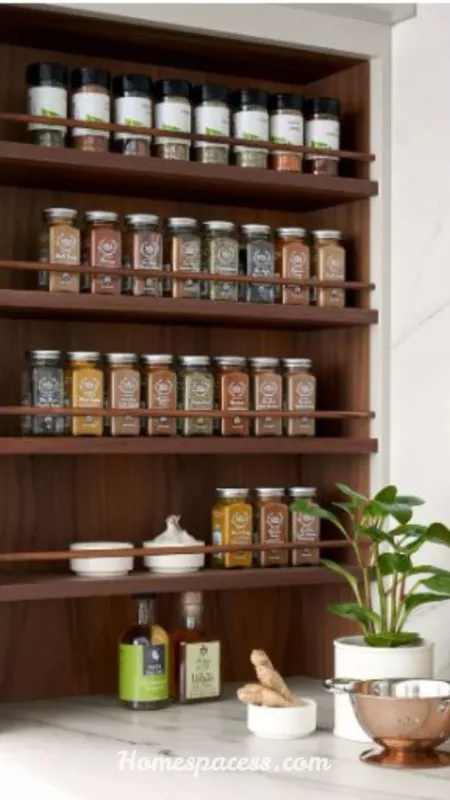
Floating shelves have become a dominant interior design trend, and they translate exceptionally well to spice storage. A series of narrow floating shelves 4 to 5 inches deep and 24 to 36 inches wide positioned on a kitchen wall or inside a pantry creates a display-style spice collection that is both highly functional and visually striking. Unlike traditional shelving with visible brackets, floating shelves use hidden hardware that gives a clean, modern, “furniture-grade” appearance.
The critical variable with floating spice shelves is material choice. Solid wood (walnut, oak, maple) offers the best load-bearing capacity and aesthetic versatility, but requires proper sealing against kitchen humidity and oil splatter. MDF shelves are more economical but susceptible to moisture over time. For truly minimal maintenance, powder-coated steel floating shelves offer durability and a contemporary industrial aesthetic that pairs beautifully with stainless steel appliances.
What makes floating shelf spice displays particularly powerful is their ability to double as brand storytelling for food enthusiasts. Curating your spice selection in uniform glass jars with hand-written or typographically printed labels arranged by cuisine region or color transforms a purely functional element into a reflection of your culinary identity. This is the idea food photographers and cooking content creators consistently reach for because it photographs beautifully under natural light.
Pro Tip:
Install floating spice shelves inside a pantry door alcove or on a narrow wall beside the refrigerator. These forgotten micro-spaces accommodate 2–3 floating shelves perfectly without interfering with kitchen traffic flow.
Conclusion
Finding the right spice rack ideas for your kitchen is ultimately about matching storage to your cooking habits, space constraints, and personal aesthetic. Whether you opt for a sleek magnetic wall system, an architect-grade built-in niche, or a simple tiered countertop stand, the best spice rack is the one you’ll actually maintain.
Start with a spice audit, choose a system that fits your real kitchen (not an idealized one), and invest in uniform containers for maximum organization impact. Your future cooking self will thank you every single day.
Advanced Insights & Expert Analysis
2026–2027 Spice Rack Trend Analysis
Smart Inventory Integration:
RFID-tagged spice jars paired with app-based inventory tracking are entering the consumer market in late 2026, allowing automatic reorder prompts when jars run low.
Biophilic Design Fusion:
Spice racks incorporating live herb planters alongside dry spice storage are trending strongly, merging functional storage with the wellness kitchen movement.
Matte Black Hardware Dominance:
Matte black has overtaken brushed nickel as the dominant finish for wall-mounted and cabinet-integrated spice systems in contemporary kitchen design.
Modular Expandability:
Consumers are shifting from fixed-size racks to modular, add-on systems that grow with their spice collection no replacement needed, just additional components.
Looking ahead to 2026, the biggest emerging shift is the move toward unified flavor stations integrated kitchen zones that combine spice racks, oil dispensers, herb planters, and small condiment storage into a single cohesive unit. Companies like OXO, Joseph Joseph, and boutique kitchen brands are actively developing these ecosystems. For consumers, this means the smartest purchase today is a system with open standards or universal jar sizing that will integrate seamlessly into tomorrow’s modular kitchen ecosystems.
Voice-activated smart home integration is also approaching viability. Imagine asking your kitchen hub to “find the cardamom” and receiving a visual indicator light on the correct jar this technology, already prototyped by a handful of European kitchen tech startups, is expected to reach consumer availability between 2026 and 2028.
Trend Insight:
When choosing spice rack solutions in 2026, prioritize systems that use standardized 4 oz or 8 oz jar sizing. Universal sizing ensures future compatibility with smart systems and subscription spice services.
Expert Insights: Optimizing Your Spice Storage System
Professional chefs and certified kitchen designers consistently emphasize one principle that most home cooks overlook: the proximity rule. Spices should always be stored within 18 inches of the primary cooking zone but never directly above the stove. This sweet spot reduces reach time by an estimated 40% during active cooking and avoids the heat and steam exposure that degrades volatile flavor compounds in spices within weeks of regular exposure.
A second insight from professional kitchen consultants: alphabetical organization is rarely the optimal choice. Instead, organize spices by cooking frequency (front and center for daily spices), then by cuisine type (a dedicated zone for baking spices separate from savory cooking spices), with specialty or seasonal spices in more remote storage. This zone-based approach aligns with how the brain naturally categorizes cooking knowledge and significantly reduces search time.
The third overlooked factor is container standardization. When all spices are transferred into uniform jars of consistent height and diameter, every spice rack works more efficiently labels align perfectly, shelves can be optimally spaced, and the visual calm of uniformity actually reduces cooking anxiety. Studies in kitchen behavioral science confirm that visual clutter in cooking environments measurably increases stress hormones. Uniformity is not just aesthetic it’s ergonomic.
Expert Tip:
Date every spice jar when you open it. Most ground spices retain peak potency for only 6–12 months after opening. A small dot sticker on the lid bottom with a month/year code makes this effortless and prevents the expensive habit of cooking with flavorless old spices.
Sustainability & Long-Term Value of Your Spice Rack Investment
Sustainability in spice storage begins with material selection. Bamboo is the gold standard: it grows 30x faster than hardwood timber, requires no pesticides, and produces spice racks that last 10–15 years with minimal care. Recycled steel and reclaimed wood options carry lower lifecycle environmental costs than virgin plastic alternatives, even when plastic racks appear cheaper at point of purchase. The true cost of a $12 plastic rack replaced every 3 years far exceeds a $65 bamboo system used for a decade.
Beyond material sustainability, a well-organized spice rack directly reduces food waste. The USDA estimates that American households discard an average of $30–$60 in expired spices annually simply because spices weren’t visible and were forgotten. Proper spice rack organization that makes every jar visible reduces this waste dramatically. Over a decade, a quality spice rack system pays for itself many times over through waste reduction alone, not counting the cooking satisfaction improvements.
For the eco-conscious kitchen, bulk spice purchasing with reusable glass jars represents the most sustainable long-term system. Buying from bulk spice suppliers like The Spice House, Penzeys, or local co-ops, and refilling labeled glass jars eliminates the plastic waste of commercial spice packaging. Combined with a well-designed spice rack, this approach reduces kitchen plastic waste by an estimated 60–70% for the average spice-heavy household.
Sustainability Tip:
Choose glass spice jars over plastic. Glass is fully recyclable, doesn’t absorb odors or colors, and doesn’t leach chemicals when exposed to heat making it the superior material for both health and environmental reasons.
Future Innovations in Spice Rack Design (2026–2030)
The next frontier in spice rack design is smart freshness monitoring. Sensor-embedded jar lids already in early commercial development will measure humidity and volatile compound levels inside spice jars and alert users via smartphone when a spice has passed its peak potency. This eliminates the guesswork of “is this paprika still good?” and prevents the all-too-common experience of cooking with flavor-depleted spices. Expect this technology to reach mainstream pricing by 2027.
AI-powered spice recommendation is the second major incoming innovation. Kitchen AI systems, already able to suggest recipes based on available ingredients, are evolving toward real-time spice recommendation during cooking. Integrated with a smart spice rack inventory system, your home AI will eventually be able to say “You’re low on cumin you’ll need it in 3 of your planned meals this week. Reorder?” with full awareness of your cooking calendar and habits.
From a design perspective, the biggest architectural shift expected by 2028 is the fully disappearing spice system spice racks integrated behind kitchen cabinet door panels that open with a gentle push and reveal an illuminated, organized spice display before sliding silently back into the wall. German and Scandinavian kitchen manufacturers are already filing patents for such systems, targeting the luxury residential and high-end hospitality kitchen market as an entry point before broader consumer adoption.
Future-Ready Tip:
When investing in spice storage today, choose systems that use standardized jar diameters (typically 53mm lids). This universal sizing will ensure compatibility with the smart jar lids and automated dispensing systems currently in development.
Common Spice Rack Mistakes Most People Make
Even well-intentioned spice organization efforts often fall into predictable failure patterns. Understanding these mistakes upfront saves money, frustration, and wasted effort and separates truly functional kitchens from ones that look organized on day one but devolve into chaos within a month.
- ✕Storing spices above the stove. Heat and steam are spice killers. The above-stove position is the single worst location for spice storage, yet it’s the most commonly chosen. Potency degrades in weeks with regular heat exposure.
- ✕Using mismatched containers. Inconsistent jar sizes create wasted space, uneven label alignment, and visual chaos that makes it harder to maintain organization over time. Standardize container sizes before building any system.
- ✕Ignoring jar height clearance. Buying a rack before measuring jar heights leads to the most common spice rack return: jars that are too tall for the shelf spacing and can’t stand upright. Always measure first.
- ✕Alphabetical-only organization. While intuitive, strict alphabetical ordering often separates functionally related spices (cumin goes with coriander and turmeric in cooking, not alphabetically near cardamom). Blend alphabetical with zone-based organization instead.
- ✕Over-purchasing capacity. Buying a 60-jar rack when you use 20 spices means 40 half-empty or decorative jars. Start with the right capacity for your actual collection and expand modularly as needed.
Key Insight:
The #1 mistake isn’t a bad rack choice it’s failing to audit your existing spices before organizing. Purge expired, duplicate, or rarely-used spices first. The edit comes before the organization.

Team Home Spacess shares simple, practical design ideas that work for real families. The team focuses on cozy décor, soft colors, and natural textures that make a space feel truly lived-in. From everyday decorating tips to creative home projects, Team Home Spacess is dedicated to helping readers create warm, comfortable, and inviting spaces with a fresh and personal touch.