

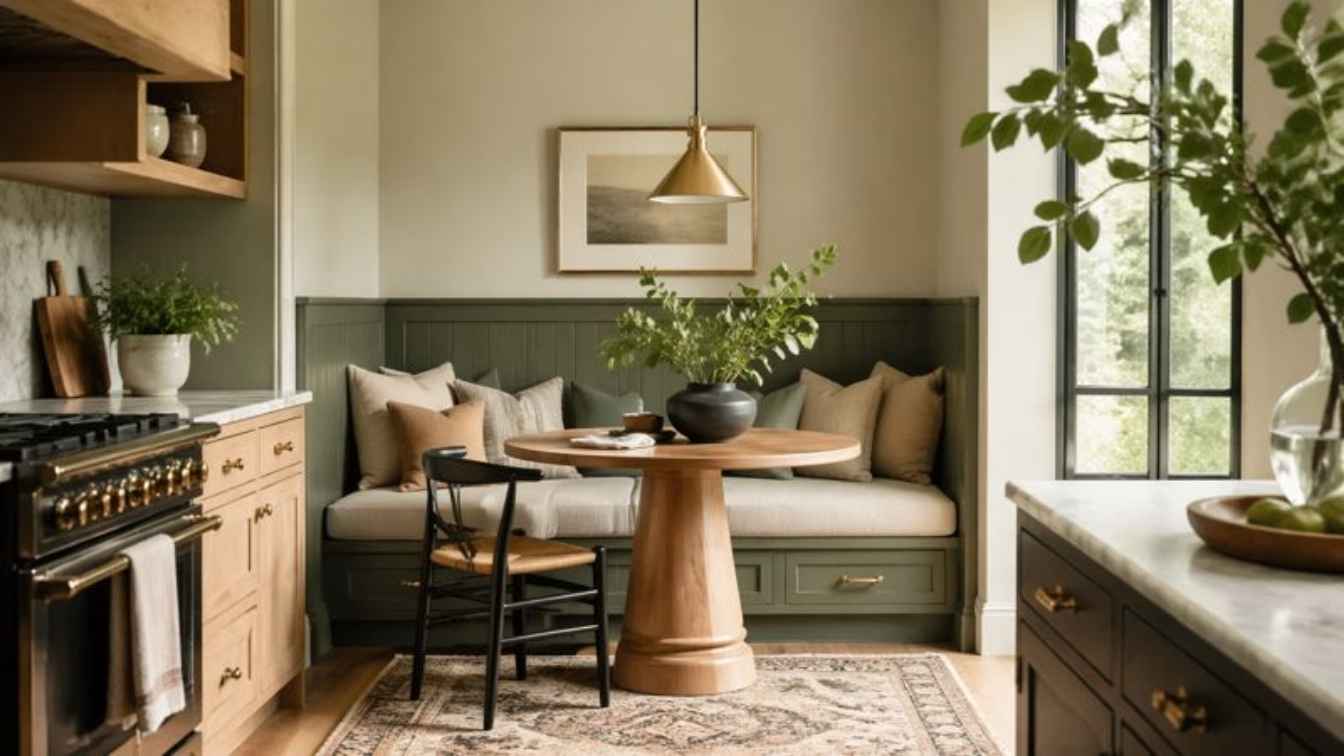
Most kitchens have at least one overlooked corner awkward, underused, and full of potential. The right kitchen nook can solve the eternal problem of “where does everyone actually sit?” without the cost of a full dining room. Whether you’re working with 40 square feet or 400, a well-designed breakfast nook creates warmth, storage, and daily-use functionality that a standard dining table simply can’t match. This guide covers five high-impact kitchen nook ideas, plus expert insights on trends, sustainability, and the mistakes that quietly ruin an otherwise beautiful space.
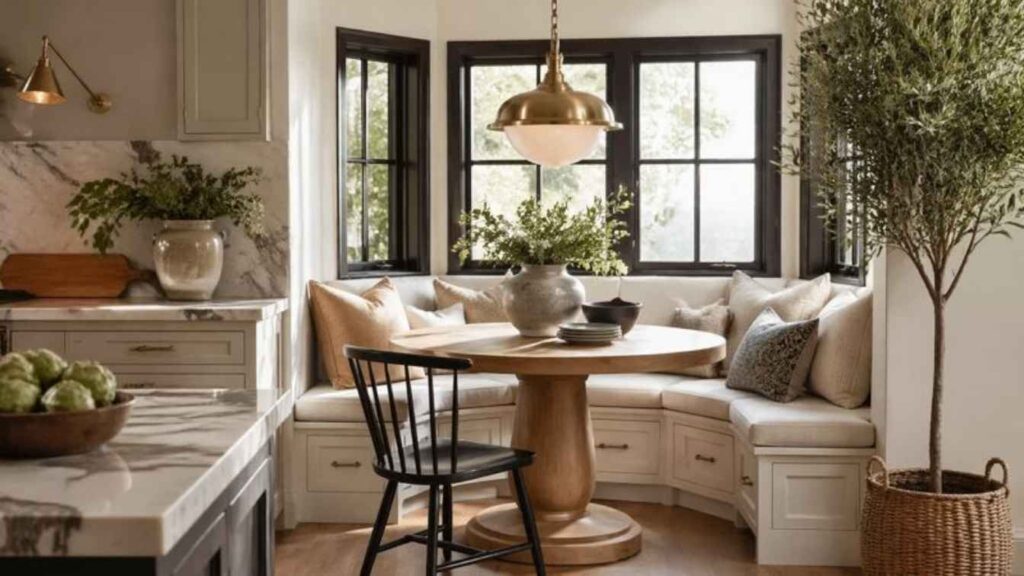
Pro Tip:
“Use a built-in bench with hidden storage under the seat. This saves space and keeps items like cushions, tools, or kitchen extras neatly organized.“
Kitchen Nook ideas bring smart ways to use small dining corners in modern homes. A kitchen nook is a compact seating space near the kitchen. It saves space and adds comfort. It creates a cozy spot for meals and daily use. A kitchen nook uses limited space with purpose and style. It improves daily routines with easy seating access. It adds charm to unused corners. It supports small families. It keeps dining simple and organized without taking much room.
Built-In Banquette Seating With Hidden Storage
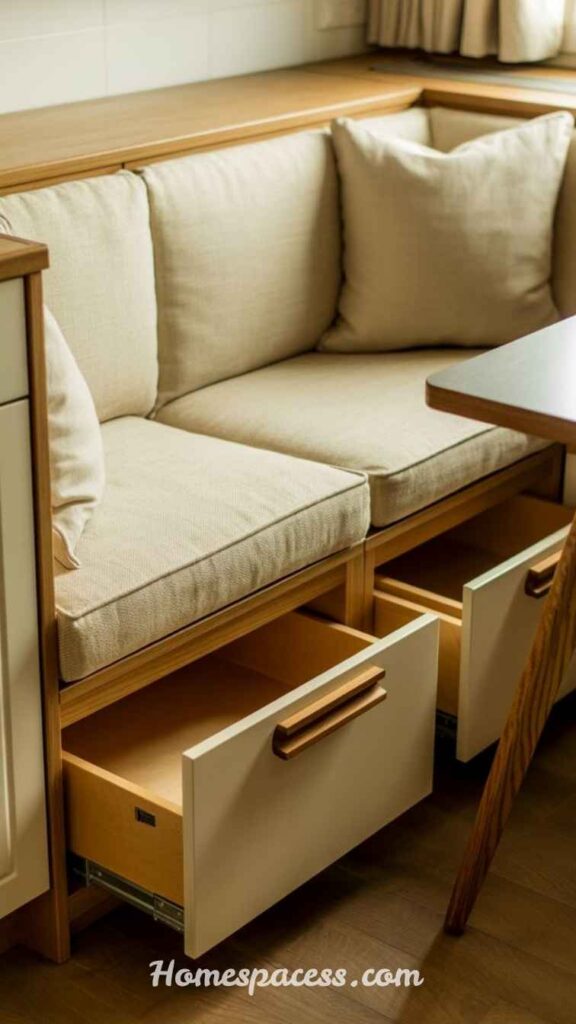
A built-in banquette is the gold standard of kitchen nook design and for good reason. Unlike freestanding furniture, banquette seating fits flush against walls, reclaims dead corner space, and hides surprising amounts of storage beneath lift-up seat cushions. Imagine a family of four sharing breakfast in a corner that once stored nothing but dust and forgotten appliance boxes.
The real advantage is customization. Banquettes can be built to any angle, L-shape, or U-shape, allowing them to conform to architecturally awkward spaces that no off-the-shelf furniture could accommodate. For small kitchens in particular, this is not just a design choice it’s a spatial strategy. A 5-foot banquette with 12-inch storage drawers can hold seasonal kitchenware, board games, or linens, turning seating into a multi-tasking system.
From an investment perspective, professionally built banquette seating consistently adds resale value by making kitchens feel intentional and custom. Using plywood with a solid wood veneer keeps costs manageable while still delivering a high-end look. Pair it with a round pedestal table which allows more seating without corner-chair awkwardness and you have one of the most space-efficient kitchen nook configurations available.
Expert insight:
Opt for lift-top seat storage rather than front-opening drawers they hold more volume, are easier to access during meals, and structurally reinforce the bench frame.
Must Read: Creative Camper Interior Ideas to Make Your RV Feel Like a Dream Home
Window Nook With a Floating Bench and Natural Light Design
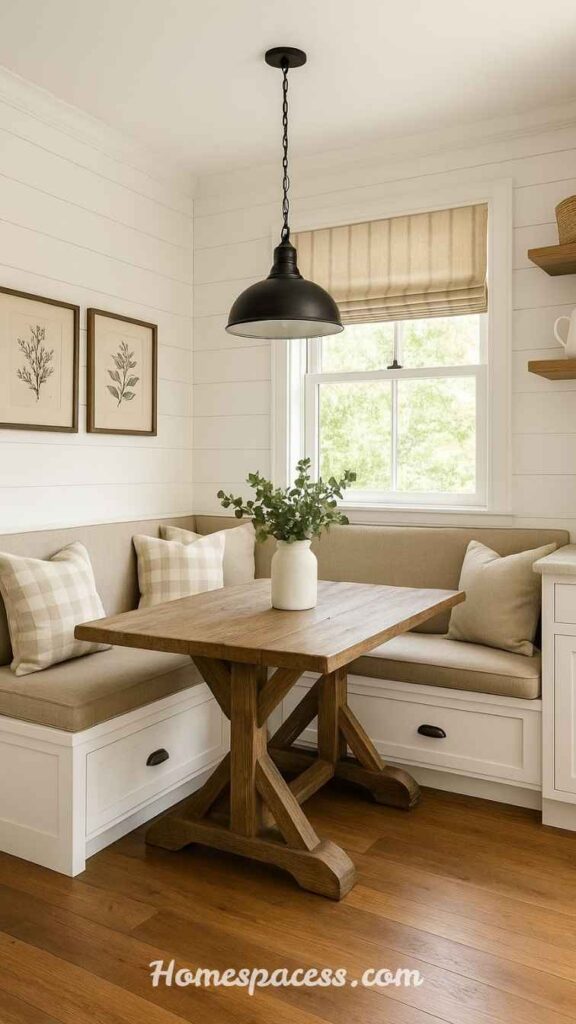
There is something almost universally appealing about sitting near a window with a cup of coffee in the morning and a window-facing breakfast nook turns that into a daily ritual. Positioning a seating nook directly beneath or adjacent to a kitchen window brings in natural light, frames an outdoor view, and creates the kind of atmosphere that even expensive lighting design cannot fully replicate.
The key to making a window nook feel designed rather than improvised is to align the bench height with the window sill. This creates a visual continuation of the sill line into the seating surface, making the space feel architecturally cohesive. Add a floating shelf just above at eye level ideal for small plants, cookbooks, or ceramic objects and the nook becomes a mini focal point within the kitchen.
In humid climates or north-facing kitchens that receive less sun, consider installing a solar tube or selecting a window bench upholstered in a UV-resistant fabric. A scenario worth planning for: morning sun streaming directly onto vinyl or certain foam cushions can cause accelerated fading and material degradation within two to three years. Linen-cotton blends or performance fabrics rated for UV exposure solve this problem elegantly while staying within budget.
Also Read: Modern Dining Room Ideas That Instantly Elevate Your Home Style
Corner Booth Kitchen Nook Inspired by Restaurant Design
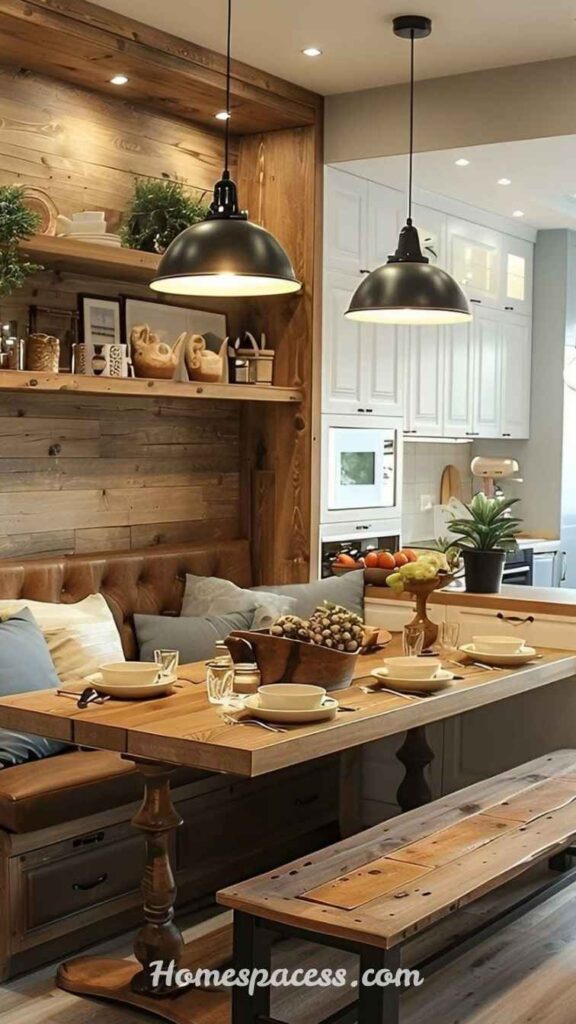
Restaurant-style corner booths have migrated from diners into residential kitchens for a reason: they maximize seating in minimal footprint, encourage lingering conversations, and carry an inherent coziness that open-plan seating arrangements simply lack. A corner booth kitchen nook typically seats four to six people in roughly the same square footage a standard two-chair setup would occupy.
What separates a well-executed booth from a mediocre one is the table height and clearance. Restaurant designers typically specify 17 to 18 inches from floor to seat, and 28 to 30 inches from floor to tabletop a ratio that balances comfort for both adults and children. Residential DIY builds frequently miss this ratio, resulting in seats that feel either like floor cushions or bar stools. Getting this measurement right before building is the single biggest factor in long-term comfort.
A trend gaining traction in 2026–2027 is the use of curved or barrel-back upholstery on residential booths borrowing the hospitality industry’s “high-back booth” format for greater acoustic privacy and a more encapsulated dining experience. This is particularly valuable in open-plan homes where the kitchen nook also doubles as a homework station or remote work spot during daytime hours.
Read More: Home Bar Ideas That Make Entertaining at Home More Fun
Minimalist Scandinavian Nook With Multifunctional Furniture
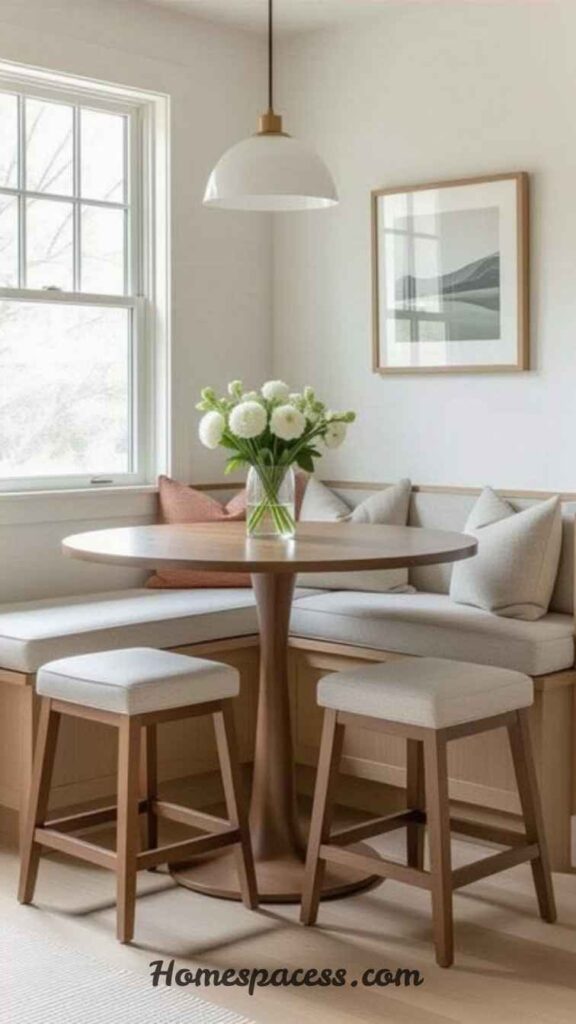
Not every kitchen nook needs to be built-in or permanent. The Scandinavian design philosophy functional simplicity, honest materials, and purposeful use of negative space translates exceptionally well into small breakfast nook setups. The formula: a slim-leg wooden table, two to three stackable or folding chairs, and one pendant light placed low to define the zone without physical walls.
The real innovation in this approach is the concept of “furniture that disappears.” Drop-leaf tables, for example, fold flat against the wall when not in use, recovering floor space for busy mornings. Stackable stools double as side tables or step stools. A wall-mounted fold-down bench eliminates the permanent bench entirely on weekdays, revealing clear kitchen floor space that makes cleaning far easier in compact apartments.
Materially, this style performs best with light-toned woods ash, beech, or birch combined with natural textiles like linen cushion covers and wool placemats. This material palette has strong longevity because it doesn’t chase trend cycles. A Scandinavian-style nook designed in 2020 will look as relevant in 2030 as it does today, making it one of the safest long-term investments in kitchen interior design for those who dislike frequent refreshes.
Eclectic Reading-and-Dining Nook With Layered Personality
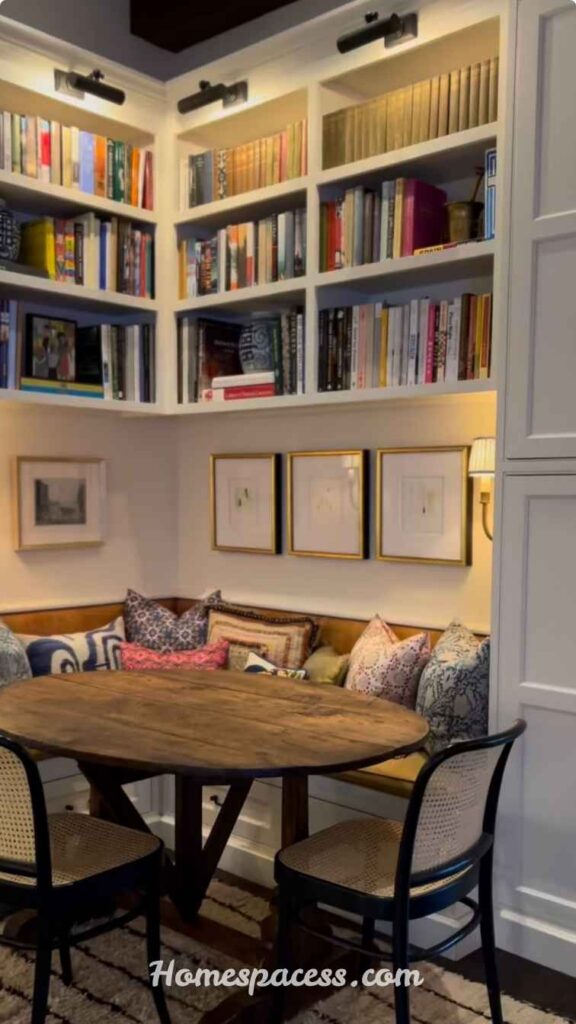
The most memorable kitchen nooks are rarely the most symmetrical they’re the ones that feel curated over time. An eclectic kitchen nook blends mismatched chairs with a single unifying element (color, material, or silhouette), layered textiles, and purposeful objects that tell a story. Think: a dark-stained oak table, two rattan chairs, a vintage pendant, and a gallery wall that starts in the nook and bleeds into the kitchen wall beyond it.
This style works particularly well in kitchens where the nook doubles as a reading corner or slow-morning ritual space. A built-in or freestanding bookshelf integrated at one end of the seating zone turns the nook into a destination rather than just a functional eating area. A small floor lamp provides task lighting for reading without requiring any electrical work, making this the most accessible kitchen nook idea for renters or those who want results without renovation budgets.
The key restraint in eclectic design is pattern discipline. One bold patterned textile cushion, rug, or curtain should act as the anchor, with all other textiles in solid or subtle tones. This prevents visual chaos while preserving the layered, collected feeling that makes eclectic spaces feel personal rather than haphazard. A well-executed eclectic nook is genuinely difficult to replicate, which makes it the most uniquely personal of all kitchen nook styles.
Expert insight:
Hang a small mirror on the wall adjacent to your eclectic nook it reflects natural light deeper into the kitchen and makes the nook feel 30% larger without any structural change.
Conclusion:
A well-designed kitchen nook is one of the highest-return investments you can make in daily home life not because it’s expensive, but because it transforms an underused corner into a space the whole household actually gravitates toward. From built-in banquettes with hidden storage to eclectic reading corners layered with personality, the right kitchen nook idea depends on your space, lifestyle, and how you want the room to feel at 7am on a Tuesday.
The through-line across every style covered here is intentionality. The best nooks aren’t accidental they’re sized correctly, lit warmly, and furnished for how people actually sit, not just how furniture looks in a showroom. Whether you build, buy, or piece things together gradually, start with one good decision: where does the light fall? Let your kitchen nook answer from there.
Trends Analysis:
2026 Kitchen Nook Trends and What’s Coming Next
The kitchen nook has undergone a quiet revolution. In 2024–2025, the dominant trend was the “kitchen as social hub” open-plan living drove breakfast nooks to become multi-use zones serving meals, remote work, homework, and casual entertaining simultaneously. In 2026, the pendulum is swinging toward deliberate cosiness: enclosed, defined nook spaces that offer a psychological counterpoint to the open-plan overstimulation many households now recognize as a real problem.
2026 Trend
Curved banquette seating with arched canopy above
Rising Style
Japandi nook wabi-sabi textures, neutral palette
Material Shift
Reclaimed wood + recycled foam cushions
Tech Integration
Built-in USB-C ports in banquette trim
Color Direction
Deep terracotta, clay, warm sage replacing grey
Future Prediction
AI-integrated nook lighting tied to meal schedules
Looking ahead to 2027–2028, the most significant development will likely be modular nook systems prefabricated banquette kits designed for flat-pack delivery and tool-free assembly, bridging the gap between custom built-ins and generic furniture. Several Scandinavian and Japanese furniture brands are reportedly developing these systems. For consumers, this means custom-looking kitchen nooks at IKEA price points, which will dramatically expand access to well-designed breakfast nook setups beyond the renovation-budget demographic.
Expert Insight
Practical Expert Tips for Designing a Kitchen Nook That Actually Works
The biggest gap between a beautiful kitchen nook in a magazine and one that functions well in real life is ergonomics. Most homeowners focus on aesthetics first and comfort second which is why so many nooks look great in photographs but feel uncomfortable after more than 15 minutes of sitting. The single most actionable rule: always test cushion firmness before committing. Overly soft cushions feel luxurious at first but cause posture fatigue within one meal. Medium-firm cushions rated at 1.8 density foam are the interior design standard for good reason.
- Maintain at least 36 inches between the table edge and the nearest wall or obstacle this is the minimum comfortable exit path for adults.
- Use dimmable pendant lighting positioned 28–32 inches above the tabletop this creates the “restaurant effect” that makes any nook feel intimate and purposefully designed.
- Install a power outlet inside the banquette base (not just nearby) modern families use kitchen nooks as charging stations, and visible cord clutter is the fastest way to undermine an otherwise beautiful space.
- Choose a table with a pedestal base over four legs pedestal tables allow more flexible seating arrangements and avoid the corner-seat awkwardness that four-leg tables create in tight booth configurations.
- Apply peel-and-stick acoustic panels to the wall behind the nook in hard-surface kitchens, echo and reverberation make conversations during meals genuinely tiring.
One underrated expert insight: kitchen nooks benefit enormously from a single overhead anchor point whether that’s a pendant light, a hanging plant, or a flush-mount fixture. Without vertical definition, a nook can feel like an afterthought even with excellent furniture. The ceiling element signals to the brain that “this is a place,” not just a corner with a bench.
Sustainable
Sustainable Kitchen Nook Design: Long-Term Value and Eco-Conscious Choices
Kitchen nooks are one of the most sustainability-positive investments in home design primarily because they convert an unused zone into daily-use space without requiring any structural change. A well-built banquette reduces the need for a separate dining room, effectively consolidating two spaces into one and reducing the total household footprint. In apartment living particularly, this spatial efficiency directly reduces energy consumption per square foot.
Material selection is where sustainability decisions become consequential. Solid hardwood responsibly sourced ash, oak, or maple will outlast particleboard alternatives by two to three decades. A banquette built from FSC-certified solid wood in 2026 is a rational 30-year investment; the equivalent MDF structure will likely need replacement within 8–12 years in a high-use household. The difference in upfront cost is typically 20–40%, but the lifecycle cost of solid wood is substantially lower when replacement and disposal costs are accounted for.
For cushion and upholstery sustainability, recycled polyester fills derived from post-consumer plastic bottles are now widely available and match the performance of virgin foam at comparable price points. Several UK and EU brands now offer repair-and-replace cushion programs where individual seat pads can be recovered without replacing the entire bench structure. This model dramatically extends the usable life of kitchen nook upholstery and reduces textile waste, which is one of the interior design industry’s least-discussed environmental costs.
Future Innovation
The Future of Kitchen Nooks: What Innovation Looks Like by 2030
By 2028–2030, kitchen nooks are expected to become the primary “connected dining zone” in smart homes integrating wireless charging surfaces, embedded ambient sensors that adjust lighting based on time of day, and tabletops made from materials that can display projected information from overhead devices without screens cluttering the space.
The concept of the “hybrid nook” is already emerging in high-end residential design studios. These are nook configurations engineered to shift function during the day: a breakfast nook in the morning, a focused work station from 9–5, and a social dining zone in the evening each mode triggered by lighting changes, furniture repositioning, or integrated technology. While this sounds futuristic, the furniture foundations are already available: height-adjustable table bases, modular cushion systems, and programmable smart lighting make a three-mode nook possible today with existing products.
Perhaps the most disruptive upcoming innovation is acoustic-smart nook design integrating directional microphone arrays and sound-dampening materials into the nook structure to create a “quiet zone” within an otherwise noisy open-plan kitchen. As remote work and hybrid schooling continue to define household routines, the demand for a genuinely quiet, enclosed eating and working nook will drive significant innovation in residential furniture design through the end of this decade.
Common Mistakes
Common Kitchen Nook Mistakes Most Homeowners Don’t Realize They’re Making
The most frequently missed detail in kitchen nook planning: traffic flow. A nook placed incorrectly blocks the path between the refrigerator and the stove creating daily friction that erodes the joy of the space faster than any aesthetic shortcoming.
Overcrowding is the second most common error. The instinct to maximize seating in a nook is understandable, but fitting six seats into a space designed for four means nobody sits comfortably. A rule of thumb from residential designers: calculate 24 inches of table perimeter per seated person as the minimum. Below this threshold, elbow contact during meals becomes a persistent irritant that subtly discourages use of the nook altogether which defeats the entire investment.
A frequently overlooked mistake is ignoring the relationship between nook lighting and kitchen task lighting. Many homeowners install a beautiful pendant over their nook, then discover it conflicts with the recessed task lighting grid above the counters, creating a dissonant, layered brightness that makes the kitchen feel visually restless. The solution is to put the nook pendant on a separate dimmer circuit from the kitchen’s main lighting allowing the nook to be its own warmly lit island while the kitchen operates at task-level brightness during meal preparation.
- Never install a nook bench directly against an exterior wall without checking for condensation risk: in cold climates, uninsulated exterior walls behind cushioned benches can cause mold growth within the bench structure over time.
- Avoid choosing a table that’s too large for the nook zone: oversized tables visually shrink the kitchen and prevent comfortable exit from the seating. When in doubt, size down by one.
- Don’t skip the rug: a defined area rug beneath the nook anchors the zone visually, reduces chair scraping noise on hard floors, and makes the entire composition feel intentional rather than incidental.
- Resist the urge to match all furniture perfectly: a nook where every element is from the same collection feels sterile. One contrast element (different chair material, different table finish) adds the visual interest that keeps a space feeling lived-in.

Team Home Spacess shares simple, practical design ideas that work for real families. The team focuses on cozy décor, soft colors, and natural textures that make a space feel truly lived-in. From everyday decorating tips to creative home projects, Team Home Spacess is dedicated to helping readers create warm, comfortable, and inviting spaces with a fresh and personal touch.