

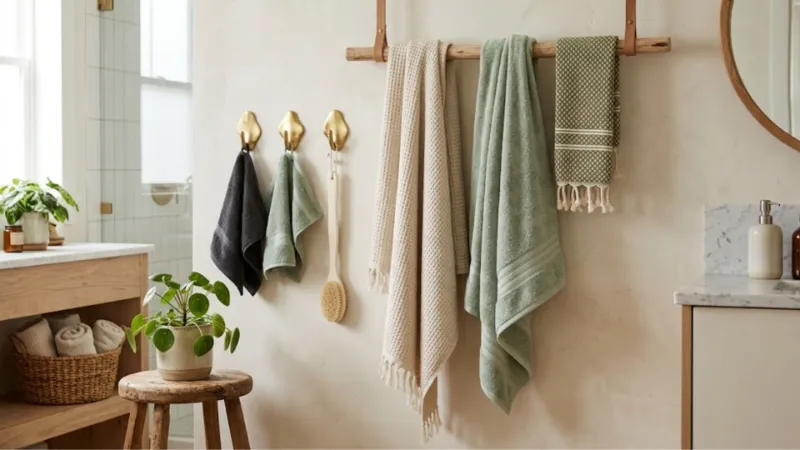
Struggling with damp, cluttered towels? These expert-backed ideas combine style, function, and smart storage for every bathroom size.
Most bathrooms have a towel-hanging problem and most people don’t realize it until a guest arrives. Towels draped over cabinet doors, piled on counters, or shoved through small rings that leave them permanently damp are not just an eyesore. They’re a hygiene issue. Poor bathroom towel Hanging storage means slower drying, bacterial growth, and a bathroom that never quite looks finished no matter how much else you invest in it.
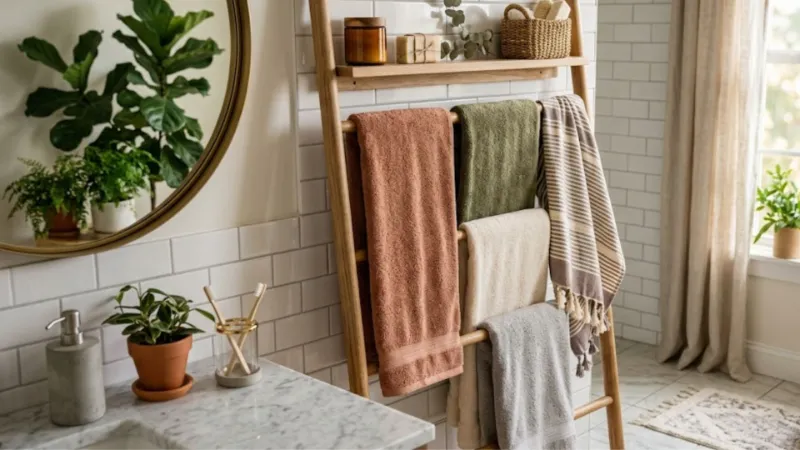
The right towel hanging solution doesn’t require a renovation. Whether you have a tiny powder room or a generous master bath, the ideas below cover every situation with practical, design-forward approaches. From classic towel bars and over-door hooks to ladder racks and heated towel rails, this guide gives you real options with the detail and insight most home-décor articles skip.
Each idea below is built around usability, airflow, aesthetics, and durability the four pillars of a truly functional bathroom towel display. Apply even one of these ideas and you’ll notice the difference immediately.
The Classic Towel Bar: Timeless, Reliable, and Underrated
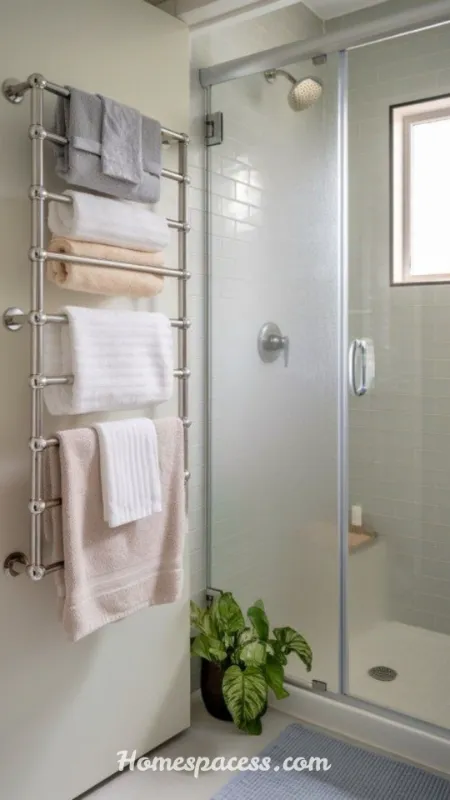
The towel bar is the most common bathroom towel hanging idea for good reason when installed correctly, it outperforms almost every other option for drying efficiency. A standard 24-inch bar allows a bath towel to hang fully open, maximizing the exposed surface area and letting air circulate on both sides. Most homeowners install bars too low or too close to walls, reducing airflow and trapping moisture. Mount your towel rack at least 48 inches from the floor and 12 inches from adjacent walls for optimal results.
Material and finish matter far more than most buyers realize. Brushed nickel, matte black, and brushed brass all offer strong corrosion resistance in humid environments, but only if they’re solid metal not hollow chrome-plated plastic. Premium bars use solid stainless or zinc alloy construction with high-quality plating that won’t flake after 18 months of steam exposure. If you’re choosing between a budget single bar and a quality double bar, always choose the latter. Double towel bars handle two towels simultaneously without overlap, making them practical for couples and families.
A less-discussed benefit of towel bars is their role in bathroom safety. When anchored into studs or with proper toggle bolts, a quality bar can function as a light grab support particularly valuable in bathrooms used by elderly family members. Code-compliant grab bar towel combinations are now widely available, blending ADA-grade structural support with everyday towel-hanging aesthetics. This dual functionality makes the towel bar one of the smartest long-term investments in any bathroom.
Pro Tip:
Mount your towel bar on the same wall as your shower door pull not opposite it. This creates a logical movement flow: exit shower → reach towel → dry off, reducing wet footprints across the floor.
You May Also Like: Bathroom Tile Ideas That Transform Any Space (2026 Guide)
Towel Ladder Rack: Stylish Storage That Works Vertically
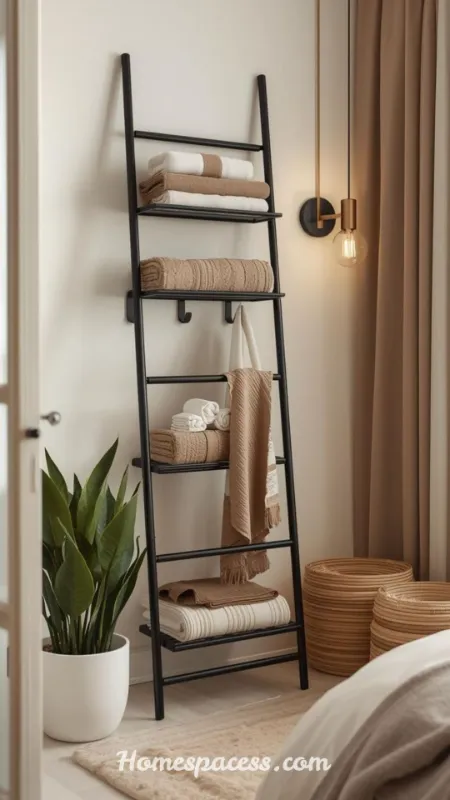
The towel ladder rack has become one of the most popular bathroom storage ideas of the past decade and it deserves its reputation. Unlike fixed wall towel racks, a leaning ladder uses vertical space rather than precious square footage, making it a natural fit for small bathroom towel storage.
A standard ladder holds 3–5 towels comfortably when each is folded once and draped across individual rungs with a few inches of breathing room on each side. Teak, bamboo, iron, and powder-coated steel all perform well, though solid teak is the longest-lasting choice in high-humidity settings.
What competitors rarely mention: the angle of your ladder lean determines drying speed. A steeper lean (closer to 80° from horizontal) keeps towels more open but risks toppling in busy households. A shallower angle around 65–70° offers more stability and still provides good airflow.
Rubber feet on the base are non-negotiable they prevent floor scratching and stop the ladder from slowly creeping outward over time. Tall ladders (over 60 inches) are more versatile, allowing the top rungs to hold hand towels and washcloths while lower rungs hold full bath sheets.
The decorative ladder rack also serves as an instant styling tool. A weathered white ladder against shiplap walls creates a farmhouse-spa aesthetic; a matte black iron ladder paired with white Turkish towels reads contemporary and editorial. For maximalist bathroom decor, you can hang small wicker baskets from the rungs to hold rolled hand towels, loofahs, or even small succulents giving you storage depth within the same footprint.
Pro Tip:
Add a slim tension rod between two rungs at the bottom to create an extra holding space for wet swimwear or small floor towels a genuinely useful hack that costs almost nothing.
Recommended for You: Trendy Funky Bathroom Ideas for a Cool and Modern Bathroom Makeover
Over-Door Towel Hooks: No-Drill Storage Done Right
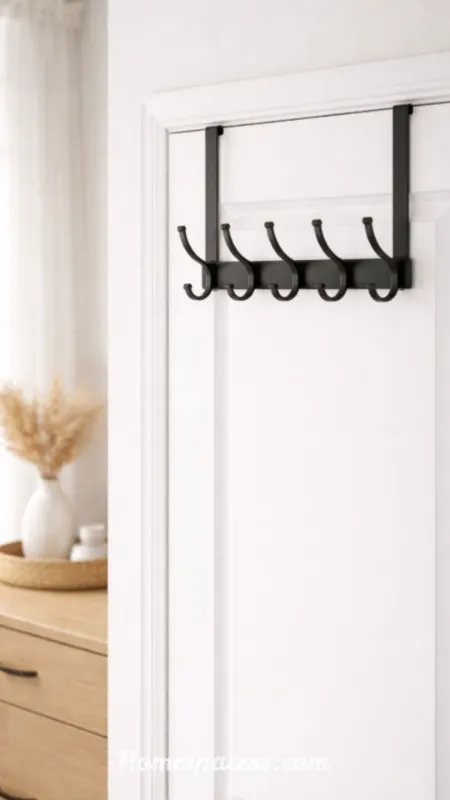
Over-door towel hooks are the most underrated bathroom towel organization solution for renters and those who want zero-damage installation. Modern designs use reinforced steel saddles that distribute weight across the entire door thickness rather than a single contact point, preventing warping even with heavy bath towels. Stainless steel over-door racks with rubberized door protectors now hold up to 30 pounds comfortably more than enough for three or four fluffy bath towels without causing any door damage.
The functional difference between a cheap over-door hook set and a quality one comes down to hook spacing and depth. Poorly designed versions place hooks too close together, meaning towels overlap and never fully dry. Look for designs with hooks spaced at least 4 inches apart and positioned 2 inches outward from the door surface, allowing each towel to hang freely without touching the door paint. Brands offering multi-tier over-door designs give you the equivalent of a towel bar without a single screw an ideal no-drill bathroom towel storage option for apartments.
One frequently missed opportunity: using the bathroom door interior as a secondary display surface. A wide over-door rack with 5–6 hooks can handle daily towels, guest towels, and a hanging toiletry organizer simultaneously effectively turning a blank door into a functional wall. In small bathrooms under 50 square feet, this strategy can eliminate the need for any wall-mounted bathroom accessories entirely, preserving visual openness while maximizing storage capacity.
Pro Tip:
Choose over-door racks with hooks facing slightly upward (not perpendicular to the door). This small angle helps towels slide inward by gravity rather than falling off when the door swings open.
More on This Topic: Bathroom Mirror Ideas to Create a Spa-Like Feel in Your Bathroom
Wall-Mounted Towel Hooks: Minimal Footprint, Maximum Function
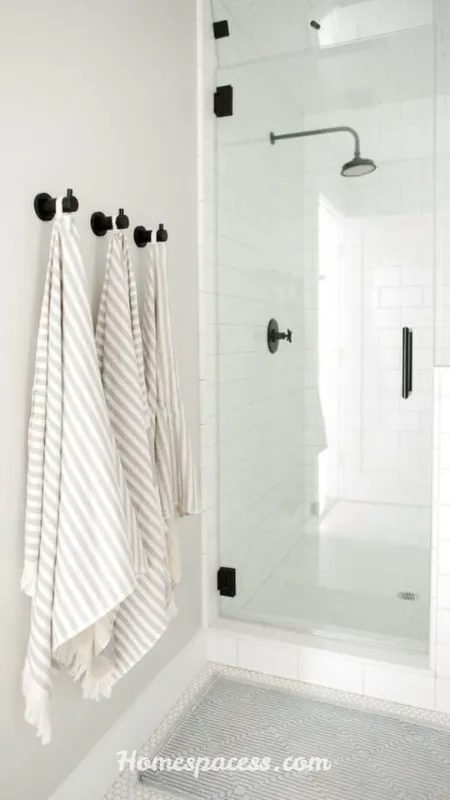
Wall-mounted towel hooks solve a problem most homeowners don’t initially recognize: the gap between what a towel bar offers and what daily use actually demands. Towel bars work beautifully for display, but hooks are how most people actually hang their towels after showering.
A properly sized robe hook or double-arm hook holds a damp towel open enough to dry within a few hours, especially when mounted on a wall with some ambient airflow. Pairing a towel bar for display and hooks for daily use is one of the most practical bathroom towel ideas that most guides never spell out clearly.
Hook placement is a science, not an afterthought. The ideal height for a bathroom hook is between 60 and 66 inches from the floor high enough that towels don’t drag on the floor when draped, low enough to be comfortably reachable without stretching.
For a family bathroom, cluster hooks in groups of 2–3 rather than spreading them across multiple walls, creating a dedicated towel zone that keeps the space organized. Clusters also photograph better for home listings a detail worth considering if you’re improving for resale.
Heavy-duty hooks with articulating arms, sometimes called swing-arm hooks, are a particularly clever upgrade. They fold flat against the wall when not in use and swing outward when holding a towel reducing the visual clutter of empty hooks.
For spa-style bathroom ideas, oversized hooks in brushed gold or matte black add an almost sculptural quality when used consistently. Adhesive towel hooks have also improved dramatically modern VHB (very high bond) adhesive versions hold 15–20 pounds on tile with no drilling required.
Pro Tip:
Mount a row of 4–5 small individual hooks rather than one large multi-hook strip. Individual hooks allow each towel to dry independently, and the layout is easier to adjust or relocate without leaving a wide patch of holes.
See Related Articles: Bathroom Decor Ideas That Transform Any Space
Freestanding Towel Stand: Flexible and Furniture-Forward
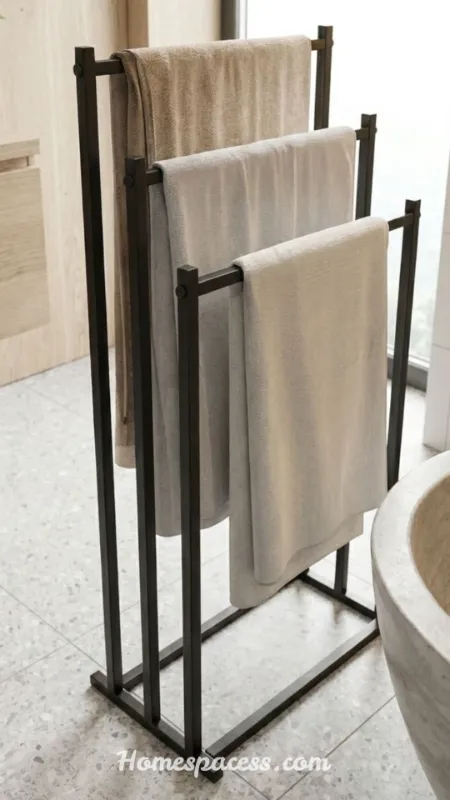
A freestanding towel stand occupies a unique position in bathroom organization it requires no installation but delivers the structural elegance of a built-in fixture. Unlike a leaning ladder, a freestanding stand is fully self-supporting with a weighted base, making it safe around children who might lean or grab for balance. Quality designs in wrought iron, solid walnut, or chrome-plated steel are weighty enough to stay put during casual contact while remaining light enough to reposition for cleaning.
The most functional bathroom towel racks in this category include both horizontal arms and a bottom shelf the arms handle full-sized bath towels while the shelf corrals rolled hand towels, small baskets, or bathroom floor mats. This two-tier design approach delivers dramatically more utility per square foot than a single-purpose stand. When choosing finish, consider how the stand will look when towels aren’t on it a beautifully crafted walnut stand with brass hardware is a genuine bathroom furniture piece, not just a utilitarian fixture.
Interior designers frequently recommend freestanding towel towers for bathroom staging because they’re instantly repositionable and visually assertive without being permanent. This flexibility also makes them the top recommendation for guest bathroom towel ideas you can move the stand adjacent to the vanity for a visiting guest and return it to its usual corner afterward. In open bathroom layouts common in contemporary homes, a well-designed freestanding stand placed near the soaking tub creates a natural functional zone that anchors the space.
Pro Tip:
Place your freestanding stand 18–24 inches from the shower or tub close enough for convenient reach, but far enough that direct water spray doesn’t keep the wood or metal base perpetually damp.
Discover More: Best Spice Racks Ideas to Transform Your Kitchen Storage
Heated Towel Rail: The Luxury Upgrade That Pays Back
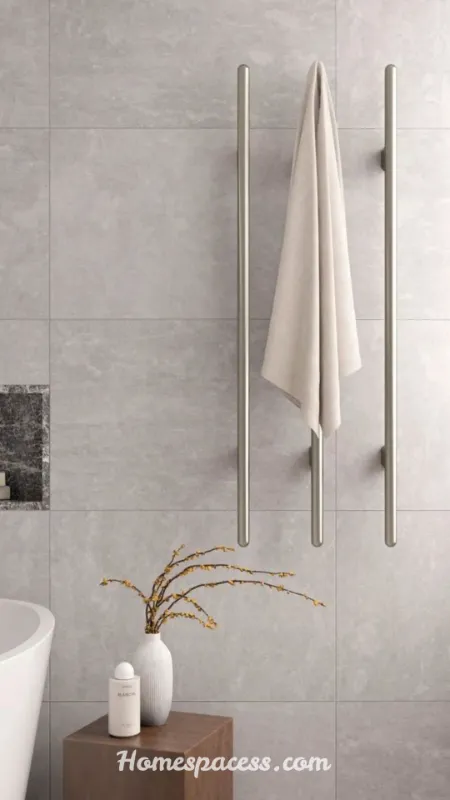
A heated towel rail (also called an electric towel warmer) is the single upgrade that most consistently generates regret from homeowners who delayed installing one. Beyond the obvious comfort of a warm towel post-shower, heated rails offer a practical benefit that most reviews understate: they fully dry a damp towel in 30–60 minutes, dramatically reducing mold-friendly moisture conditions in the bathroom. In climates with high ambient humidity, this alone justifies the investment reducing towel laundry frequency by 30–40% because towels stay genuinely dry between uses.
Installation options span a wide range: plug-in heated towel racks that connect to any standard outlet (no electrician needed), hardwired versions that run on a bathroom circuit, and hydronic versions that tap into your home’s existing hot water plumbing.
For most homeowners, a plug-in towel warmer in the 60–100W range provides adequate heat output for 2–4 towels and costs pennies per hour to run. Programmable timers allow you to set the warmer to turn on 20 minutes before your usual shower time so you’re never waiting for warmth.
From a design standpoint, towel radiators have evolved well beyond their utilitarian origins. Curved chrome rails, matte black ladder-style warmers, and designer finishes in brushed rose gold or gunmetal are now widely available at accessible price points.
Many European-style warmers work simultaneously as space heaters in small bathrooms, particularly in winter, adding meaningful warmth to a cold tile room. When positioned near the vanity, a heated rail also gently warms the ambient air making your entire morning routine more comfortable during colder months.
Pro Tip:
Look for heated towel rails with an IP44 (splash-proof) or IP55 (jet-proof) rating if mounting within 60cm of a shower or tub. The rating isn’t a legal nicety it’s the difference between a safe installation and a serious electrical risk.
Learn More: Beach Bedroom Ideas That Actually Feel Like the Coast
Towel Ring Holder: Compact, Elegant, and Space-Smart
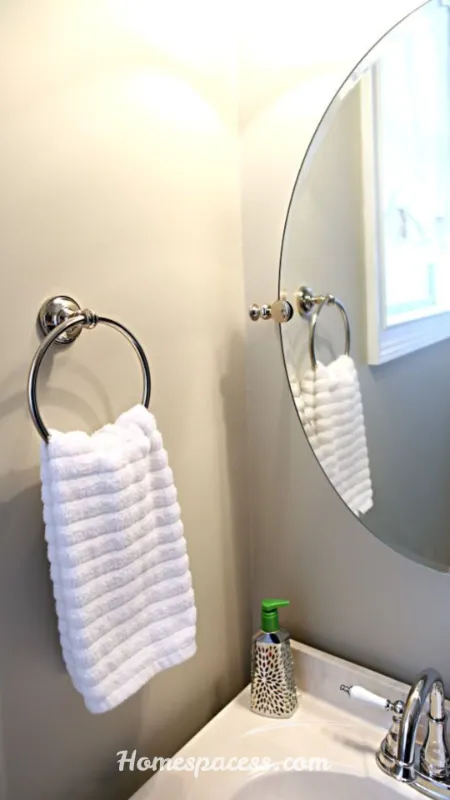
The towel ring is the most space-efficient wall-mounted bathroom towel holder available, and it’s systematically underused in modern bathrooms. A single 8-inch ring positioned next to the sink handles daily hand towels and washcloths with elegance that a full towel bar in the same location can’t match particularly in small bathrooms where every inch of wall space matters.
Quality rings use a solid post with a pivoting arm, allowing the towel to be pulled one-handed without the ring swinging or the towel falling a frustration with cheaper single-post versions that’s solved by a locking or tensioned arm design.
Strategically, the towel ring holder is most powerful when used in combination with other hanging solutions rather than as a standalone. Place a ring beside each sink in a double-vanity bathroom for personal hand towels, and reserve the larger bathroom towel bar for bath towels on the opposite wall.
This zoning approach each fixture serving a distinct function is how interior designers create spa-like bathroom layouts that feel organized rather than cluttered. When rings and bars share the same finish, the layered look reads as intentional rather than mismatched.
For guest bathrooms, a decorative towel ring with an architectural finish think unlacquered brass, oil-rubbed bronze, or matte white elevates a simple hand towel into a design statement. Folding a hand towel with a pull-through fold (the towel looped through the ring with even ends) rather than simply draping it creates the kind of hotel-style towel presentation that guests notice and photograph. This minimal effort in towel display has an outsized effect on the perceived quality of your bathroom.
Pro Tip:
Position towel rings at an angle of 20–30° below horizontal (slightly tilted down toward the front). This natural tilt mirrors how most people reach for a hand towel and reduces fumbling particularly appreciated in the dark during nighttime bathroom visits.
Floating Shelves with Hooks: Vertical Storage Maximized
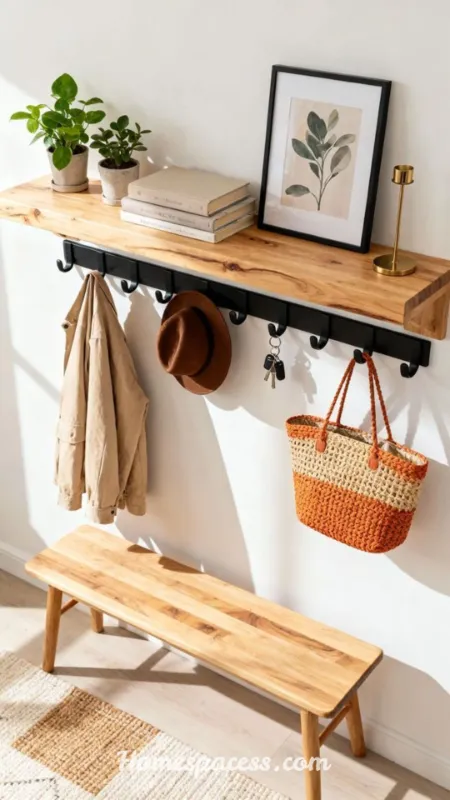
Floating shelves with integrated hooks below them represent one of the most underexplored bathroom storage ideas in this category. The shelf surface handles rolled towels, woven baskets, candles, and bathroom décor; the hooks beneath hold active-use bath towels or robes.
This vertical stacking approach delivers two functional layers in the footprint of one wall fixture. It’s particularly effective in master bathroom ideas where the towel storage needs to serve both decorative and practical roles simultaneously looking polished when guests visit while functioning smoothly in daily use.
Floating shelf materials in bathrooms deserve more scrutiny than most buyers give them. Solid wood shelves expand and contract with humidity, eventually warping if not properly sealed particularly in steamy shower-adjacent walls. The better choices are PVC-core shelves with wood-look veneers, marine-grade plywood with sealed edges, or porcelain tile shelf units built directly into wet walls.
These materials maintain structural integrity and appearance through years of humidity cycling. For open shelves in a bathroom, seal all cut edges and exposed wood grain with 2–3 coats of polyurethane or tile-grout sealer, regardless of what the manufacturer claims about factory sealing.
Hook configuration under floating shelves offers creative flexibility. A continuous S-hook rail attached to the underside of a shelf allows hooks to slide and be repositioned as your needs change a versatile system that outperforms individually drilled hooks in adaptability.
For a modern farmhouse bathroom, combining white-painted wood shelves with black iron S-hooks creates a high-contrast look that photographs exceptionally well and costs far less than a custom built-in unit. Consider adding a small LED puck light under the shelf to illuminate the storage below, turning a functional shelf into a subtle design feature.
Pro Tip:
Install a narrow floating shelf at 72–78 inches (just above head height) in a small bathroom most people never consider this zone. It’s perfect for storing clean spare towels that stay dry and visible without taking up any functional wall space below.
Barn Door Towel Rack: Industrial Style with Real Function
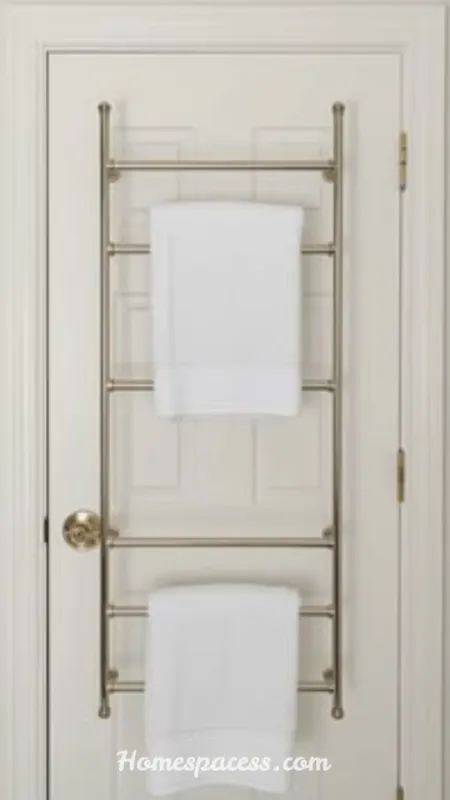
The barn door towel rack adapts the sliding door aesthetic into a wall-mounted towel display and it’s far more practical than its decorative reputation suggests. A standard barn door rack consists of a horizontal wooden or metal plank mounted on sliding hardware, hung from a wall-mounted rail.
Towels drape over the plank and can be slid along the rail to spread out during drying or compressed together when not in use. This sliding mechanism is genuinely useful in narrow bathrooms where a fixed bar would block natural movement paths slide the towels toward the wall when needed, then spread them back out after use.
Construction quality in barn door towel holders varies enormously. The rail hardware is the critical component it must support the plank weight plus wet towels (which can add several pounds). Look for rail systems rated for at least 50 pounds with sealed bearings that won’t rust in bathroom humidity.
The plank itself works best in solid hardwood with a waterproof finish, or in powder-coated steel. Raw wood planks without proper sealing will absorb steam and eventually develop mold a problem that’s invisible until the wood is already compromised from the inside.
From a design language perspective, the industrial bathroom aesthetic that barn door racks naturally evoke pairs beautifully with exposed concrete, black fixtures, and dark-stained wood vanities a combination that’s grown significantly in premium home design.
Beyond aesthetics, the barn door system works effectively as a double-duty display piece: the plank can hold signage, decorative hooks, or a small mirror when not in towel-holding use. This adaptability makes it a particularly smart investment for rooms that serve multiple functions, such as a bathroom that doubles as a laundry room in smaller homes.
Pro Tip:
Install a rubberized stopper at each end of the barn door rail to prevent the plank from sliding off the track during use a small addition that prevents a frustrating (and potentially floor-damaging) accident that most installation guides don’t mention.
Basket and Bin Storage: Rolled Towels as Visual Décor
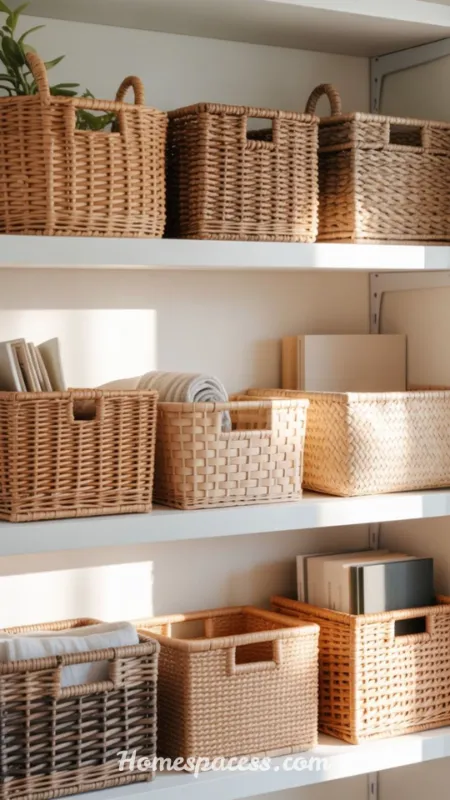
Storing rolled towels in baskets is one of the simplest, most impactful bathroom towel display ideas available and it works in every price bracket. A rolled towel stored in a woven seagrass basket, a wire bin, or a ceramic crock creates immediate visual interest through texture and repetition.
Unlike flat-hung towels, rolled towels display the full surface of the fabric making quality, color, and pattern immediately visible. A basket of white waffle-weave towels reads as elevated and spa-like with essentially zero investment beyond the towels and container themselves.
The basket placement strategy matters considerably. Floor-level baskets create a grounded, earthy look and work well in bathrooms with clean floors and minimal traffic obstacles. Shelf-mounted baskets at eye level or slightly above create a more curated gallery-wall feeling.
For bathroom counter towel storage, small open-top ceramic or brass containers hold a trio of rolled hand towels near the sink a detail borrowed directly from boutique hotel bathrooms that costs almost nothing to replicate. The key is density: a basket that’s loosely filled looks sloppy; a tightly packed basket with 6–8 matching rolled towels looks intentional and abundant.
What most articles miss about towel basket organization: rolled storage actively reduces laundry frequency if you establish a clear front-to-back rotation system. Fresh towels go in the back or bottom; used towels come from the front or top.
This ensures all towels are rotated into use at similar intervals preventing the “five old favorites and twelve never-touched” problem that plagues most bathroom linen collections. Labels inside baskets (even masking tape and a marker) help maintain the system when multiple family members are involved.
Pro Tip:
For the most visually polished rolled towel display, roll toward the finished edge (the hemmed border), not away from it. This brings the decorative border to the front face of each roll a detail that distinguishes a deliberate display from a hasty storage solution.
Recessed Towel Niche: Built-In Storage with Zero Footprint
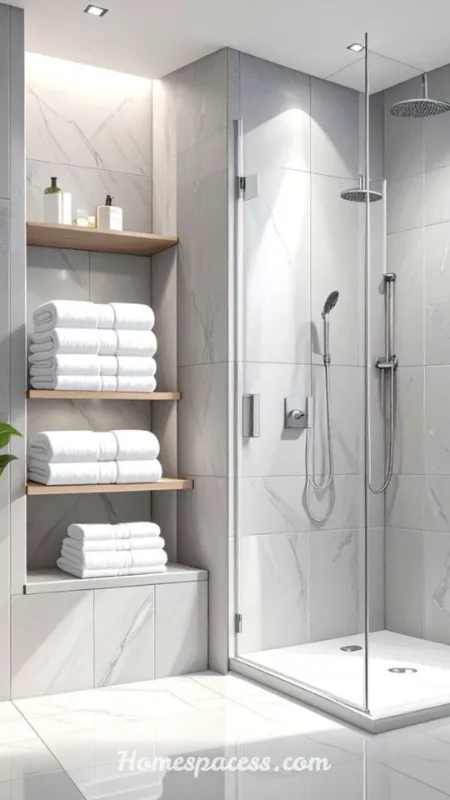
A recessed towel niche a shallow cubby cut into a wall between studs is the most spatially efficient bathroom towel storage idea in any list because it occupies literally zero floor or surface area. Standard stud bays are 3.5 inches deep and 14.5 inches wide, which is sufficient for rolled hand towels and washcloths.
A double stud bay (removing the center stud and properly headering) creates a niche wide enough for folded bath towels or a combined towel-and-toiletry display. This kind of built-in bathroom storage adds meaningful perceived value to a home buyers and appraisers consistently respond positively to built-in organizational features.
The construction details of a towel niche are where most DIY projects fail. Waterproofing the interior is non-negotiable even in walls that aren’t directly adjacent to a wet shower zone, steam and ambient humidity will degrade drywall paper and promote mold inside an unprotected niche within 2–3 years.
Schluter Kerdi membrane, RedGard liquid waterproofer, or Wedi board panels applied to all niche surfaces before tiling solve this problem permanently. Finish the niche with the same tile as the surrounding wall for a seamless built-in look, or use a contrasting material a marble or zellige tile interior in an otherwise neutral bathroom creates a striking focal point.
From an interior design standpoint, a lit towel niche with LED strip lighting underneath the top shelf is one of those details that photographs exceptionally well and feels genuinely luxurious in daily use. Warm-white LED strips (2700–3000K color temperature) create a glow that elevates white towels and makes the niche a visual anchor point in the bathroom.
This bathroom lighting idea costs approximately $15–30 in LED strip tape and a few hours of work one of the highest design-to-cost ratios of any bathroom upgrade available. If you’re already renovating a bathroom wall, investing in at least one recessed niche is almost always the right decision.
Pro Tip:
Before cutting into any wall for a towel niche, use a stud finder AND a handheld inspection camera to check for hidden electrical wiring, plumbing, and ductwork. Structural surprises inside walls are the most common reason DIY niches turn into expensive contractor repairs.
Decorative Towel Display: Turn Towels into Intentional Décor
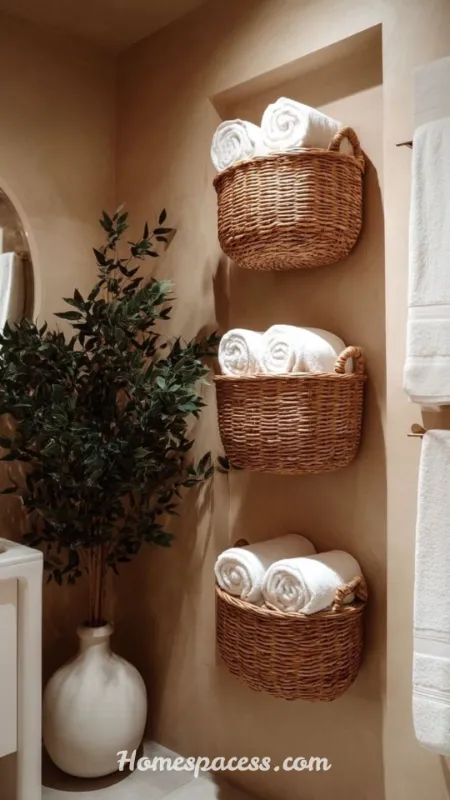
Treating bathroom towel display as a deliberate design choice rather than an afterthought is what separates forgettable bathrooms from memorable ones. A thoughtfully arranged towel display communicates that the entire bathroom has been considered with care.
The fundamentals are straightforward: odd numbers look more natural than even numbers (three rolled towels always outperforms two or four); contrasting textures within the same color family add visual depth without chaos; and vertical stacking of folded towels creates visual height that makes small bathrooms feel larger.
Decorative towel folding techniques used in hotels are surprisingly accessible. The classic bifold drape fold in thirds lengthwise, then in half, then in half again creates a rectangular display block that stores flat and looks intentional. The spa roll rolled tightly from the corner creates a cylinder that fits in baskets and niches cleanly.
For towels hanging on bars, the centered tri-fold (fold in thirds so both finished edges face out equally) creates a symmetrical display that maintains its appearance much longer than a simple drape. These techniques take approximately 30 additional seconds per towel and significantly elevate the perceived quality of your bathroom.
The final layer of a sophisticated bathroom towel styling approach involves accessories. A towel ring with a rolled washcloth tucked through it, a small sprig of eucalyptus draped over a ladder rung, or a linen ribbon tied around a stack of folded towels these details signal intentionality.
For guest bathrooms especially, pre-folded towels with a small amenity bar of soap sitting on top is a direct hotel-sourced hospitality gesture that costs nothing but time. When your bathroom’s towel organization ideas work together as a complete visual system, the result is a space that feels designed rather than assembled.
Pro Tip:
Maintain a “display set” of your nicest towels exclusively for guests and photos and keep everyday towels in a drawer or basket. This simple separation protects your display aesthetic without requiring daily restyling.
Conclusion
The best bathroom towel hanging ideas aren’t about choosing the most expensive fixture they’re about matching the right solution to your space, your habits, and your household’s real needs. From a classic towel bar to a heated rail, from a leaning ladder to a recessed niche, every option here solves a real problem when applied with intention and installed correctly.
A well-organized bathroom isn’t a luxury it’s a daily quality-of-life improvement that takes less time and investment than most people expect. The ideas in this guide give you a clear path from cluttered and damp to organized and elevated.
Start with one change this week. Pick the idea that fits your space best, install it correctly, and notice how quickly it improves your entire bathroom experience. Small improvements, done right, have lasting impact.
Advanced Insights & Expert Perspectives
Trend Analysis: Bathroom Towel Hanging in 2026 and Beyond
The dominant bathroom towel storage trend in 2026 is the convergence of function and sustainability homeowners are actively seeking organic and natural materials over chrome and plastic. Teak, bamboo, and stone-composite towel holders have seen a 40%+ increase in search interest over the past two years, reflecting the broader biophilic design movement filtering into everyday bathroom decisions. Simultaneously, matte and satin finishes continue to outpace polished chrome in new installations brushed warm brass, matte black, and satin nickel dominate premium hardware lines entering the market in 2026–2027.
A quieter but significant trend is the integration of smart heating technology into towel storage. Wi-Fi-connected heated towel rails that tie into home automation platforms like Google Home and Amazon Alexa are seeing accelerating adoption particularly in premium renovations.
The appeal is practical: preheat your towel rail via voice command or automated schedule, track energy consumption via app, and set auto-shutoff timers without manual intervention. These products were a niche market 18 months ago and are now available at mainstream price points from brands like Mysa, WarmlyYours, and Nevo. Within three years, smart bathroom heating accessories are likely to become an expected feature in new construction.
The micro-trend most industry observers are tracking is the growing preference for concealed towel storage in modern minimalist bathrooms drawers, closed cabinets, and flush-panel niches that hide towels entirely from view rather than displaying them.
This counters the open-display approach that dominated 2018–2023 bathroom design and reflects a broader shift toward the serene, uncluttered bathroom aesthetic popularized by Japanese and Scandinavian interior design. The most forward-thinking bathroom organization ideas are increasingly invisible which requires even more careful planning than their visible counterparts.
Expert Insights: What Interior Designers Know About Towel Organization
One of the most consistently overlooked professional principles in bathroom towel hanging is the concept of designated towel zones. Professional bathroom designers almost never place all towel storage in a single location instead, they distribute storage around the room based on functional need.
Hand towels near the sink: bath towels adjacent to the shower or tub exit; guest towels visible near the door. This zone-based approach reduces movement, keeps each towel in its ideal use position, and prevents the crowding that makes bathrooms feel chaotic. Most homeowners place towels wherever there’s available wall space a reactive approach that produces the exact clutter they’re trying to avoid.
Professional designers also apply the rule of three finishes strictly in bathroom hardware selections: choose one dominant finish (usually a neutral like brushed nickel or matte black), one secondary accent finish, and a maximum of one statement piece in a contrasting material.
When towel bars, hooks, rings, and shelves all share the same finish language, they read as a cohesive system rather than a collection of separate purchases. Mixing too many finishes the most common amateur mistake in bathroom accessory selection makes even high-quality individual pieces look cheap by association. This single discipline elevates a budget bathroom more reliably than any single product upgrade.
A practical expert insight that most guides miss: towel bar length should be scaled to towel width, not wall width. The instinct to fill a long wall with a long towel bar produces a chronically half-empty fixture that looks awkward. A well-matched towel bar is 2–4 inches wider than the towels it will hold a 24-inch bar for standard bath towels, a 30-inch bar for oversized bath sheets.
Sustainability & Long-Term Value in Towel Storage Solutions
The environmental impact of bathroom towel systems is rarely discussed in home improvement content but it’s genuinely relevant. Most bathroom hardware is manufactured from zinc alloy with chrome plating, using processes that are chemically intensive and produce waste water requiring careful treatment.
Choosing fixtures made from stainless steel, solid brass, or FSC-certified hardwood typically means a longer product lifespan (15–30 years versus 5–7 years for plated zinc), less replacement frequency, and more responsible raw material sourcing. When calculated over a 20-year period, premium sustainable hardware is often cheaper than replacing budget fixtures every few years both financially and environmentally.
The heated towel rail sustainability debate deserves honest analysis. A 60-watt electric towel warmer running 2 hours daily consumes approximately 43 kWh per year equivalent to about $6–8 annually at average electricity rates. However, users consistently report washing towels 30–40% less frequently because towels stay genuinely dry between uses.
At 4–5 fewer towel washes per month (each at approximately 0.9 kWh for a warm-water wash cycle), the energy balance often comes out ahead of not using a warmer at all and the reduction in detergent, water, and textile wear compounds those savings further. The sustainability case for a quality heated rail is stronger than most people assume.
From a long-term value perspective, the towel storage decisions that age best are those made with spatial flexibility in mind. Hooks that can be relocated, freestanding stands that move between rooms, and shelves with adjustable heights all allow your storage system to evolve with your needs rather than requiring replacement when your household changes.
Built-in solutions like recessed niches have high resale value but low adaptability worth the investment in permanent bathrooms, but a liability in rental properties or homes you’re likely to sell within 5 years. Matching storage permanence to your length of occupancy is a genuinely strategic framework that most bathroom planning guides don’t articulate.
Future Predictions: The Next Wave of Bathroom Towel Storage Innovation
The most consequential incoming innovation in bathroom towel hanging is the integration of antimicrobial surface treatments directly into towel hardware not as marketing language, but as functional chemistry. Silver-ion coatings, copper-infused alloys, and photocatalytic titanium dioxide surfaces are all in commercial development specifically for bathroom hardware applications.
These surfaces actively inhibit bacterial and mold growth on the towel rail itself addressing the core hygiene problem that towel storage creates (damp fabric in contact with a wall-mounted surface for hours at a time). First-generation commercial versions are already available in European markets and will likely reach mainstream availability globally within 2–3 years.
Structural changes in bathroom design itself will reshape towel storage priorities. The ongoing shift toward wet room bathrooms barrier-free shower zones that replace traditional shower enclosures changes the optimal towel placement strategy fundamentally. In a wet room, towels must hang outside the splashback zone entirely, which pushes storage toward the room perimeter and makes corner and door-adjacent solutions more valuable.
As wet room design grows in popularity (currently the dominant trend in luxury bathroom renovations in Europe and accelerating in North America), the entire spatial logic of towel hanging needs updating. Designers who understand this shift are already rethinking bathroom floor plans to include dedicated dry zones with built-in towel storage from initial planning stages.
Perhaps the most speculative but plausible bathroom technology trend involves UV sanitization integrated into towel storage. Several patent filings from bathroom hardware companies describe towel bars with embedded UV-C LED strips that activate during nighttime or non-use periods, sanitizing the towel surface without heat or chemicals. UV-C LEDs have dropped sharply in cost over the past three years, and the application is technically straightforward.
If validated by clinical testing for consumer bathroom conditions, a UV-sanitizing towel bar could address one of the genuine hygiene concerns about bathroom towel reuse particularly relevant for households with compromised immune systems or high pathogen exposure. The technology exists; the remaining question is regulatory and consumer trust.
Common Mistakes in Bathroom Towel Hanging (And How to Avoid Them)
The most widespread mistake in bathroom towel organization is choosing storage capacity based on current household size and ignoring growth or guests. Most people install enough storage for their daily towel needs and immediately run out of space when guests visit, children accumulate more towels, or they upgrade to larger bath sheets that won’t fit on their existing bars.
The professional standard is to install 30–40% more towel storage than your baseline need a buffer that accommodates guests, seasonal extras like beach towels, and the natural tendency of towel collections to expand. Retrofitting additional storage after the fact almost always means suboptimal placement due to whatever wall space remains available.
A less obvious but frequently encountered mistake is installing towel hooks on the back of bathroom doors without accounting for door swing clearance. When the door opens fully against a wall, items hanging on the back of the door can hit the wall or door stop, damaging both the wall and the hooks.
Over-door racks with protruding hooks longer than 3 inches are particularly at risk. Measure your door’s open clearance before any door-mounted storage installation most bathroom doors have 2–4 inches of clearance at most when fully open, which severely limits viable hook depth. This detail causes real damage and is entirely preventable with 60 seconds of measurement.
Finally, the single mistake that produces the most aesthetic damage in bathrooms is mismatched mounting heights across different bathroom towel accessories. Installing a towel bar at 44 inches, hooks at 58 inches, and a shelf at 72 inches on the same wall looks disorganized because the eye has no anchoring horizontal line to follow.
Professional installers establish a consistent mounting height grid typically a primary height (45–48 inches) and a secondary height (60–66 inches) and align all hardware to those two levels. This grid approach, which takes 10 minutes of planning before any drilling begins, creates the visual coherence that makes a bathroom look professionally designed rather than assembled piecemeal over time.

Team Home Spacess shares simple, practical design ideas that work for real families. The team focuses on cozy décor, soft colors, and natural textures that make a space feel truly lived-in. From everyday decorating tips to creative home projects, Team Home Spacess is dedicated to helping readers create warm, comfortable, and inviting spaces with a fresh and personal touch.