

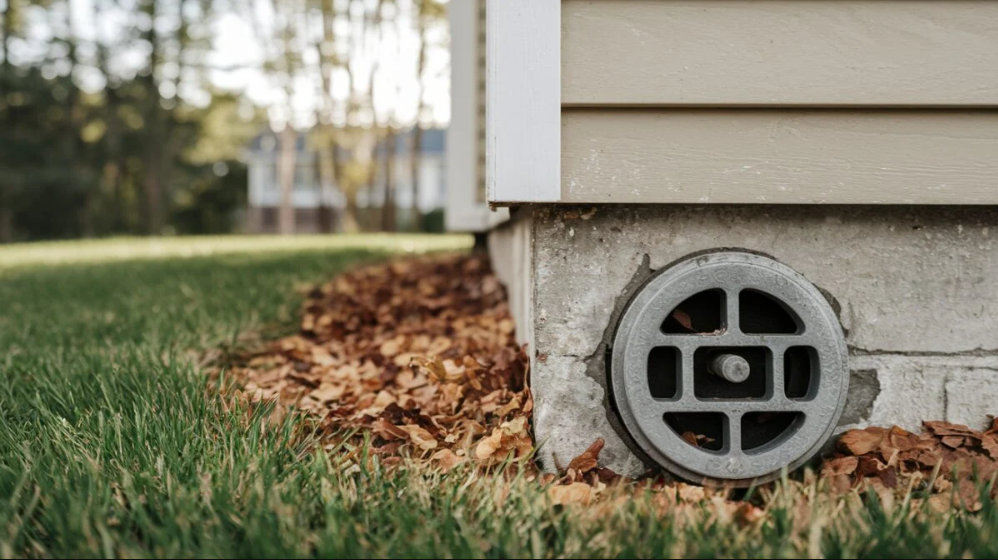
A landscaped yard can look inviting without hiding the plumbing access points a home may need. Sewer cleanouts are one example. These capped openings may clash with flower beds, decorative stone, or a new patio, but covering them can leave a plumber with nowhere convenient to work.
If the sewer line clogs, a plumber may need the cleanout to inspect the pipe or clear the blockage. A cap buried under soil, trapped inside a raised bed, or covered by paving must be found and exposed before the work can start.
Plan for the cleanout before planting or paving. It can be incorporated into the yard without becoming the centerpiece of the design.
Why Sewer Cleanouts Matter in Your Yard
What a Sewer Cleanout Does
A sewer cleanout is an access opening connected to a building’s drainage system. It typically has a removable, sealed cap that allows a plumber to insert inspection cameras, drain-cleaning equipment, or other specialized tools.
Outdoor cleanouts are commonly found along the sewer lateral, which carries wastewater from a building toward a public sewer main. Some properties have multiple cleanouts, while others have access points inside the building.
According to the City of Portland’s Bureau of Environmental Services, cleanouts provide access for sewer inspection, cleaning, root removal, and certain repair procedures. Cleanouts may go unused for years. Recording their location now can prevent a search after shrubs mature or the ground level changes.
Why Plumbers Need Access to Sewer Cleanouts
A blocked sewer line can cause several plumbing fixtures to drain slowly or wastewater to back up into the home. Depending on the location of the blockage, a plumber may use an accessible cleanout to investigate the problem without removing a toilet or opening another part of the drainage system.
If the cap is concealed, workers may spend time locating and uncovering it before diagnosing the blockage. That delay may also mean disturbing newly installed paving or planting areas.
Model plumbing codes address cleanout clearance and access. Under the 2021 International Plumbing Code (Section 708.1.10), cleanouts on pipes 6 inches or smaller generally need at least 18 inches of unobstructed clearance measured outward, perpendicular to the face of the opening.
Section P3005.2.9 of the 2024 International Residential Code has comparable provisions for one- and two-family homes. The locally adopted code and amendments determine which requirements apply.
How to Locate Sewer Cleanouts Before Landscaping
Common Places to Find Sewer Cleanouts
Start near the foundation and follow any documented sewer route, noting capped openings that might be cleanouts.
Outdoor cleanouts may appear as short sections of capped plastic or metal pipe near the foundation, along the route of the sewer lateral, or closer to the property boundary. Some terminate at ground level inside an approved access box.
Look for a round cap, often white, black, or another color associated with the pipe material. However, appearance alone cannot confirm that a pipe is a sewer cleanout. Irrigation and other utility components can look similar.
If you cannot identify the opening, review available plumbing plans or ask a qualified plumber to locate it. Avoid opening unidentified caps or digging around suspected sewer pipes without appropriate precautions.
How Sewer Line Depth and Layout Affect Cleanout Locations
Not every sewer line runs at the same depth. Ground slope, the elevation of the building’s drainage outlet, soil conditions, and the connection to the public sewer can all influence its installation.
This matters when landscaping because the visible cleanout may be connected to a pipe buried considerably deeper. The position of the cap does not tell you how deep the sewer lateral runs through the rest of the yard.
Never assume a pipe is safely below the depth of a planting hole or fence footing. Only a suitable inspection or locating procedure can establish its position with enough confidence for excavation planning.
When to Ask a Plumber for Help Locating Buried Cleanouts
Older properties sometimes have cleanouts that have been covered during previous landscaping work. Soil accumulation, lawn installation, or changes in ground level can make an originally accessible opening difficult to find.
A plumber may be able to review the drainage layout, inspect the sewer through an existing access point, or use specialized locating equipment to identify the route of an underground line.
Consider professional locating before excavating for fence posts, a slab, or a raised bed when the sewer route or cleanout location is uncertain.
After the cleanout is identified, photograph it and measure its position from two fixed landmarks, such as a building corner and a permanent walkway. Keep that record with the landscaping plan.
Landscaping Features That Can Block Sewer Cleanouts
Raised Garden Beds and Dense Plantings
A raised bed can frame a utility-access area, but the bed’s soil and walls should not surround the cap. If the cleanout is under the bed, reaching it may require digging out soil or dismantling the frame. Even a visible cap may be unusable if the wall blocks the direction in which cleaning equipment must enter.
Similarly, a shrub that seems small when planted may eventually fill the working space or conceal the opening. Allow for mature plant size and a clear approach from the nearest practical path. A plumber should not have to uproot landscaping to bring equipment to the cleanout.
Patios, Walkways, and Decorative Pavers
On a patio plan, mark the cleanout before selecting the paver layout or deciding where a concrete edge will go. Concrete poured directly over a cleanout blocks access. Pavers can also conceal the opening if the finished surface lacks a suitable access arrangement.
If paving must cross the location, ask a plumber whether a code-compliant access box or flush cover can be incorporated without blocking the opening.
An access cover is not enough by itself: the cap must still be removable, and service equipment needs room to enter. A cover in a walking or driving area must also be suitable for anticipated loads and installed to avoid a trip hazard.
Retaining Walls, Fences, and Outdoor Structures
Retaining walls, fence posts, pergola foundations, and sheds can interfere with buried plumbing even when they do not cover the cleanout itself. The assumption that sewer lines are buried deep in earth is not a reliable basis for planning excavation because actual burial depths vary. Confirming the pipe’s location and depth before digging helps prevent accidental damage.
Consider a cleanout whose opening faces a retaining wall 12 inches away. Although the cap is visible, the wall would leave less than the 18 inches specified for smaller pipes by the 2021 International Plumbing Code where that provision applies. It could also obstruct a cleaning cable.
Both aboveground clearance and the pipe’s underground route matter when placing walls, fences, or foundations. Have the cleanout and sewer route confirmed before excavation. Structural work near plumbing may also require professional review and local permits.
How to Design Landscaping Around Sewer Cleanouts
Keeping Cleanout Caps Visible and Accessible
A small utility-access area can be finished neatly with surrounding plants or edging, provided the cap stays identifiable and loose material cannot bury it.
Where permitted, an access box may conceal the cap from view while allowing its cover and the cleanout plug to be removed. Check its interior dimensions and access from the approach path, not just its appearance.
Section 708.1.11 of the 2021 International Plumbing Code calls for cleanouts below grade to be extended so the plug is at or above grade. Before raising the finished ground level, ask a plumber to assess the existing installation rather than burying the cap.
Consult a qualified plumber before shortening, extending, or relocating a cleanout. The work must preserve the proper fittings, cap seal, and access and comply with applicable local requirements.
Choosing Plants That Will Not Obstruct Maintenance
Choose low-growing plants that can be maintained without blocking the cap or the route to it. Before planting, compare each plant’s mature spread with the available work area. Keep mulch and stems from accumulating over the cover.
Root behavior also matters near underground sewer pipes. Roots can enter sewer lines through cracks, deteriorated joints, and other defects. The Seattle Public Utilities guidance on side sewer problems identifies root intrusion as a potential issue in damaged sewer systems.
Avoid placing trees or large shrubs directly over known sewer routes without evaluating their mature root systems and the condition of the pipes. There is no single planting distance that guarantees protection for every property.
Planning Garden Beds and Pathways Around Plumbing Access Points
Draw the cleanout and the known sewer route on the landscape plan, along with the bed edges and the approach a plumber would use. For example, if a cleanout sits between the house and a proposed pathway, shift the bed to one side rather than placing the bed’s frame across the opening.
The pathway can run beside the access point instead of over it. In that layout, consider both the route for carrying equipment and the space needed at the capped opening.
A clear line of sight to the cap is not enough if edging, a raised planter, or a narrow gap prevents the cap from being removed or a cleaning cable from being inserted. Adjust the drawing while those features can still be moved without demolition.
Mistakes to Avoid When Landscaping Near Sewer Lines
Covering Cleanouts With Soil or Mulch
A cleanout that is visible after installation can disappear as mulch, compost, or fresh topsoil is added over several seasons. Even a shallow layer can obscure the cap’s edge or make it difficult to turn and remove the plug.
When a landscaper refreshes the beds, show them the cleanout and ask that the access area be kept free of accumulated material.
If the opening is already buried, do not probe blindly with a shovel. Have its position confirmed and the grade or access arrangement assessed.
Installing Permanent Features Over Plumbing Access Points
A planter, storage box, or portable fire pit might seem removable, but it may be heavy, crowded by other features, or hard to shift during a backup.
Leave these items outside the access and equipment route rather than counting on someone to move them during an emergency.
Permanent slabs and masonry are harder to correct. Where one is proposed near a cleanout, confirm before construction that the cap and working clearance will remain usable.
Think about access on an ordinary day as well as in an emergency: a locked gate, narrow passage, or stacked supplies can create a problem even when the cap itself is uncovered.
Digging Without Confirming Underground Utility Locations
Landscaping excavation can damage more than sewer pipes. Irrigation lines, electrical cables, gas lines, and other underground utilities may also cross the work area.
In the United States, homeowners and contractors should contact their local 811 service before digging. The Pipeline and Hazardous Materials Safety Administration explains how the 811 notification process helps participating utility operators identify underground facilities.
However, an 811 request does not necessarily locate privately owned sewer laterals. As Tennessee 811 explains, some customer-owned facilities may not be marked by utility operators.
Before digging, determine whether owner-maintained sewer or other private lines need a separate locating service. An unmarked area is not proof that no buried line is present; follow the applicable notice and safe-excavation rules.
When to Consult a Plumber Before Landscaping
Checking the Condition and Location of Existing Sewer Lines
Routine planting away from known utilities is different from excavating for a retaining wall or laying a patio over an uncertain sewer route.
A plumber’s assessment is particularly helpful when the property has recurring backups, the pipe location is unclear, or the project will disturb soil near the expected sewer path.
A sewer camera inspection can help identify accessible sections of the pipe and reveal certain defects. Depending on the equipment used, a technician may also be able to trace the pipe’s route from aboveground.
Ask whether the project needs a camera inspection to evaluate pipe condition, electronic locating to trace its path, or both. A camera image alone does not establish the pipe’s position on the lawn.
Planning Around Cleanouts That Are Difficult to Access
An existing cleanout may be hard to reach because a shrub has spread across it, the ground has been raised, or a fixed feature now blocks the approach.
Start with what the landscaping can solve: pruning or moving plants may restore usable access without touching the pipe.
If the cap is below grade or trapped by a structure, have a plumber assess the installation before changing the ground surface or removing fittings.
A code-compliant enclosure or plumbing alteration may be possible, but the right choice depends on the pipe’s condition, the surrounding construction, and local approval requirements.
Resolve that decision before installing permanent landscaping nearby.
Considering Professional Cleanout Adjustments
Extending or relocating a cleanout changes the drainage system; it is plumbing work rather than a landscaping shortcut.
The modification must maintain proper fitting orientation, a sealed cap, and access. Depending on local rules, a permit, inspection, or licensed professional may be required.
For example, Seattle Public Utilities identifies repair or replacement of external sewer fixtures, including cleanouts, as work requiring a side sewer permit.
Before authorizing changes, check the building or sewer authority’s current permit, inspection, and contractor requirements.
If the cleanout is already accessible and properly installed, redesigning the landscaping can avoid disturbing a functioning sewer connection.

Team Home Spacess shares simple, practical design ideas that work for real families. The team focuses on cozy décor, soft colors, and natural textures that make a space feel truly lived-in. From everyday decorating tips to creative home projects, Team Home Spacess is dedicated to helping readers create warm, comfortable, and inviting spaces with a fresh and personal touch.