

Asphalt surfaces are everywhere—driveways, parking lots, roads, and pathways. Yet despite their ubiquity, most property owners give little thought to asphalt maintenance until visible damage appears. By then, minor issues have often escalated into costly repairs or full replacements. Understanding the science behind asphalt degradation and the value of proactive care can save thousands of dollars while extending pavement lifespan by decades.
The Hidden Enemy: Oxidation and Water Intrusion
Asphalt pavement consists of aggregate stone held together by bitumen, a petroleum-based binder. When freshly laid, this binder is flexible and water-resistant. Over time, however, exposure to ultraviolet radiation, oxygen, and temperature fluctuations causes the bitumen to harden and become brittle. This process, known as oxidation, creates microscopic cracks that allow water to penetrate the surface.
Water intrusion is particularly destructive in climates with freeze-thaw cycles. When water seeps into cracks and freezes, it expands by approximately nine percent, widening the cracks further. As temperatures rise, the ice melts, leaving larger voids that collect more water during the next precipitation event. This cycle accelerates exponentially, transforming hairline cracks into potholes within a single season if left unaddressed.
Preventive Maintenance vs. Reactive Repair
The economics of asphalt care strongly favor prevention. Sealcoating, crack filling, and regular inspections cost a fraction of what full-depth repairs or replacement demand. According to industry research, every dollar spent on preventive maintenance saves approximately six to ten dollars in future repair costs. Yet many property managers operate on a “fix it when it breaks” mentality, ultimately paying far more over the pavement’s lifecycle.
When searching for quality pavement services, partnering with an experienced asphalt paving contractor in Fort Collins, CO ensures access to both preventive maintenance and expert repair work. Established contractors understand local climate challenges and can recommend maintenance schedules tailored to regional conditions, helping property owners maximize their pavement investment.
Sealcoating: Your First Line of Defense
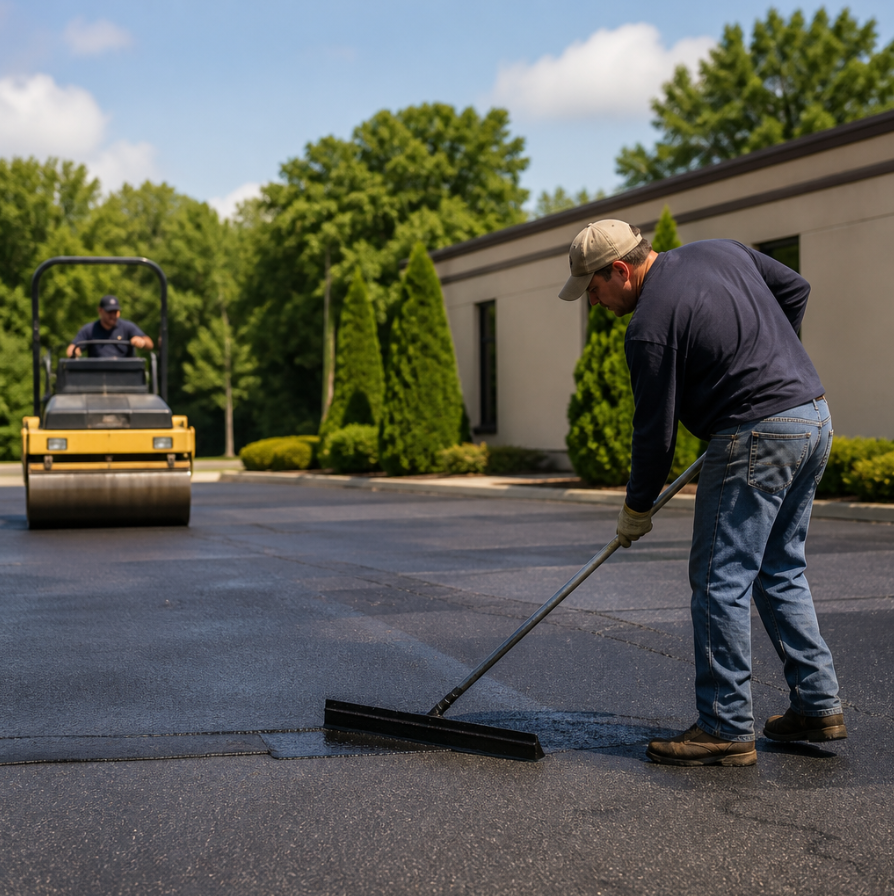
Sealcoating involves applying a protective emulsion layer over existing asphalt. This coating blocks UV rays, repels water, and fills surface voids, effectively slowing oxidation. Industry standards recommend sealcoating every two to three years for residential driveways and more frequently for high-traffic commercial lots. The upfront cost is minimal compared to the extended lifespan it provides—often adding five to seven years to pavement life when applied consistently.
Beyond structural benefits, sealcoating restores the deep black appearance of fresh asphalt, significantly improving curb appeal. For commercial properties, this aesthetic enhancement can influence customer perception and even property valuations during sales or lease negotiations.
Modern Advancements in Asphalt Technology
The asphalt industry has undergone significant innovation in recent years, with new materials and techniques improving both durability and sustainability. Recent developments in asphalt pavement technology include polymer-modified binders that resist cracking, warm-mix asphalt that reduces production emissions, and recycled asphalt pavement (RAP) that diverts waste from landfills while maintaining performance standards.
These advancements benefit both municipal road projects and private property owners. Polymer-modified asphalts, for instance, offer superior flexibility in temperature extremes, making them ideal for regions with harsh winters or scorching summers. Meanwhile, porous asphalt systems allow water to drain through the surface rather than running off, reducing flooding and recharging groundwater supplies—an increasingly important consideration in drought-prone areas.
The Role of Proper Installation
Even the highest-quality materials cannot compensate for poor installation. Proper asphalt placement requires adequate base preparation, correct compaction, and appropriate thickness for the intended load. Shortcuts during installation—such as insufficient base aggregate or inadequate compaction—create weak points that fail prematurely, regardless of subsequent maintenance efforts.
Professional contractors follow engineered specifications that account for soil conditions, drainage patterns, and expected traffic loads. They use laser-guided grading equipment to ensure proper slope for water runoff and employ multi-ton rollers to achieve optimal density. These details, invisible once pavement is complete, determine whether a surface lasts fifteen years or requires repairs within five.
Restoration as a Middle Ground
When pavement shows significant wear but the base remains structurally sound, restoration offers an economical alternative to complete replacement. Techniques such as milling and overlay involve removing the top layer of damaged asphalt and applying a fresh surface course. This approach costs roughly half what full-depth reconstruction demands while providing a like-new surface that extends useful life by ten to fifteen years.
The principle of restoration over premature replacement applies across property maintenance disciplines. Just as roof restoration can extend service life when deterioration is caught early, asphalt restoration maximizes value when implemented at the right stage of pavement decline. The key is conducting regular assessments to identify the optimal intervention point before damage reaches the base layers.
About Professional Asphalt Services
Selecting the right asphalt contractor involves evaluating experience, equipment, and customer feedback. Reputable companies carry proper licensing and insurance, provide detailed written estimates, and offer warranties on their work. They should be willing to explain their process, recommend appropriate solutions for your specific situation, and provide references from similar projects.
Experienced contractors also understand that different applications require different approaches. A residential driveway faces different stresses than a commercial parking lot, and a rural private road differs from a municipal street. Quality service providers tailor their recommendations to match the specific use case, climate conditions, and budget constraints of each project rather than offering one-size-fits-all solutions.
Making Maintenance a Priority
Asphalt maintenance should be viewed as an investment rather than an expense. By implementing a scheduled maintenance program that includes regular inspections, timely crack sealing, periodic sealcoating, and prompt repair of drainage issues, property owners can double or even triple pavement lifespan. The result is lower long-term costs, improved safety, enhanced aesthetics, and preserved property value.
Whether managing a single-family home driveway or a multi-acre commercial complex, the principles remain consistent: protect the surface from oxidation and water intrusion, address minor damage before it spreads, and work with qualified professionals who understand both the science and craft of asphalt care. In doing so, that black ribbon of pavement will continue serving reliably for decades to come.

Team Home Spacess shares simple, practical design ideas that work for real families. The team focuses on cozy décor, soft colors, and natural textures that make a space feel truly lived-in. From everyday decorating tips to creative home projects, Team Home Spacess is dedicated to helping readers create warm, comfortable, and inviting spaces with a fresh and personal touch.