

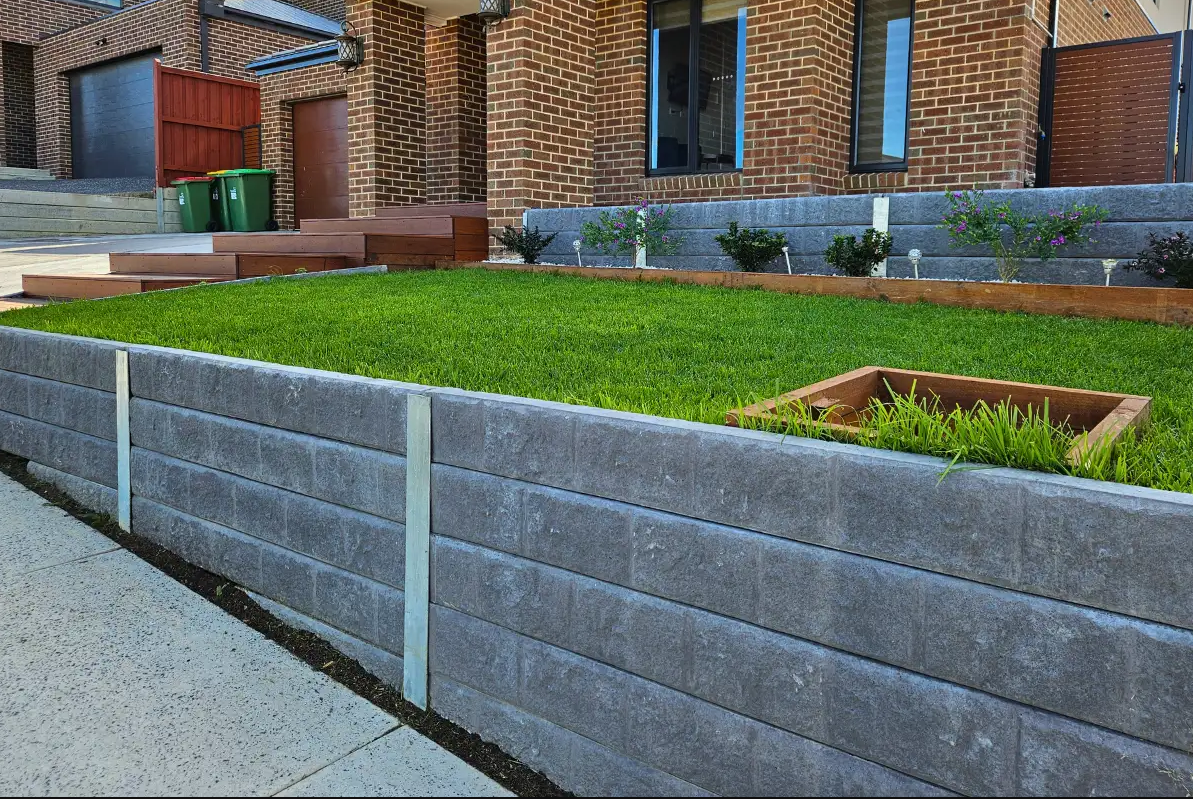
A retaining wall can turn a steep, hard-to-use slope into flat garden beds, a seating area or a level lawn. It can also add structure and texture to a backyard design. But a retaining wall is not just a decorative feature: it holds back tons of soil and water. Getting the hidden parts right matters far more than the stone you see on the face. Here is what homeowners should understand before planning one.
Why Retaining Walls Fail
Most wall failures come down to a few causes:
- Water pressure building up behind the wall after rain or snowmelt.
- A weak or shallow base that lets the wall settle unevenly.
- Too much height for the type of wall or block being used.
- Poor backfill that holds water instead of letting it drain.
Bulging, leaning, cracked blocks and soil washing out at the bottom are all warning signs. The good news is that each of these problems can be prevented in the design stage.
Choosing a Wall Material
Segmental Concrete Block
Interlocking concrete blocks are the most common choice for residential walls. They are designed to stack with a slight setback, come in many colours and textures, and don’t need mortar. They suit both modern and traditional homes.
Natural Stone
Fieldstone, limestone and other natural stone give a timeless, organic look that blends into planting beds. Dry-stacked stone walls drain well but take skill to build so that each course locks in place.
Timber
Treated timber walls cost less up front and work for low garden beds, but wood eventually rots. Expect a shorter lifespan than stone or block.
Poured Concrete
Poured walls are strong and sleek, but they need forms, reinforcement and proper drainage. They are usually a job for a contractor.
The Foundation: What’s Under the First Course
The base is the most important part of any retaining wall. A typical approach is to dig a trench below the first course, fill it with compacted crushed stone, level it carefully, and partially bury the first row of blocks. The right material compacts firmly but still lets water pass through.
Not every gravel works here. Rounded stone rolls and shifts, while angular crushed stone locks together. If you are comparing options, this guide to choosing the right rock base for a retaining wall explains the differences between common base materials and why compaction matters.
Drainage Behind the Wall
Water is a retaining wall’s biggest enemy. A well-built wall usually includes:
- A perforated drain pipe at the base, behind the wall, sloped to an outlet.
- Clean drainage gravel behind the blocks, often about a foot thick.
- Filter fabric between the gravel and native soil to keep fines out.
- Proper grading at the top so surface water doesn’t pour over the wall.
Skipping drainage might save a little time and money during the build, but trapped water is the leading reason walls lean or collapse.
Height, Permits and Engineering
Short garden walls of a few feet are common DIY projects. Taller walls are a different matter. Many municipalities require permits, and often an engineered design, once a wall passes a certain height (frequently around 3 to 4 feet), or if it supports a driveway, structure or slope above. Check your local building department before you start.
For taller or tiered walls, walls near foundations, or sites with heavy clay and lots of water, hiring an experienced installer is usually the safer route. Landscape contractors such as Ware Landscaping typically handle excavation, base preparation, drainage and block installation as one coordinated job, which reduces the risk of a weak link in the system.
Design Ideas That Add Value
A retaining wall can do more than hold back soil:
- Built-in seating: A wall at bench height doubles as extra seating around a patio or fire pit.
- Terraced beds: Two or three shorter walls are often more stable, and more attractive, than one tall wall.
- Integrated steps: Steps set into the wall connect upper and lower levels of the yard.
- Lighting: Low-voltage cap or face lights add safety and evening ambience.
- Planting pockets: Trailing plants softening the top edge help the wall blend into the garden.
Maintenance Tips
Retaining walls need little upkeep when built well. Once or twice a year, check for leaning or bulging, make sure weep holes or drain outlets are clear, pull weeds from joints, and keep downspouts from discharging directly behind the wall.
Final Thoughts
A retaining wall is an investment in both the usability and the look of your outdoor space. Focus on what’s hidden (the base, the backfill and the drainage) and the visible stonework will stay straight and beautiful for years.

Team Home Spacess shares simple, practical design ideas that work for real families. The team focuses on cozy décor, soft colors, and natural textures that make a space feel truly lived-in. From everyday decorating tips to creative home projects, Team Home Spacess is dedicated to helping readers create warm, comfortable, and inviting spaces with a fresh and personal touch.