

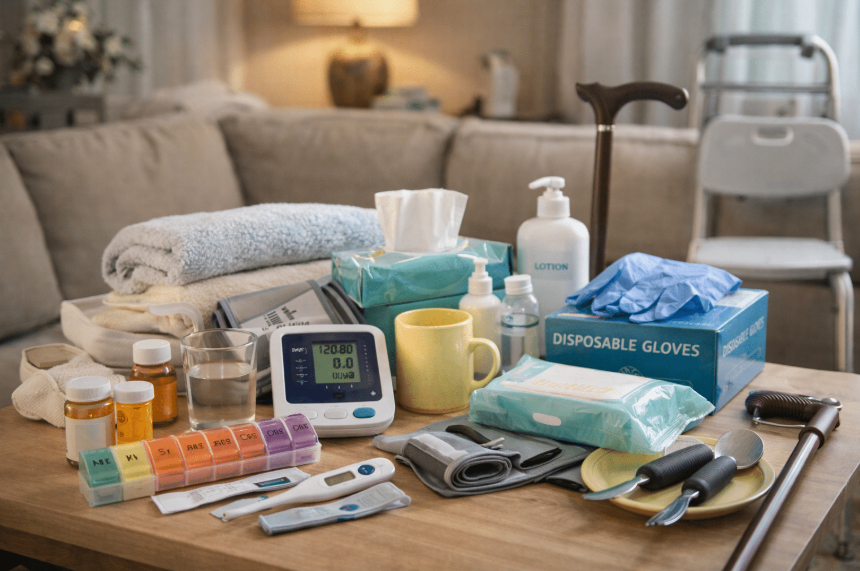
Caregiving is mostly made of small repeated actions: handing over a glass of water, finding the right pill, helping someone stand, changing a dressing, adjusting a pillow. Each one is simple. Together, they can consume an entire day, especially when supplies are scattered across the house and every task begins with a search. The right items, placed in the right spots, remove much of that friction. They reduce falls, cut down on mistakes, and give you back minutes that add up to hours across a week. Equipment does not need to be expensive or elaborate to help. A good lamp, a labeled pill box, and a sturdy chair do more than a drawer full of gadgets. What follows describes the categories of home items that tend to matter most and how to arrange them so the person you care for and you can move through the day with less strain.
Setting Up a Care Station Within Arm’s Reach
The most useful principle in home caregiving is proximity. Items used every day should sit where the care happens, not in a closet down the hall. A small cart, a basket, or a bedside table can serve as a care station that keeps frequently used supplies together.
Think in zones. The bedside needs water, tissues, a lamp, a phone, glasses, and a call bell or alarm. The bathroom needs hygiene supplies and something steady to hold. The living area needs a comfortable chair, a blanket, the remote, and a place for medications and snacks. When each zone has what it needs, the person you care for can often reach things alone, which preserves their independence and spares you constant requests. A small tray or lap desk can turn a favorite chair into a self-contained workspace for meals, puzzles, or paperwork.
Visibility matters as much as location. Clear containers and large labels let anyone in the household find what they need quickly, including a relief caregiver or a visiting nurse who does not know the house. Keep heavy supplies at waist height, rarely used items on higher shelves, and spills or sharp objects well away from walking paths. Reassess the layout every few weeks, since needs shift and a once-convenient spot can become a poor one.
Medication Storage and Organizers That Prevent Mix-Ups
Medication errors are among the most preventable caregiving problems, and good storage is the first defense. A weekly pill organizer with compartments for morning, noon, evening, and bedtime lets you see at a glance whether a dose has been taken. Fill it at the same time each week, with the list of current prescriptions beside you. Large-print labels and color coding help anyone who struggles with small type.
Anyone using “must have items to have as a caregiver” to build a supply checklist should put a reliable medication system near the top. Keep original bottles in a cool, dry place away from bathroom steam and direct sunlight, and store them out of reach of children or confused family members. A locked box is worth considering when a household includes visitors or when certain medications carry risks if misused.
Keep a current written list of every medication, dose, schedule, and prescriber, and update it whenever something changes. A copy in your wallet and one on the refrigerator can help in an emergency. Pharmacies often offer blister packaging and refill reminders, and a phone alarm can cue doses. Ask the pharmacist before crushing pills or mixing them with food, since some formulations are not meant to be altered. Bring the organizer to medical visits so the doctor sees exactly what the person takes.
Mobility Aids, Seating, and Nonslip Protection
Falls are one of the greatest worries in caregiving, and a few well-chosen items lower the odds. A cane, walker, or rollator that fits the user properly should be adjusted to wrist height, and a physical or occupational therapist can confirm the setup. Place the device within reach of the bed and chair so no one tries to stand and walk unaided. Check rubber tips and wheels regularly, since worn parts reduce grip and stability.
Nonslip products pay off quickly. Rubber-backed bath mats, textured strips in the tub, and slip-resistant socks reduce risk on wet or smooth floors. Remove loose rugs, or secure them with grip pads, and tape down cords that cross walkways. Grab bars installed into wall studs offer far more stability than suction-cup versions.
Seating deserves real thought. A firm chair with armrests and a seat height that lets the person rise with minimal effort is safer than a deep sofa. A seat cushion, lumbar support, or a lift-assist cushion can add comfort and make standing easier. For showers, a stable bench and a handheld sprayer let someone bathe sitting down with far less worry about balance. Raised toilet seats and a bedside commode may also reduce risky nighttime trips.
Lighting and Hygiene Supplies That Cut Down on Awkward Moments
Poor lighting causes more trouble than most families realize. Older eyes need more light to see clearly, and dim hallways turn a midnight bathroom trip into a hazard. Motion-activated night lights along the path from bed to bathroom, a bedside lamp with an easy switch, and bright bulbs in stairwells all lower the chance of a stumble. Keep a flashlight within reach of the bed for power outages, and avoid glare from bare bulbs and shiny floors.
Hygiene supplies also deserve planning. Disposable gloves, wipes, barrier creams, incontinence products, a basin, soft washcloths, and extra towels are easier to manage when stored together in a labeled container. A caddy that travels between rooms keeps everything at hand for bathing, dressing, or skin care.
Dignity and comfort go together here. Warm towels, a handheld shower head, a long-handled sponge, and adaptive clothing with easy closures help the person do more for themselves. Among the essential caregiving supplies, hygiene supplies save the most time when stocked before they run out, so check inventory weekly and keep a spare set of everything in a separate spot. Waterproof mattress covers and extra bed linens are worth keeping near the bedroom for quick overnight changes.
Arranging the Day So Nothing Is Out of Reach
A well-organized home needs maintenance. Pick a regular time each week to restock supplies, empty the pill organizer into fresh slots, wipe down surfaces, and test batteries in alarms and flashlights. Rotate stock so older supplies get used first and expired items never linger. Small routines prevent the scramble that happens when something runs out during a difficult moment. A shared notebook near the care station lets family members leave notes about what changed during their shift.
Use this simple review to check your setup:
- Can the person reach water, glasses, phone, and a call device from bed?
- Is the path to the bathroom clear and well lit?
- Are medications stored together, labeled, and current?
- Is a stable chair or bench available where tasks occur?
- Are cleaning and hygiene supplies stocked in a single place?
Adjust as needs change. A person who walks independently today may need a rollator next month, and a household that never needed night lights may suddenly rely on them. Ask doctors, therapists, and home care professionals for recommendations, since they often notice details you may overlook. Their suggestions often cost little and can prevent a fall that would otherwise change everything.
Final Analysis
Good caregiving at home depends less on gadgets than on thoughtful arrangement. Medication organizers, mobility aids, solid seating, bright lights, nonslip surfaces, and well-stocked hygiene supplies each solve a specific problem, and their value multiplies when they sit within easy reach. Safer rooms mean fewer falls, and tidier systems mean fewer errors. Small purchases, sensibly placed, repay themselves in saved time and avoided accidents.
Start with the biggest risks in your own home and add changes gradually. Watch how the day actually unfolds, note where you waste steps or worry, and rearrange accordingly. A calmer, more organized space benefits the person receiving care and the person giving it, and it makes the long stretches of caregiving easier to sustain. Revisit the setup whenever health changes, because the best arrangement is the one that fits today’s needs.

Team Home Spacess shares simple, practical design ideas that work for real families. The team focuses on cozy décor, soft colors, and natural textures that make a space feel truly lived-in. From everyday decorating tips to creative home projects, Team Home Spacess is dedicated to helping readers create warm, comfortable, and inviting spaces with a fresh and personal touch.