


Key Takeaways
- A brief monthly walk-through can reveal leaks, water damage, unsafe outlets, and equipment concerns early.
- Water and electricity require special attention because moisture near electrical equipment can create a serious hazard.
- Homeowners can perform visual inspections and basic upkeep, but hidden leaks, wiring, panels, sewer lines, and major repairs need qualified service.
- Seasonal tasks make maintenance easier to manage and help prepare a home for North Carolina’s changing weather.
- Utility-bill changes and recurring problems are useful signals that a deeper inspection may be needed.
Homes in Youngsville and the wider Triangle face changing conditions throughout the year, from humid summer weather and heavy rain to occasional winter freezes. A practical maintenance routine helps homeowners protect plumbing, electrical systems, indoor comfort, and the property itself before small issues become disruptive repairs.
For problems beyond a visual check, White’s Plumbing and Electrical is the website for White’s Plumbing & Electrical LLC, a Youngsville-based residential and commercial provider serving Wake Forest, Raleigh, Durham, Louisburg, and nearby communities. Its listed plumbing, electrical, leak response, drain, water system, and panel-related services make it a relevant local option when a repair requires trained help rather than a household DIY fix.
Why a Simple Maintenance Plan Works
Preventive maintenance is not about finding a project every weekend. It is about noticing changes while they are still manageable. A drip beneath a sink can damage cabinetry over time. A slow drain can become a recurring blockage. An outlet that feels warm may point to a problem that should not be ignored. Keeping a repeatable schedule helps homeowners act on warning signs before they become emergencies.
Start With a Monthly Home Check
Set aside about 15 minutes each month for a careful walk-through. Bring a flashlight, check rooms where water is used, and pay attention to anything that looks, sounds, or smells different than usual.
- Look beneath sinks and around toilets for dampness, stains, peeling finishes, or musty odors.
- Inspect visible supply lines, exposed pipes, and washing-machine hoses for corrosion, cracking, or swelling.
- Watch for faucets that drip, toilets that run, drains that empty slowly, or sudden pressure changes.
- Check outlets and switches for looseness, discoloration, buzzing, or unusual warmth.
- Test smoke and carbon monoxide alarms according to the manufacturer’s instructions.
- Note repeated breaker trips, burning smells, or unusual sounds near the electrical panel.
Seasonal Tasks That Deserve Attention
Spring
After cold weather, inspect outdoor faucets and exposed plumbing for damage. Test the sump pump if your home has one, look for moisture in the basement or crawl space, and make sure outdoor drainage carries water away from the foundation. Test GFCI outlets in bathrooms, kitchens, garages, laundry areas, and outdoors.
Summer
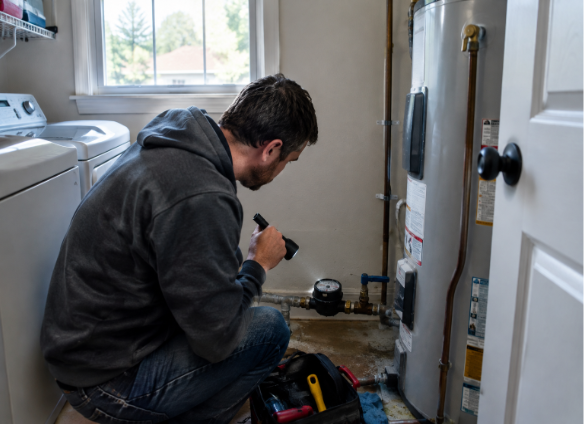
Summer is a useful time to check for water waste. Turn off all water-using fixtures and observe the water meter. Movement can indicate a leak somewhere in the system. Review the water heater for rust, visible leaks, or unusual noises, and inspect ceiling fans, light fixtures, and outdoor receptacles before frequent use.
Fall
Before colder weather arrives, inspect pipes in garages, crawl spaces, and other unconditioned areas. Clear leaves and debris from exterior drains, replace worn appliance hoses, and tighten visibly loose fixture connections.
Confirm that everyone in the household knows the location of the main water shutoff.
Winter
Protect exposed pipes when freezing temperatures are expected. Keep portable heaters clear of curtains, furniture, bedding, and other combustible materials. Never dismiss flickering lights, scorch marks, sparking, burning odors, or breakers that repeatedly trip. These signs call for prompt professional assessment.
Plumbing Warning Signs to Catch Early
A small leak is not always a small problem. Water can travel behind walls, beneath flooring, or into cabinets before the source becomes visible. Watch for ceiling spots, warped cabinetry, peeling paint, mildew odors, low water pressure, and recurring clogs. A meter that moves when all fixtures are off is another reason to investigate.
Homeowners may be able to replace a faucet washer, clear hair from a drain stopper, or clean an accessible aerator. Avoid aggressive chemical drain products, especially when a drain clogs repeatedly. Hidden leaks, damaged supply lines, sewer issues, water damage behind walls, and recurring blockages warrant a professional diagnosis.
Electrical Checks That Should Not Be DIY Projects
Visual checks are useful, but homeowners should not remove a panel cover, alter wiring, or attempt electrical repairs without proper training. Loose outlets, appliance shocks, buzzing switches, scorch marks, sparks, and frequent breaker trips are warning signs. The U.S. Consumer Product Safety Commission’s home wiring hazard guidance reinforces the importance of recognizing unsafe conditions and using appropriate protection in wet areas.
GFCI protection is especially important where electricity and water may come into contact. Test GFCI receptacles using their built-in test and reset buttons, but arrange service if a device will not reset or trips repeatedly.
Remember that a power strip does not add circuit capacity, and extension cords are not a permanent substitute for properly installed outlets.
Improve Efficiency Without Guesswork
Start with maintenance before making major purchases. Repair dripping fixtures, replace heating and cooling filters as needed, seal obvious air gaps around pipe penetrations, and use efficient lighting in frequently used rooms. Water heating can account for a meaningful share of household energy use, so proper temperature settings, pipe insulation where appropriate, and routine equipment service can help reduce waste.
If bills rise without a clear explanation, review the U.S. Department of Energy’s home energy checklist and consider a professional energy assessment. A whole-home review can identify air leaks, insulation gaps, aging equipment, and usage patterns that are easy to miss during a quick inspection.
When to Call a Qualified Professional
- Shut off water, if it is safe to do so, when a pipe bursts, a supply line fails, or water is spreading quickly.
- Do not touch damaged electrical equipment or standing water near electricity. Seek emergency help when there is smoke, sparking, or a burning odor.
- Call a professional when the source of a leak is hidden, or the same drain, breaker, or fixture keeps failing.
- Request a written explanation of the issue, available repair options, expected timing, and safety concerns.
- Verify licensing, insurance, and relevant experience before approving work involving electrical panels, sewer systems, major water equipment, or new installations.
Common Home Maintenance Questions
How Often Should a Home Be Checked?
Perform a short monthly walk-through, add seasonal tasks, and schedule a more detailed annual review of plumbing, electrical, water-heating, and safety systems.
What Can Homeowners Safely Check Themselves?
Safe tasks generally include visual inspections, alarm testing, filter replacement, basic drain-stopper cleaning, identifying shutoff valves, and noting unusual noises, odors, or moisture.
When Is a Small Leak an Emergency?
A leak becomes urgent when water is spreading, entering a wall or ceiling, is near electrical equipment, comes from a pressurized line, or causes visible damage.
Build a Calendar That Fits Your Household
Create recurring phone reminders for monthly and seasonal checks. Keep service records, warranties, equipment ages, and emergency contacts in one accessible location. A modest repair fund can also make it easier to address problems promptly rather than delay important repairs.
Conclusion
A safer, more efficient Youngsville home does not require an overwhelming checklist. It requires regular attention, sensible limits on DIY work, and quick action when warning signs appear. Monthly checks, seasonal care, and qualified support for complex repairs can help protect your home, conserve resources, and reduce the chance of an expensive emergency.

Team Home Spacess shares simple, practical design ideas that work for real families. The team focuses on cozy décor, soft colors, and natural textures that make a space feel truly lived-in. From everyday decorating tips to creative home projects, Team Home Spacess is dedicated to helping readers create warm, comfortable, and inviting spaces with a fresh and personal touch.