
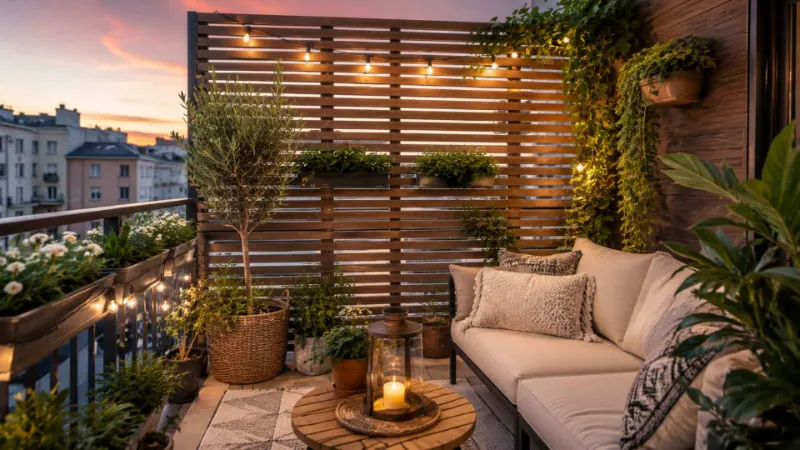
DIY Balcony Privacy Ideas to Upgrade Your Outdoor Space
Balcony Privacy Ideas help create a quiet, stylish, and comfortable outdoor space at home. Many people use screens, plants, curtains, and wood panels for better privacy. These ideas block unwanted views and add beauty to small balconies. Balcony Privacy Ideas also improve relaxation and give a cozy feeling for daily use. A private balcony feels peaceful after a busy day.
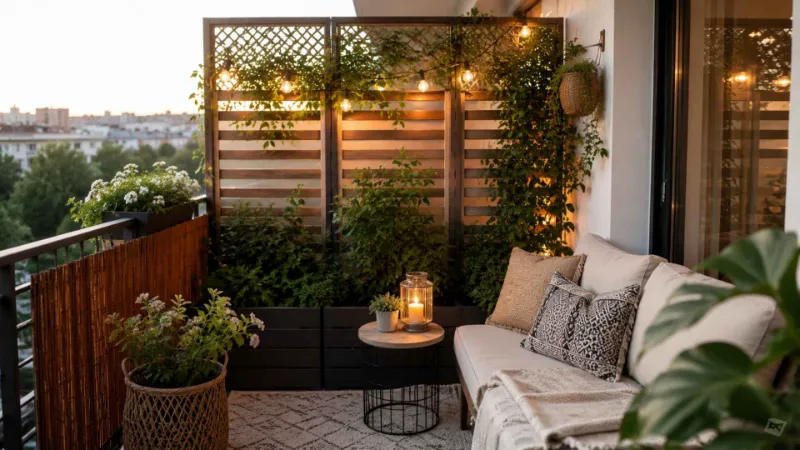
Balcony Privacy Ideas include simple and affordable ways to upgrade outdoor living areas. Natural plants bring fresh air and soft beauty to the balcony. Bamboo screens and outdoor curtains add shade and comfort. Wooden dividers create a clean and modern look. Many homeowners choose stylish privacy options that match their furniture and decor. These ideas improve both appearance and comfort without taking too much space.
Privacy Screens for Instant Seclusion
Privacy screens are one of the fastest and most versatile balcony privacy solutions available today. Available in wood, metal, bamboo, woven polyethylene, and composite materials, they can be freestanding, wall-mounted, or hung from railings making them ideal for renters and homeowners alike. Unlike permanent walls, screens can be repositioned seasonally or swapped out as your design preferences evolve.
What most guides skip is the importance of choosing the right opacity level. Not all screens block 100% of visibility many offer 70–90% blockage, which still allows airflow and diffused light to pass through. This makes them far more comfortable on hot days than a solid wall. For urban balconies with tight wind corridors, a perforated or lattice-style screen prevents that uncomfortable “sail effect” that can topple lightweight screens in gusty weather.
When shopping, look for UV-resistant materials rated for outdoor use. Cheaper PVC screens degrade and discolor within a single season of direct sun, while powder-coated steel or HDPE woven panels can last 10–15 years with minimal maintenance. Brands like Yardistry, Screenguard, and VOUNOT offer quality mid-range options worth considering.
Must Read: Modern Family Room Ideas for Relaxing and Entertaining Guests
a Living Wall or Vertical Garden for Natural Privacy
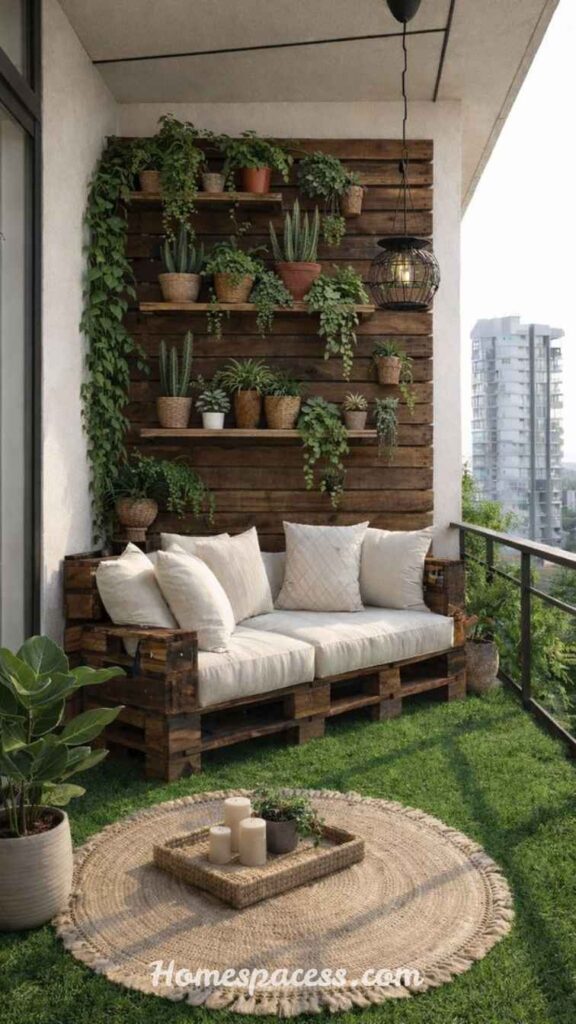
A living privacy wall combines lush greenery with genuine visual coverage and it’s one of the most aesthetically rewarding balcony privacy ideas you can implement. Fast-growing climbing plants like clematis, star jasmine, English ivy, and hops can fill a trellis or wire panel within a single growing season, creating a soft, organic barrier that shifts beautifully with light and breeze.
For balconies in hotter climates, tropical options like bougainvillea or passionflower add color and density simultaneously. The practical key most people miss: always grow climbing plants in deep containers (at least 12 inches) with a robust trellis or tension wire system fixed directly to the balcony railing or wall. Undersized pots stress the root system and limit growth, leaving you with thin, patchy coverage instead of a full green screen.
Beyond aesthetics, living walls improve local air quality, reduce surface temperatures by up to 5°C through evapotranspiration, and attract pollinators turning your privacy solution into a functioning micro-ecosystem. If full climbing plants feel like too much maintenance, mix in evergreen ornamental grasses like Miscanthus in tall planters along the perimeter for low-maintenance year-round density.
Read More: Trending Basement Family Room Ideas for Comfortable Home Living
Outdoor Curtains for Flexible, Stylish Coverage
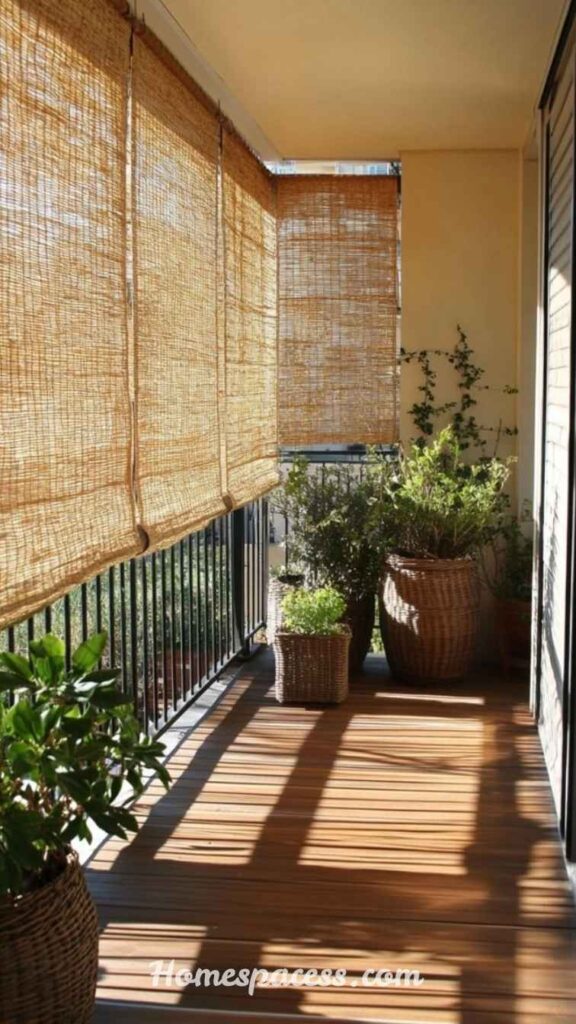
Outdoor curtains are a surprisingly underused balcony privacy idea that delivers both privacy and an elevated aesthetic instantly. Hung from a tension rod, ceiling-mounted curtain track, or a simple cable wire system, weather-resistant curtains let you open up your view on clear days and close off the world completely when you want solitude. This on-demand privacy control is something rigid screens simply can’t offer.
The material you choose matters enormously. Look for solution-dyed acrylic fabrics (like Sunbrella) or polyester blends rated for outdoor use these resist fading, mold, and moisture far better than standard indoor curtains draped outside. Avoid cotton or linen outdoors; they absorb water, develop mildew quickly, and degrade within months. White or light-colored curtains maximize light diffusion, while dark tones absorb heat and create more dramatic seclusion.
One design-forward tip: hang curtains higher than the actual opening and wider than the rail span. This classic interior design principle makes the balcony feel larger and taller a big win for compact urban spaces. Adding curtain tiebacks lets you style the drapes even when they’re open, giving the space a curated, resort-like feel without additional cost.
Also Read Stunning Staircase Decor Ideas for Small Spaces and Narrow Halls
Tall Planter Boxes Along the Railing
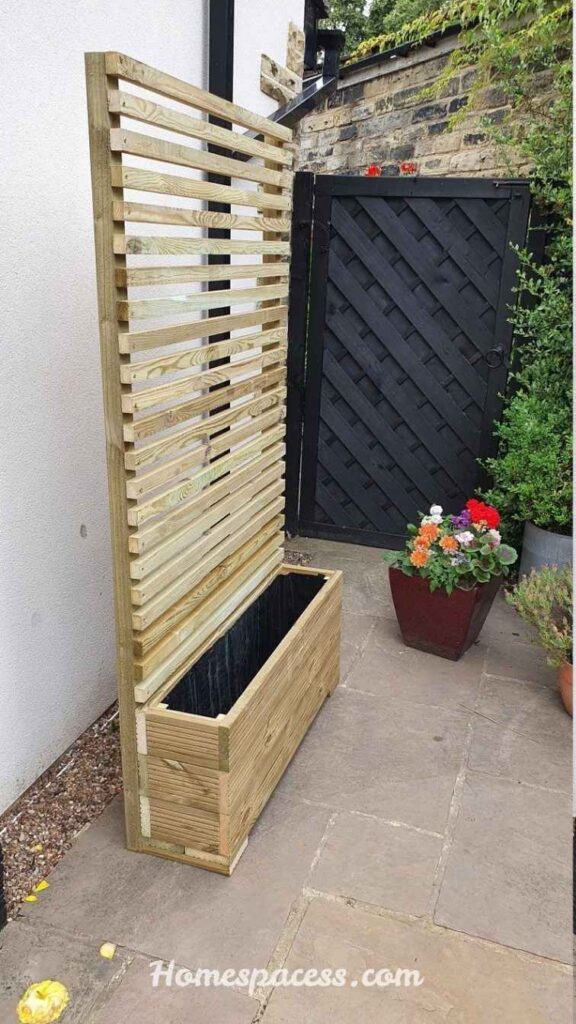
Strategic placement of tall, narrow planter boxes along balcony railings creates a layered privacy barrier that is both functional and design-forward. Unlike a single large plant, a row of tall planters filled with bamboo, ornamental grasses, columnar junipers, or boxwood standards creates a continuous green line that blocks sightlines at eye level from neighboring units or street level.
The critical detail most people overlook is weight. Balconies have structural load limits (typically 40–60 lbs per square foot in residential buildings), and waterlogged soil in large planters is surprisingly heavy. Always use lightweight potting mixes with perlite or coconut coir instead of garden soil, and opt for fiberglass or high-density polyethylene planters rather than terracotta or concrete. Self-watering planter inserts also reduce overwatering and minimize spillage onto lower balconies a common neighbor complaint worth preventing.
For year-round privacy, combine evergreen columnar plants with seasonal bloomers for a dynamic, layered look. For example, a row of slim Sky Pencil hollies provides constant cover, while trailing petunias or calibrachoa at the base add seasonal color. This two-tier planting strategy delivers both year-round privacy and rotating visual interest.
Don’t Skip: Bathroom Mirror Ideas to Create a Spa-Like Feel in Your Bathroom
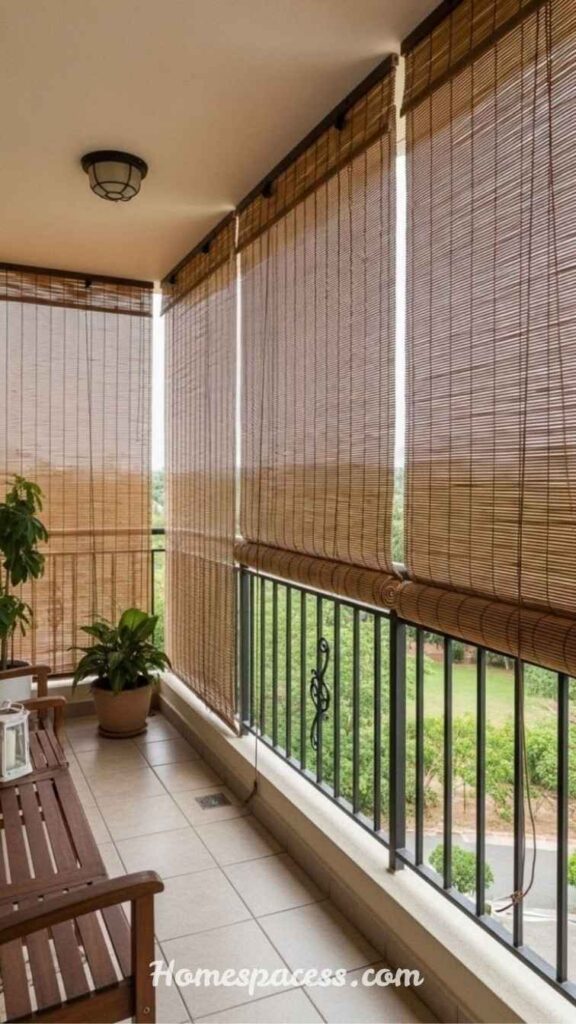
Bamboo or Reed Fencing for a Natural Barrier
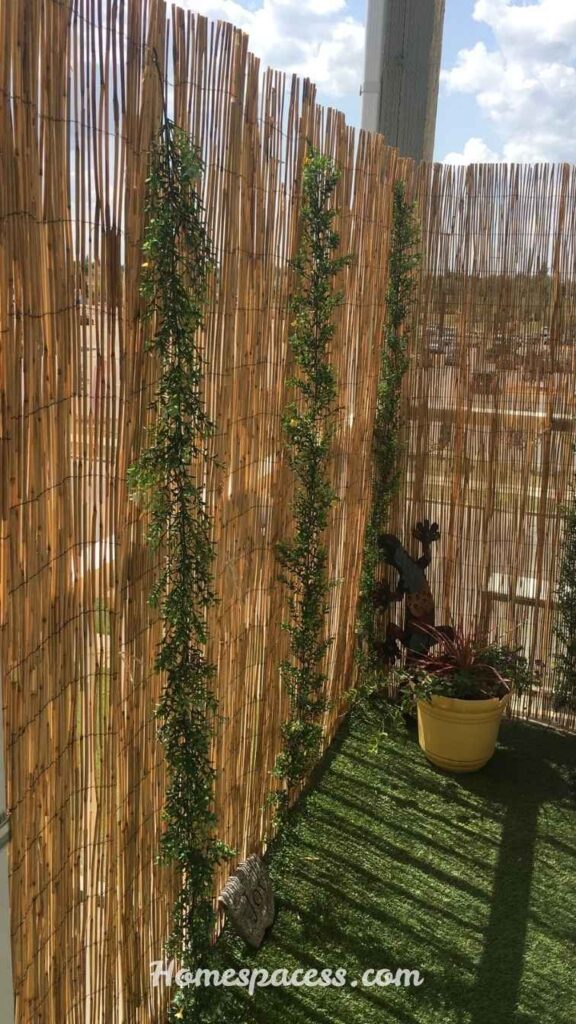
Bamboo and reed roll fencing is one of the most budget-friendly and rapidly installable balcony privacy ideas on the market. A standard bamboo roll (6 ft × 8 ft) can be attached to an existing railing with zip ties or garden wire in under 30 minutes, creating immediate visual coverage with a natural, earthy aesthetic that works beautifully in both modern and rustic design contexts.
However, quality varies wildly. Low-grade bamboo fencing sold at discount retailers often begins to splay, discolor, and deteriorate within 12–18 months, especially in humid climates. Look for panels where the bamboo canes are tightly bound, kiln-dried, and treated with a UV-protective oil coating. Premium options made from Moso bamboo (the same species used in flooring) are notably denser and more durable. Applying a fresh coat of outdoor bamboo oil annually extends panel life by 3–5 years.
One underrated benefit: bamboo fencing creates a pleasant wind-filtering effect. Rather than fully blocking airflow like a solid panel, it disperses and softens breezes, reducing wind noise and turbulence while maintaining comfortable ventilation. This makes it particularly effective for balconies that face prevailing wind directions where solid screens cause uncomfortable pressure differentials.
Create Overhead Privacy with a Pergola or Shade Sail
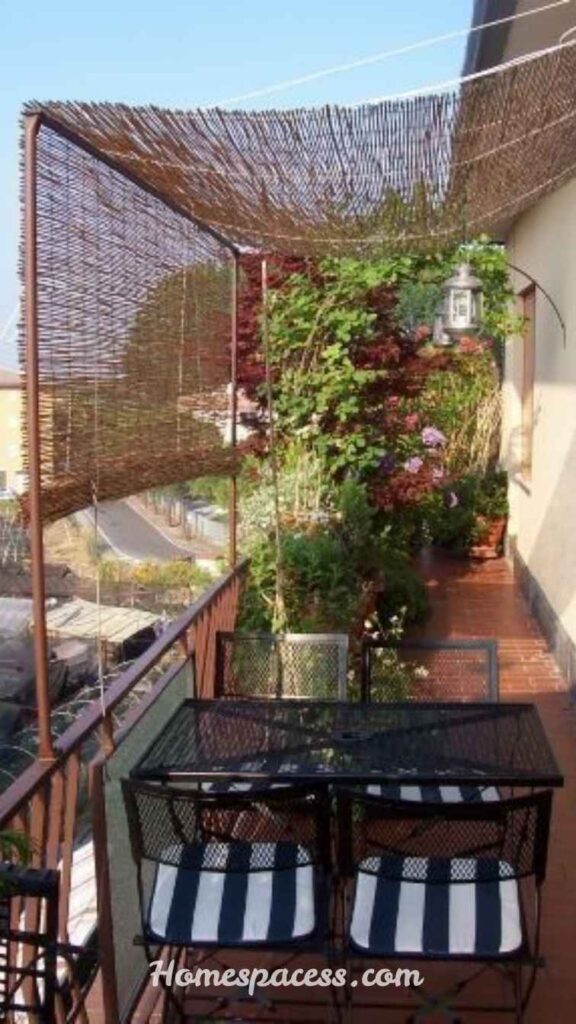
Most balcony privacy discussions focus on vertical screening but overhead privacy is equally important, particularly if you live in an apartment with units stacked directly above you or if your outdoor space is visible from a taller neighboring building. A pergola framework with climbing plants, a UV-stabilized shade sail, or a tensioned fabric canopy directly addresses overhead sightlines that wall-mounted solutions cannot.
Shade sails are particularly popular because they’re lightweight, affordable, and available in a range of opacity levels from 90% UV blockage (near-opaque) to 50% (light filter only). For true privacy combined with weather protection, look for HDPE knitted shade cloth rather than woven polypropylene, which tends to stretch and sag over time. Proper tensioning with stainless steel hardware is critical a poorly anchored shade sail is a wind hazard and a common cause of balcony railing damage.
If your building allows structural modifications, a simple aluminum pergola frame with adjustable louvers (like those from Louvretec or Stratco) represents a premium upgrade that gives you digital control over light and privacy simultaneously. These motorized systems are increasingly popular in high-end residential builds and represent one of the fastest-growing segments in outdoor renovation.
Decorative Trellises with Climbing Plants or Art Panels
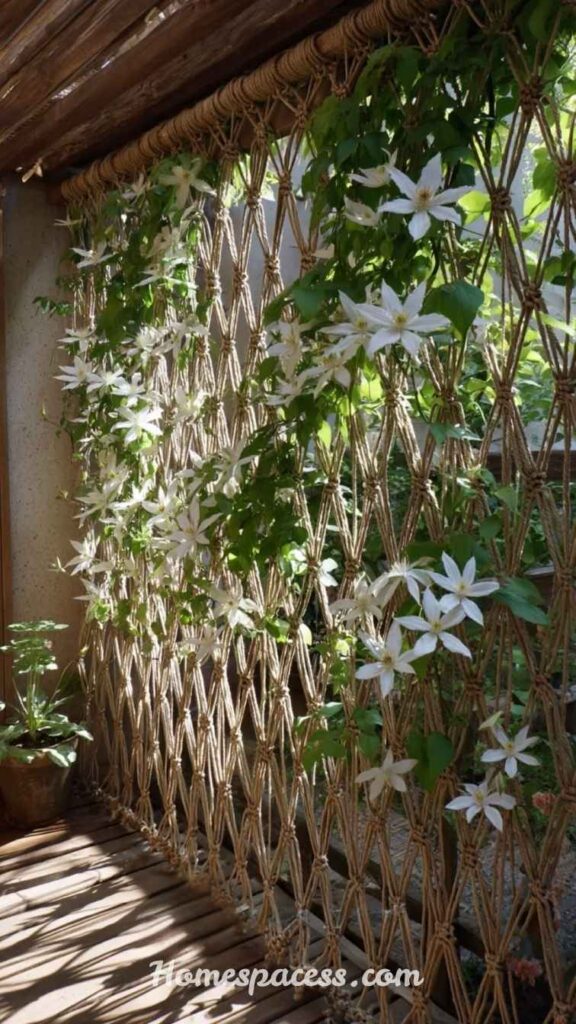
A decorative trellis does double duty as both a structural support for plants and a standalone visual privacy element. Laser-cut metal trellises in geometric, botanical, or abstract patterns create a sophisticated screen effect even before any plants grow in making them effective from day one, unlike a bare wire panel waiting for vines to fill. Combined with climbing plants like climbing hydrangea, mandevilla, or wisteria, they become increasingly private over time without losing their design character.
Art panels powder-coated corten steel, porcelain tile mosaic inserts, or handcrafted timber screens represent a newer category emerging from the luxury outdoor design space. These are essentially wall art that also functions as a privacy barrier, and they’re gaining traction in urban architecture and small-space design globally. While the upfront investment is higher (typically $150–$600 per panel), their durability and visual impact far exceed most soft-screen alternatives.
For maximum versatility, choose modular trellis systems where individual panels can be added, rearranged, or replaced. This approach future-proofs your investment you can expand coverage as needed, change the configuration when you move, and swap in new art panels as your taste evolves. Several companies now offer customizable outdoor panel systems specifically designed for apartment balconies with standard railing widths.
Conclusion
Balcony Privacy Ideas can change a simple balcony into a peaceful and stylish outdoor space. Small changes like curtains, plants, and wooden screens improve comfort and beauty. These ideas help create more privacy and make daily relaxation better for families and apartment owners.
Many Balcony Privacy Ideas are affordable, easy to use, and perfect for small spaces. A private balcony feels calm, cozy, and more inviting every day. Smart designs also increase the value and appearance of your outdoor area in a simple way.
Trends Analysis
The balcony privacy space is evolving rapidly in response to the global rise of high-density urban living. In 2026, two dominant trends are reshaping the market: biophilic privacy design and smart adaptive screening. Biophilic design integrating living plants, natural materials, and organic textures into privacy solutions has moved from a niche aesthetic preference to a mainstream specification in new apartment developments. Architects are now designing buildings with pre-installed trellis infrastructure and irrigation systems on every unit balcony, anticipating resident demand for green privacy from day one.
On the technology side, motorized louvered privacy systems are entering the mid-market after years of being limited to luxury builds. Products combining app-controlled aluminum louvers with solar-powered actuators are now available for under $2,000 for a standard-sized balcony a price point that’s attracting mainstream adoption. These systems can adjust dynamically based on sun angle, wind speed sensors, and even calendar-based privacy schedules.
Looking forward to 2027–2030, expect to see photovoltaic privacy screens enter the residential market panels that simultaneously provide privacy, shade, and low-level energy generation for balcony lighting or device charging. Pilot installations already exist in Germany and Japan, and material costs are declining fast enough to suggest commercial availability within three to five years.
Expert Tips
Interior designers and landscape architects who specialize in small outdoor spaces consistently identify the same missed opportunity: most people under-invest in height and over-invest in width. A 4-foot screen at railing height stops very little sightline when neighboring units are at the same floor level the eye-level gap remains fully exposed. The practical fix is to always aim for privacy solutions that extend at least 6 feet above the balcony floor, using extensions, tall planters, or overhead elements to close the upper gap.
Another expert insight frequently overlooked in DIY advice: color and pattern selection dramatically affects perceived privacy. Dark-colored screens, curtains, and panels create a visual “void” effect from outside, making it genuinely harder to discern movement or shapes behind them even when they’re not technically 100% opaque. This is the same principle used in one-way window films. Choosing charcoal, forest green, or deep navy for your privacy materials adds approximately 15–20% more effective visual shielding compared to white or beige at the same opacity rating.
For renters who can’t make permanent changes, a professional tip is to use tension-based modular systems that work within railing channels or rely entirely on pressure, weight, and cable tension rather than fixings. These can achieve near-permanent stability without drilling or adhesives, satisfying most lease agreements while still delivering robust privacy coverage.
Sustainability and Long-Term Value
Choosing sustainable balcony privacy materials is no longer just an ethical decision it’s a financially smart one. Natural and recycled materials have significantly closed the price gap with cheap synthetic alternatives, while offering substantially longer service lives. FSC-certified timber trellises, for example, cost roughly 20% more upfront than untreated pine but last 3–4 times longer with basic annual oiling. When calculated over a 10-year period, the sustainable option costs less in total.
Living privacy solutions vertical gardens, climbing plants, and planter-based barriers offer compounding environmental value over time. A mature climbing plant wall can reduce the thermal load on adjacent glass doors and windows by up to 30%, meaningfully reducing cooling energy demand in summer months. For apartment residents in hot climates, this translates directly to lower electricity bills. Cities like Singapore and Melbourne are actively incentivizing green wall installation on private balconies through rebate programs precisely because of this measurable urban heat island mitigation effect.
From a property value perspective, landscaped and privacy-enhanced balconies consistently outperform unimproved equivalents in the rental and resale market. Real estate data from the UK and Australia shows that well-presented outdoor spaces including private, usable balconies can add 5–10% to a property’s perceived value during appraisal. Investing in quality balcony privacy solutions is therefore not just a lifestyle upgrade it’s a measurable return on investment for property owners.
Future Innovations
Several emerging technologies are set to redefine what’s possible in outdoor privacy design. Electrochromic glass panels which switch from transparent to opaque at the touch of a button are already appearing in commercial buildings and high-end residential developments. As manufacturing scales up and prices fall, expect privacy glass panels suitable for balcony railings and screens to reach the prosumer market within five to seven years.
Modular green wall systems with integrated drip irrigation and nutrient monitoring represent another imminent innovation. Companies like Mobilane, ANS Group, and Verti Garden are already deploying these in commercial contexts, and residential-scale versions are in development. These smart systems will allow homeowners to maintain a lush living privacy wall with near-zero manual intervention, monitored via smartphone solving the biggest barrier to adoption for plant-based privacy: maintenance anxiety.
Perhaps the most forward-thinking development is the emergence of privacy-as-a-service models in purpose-built apartment developments. Some developers are experimenting with subscription-based modular privacy panel systems installed and maintained by the building management team a model that removes the DIY burden entirely and provides consistent, curated privacy aesthetics across a building’s exterior. This concept, currently piloted in Singapore and Dubai, could become a standard amenity offering in premium urban residential buildings globally by 2030.
Common Mistakes
The single most common mistake is choosing aesthetics over structural reality. A beautiful heavy stone planter or cast-iron screen that exceeds your balcony’s weight limit is not just a wasted investment it’s a genuine structural and safety risk. Always check your building’s maximum load capacity (usually found in the building’s strata or HOA documentation) before purchasing any large planters, furniture, or screen systems. When in doubt, consult your building manager or a structural engineer.
A second frequently overlooked error is installing privacy solutions that solve one sightline problem while creating another. For example, a low trellis along the front railing blocks street-level views perfectly but does nothing to prevent sightlines from the adjacent unit on the same floor. Before purchasing anything, spend 10 minutes standing on your balcony and identifying every direction from which you can be seen. Photograph those sightlines and use them as a brief when choosing solutions.
Finally, many people fail to account for seasonal changes in natural screening. A beautiful hedge or climbing plant that provides perfect privacy in summer may drop 80% of its leaves in winter, leaving the balcony fully exposed for four months of the year. This is a critical planning gap in temperate climates. The solution is to combine deciduous plants with at least one evergreen element whether a hardy evergreen climber, a solid screen panel, or a row of year-round ornamental grasses to ensure your privacy coverage is genuinely consistent across all seasons.
Aliza Noor founded Home Spacess to share simple, practical design ideas that work for real families. She focuses on cozy décor, soft colors, and natural textures that make a space feel truly lived-in. Based just outside Toronto, Aliza spends her days juggling family life, experimenting with home projects, tending to her plants, and occasionally moving things around just to create a fresh vibe.


