

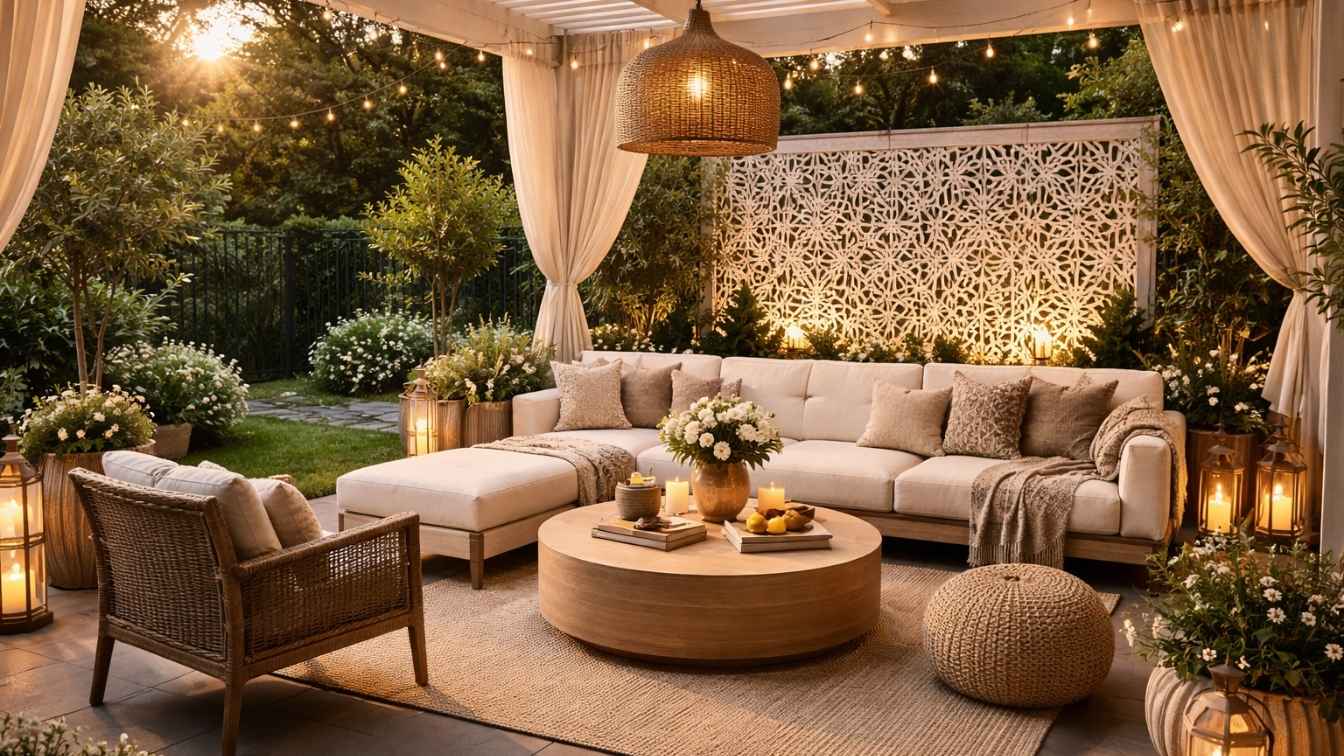
Most terraces are an afterthought a slab of concrete with a couple of plastic chairs. Yet a well-designed terrace can add up to 15–20% to a home’s perceived value, extend your usable living space by hundreds of square feet, and become the room your family uses most. The problem? Most homeowners don’t know where to start.
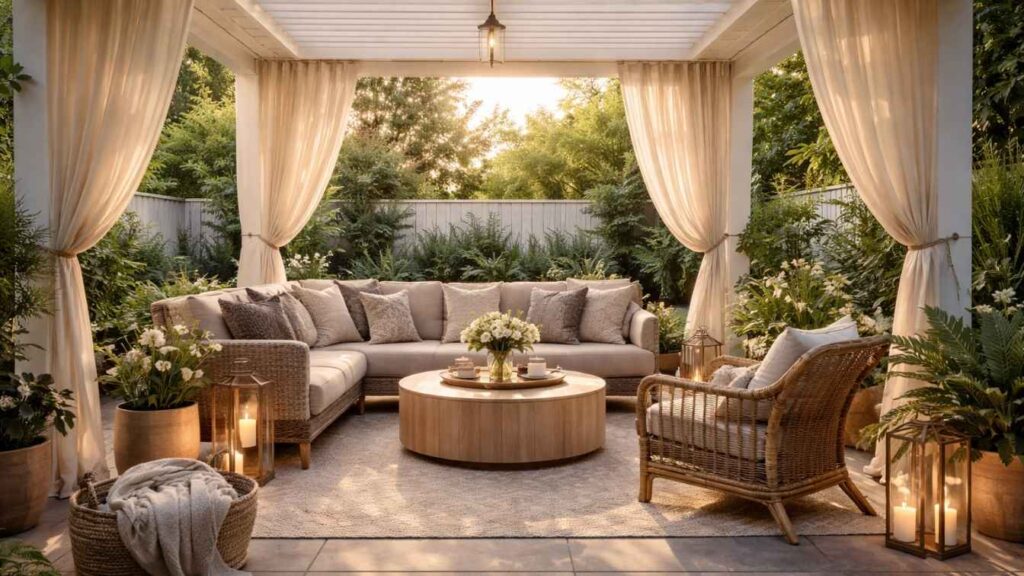
Whether you have a compact city rooftop, a sprawling suburban deck, or a hillside balcony with a view, the right terrace design ideas can completely reshape how you live outdoors. In this guide, we cover 10 high-impact design ideas each grounded in real-world application followed by expert trend analysis, sustainability strategies, and the mistakes that trip up even experienced renovators.
Define Functional Zones for Living and Dining
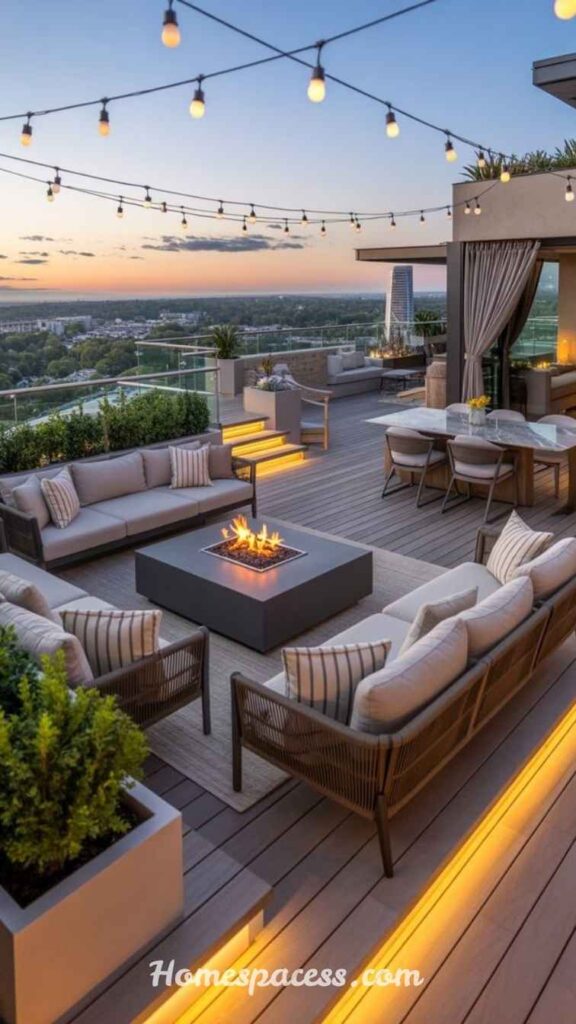
One of the most powerful terrace design ideas and one of the most overlooked is creating distinct activity zones. Rather than scattering furniture randomly, divide your terrace into purposeful areas: a dining zone, a lounging zone, and perhaps a small preparation or bar zone. Zoning doesn’t require walls; it requires visual anchors like area rugs, planters, or a slight change in flooring material.
For example, a 4m × 6m terrace can comfortably host a 4-seater dining table on one end and a low sectional sofa with a coffee table at the other separated by a line of potted olive trees. This separation makes the space feel twice as large because each zone has a clear purpose. Without zones, even a spacious terrace feels cluttered and disorganized.
Expert Insight:
Define zones before buying any furniture. Sketch your terrace to scale and assign each zone a minimum of 40% of total space for the primary use (lounge or dining). Avoid allocating equal space to each function one zone should always be dominant.
Must Read: Swimming Pool Design Ideas: Expert Concepts That Transform Any Backyard
Layer Greenery Vertically to Maximize Impact
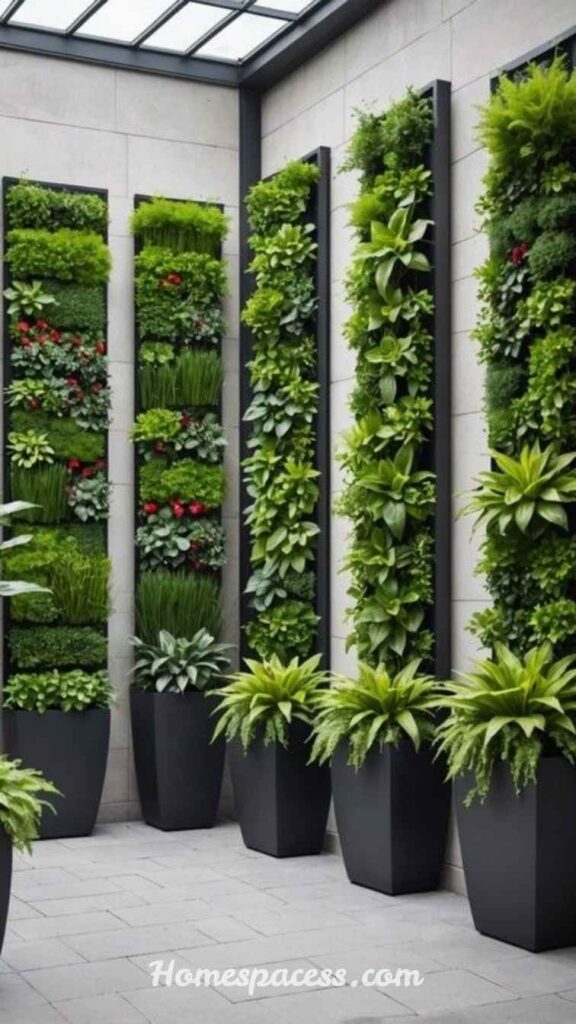
Vertical gardening is one of the smartest terrace design ideas for space-constrained outdoor areas. Instead of eating into floor space with large pots, grow upward. Wall-mounted planters, trellis systems with climbing plants (such as jasmine, clematis, or star jasmine), and hanging basket arrangements can transform a bare wall into a lush living backdrop within a single growing season.
The key is layering combine tall statement plants like bamboo or feather reed grass at the back, medium-height flowering plants in the middle, and trailing varieties at the front or edges. This depth creates the illusion of a garden even on a rooftop terrace with zero soil access. Pairing evergreen species with seasonal bloomers ensures year-round visual interest without replanting.
Unique Insight Competitors Miss:
Scented vertical gardens add a sensory dimension that photography can’t capture. Planting lavender, mint, or rosemary at nose height turns your terrace into a multi-sensory experience and repels mosquitoes naturally, reducing the need for chemical repellents.
Don’t Skip: Sun Room Ideas That Turn Dead Space Into Your Home’s Best Room
Choose the Right Weather-Resistant Flooring
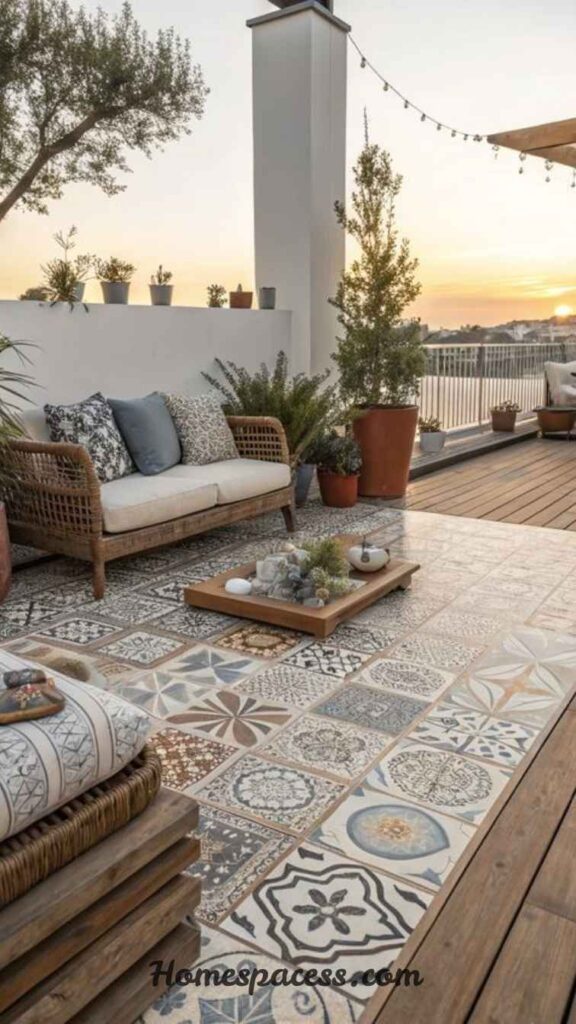
Flooring is the foundation of any terrace design, quite literally. The right material sets the tone for the entire space yet many homeowners choose based on appearance alone, only to find that their choice warps, fades, or becomes dangerously slippery after a season. The top performers in 2026 are porcelain outdoor tiles, composite decking, and natural stone each with different trade-offs in cost, maintenance, and aesthetics.
Porcelain tiles rated R11 or higher (the slip-resistance rating) are excellent for wet climates because they mimic the look of wood or stone with virtually no maintenance. Composite decking has largely replaced treated timber in premium projects it won’t splinter, rot, or require annual sealing. Natural stone like travertine or slate is beautiful and durable but requires sealing every 2–3 years and can be expensive. For smaller terraces, interlocking deck tiles offer a budget-friendly DIY option with a surprisingly polished result.
Pro Tip:
Run floor tiles or decking boards diagonally (at 45°) rather than straight. This single design trick visually enlarges a narrow terrace by drawing the eye across its widest axis rather than along its shortest dimension.
Read More: Entryway Decor Ideas: Transform Your First Impression Into a Lasting Statement
Install Layered Ambient and Task Lighting
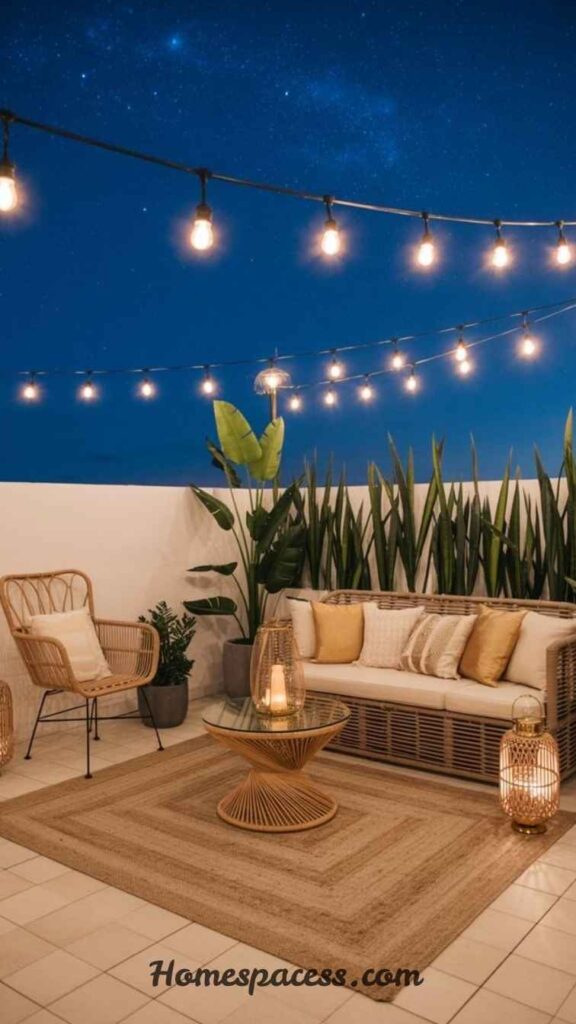
Terrace lighting is where good design becomes magical and where most projects fall short. The standard approach (a single overhead light or a string of fairy lights) creates flat, uninspiring illumination. The better approach is layered lighting: ambient light for overall visibility, task lighting for dining and cooking areas, and accent lighting to highlight plants, architectural features, or water elements.
LED strip lighting tucked under a pergola beam creates a warm, indirect glow that’s far more inviting than a bare bulb. Solar-powered pathway lights define zones without wiring costs. Low-voltage wall sconces provide practical light for evening dining. For a truly immersive atmosphere, use a 2700K–3000K color temperature this warm white mimics candlelight and flatters both food and faces, unlike the harsh blue-white of many outdoor security lights.
Overlooked Strategy:
Light from below uplighting plants, steps, and walls adds dramatic depth at very low cost. A single garden spotlight (£15–£30) placed at the base of a feature tree or statement planter transforms an ordinary corner into a sculptural focal point after dark.
Don’t Miss: 20 Stunning Door Painting Ideas That Actually Transform your Home
Build a Privacy Screen That Also Looks Beautiful
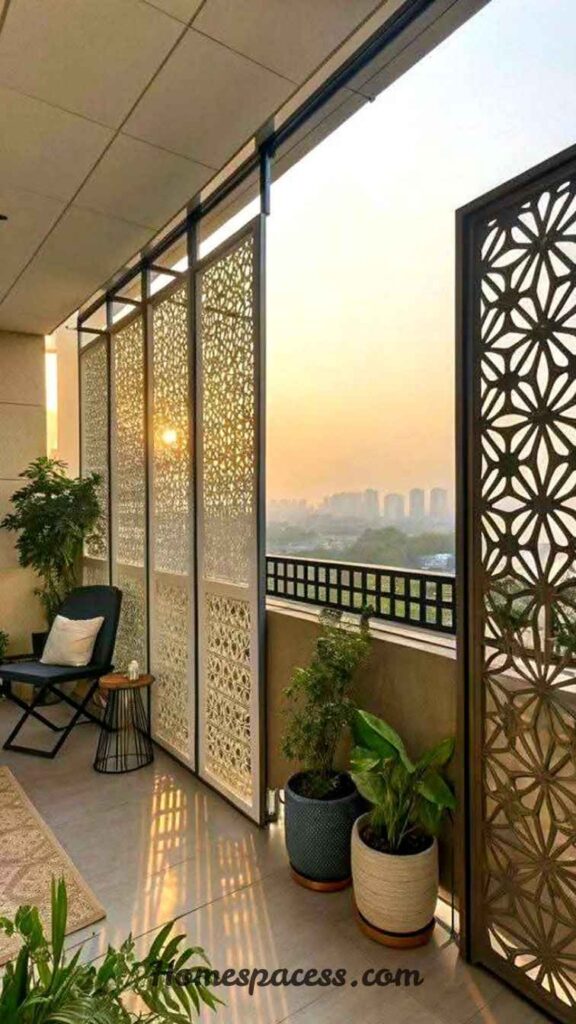
Privacy is one of the biggest barriers to enjoying a terrace, particularly in urban settings or on overlooked balconies. But privacy screens don’t have to look utilitarian. The most effective terrace design ideas in this category combine function with aesthetics using bamboo fencing, laser-cut metal panels, slatted timber screens, or dense planted hedges to create seclusion without sacrificing style.
Slatted cedar or composite screens are especially popular because they filter light rather than block it entirely, creating dappled shade and a sense of enclosure without making the space feel like a box. In small terraces, a screen placed strategically on just one or two sides the overlooked angles is far more effective than surrounding the entire space, which can feel oppressive. Paired with climbing plants over a few seasons, these screens become increasingly lush and natural-looking.
Mini-Scenario:
A rooftop apartment owner installed two 2m slatted screens at 90° angles, masking the neighboring building while preserving the skyline view. The screens were planted with black-eyed Susan vine by summer, the screen disappeared entirely behind foliage.
Add a Focal Point That Anchors the Whole Design
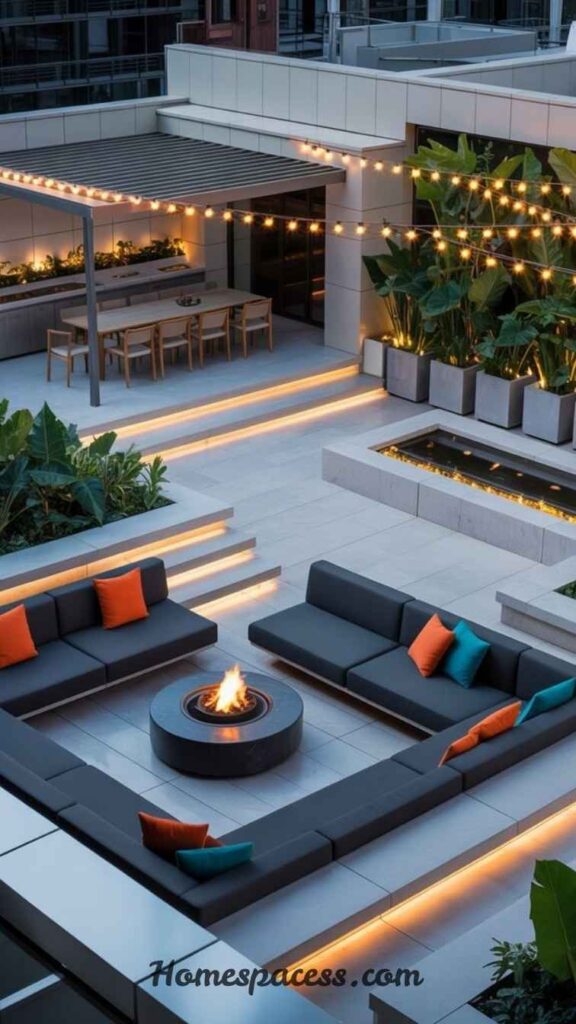
Every well-designed terrace needs one dominant focal point the element your eye travels to first and returns to repeatedly. Without it, a terrace feels like a collection of objects rather than a designed space. Your focal point could be a statement planter, a sculptural fire pit, a bold outdoor artwork, a built-in barbecue station, or even a dramatically lit tree. The specific choice matters less than the commitment to it.
A focal point works because it gives the rest of the design something to orient around. Furniture naturally angles toward it. Lighting highlights it. Paths lead to it. When choosing your focal point, consider what you want the terrace to feel like a fire pit says warmth and gathering; a water feature says calm and luxury; a sculptural plant says artistry and nature. Pick one story and tell it consistently across every other element.
Expert Insight:
Fire features from bioethanol bowls to built-in gas fire pits have become the single most requested focal point element in terrace redesigns. Beyond aesthetics, they extend the terrace season by 6–8 weeks by encouraging use on cooler evenings.
Choose Modular, Multi-Use Outdoor Furniture
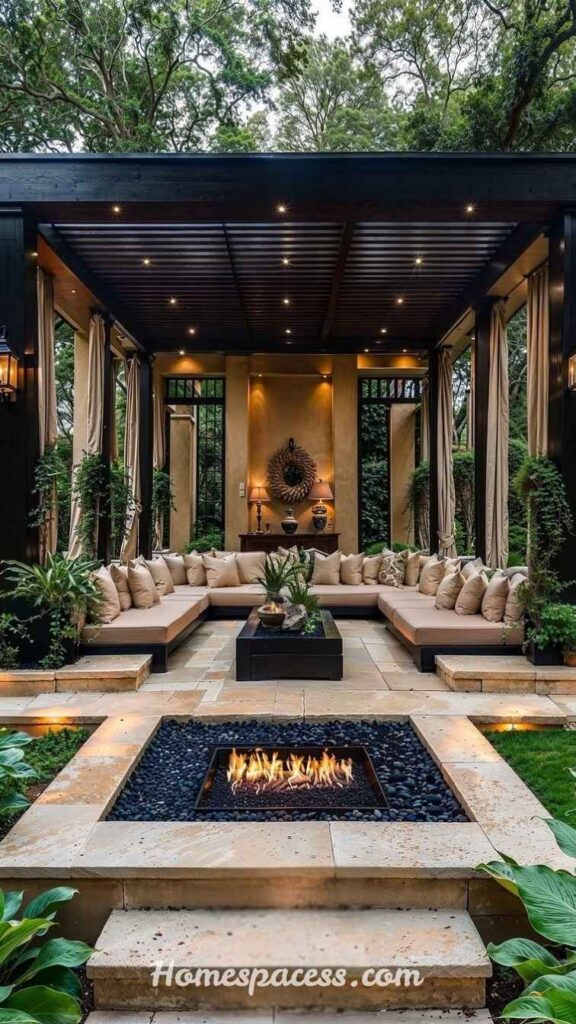
Outdoor furniture that serves only one function is a luxury that most terraces can’t afford especially smaller spaces. The best terrace design ideas for furniture focus on modularity and adaptability: pieces that reconfigure for different occasions, double as storage, or fold away when not in use. Modular sectional sofas that separate into individual seats, ottomans that open for storage, and dining tables with foldable extensions are all worth the premium over fixed-function alternatives.
Material choice is equally important. The best performers in outdoor settings are all-weather wicker (resin-based), powder-coated aluminium, and teak. Powder-coated aluminium is particularly compelling it’s lightweight enough to rearrange easily, corrosion-proof, and available in a growing range of finishes that rival indoor furniture aesthetics. Avoid wrought iron for mobile pieces (too heavy) and untreated wood for low-maintenance settings (requires too much care).
Space Hack:
Replace a standard 6-seat dining set with a 4-seat table and two stackable chairs stored nearby. This frees significant floor space on quiet days while maintaining entertaining capacity the most common size terrace furniture trap is over-furnishing for peak occasions at the cost of everyday usability.
Create a Covered Pergola Zone for Year-Round Use
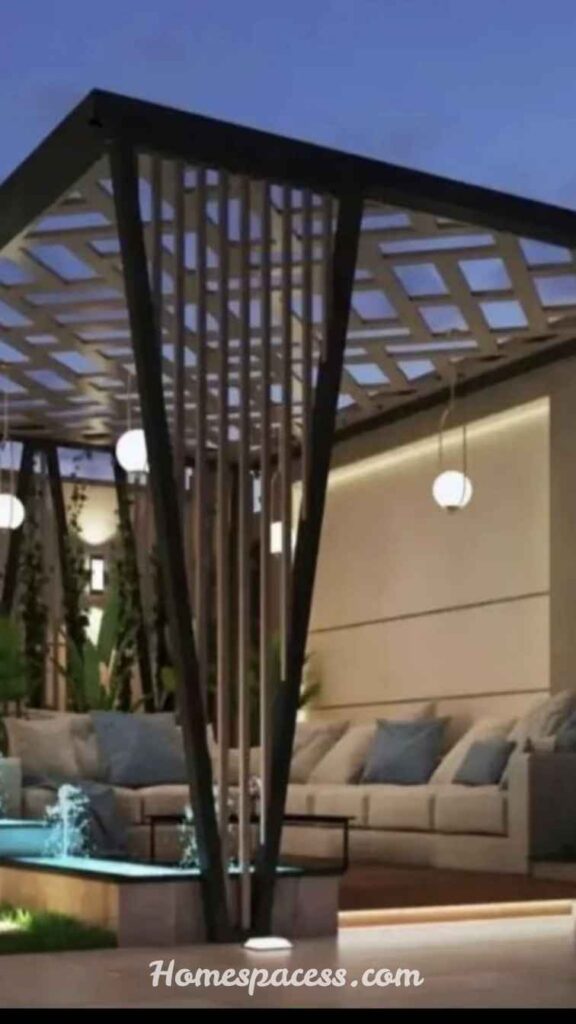
A pergola is arguably the single highest-ROI investment in terrace design. It provides shade in summer, partial shelter from light rain, and a structural framework for lighting, curtains, plants, and heating. More importantly, it transforms a flat, exposed terrace into a room-like space giving it a ceiling, a sense of definition, and a feeling of permanence that furniture alone can never achieve.
Modern pergola options range from simple timber frames (DIY-friendly from around £800–£2,000) to motorized aluminium louvred systems that adjust to weather conditions automatically (£6,000–£20,000+). For most homeowners, a mid-range timber or powder-coated aluminium pergola with an optional polycarbonate or tensile fabric roof panel strikes the right balance. Heating options infrared panel heaters mounted to the frame add another 8–12 weeks of usability per year in temperate climates.
Design Tip:
Pergolas look best when they are slightly oversized relative to the furniture beneath them allow at least 60cm overhang on all sides. A too-small pergola looks like a parasol; a generously sized one reads as architecture.
Integrate a Water Feature for Calm and Character
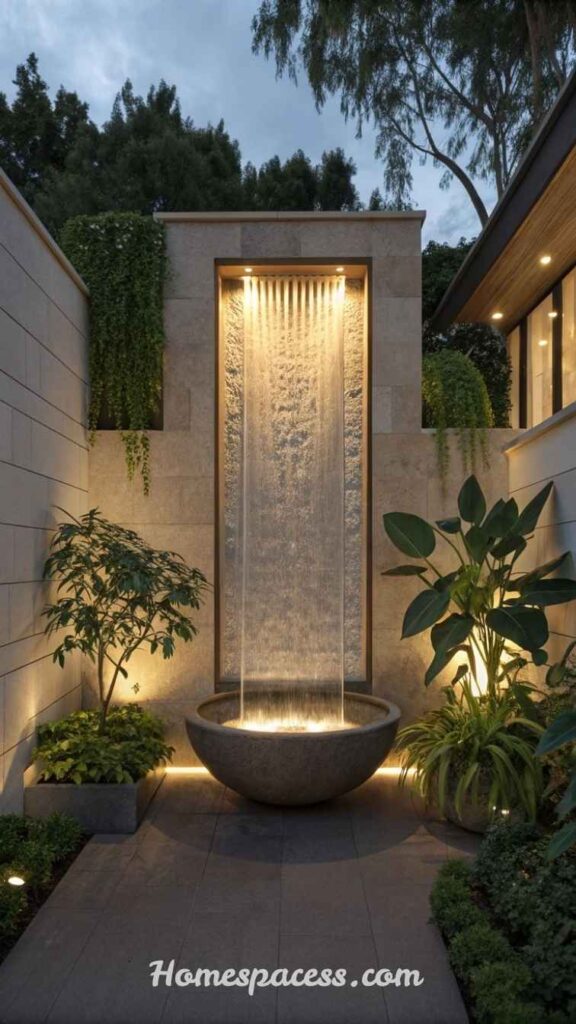
Water features are one of the most transformative terrace design ideas and one of the most misunderstood. Many homeowners assume they require complex plumbing or large budgets. In reality, a self-contained solar-powered fountain or a simple poured-concrete trough with a recirculating pump can be installed in an afternoon for under £200, and will fundamentally change the sensory character of your terrace. The sound of moving water masks street noise, reduces wind noise perception, and creates a calming psychological backdrop.
For larger terraces, a raised plunge pool or rill (a narrow linear water channel, often seen in contemporary garden design) adds genuine luxury without the cost of a full swimming pool. Even a large glazed pot converted into a water bowl with aquatic plants adds visual depth and supports local biodiversity small water sources attract beneficial insects and birds, creating a mini-ecosystem that genuinely improves the garden environment.
Surprising Insight:
Research in environmental psychology consistently shows that proximity to water sounds reduces cortisol levels within minutes. A terrace with a simple moving water feature isn’t just aesthetically better it’s measurably more relaxing than one without.
Adopt a Cohesive Color Palette Across All Materials
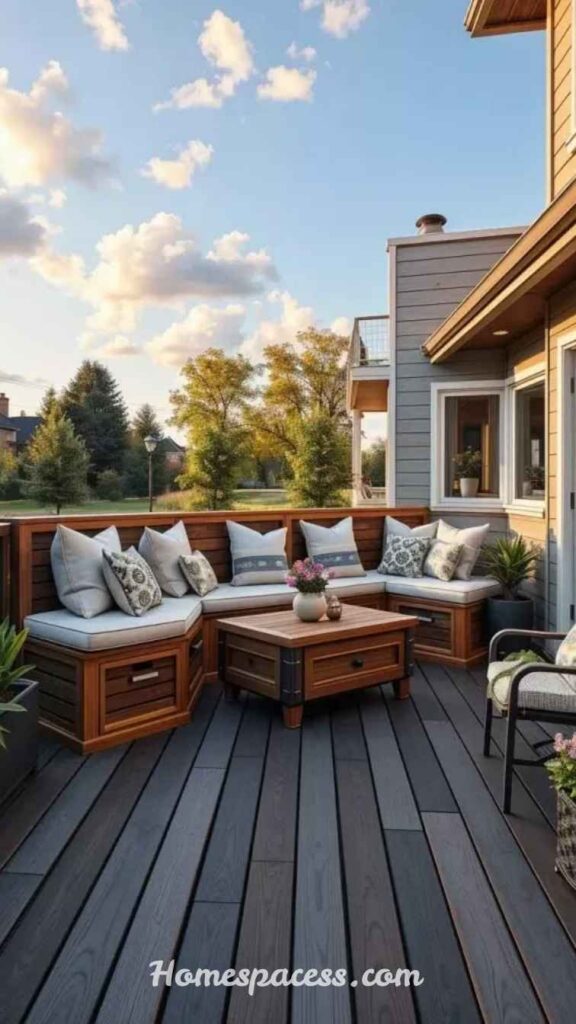
The most common visual problem in terrace design isn’t a lack of quality elements it’s a lack of cohesion between them. A terrace with beautiful individual pieces that clash in tone, texture, or style looks chaotic rather than curated. The solution is committing to a defined color palette of 2–3 colors and applying it consistently across flooring, furniture, textiles, planters, and accessories. This is what separates a designed terrace from a furnished one.
The most enduring terrace palettes are grounded in naturals: sandy stone, warm timber tones, and deep greens or charcoal grey as accents. These tones connect the terrace to the garden and don’t date quickly. If you want personality, introduce it through cushion covers, throws, and small accessory pieces that can be swapped seasonally without structural changes. Avoid mixing too many material finishes if your flooring is warm-toned timber, choose furniture in warm tones too; cool grey decking pairs better with anthracite or white furniture.
Professional Shortcut:
Take a photo of your terrace’s most permanent element (usually the flooring or wall tile) to a paint shop and ask for a palette of 3 complementary tones. Use those tones as your guide for every subsequent purchase. This method takes 15 minutes and prevents years of visual inconsistency.
Conclusion:
A truly great terrace design balances beauty with function, permanence with adaptability, and ambition with the reality of your climate and lifestyle. The terrace design ideas in this guide aren’t trends for the sake of trends they’re principles drawn from real projects and real outdoor living. Whether you start with a simple colour palette refresh or commit to a full pergola installation, every improvement compounds over time.
The best terrace doesn’t require the biggest budget it requires the clearest thinking. Define your zones, choose materials that last, light the space properly, and plant boldly. Your outdoor space is one of the most underutilized assets in most homes. The ideas above will help you change that.
Pick one idea from this guide that resonates most with your space and begin there. Great terrace design, like all good design, is built one intentional decision at a time.
Trend Analysis:
Terrace Design Trends in 2026 and Beyond
The terrace design landscape is shifting rapidly, driven by three forces: the normalization of working from home, the growing awareness of sustainability, and the remarkable improvement in outdoor-grade materials. What’s emerging in 2026 isn’t just aesthetic it reflects a fundamental change in how people relate to outdoor space.
2026 Now
Biophilic Design
Integrating natural materials, living walls, and plant-forward design to blur indoor/outdoor boundaries deliberately.
2026 Now
Outdoor Workspaces
Weather-resistant desks, pergola offices, and shaded work zones replacing the home office for warm-weather months.
Emerging
Smart Terraces
App-controlled irrigation, automated louvred pergolas, and sensor-based lighting responding to time and weather.
Emerging
Edible Terraces
Raised herb gardens, fruit-bearing espaliered trees, and productive planting replacing purely ornamental choices.
Near Future
Climate-Adaptive Design
Flexible terrace systems engineered for heat, drought, or rainfall depending on regional climate forecasts.
Near Future
Micro-Wellness Spaces
Cold plunge baths, outdoor sauna pods, and infrared panels integrated into terrace designs as a wellness tier.
One trend competitors consistently underreport is the decoupling of terrace design from garden design. Increasingly, terraces are being treated as autonomous rooms with their own design language inspired by interior design trends (japandi, maximalist botanica, raw brutalism) rather than traditional garden aesthetics. This shift opens entirely new creative possibilities and is particularly visible in urban rooftop terrace projects.
Expert Insights
Practical Expert Insights for Real-World Terrace Optimization
Having observed hundreds of terrace projects across different climates, budgets, and property types, the single most consistent observation is this: the highest-impact improvements are never the most expensive ones. A £300 investment in good outdoor cushions, a £150 rug, and a £100 set of solar lights will transform a terrace more dramatically than £3,000 spent on new paving because comfort, texture, and warmth are what the eye and body respond to first.
- Always plan for drainage before aesthetics. Poor drainage causes structural damage, algae growth, and flooding. Ensure a minimum 1–2% slope away from the building on any hard surface.
- Invest in outdoor-grade textiles rated for UV and moisture resistance (look for Sunbrella or similar solution-dyed fabrics). Cheap cushions fade within one season and communicate neglect more powerfully than bare concrete.
- Place your primary seating area to face the best view or the afternoon sun not toward the house. Most people instinctively face their furniture toward the building, missing the point of being outside.
- Test materials in your specific microclimate before committing. A shaded north-facing terrace will grow algae on timber; a south-facing one will bleach untreated fabrics. The same product performs very differently in different conditions.
- Use container planting over in-ground planting on terraces wherever possible. Containers allow you to move, replace, and reconfigure without disrupting the structure invaluable as your taste and needs evolve.
One insight rarely mentioned in mainstream guides: the acoustic environment of your terrace matters as much as the visual one. Terraces bounded by hard surfaces (concrete, stone, glass) create echo and amplify noise. Introducing soft elements cushions, outdoor rugs, fabric panels, and plants absorbs sound and makes conversation at normal volume far more pleasant. This is particularly important for urban terraces surrounded by traffic or neighboring buildings.
Sustainability, Long-Term Value
Sustainability, Long-Term Value, and Strategic Investment
Sustainable terrace design is no longer a niche consideration it’s increasingly the smart financial choice as well as the ethical one. Materials that age well, maintain their appearance, and require minimal maintenance consistently outperform cheaper alternatives over a 5–10 year horizon. The total cost of ownership of a composite deck (high initial cost, near-zero maintenance) is typically lower than a pressure-treated timber deck (lower initial cost, annual sealing, board replacement) within 4–5 years.
From an environmental perspective, the choices with the strongest credentials are reclaimed stone or timber (highest impact), FSC-certified timber, recycled composite decking, and locally sourced natural stone. Avoid tropical hardwoods without robust certification, petroleum-based artificial grass (which creates microplastic runoff and contributes to urban heat), and single-use plastic furniture marketed as “weather resistant.”
Long-Term Value Insight:
Terraces with mature, well-established planting command significantly higher property valuations than newly planted ones. Every year of plant growth adds value that money alone cannot buy quickly. Plant large and plant early even if the rest of your terrace design is a work in progress.
Strategically, the best terrace investments are those that solve a specific problem (lack of privacy, exposure, noise) rather than those that add decoration. Solving problems creates immediate, measurable improvement in how the space is used and used terraces are valued terraces. Decorative additions, however beautiful, only compound the value of a functional base.
Future Innovations
Future Innovations That Will Reshape Terrace Design
The next wave of terrace design innovation is arriving from an unexpected direction: materials science. Self-healing outdoor coatings (surfaces that repair minor scratches and weather damage without intervention), photovoltaic paving tiles (flooring that generates solar power while looking like conventional stone), and aerogel-insulated outdoor cushions (warmer than down at one-tenth the thickness) are moving from prototype to consumer availability in 2026–2028.
Smart home integration will become standard rather than premium within 5 years. Imagine a terrace where the pergola louvers automatically adjust for sun angle throughout the day, the irrigation system checks the weather forecast and skips watering before rain, and the heating system activates when motion sensors detect you stepping outside in the evening. These systems exist today at premium price points; by 2028–2030, they will be mainstream in the way smart thermostats are today.
Forward-Looking Insight:
The most disruptive terrace innovation of the next decade may be modular plug-and-play outdoor rooms prefabricated terrace modules (pergola, seating zone, kitchen zone) that arrive flat-packed, assemble without tools, and are designed to be reconfigured or relocated as living situations change. Several Scandinavian startups are already at advanced prototype stage.
Climate adaptation will also drive significant design innovation. As summers become hotter and rainfall more intense, terrace design will increasingly incorporate passive cooling strategies (thermal mass flooring that absorbs heat by day and releases it at night), advanced rainwater harvesting integrated into terrace drainage, and shade structures engineered for maximum wind resistance. Designing for climate resilience is not pessimistic it’s the difference between a terrace that lasts 30 years and one that struggles after 5.
Common Mistakes
Common Terrace Design Mistakes Most Guides Don’t Warn You About
Even experienced renovators fall into predictable terrace design traps. These aren’t obvious errors they’re subtle misjudgements that only become apparent after installation, making them frustrating and expensive to correct. Here are the most consequential ones:
- Scaling Furniture to the Space, Not the Use: A 3m × 4m terrace does not need a 6-seater dining table just because you occasionally host six people. Over-scaled furniture dominates small terraces visually and physically, making everyday use uncomfortable. Size furniture for how you use the space 80% of the time, not 100% of the time.
- Installing Plants Without Considering Their Mature Size: A bamboo clump that looks elegant at 60cm will reach 4–5 metres in 3 years and can damage structures with its roots. Always research the mature size and root behaviour of every plant before installation especially in raised planters or near walls.
- Ignoring the Terrace in Winter: Most terrace designs are optimized for summer and abandoned by October. A winter-proof terrace with evergreen planting, a covered zone, heating, and weather-resistant surfaces extends the season dramatically and protects your investment. Designing for summer only is designing to abandon a major asset for 5–6 months each year.
- Choosing Style Over Slip Resistance: Polished stone and smooth tiles look spectacular in photographs but become serious fall hazards when wet. Always check the slip resistance rating (R9 minimum for dry areas, R11–R12 for areas exposed to rain or splash) before purchasing outdoor flooring. Beauty means nothing on a surface that injures someone.
- Starting with Hard Landscaping Before Layout Testing: Many homeowners commit to expensive paving or decking before testing whether their intended layout actually works. Before any hard landscaping, spend a week living with cardboard boxes, garden chairs, and chalk outlines in the positions you plan to install permanent elements. This free experiment prevents costly structural mistakes.

Team Home Spacess shares simple, practical design ideas that work for real families. The team focuses on cozy décor, soft colors, and natural textures that make a space feel truly lived-in. From everyday decorating tips to creative home projects, Team Home Spacess is dedicated to helping readers create warm, comfortable, and inviting spaces with a fresh and personal touch.