

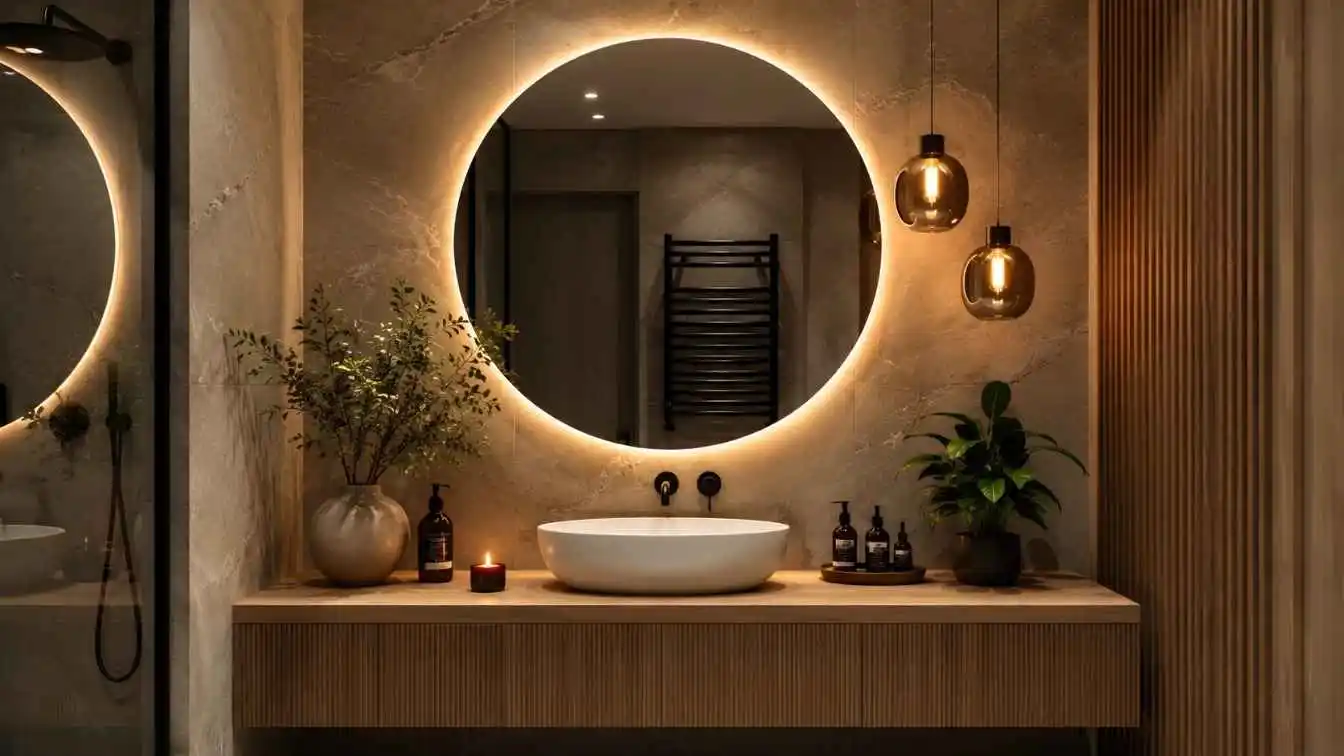
Most bathrooms have a mirror. But very few have the right mirror one that enhances light, amplifies space, and ties the entire design together. Here are five ideas that actually change how your bathroom feels.
Your bathroom mirror is not just a functional object it is one of the most powerful design tools in your entire home. It is usually the first thing you see in the morning and the last thing before bed. Yet most homeowners treat mirror selection as an afterthought, choosing whatever fits above the vanity without considering proportion, light quality, frame character, or long-term style compatibility.
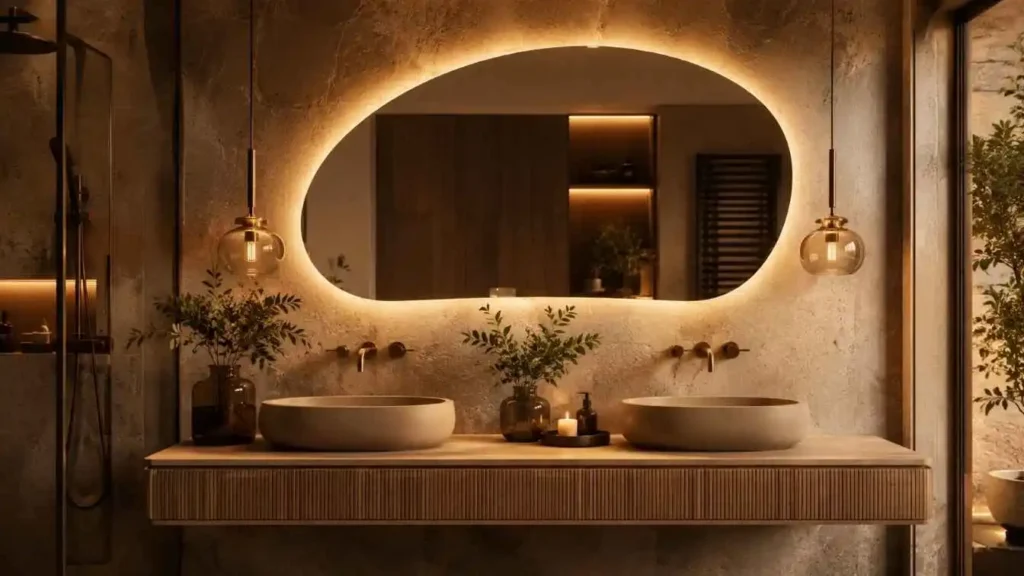
The right bathroom mirror can make a small bathroom feel twice as large, turn dim lighting into a warm glow, and elevate a builder-grade space into something that feels intentionally designed. Whether you are renovating a master bath, refreshing a powder room, or simply swapping out a dated mirror, the ideas in this guide will help you make a decision that adds both beauty and genuine value to your home.
68%
of buyers say bathroom design influences home purchase decisions
3×
more light reflected in well-placed mirror setups vs. standard installs
$2,400
average ROI increase from a bathroom refresh including mirror upgrade
Backlit LED Mirrors
Modern Lighting Meets Functional Design
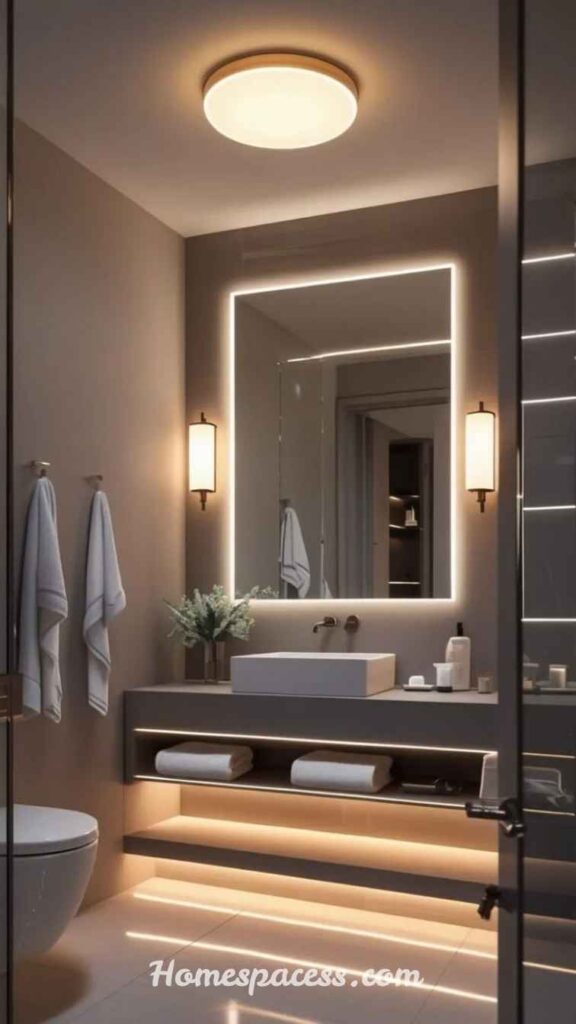
A backlit LED mirror does two jobs simultaneously: it serves as a mirror and as a primary light source. Unlike traditional overhead lighting that casts shadows under your eyes and chin making even clear skin look tired LED backlighting wraps your face in even, diffused illumination. This is the same concept used in professional makeup studios and photography setups, now accessible for residential bathrooms.
The color temperature of backlit mirrors matters more than most buyers realize. Mirrors with 3,000K (warm white) lighting create a spa-like ambiance ideal for relaxing evening routines. Meanwhile, 5,000K (daylight) options are preferred for morning grooming, makeup application, and skincare routines where accurate color rendering is essential. Some premium models offer adjustable color temperature a feature that provides genuine daily-use value that goes far beyond aesthetics.
From a design standpoint, the halo glow created by a backlit mirror adds architectural depth to your bathroom wall. In a small bathroom, this floating-light effect creates a visual focal point that draws the eye and subtly expands the perceived size of the room. Pair with large-format tiles and a wall-hung vanity for a cohesive contemporary look that photographs beautifully for real estate listings.
💡Pro Insight:
Look for mirrors with a CRI (Color Rendering Index) of 90+ for the most accurate skin tone representation. Cheaper LED mirrors often have CRI below 80, which distorts color and makes grooming decisions less reliable.
Must Read: Smart Backyard Bar Ideas to Create a Perfect Outdoor Hangout Spot
Arched & Curved Frame Mirrors
Softening the Modern Bathroom
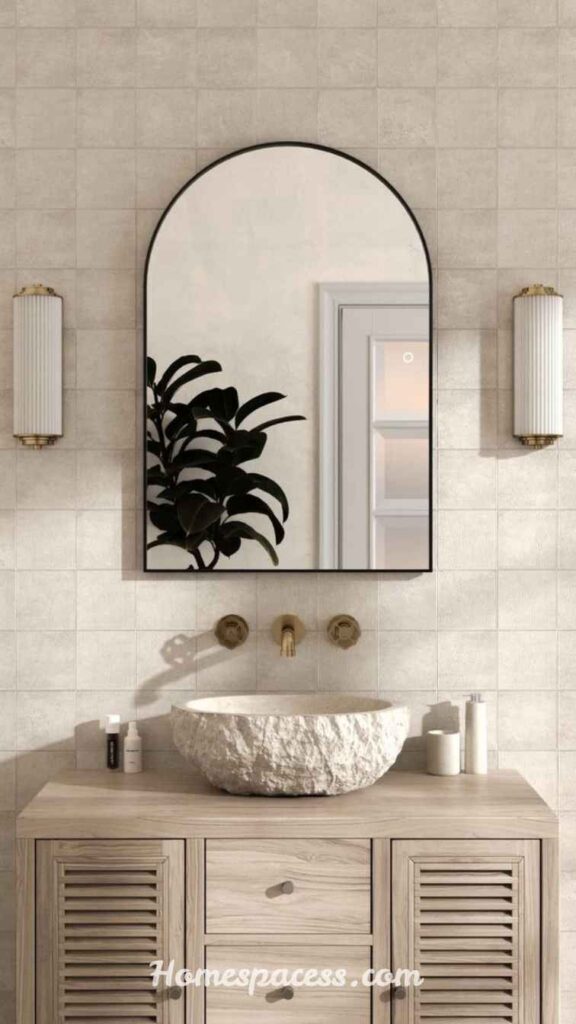
The arched mirror trend emerged as a direct response to the sterile, ultra-minimal bathroom aesthetic that dominated the early 2010s. As homeowners began craving warmth and organic form, rounded and arched mirrors became the single fastest route to softening a bathroom without a full renovation. Unlike rectangular mirrors, a curved arch interrupts the rigid geometry of tile grids, square vanities, and right-angled walls creating visual relief that feels natural rather than designed.
Material choice dramatically changes the character of an arched mirror. A rattan or woven frame brings natural texture into an otherwise hard-surface environment. A slim brushed brass arch feels luxurious without being ornate. A minimalist frameless arch in dark-tinted glass reads as editorial and fashion-forward. One detail that most décor articles fail to mention: the height-to-width ratio of the arch affects how the mirror interacts with your vanity proportions. A tall, narrow arch works brilliantly over a single-sink vanity or pedestal sink, creating a portrait-like effect. A wide, lower arch suits double vanity setups and elongates the horizontal line of the countertop.
Arched mirrors also create a subtle illusion of ceiling height a significant benefit in bathrooms with standard 8-foot ceilings. When the curve of the mirror draws your eye upward, the room feels taller than it is. For small powder rooms that function as design statements for guests, an arched mirror with a distinctive finish is often the single most impactful upgrade you can make.
💡Expert Tip: When pairing an arched mirror with a rectangular vanity, offset the mirror slightly above center-vanity height. This adds a collected, curated look that distinguishes intentional design from a purely symmetrical install.
Read More: Trendy Baby Nursery Ideas for Boys That Make Your Room Look Amazing
Full-Length Frameless Mirrors
Space-Expanding Bathroom Luxury
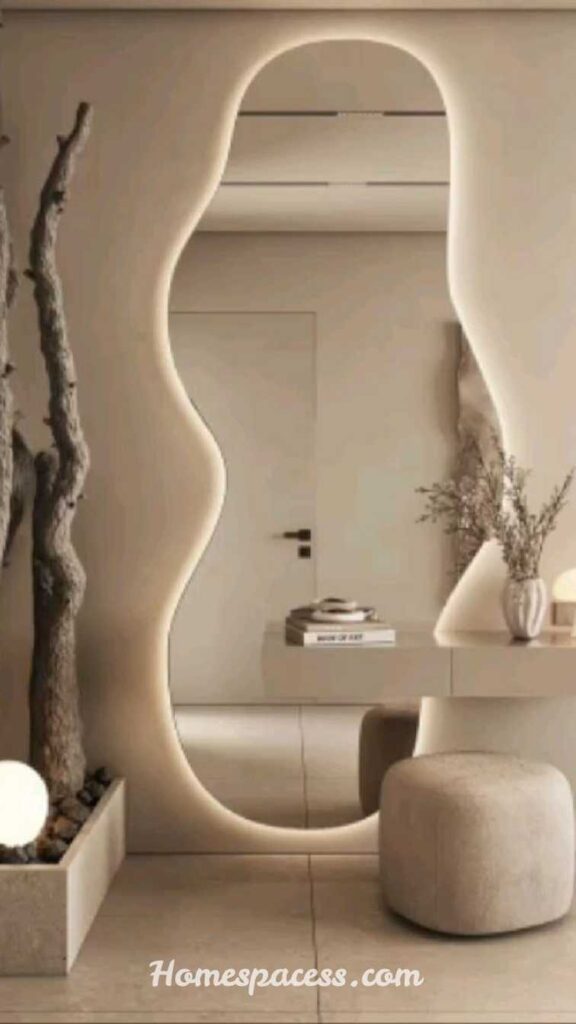
A floor-to-ceiling or full-length frameless mirror is one of the most underused tools in residential bathroom design. Interior designers use this strategy professionally reflecting an entire wall with frameless mirror effectively doubles the visual size of any room. In a narrow bathroom, a full-length mirror placed on the short end wall creates the impression of a corridor twice as deep. In a master bathroom with a soaking tub, a full-height mirror on the opposite wall reflects the tub, the window, and natural light creating a layered, hotel-suite quality that no fixture or tile choice can replicate.
The frameless quality is critical to achieving this effect. Framed mirrors call attention to their edges and limits. A frameless mirror, especially one with beveled or polished edges, appears to float and the reflective surface reads as an extension of the room rather than an object hanging on the wall. Many homeowners use full-length frameless mirror panels as a subtle alternative to wallpaper, covering an entire accent wall behind a freestanding tub for maximum drama without pattern commitment.
Practical installation note: full-length mirrors require proper wall anchoring into studs or heavy-duty wall anchors rated for the mirror weight. A frameless mirror large enough to cover most of a wall can weigh 40–80 lbs a detail DIY guides rarely emphasize. Professional installation is strongly recommended for pieces over 36 inches wide, particularly in older homes where stud spacing may be irregular.
💡Design Hack:
Place a full-length frameless mirror at a 5–8 degree angle (slightly leaning) rather than perfectly flush with the wall. This extends the reflected angle of view, making the bathroom appear wider while adding an intentionally casual, editorial feel.
Don’t Miss: Top Dining Table Decor Ideas to Make Your Dining Area Look Amazing
Antique & Vintage-Style Mirrors
Character That Modern Can’t Replicate
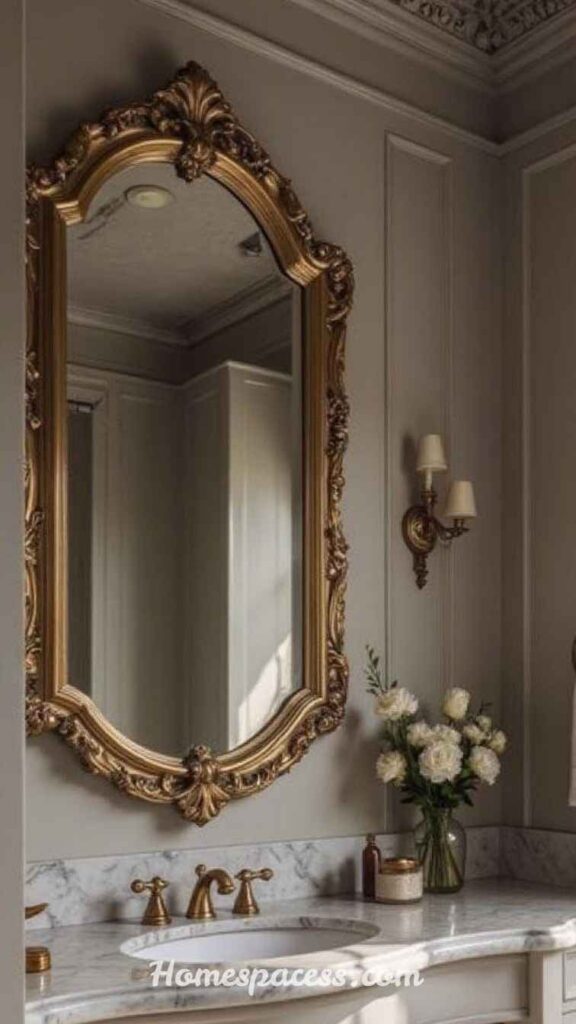
There is something that a genuine antique mirror or a well-made reproduction provides that no new fixture can: visual age and earned character. Vintage bathroom mirrors with distressed silver glass, ornate carved wood frames, or gilded gesso details instantly signal that a home has been thoughtfully assembled rather than assembled from a catalog. In a bathroom that might otherwise feel generic, a single antique-style mirror becomes the room’s story a piece with apparent history that guests notice and ask about.
True antique mirrors feature glass with slight distortion or mottling a result of mercury or silver oxidation over time. This is not a flaw; it is a quality. The slight softness of an aged mirror reflects a gentler, more flattering image than the clinical precision of modern float glass. For homeowners who want this look without sourcing authentic antiques, mercury-style aged mirrors are available from specialty manufacturers that use a controlled chemical oxidation process to produce authentic-looking patina on new glass.
Frame authenticity matters in this category. Cast resin frames painted gold often look convincing in photos but feel cheap in person. Genuine carved wood frames, hand-forged iron frames, and real gilded plaster are worth the investment if you want the look to survive close inspection. A well-chosen vintage mirror in a bathroom also holds or increases its resale value as a decorative object something modern mirrors rarely achieve.
💡Sourcing Tip:
Estate sales, architectural salvage shops, and online platforms like Chairish or 1stDibs consistently offer genuine antique mirrors at prices competitive with high-quality reproductions. Always examine in person glass quality and frame construction are best assessed physically.
Also Read: Elegant Mini Bar Ideas for a Stylish Home Makeover
Smart Mirrors
The Future of the Bathroom Already Here
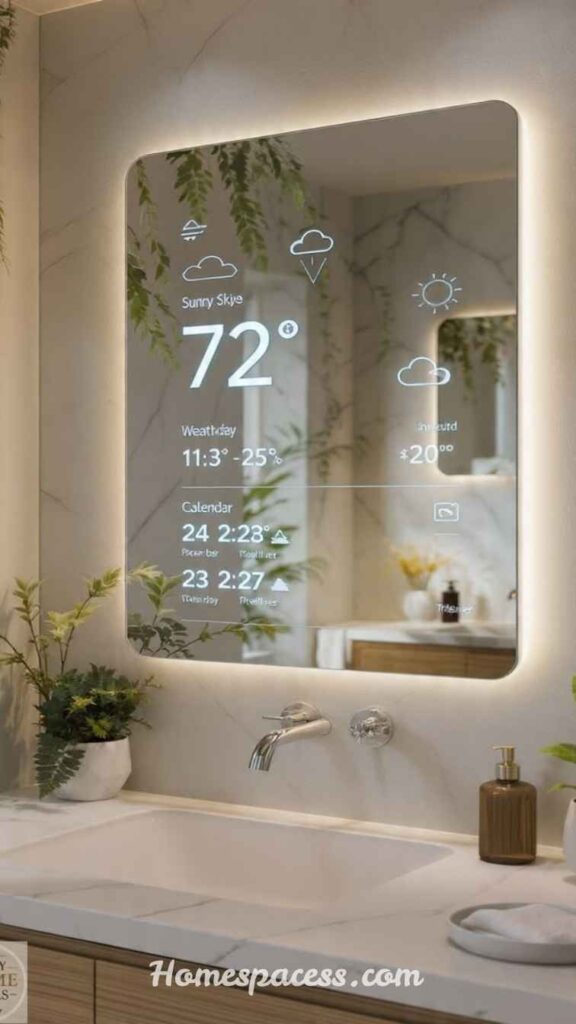
Smart mirrors represent the most significant evolution in bathroom design since the introduction of thermostatic shower controls. At the functional level, smart mirrors display time, weather, and calendar data directly on the mirror surface using embedded displays behind semi-reflective glass. More advanced models include voice assistant integration, touchscreen interfaces, Bluetooth audio for shower playlists, built-in defogging elements, and real-time health metric displays. Some cutting-edge models can track skin health data through cameras and AI analysis providing UV damage assessment, hydration recommendations, and skincare routine tracking directly in the mirror.
The hidden value of smart mirrors extends beyond their features. In a connected home ecosystem (Apple HomeKit, Google Home, Amazon Alexa), a smart mirror becomes a morning command center briefing you on your day while you get ready. For households with complex schedules, the time savings and reduced friction in morning routines have measurable daily-life impact. Unlike smart speakers hidden in corners, the smart mirror naturally occupies your full attention during a critical 10–20 minute window each morning.
One consideration most buyers overlook: smart mirrors require electrical planning that standard bathroom mirrors do not. They need a dedicated power source, ideally with a discreet USB-C or hardwired connection that does not compromise the clean aesthetic. Plan this during renovation if possible retrofitting power to a mirror location after tile work is significantly more expensive. Quality smart mirrors from brands like Kohler Verdera, Electric Mirror, and Séura range from $800 to $4,000+ but represent a category where hardware longevity and software update support should factor into brand selection.
💡Future-Proof Tip:
Choose smart mirrors from brands with documented software update commitments. A smart mirror with an abandoned software platform in 3 years is an expensive dumb mirror ecosystem longevity matters more than specs at point of purchase.
Conclusion
The right bathroom mirror idea is not just about aesthetics it is about understanding how light, proportion, material, and technology work together to create a space that functions beautifully every single day. From the warm even light of a backlit LED mirror to the timeless character of an antique frame or the expanded dimension of a full-length frameless installation, bathroom mirrors offer more transformative power per dollar than almost any other upgrade in the home.
The best bathroom mirror ideas are those that serve your actual daily routine, complement your home’s design language, and are built with materials that will look better not worse as years pass. Whether you start with a simple arch frame swap or commit to a full smart mirror integration, each idea in this guide offers a clear path to a bathroom that feels genuinely considered.
Trend Analysis
Bathroom Mirror Design in 2026–2027
The dominant trend shaping bathroom mirror choices right now is the move away from purely symmetrical, center-mounted designs toward what designers call “considered asymmetry.” Rather than centering one mirror precisely over a double vanity, homeowners and interior designers are increasingly placing one oversized mirror at a deliberate offset, or using two mirrors of different sizes and shapes at staggered heights. This reflects a broader shift in bathroom design philosophy from spa-like uniformity toward the collected, eclectic warmth of a personally curated space.
Biophilic design is the second major force reshaping bathroom mirror choices. Natural and organic materials rattan, reclaimed wood, hammered copper, rough-hewn stone surrounds are replacing the lacquered and powder-coated metal frames that dominated bathroom retail for the past decade. This is not a trend headed for rapid reversal; biophilic design principles have strong backing in environmental psychology research showing measurable positive effects on stress, mood, and perceived comfort. Mirrors that incorporate natural textures align with this longer arc.
Tinted Glass Mirrors
Smoke, green, and champagne-tinted mirrors are gaining traction as a sophisticated alternative to clear glass adding warm tone to reflected light while functioning as subtle room-warmers.
Medicine Cabinet Revival
Flush-recessed medicine cabinets with mirrored fronts are reclaiming design credibility after years of looking dated driven by minimalism and the premium on bathroom storage.
Oversized Single Mirror
One mirror spanning the entire vanity wall from cabinet to cabinet is replacing the two-mirror setup in new construction. Cleaner, more expansive, and easier to maintain.
Unlacquered Brass Frames
Living metal finishes that patina naturally over time are becoming preferred over static polished or brushed metals, signaling a shift toward acceptance of material aging.
Looking toward 2026 and beyond, the integration of health and wellness technology directly into bathroom mirrors will accelerate. AI-powered skin analysis, posture feedback for morning stretches, circadian-rhythm-aligned lighting adjustment, and integration with wearable health data are all in active commercial development. Within 3–5 years, the smart mirror category will likely split into a utilitarian tier and a wellness-platform tier, with the latter functioning as a genuine health interface rather than a novelty.
Expert Tips & Practical Insights for Choosing the Right Mirror
One of the most consistent mistakes in bathroom mirror selection is choosing a mirror width that does not relate to the vanity below it. The professional standard is for a mirror to be no wider than the vanity cabinet itself, and ideally 2–4 inches narrower on each side. A mirror that is wider than the vanity looks unstable and unanchored. Conversely, a mirror significantly narrower than the vanity creates awkward visual imbalance. When in doubt, err slightly narrower it reads as deliberate and refined.
Height placement is equally underappreciated. The center of the mirror should align with the eye level of the primary user approximately 57–65 inches from the floor for most adults. In households with significant height differences between users, consider a mirror that is taller rather than repositioning it this accommodates a wider range of heights while keeping installation practical. For pedestal sinks or floating vanities, wall-mounting a mirror at the correct height also requires careful stud-finding work that most DIY tutorials gloss over.
“A mirror is the only decorative object in your bathroom that simultaneously reflects the space, frames your face, and sets the ambiance of the entire room. It deserves the same consideration you give to tile selection.”
Moisture resistance is a non-negotiable technical consideration that aesthetic-focused articles routinely omit. Standard household mirrors have a silver or aluminum backing that will delaminate, oxidize, and develop dark spots (“black edge”) within a few years in a high-humidity bathroom. Look specifically for mirrors labeled “copper-free” or “moisture-resistant” these feature a multi-layer backing process that extends mirror lifespan in wet environments by 2–3 times. For mirrors adjacent to showers, this distinction is critical and worth the modest price premium.
Sustainability, Longevity & Long-Term Value
Sustainability in bathroom mirror selection is a topic almost entirely absent from mainstream décor coverage, yet it carries both environmental and financial implications. Standard flat glass production is energy-intensive, and most imported bathroom mirrors have significant embedded carbon from international shipping. Sourcing from domestic or regional manufacturers or choosing certified recycled-content glass where available reduces environmental impact without compromising quality. Some specialty manufacturers now offer mirrors made entirely from reclaimed glass, creating a product with a compelling sustainability story and unique visual character from imperfections in the source material.
From a long-term value perspective, the mirror choices most likely to retain their appeal and monetary value are those grounded in craft quality rather than trend alignment. A handmade unlacquered brass frame, a genuine antique mirror, or a custom-size frameless installation are all assets that appreciate with time both aesthetically as they develop patina, and financially as the bathroom ages. Trend-driven choices highly specific geometric shapes, ultra-fashionable finishes, or technology-dependent mirrors with short software support cycles carry higher obsolescence risk.
LED backlit mirrors present a sustainability consideration worth examining: the long-term energy efficiency of LED lighting makes them genuinely more sustainable over their lifespan than incandescent bathroom lighting, with most LED mirror lights rated for 50,000+ hours. However, the electronics integration also means that when the mirror is eventually replaced or fails, it cannot be recycled as simply as a standard glass mirror. Choosing mirrors with replaceable LED strips rather than sealed-in components addresses this concern and extends the functional lifespan significantly.
Future Predictions
What Bathroom Mirrors Will Look Like in 2028 and Beyond
The most transformative near-future development in bathroom mirror technology is AI-powered health monitoring embedded in the mirror surface. Startups and established brands are actively developing mirrors with multimodal sensors capable of detecting changes in skin tone associated with blood pressure, identifying early signs of conditions like anemia or jaundice through reflectance analysis, and providing longitudinal skin health tracking using daily camera data. This is not science fiction prototype systems already exist in clinical settings, and commercial versions are expected within 2–4 years at consumer price points.
Electrochromic glass glass that changes opacity or tint in response to electrical current is another innovation actively moving from commercial applications (aircraft windows, office partitions) into residential bathroom use. Imagine a bathroom mirror that doubles as a privacy screen for a shower wall, shifting from reflective to frosted at the touch of a button. Or a mirror that dims its own reflectivity during low-light evening use, reducing visual stimulation before sleep. These are not concept renders the underlying technology is commercially mature; it is currently a question of manufacturing cost and residential adoption timing.
Projection technology will also reshape the smart mirror category. Rather than displays embedded behind glass, next-generation smart mirrors may use short-throw projection onto the mirror surface allowing any mirror to become a smart display without permanent hardware commitment. This technology preserves the design integrity of architecturally significant mirrors (antique, custom, or artisan-crafted pieces) while adding digital utility. It represents a resolution to the current tension between smart functionality and design authenticity.
Common Mistakes
Overlooked Factors in Bathroom Mirror Selection
- Ignoring moisture-resistance ratings. Standard mirrors delaminate quickly in humid bathrooms. Always verify “copper-free” or “sealed backing” construction especially in wet zones.
- Choosing a mirror before finalizingvanity height. If you install mirrors before your vanity is in, center-of-mirror height will likely be wrong. Confirm final vanity height first, then position mirror.
- Over-matching metals. A brass-framed mirror does not need to match brass faucets and brass hardware exactly. Mixing warm metals within one to two tones of each other looks collected and intentional perfect matching looks catalog-generic.
- Underestimating weight and mounting requirements. Large mirrors, ornate frames, and frameless glass panels can weigh 60–100 lbs. Using drywall anchors rated for 20 lbs on a 60-lb mirror is a genuine safety risk. Always anchor into studs for mirrors over 24 inches wide.
- Choosing a frame finish based on current trends alone. Trendy finishes matte black, champagne gold, polished nickel cycle in and out of fashion faster than a typical bathroom renovation cycle. Choose based on your overall home’s metal palette, not the trending finish of the year.
- Skipping lighting planning when choosing a backlit mirror. Backlit LED mirrors require a power source at the mirror location. Retrofitting electrical after tiles are set is expensive and disruptive. Plan power access during rough-in if you know you want a backlit or smart mirror.

Team Home Spacess shares simple, practical design ideas that work for real families. The team focuses on cozy décor, soft colors, and natural textures that make a space feel truly lived-in. From everyday decorating tips to creative home projects, Team Home Spacess is dedicated to helping readers create warm, comfortable, and inviting spaces with a fresh and personal touch.