

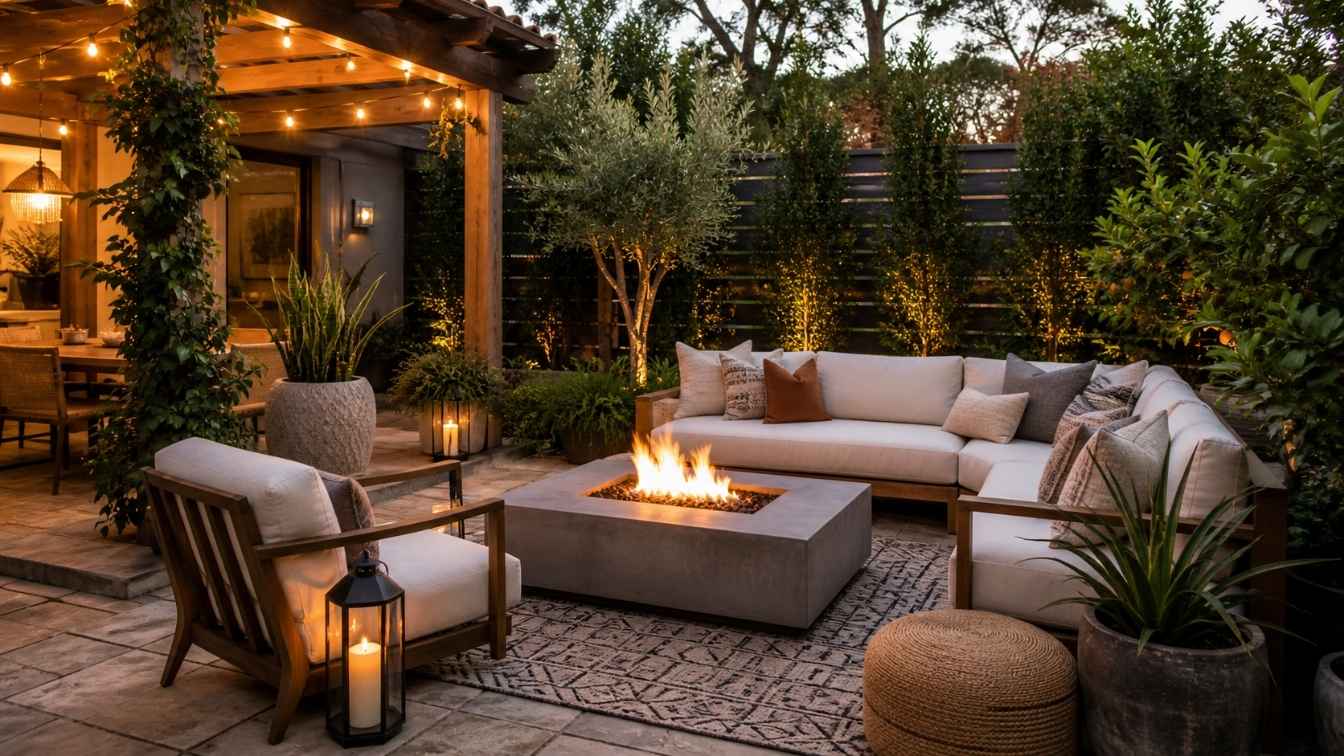
Most homeowners spend thousands on interior design then completely ignore the outdoor space that could double their usable living area. A well-designed patio isn’t just a “nice to have.” It’s a proven investment that boosts property value, improves mental well-being, and creates the kind of everyday living experience that makes staying home feel like a vacation.
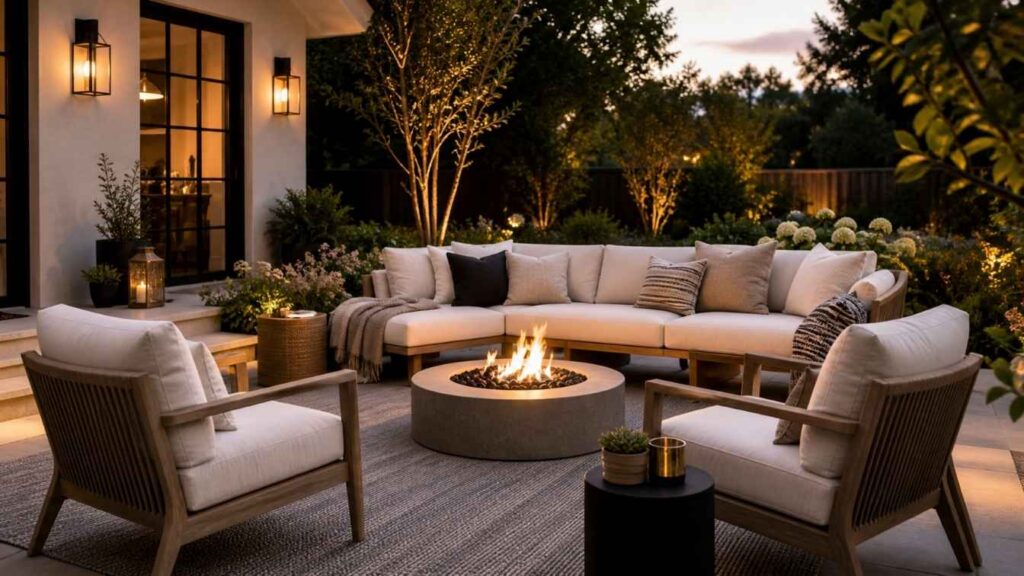
This guide covers transformative outdoor patio ideas from budget-friendly DIY upgrades to full-scale outdoor room builds along with trend analysis, expert tips, sustainability insights, and the most overlooked design mistakes homeowners make. Whether you’re starting from scratch or refreshing an existing patio, there’s something here for every space and budget.
Create a Defined Outdoor Living Room
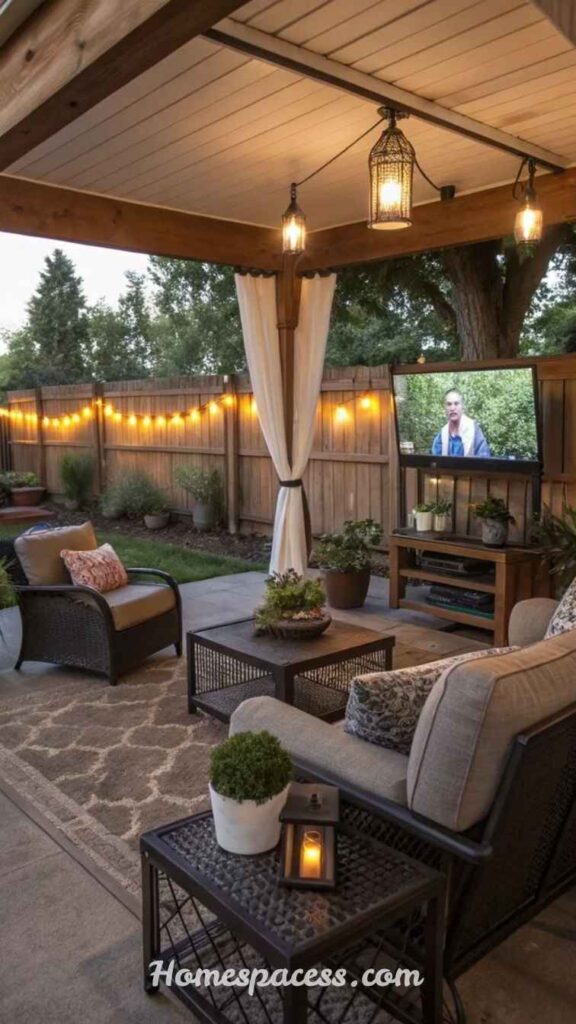
The number one reason patios feel underwhelming is a lack of definition. Treat your outdoor space exactly like an indoor room with a “floor” (pavers, decking, or an outdoor rug), a visual boundary (planters, low walls, or pergola columns), and a clear focal point like a fire pit or statement sofa. This psychological anchoring instantly makes the space feel intentional rather than accidental.
For furniture, opt for deep-seated, weather-resistant sectionals in neutral tones (slate grey, warm beige, or forest green) and anchor them with a durable outdoor rug in a contrasting pattern. Layer in throw pillows made with UV-resistant fabric brands like Sunbrella offer colors that hold up for years. The goal is to replicate the comfort and visual weight of your interior living room, but in a material vocabulary that can handle the outdoors.
Pro Tip
Define your patio zone with rope lights or solar lanterns along the perimeter this creates a “room” effect even before furniture arrives, and helps you visualize scale.
Must Raed: Wall Painting Ideas That Make Your Home Feel Warm and Inviting
Build a Pergola for Shade and Structure
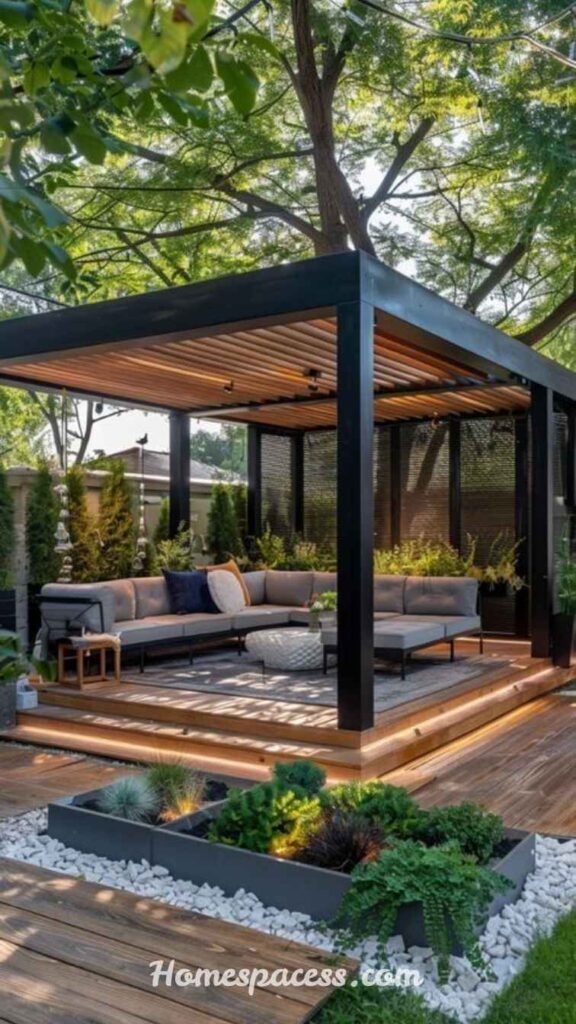
A pergola is arguably the single highest-ROI addition to any outdoor patio. It transforms an exposed slab into a sheltered gathering spot, creates vertical interest in an otherwise flat space, and provides a natural framework for climbing plants, string lights, or retractable shade panels. Studies from the National Association of Realtors suggest outdoor structures like pergolas can return 50–80% of their cost in home resale value.
Modern pergola design has evolved well beyond the basic lumber lattice. Today’s options include aluminum pergolas with motorized louvered roofs (brands like Palram and Pergola Depot), bioclimatic pergolas that adjust airflow automatically, and minimalist steel structures that pair beautifully with contemporary architecture. For a DIY-friendly build, cedar or pressure-treated pine kits from major home improvement retailers typically run $800–$2,500 for a 10×12 ft footprint.
Pro Tip
Attach a ceiling fan to the center beam of your pergola. It extends comfortable use by 2–3 hours on warm evenings and dramatically reduces perceived temperature.
Read Also: Simple Garden Decor Ideas for a Clean and Modern Outdoor Style
Install a Fire Pit or Outdoor Fireplace
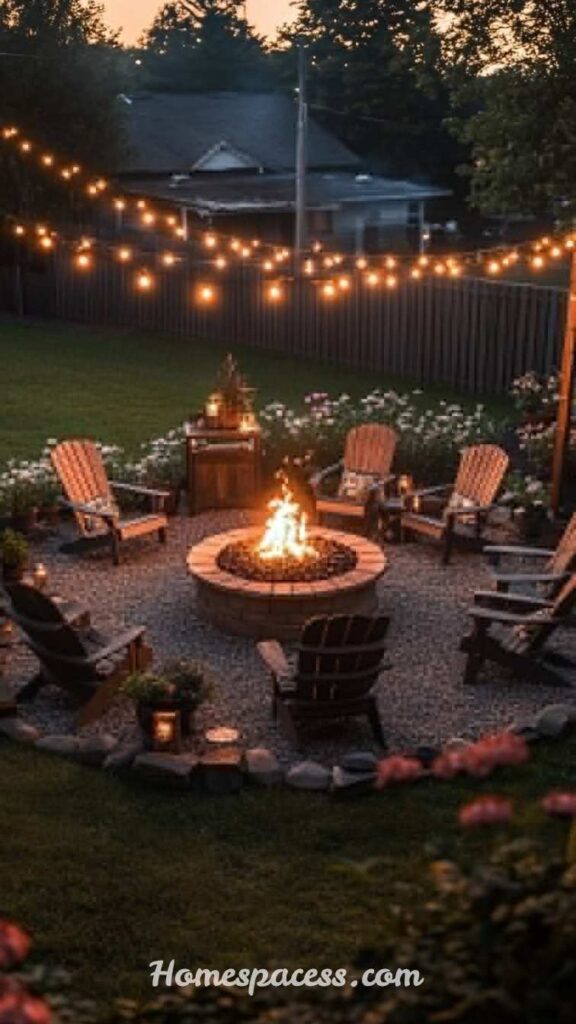
Fire is the single most powerful tool in outdoor design. It extends the usable season of your patio well into autumn, creates a natural social gathering point, and adds a primal sense of warmth and comfort that no lighting fixture can replicate. A well-positioned fire feature can transform a patio from a daytime deck into an evening destination you return to night after night.
For smaller patios (under 200 sq ft), a propane or bioethanol fire table is the practical choice no smoke, no embers, and zero clearance requirements in most municipalities. For larger spaces, a wood-burning in-ground fire pit or a freestanding masonry fireplace creates the authentic crackling experience. Gas-line fireplaces offer the visual appeal of a masonry build with push-button convenience, making them increasingly popular in suburban outdoor kitchens. Always check local codes before installing any permanent fire feature.
Pro Tip
Arrange patio seating in a circle or horseshoe shape around the fire pit, with chairs set 3–4 feet from the edge for safety and conversational comfort.
Read More: Simple Bedroom Decor Ideas to Make Your Room Look Modern and Fresh
Design an Outdoor Kitchen or Bar
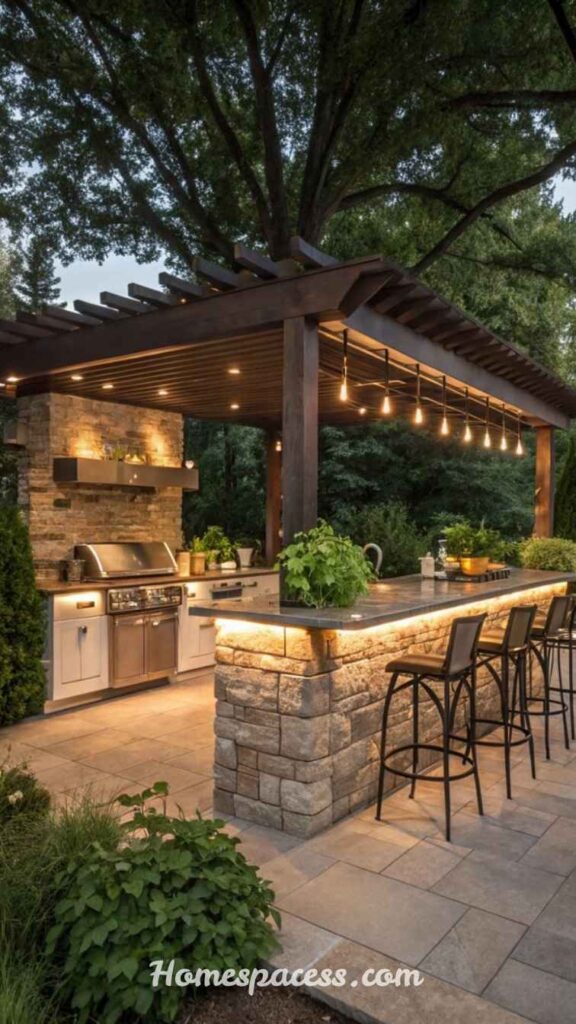
The outdoor kitchen has become one of the fastest-growing segments in home improvement and for good reason. When you move cooking outside, you eliminate indoor heat and odor, expand your entertaining capacity, and create a “chef’s experience” that makes every backyard gathering feel like a restaurant event. Even a modest outdoor kitchen a built-in grill, mini fridge, and stone countertop transforms how you use the space.
A practical outdoor kitchen layout follows the same work triangle principle as indoor kitchens: prep area, cooking zone, and serving/storage in close proximity. Modular stainless steel systems (from brands like Bull or Summerset) make this achievable without a full construction project. Budget-conscious homeowners can start with a premium freestanding grill station and add modular components over time. For an immediate upgrade at low cost, a portable bar cart with a small wine fridge creates an outdoor entertaining hub for under $400.
Pro Tip
Install a simple overhead hook rail or pegboard near your outdoor grill for utensil storage it keeps tools accessible and gives the area a purposeful, kitchen-like feel.
Don’t Miss: Trending Home Decoration Ideas to Upgrade Your Home Instantly
Layer Outdoor Lighting for Ambiance and Safety
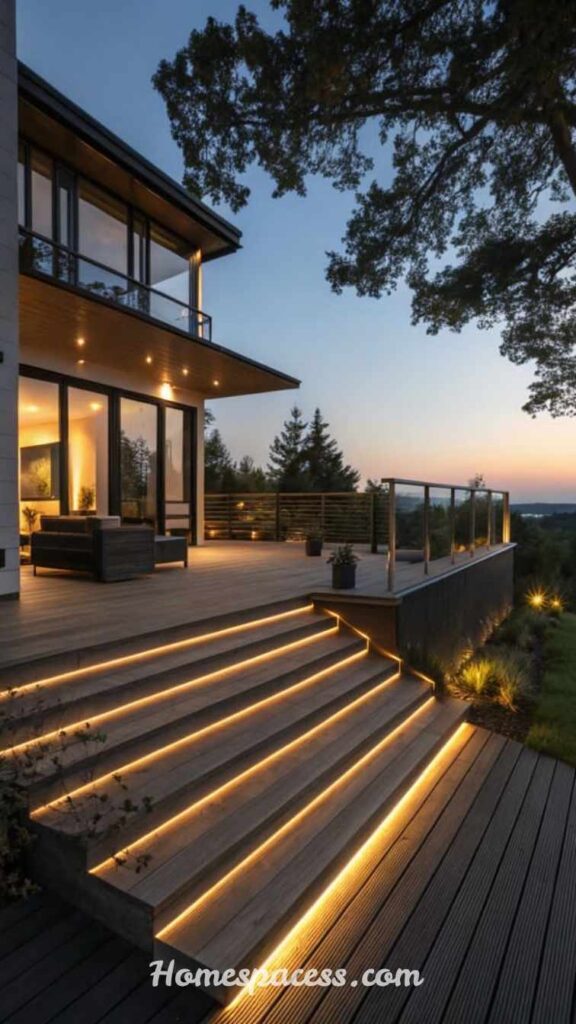
Outdoor lighting is one of the most underestimated elements in patio design and one of the most transformative. The mistake most homeowners make is relying on a single overhead fixture, which creates harsh, unflattering light. Instead, think in layers: task lighting (for cooking or dining areas), ambient lighting (string lights, lanterns, wall sconces), and accent lighting (up-lighting plants or architectural features).
String lights strung in a canopy pattern above a seating area have become a design classic for good reason they create an instantly festive, soft-glowing atmosphere that photographs beautifully and feels magical in person. Solar-powered path lighting along patio edges adds safety without electrical installation. For a more sophisticated effect, low-voltage LED landscape lighting (installed by electricians or ambitious DIYers) can highlight textural elements like stone walls, water features, or ornamental grasses at a fraction of the operational cost of traditional bulbs.
Pro Tip
Use warm-white (2700K) bulbs for all patio lighting the warm tone mimics candlelight and flatters skin tones, making evening gatherings feel more intimate.
Add a Water Feature for Sensory Calm
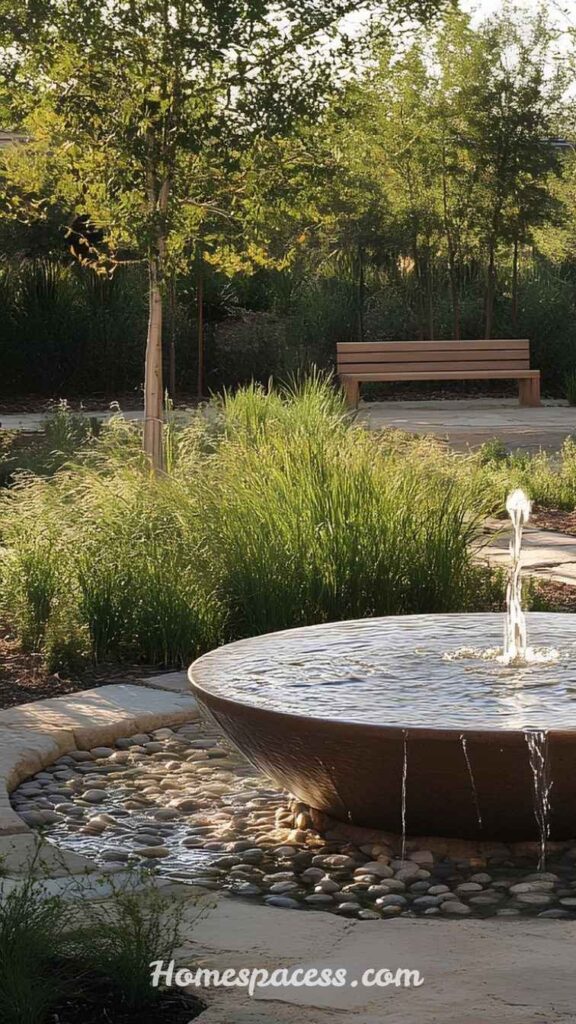
Sound design is the most overlooked dimension of outdoor living. A well-placed water feature whether a wall fountain, freestanding urn bubbler, or small naturalistic pond introduces white noise that masks traffic and neighborhood sounds, creating a private oasis effect even in dense urban settings. Research in environmental psychology consistently links the sound of moving water to measurable reductions in stress and cortisol levels.
For small patios, a self-contained wall fountain (typically 18–24 inches wide) installs in an afternoon and runs on a recirculating pump that consumes less electricity than a light bulb. Mid-size patios benefit from a freestanding sphere or trough-style water feature placed near a seating area. Larger garden patios can accommodate a pondless waterfall or stream a professionally installed version typically costs $2,000–$6,000 depending on scale, but creates a focal point that defines the entire outdoor space.
Pro Tip
Place your water feature upwind from your primary seating area (usually northeast or east in the Northern Hemisphere) so the sound carries toward you naturally.
Use Pavers and Natural Stone Flooring
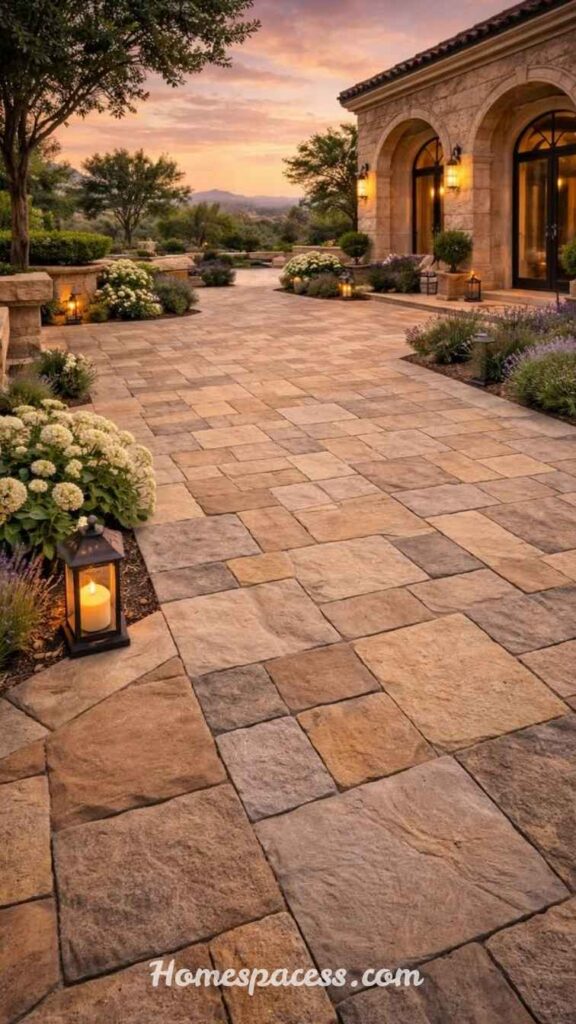
The flooring material you choose sets the entire visual tone of your outdoor patio. Concrete slabs are functional but flat. Natural stone travertine, bluestone, flagstone, or slate brings warmth, texture, and timeless character that ages beautifully over decades. Porcelain pavers, the fastest-growing segment of outdoor flooring, offer the look of stone with extreme durability, frost resistance, and minimal maintenance.
For a mid-century modern aesthetic, large-format 24×24 porcelain pavers in a light grey or warm sand finish create a clean, architectural look. For a Mediterranean or Tuscan feel, tumbled travertine in a random ashlar pattern delivers the warm, aged aesthetic that pairs perfectly with terra cotta planters and wrought iron furniture. Budget-conscious homeowners can create dramatic impact with gravel or decomposed granite poured within defined edging, these materials look intentional and cost a fraction of masonry paving.
Pro Tip
Mix materials intentionally a core of large-format pavers surrounded by a border of contrasting smaller stones or gravel creates a “framed” look that feels custom-designed.
Incorporate Vertical Gardens and Green Walls
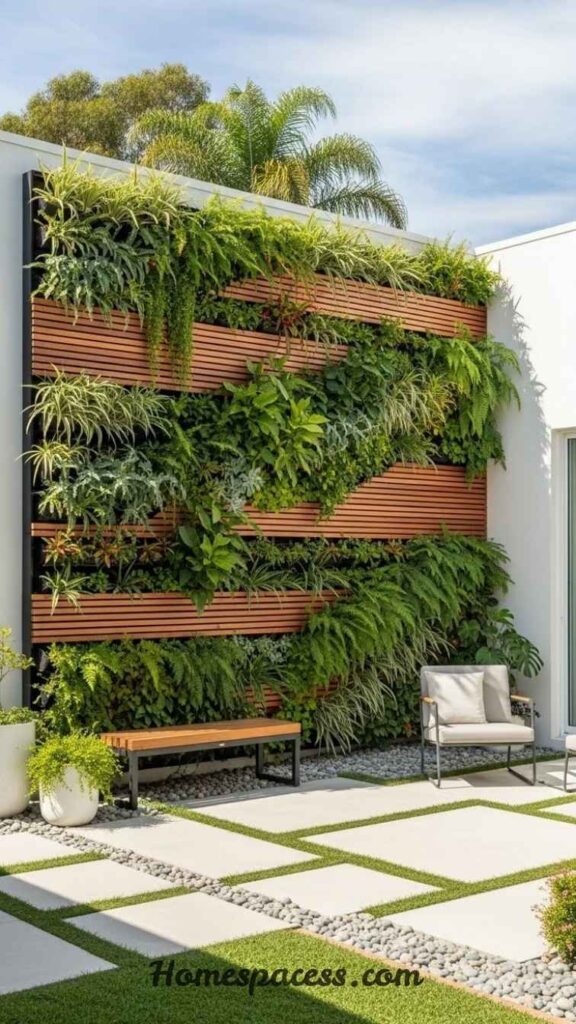
Vertical gardening is the space-maximizing technique that small patio owners have been waiting for. Instead of competing with limited square footage, green walls and trellis systems take gardening upward adding lush visual texture, natural air purification, and privacy screening without consuming a single square foot of floor space. A well-planted vertical garden can reduce the ambient temperature of a sun-exposed wall by up to 10°F through evaporative cooling.
Entry-level vertical gardens can be built with modular felt pocket systems (brands like Woolly Pocket), cedar ladder planters, or simple DIY pallet gardens. More sophisticated living wall systems with integrated drip irrigation are now available from brands like Tournesol and Florafelt, starting around $300–$500 for a 4×4 ft panel. For a maintenance-free version, train climbing plants like wisteria, climbing hydrangea, or star jasmine onto a simple cable trellis system and let them fill in over 1–2 growing seasons.
Pro Tip
Combine herbs like basil, mint, and rosemary in your vertical garden you’ll have a fragrant, functional, and visually lush wall that also serves as a cooking resource.
Build a Dedicated Dining Area
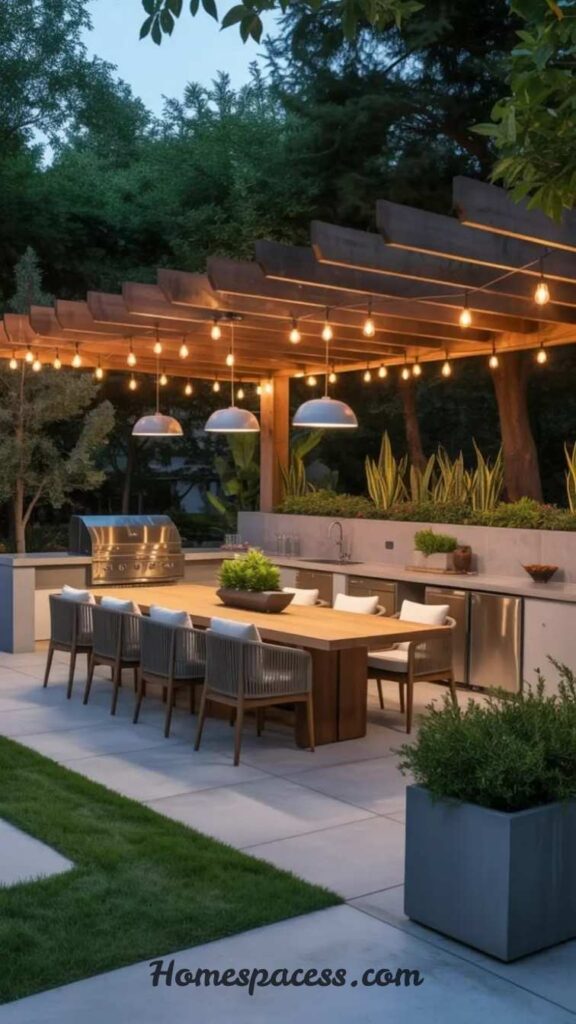
Al fresco dining is one of life’s simple luxuries but only when the setup actually supports it. A dedicated outdoor dining area, properly scaled and equipped, makes every meal feel like an occasion. The key is right-sizing the table to your space: a 6-seat table requires at minimum a 12×12 ft area when surrounded by chairs and a 3-foot clearance path. Trying to fit too much furniture into too small a space is the number one reason outdoor dining areas feel crowded and uncomfortable.
For the table itself, teak remains the gold standard for outdoor dining furniture naturally weather-resistant, beautiful, and a furniture investment that lasts 30–40 years with minimal maintenance. Powder-coated aluminum alloy is the practical alternative, offering lightweight durability and a wide range of contemporary designs at a lower price point. Overhead, a market umbrella (9–11 ft diameter) provides shade for a 6-person table without the commitment of a permanent structure look for canopies rated UPF 50+ with a tilt mechanism for afternoon sun control.
Pro Tip
Add a side serving station (even a simple folding table) near your outdoor dining area it eliminates the constant trips inside and makes outdoor entertaining genuinely effortless.
Design a Cozy Reading or Relaxation Nook
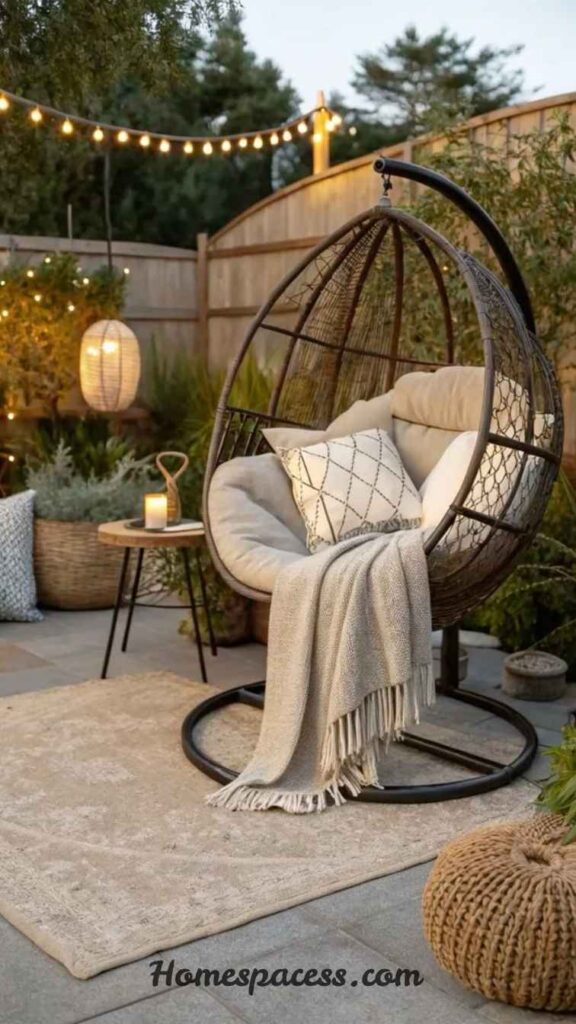
Not every outdoor space needs to be a social hub. One of the most valuable and underutilized outdoor patio ideas is carving out a private, single-person retreat: a reading nook, meditation corner, or hammock spot designed purely for solitary restoration. These quiet zones dramatically increase how often a patio gets used, because they serve the everyday need for personal decompression, not just the occasional party.
A hanging egg chair or oversized wicker swing chair positioned in a shaded corner creates an immediate cocoon of comfort. Add a small side table for coffee, a waterproof storage ottoman for books and blankets, and a simple canopy or umbrella for overhead protection. For complete immersion, surround the nook with tall ornamental grasses, bamboo screening, or a tall potted olive tree these create a sense of enclosure without blocking air circulation. The goal is to make a space where the outside world genuinely disappears for an hour.
Pro Tip
Use a weighted outdoor blanket (these now come in weather-resistant, quick-dry fabrics) in your relaxation nook the gentle pressure enhances relaxation and makes cool evenings much more comfortable.
Create Privacy with Smart Screening Solutions
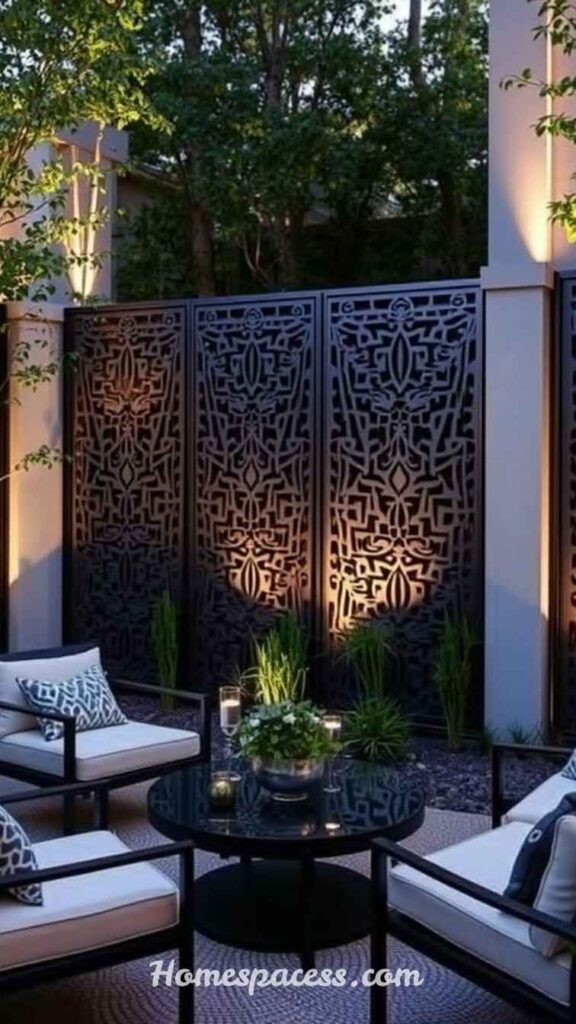
Privacy is the invisible prerequisite for genuine outdoor enjoyment. Even the most beautifully designed patio will go unused if neighbors can see directly in, or if the space feels exposed. The challenge is creating privacy without making the space feel closed-off or dark. The solution is layered screening using a combination of plants, structures, and decorative elements at different heights to create natural visual barriers without sacrificing airflow or light.
Tall bamboo in grow bags or planters creates instant, moveable privacy walls (clumping bamboo varieties won’t spread invasively). Cedar privacy screens with slatted designs provide structure while allowing breeze through. Outdoor shade sails in a triangular or rectangular configuration solve overhead sightlines from neighboring balconies. For renters or those who need flexibility, freestanding outdoor screens (teak, metal, or rattan) from brands like CB2 and Restoration Hardware Outdoor offer designer aesthetics with zero installation requirements.
Pro Tip
Layer a living privacy hedge (arborvitae, boxwood, or skip laurel) in front of any solid fence or wall the plants soften the barrier aesthetically and add a natural texture that dramatically improves the space.
Introduce Color with Outdoor Textiles and Décor
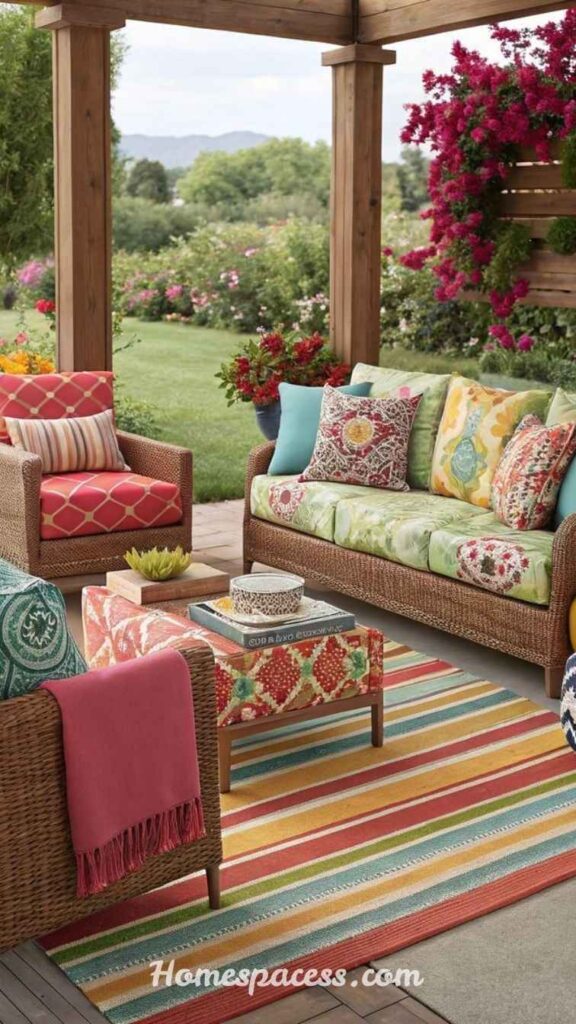
Color is the fastest, most affordable way to transform any outdoor space and most homeowners dramatically underutilize it. The outdoors is already a backdrop of greens and earth tones; the opportunity is to introduce intentional pops of color through cushions, rugs, planters, lanterns, and accessories that express personality and make the space feel curated rather than generic. Even a single bold-colored accessory a cobalt planter, a terracotta garden stool, a striped rug can anchor a visual palette for an entire patio.
For a cohesive look, start with a base of neutral furniture (white, grey, or natural wood tones) and then build a 3-color accent palette using textiles. A warm earthy scheme might combine rust, warm cream, and olive green. A coastal palette might layer navy, coral, and sandy beige. Seasonal rotation keeps the space feeling fresh swap cushion covers for spring/summer brights and autumn/winter earth tones. Look for Sunbrella, Outdura, or RAVE fabrics specifically, as these are engineered to resist UV fading, mold, and moisture far better than standard indoor fabrics.
Pro Tip
Oversize your outdoor rug most people choose one too small. A rug that fits all furniture legs on it (or at least front legs) makes the space feel expansive and intentionally designed.
Incorporate Smart Technology for Modern Outdoor Living
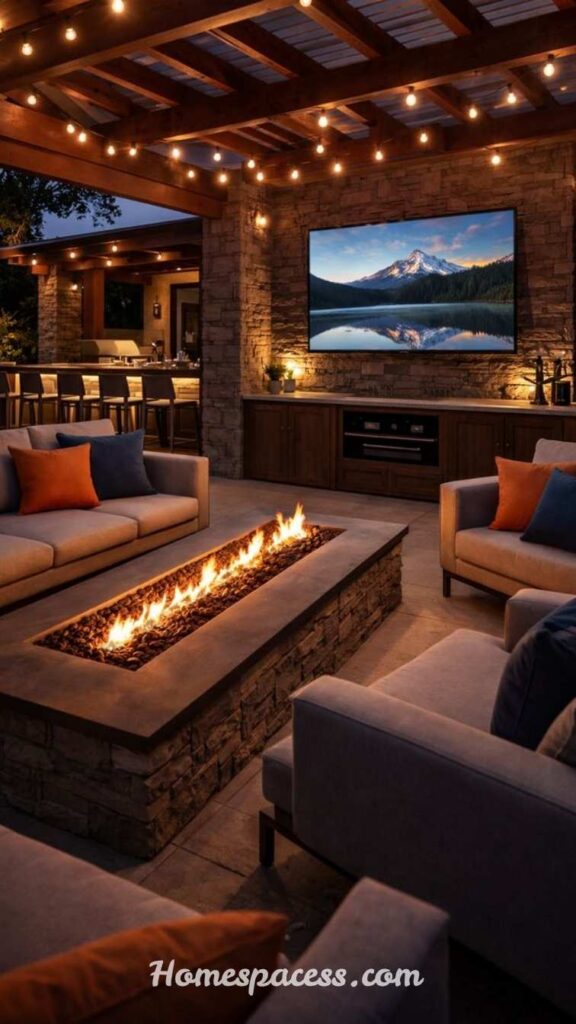
Smart outdoor technology is no longer just a luxury upgrade it’s fast becoming a practical solution to everyday outdoor living challenges. Weather-responsive smart irrigation systems (like Rachio or RainBird) prevent overwatering and dramatically reduce water bills. Outdoor Bluetooth speakers (specifically rated for weather exposure) from brands like Sonos or Bose allow seamless music extension from interior to exterior spaces. Smart string lights and LED systems controlled via smartphone apps allow you to adjust color temperature, brightness, and timing without leaving your seat.
For patios in climate-variable regions, motorized pergola roofs with weather sensors are increasingly affordable these automatically close when rain is detected and open to maximize sun on clear days, extending patio use across more seasons without constant manual adjustment. Outdoor-rated smart plugs and outlets (with weatherproof covers rated to UL or NEMA 3R standards) enable control of fans, heaters, and lighting from a single app or voice assistant. The cumulative effect of smart outdoor integration is a patio that practically manages itself lowering the friction that often prevents outdoor spaces from being used daily.
Pro Tip
Install an outdoor Wi-Fi extender or mesh node specifically designed for exterior use a stable wireless connection on your patio enables remote work, streaming, and smart device control without the dead zones most homes experience outdoors.
Conclusion
Outdoor Patio Ideas can truly change how your backyard feels and works. You do not need a large space or a big budget to start. Simple steps can make a big difference. Add comfortable seating, soft lighting, and a few plants for a fresh look. Use rugs or cushions to bring color and warmth. These small updates help create a cozy and inviting place. You can enjoy quiet mornings, family dinners, or relaxing evenings outside. A well-designed patio makes everyday life more pleasant and adds value to your home.
Outdoor Patio Ideas also let you show your personal style in an easy way. You can choose a modern setup or a more natural and cozy theme. Pick materials and colors that match your home. Try simple DIY ideas and improve your space step by step. Do not rush the process. Take time to build a space you really enjoy. In the end, your patio can become your favorite spot to relax, spend time with loved ones, and make lasting memories.
Trend Analysis
Outdoor Patio Design Trends: 2026 and Beyond
The biggest macro shift in outdoor patio design right now is the concept of the “outdoor room” evolving into the “outdoor home.” Post-pandemic behavioral changes have permanently altered how people relate to their outdoor spaces research from the American Institute of Architects shows outdoor living additions consistently rank among the top residential design priorities, year after year since 2021. Homeowners no longer want a patio; they want a fully equipped exterior living environment that supports every activity from remote work to weekend entertaining.
On the aesthetics front, 2026 is seeing a decisive move toward biophilic design materials, forms, and palettes drawn directly from nature. Think rough-hewn travertine, organic-shaped furniture (curves replacing the angular lines of the 2010s), and living elements like moss walls and tree-form planters integrated into structural design. Simultaneously, “japandi” outdoor aesthetics (a fusion of Japanese minimalism and Scandinavian warmth) are gaining rapid traction, characterized by natural wood tones, negative space, and a deep emphasis on craftsmanship over ornamentation.
Looking further ahead to 2026–2028, the convergence of outdoor design with sustainability technology is accelerating rapidly. Solar-integrated pergola panels, greywater-fed irrigation systems, and hempcrete outdoor walls are moving from architectural niche to mainstream catalog offerings. The patios of the near future will not just be beautiful they’ll be net-positive contributors to a home’s energy and environmental footprint.
Expert Insights
Real-World Patio Optimization: What Most Guides Miss
The most consistent insight from landscape designers and outdoor living specialists is this: homeowners consistently overestimate how much they’ll use large, open patio spaces, and underestimate how much they’ll use intimate, well-defined smaller zones. The “great lawn” model a wide-open patio with no sub-structure almost always ends up underutilized. The solution is deliberate zone planning: even a 20×20 ft patio benefits from three defined areas a dining zone, a lounge zone, and a transition/planting zone.
Another overlooked professional insight involves microclimate management. Every patio has a microclimate determined by its sun exposure, prevailing wind direction, and surrounding structures. A north-facing patio in a temperate climate is fundamentally a different design challenge than a west-facing patio that bakes in afternoon sun. Professional landscape designers always start with a site analysis observing the space at multiple times of day across seasons before specifying furniture placement, shade structures, or planting. Even a basic understanding of where sun and wind hit your patio at 4pm in July changes every decision that follows.
Finally, the #1 budget-optimization insight from experienced outdoor designers: spend disproportionately on the floor and the light. Floor quality (materials, finish, pattern) has the largest visual impact per dollar in any outdoor space. Lighting specifically layered ambient and accent lighting has the largest impact on how much the space is actually used. Cheap furniture on beautiful pavers under good lighting looks far better than premium furniture on a bare concrete slab.
Sustainability & Long-Term Value
Building a Patio That Pays Back Financially and Environmentally
Sustainable outdoor patio design isn’t a compromise it’s a compounding investment. Materials chosen for ecological integrity (reclaimed wood, recycled content pavers, natural stone from regional quarries) consistently outperform conventional alternatives in longevity and maintenance cost. Teak furniture from responsibly certified plantations (look for FSC certification) lasts 4–5x longer than typical synthetic alternatives. Permeable pavers which allow rainwater to percolate through rather than running off reduce local flooding risk, recharge groundwater, and can reduce stormwater utility fees in municipalities that meter runoff.
Reclaimed Wood
Lower embodied carbon, unique character, typically more durable than new-growth timber.
Permeable Pavers
Reduce runoff, recharge groundwater, lower stormwater utility costs.
Solar Outdoor Lighting
Zero operational cost, no electrical installation, improving battery tech year-on-year.
Native Plant Landscaping
Minimal irrigation, supports local pollinators, dramatically reduces maintenance time.
From a financial perspective, the ROI on outdoor patio investment varies by type: a basic patio installation returns 30–60% at resale, while a full outdoor kitchen returns 55–80%, and a well-built pergola returns 50–80%. However, these figures understate the true value a compelling outdoor living space measurably reduces time to sale and differentiates a property in competitive real estate markets. The psychological premium buyers place on a ready-to-enjoy outdoor space often exceeds the literal cost of improvements.
Future Predictions
The Outdoor Patio of Tomorrow: Upcoming Innovations to Watch
Within five years, the integration of AI-driven outdoor environment control will move from prototype to mainstream product. Imagine a patio system that automatically adjusts its motorized shade panels based on live sun position data, activates its misting system when skin-temperature sensors detect discomfort, dims or brightens lighting in response to ambient cloud cover, and plays curated sound environments based on time of day all coordinated through a single home automation hub without a single manual input.
Material science is also producing genuinely exciting developments for outdoor spaces. Self-cleaning porcelain surfaces (using photocatalytic technology that breaks down organic stains under UV light) are entering the residential market. Phase-change materials embedded in outdoor cushion cores that absorb heat during the day and release it in the evening extending thermal comfort without energy input are in active commercial development. Mycelium-based outdoor furniture (grown from fungal root structures rather than manufactured) is transitioning from design concept to production at several emerging sustainable brands.
Perhaps most significantly, modular outdoor living systems are poised to transform how patios are built and upgraded. Rather than committing to a fixed layout, next-generation modular systems will allow homeowners to reconfigure kitchen stations, seating modules, shade structures, and planting beds seasonally the outdoor equivalent of flat-pack interior furniture, but designed for permanent, weather-resistant outdoor use at a design quality that rivals custom construction.
Common Mistakes
7 Outdoor Patio Mistakes That Cost Homeowners (and How to Avoid Them)
Even with the best intentions and a generous budget, certain patio design mistakes consistently undermine the final result. These aren’t obscure technical errors they’re high-frequency mistakes that appear in project after project, and understanding them is genuinely worth more than most design tips.
- Choosing furniture before measuring: Oversized furniture in a small patio immediately makes the space feel claustrophobic. Always measure and tape out furniture positions on the actual patio surface before purchasing anything.
- Ignoring drainage: A patio that pools water after rain becomes unusable and damages materials over time. Ensure a minimum 1% slope away from the house and plan drainage channels for areas that collect runoff.
- Buying the wrong outdoor furniture grade: “Outdoor” label doesn’t equal weather resistance. Cheap wicker and powder-coated steel from discount retailers degrades within 2–3 seasons. Look for commercial-grade materials with multi-year warranties.
- Only one light source: A single overhead fixture creates a harsh, functional (not atmospheric) light environment. Layer at least three types: ambient, task, and accent, using multiple sources at different heights.
- Neglecting shade planning: A beautiful patio becomes unusable at 2pm in summer if there’s no sun mitigation strategy. Plan shade structures at the design stage, not as an afterthought.
- Creating one big undifferentiated space: Without zone definition (dining, lounging, cooking), large patios feel like parking lots. Divide any patio over 150 sq ft into at least two defined functional areas.
- Treating the patio as seasonal: Patios designed for summer only are underperforming assets. Adding a heat source (fire pit, patio heater, or outdoor fireplace) and weather protection extends usable months dramatically and adds year-round value.

Team Home Spacess shares simple, practical design ideas that work for real families. The team focuses on cozy décor, soft colors, and natural textures that make a space feel truly lived-in. From everyday decorating tips to creative home projects, Team Home Spacess is dedicated to helping readers create warm, comfortable, and inviting spaces with a fresh and personal touch.