

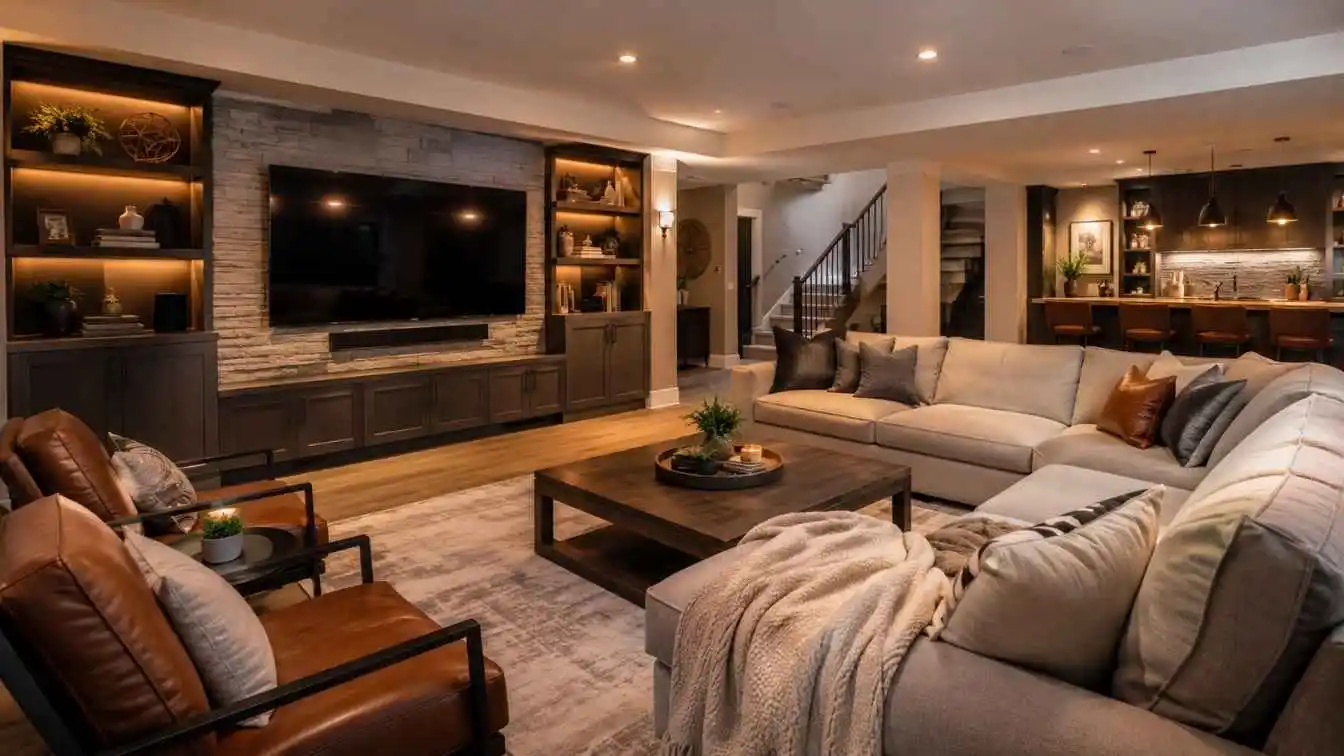
Most basements are wasted space cold, dark storage zones collecting dust instead of memories. But the same square footage sitting beneath your feet could become the most-used room in your entire home.
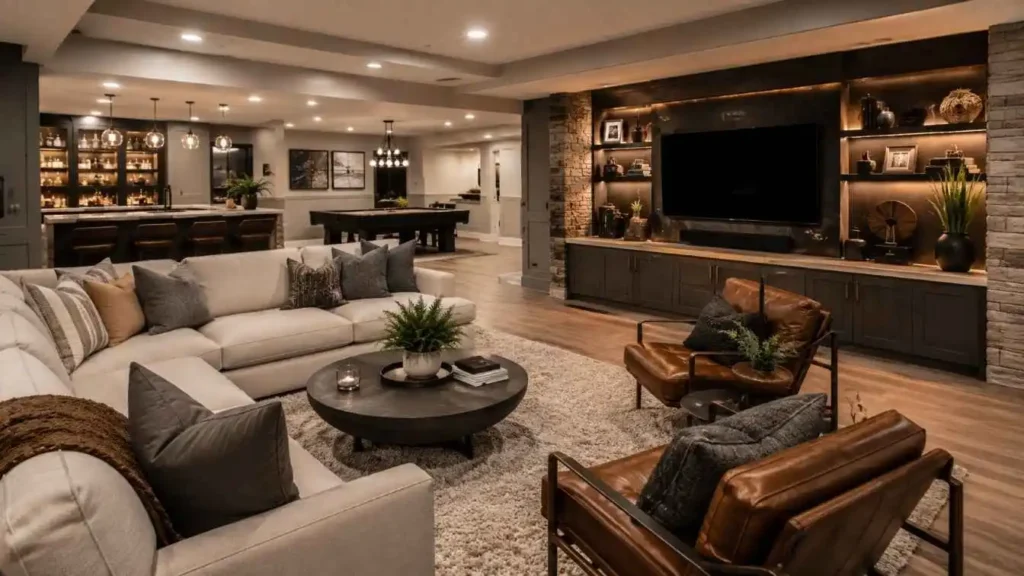
The challenge is that basements come with real constraints: low ceilings, limited natural light, moisture concerns, and an awkward sense of isolation from the rest of the house. These aren’t deal breakers they’re design problems that have tested, proven solutions. Once you understand them, your basement family room can feel warmer, brighter, and more inviting than rooms above grade.
Cozy Movie & Media Zone
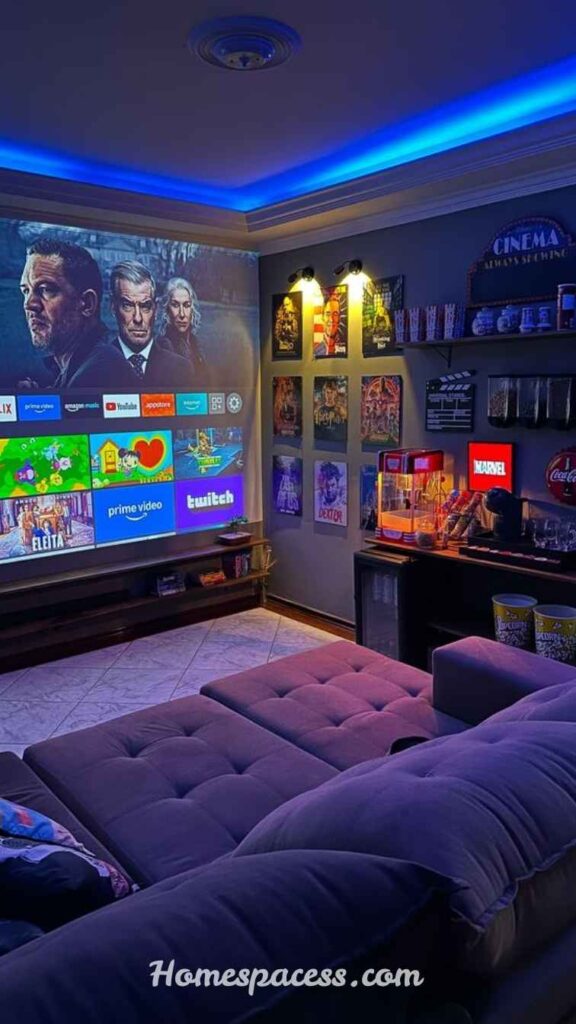
The basement is arguably the best room in the house for a home theater naturally dark, acoustically isolated from street noise, and away from daytime foot traffic. The key is to go beyond just hanging a big TV on the wall. Layer your seating with a mix of a deep sectional sofa, oversized poufs, and a few recliners so different family members can watch in their preferred position. Dimmable sconce lighting behind the screen dramatically reduces eye strain and adds cinematic depth.
Don’t overlook acoustic treatment. Even basic fabric wall panels which can double as art cut down echo and muddiness caused by hard basement walls. For a family-friendly setup, opt for a projector and retractable screen rather than a fixed TV. This lets you fold the screen away and reclaim floor space for other activities when movie night is over. Streaming-ready smart systems make operation simple even for kids.
Expert Insight: Position seating 1.5× the screen diagonal away from the screen for ideal viewing comfort. For a 100-inch projector screen, that’s about 12–13 feet of clear viewing distance plan your layout around this before buying furniture.
Must Read: Stunning Staircase Decor Ideas for Small Spaces and Narrow Halls
Industrial Chic Lounge
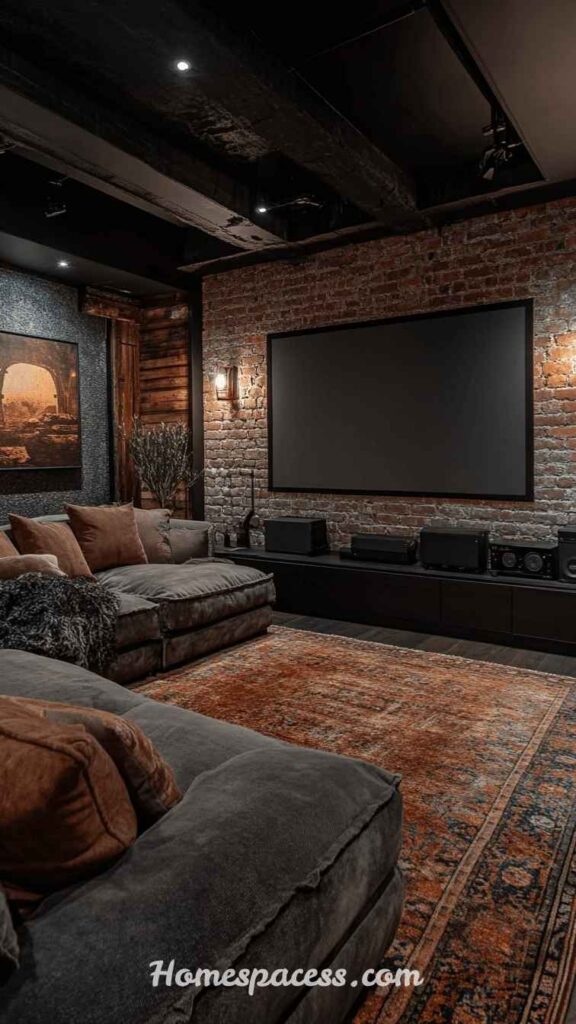
Basements naturally lend themselves to the industrial aesthetic exposed pipes, concrete floors, and unfinished ceilings can become design features rather than flaws. Painting exposed ductwork and beams in flat black or deep charcoal makes them look intentional. Pair this with Edison-bulb pendant lights, leather or leather-look sofas, and raw wood shelving for a curated, loft-like atmosphere that feels sophisticated without being precious or formal.
The industrial style also solves a practical basement problem: it embraces imperfection. You don’t need to skim-coat every concrete wall or perfectly finish every edge. Metal mesh cabinet fronts, concrete countertops on a small bar area, and reclaimed wood accent walls all add character without requiring flawless execution. This style is particularly durable for families scratches and dings only add to the aesthetic over time.
Pro Tip: Use large-format porcelain tiles that mimic polished concrete on the floor they’re far warmer underfoot and easier to clean than actual concrete, while maintaining the industrial look seamlessly.
Also Read: Bathroom Mirror Ideas to Create a Spa-Like Feel in Your Bathroom
Kids’ Play & Study Corner
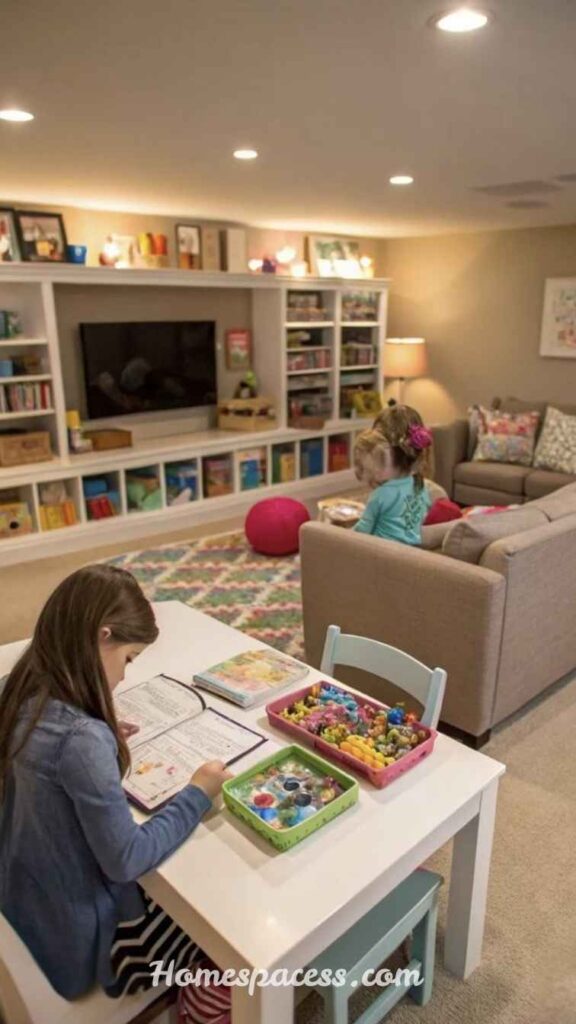
A dedicated kids’ zone in the basement is one of the most practical gifts you can give your family. When children have a space where noise, mess, and movement are genuinely welcome, the rest of the house stays calmer and cleaner. Zone the area into at least two sub-areas: an active play zone with soft flooring tiles, a craft table, and toy storage; and a quieter study corner with proper task lighting, a desk at the right height, and minimal distraction. The two zones can coexist beautifully if color and furniture define the boundary rather than walls.
Think long-term when designing this space. Modular furniture that adjusts as children grow desks with adjustable heights, shelving at varying levels, storage that transitions from toy bins to book storage extends the room’s usefulness from ages 3 to 16. Wall-mounted pegboards are underrated: they cost almost nothing, adapt endlessly, and keep frequently used items off flat surfaces. Mount a whiteboard or chalkboard wall panel instead of a standard painted surface in the study area for durability and flexibility.
Unique Insight: Consider running a dedicated ethernet cable to the study corner rather than relying on Wi-Fi. Basement Wi-Fi signals are often weakest in this location, and a wired connection means homework interruptions from dropped connections become a thing of the past.
Read More: Smart Backyard Bar Ideas to Create a Perfect Outdoor Hangout Spot
Multifunctional Open Layout
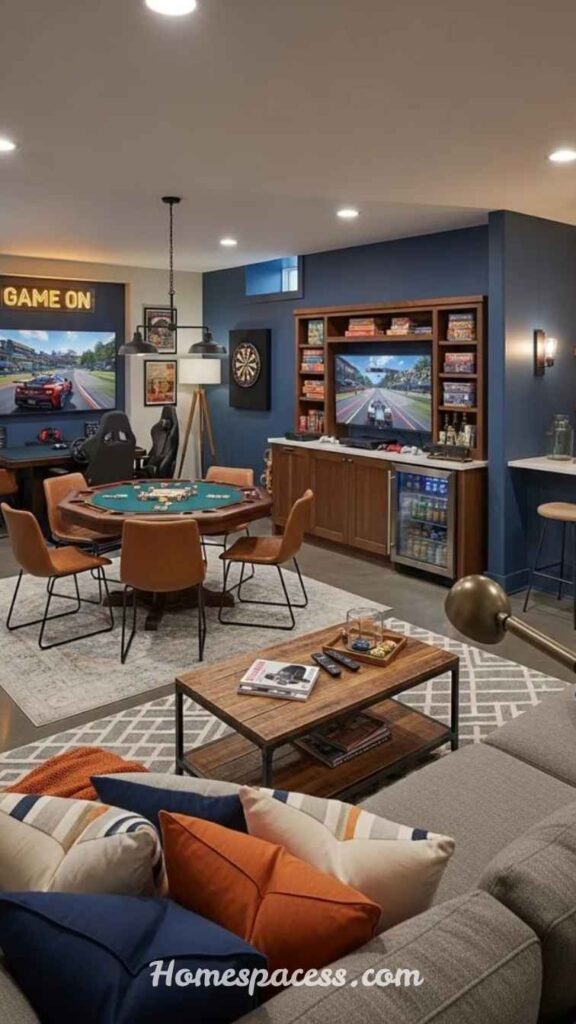
The most common mistake in basement design is treating it like a single-purpose room. Real family life is rarely single-purpose someone is always watching a game, doing homework, folding laundry, or on a video call simultaneously. An open-plan layout with clearly defined zones lounge, activity table, gaming station serves families far better than a rigid single-use room. Area rugs are your most powerful zoning tool: they define spaces visually without walls, and they’re completely changeable as needs evolve.
Furniture arrangement matters as much as furniture selection. Floating furniture off the walls instead of pushing everything to the perimeter creates distinct zones and makes the basement feel intentionally designed rather than assembled from overflow pieces. A large, low bookshelf placed perpendicular to a wall can act as a partial divider between a media zone and a play area without blocking light or airflow. Double-duty pieces like storage ottomans, fold-out sofa beds, and extendable coffee tables amplify the room’s versatility dramatically.
Pro Tip: Before buying any furniture, tape out zones on the floor with painter’s tape and live with the layout for a few days. What feels intuitive on paper often needs adjustment once you’re physically in the space tape costs nothing to move.
Don’t Miss: Trendy Baby Nursery Ideas for Boys That Make Your Room Look Amazing
Rustic Farmhouse Retreat
The warmth of the farmhouse aesthetic counters everything that feels uninviting about a typical basement. Shiplap accent walls or even more affordable shiplap-look paneling add texture and warmth without the weight of dark paint or heavy stone. Natural wood beams on the ceiling, whether structural or decorative, visually raise the eye and reduce the perception of low ceiling height. Pair these with linen upholstery, rattan light fixtures, and muted earthy tones like warm cream, sage green, and terracotta to create a space that feels genuinely cozy rather than designed-to-look-cozy.
One underused farmhouse technique for basements is shiplap on the ceiling rather than just the walls. A whitewashed ceiling treatment reflects more light, makes the ceiling feel higher, and adds architectural character that distinguishes your basement from every other “finished basement” in the neighborhood. It’s also a more forgiving finish than smooth drywall any imperfections in the ceiling framing are hidden rather than highlighted.
Expert Insight: The farmhouse palette works especially well because its light, muted tones compensate for the lack of natural light that most basements suffer from. Avoid deep, saturated colors in low-light basements they absorb the limited light available and shrink the room visually.
Sports Bar & Game Room
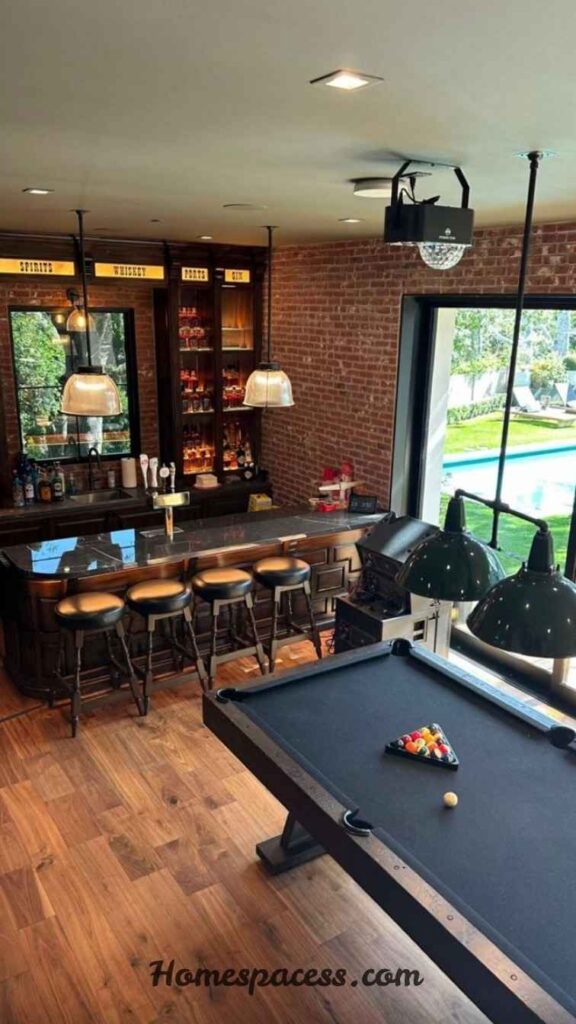
A basement sports bar hits a sweet spot between entertainment and functionality that virtually no other room in the house can offer. The combination of a mounted TV or projection system, a bar area with stools, and a games table billiards, foosball, or ping pong creates a space that draws family and guests for hours without anyone feeling like they need to entertain. The key design decision is the bar placement: position it on a wall with direct access to the nearest utility line to minimize plumbing costs if you plan a sink.
For families with younger children, balance the adult entertainment zone with age-appropriate game options so the room serves everyone. A section of the room dedicated to tabletop games, card tables, or a shuffleboard table works for all ages. Consider mounting multiple smaller screens rather than one giant screen this allows different games to be watched simultaneously during major sporting events, which dramatically increases the room’s social usefulness during family gatherings.
Pro Tip: Install a mini-split unit for heating and cooling in a game room rather than extending your central HVAC system. Basements used for active recreation generate more body heat than typical rooms you’ll want independent temperature control, especially during summer gatherings.
Built-In Storage Solutions
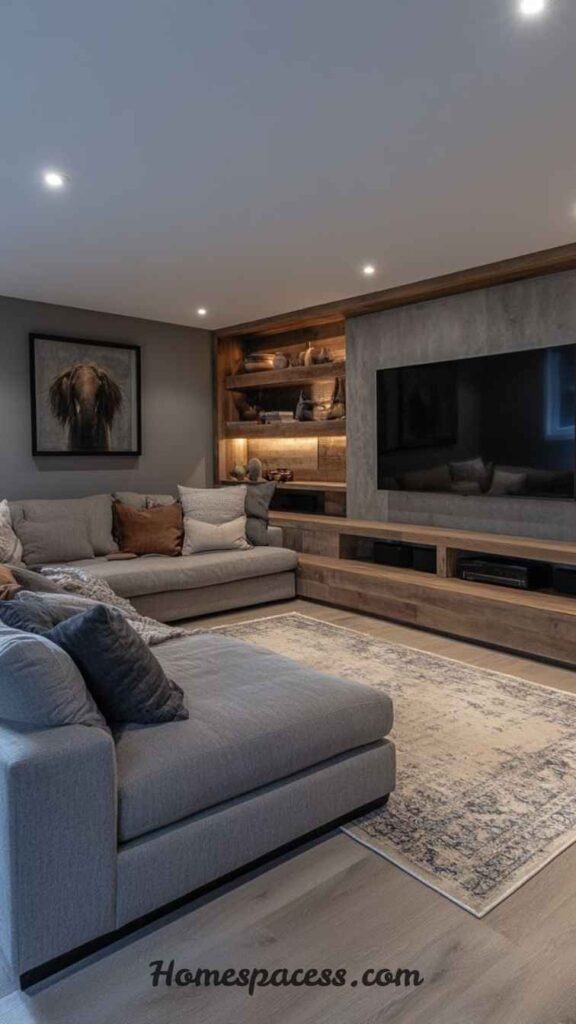
Storage is the silent backbone of every successful basement family room. Without a thoughtful storage strategy, the room becomes a dumping ground within months of finishing. Built-in shelving units on either side of a focal point a fireplace, TV, or large window serve double duty as functional storage and visual anchors that make the room look professionally designed. Floor-to-ceiling built-ins are particularly impactful in basements because they draw the eye upward and make the ceiling feel higher than it is.
The most overlooked storage opportunity in basements is the space under the stairs. A properly designed under-stair storage system with pull-out drawers, cubbies, or even a small wine rack reclaims what is often 40–60 square feet of wasted space. For families, this area can house seasonal sports equipment, bulky board games, or extra media equipment. Custom built-ins seem expensive but flat-pack IKEA cabinetry with custom doors and trim is a fraction of the cost and virtually indistinguishable from bespoke carpentry once painted and styled.
Unique Insight: Plan storage for the items your family actually owns not generic categories. Take a full inventory of what needs to live in the basement before designing shelving. Many homeowners build beautiful shelves and then realize they need different dimensions for what they actually store.
Wet Bar & Entertainment Hub
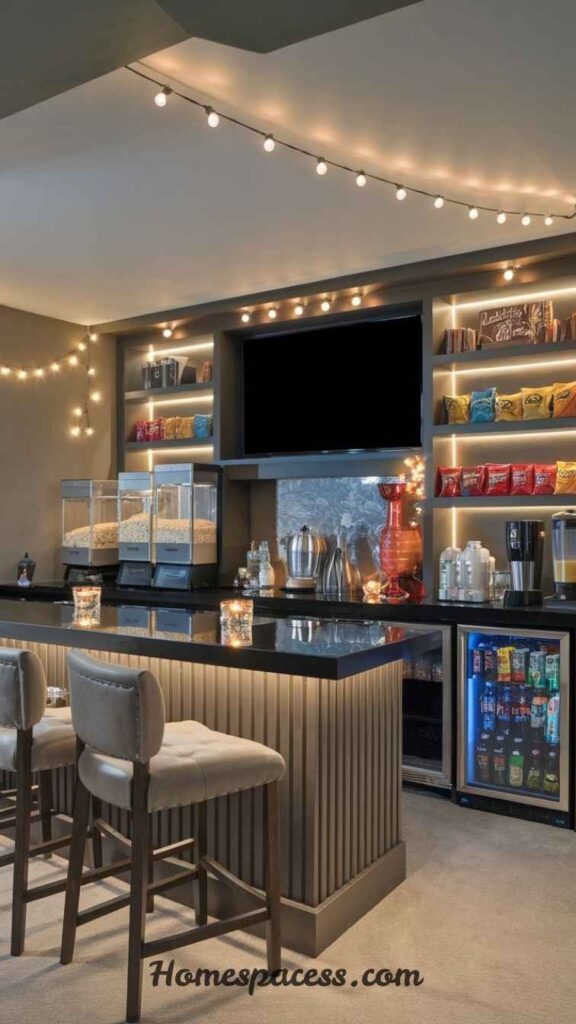
A wet bar elevates a basement family room from comfortable to genuinely impressive. The investment is moderate running a drain line and water supply to the basement is more affordable than most homeowners expect, especially during a full renovation when walls are already open. A well-designed bar doesn’t need to be large: six linear feet of counter space, a small under-counter refrigerator, a sink, and upper cabinetry for glassware creates a fully functional bar that serves a room of twenty people with ease.
The aesthetic design of the bar sets the tone for the entire room. A bold bar back whether it’s mirrored shelving, tile mosaic, or dramatic wallpaper gives the space a visual focal point that photographs beautifully and impresses guests. Pendant lighting over the bar counter adds intimacy and separates the bar zone from the rest of the room without a physical partition. For families with children, include a dedicated section of the bar refrigerator for non-alcoholic beverages and a lower counter section for kids to access snacks and drinks independently.
Biophilic Design Touches
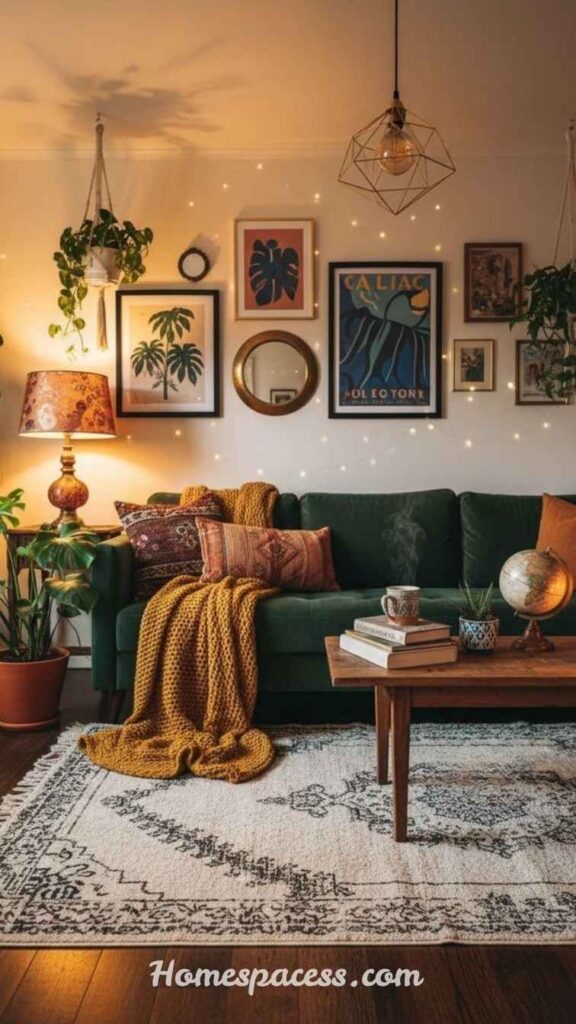
One of the most counterintuitive and effective basement design strategies is introducing plants and natural elements the exact things you wouldn’t expect to thrive below grade. While direct sunlight is unavailable, a dedicated grow light shelf with low-light plants like pothos, snake plants, ZZ plants, and philodendrons brings genuine life and warmth to a space that can otherwise feel artificially finished. Research consistently shows that plants in interior spaces reduce stress, improve air quality, and increase how long people comfortably occupy a room.
Beyond plants, biophilic design in a basement family room means using natural materials wherever possible: stone tile, live-edge wood tables, jute or wool area rugs, linen curtains over window wells, and wooden ceiling beams. These materials carry the psychological associations of the outdoors into a below-grade space and soften the inherent hardness of concrete and drywall. Water features even a small tabletop fountain add the sound dimension of nature, which is particularly effective in acoustically deadened basement spaces.
Pro Tip: Full-spectrum LED grow lights designed for plants have improved dramatically in cost and quality. A simple shelf mounted on a wall with a built-in timer creates a thriving plant display that becomes a genuine conversation piece and costs under $80 to set up.
Egress Windows & Light Wells
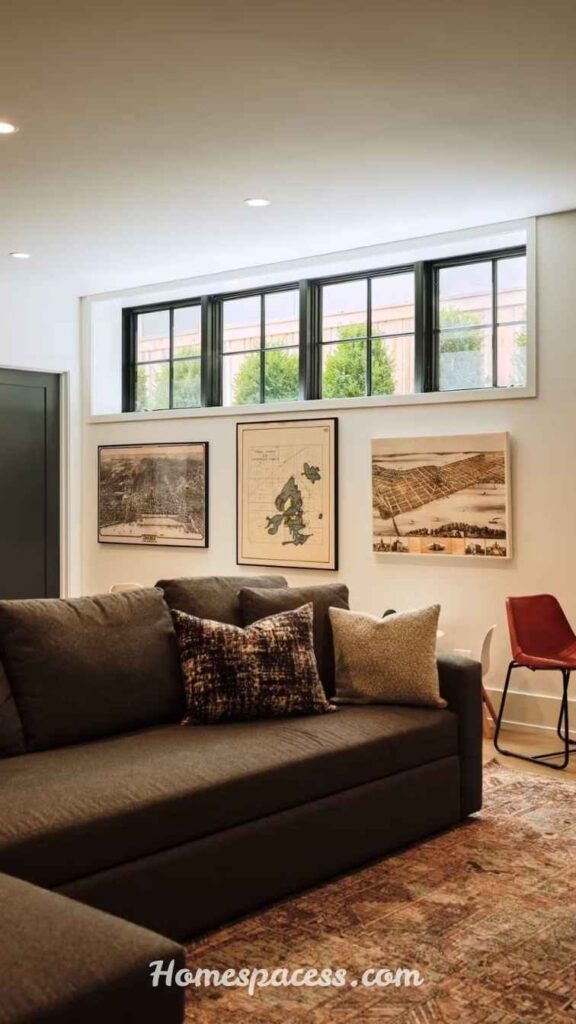
Adding or enlarging egress windows is one of the highest-return investments in basement finishing. These windows serve two critical purposes: they’re required by building code for any basement bedroom (and recommended for any occupied room), and they dramatically change how the space feels. A basement with properly sized egress windows and well-designed window wells filled with gravel and optionally fitted with transparent covers or glass blocks can receive enough natural light to feel noticeably brighter throughout the day.
Window well design is often an afterthought, but a thoughtfully designed well lined with stone, planted with shade-tolerant ground cover, or fitted with a decorative steel liner brings natural light and a glimpse of the outdoors that transforms the psychological experience of being in the basement. Mirrored surfaces inside window wells amplify the light further. From a safety and resale perspective, egress windows pay for themselves: a basement with proper egress can legally function as a bedroom, substantially increasing your home’s appraised value and functional living space.
Expert Insight: The cost of adding an egress window typically ranges from $2,500 to $5,000 including excavation. However, the ability to legally call a basement room a bedroom adds significant resale value in most markets, this investment returns 3× to 5× in home value increase.
Acoustic-Treated Music Room
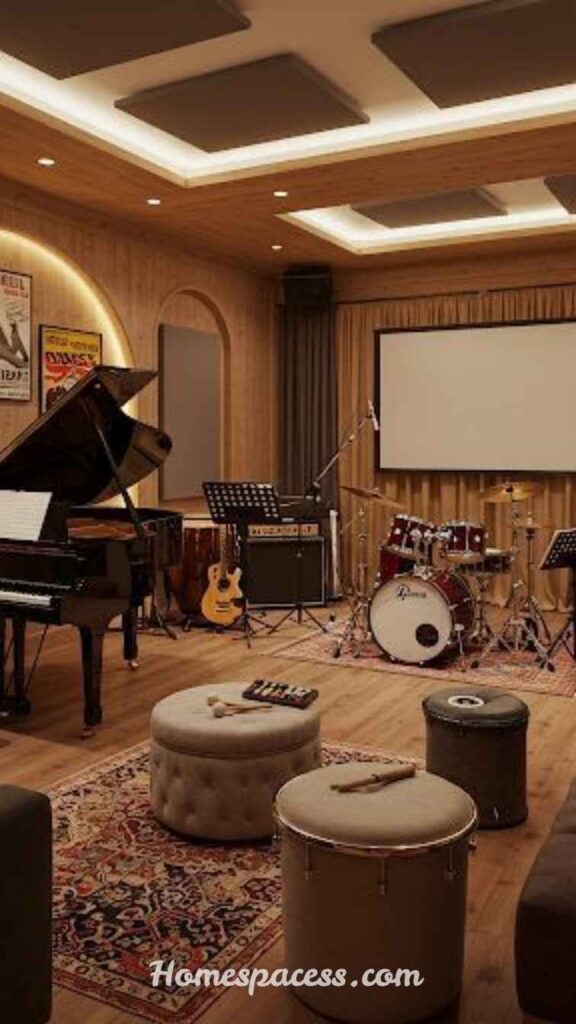
Basements are the natural home for music in a family house the structural mass of the surrounding earth provides inherent soundproofing that no above-grade room can replicate without major construction. However, a basement’s hard surfaces also create acoustic problems: flutter echo, standing waves, and harsh reverb that make music sound worse than it would in a carpeted upstairs room. The solution is strategic acoustic treatment: thick area rugs on concrete floors, fabric wall panels at first reflection points, and bookshelves filled with irregular objects all diffuse sound effectively without technical knowledge.
For families where music is a serious pursuit, a semi-professional acoustic treatment doesn’t require a recording studio budget. Rockwool-filled fabric frames built from 2×4 lumber cost under $30 each and outperform most commercial acoustic panels at a fraction of the price. Place them at the first reflection points on the side walls and behind the primary listening or playing position. Add a thick area rug and a sectional sofa, and the room transforms from a reverberant concrete box into a genuinely pleasant place to play, practice, and listen.
Teen Hangout Lounge
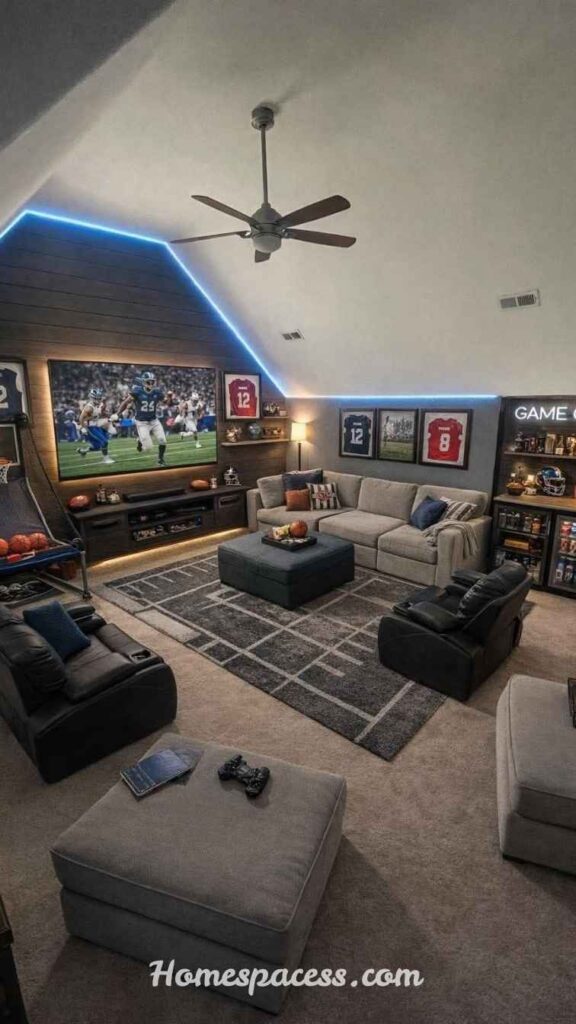
Teenagers crave independence within the family home they want a space that feels like theirs rather than an extension of their parents’ design preferences. A basement teen lounge is one of the smartest investments a family can make, primarily for a non-design reason: when teenagers have a comfortable, appealing space at home, they’re far more likely to spend time there rather than elsewhere. This gives parents passive awareness of their children’s social lives while respecting teens’ need for their own territory.
Design for durability and adaptability. Modular seating that can be rearranged loveseat-sized sectional pieces, large floor cushions, gaming chairs accommodates the constantly shifting social dynamics of teenage friendships. A dedicated gaming station with proper cable management and charging ports for multiple devices removes the frustration that kills the mood in most teen spaces. Acoustic panels are worth the investment here because teenagers play music loudly; containing the sound to the basement maintains household harmony without restricting the teen’s experience.
Pro Tip: Involve teenagers in the design decisions for their space even small choices like wall color or furniture style increase their ownership of and responsibility for the room. A teen who helped design a space is significantly more likely to keep it reasonably clean.
Scandinavian Minimalist Den
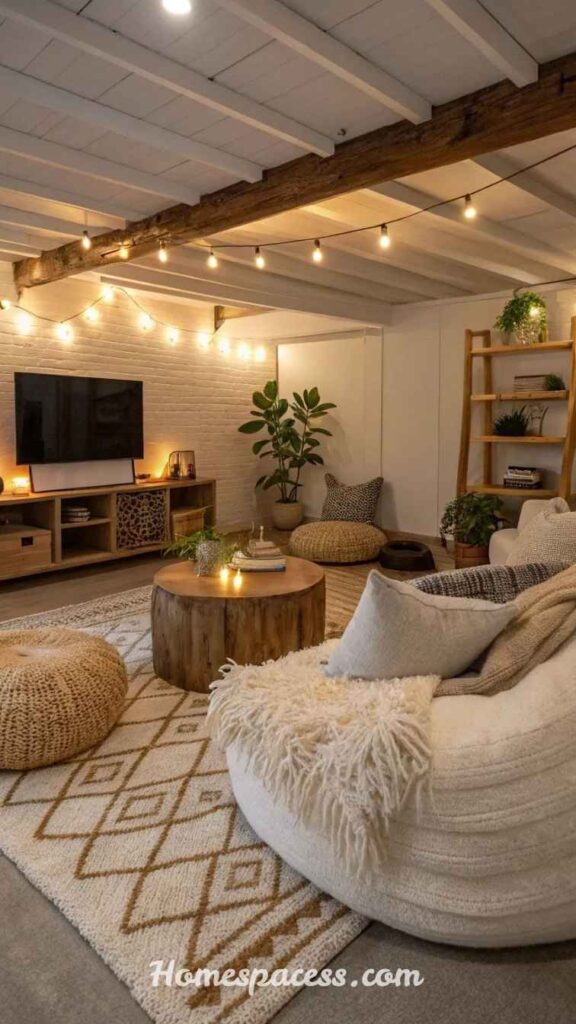
Scandinavian design philosophy was essentially developed for low-light, cold environments which makes it a near-perfect fit for basements. The core principles translate directly: maximize light with pale walls (warm whites and light grays rather than cool whites, which can feel clinical); use natural wood elements to add warmth; keep furniture clean-lined and multi-functional; and add warmth through textiles rather than color. A Scandinavian basement family room feels calmer, brighter, and more spacious than any other style applied to the same footprint.
The minimalist approach also makes basement maintenance significantly easier fewer surfaces collect dust, fewer decorative items need to be cleaned, and the clean lines make messes easier to spot and address. This style works especially well for families who want the basement to function as a genuine second living room that feels as polished as the rooms upstairs. Choose warm-toned LED lighting (2700K–3000K color temperature) throughout this temperature compensates for the absence of daylight and prevents the basement from feeling artificially lit even on bright summer days.
Expert Insight:
Scandinavian design relies heavily on layered textiles for warmth throw blankets, wool area rugs, linen cushions. In a basement, this is especially effective because it addresses both visual and physical warmth. Basements run 5–8°F cooler than upper floors, and layered textiles make that temperature difference feel comfortable rather than cold.
Conclusion
Basement Family Room Ideas can help you turn an empty basement into a warm and useful space for the whole family. Small changes like better lighting, cozy furniture, and simple decor can make the room feel comfortable and stylish. You can also add storage and fun entertainment areas to match your daily needs.
These Basement Family Room Ideas are great for movie nights, relaxing evenings, and family gatherings. A well-designed basement can add beauty and value to your home. Choose colors and layouts that fit your style and make the space feel welcoming. With the right ideas, your basement can become everyone’s favorite room.
Trend Analysis
2026–2027 Basement Family Room Design Trends: What’s Actually Changing
The basement family room is undergoing a quiet but significant evolution in 2026–2027. The era of the “bonus room” a basement that was essentially a carpeted afterthought furnished with hand-me-down furniture is definitively over. Homeowners are now investing in basements with the same intentionality they bring to primary living spaces, driven by rising home prices that make moving less viable and by the remote work revolution that permanently increased time spent at home.
Warm Earth Tones
Terracotta, warm sage, clay, and deep amber are replacing the cool grays and whites of the previous decade in basement spaces.
Integrated Tech Zones
Dedicated, cable-managed tech walls with wireless charging surfaces and smart home hubs are becoming standard basement features.
Biophilic Basement
Grow-light plant walls, natural material surfaces, and even small indoor water features are gaining traction in below-grade spaces.
Flex-Use Rooms
Spaces designed to shift function throughout the day gym in the morning, office by noon, lounge by evening are driving furniture and layout choices.
Looking toward 2027, the most significant trend is the integration of wellness infrastructure into basement design. Beyond the home gym, this means saunas (particularly compact infrared sauna cabins), cold plunge tubs, meditation corners, and dedicated breathwork spaces. These aren’t luxury outliers as the wellness industry continues its mainstream expansion, they’re becoming middle-market aspirations that are increasingly built into basement finishing plans from the start rather than retrofitted later.
Expert Insights
Practical Tips Professionals Use That DIY Guides Usually Skip
The most common professional insight that DIY basement guides overlook is this: solve moisture before solving aesthetics. Every design decision you make on top of an unaddressed moisture problem is money at risk. Before choosing flooring, paint, or furniture, conduct a simple concrete moisture test tape a 12-inch square of plastic film to the bare concrete floor and seal all edges with tape. Leave it for 24–48 hours. If condensation forms under the plastic, you have a moisture issue that requires vapor barrier membrane, proper drainage matting under flooring, or exterior waterproofing before any finish materials go down.
The second overlooked professional practice is lighting design before layout design. Most homeowners pick furniture positions and then figure out where to put lights professionals do the reverse. Recessed lighting should be positioned first based on functional zones, with special attention to avoiding overhead lights directly above seating positions (which creates unflattering, shadow-casting light on faces). Layer ceiling recessed lights with sconces, table lamps, and accent lighting so every zone has its own independently controllable lighting character. In a basement without natural light, your artificial lighting carries all of the emotional weight that windows provide in above-grade rooms.
Finally: floor height matters more than most people realize. If you’re laying a subfloor system, you’ll lose 2–3 inches of ceiling height. In a basement with 8-foot ceilings, that’s a meaningful reduction. Sleek, low-profile subfloor systems (DRIcore, for example) add only 3/4 inch of height while still providing critical thermal separation and moisture protection. Choosing the thinnest adequate subfloor option and pairing it with the lowest-profile flooring compatible with your design intent preserves ceiling height that genuinely changes how the finished space feels.
Long-Term Value
Sustainability, Home Value & Strategic Planning for Basement Rooms
Finishing a basement is one of the highest-return home improvement investments available, but only when the execution focuses on long-term quality rather than short-term cosmetic appeal. Studies from the National Association of Realtors consistently show that a well-finished basement returns 70–75% of renovation costs at resale better than most kitchen or bathroom remodels. However, basements finished with cheap materials, inadequate moisture protection, or poor lighting return significantly less because buyers’ inspectors flag these issues and they become negotiating leverage that erodes your position.
From a sustainability perspective, the basement is one of the most thermally efficient spaces in the home surrounded on three sides by earth that maintains a near-constant temperature year-round. Insulating the rim joists (the horizontal framing members where your home’s floor system meets the foundation walls) has one of the highest energy return ratios of any insulation project in a home, and it’s often overlooked in basement finishing. Closed-cell spray foam in rim joists costs relatively little and can reduce heating and cooling costs by 5–10% annually.
When selecting materials for long-term value, prioritize moisture-resistant options even in zones that seem dry. Luxury vinyl plank over moisture-resistant subfloor, fiberglass-backed drywall (instead of standard paper-faced drywall), and mold-resistant paint throughout the space adds a small upfront cost that prevents catastrophic renovation failures. A basement that requires tear-down and remediation 10 years post-finish loses all of its initial investment resilient material choices are the single best insurance policy against that outcome.
Future Innovations
The Basement Family Room in 2030: What’s Coming Next
Within the next 3–5 years, smart home technology will fundamentally change how basements function as family spaces. Current smart home integration in basements is mostly cosmetic app-controlled lighting, voice-activated speakers. The next generation will be structural: pressure-sensitive flooring that knows when and where family members are present and adjusts lighting and temperature automatically by zone; smart glass in window wells that darkens for movie watching and clears for maximum daylight; and AI-driven HVAC systems that learn a family’s schedule and pre-condition the basement to the right temperature before it’s occupied.
Spatial computing augmented and mixed reality technology will also change what a basement family room means. As headsets become lighter and more social (multiple family members experiencing shared AR content simultaneously), basements will be intentionally designed with flat, clear floor space for active mixed reality experiences. This will shift furniture toward the perimeter, create demand for wall-mounted technology integration, and influence flooring choices toward materials that support mixed reality boundary detection. The basement of 2030 may be as much a digital environment as a physical one.
Perhaps most practically, the next wave of modular construction will make basement finishing dramatically faster and more accessible. Panelized wall systems designed specifically for basement installation pre-insulated, pre-wired, and moisture-resistant are already in development by several manufacturers. These systems, when widely available, will reduce basement finishing time from weeks to days and bring professional-quality results within reach of DIY-level skill and budget. For homeowners planning a basement project in the next 2–3 years, staying aware of these systems as they come to market could represent a significant cost saving.
Common Mistakes
Basement Family Room Mistakes That Cost Homeowners Dearly
These are the mistakes that don’t appear on inspiration boards but consistently derail real basement projects. Understanding them before you start is the difference between a finished basement you love for decades and one you quietly regret.
- Skipping the moisture test. Finishing over an undiagnosed moisture problem is the single most expensive mistake in basement renovation. What looks like a cosmetic issue (slight efflorescence on the wall) can signal active water infiltration that destroys drywall, flooring, and furniture within 2–3 years.
- Using carpet directly on concrete. Even with a pad, carpet directly on concrete wicks moisture and becomes a mold substrate. At minimum, use a quality vapor barrier and subfloor system or choose a more resilient flooring material entirely.
- Undersized electrical service. Basements added to existing electrical panels as an afterthought often end up on shared circuits that trip breakers during normal use. Budget for a dedicated sub-panel for the basement if your use will include media equipment, mini-fridges, gaming stations, and other electronics simultaneously.
- Ceiling height miscalculation. Building code minimums for habitable basement space vary by municipality but are typically 7 feet. Measure your ceiling height AFTER accounting for subfloor, flooring, and any recessed lighting fixtures not at the bare concrete ceiling before finishing begins.
- Ignoring egress requirements. Adding a room or bedroom in a basement without proper egress windows creates a code violation, prevents legal rental income if you ever want to rent the space, and creates a genuine safety hazard. Check local code requirements before finalizing your layout.
- Over-designing the first iteration. Many homeowners spend years planning a perfect basement and then over-invest in a layout that doesn’t match how they actually use the space. Consider a phased approach: start with infrastructure (electrical, insulation, drywall, flooring) and add furniture and technology incrementally as you learn how you use the room.
- Choosing cool-toned lighting. LEDs in the 5000K–6500K range look clinical and harsh in basements without natural light. Always choose warm-toned LEDs (2700K–3000K) for living spaces. This single decision has an outsized impact on how welcoming and comfortable the finished space feels to everyone who spends time in it.

Team Home Spacess shares simple, practical design ideas that work for real families. The team focuses on cozy décor, soft colors, and natural textures that make a space feel truly lived-in. From everyday decorating tips to creative home projects, Team Home Spacess is dedicated to helping readers create warm, comfortable, and inviting spaces with a fresh and personal touch.