

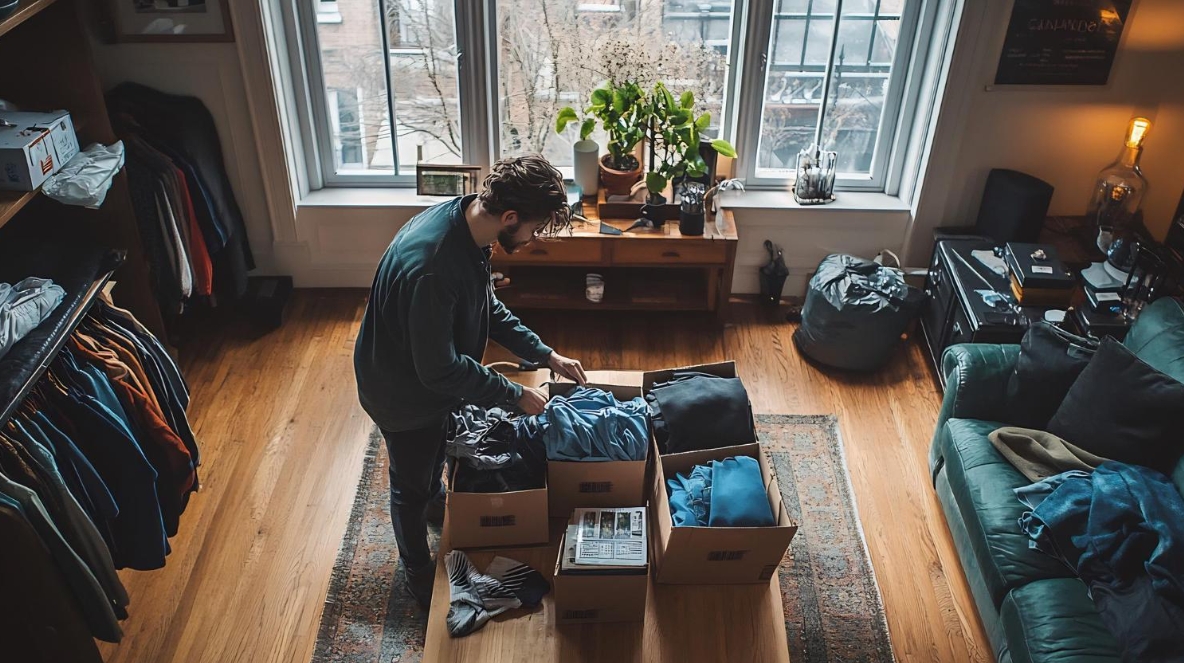
Moving has a way of showing you exactly how much you own. Cupboards you have not opened in years, a garage full of boxes from the last move and closets packed with clothes you never wear suddenly all need to be wrapped, carried and paid for. Every item you move costs time, packing materials and space in the truck.
That is why decluttering before a move is one of the smartest things you can do. It lowers moving costs, makes unpacking easier and gives you a fresh start in your new home. Sometimes, though, you will have things you want to keep but cannot fit in the new place right away. That is where a storage unit can help.
Start Early and Work Room by Room
Decluttering takes longer than most people expect, so start as soon as you know a move is coming. Six to eight weeks is a comfortable window for most homes. Tackle one room at a time, beginning with the spaces you use least, such as the basement, attic, garage or spare room. These areas tend to hold the most forgotten items, and clearing them early builds momentum.
Set aside a little time every day rather than trying to do everything in one weekend. Short, focused sessions are less tiring and lead to better decisions.
When a Storage Unit Makes Sense
Decluttering does not mean getting rid of everything you cannot use immediately. A storage unit is a practical solution in several common situations. If your moving dates do not line up and you need to leave one home before the next is ready, storage bridges the gap. If you are downsizing but are not ready to decide about certain furniture or family items, storage gives you time to think. Storage also helps when you are staging a home for sale and want to clear rooms so they look more spacious, or when you are moving temporarily for work and plan to return.
Choosing the right facility matters. Look at location, security, access hours and unit sizes. Providers such as Top Storage Co offer units ranging from as small as 25 square feet up to 300 square feet, along with options such as climate controlled and drive up units, which makes it easier to match the space to what you actually need to store.
Use a Simple Sorting System
As you go through each room, sort items into four groups: keep, sell, donate and discard. Be honest with yourself. If you have not used something in a year and it has no sentimental value, it probably does not need to come with you.
Ask practical questions as you sort. Will this fit in the new home? Does it suit the new layout? Would it cost less to replace it later than to move it now? Bulky furniture, outdated electronics and duplicate kitchen items are often easier to let go of than to transport.
Sell, Donate and Recycle
Items in good condition can earn you a little money or help someone else. Online marketplaces and local buy and sell groups work well for furniture, appliances and tools. A garage sale can clear a lot of small items in a single morning.
Donation is a good option for things that will not sell quickly. Many charities accept furniture, household goods and building materials, and some will even pick up larger pieces. Electronics, paint, batteries and chemicals should be taken to proper recycling or disposal sites rather than thrown in the household trash.
Pick the Right Unit Size
Renting too much space wastes money, while renting too little leads to damaged belongings and frustration. Make a list of what you plan to store before you reserve a unit. A small unit of around 25 square feet suits boxes, seasonal items and a few small pieces of furniture. A medium unit can handle the contents of a one bedroom apartment. Larger units hold the furniture and boxes from a whole house.
If you are unsure, ask the facility staff to help you estimate based on your list. Measuring large furniture in advance helps you avoid surprises on moving day.
Climate Control and Security
Some belongings are sensitive to heat, cold and humidity. Wooden furniture, leather, photographs, documents, electronics and musical instruments can warp, crack or develop mould in extreme conditions. If you are storing items like these for more than a few weeks, consider a climate controlled unit.
Security matters too. Look for gated access, video surveillance and good lighting. Ask whether you need your own lock and who has access to the property.
Pack Smart for Storage
How you pack affects how well your belongings survive. Use sturdy boxes of similar sizes so they stack evenly. Label each box clearly on more than one side. Wrap fragile items carefully, and disassemble furniture where possible. Keep a simple inventory of what is in the unit and place the items you may need first near the front.
Make Good Use of What You Let Go
Furniture, appliances and building materials you no longer need can often find a second life. Habitat for Humanity ReStores accept donations of gently used furniture, appliances and home improvement items, and many locations offer pickup for larger pieces.
A Lighter Move and a Fresh Start
Decluttering before a move saves money, time and stress. Combined with the right storage solution for the things you are not ready to part with, it lets you arrive in your new home with only what you need and the space to decide about the rest at your own pace.

Team Home Spacess shares simple, practical design ideas that work for real families. The team focuses on cozy décor, soft colors, and natural textures that make a space feel truly lived-in. From everyday decorating tips to creative home projects, Team Home Spacess is dedicated to helping readers create warm, comfortable, and inviting spaces with a fresh and personal touch.