
A house roof has to deal with different weather conditions throughout the year. In summer, it receives strong sunlight for long hours. During rainy weather, heavy rain, strong winds, and hail can also affect its condition. Asphalt shingles may handle these conditions for some time, but their performance can become weaker as the years pass. Some shingles start coming loose, while others lose their protective surface. Homeowners may then find themselves arranging repairs more frequently. In many cases, the roof needs a full replacement after around 12 to 15 years. Because of these issues, metal roofing is becoming a choice for more residential property owners. It offers good strength in different weather conditions, and the right type of coating can also help reduce energy use. Another important point is its longer service life compared with ordinary shingle roofing.
However, replacing an old roof is not a decision that should be made without looking at the available materials first. Metal roofing comes in several designs, and each system has its own features. Panel profiles, material grades, and fixing methods can be different, which also affects the final project cost. Homeowners need to consider the building structure, roof shape, and available budget before choosing one. Information about high-performance building materials from Window Pro TX explains how impact-rated metal roofing can help lower the chances of storm damage. Certain roofing finishes can also make cooling costs easier to manage during hot weather. Having some knowledge of these points before the work begins can help avoid a poor choice.
Major Benefits of Upgrading to a Metal Roof
For homeowners who are planning to replace an old roof, metal is one material worth considering. Its installation price is often higher than asphalt shingles, and this is something that needs to be considered. At the same time, the expected lifespan and maintenance costs should also be part of the decision. There are a few reasons why many property owners still prefer to spend more on a metal roofing system.
Superior Storm and Impact Resistance
Hail can cause different levels of damage depending on the roofing material. Some surfaces may crack or lose their protective layer after being hit several times. Metal panels, on the other hand, can be manufactured to handle stronger impacts. Products carrying a Class 4 impact rating have passed testing for resistance to severe hail impacts. For homes located in areas where hailstorms happen regularly, this type of roofing can be a useful option.
Wind damage is another matter that should not be ignored. During strong gusts, asphalt shingles can lift from the roof, particularly when they have already become old or weak. Metal panels are connected differently, and their interlocking design helps keep them in place. Some systems are rated for wind uplift speeds of more than 140 miles per hour. Of course, the actual protection also depends on the installation. When the panels and fastening system are fitted correctly, they can provide better resistance when severe storms reach the area.
Solar Reflectivity and Lower Energy Costs
The type of roof installed on a house can affect indoor temperatures more than some homeowners realize. Dark asphalt shingles absorb a considerable amount of sunlight during the day. Over time, this heat can move into the attic and make the upper part of the house much warmer. When the attic temperature rises, keeping the rooms comfortable becomes more difficult. The air conditioning system then has to run for longer periods, which can add to the electricity bill during summer.
A metal roof with a cool-roof coating can help with this problem. Its reflective surface sends a large part of the sunlight away instead of allowing the roof to absorb most of the heat. Depending on the coating, some products can reflect up to 70 percent of solar heat. This may help lower summer cooling expenses by around 20 to 25 percent. The actual savings will not be the same for every house, since climate, insulation, and building design all have an effect. Roof ventilation and the quality of the coating are also worth considering.
Outstanding Longevity and Low Maintenance
Asphalt shingles do not always age in a good way. After years of exposure to sunlight and changing weather, their protective granules may start coming off. Some shingles can also curl or become damaged. When these signs become more serious, homeowners may need to arrange repairs or even replace the roof.
Metal roofing usually stays in service for a much longer time. A good-quality system, when installed properly, can last approximately 40 to 70 years. This does not mean that no maintenance is needed after installation. Homeowners should still have the roof inspected from time to time, especially around flashing, fasteners, and other exposed sections. Even so, metal roofs generally need less regular maintenance than many traditional roofing materials. Their longer lifespan can also reduce the need to remove and replace the entire roof repeatedly, which means less old roofing material ends up in landfills.
Primary Types of Metal Roofing Panel Systems
Choosing metal roofing is only the first part of the decision. Homeowners also need to understand that different panel systems are available, and they are not all used for the same purpose. Some are selected because of their appearance, while others are mainly used where practical performance and cost are more important. The roof slope and structure of the building should also be checked before selecting a panel type. Looking at the common options can make this decision easier.
Standing Seam Metal Systems
Standing seam is generally considered one of the higher-end options for residential metal roofing. Its panels have raised edges that run from the lower part of the roof towards the top. These edges are joined with concealed clips, so the screws are not visible on the outer surface. This is different from exposed-fastener roofing, where the screws can be seen. Keeping the fasteners hidden also means they have less direct exposure to rainwater and changing weather.
There is another reason why this fastening method is useful. Metal naturally changes its size when the temperature changes. In hot weather, it expands, and when temperatures become colder, it contracts again. The concealed clips allow the panels to move slightly with these temperature changes. They do not hold the metal in one fixed position where natural expansion and contraction could create unnecessary stress.
For homeowners who prefer a cleaner roof appearance without visible screws, standing seam is worth considering. It gives the property a simple, modern look. Its concealed fastening arrangement can also reduce some of the problems that may develop around exposed screw openings. As with other roofing systems, though, correct installation is still necessary to protect against water entering the roof.
Exposed-Fastener Panels (R-Panel and PBR-Panel)
When the roofing budget is limited, exposed-fastener panels are often considered as a more affordable option. Their installation cost is usually below that of standing seam systems. This does not mean they cannot provide good protection. Their performance depends on the quality of the panels, the fastening materials, and how the installation work is carried out.
With this system, screws are used to attach the metal panels directly to the roof deck. Special neoprene washers are fitted with these screws to seal the openings around them. Their purpose is to reduce the possibility of water getting through the fastening points. R-Panel and PBR-Panel are two common examples of exposed-fastener roofing.
These panels are not limited to one type of building. They are used on residential properties, garages, workshops, and agricultural structures. Depending on the product specifications and installation quality, they can offer good resistance to hail and wind. One thing homeowners should remember is that the screws remain visible on the roof. The washers can wear down with time, and some fasteners may become loose. For this reason, checking them during routine roof maintenance is important.
Metal Shingles and Stone-Coated Steel
Not every homeowner likes the appearance of large metal panels. Some prefer a roof that looks closer to traditional shingles or tiles, but they still want the strength that metal can provide. Metal shingles are made for this kind of preference. Their outer design can resemble architectural shingles, wooden shakes, or clay tiles, while the material underneath is metal.
Stone-coated steel is another option for people who want a more traditional roof appearance. It is made using a galvanized steel base, with ceramic-coated stone granules attached to the upper surface. These granules give the roof a different finish and make it look more like conventional roofing materials. The steel underneath provides the main strength and durability. This system can therefore suit homeowners who want the appearance of a traditional roof but would rather use metal as the main roofing material.
Comparing Metal Roofing Panel Options
Appearance is not the only difference between metal roofing systems. The way panels are fastened, how long they may last, and the type of building they are commonly used on should also be considered. A panel that is suitable for one property may not be the right choice for another. The table below gives a general comparison of some commonly available metal roofing options.
| Panel Style | Fastener Type | Expected Lifespan | Best Use Case |
|---|---|---|---|
| Standing Seam | Concealed clip system | 50 to 70 years | High-end residential homes; low to steep slopes |
| R-Panel / PBR-Panel | Exposed washer screws | 40 to 50 years | Residential homes, workshops, and ranch structures |
| Metal Shingles | Concealed interlocking tabs | 40 to 60 years | Traditional suburban homes and steep-pitch roofs |
| Corrugated Panels | Exposed washer screws | 30 to 45 years | Agricultural buildings and utility sheds |
Crucial Steps for a Quality Metal Roof Installation
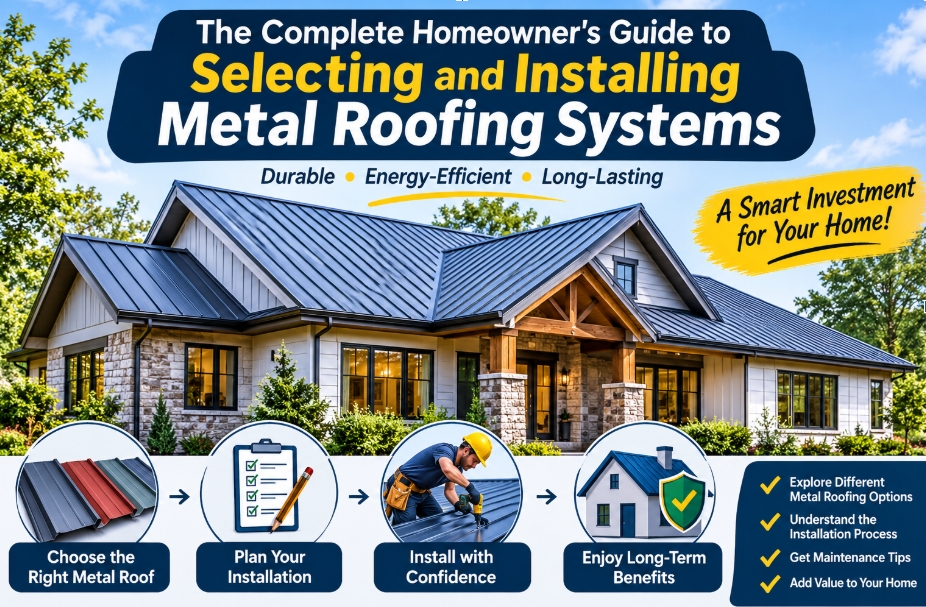
Buying good-quality metal panels is important, but the installation work needs the same level of attention. Even a small mistake can become a problem later, especially near roof edges, panel joints, or openings. Metal roofing installation involves several stages, and each stage needs to be completed properly. The main steps are explained below.
- Roof Deck Inspection and Preparation: Before new panels are installed, the old roofing material is removed and the roof deck is checked. Covering old shingles without looking at the surface underneath can create problems later. In some houses, moisture has already damaged parts of the plywood, making those sections weak. Any damaged areas should be replaced before moving forward. The roof deck also needs to be clean and reasonably flat, because an uneven surface can affect how the metal panels sit.
- Synthetic Underlayment Layer: After preparing the deck, installers place a high-temperature synthetic underlayment over the surface. This material stays underneath the metal panels and works as an additional protective layer. If water manages to get past the outer roofing, the underlayment can help protect the roof deck below. It acts as a secondary barrier rather than the main roofing surface. The selected underlayment should be suitable for metal roofing and the temperature conditions expected in the area.
- Eave and Drip Edge Flashing: Roof edges need proper attention because rainwater must be directed away from the building. Metal flashing is installed along the eaves and gables to guide water away from the fascia boards. This helps prevent water from collecting around the edges. Heavy-gauge perimeter flashing is commonly used for this purpose. If these sections are not installed correctly, water may reach parts of the roof where it can cause damage over time.
- Precision Panel Layout: The position of the first metal panel is more important than it may seem. Installers need to measure and align it properly with the roof edge before fixing the remaining panels. The first panel provides a starting point for the rest of the layout. If it is placed at the wrong angle, the panels installed after it may also become uneven. Taking time to check the measurements at this stage can prevent alignment problems during the rest of the work.
- Ridge Cap and Pipe Boot Sealing: Once the main panels are in place, the roof peak and pipe openings need to be completed. Ridge caps are fitted along the top of the roof, and ventilated versions can help maintain airflow through the attic. Pipe vents create openings in the metal surface, so they need proper sealing to prevent rainwater from entering. Flexible EPDM rubber flashing boots are placed around these pipes to close the gaps and provide protection against leaks.
Long-Term Value and Financial Advantages
When homeowners compare metal roofing with asphalt shingles, the installation price is usually the first thing they notice. Metal systems normally need a larger budget at the beginning. But looking only at the initial payment does not give a complete picture of the roofing cost. Future repairs, regular maintenance, and the expense of replacing the roof again should also be included. A properly installed metal roof can remain in service for several decades, which may help homeowners avoid some of the repeated costs that come with shorter-lasting roofing materials.
Insurance savings may also be possible, although this depends on the provider and the terms of the policy. Some insurance companies offer discounts for properties that have Class 4 impact-rated roofing. Homeowners should check directly with their insurance provider before expecting this benefit, because the rules are not the same for every company. Reflective metal coatings can provide another financial advantage. By reducing the amount of heat absorbed by the roof, they may help lower the use of air conditioning during the summer months.
The overall value of metal roofing comes from more than one benefit. Its longer service life can mean fewer complete roof replacements, while lower maintenance needs may reduce regular upkeep costs. Energy savings and possible insurance discounts can add to these benefits as well. A roof that is kept in good condition may also improve the appearance of a property and make it more attractive to future buyers. Still, these advantages depend on selecting the right panel system and having it installed correctly. When both of these things are handled properly, homeowners have a better chance of getting the protection and lifespan they expect from their metal roof.

Team Home Spacess shares simple, practical design ideas that work for real families. The team focuses on cozy décor, soft colors, and natural textures that make a space feel truly lived-in. From everyday decorating tips to creative home projects, Team Home Spacess is dedicated to helping readers create warm, comfortable, and inviting spaces with a fresh and personal touch.