

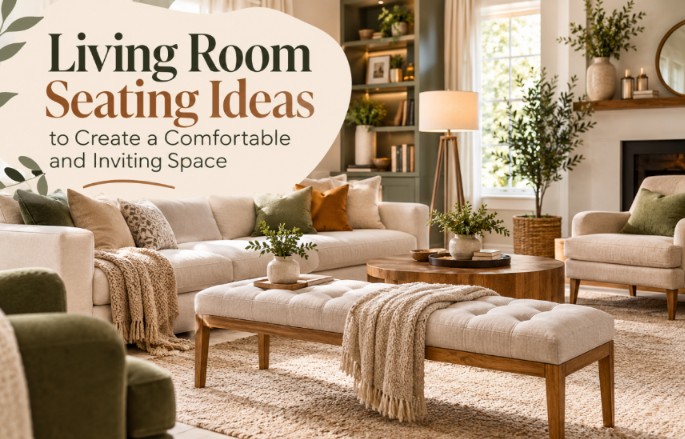
A living room has to work hard. It may be where the family gathers at the end of the day, where friends come to visit, or simply where you settle down with a book and a cup of tea. The way the seating is arranged can make all these activities feel easier. A thoughtful mix of sofas, occasional chairs and smaller seats can help the room feel welcoming without making it crowded.
Rather than choosing furniture one piece at a time, think about how people will use the room and how they will move through it. These ideas will help you plan a seating arrangement that feels comfortable, practical and suited to your home.
1. Start with the Room’s Main Feature
Before moving furniture around, decide what should draw the eye when someone enters the room. It could be a fireplace, a large window, a television or a favourite piece of artwork. Use that feature as a starting point for the seating plan.
A sofa can face towards the focal point, with an armchair or occasional seat positioned nearby. If the room is spacious, consider creating two smaller areas: one for watching television and another for reading or conversation. Leave clear routes between the furniture so people can move around without squeezing past chairs or tables.
2. Bring in a Bench for Extra Seating
A bench can provide an extra place to sit without the visual weight of another full-sized armchair. Depending on its shape and size, it may work against a wall, beneath a window or along the edge of the main seating area. If you are considering living room benches, look for a design that sits comfortably alongside your sofa and other furniture.
A wooden finish can add a natural element to the room, while an upholstered seat may create a softer look. Check the measurements before buying, particularly if the bench will sit near a walkway. It should be sturdy enough for its intended use and leave enough space for people to sit down and stand up comfortably.
3. Use Accent Chairs to Make the Layout More Sociable
An accent chair can introduce a different shape, colour or texture while giving the room another useful seat. Instead of placing it far away in an unused corner, angle it towards the sofa to create a natural place for conversation.
The chair does not have to match the sofa exactly. A deeper fabric shade can add contrast to a neutral sofa, while wooden legs may pick up details elsewhere in the room. In a compact space, pay attention to the chair’s overall footprint and avoid blocking doors, windows or access to the main seating area.
4. Make a Smaller Living Room Work Harder
In a small living room, the right proportions matter more than the number of seats. A large sofa may dominate the space, but choosing furniture that is too small can leave the room feeling less useful. Measure the room first and note the areas that need to remain clear.
A few practical ways to make the layout feel more open:
- Choose a sofa that fits the room rather than filling the longest wall automatically.
- Use a compact bench or occasional chair when you need an additional seat.
- Keep corners and walkways clear instead of filling every available gap.
- Consider furniture with open legs or a lighter visual profile.
- Arrange seating to make good use of daylight without blocking windows.
It can also help to leave a little breathing room around each piece. A layout that is easy to walk through will usually feel more comfortable than one packed with furniture.
5. Set Aside a Spot for Reading or Quiet Time
A quiet corner can give the living room another purpose without needing a separate room. Place a comfortable chair near a window or floor lamp, then add a small table for a book, reading glasses or a drink.
If you prefer a bench, choose one with a seat that is comfortable for the amount of time you plan to spend there. A cushion or throw can soften the look, but keep the arrangement simple. Position the reading spot slightly away from the busiest route through the room so it feels like its own little retreat.
6. Use a Bench to Break Up a Large Seating Arrangement
Large sofas and substantial coffee tables can make one side of a room feel visually heavy. A bench can introduce a lower, more streamlined shape and provide occasional seating without adding another bulky sofa.
Try placing it opposite the main sofa or near the edge of a seating zone, provided there is enough room to move around it. Its length and finish should relate to the furniture nearby. A bench that is too small may look lost, while an oversized one can interrupt the layout.
7. Choose Materials with Everyday Life in Mind
The material of a seat affects its appearance, care needs and suitability for your household. Think about how often it will be used, whether children or pets share the room, and how much time you want to spend maintaining it.
Upholstery
Fabric seating can make a room feel softer and more relaxed. Check the cleaning guidance and choose a material that suits the level of everyday use.
Wood
Wooden seats and frames bring natural warmth and can work with both traditional and contemporary interiors. The finish, grain and tone will influence the overall look.
Metal
Metal frames can suit modern or industrial-inspired rooms. Check the seat construction and comfort as well as the appearance.
Mixed materials
Combining wood, metal and upholstery can add contrast. To keep the room cohesive, repeat one or two finishes elsewhere rather than trying to make every item identical.
8. Finish the Seating Area with Useful Accessories
Accessories should make the seating area more comfortable, not compete with the furniture. Cushions and throws can add colour and texture, while a side table gives you somewhere to put everyday items. A floor or table lamp can provide focused light for reading and relaxing.
A rug can help bring the arrangement together, especially in an open-plan room. Choose a size that relates to the main seating pieces and avoid using so many accessories that the floor and surfaces feel crowded.
9. Plan for Visitors as Well as Everyday Use
If you often have friends or family over, think about where an extra person could sit. A bench or occasional chair can provide flexible seating without permanently filling the room with furniture. Lightweight pieces may be easier to reposition when needed, as long as they remain stable and suitable for sitting.
Arrange seats close enough for conversation, but leave enough space between them for people to move around. Keep doorways and main walkways clear, particularly when several people are using the room.
10. Check the Layout Before Adding More Furniture
A comfortable living room does not need to contain every type of seating. Before buying another piece, consider what is missing from the current arrangement. Do you need another place to sit, a quieter corner, or simply more space to move around?
Try shifting the existing furniture first. Even a small change to the position of a sofa or chair can improve the flow of the room. Once the layout works, choose any additional piece for a clear reason and make sure its size and style suit the space.
Choosing a Bench for Your Living Room
Think about how the bench will be used before deciding on its appearance. A piece intended for occasional seating may have different requirements from one that will be used every day. Compare the dimensions, materials and construction, and check the product information for care guidance and recommended use.
It should complement the sofa, chairs and coffee table without making the room difficult to navigate. Measuring the intended position before ordering can help avoid a piece that feels too large or too small once it arrives.
Final Thoughts
A well-planned seating arrangement makes a living room easier to enjoy, whether the space is used for family time, entertaining or a quiet evening in. Start with the way you use the room, keep the proportions in balance and choose materials that suit your day-to-day routine. A sofa, accent chair or carefully placed bench can each play a useful part; the aim is to create a room that feels comfortable, welcoming and easy to live in.

Team Home Spacess shares simple, practical design ideas that work for real families. The team focuses on cozy décor, soft colors, and natural textures that make a space feel truly lived-in. From everyday decorating tips to creative home projects, Team Home Spacess is dedicated to helping readers create warm, comfortable, and inviting spaces with a fresh and personal touch.