
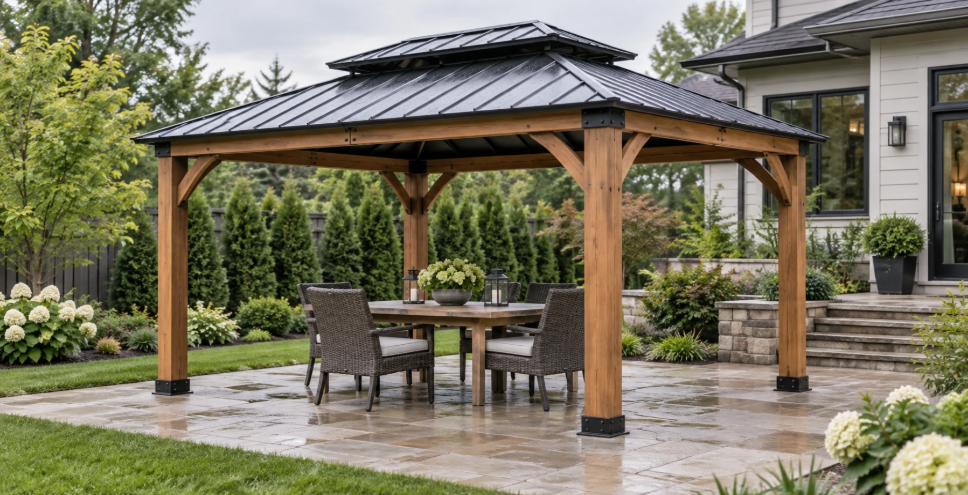
The roof is the part of a gazebo that changes how the space feels and how often it can be used. A fabric canopy can keep the structure visually light. Polycarbonate panels can admit more daylight. A metal hardtop creates a more substantial architectural presence. None of these is automatically the best choice for every garden.
A useful comparison starts with the conditions in your own space. Think about when you want to sit outside, how much light you want beneath the roof, what maintenance you will realistically do and what the chosen model requires for installation. Those questions narrow the choice more effectively than appearance alone.
Start with the job the roof needs to do
Write down the main reason for adding the gazebo before comparing materials. A shaded lunch area, a bright reading space and a regular entertaining zone place different demands on a roof.
For daytime dining, shade may matter more than maximum brightness. A solid roof can create a more defined outdoor room, but the table still needs enough natural or fitted light for serving food comfortably.
A reading or conversation area may benefit from a lighter roof or a position that receives daylight from the open sides. Test the proposed location at the time you expect to use it. A garden corner that looks shaded in the morning may receive direct afternoon sun.
A gazebo used mainly for occasional summer gatherings may suit a different roof from one intended to remain a permanent part of the garden. Check whether the entire product is described for seasonal, semi permanent or permanent use. The roof cannot be assessed separately from its frame, fixings and anchoring requirements.
Compare complete roof systems
Terms such as hardtop and soft top describe broad categories rather than one standard level of performance. Two roofs in the same category may use different materials, panel arrangements, fasteners and maintenance instructions.
When comparing gazebo roof options, open the specifications and installation manual for each complete model. Record the roof material, frame material, overall dimensions, assembly requirements, included hardware and stated care guidance. If wind or snow performance matters where you live, use only the rating and installation conditions documented for that exact model. Do not transfer a claim from one gazebo to another because the roofs look similar.
The four common choices below offer different experiences as well as different care demands.
Fabric canopy roofs
A fabric canopy gives a gazebo a softer, less permanent appearance. It can work well where the goal is seasonal shade or a relaxed entertaining area rather than a heavy architectural feature.
Look closely at the canopy material, how it attaches to the frame and whether the manufacturer instructs owners to remove it during certain weather or seasons. Also check whether a replacement canopy is available for the exact model. Similar looking gazebos do not necessarily use interchangeable covers.
Fabric needs more hands on care than many buyers expect. Leaves and moisture can collect in folds or low points, while careless storage can damage a canopy that was still usable. Follow the cleaning and storage instructions rather than treating every outdoor fabric in the same way.
A soft top can be the right choice for someone who values a light appearance and accepts regular inspection and seasonal handling. It is a poor fit if the owner expects to install the gazebo and ignore the roof indefinitely.
Polycarbonate panel roofs
Polycarbonate roof panels can create a bright space while still providing an overhead covering. Their translucent appearance often feels lighter than an opaque metal roof, which can suit a small patio or a garden where preserving daylight is important.
Transparency varies by product. Do not assume every panel produces the same shade, glare or appearance. Look at actual product photographs in both sun and overcast light, then read the specifications for panel colour and construction.
Check how the panels fit into the roof frame and what the manual says about cleaning them. Abrasive tools or unsuitable cleaners may damage some surfaces. Any damaged or displaced panel should be addressed according to the manufacturer’s instructions rather than patched with an improvised material.
Polycarbonate is worth considering when daylight is central to the design. The tradeoff is that dirt, marks and debris can be more visible than they are on an opaque roof, so access for safe maintenance deserves attention before purchase.
Metal hardtop roofs
A metal roof gives a gazebo a strong, finished outline and can coordinate with contemporary homes, dark window frames or other metal details in the garden. Its opacity can also produce deeper shade than a translucent panel.
The experience underneath matters as much as the view from the house. Rain may sound different on a metal roof than on fabric or polycarbonate. Roof colour, surrounding trees and the amount of open airflow can also affect how the area feels in direct sun. A showroom visit or careful review of owner supplied videos can reveal qualities that a still product image cannot.
Confirm the specific metal and finish described for the model. Steel and aluminium are not interchangeable terms, and a coated surface still needs the care set out by its manufacturer. Check the roof for accumulated leaves and visible damage as directed, while avoiding any maintenance method that the instructions do not permit.
A metal hardtop often suits homeowners who want the gazebo to read as part of the landscape design rather than as temporary shade. That visual weight makes proportion especially important in a small garden.
Double tier roof designs
A double tier roof has a smaller raised section above the main roof. It changes the silhouette and may be designed with an opening between the tiers. The exact construction varies, so appearance alone cannot establish how air or rain moves through it.
This style can add height and detail to a large structure. In a compact garden, the taller profile may become the dominant feature, which can be useful when the gazebo is intended as a focal point but distracting when the surrounding planting is the priority.
Inspect the drawings to understand where the roof sections meet, how any vented area is protected and which components require assembly. A double tier shape is a design characteristic, not a substitute for checking the material and documented performance of the complete roof.
Judge light and shade in the real location
A roof that looks perfect online can feel too dark, too bright or poorly positioned once installed. Test the site before settling on a material.
Mark the post positions and roof outline on the ground using the model’s drawings. Stand inside the proposed footprint in the morning, around midday and later in the afternoon. Notice where the sun enters from the open sides, because an opaque roof cannot stop low sunlight travelling beneath its edge.
Now look back from the house. A large dark roof can frame the garden beautifully, but it can also block a valued view from a kitchen or sitting room. A translucent roof may preserve more brightness while remaining visually prominent.
If possible, use a temporary sheet or garden umbrella to explore the effect of shade at seated height. The test will not reproduce the finished gazebo, but it can expose a poor orientation before the structure arrives.
Check drainage and upkeep before buying
Every roof directs water and collects debris differently. Study the model drawings to see where rain is intended to leave the roof and whether that location works with the patio and nearby planting. Water should not be allowed to create a persistent problem around the chosen site.
Trees add shade, but branches, sap and falling leaves can increase roof maintenance. Consider whether the roof can be inspected and cleaned using the method approved in its manual. A design that requires maintenance you cannot safely perform is not a practical match.
Ask four simple questions for each shortlisted model:
- What cleaning and inspection does the manual require?
- Are roof panels, canopies or other replacement parts available for this exact model?
- Who can assemble and anchor the complete structure as instructed?
- Where will roof runoff go after installation?
These questions reveal ownership demands that a colour swatch cannot show.
Match the roof to the house without copying it
A gazebo can relate to the home through proportion, colour or line. It does not need to imitate the main roof exactly.
A charcoal hardtop may pick up dark doors or window frames. A warm wood frame can connect with fencing or garden furniture. A pale or translucent roof can keep the composition lighter where the house already has a strong architectural presence.
Use one or two connections rather than forcing every material to match. The gazebo should look deliberate from the house and comfortable from within. Both views matter.
Make the decision in the right order
Choose the roof by moving through five decisions.
First, define the gazebo’s main use. Second, observe sunlight in the proposed location. Third, compare complete models and their manuals. Fourth, assess the cleaning, parts and installation requirements. Finally, choose the appearance that works with the garden and house.
This order prevents an attractive roof from deciding the project before the practical questions have been answered. The best choice is the roof system whose light, care and installation requirements suit the way you will actually use the garden.

Team Home Spacess shares simple, practical design ideas that work for real families. The team focuses on cozy décor, soft colors, and natural textures that make a space feel truly lived-in. From everyday decorating tips to creative home projects, Team Home Spacess is dedicated to helping readers create warm, comfortable, and inviting spaces with a fresh and personal touch.