


If you searched “PushWiki com” hoping for a straightforward answer, you’ve probably already noticed the problem: every article about it describes a different website. One says it’s a tech and AI news hub. Another calls it a “collaborative knowledge base” for SEO and blogging, compared to Wikipedia and Coursera. A third frames it as a general lifestyle and education publisher.
They can’t all be right, and that’s exactly what this review digs into.
Rather than repeat whatever the top-ranking pages say, I went to the live site, checked what’s actually published there, looked for independent verification (Trustpilot, Reddit, forums), and compared it against the competing “review” articles circulating online. What I found is a small, brand-new content site and a cluster of near-identical, contradictory reviews that look automated rather than experienced firsthand.
This guide covers what PushWiki com genuinely is, what you’ll find if you visit it, who claims to run it, whether it’s safe to browse, and more usefully how to judge any new site like this for yourself before you trust it. That last part matters more than the verdict itself, because sites like this appear and disappear constantly, and the skill of evaluating them is reusable long after this particular review goes stale.
What Is PushWiki com, Really?
Based on the live site (hosted at push-wiki com), PushWiki com is a WordPress-built content publisher that brands itself as a “Tech and AI Information Hub.” It runs on WordPress 6.9, was published in late May 2026, and organizes its content into four main sections:
- Tech News — items like 6G rollout coverage and Windows 13 feature roundups
- AI Tools — reviews of AI agents, AI video editors, and 3D design tools
- Reviews — product write-ups such as a Samsung S26 Ultra hands-on and a Snap Planets review
- How-to Guides — troubleshooting content like modular laptop repairs and home AI server setup
That’s the plain, verifiable description. It positions itself in the same lane as consumer tech blogs closer to a niche gadget and AI-tools site than a reference resource.
Key Takeaways about PushWiki com
- PushWiki com is a newly launched (May 2026) WordPress site publishing tech news, AI tool reviews, and how-to guides.
- A cluster of unrelated “review” articles describes it inaccurately as an SEO/blogging knowledge base a sign of low-quality, likely AI-generated content rather than firsthand research.
- The site’s founder claims are self-reported and not independently verifiable at this time.
- It’s reasonably low-risk to read casually, but not yet a reliable sole source for purchase-critical product specs.
- Use a repeatable verification checklist for any new site like this rather than trusting the first review you find.
Must Read: ErikkaPost com: What the Site Actually Is (Verified, Fact-Based Guide)
Why Do So Many “Reviews” Describe a Different Site?
This is the part worth paying attention to, because it’s not something most reviews of PushWiki.com mention.
Search results currently surface several articles published within weeks of each other, on unrelated low-authority blogs that describe PushWiki com as a broad “knowledge platform” covering SEO, blogging, website development, digital marketing, and online entrepreneurship. They repeatedly use phrases like “topic clusters,” “structured learning,” and direct comparisons to Wikipedia and Coursera. The wording across these pieces is strikingly similar, and none of them reference the tech-and-AI content that’s actually live on the site.
That pattern multiple new domains publishing near-identical, unverifiable claims about the same keyword in a short window is a recognizable signature of programmatically generated SEO content, sometimes built to promote a site’s authority score or simply to capture search traffic on a trending keyword. It doesn’t necessarily mean PushWiki com itself is doing anything wrong; it means a chunk of the content about it isn’t trustworthy, which is a meaningfully different problem.
Practical takeaway: if you’re researching PushWiki com (or any small, newly launched site) and every third result reads like it was templated, treat those specific claims as unverified rather than as confirmation.
Don’t Miss: TheSindi com Review 2026: What It Really Is (and Isn’t) Before You Trust It
Who’s Behind PushWiki com?
The site’s own “About” and homepage content credit a person named “Martin,” described as a tech specialist with four years of experience in the digital and software industry, positioned as the founder and editorial lead. The site explicitly references Google’s E-E-A-T framework and states that content is tested and reviewed under Martin’s oversight.
There’s an important distinction here: these are the site’s own claims about itself, not something a third party has independently verified. There’s no visible public track record no linked author profile on other publications, no case studies, no verifiable portfolio that would let a reader confirm the stated experience. That’s common for brand-new sites and isn’t automatically a red flag, but it does mean the “expert-backed” framing should be treated as a claim to evaluate, not a fact to accept.
Is PushWiki com Safe to Use?
For simple reading browsing articles, following how-to guides the risk profile is similar to visiting any other new content website. The bigger question is what to do if the site ever asks for payment, account signup, or personal information, since that’s where new, unverified domains warrant more caution.
A few things worth checking before trusting a new site like this with anything beyond casual reading:
- Domain age. Very new domains (this one is only months old) haven’t had time to build a review history anywhere.
- Independent reviews. At the time of writing, there’s no meaningful Trustpilot, Reddit, or forum presence for PushWiki com which isn’t proof of a problem, just an absence of evidence either way.
- Contact transparency. Look for a real “Contact Us” page, and be cautious if support only exists through a contact form with no named entity behind it.
- What it’s asking for. Reading an article is low-risk. Entering payment details or downloading software from an unverified site is a different risk category entirely.
There’s currently no evidence indicating PushWiki com is a scam, but there also isn’t enough independent verification to rule that out with confidence. That’s simply the honest state of things for a site this new.
Also Read: WallPostMedia com Review 2026: What This Site Actually Is (And Why So Many “Reviews” Get It Wrong)
What You’ll Actually Find There
If you visit PushWiki com today, expect short-to-medium consumer tech content: phone and gadget reviews, AI tool roundups, troubleshooting guides, and trend pieces on things like AR glasses or neural-link privacy. The writing style leans toward accessible, plain-English explanations rather than deep technical benchmarking.
Important caveat for buying decisions: for anything spec-driven camera details, chipset numbers, release dates, pricing verify against the manufacturer’s own site or an established outlet with a public testing methodology before acting on a PushWiki com article alone. Established review sites show their work (testing conditions, named reviewers, comparison benchmarks); PushWiki.com doesn’t yet display that level of transparency.
PushWiki com: Pros and Cons
| Pros | Cons |
|---|---|
| Free to read, no paywall observed | Very new domain with no track record |
| Covers currently trending tech/AI topics | No independent reviews (Trustpilot, Reddit, etc.) yet |
| Simple, accessible writing style | Author credentials aren’t independently verifiable |
| Clear site structure and navigation | Surrounded online by contradictory, likely AI-generated “review” content |
| No sign-up required to read articles | Not suited as a sole source for purchase-critical specs |
How to Evaluate Any Site Like This Yourself
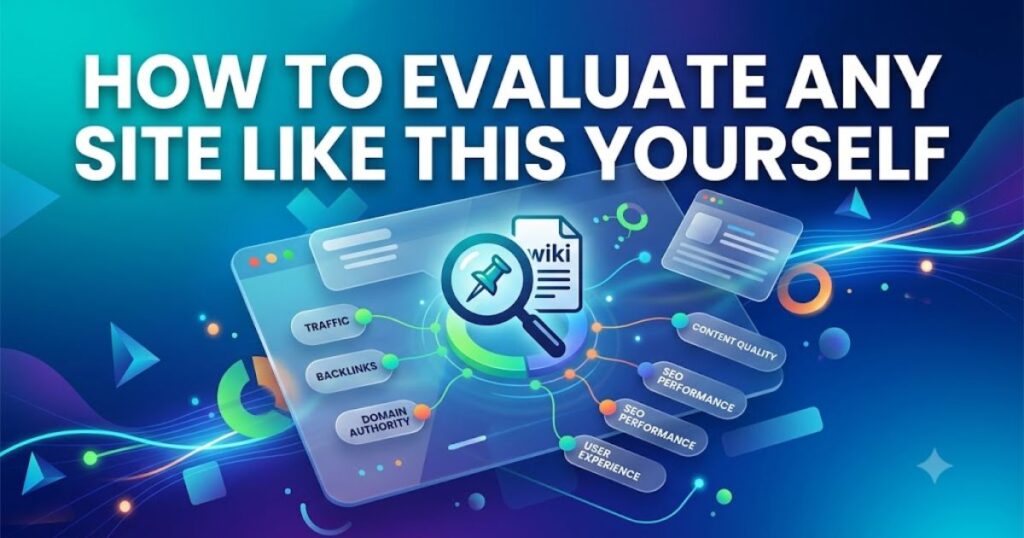
Since PushWiki.com will likely change, expand, or rebrand as it matures, the more durable value here is a repeatable checklist:
- Go to the source. Don’t rely on secondhand summaries visit the live site directly.
- Cross-check claims against dates. If an “About” page cites years of experience, see if that lines up with the domain’s actual age and any public footprint.
- Search for the brand name plus “scam” or “reviews.” Look past the first page of results for forum threads rather than other content-farm articles.
- Watch for templated language across multiple “review” sites. Near-identical phrasing across unrelated domains is a stronger signal than any single review’s tone.
- Separate “reading” risk from “transacting” risk. Most new content sites are low-risk to browse; the risk rises sharply if money, accounts, or personal data get involved.
Frequently Asked Questions
What is PushWiki com?
It’s a WordPress-based content site, live since around May 2026, publishing tech news, AI tool reviews, and how-to guides under the “Pushwiki com: Tech and AI Information Hub” branding.
Is PushWiki com the same as a “knowledge base” for SEO and blogging?
Not based on what’s actually live on the site. That description appears in a cluster of separate, near-identical review articles that don’t match the site’s real content, and it should be treated as unverified.
Who owns or runs PushWiki com?
The site credits a person named “Martin” as founder and editorial lead, with four years of stated industry experience. This is a self-reported claim without independent verification currently available.
Is PushWiki com legit or a scam?
There’s no current evidence pointing to fraud, but there’s also no independent review history to confirm legitimacy. Treat it as an unverified new site: fine to read, worth extra caution before any transaction.
Where can I find real user reviews of PushWiki com?
As of now, independent platforms like Trustpilot and Reddit show little to no organic discussion of the site. That will likely change as it accumulates more traffic and time online.
Conclusion
PushWiki com, at least as it exists right now, is a small, new tech-and-AI content site nothing more dramatic than that, despite the conflicting descriptions floating around search results. The most useful thing you can take from this review isn’t a verdict on whether it’s “good,” but a reminder that new-domain reviews deserve the same scrutiny as the sites they’re reviewing. When several “reviews” of the same site can’t agree on what it even does, that disagreement is itself the most important data point.

Team Home Spacess shares simple, practical design ideas that work for real families. The team focuses on cozy décor, soft colors, and natural textures that make a space feel truly lived-in. From everyday decorating tips to creative home projects, Team Home Spacess is dedicated to helping readers create warm, comfortable, and inviting spaces with a fresh and personal touch.