

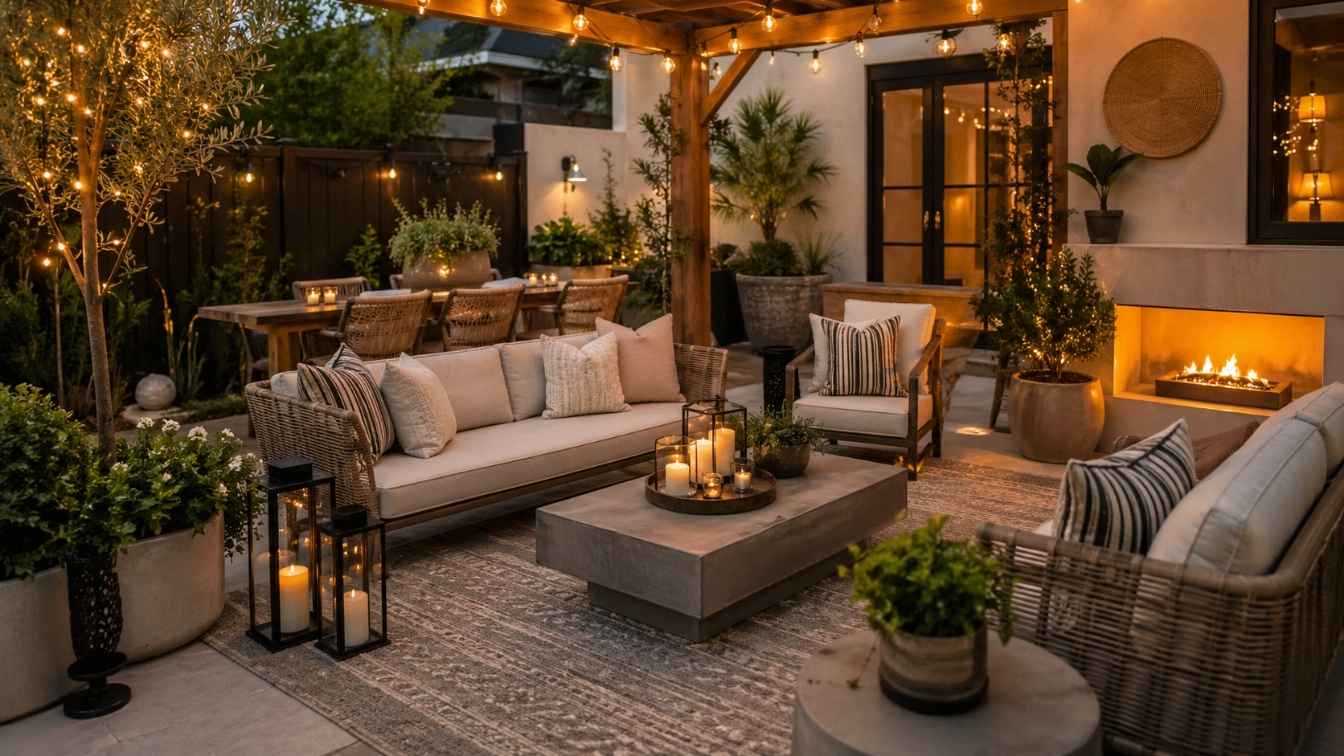
Most patios are an afterthought a bare slab with a plastic chair. But your outdoor space holds the same potential as any room inside your home. Here’s how to unlock it with ideas that are both beautiful and built to last.
Patio decor means designing and styling your outdoor sitting area. It includes furniture, lights, plants, and small details. The goal is to make the space look nice and feel comfortable. Patio decor helps turn a simple area into a relaxing place.
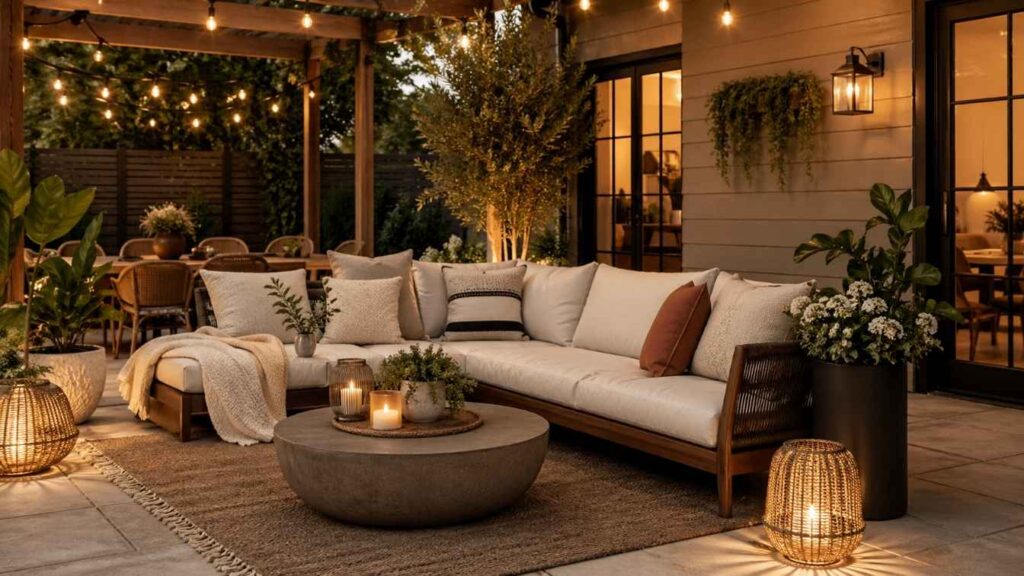
Imagine sitting outside with fresh air and a cozy setup. A well-decorated patio can change your mood quickly. It can be a perfect spot for family time or quiet evenings. Good patio decor ideas make your outdoor space more inviting.
Patio decor ideas include simple and creative ways to improve your space. You can add chairs, rugs, lights, and plants easily. Small changes can make a big difference in the overall look. These ideas help you create a stylish and useful outdoor area.
Define a Clear Layout Zone Before Buying Anything
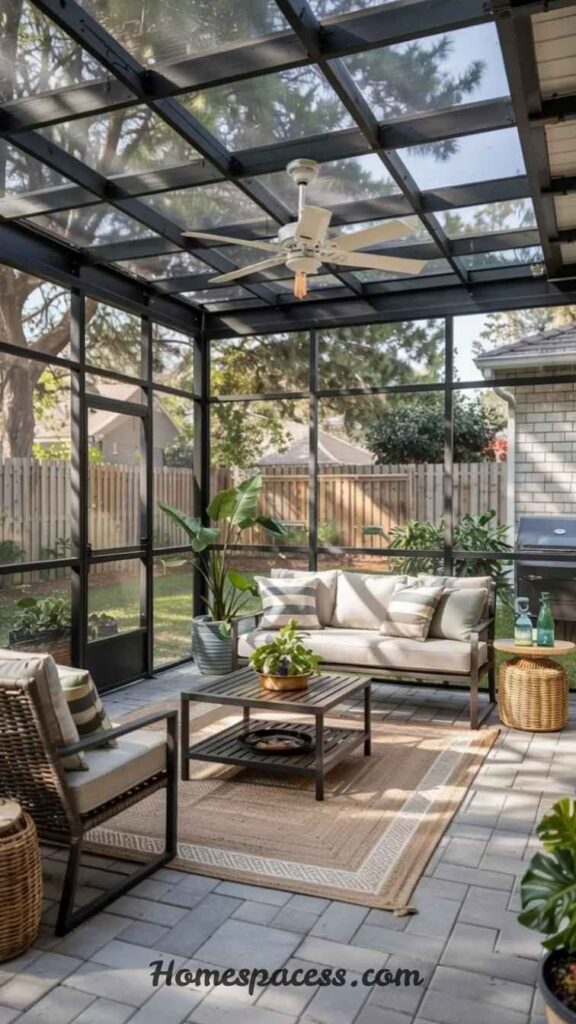
The single biggest mistake in patio decorating is buying furniture before deciding on a zone plan. A well-defined layout tells every piece of decor where it belongs, prevents visual clutter, and makes a small space feel intentionally designed rather than randomly assembled. Think of your patio the same way an interior designer thinks about a living room you need a focal point, a flow path, and a seating anchor before anything else goes in.
Start by measuring your space and sketching a rough floor plan. Decide whether you want one large entertaining area or two smaller zones for example, a dining area near the kitchen door and a lounge corner near a garden view. The 60-30-10 color rule applies outdoors too: 60% neutral base (pavers, concrete, natural wood), 30% complementary tones (furniture upholstery, pots), and 10% bold accent (cushion colors, lanterns, a bright planter). This structure prevents the “too many things competing” problem that plagues most patios.
Expert Insight:
Landscape designers recommend leaving at least 36 inches of walking clearance between any furniture grouping and a wall or fence. This prevents the claustrophobic feel that kills many small patio setups.
Must Read: Kitchen Lighting Ideas to Create a Cozy and Modern Cooking Space
Layer Outdoor Rugs to Anchor Each Zone
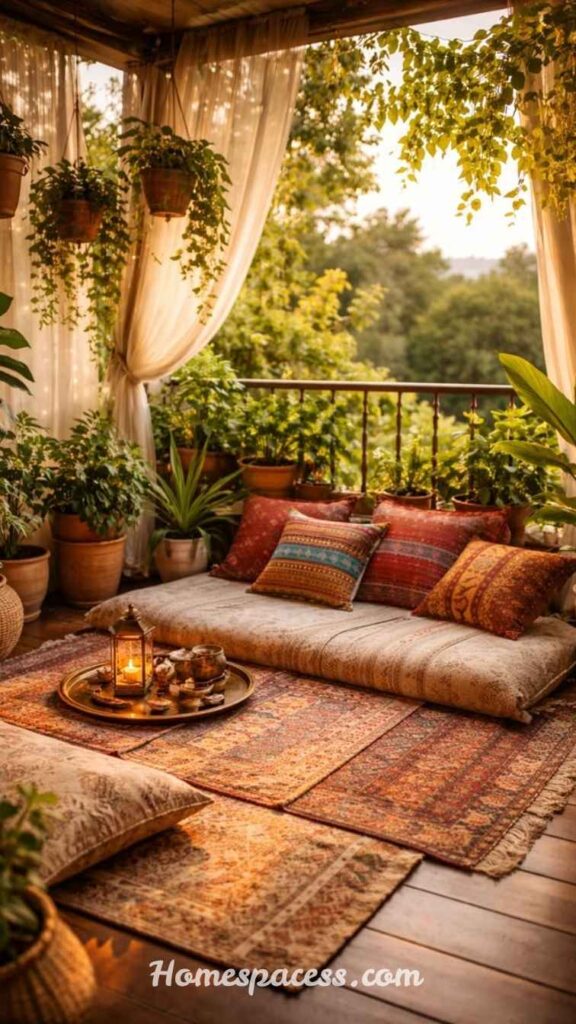
An outdoor rug is arguably the highest-impact single purchase you can make for patio decor. It instantly defines a seating zone, softens hard surfaces, adds color and pattern, and makes the space feel like an actual room rather than a concrete slab. The key is choosing a rug rated for UV and moisture resistance look for polypropylene or recycled PET materials, which mimic the look of wool or jute without degrading in rain or direct sunlight.
For larger patios, consider layering two rugs of different sizes a larger neutral base rug beneath the dining table and a smaller, bolder pattern rug under a lounge chair grouping. This layering technique is borrowed from interior design and works surprisingly well outdoors. It creates visual separation between zones without needing physical dividers like screens or walls. Warm terracotta, dusty blue, and earthy beige patterns are dominating the 2026 outdoor rug market, replacing the solid grey tones that were popular in the early 2020s.
Size tip:
Always go bigger than you think you need. A rug that’s too small makes furniture float and zones collapse. For a 4-chair dining table, go at minimum 8×10 feet so all chair legs sit on the rug when pulled out.
Don’t Skip: Gaming Desk Ideas: Stylish and Functional Setups for Every Budget
Use String Lights to Build Evening Ambiance
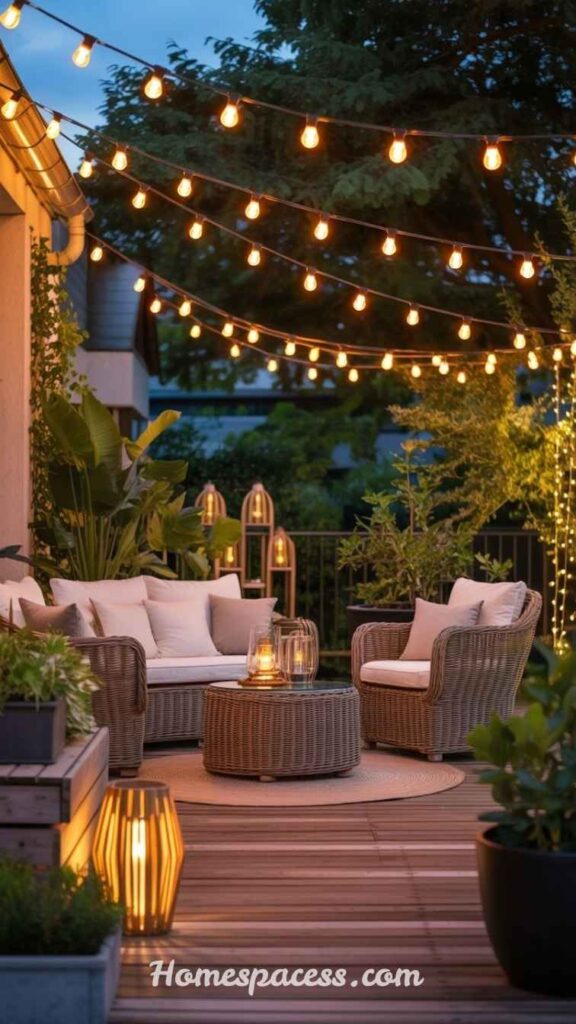
Lighting is what separates a patio that’s used once a week from one that becomes the favorite spot in the house. String lights specifically warm-white Edison bulbs strung between posts, pergola rafters, or fence lines create an atmosphere that no other outdoor lighting source can replicate. The warm glow makes evening gatherings feel intimate, extends usable hours well past sunset, and photographs beautifully for anyone who cares about their outdoor aesthetic on social media.
The 2026 trend is moving beyond standard café-style strings toward deliberate layered lighting: string lights above at 9–12 feet for ambient coverage, solar lanterns at mid-height (4–6 feet) for task lighting near seating, and low ground-level lights along path edges for safety and depth. Smart string lights with app control like those from Govee or Twinkly now allow you to set scenes, adjust warmth, and sync with music, transforming a simple patio into a fully programmable outdoor living room.
Also Read: Living Room Curtain Ideas for a Cozy and Modern Home Look
Choose One Statement Furniture Piece as Your Anchor
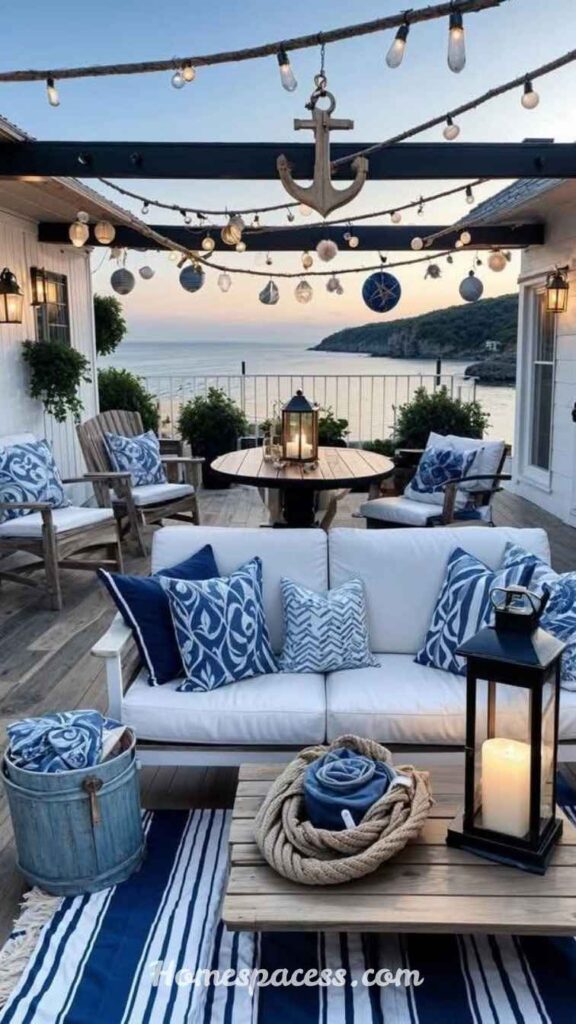
Rather than filling your patio with a matching 7-piece set from a big box store, experienced outdoor decorators recommend choosing one standout furniture piece and building everything else around it. This could be a curved rattan sofa, an oversized hammock chair, a vintage wrought-iron dining table, or a teak daybed. The statement piece becomes your visual anchor the first thing guests notice and gives you a clear aesthetic direction for every other purchase.
In 2026, curved and organic-shaped furniture is rapidly replacing the rigid rectangular sets that dominated patios in the previous decade. Modular curved sectionals in particular are highly popular because they allow flexible configuration for different occasions intimate pairs one day, full party seating the next. When choosing statement outdoor furniture, prioritize frame material: powder-coated aluminum is the practical winner for most climates, while teak and eucalyptus offer superior natural beauty at higher price points and maintenance requirements.
Money-Saving Tip:
Buy your statement piece at full quality and fill supporting pieces from budget retailers. Mixing a high-quality teak coffee table with simple affordable side chairs looks intentionally curated not cheap.
Read More: 15 Baby Nursery Ideas That Are Beautiful, Safe & Built to Grow With Your Child
Build a Vertical Garden or Living Wall
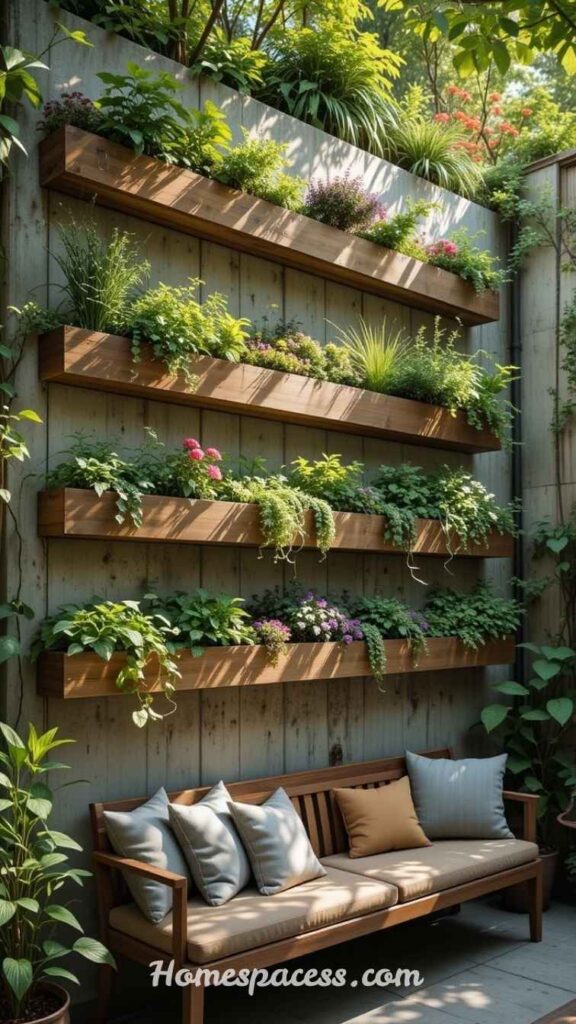
Vertical gardens solve the most common small-patio problem: no ground space for plants. A well-executed living wall or vertical planter panel transforms a plain fence or exterior wall into a lush, textured backdrop that makes your entire outdoor area feel like a garden retreat. Beyond aesthetics, vertical greenery provides natural insulation, mild sound dampening, and a privacy buffer all without shrinking your usable floor space by a single square foot.
The most practical approach for beginners is a modular pocket planter system individual fabric or plastic pockets that attach to a frame or fence post. These allow you to mix herbs, trailing plants, ferns, and succulents for varied texture. For a polished, maintenance-light option, consider a trellis planted with fast-growing perennial climbers like star jasmine, climbing roses, or black-eyed Susan vine. In 2026, hydroponic vertical wall panels with self-watering reservoirs are gaining traction among design-forward homeowners who want lush greenery without daily watering schedules.
Invest in Weather-Proof Outdoor Textiles
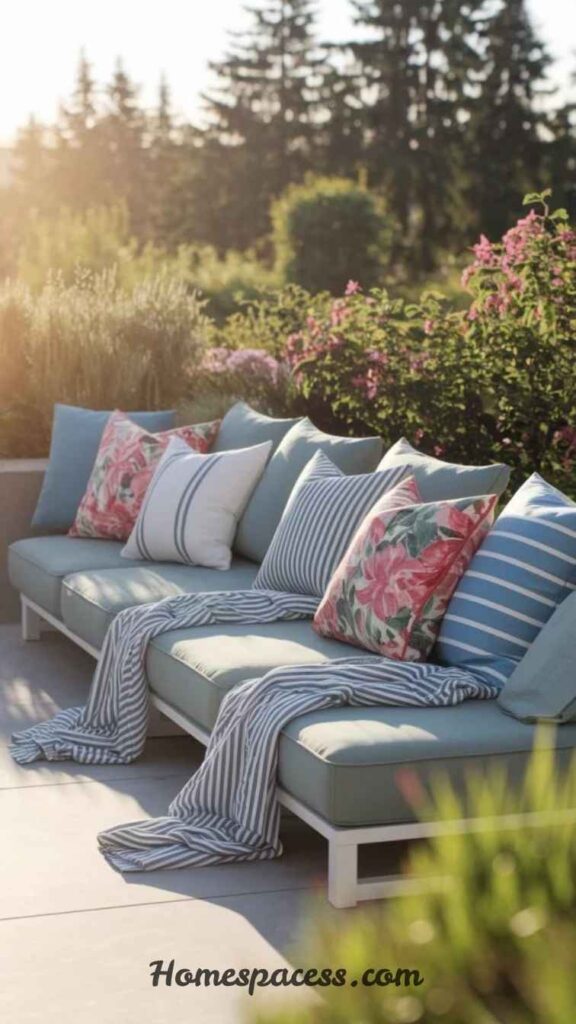
Cushions, throw pillows, and outdoor curtains are the fastest way to inject personality into a patio and the fastest way to create expensive headaches if you choose the wrong materials. Outdoor textiles must be UV-resistant, mold-resistant, and quick-drying. The benchmark fabric is Sunbrella an acrylic solution-dyed material that resists fading for 5+ years and can be cleaned with mild bleach without damage. While pricier than standard polyester fillers, Sunbrella cushions genuinely last and maintain their color through seasons of sun and rain.
The current trend in outdoor textiles is maximalist pattern mixing geometric prints, botanical motifs, and solid bold colors layered together rather than the safe, matchy sets of previous years. Terracotta, forest green, warm rust, and clay tones dominate 2026 palettes for outdoor soft furnishings. Don’t overlook outdoor curtain panels as a decor element sheer white panels hung between pergola posts or on a tension rod system add elegance, create privacy, and block afternoon glare without making the space feel enclosed.
Add a Fire Pit or Fire Table as a Gathering Centerpiece
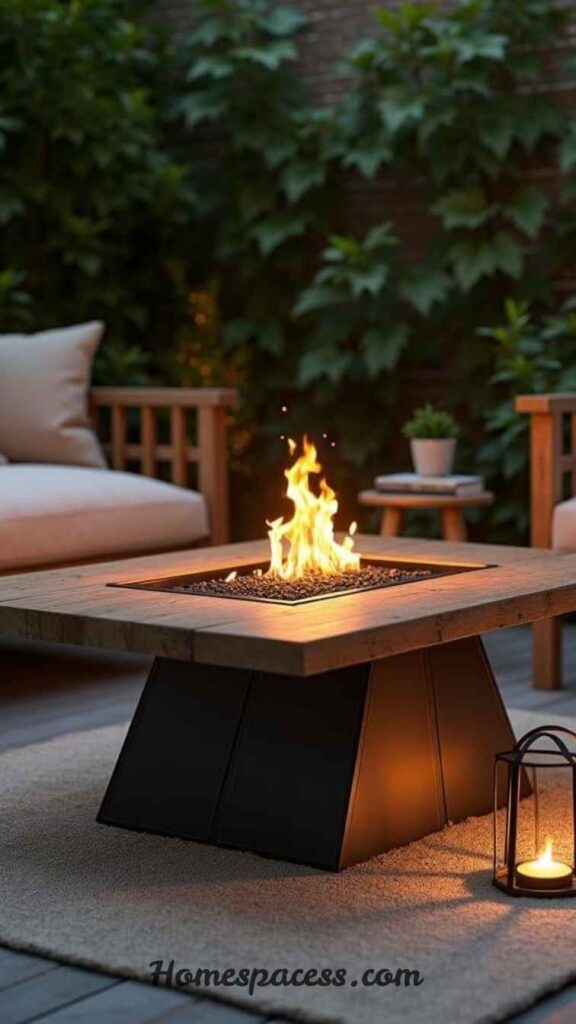
Nothing extends the outdoor season or draws people together quite like a fire feature. A fire pit or fire table placed at the center of a seating arrangement creates an immediate focal point and transforms a patio from a passive space into an active destination. Gas-powered fire tables are the 2026 choice for most urban and suburban homeowners: they ignite instantly, produce no smoke or ash, and are suitable for apartment patios and HOA-restricted properties where wood-burning fires are prohibited.
Concrete fire tables have surged in popularity because they bridge the gap between rustic warmth and modern minimalism a difficult aesthetic balance that wood-burning pits rarely achieve. For smaller balconies, tabletop bioethanol fire bowls offer the same visual warmth without any gas lines or permits. Beyond ambiance, fire tables serve a practical function: they allow guests to remain outdoors comfortably from late spring through early autumn, potentially doubling the seasonal value of your outdoor investment.
Use Container Plants and Oversized Pots Strategically
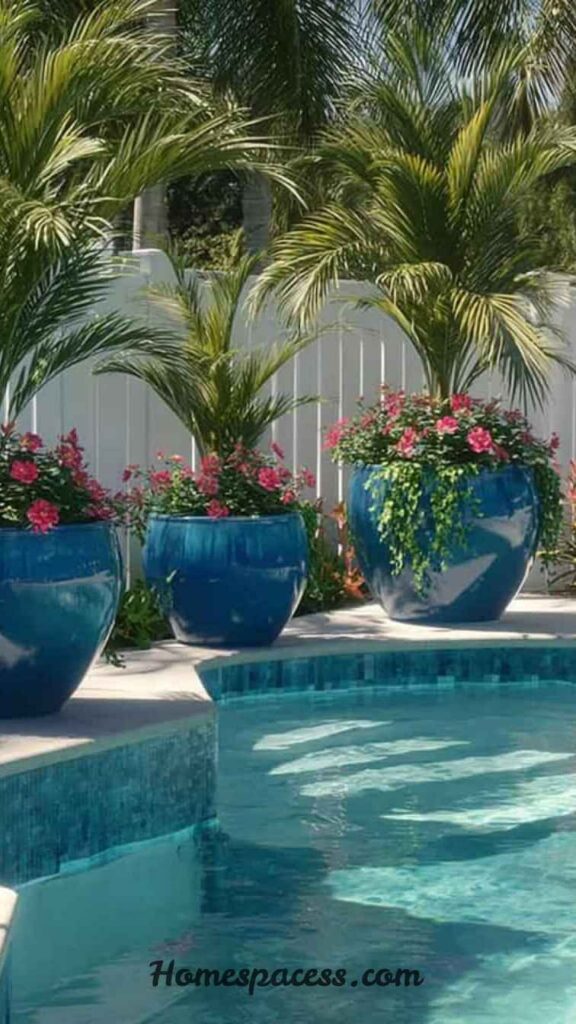
Container gardening on a patio is not just about adding plants it’s about using plants as architectural elements. A pair of tall olive trees in glazed ceramic pots flanking a seating area creates the same effect as a formal garden entrance. A cluster of three different-height planters in one corner builds visual depth. The mistake most people make is buying too many small pots scattered randomly, which creates visual chaos rather than the lush, curated effect they’re imagining.
The 2026 container plant trend leans heavily into Mediterranean aesthetics: olive trees, lemon trees, lavender, rosemary topiaries, and tall ornamental grasses in terracotta, white ceramic, or brushed concrete pots. This palette works beautifully across contemporary, bohemian, and traditional patio styles. From a practical standpoint, grouping pots together conserves moisture better than scattering them, and it allows you to create micro-climates for plants that prefer slightly more shade or shelter from wind.
Designer secret:
Odd numbers of pots always look better than even numbers. Three pots of varying heights beats two matching ones every time asymmetry reads as intentional, pairs read as accidental.
Install Privacy Screens Without Sacrificing Style
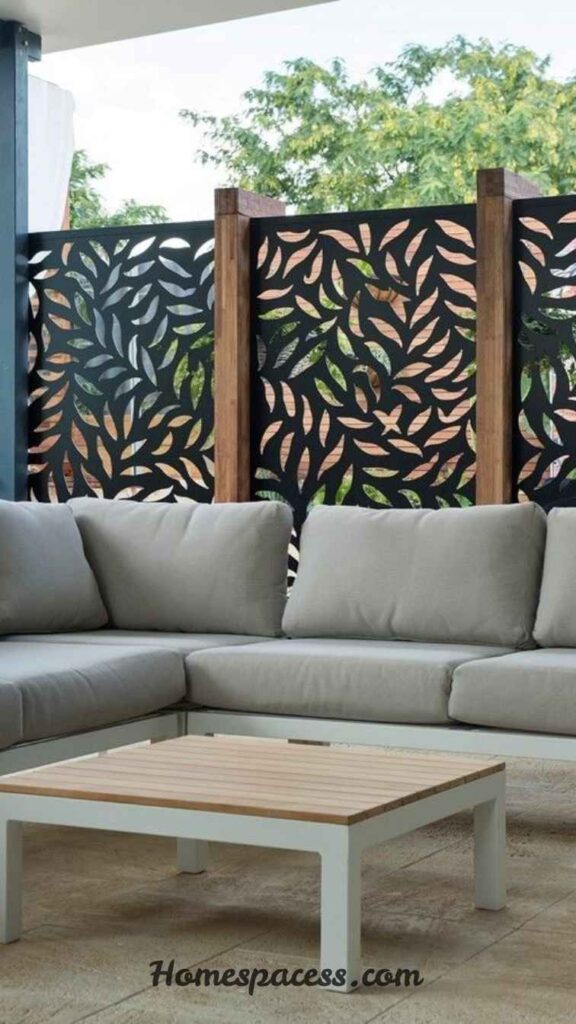
Privacy is one of the most underrated elements of patio comfort. If you feel overlooked by neighbors or exposed to street traffic, you’ll unconsciously avoid using the space no matter how beautifully decorated it is. The good news is that privacy solutions in 2026 are far more design-forward than the standard wooden slat fences of previous decades. Laser-cut metal privacy panels, natural bamboo screens, woven willow panels, and stretched fabric sails all offer privacy with strong aesthetic value.
Consider privacy in layers rather than as a single solid barrier. A 6-foot bamboo screen on one side, a vertical garden panel on another, and a tall ornamental grass row along the front creates privacy from multiple angles while still allowing airflow and dappled light. This layered approach feels organic and garden-like rather than defensive and enclosed. For renters who can’t install permanent structures, freestanding privacy panels with weighted bases are a practical alternative that can be moved or stored seasonally.
Create an Outdoor Kitchen or Grill Corner
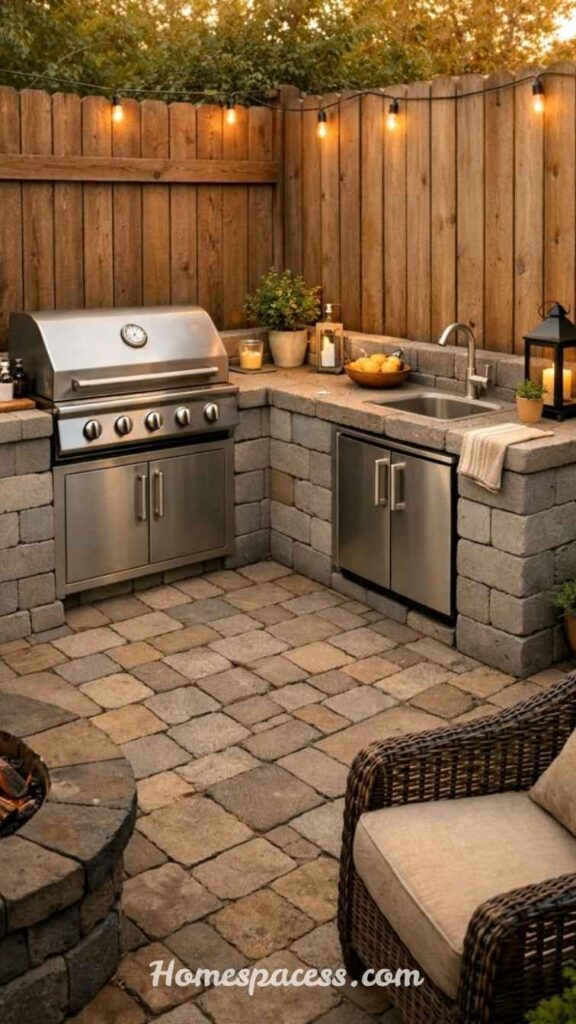
An outdoor kitchen doesn’t require a full built-in BBQ island with a $20,000 budget. Even a thoughtfully arranged grill station a quality gas grill, a rolling stainless cart, a small outdoor mini-fridge, and a simple concrete countertop creates the feeling of a dedicated cooking zone that elevates the entire patio experience. The key is treating the grill area as part of the decor scheme rather than an afterthought tucked in the corner.
Modular outdoor kitchen systems from brands like Coyote, Napoleon, and Weber now allow homeowners to build custom configurations at a range of price points. For smaller patios, a grill table with built-in storage and prep space provides functionality without occupying the footprint of a full outdoor kitchen. In 2026, wood-fired pizza ovens are having a significant cultural moment they’re both a functional cooking tool and a dramatic visual centerpiece that turns a patio into a genuine entertaining destination.
Incorporate a Water Feature for Sensory Depth
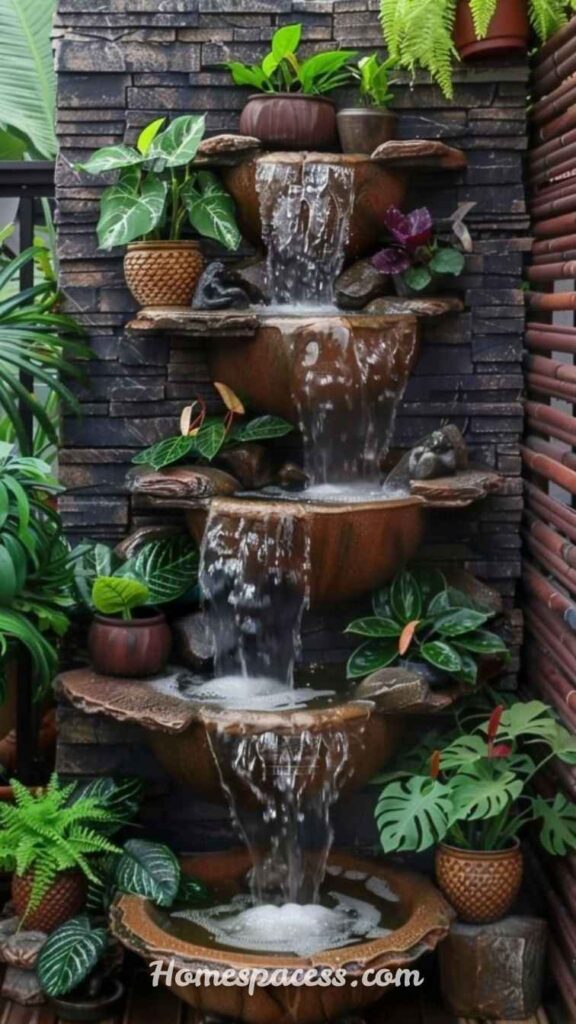
Water features add something no other decor element can sound. The gentle movement of water creates a white-noise effect that masks street sounds, neighbor conversations, and ambient urban noise, making even a small urban patio feel like a private retreat. More importantly, the visual and auditory presence of moving water triggers a measurable psychological relaxation response, a phenomenon backed by environmental psychology research sometimes called the “blue mind” effect.
For most patio applications, a self-contained solar-powered fountain is the ideal starting point no plumbing, no electricity costs, and easy to relocate. Tiered stone fountains, Japanese bamboo spout designs, and modern concrete bowl fountains are all popular in 2026. For those with a larger budget and a fixed installation, a pondless waterfall feature built into a garden border or retaining wall creates a dramatic focal point that completely redefines the character of an outdoor space.
Plan for Seasonal Decor Swaps
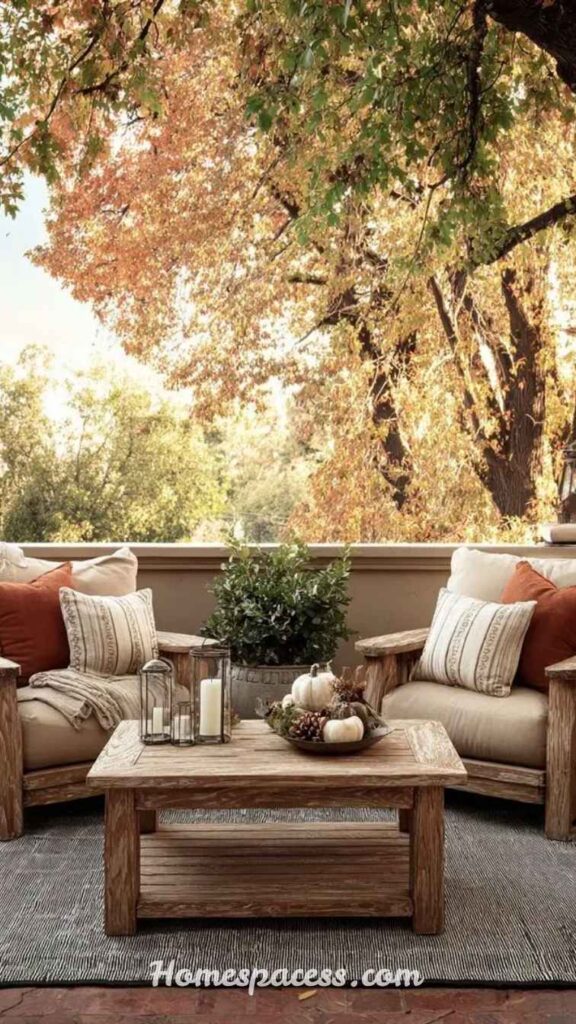
One of the most overlooked elements of sophisticated patio decorating is designing for adaptability. The best outdoor spaces feel current and alive year-round, not frozen in their summer peak. This requires building a base layer of permanent elements furniture, rugs, lighting, plants that can be refreshed seasonally with inexpensive swappable accents: cushion covers, lanterns, wreaths, table arrangements, and potted seasonal plants.
A practical seasonal swap system works like this: maintain a neutral furniture and rug base in all-season materials, then keep a small storage bin of seasonal accents warm plaid throws and amber lanterns for autumn, frosted glass ornaments and evergreen wreaths for winter, pastel cushion covers and wildflower arrangements for spring, and tropical-print pillows and citrus pots for summer. This approach costs far less than replacing full furniture sets and keeps the space feeling intentional and fresh across all 12 months rather than looking abandoned after August.
Add a Pergola or Shade Structure for Year-Round Comfort
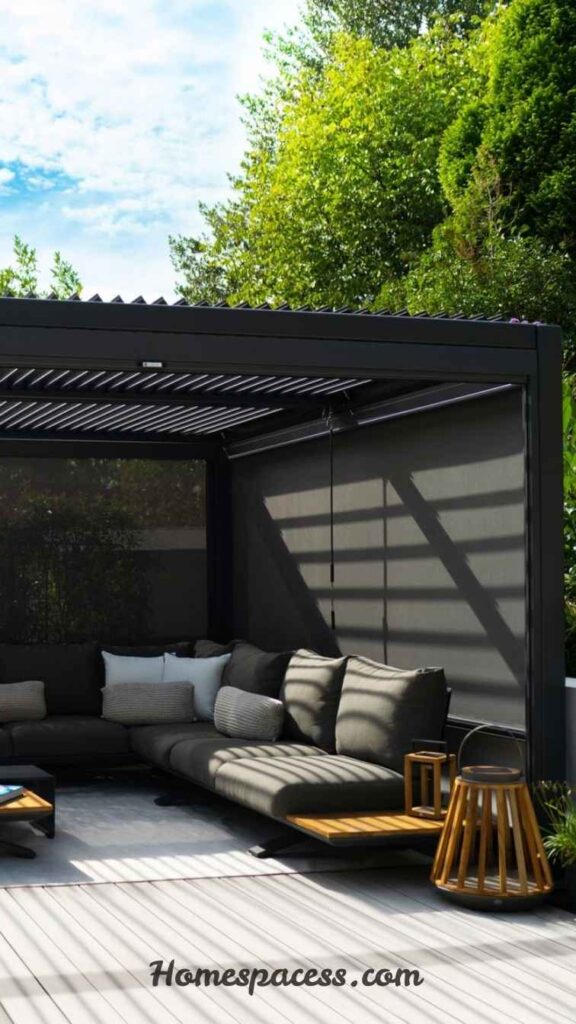
A pergola is arguably the single investment that generates the highest long-term value in patio decor. It defines the space architecturally, provides a framework for string lights, climbing plants, and curtain panels, offers shade during peak afternoon sun hours, and significantly increases the perceived livability and actual real estate value of your outdoor area. Studies from the National Association of Realtors suggest that a well-designed outdoor living space can increase home value by 5–15%, with shade structures being a primary contributing factor.
Modern pergolas have evolved far beyond basic cedar posts and rafters. Bioclimatic pergolas with adjustable louvered roofs capable of opening fully for sunshine or closing against rain represent the premium end of the market and are rapidly becoming a mainstream choice for serious outdoor living enthusiasts. For budget-conscious homeowners, a sail shade or tensioned fabric canopy achieves similar sun coverage at a fraction of the cost and can be taken down seasonally. In 2026, aluminum pergola kits with powder-coated finishes are bridging the gap between DIY accessibility and architectural permanence.
Display Outdoor Art and Decorative Sculpture
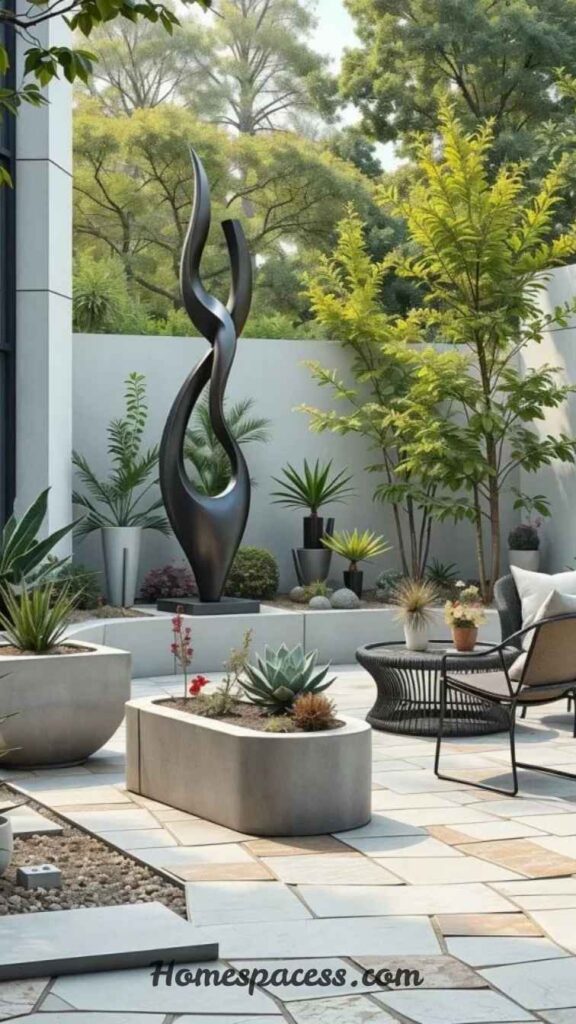
Outdoor art is the most underused patio decor tool available to homeowners. A weather-resistant metal wall sculpture mounted on a fence, a ceramic garden stool doubling as a side table, a stone or concrete abstract sculpture anchoring a garden bed these elements signal that the outdoor space was decorated with the same care and intention as the interior of the home. They create conversation points, establish a design identity, and add the kind of layered character that purely functional outdoor spaces always lack.
When selecting outdoor art, prioritize materials rated for exterior use: powder-coated steel, cor-ten weathering steel, cast stone, bronze, ceramic, and teak are all durable options. A single large-scale piece makes more impact than several small ones scattered around scale matters outdoors the same way it does in interior design. In 2026, abstract geometric metal sculptures in matte black and oxidized copper finishes are particularly popular, as they complement both contemporary and natural garden styles without dominating either.
Shopping Tip:
Check garden centres, estate sales, and artisan craft markets before buying art online. Local artists often create weather-resistant outdoor work at accessible price points, and you’ll have a piece with a story attached.
Conclusion
Patio Decor Ideas can help you turn any outdoor space into a calm and cozy place. You do not need a big budget or a large area. Small changes like adding lights, plants, and simple furniture can improve the look. Choose items that match your style and comfort. Keep the space clean and fresh. A well-decorated patio makes your home feel more welcoming and peaceful.
With the right Patio Decor Ideas, you can enjoy your outdoor area every day. It can be a place to relax, read, or spend time with family. Try simple updates and change things over time. Focus on comfort and beauty together. Your patio should feel like a part of your home. Good planning and easy ideas can make a big difference.
Trend Analysis
2026 Patio Decor Trends and What’s Coming Next
68%
of homeowners increased outdoor living spend post-2022
$10BUS
outdoor furniture market value in 2024
3×
growth in bioclimatic pergola searches since 2022
The dominant shift in 2026 patio decor is what designers are calling the “indoor-outdoor blur” the deliberate dissolution of the visual and functional boundary between interior and exterior living spaces. This manifests in several specific ways: outdoor rugs that mimic interior carpet patterns, weather-resistant bookshelves on covered patios, full outdoor sofas upholstered in indoor-fabric-quality materials, and outdoor lighting designs that mirror the layered ambient-task-accent approach of interior lighting design.
Sustainability is no longer a niche consideration it’s a mainstream purchasing factor. Consumers in 2026 are actively seeking furniture made from recycled ocean plastic, FSC-certified teak, reclaimed steel, and low-VOC powder coatings. Brands that can credibly document their supply chains are outperforming those that cannot, reflecting a broader shift in consumer values that’s reshaping the entire outdoor furnishings category.
What’s coming in 2026 and beyond
The near future of patio decor will be defined by three emerging forces: smart material technology (self-cleaning fabric coatings, phase-change materials that regulate temperature in outdoor cushions), AI-assisted outdoor design tools that generate personalized layouts based on your space dimensions and lifestyle inputs, and a continued acceleration toward biophilic design the deliberate integration of natural elements like water, plants, natural stone, and unfinished wood into every layer of outdoor decor. Expect to see more outdoor spaces designed around sensory experience sound, scent, texture, and temperature rather than purely visual aesthetics.
Expert Insights
Practical Tips That Most Patio Guides Miss
One insight that rarely appears in standard patio decor guides: always plan your lighting before your furniture layout, not after. Lighting determines where you can realistically create ambiance zones, which structures can support string light anchors, and where you’ll need electrical access or solar charging positions. Furniture can be moved. Light infrastructure is far harder to change once everything else is in place. Interior designers know this rule intuitively; it’s time outdoor decorators adopted it.
Similarly, the acoustic environment of your patio is worth deliberate consideration. Hard surfaces concrete, tile, glass reflect and amplify sound, which can make a patio feel noisy and uncomfortable during gatherings. Soft elements (outdoor rugs, upholstered furniture, fabric curtain panels, plant walls) all absorb sound and measurably improve the acoustic comfort of an outdoor space. This is especially relevant for urban patios surrounded by hard building surfaces where ambient noise levels are already elevated.
From a maintenance perspective, the highest-ROI habit for patio furniture longevity is not expensive cleaning products it’s correct storage. Even furniture rated for year-round outdoor use degrades significantly faster when left uncovered through harsh winters or prolonged monsoon periods. Investing in quality furniture covers and storing cushions in a waterproof chest during off-months dramatically extends the lifespan of every purchase. Treat outdoor furniture the same way you treat quality winter clothing: protect it when not in use and it will last a decade rather than three seasons.
Sustainability & Long-Term Value
Building a Patio That’s Beautiful Today and Sustainable for Decades
The most sustainable patio decor decision you can make is buying less, but buying better. A single teak garden bench purchased at high quality will outlast three or four cheaper wood alternatives and ultimately cost less per year of use. This “cost per use” mindset familiar to sustainable fashion advocates translates directly to outdoor decor. Apply it to every category: furniture frames, fabrics, pots, and lighting fixtures. Choose materials with credible longevity ratings over those with attractive price tags.
Recycled and reclaimed materials are now fully mainstream in patio decor and no longer carry the aesthetic compromise they once did. Furniture made from 100% recycled HDPE plastic (high-density polyethylene sourced from milk jugs and similar post-consumer plastics) now closely resembles painted wood at a glance, is completely impervious to rot, insects, and moisture, never requires painting or staining, and keeps plastic waste out of landfills. Reclaimed teak and reclaimed railway sleeper wood used as patio decking carry rich visual character that new wood simply can’t replicate.
Water conservation is increasingly relevant to patio garden design, particularly in drought-prone regions. Replacing thirsty annual plantings with drought-tolerant perennials, succulents, ornamental grasses, and Mediterranean herbs significantly reduces your patio garden’s water demands without sacrificing beauty. Collected rainwater systems simple barrel collectors attached to downpipes can supply most container watering needs throughout dry months. These choices reflect an understanding that a truly beautiful outdoor space should work with its local climate, not fight against it.
Future Predictions
The Outdoor Living Space of 2030 What to Expect
Within the next five years, the boundary between “outdoor furniture” and “smart home device” will essentially disappear. We’re already seeing the early signals: solar-charging outdoor sofas with built-in USB ports, pergolas with integrated speakers and retractable roofs controlled by voice command, outdoor lighting systems that automatically adjust warmth and brightness based on sunset time and temperature. By 2030, expect fully integrated patio ecosystems where a single app controls lighting, heating, shade, sound, and even irrigation all adjusted by AI based on the time of day, weather forecast, and your calendar.
Material science will drive the next wave of outdoor decor innovation. Self-healing polymer coatings that repair minor scratches are already in commercial development. Phase-change materials embedded in outdoor cushion fabric can absorb and release heat to maintain a comfortable surface temperature across a wide ambient temperature range. Aerogel-insulated outdoor blankets currently used in aerospace applications will reach consumer markets at accessible price points, making outdoor winter entertaining genuinely practical in cold climates. These aren’t distant possibilities; several are already available in prototype or limited commercial form.
Perhaps the most significant future shift is demographic. As millennials the generation most likely to prioritize outdoor living and “experience investment” over traditional consumer goods move into their peak home-ownership and renovation years through the late 2020s, the outdoor living market will continue to grow faster than almost any other home category. This demographic pressure will drive further product innovation, price competition, and design sophistication across every segment from budget DIY to high-end landscape architecture.
Common Mistakes
7 Patio Decor Mistakes (And How to Fix Them)
Even beautifully intentioned patio setups fall flat because of a handful of consistent, avoidable mistakes. These are the ones that professional outdoor designers see repeatedly and that most patio decor articles never address honestly.
- Buying furniture before measuring the space:
Fix: Map your zone in chalk or tape on the patio surface before purchasing anything. Always measure and use painters tape to mock out furniture footprints. - Choosing a rug that’s too small:
Fix: For a 4-seat dining setup, go minimum 8×10 ft. For a sofa grouping, the coffee table and all front legs should sit on the rug. - Ignoring overhead lighting entirely:
Fix: A beautifully decorated patio with no ambient lighting is unusable after 7pm. Add at least one string light layer before any other decor investment. - Buying cheap cushions expecting them to survive outdoors:
Fix: Outdoor-rated cushions only. Sunbrella or equivalent. Standard indoor polyester foam disintegrates in one wet season and grows mold rapidly. - Over-potting with too many small containers:
Fix: Three large statement pots beat twelve small ones. Fewer, larger containers create architectural presence; clusters of small pots create visual noise. - Neglecting the ceiling/overhead plane entirely:
Fix: String lights, a pergola, shade sail, or climbing vine overhead transforms how the space feels psychologically like a room rather than an open area. - Forgetting to plan for storage and maintenance:
Fix: Build in one deck box or storage bench from the start. Cushions left outside without storage degrade 3–4 times faster than those stored when not in use.

Team Home Spacess shares simple, practical design ideas that work for real families. The team focuses on cozy décor, soft colors, and natural textures that make a space feel truly lived-in. From everyday decorating tips to creative home projects, Team Home Spacess is dedicated to helping readers create warm, comfortable, and inviting spaces with a fresh and personal touch.