

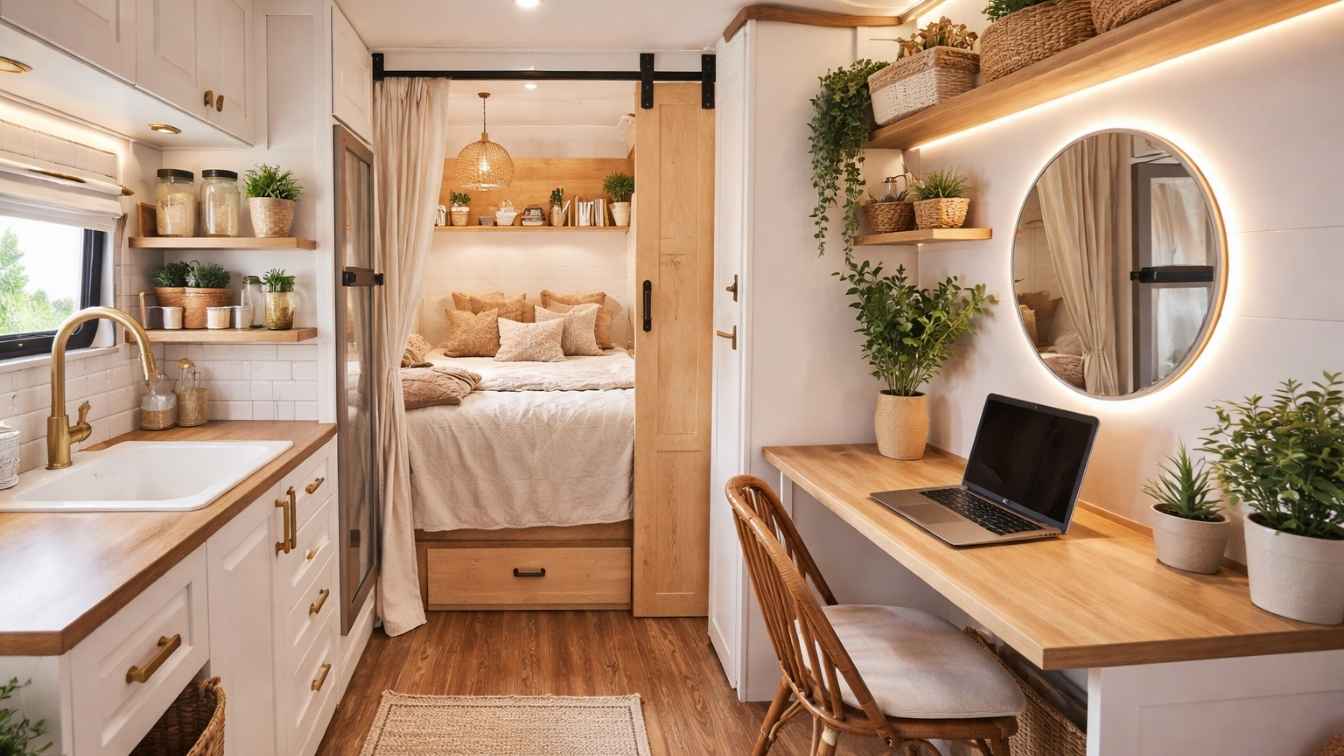
Most campers waste space on things that don’t matter and sacrifice comfort for the things that do. Whether you’re converting a bare van or breathing new life into a dated RV, the right interior strategy changes everything. Here are 12 expert-backed ideas that deliver style, storage, and sanity on the road.
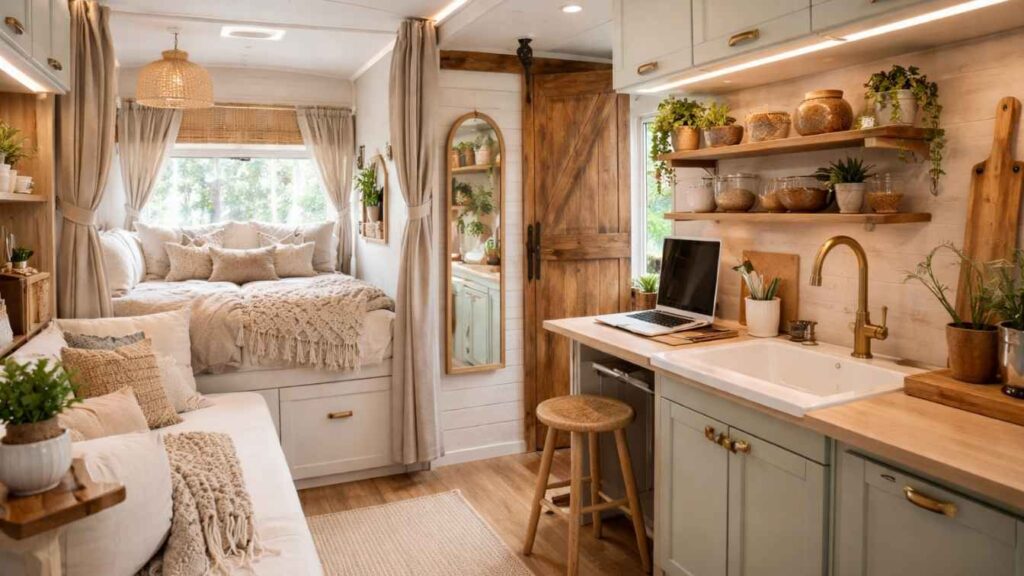
“The difference between a camper that feels like a prison on wheels and one that feels like a boutique retreat comes down to intentional design. Every decision from wall color to fold-away furniture either earns its place or costs you comfort. This guide covers the camper interior ideas that experienced van-lifers and RV owners actually swear by, not just the ones that look good on Instagram.“
Use a Murphy-Style Bed to Reclaim Your Living Space
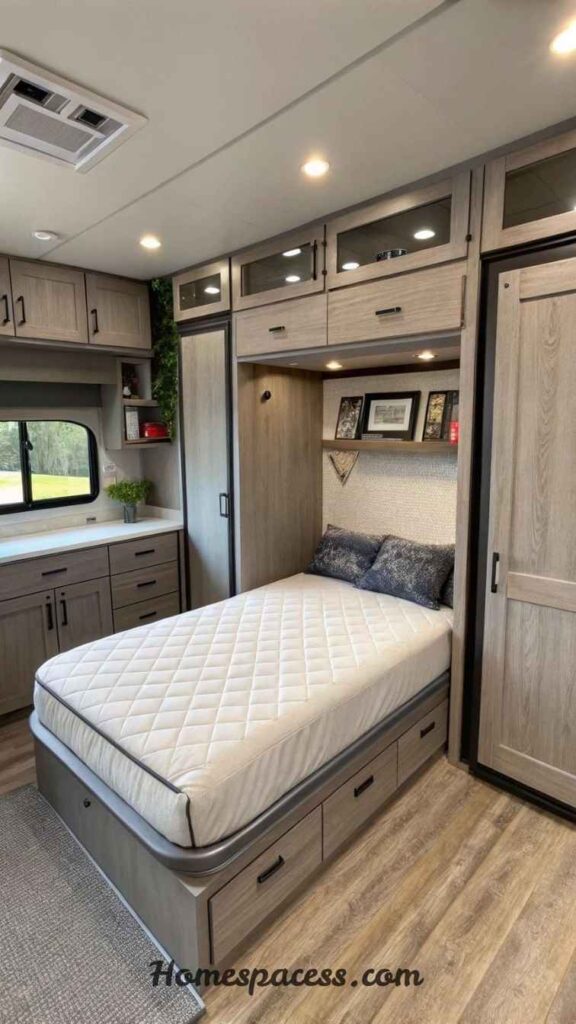
One of the smartest camper interior ideas is converting your sleeping area into a daytime living room. A fold-up wall bed or a convertible sofa-bed system can double your usable floor space during waking hours. In a standard 144-inch high-roof van, a Murphy-style platform bed can free up roughly 40 square feet of functional room, which is transformative in a small footprint.
The key is mounting the bed on heavy-duty gas struts so it operates with one hand, and building a slim storage cabinet behind it so the wall is never wasted. Many full-time van-lifers pair this with a foldable dining table that tucks under the raised bed eliminating the need for a separate dining zone entirely.
“In a compact camper, your bed frame is also your living room furniture. Design both at once.”
Install Floating Shelves to Free Up Floor Space
Storage Hack
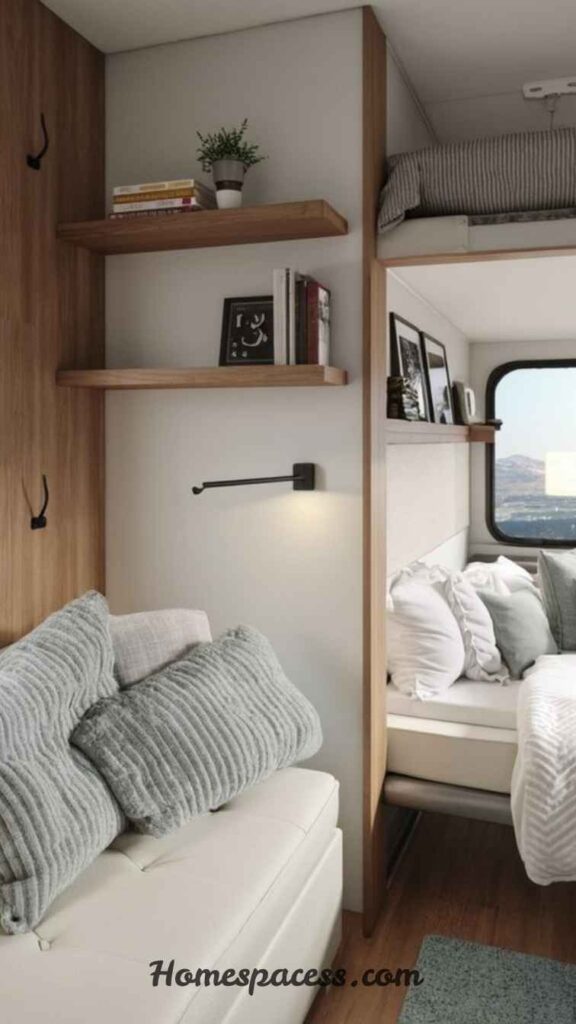
Floor-mounted furniture adds visual weight and physical bulk to a small camper interior. Floating shelves, on the other hand, keep the floor clear making the entire space feel significantly larger. Cedar or pine floating shelves stained in a warm walnut tone add natural warmth, while slim metal brackets keep it industrial and modern if that’s your aesthetic direction.
The practical trick most guides miss: add a low lip (about 1.5 inches) to the front edge of each shelf. This prevents items from flying off on winding roads without requiring a full enclosed cabinet. Pair floating shelves above the bed, above the sink, and alongside the driver’s area for a cohesive, airy look throughout the van.
Must Read: Modern Dining Room Ideas That Instantly Elevate Your Home Style
Choose Light-Colored Wood Paneling for Walls and Ceilings
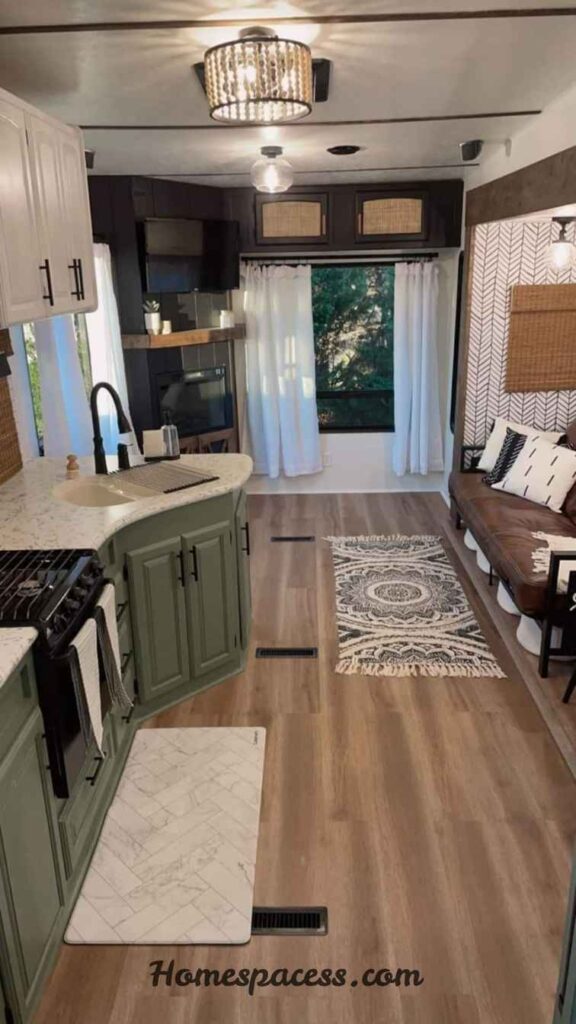
Dark interiors feel like caves. Light-colored birch, pine, or cedar tongue-and-groove panels immediately brighten a camper’s interior and make the space feel at least 30% larger, perceptually. The natural grain adds visual texture without adding visual noise which matters enormously in a small living environment where everything competes for attention.
From a practical standpoint, wood paneling also adds a layer of insulation and helps with sound dampening compared to bare metal walls. Birch ply is particularly popular among van builders because it’s lightweight, easy to cut to curved van walls, and holds screws well. A simple satin-finish clear coat keeps the wood protected from moisture and easy to wipe down.
Also Read: Home Bar Ideas That Make Entertaining at Home More Fun
Build a Galley-Style Kitchen Along One Wall
Layout Strategy
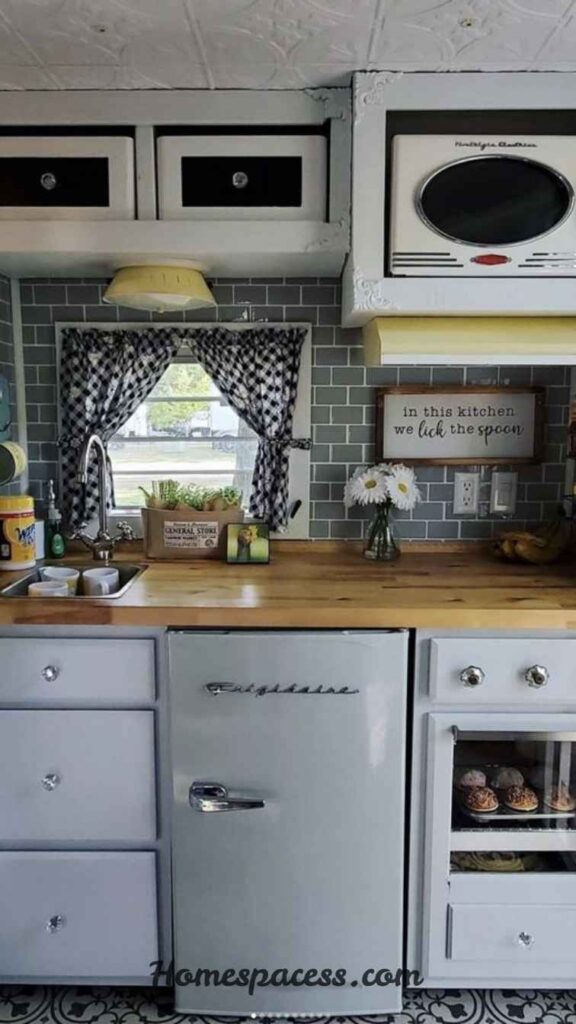
Galley kitchens where all cooking elements run along a single wall are the most efficient layout for camper van interiors. This design keeps the prep area, sink, and stove within arm’s reach without requiring you to pivot, which matters when you’re cooking in a 6-foot-wide space. A two-burner propane stove, a compact single-basin sink, and a 12-volt compressor fridge can all fit in under 48 inches of linear space.
The often-overlooked detail is vertical storage. A magnetic knife strip, small spice rack mounted at eye level, and slim hanging rail with S-hooks for utensils turn dead wall space above the counter into a fully functional prep station. This approach saves drawer space for items that genuinely need to be enclosed.
Don’t Skip: Easy Party Decor Ideas That Will Impress Your Guests Instantly
Use Curtains Instead of Doors for Cabinetry
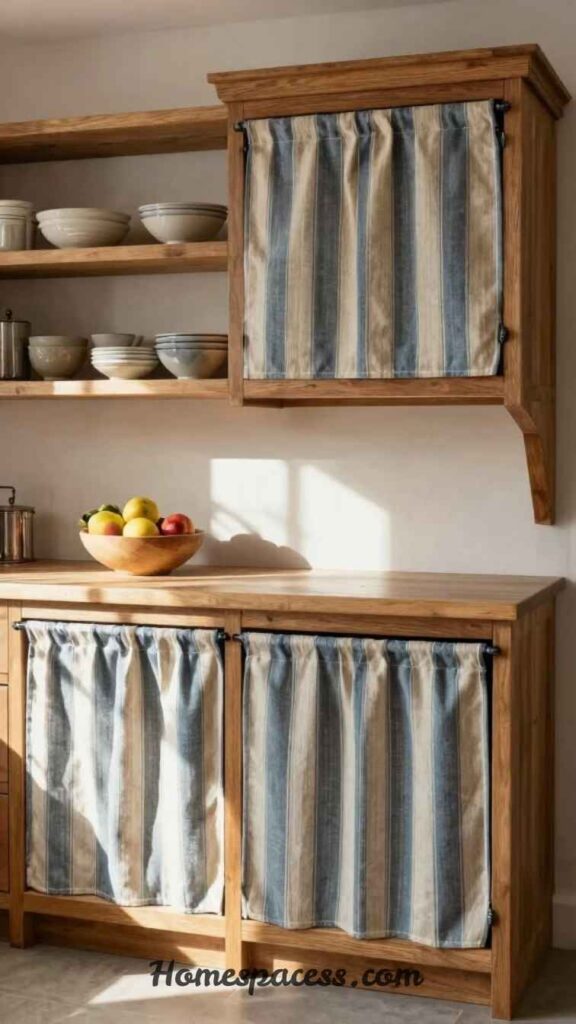
Cabinet doors seem like the obvious choice, but they’re one of the most space-wasting elements in camper interior design. Swing-out doors require clearance in front of them to open clearance you often don’t have. Linen curtains or leather tab-curtains threaded onto a tension rod cost a fraction of the price, weigh almost nothing, and add softness to what can otherwise feel like a very utilitarian interior.
Choose curtain fabrics in earth tones terracotta, sage, oat, or olive to echo the natural outdoor world you’re living close to. This simple swap also makes it easy to swap out your interior’s color palette seasonally without any major construction: just replace the curtains. A practical camper van interior idea that’s consistently underrated.
Add a Sliding Barn Door to Separate Sleeping from Living Areas
Privacy & Flow
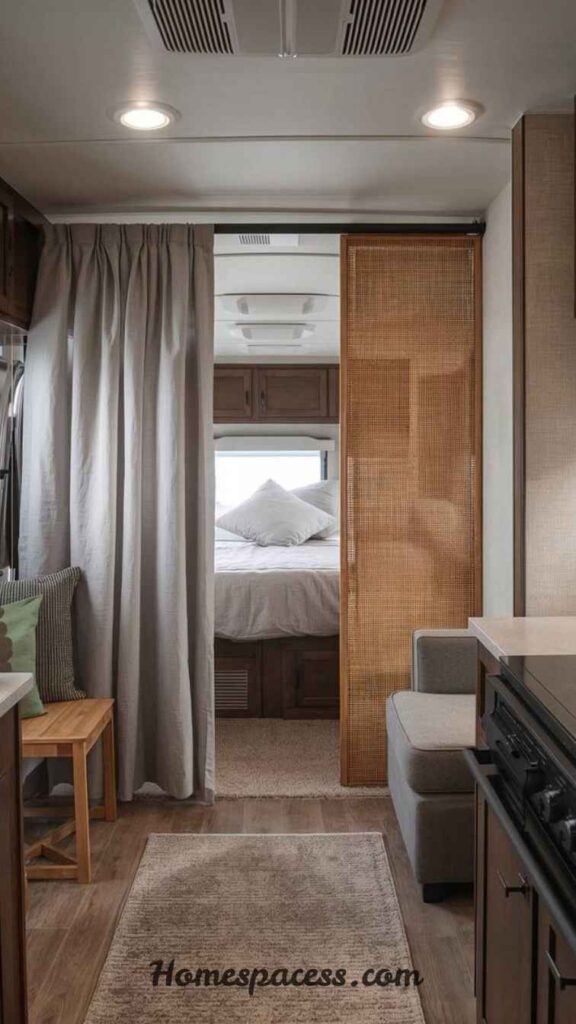
In longer camper vans and Class B RVs, a lightweight sliding barn door creates a genuine bedroom without the space penalty of a hinged door. This is one of the most impactful camper interior ideas for couples or anyone who travels with a partner on different schedules. The person who sleeps in can close the door; the early riser can make coffee without disturbing them.
Use a hollow-core door or a lightweight cedar-frame canvas panel anything under 15 pounds to ensure the sliding hardware doesn’t strain under constant road vibration. A recessed pull handle keeps the profile slim and prevents it from catching on blankets or clothing. The aesthetic payoff is also significant: it adds an architectural moment that makes the space feel genuinely designed rather than improvised.
Read More: Gaming Room Ideas That Transform Any Space Into a Setup Worth Streaming
Layer Textiles to Create Warmth and Sound Absorption
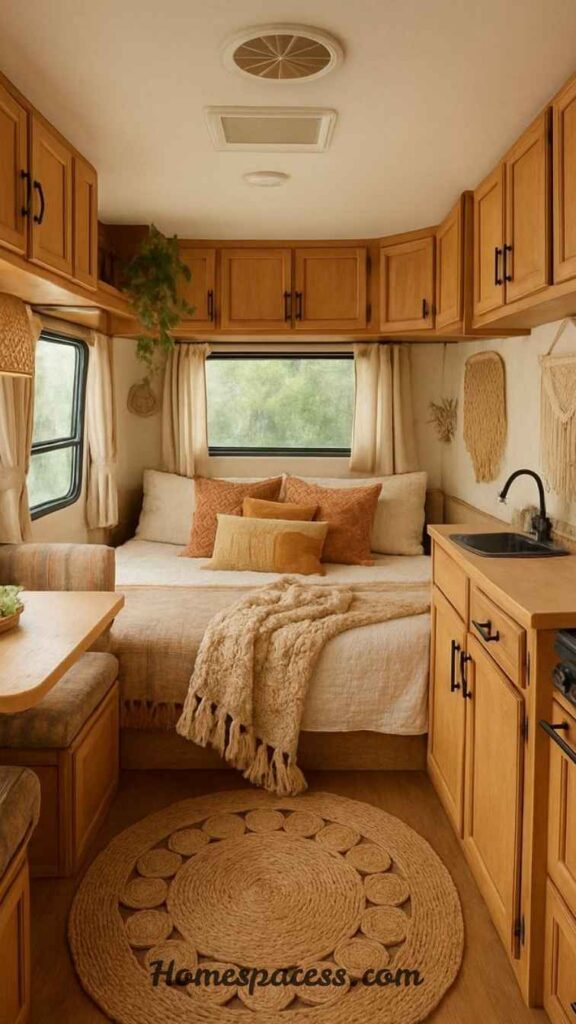
One thing experienced van-lifers learn quickly: hard surfaces are loud. Every rattle, road rumble, and rain shower echoes off wood, metal, and tile. Layering textiles a wool area rug, a quilted throw, linen pillow covers, a macramé wall hanging absorbs sound and transforms the acoustic environment of your camper interior dramatically. This isn’t just comfort; it’s quality of life.
From a design perspective, textiles are also the easiest and most affordable way to inject personality. A kilim-style rug in rust and navy, paired with a chunky knit blanket and some embroidered cushions, can make a budget van build feel genuinely luxurious. The practical rule: keep textiles washable, quick-dry, and mold-resistant choose wool blends or synthetic outdoor fabrics for anything that might get damp.
Install Recessed LED Strip Lighting for Ambiance and Function
Lighting Design
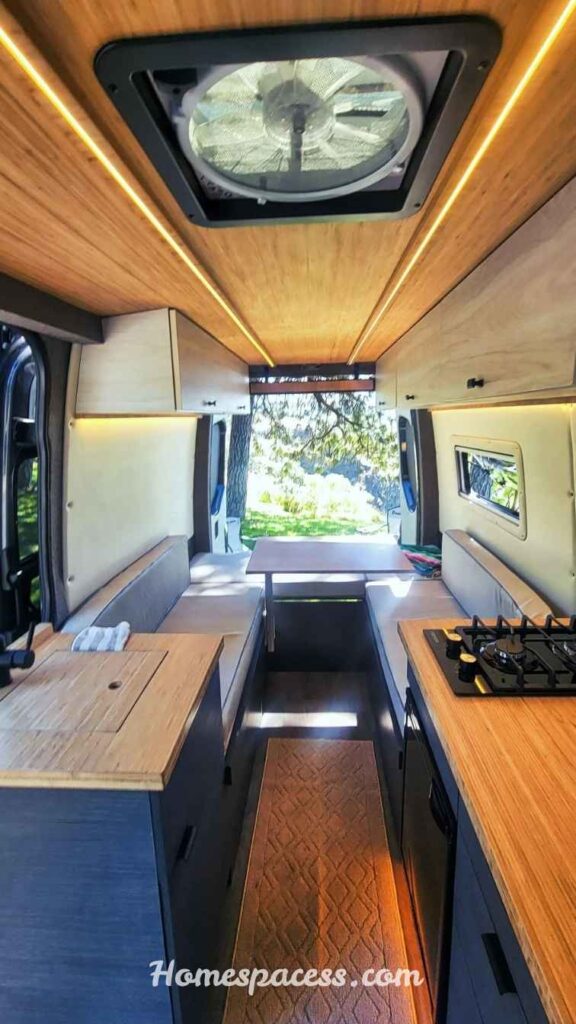
Most camper van builds make the mistake of relying on a single overhead light. This creates flat, unflattering illumination that makes the space feel institutional rather than cozy. Recessed LED strips along the base of upper cabinets, under the bed platform, and along the ceiling perimeter create layered, directional light the same principle used in high-end interior design.
Warm white LEDs (2700K–3000K color temperature) are essential for evening use cool white LEDs will keep you wired and make the space feel clinical. Dimmable circuits let you go from bright task lighting while cooking to a soft glow for reading or unwinding. The total power draw of a full LED strip setup is typically under 20 watts negligible for any decent solar system.
Create a Dedicated Workspace with a Fold-Down Desk
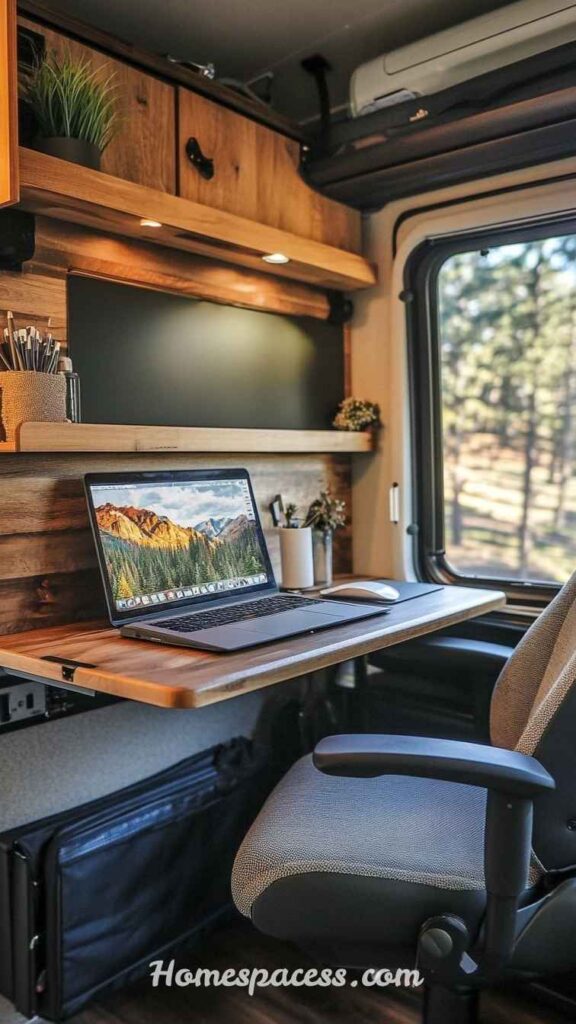
The rise of remote work has made a functional workspace one of the most in-demand camper interior ideas today. A fold-down desk wall-mounted on heavy-duty piano hinges and supported by two pull-out legs can provide 18×30 inches of solid desk surface when needed, and fold completely flat against the wall in seconds. Position it near a window for natural light and pair it with a slim wall-mounted power strip for laptops and monitors.
The ergonomics are often overlooked: make sure the desk folds out at a height of 28–30 inches to match standard desk height. Many van-lifers use a folding camp stool that stores under the bed, but a proper, height-appropriate chair (or a custom-built bench at the correct height) makes multi-hour work sessions genuinely sustainable. This detail separates a weekend camper from a full-time remote work setup.
Use Mirrors Strategically to Expand the Visual Space
Visual Trick
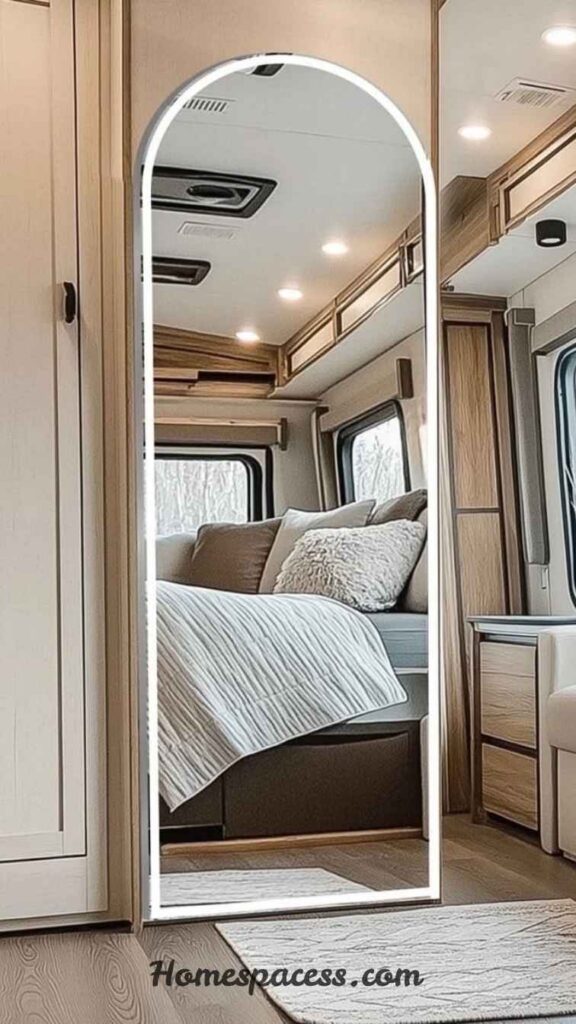
A well-placed mirror in a small camper interior can visually double the perceived depth of a space the same principle that interior designers use in compact apartments. A full-length mirror mounted on the back of a cabinet door, or a round mirror above the sink, reflects natural light and creates the illusion of a much larger room. In a 70-square-foot van build, this is one of the highest-impact, lowest-cost interventions available.
The practical consideration: secure the mirror to a solid backing and use construction adhesive plus mechanical fasteners never rely on adhesive alone over rough roads. Acrylic mirrors are lighter and shatterproof compared to glass, making them the safer choice for mobile living. A slight tinted or antiqued mirror finish also prevents the mirror from looking like an afterthought and integrates it more seamlessly into the overall design.
Design a Modular Storage System That Evolves With You
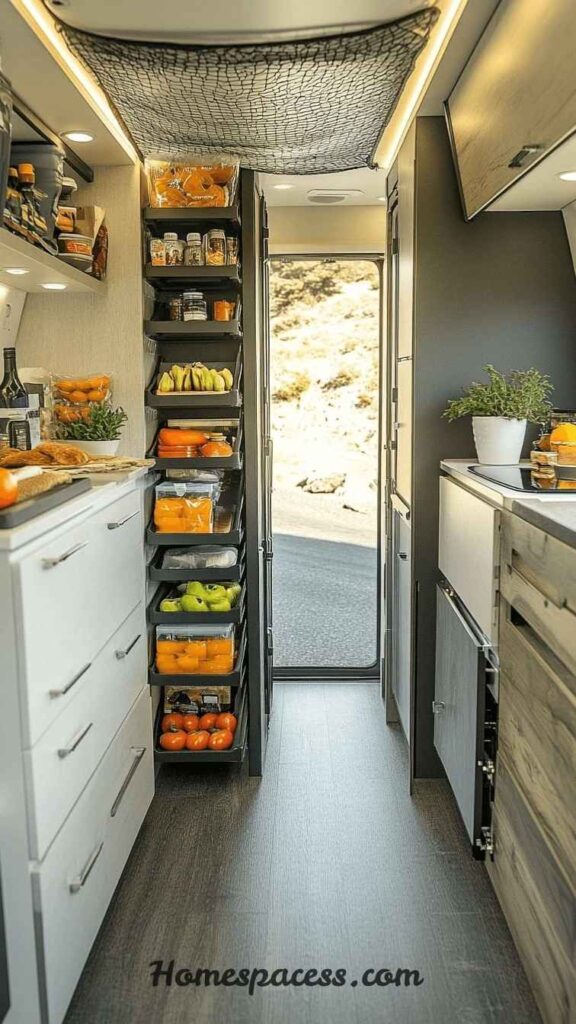
Fixed storage is the enemy of adaptability. As your needs change different trips, different gear, different seasons a rigid built-in system becomes a liability. Modular storage using stackable crates, drawer units on rails, and removable bins lets you reconfigure the interior in an afternoon rather than a weekend. MOLLE panels (originally a military organization system) mounted to the van walls are increasingly popular for hanging gear without drilling new holes every time.
The key insight most camper interior guides miss: build your largest fixed structure (usually the bed platform) first, and design everything else to be removable. This approach also dramatically increases resale value potential buyers can configure the interior to suit their own needs rather than being locked into yours.
Incorporate Living Plants for Air Quality and Visual Connection to Nature
Biophilic Design
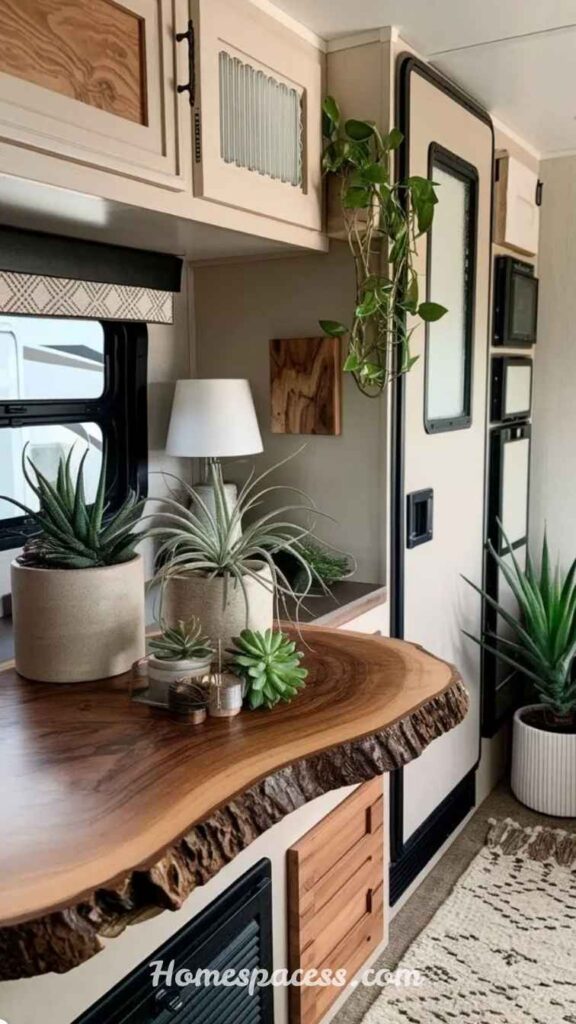
This is the camper interior idea that gets the most skepticism and produces the most delight when done well. Small, hardy plants like pothos, succulents, and snake plants thrive in camper environments with minimal care. A few mounted in repurposed tin cans or wall-hung ceramic planters add genuine life to what is otherwise an entirely man-made interior. Research consistently shows that proximity to plants reduces cortisol levels which matters when you’re living in close quarters with another person.
The practical keys: choose plants that tolerate low water and high vibration, secure planters in a way that prevents tipping during transit, and position them near roof vents where they’ll get the most airflow and ambient light. A small living wall panel above the kitchen counter is an increasingly popular feature in high-end van builds and adds a dramatic visual focal point that photographs beautifully.
40%
Floor space recovered with a Murphy bed
2700K
Ideal LED warmth for camper ambiance
48″
Galley kitchen in linear space
15lbs
Max sliding door weight for road use
Conclusion
Transforming a camper interior from a bare box into a functional, comfortable home on wheels is entirely achievable but it rewards deliberate planning over spontaneous building. The best camper interior ideas work together as a system: smart storage enables good layouts, good layouts enable comfortable living, and comfortable living makes full-time travel genuinely sustainable.
Start with your two or three biggest pain points storage, sleeping, or workspace and solve those well before adding decorative layers. Depth of quality in a few key areas beats breadth of mediocrity across all of them.
Trend Analysis
How Camper Interior Design Is Evolving Right Now
The most significant shift happening in camper interior design in 2026 is the move away from the “Instagram van” aesthetic stark white walls, Scandinavian minimalism, exposed Edison bulbs toward what designers are calling “warm utility.” This means materials that look genuinely used and loved: raw linen, oiled oak, hammered copper hardware, woven rattan. The camper interior is being treated less like a tiny house and more like a well-traveled workshop.
A second major trend is integration of smart home technology into mobile builds. 12V smart lighting systems (controllable via phone), solar monitoring dashboards, and automated ventilation systems triggered by interior humidity sensors are moving from prototype to mainstream. Companies like Victron Energy and Dometic are releasing dedicated van-life smart ecosystem products, and the RV industry is following. The camper interior of 2028 will likely include passive HVAC systems far more sophisticated than current diesel heaters and rooftop fans.
The third trend to watch: the rise of biophilic interior systems moss walls, hydroponic micro-herb gardens, and living wall panels driven by a generation of full-time remote workers who are rethinking what “home” means. As van build communities grow, the bar for interior sophistication rises alongside them.
Expert Insights
What Experienced Van-Lifers Know That Beginners Don’t
The single most consistent regret among experienced van-lifers: not building enough ventilation into their camper interior from day one. A high-quality roof fan (the Maxxair Fan Deluxe or Fantastic Fan remain the industry standards) is worth three times its cost in comfort and mold prevention. Position it over the kitchen area the highest moisture-generating zone not simply in the middle of the roof.
- Build a second power outlet at bed level you’ll use it far more than overhead sockets
- Use a hinged access panel under the bed, not a lift top it’s faster and less disruptive
- Finish all wood edges before installation sanding inside a built van is miserable
- Test every drawer and door with the van parked on a 10-degree slope before finalizing
- Install your water tank before the cabinets not after
- Spray all hardware with corrosion inhibitor before installation in coastal areas
The other insight that separates great builds from average ones: material weight management. Every pound added to a van reduces range, increases tire wear, and affects handling. Experienced builders weigh every major component before installation and often substitute standard materials MDF for cabinetry, for example with lightweight alternatives like aluminum composite panels or 9mm birch ply. The 200-pound weight savings this represents can genuinely extend engine life over 50,000+ miles of full-time travel.
Sustainability
Building a Camper Interior That Lasts a Decade
The most sustainable camper van interior approach isn’t buying the most expensive materials it’s making intentional choices that withstand real-world use. The areas that fail first in most builds are: the kitchen countertop (scratches and moisture damage), the flooring (peeling at seams), and the upholstery (UV fading and wear at seat edges). Addressing these three pressure points with upgraded materials from the start eliminates the most common mid-build overhauls.
From a sustainability perspective, sourcing reclaimed wood for paneling and countertops is both environmentally responsible and practically advantageous reclaimed timber is typically denser, more dimensionally stable, and more resistant to moisture than new pine or poplar. Companies like Evergreen Eco Builds and Sustainabuilt specialize in reclaimed materials cut to van build specifications, with lead times dropping significantly as the industry scales.
Long-term resale value is also shaped by electrical system quality more than any other single factor. A properly specified lithium battery bank with a quality inverter-charger will outlast three generations of solar panels. Investing in the electrical foundation and documenting it thoroughly with labeled wiring diagrams makes the van significantly more valuable to subsequent owners and avoids the most common and expensive retrofits.
Future Predictions
The Camper Interior of 2030: What’s Coming Next
The most significant upcoming innovation in camper interior design is structural battery integration where the floor and wall panels themselves contain lithium cells, eliminating the dedicated battery compartment entirely. Several European van conversion companies are already prototyping this, and it could free up 15–20% of current storage real estate in a typical build. Combined with advances in thin-film solar applied directly to the van’s exterior paint, self-sufficient camper interiors with no external charging dependency become genuinely viable within this decade.
Augmented reality design tools are also beginning to reshape how van builds are planned. Apps that let you walk through a photo-realistic 3D model of your proposed build with accurate measurements, solar angles, and storage simulations are moving from professional CAD software into consumer-accessible mobile tools. This will dramatically reduce costly mistakes during the construction phase and enable non-technical builders to design more sophisticated layouts independently.
Finally, the materials science of the camper interior will shift meaningfully by 2030. Aerogel-based insulation panels currently expensive and fragile are coming down in cost and up in durability. At R-10 per inch of thickness, they offer triple the insulation of current foam systems in a fraction of the space. For campers in extreme climates, this changes the thermal performance equation entirely and enables fully off-grid comfort in both arctic winters and desert summers.
Common Mistakes
The Camper Interior Mistakes That Cost People the Most
The most expensive and common mistake in camper van interior builds is underestimating condensation management. When warm, moist interior air meets cold metal van walls, it condenses and if insulation is improperly applied or vapor barriers are missing, this moisture builds up invisibly behind wood paneling for months before manifesting as mold, rot, or rust. The fix is mundane but critical: a continuous vapor barrier on the van’s metal shell before any insulation is applied, combined with adequate ventilation to flush interior humidity daily.
A second overlooked factor is ergonomic ceiling height in sleeping areas. Many first-time builds design a beautiful bed platform, then discover that sitting up in bed results in hitting one’s head on the ceiling. The minimum comfortable sitting height is 28–30 inches from mattress surface to ceiling a measurement most people fail to mock up before committing to a build. This is easy to fix in planning and essentially impossible to fix after the fact without a complete rebuild.
- Not testing mattress thickness before building the bed platform (4″ vs 6″ matters enormously)
- Placing the fridge too far from shore power connection forces long cable runs and voltage drop
- Forgetting to route wiring conduits before closing up walls
- Using interior-grade wood stain in a moisture-heavy kitchen area
- Designing storage without accounting for frequent, easy access during travel

Team Home Spacess shares simple, practical design ideas that work for real families. The team focuses on cozy décor, soft colors, and natural textures that make a space feel truly lived-in. From everyday decorating tips to creative home projects, Team Home Spacess is dedicated to helping readers create warm, comfortable, and inviting spaces with a fresh and personal touch.