
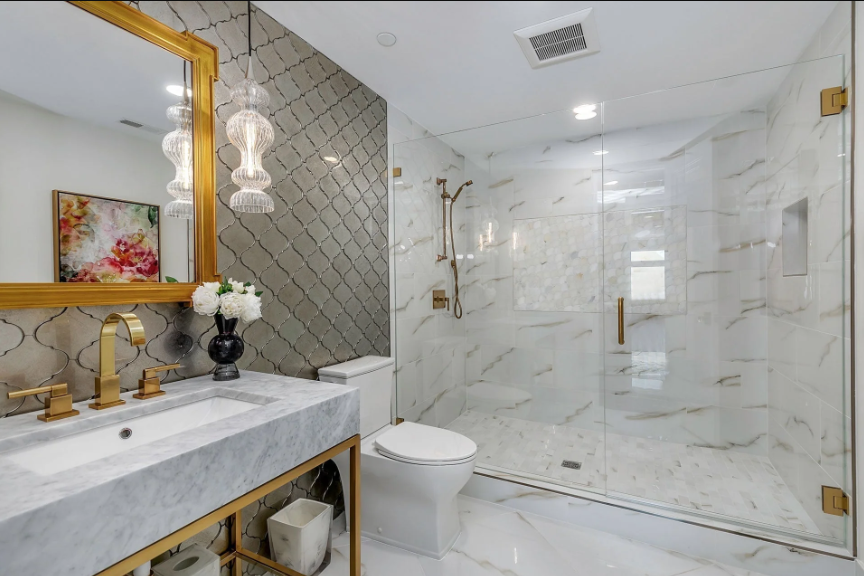
A shower floor can look beautiful in a showroom and behave very differently once water, soap and daily use enter the picture. A polished stone mosaic may have the perfect color, but is its finish appropriate for wet, bare feet? A porcelain tile might be easier to maintain, but will its dimensions work with the slope toward the drain?
These questions make material selection particularly important.
Porcelain is generally the more straightforward choice for homeowners who want durability, low water absorption and manageable cleaning. Natural stone offers veining, texture and variation that manufactured surfaces cannot reproduce exactly, although it often requires more maintenance.
Both materials can work in a well-designed shower when the individual product is suitable for the application.
The following seven brands offer different approaches to bathroom tile, from practical porcelain mosaics to expressive natural stone and handcrafted surfaces.
Porcelain vs. natural stone: What should you consider first?
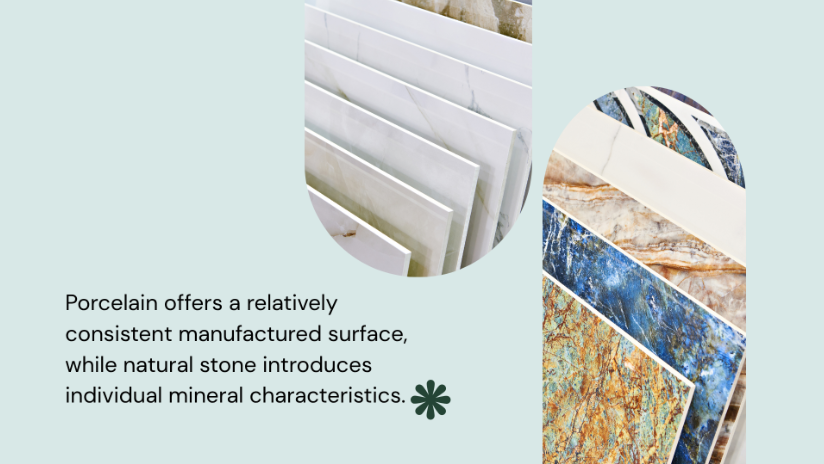
Porcelain is manufactured from refined clay and fired to produce a dense, low-absorption material. It resists everyday moisture and typically requires less maintenance than porous natural stone.
Stone behaves differently depending on its composition. Marble, limestone, travertine and slate have distinct characteristics, including differences in porosity, surface texture and sensitivity to cleaning products.
For shower floors, slip resistance deserves particular attention. Matte or textured finishes may provide suitable traction, but appearance alone cannot establish safety.
The Tile Council of North America explains how the dynamic coefficient of friction (DCOF) is used to evaluate flooring, while also emphasizing the importance of installation conditions and intended use.
Tile size matters too. Smaller mosaics generally accommodate the multidirectional slopes around conventional shower drains more easily than large-format tiles.
With these considerations in mind, the brands below provide useful starting points for different bathroom designs.
1. clé: Best for artisanal stone and expressive shower floors
 clé is particularly interesting for homeowners who approach bathroom design through materials rather than matching product sets.
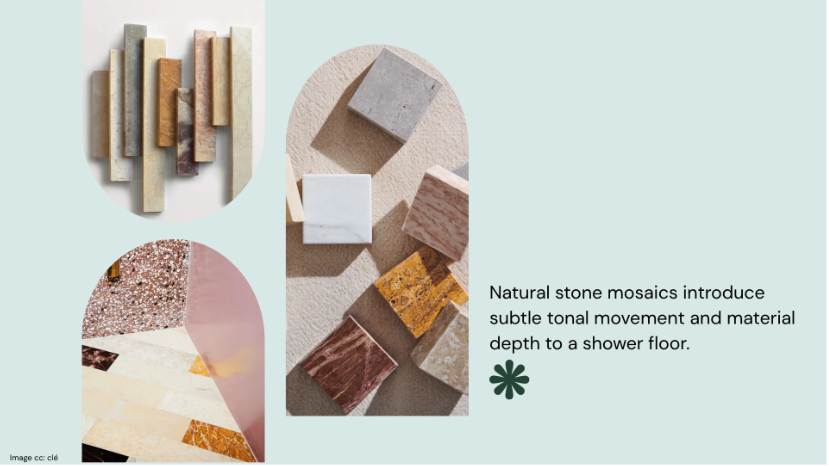
Its shower floor collection includes marble, limestone, travertine, cement, terracotta and other handcrafted surfaces. Options range from small mosaics to larger geometric formats, allowing designers to explore texture, scale and pattern.
The brand’s natural stone offerings are especially relevant to bathrooms where subtle variation is part of the intended design.
Honed marble can introduce restrained movement through its veining, while tumbled limestone or travertine provides a softer, more textured appearance.
Homeowners researching non-slip tile for shower floors can explore clé’s dedicated collection and use its material, finish and slip-resistant filters to narrow their options.
The distinction between general shower-floor suitability and documented slip resistance is important. A product’s technical information should be reviewed before purchase, particularly for wet barefoot use.
Best for: Design-forward bathrooms, natural stone mosaics, artisanal surfaces and you are comfortable with material-specific care.
2. Daltile: Best for practical porcelain mosaics
Daltile is a useful starting point for people seeking a broad selection of porcelain and ceramic tile.
Its dedicated shower-floor range includes mosaic collections, decorative formats and products designed for wet-area applications.
Collections such as Keystones and Color Wheel Mosaics provide options for classic geometric layouts, while stone-look designs can coordinate with larger bathroom tiles.
Porcelain’s low water absorption is particularly appealing in frequently used bathrooms. Smaller formats can also simplify installation around conventional shower drains.
Best for: Family bathrooms, practical renovations and coordinated porcelain floor-and-wall designs.
3. Bedrosians: Best for contemporary mosaics
Bedrosians is worth exploring for those who want modern finishes without abandoning traditional tile formats.
Its wider catalog spans porcelain, ceramic and natural stone, making it useful when comparing manufactured surfaces with more expressive materials.
For shower floors, small-format porcelain mosaics are a sensible category to investigate. Geometric arrangements such as hexagons and squares can create subtle pattern while accommodating the floor’s drainage requirements.
The strongest approach is to select the shower-floor material first, then coordinate wall tiles through color or finish rather than assuming every tile within a collection is interchangeable.
Best for: Contemporary bathrooms, understated geometric patterns and coordinated material palettes.
4. TileBar: Best for variety and decorative flexibility
TileBar offers a broad range of shower-floor tiles, including porcelain mosaics, natural stone and decorative formats.
Its selection includes small squares, hexagons, penny rounds and herringbone arrangements, alongside more expressive patterns and finishes.
This variety is useful for people who already have a specific bathroom style in mind.
A neutral herringbone mosaic can complement large-format wall tiles, while a contrasting hexagonal floor can establish a focal point in an otherwise simple shower.
However, decorative appeal should be evaluated alongside finish and maintenance. Not every product displayed within a shower-floor category will have identical performance characteristics.
Best for: Pattern-led bathrooms, varied mosaic shapes and homeowners comparing several design directions.
5. Ann Sacks: Best for refined stone and decorative detailing
Ann Sacks is a strong option for those interested in sophisticated material combinations.
The brand is associated with decorative tile, natural stone and distinctive surface treatments that suit highly considered bathroom interiors.
Its appeal lies in the ability to combine understated field tile with more intricate mosaics or decorative elements.
For shower floors, natural stone should be selected with particular care. Honed or textured finishes may be more appropriate than highly polished alternatives, depending on the product’s tested performance.
Marble also requires compatible cleaning products because acidic substances can damage its surface.
Best for: Refined bathrooms, stone-focused designs and decorative mosaics.
6. Marazzi: Best for consistent porcelain finishes
Marazzi is worth considering for homeowners who prefer manufactured surfaces with consistent color and dimensions.
Its porcelain and ceramic ranges include contemporary stone-look and concrete-inspired finishes, offering alternatives to natural materials.
This makes porcelain particularly useful when the design calls for the appearance of stone without its typical sealing requirements.
Small-format floor mosaics can be paired with larger wall tiles in related tones, creating continuity without requiring identical dimensions.
Homeowners should confirm the intended floor application for each product, since wall tiles and bathroom floor tiles are not automatically suitable for shower bases.
Best for: Contemporary renovations, stone-look porcelain and relatively low-maintenance bathroom designs.
What to check before ordering shower floor tiles
[IMAGE: Professional tile installer reviewing mosaic sheets and a shower drainage plan before installation.]
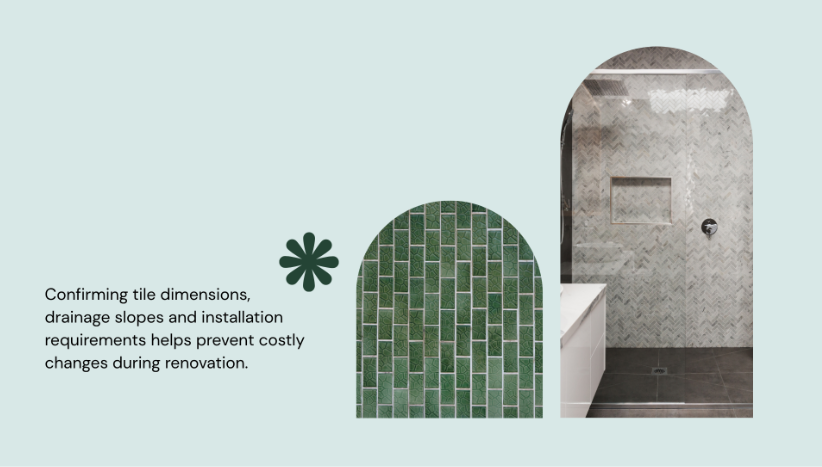
Caption: Confirming tile dimensions, drainage slopes and installation requirements helps prevent costly changes during renovation.
Regardless of brand, a shower floor must be treated as a complete installation system.
The substrate, waterproofing membrane, drain assembly, bonding materials and finished tile all need to work together.
Small mosaics can follow the slopes around a central drain, while larger tiles may require additional cuts or a compatible linear-drain arrangement.
Natural stone and handmade products may introduce dimensional variation, requiring careful setting out and appropriate grout joints.
Before placing an order, confirm:
- The exact tile is approved for shower-floor use.
- Its slip-resistance information is appropriate for wet barefoot conditions.
- The size and format suit the planned drainage slopes.
- Cleaning and sealing requirements are realistic for the household.
- The installer has experience with the selected material.
A physical sample is valuable, but it cannot replace the manufacturer’s technical documentation.
Which material should you choose?
For homeowners prioritizing straightforward cleaning and consistent finishes, porcelain is usually the practical starting point.
Natural stone is worth considering when mineral variation, texture and material character are central to the design, provided the household accepts its maintenance requirements.
Among the seven brands, Daltile and Marazzi offer practical porcelain directions, while clé and Ann Sacks are particularly relevant to material-led interiors. TileBar, Bedrosians and MSI provide further opportunities to compare formats, finishes and design styles.
The final decision should rest on the specific tile rather than the brand name alone.
A shower floor that drains correctly, provides appropriate traction and suits the household’s cleaning habits will remain a better investment than one selected purely for its appearance.

Team Home Spacess shares simple, practical design ideas that work for real families. The team focuses on cozy décor, soft colors, and natural textures that make a space feel truly lived-in. From everyday decorating tips to creative home projects, Team Home Spacess is dedicated to helping readers create warm, comfortable, and inviting spaces with a fresh and personal touch.