

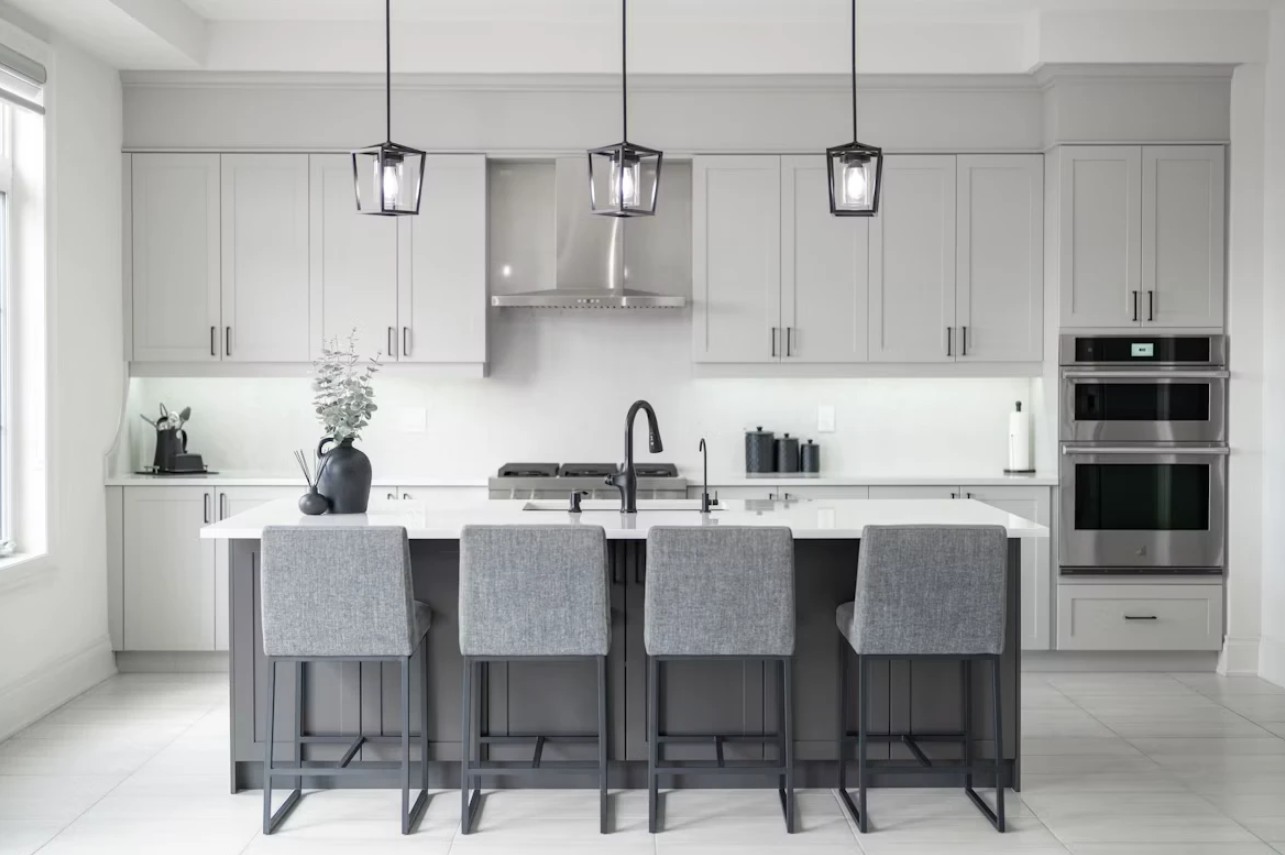
Choosing among luxury kitchen brands requires more than comparing showroom aesthetics. For contractors, builders, and interior designers, the right supplier must deliver the appropriate cabinet materials, customization options, design consistency, manufacturing quality, and project support. A well-designed luxury kitchen should meet the client’s visual expectations while fitting the project’s budget, installation requirements, and delivery schedule.
The best luxury kitchen brands combine refined finishes with reliable cabinet construction, flexible specifications, and clear technical documentation. By comparing these factors systematically, project professionals can select a kitchen partner that supports both design intent and construction performance.
1. What Defines a Luxury Kitchen Brand?
A luxury kitchen brand is distinguished by its cabinet construction, material quality, design capabilities, finish selection, hardware, and ability to meet project-specific requirements. A premium price alone does not establish quality. Contractors and designers should evaluate the actual specifications behind each collection.
The main characteristics to compare include:
- Cabinet construction: Panel composition, thickness, edge sealing, joinery, and resistance to moisture.
- Surface finishes: Natural veneer, lacquer, textured laminates, woodgrain finishes, and other decorative surfaces.
- Hardware: Hinge quality, drawer systems, soft-close mechanisms, and available internal storage accessories.
- Customization: Options for cabinet dimensions, door styles, storage layouts, colors, and integrated appliances.
- Project support: Technical drawings, material samples, quotations, production coordination, and installation guidance.
Some luxury kitchen brands specialize in distinctive European design, while others focus on made-to-measure cabinetry, modular systems, or complete residential furnishing solutions. The most suitable choice depends on the client’s priorities and the practical requirements of the project.
2. Which Cabinet Materials Should You Compare?
Cabinet materials influence durability, appearance, maintenance, and cost. Comparing the substrate and surface finish separately gives buyers a more accurate understanding of cabinet quality.
Solid Wood
Solid wood offers natural grain variation and can suit traditional, transitional, and contemporary kitchens. Different wood species have different colors, grain patterns, hardness, and movement characteristics.
However, solid wood responds to changes in humidity and temperature. It may expand or contract, so construction methods and environmental conditions matter. Solid wood is frequently used for selected door fronts, frames, and decorative elements rather than every component of a cabinet system.
Plywood
Plywood consists of bonded layers of wood veneer. Its dimensional stability and strength make it a common option for cabinet boxes, depending on the grade, adhesive system, and manufacturing quality.
For projects in humid environments, confirm the plywood grade, moisture resistance, edge treatment, and suitability for the intended application. The term “plywood” alone does not guarantee a particular performance level.
MDF and Engineered Panels
Medium-density fibreboard (MDF) provides a smooth, consistent surface that works well for painted, lacquered, and profiled cabinet doors. Engineered panels can also support repeatable dimensions across large residential developments.
Performance varies according to panel grade, density, emissions classification, moisture resistance, and edge protection. Standard MDF should not automatically be treated as suitable for prolonged exposure to water.
Veneer, Laminate, and Lacquer Finishes
The cabinet substrate and the decorative surface perform different functions. A high-quality finish cannot compensate for an unsuitable substrate or poorly sealed edges.
- Natural veneer: Offers authentic wood grain and visual variation.
- Laminate: Provides a broad range of colors and patterns, with performance depending on the laminate specification.
- Lacquer: Supports smooth, refined surfaces in matte, satin, or gloss finishes, but scratch resistance varies by coating system.
- Textured and woodgrain finishes: Create visual depth and can coordinate with flooring, wall panels, and furniture.
When comparing luxury kitchen cabinets, request physical samples and written specifications. Evaluate color consistency, edge details, cleaning requirements, and resistance to the wear expected in the intended property.
3. How Do Luxury Kitchen Brands Compare on Customization?
Customization determines how well a kitchen fits the room, the client’s lifestyle, and the overall architectural design. Some brands offer primarily standardized modular systems, while others can adapt dimensions, finishes, storage, and cabinetry configurations to individual projects.
For contractors and interior designers, customization should be evaluated at three levels.
Dimensional customization: Confirm whether cabinet widths, heights, depths, filler panels, and tall units can be adjusted. This is particularly relevant for irregular floor plans, ceiling-height cabinetry, and renovations involving existing plumbing or structural constraints.
Functional customization: Assess options for corner storage, pull-out units, integrated waste bins, drawer organizers, appliance housing, and accessibility requirements. A well-planned cabinet layout should make daily tasks easier without compromising the intended appearance.
Aesthetic customization: Compare door profiles, handle options, panel finishes, internal colors, and combinations of wood, stone, metal, and glass. Ask whether the manufacturer can coordinate finishes across kitchen islands, tall cabinets, wardrobes, bathroom vanities, and wall panels.
For projects requiring specific dimensions or a consistent interior concept, custom cabinetry can offer greater flexibility than a fixed-size collection. However, more customization may increase design time, sample approvals, production complexity, and costs. Request a clear schedule of available modifications and any associated charges before confirming specifications.
4. How Do Design Styles Differ Across Luxury Kitchen Brands?
Luxury kitchen brands often develop recognizable design languages. Comparing these styles helps designers identify suppliers whose products fit the architectural concept rather than selecting cabinets based on appearance alone.
| Design direction | Common characteristics | Best suited for |
| Minimalist contemporary | Flat fronts, restrained colors, concealed storage, simple lines | Modern apartments and contemporary villas |
| Italian-inspired modern | Refined proportions, material contrast, integrated details | High-end residential and design-led projects |
| Transitional | Clean cabinet profiles with traditional influences | Family homes and mixed-style interiors |
| Natural and organic | Woodgrain finishes, warm neutrals, tactile surfaces | Nature-inspired interiors and relaxed luxury homes |
| Architectural handleless | Flush surfaces, integrated pulls, concealed appliances | Minimalist interiors and open-plan living spaces |
The premium kitchen design process should consider the entire room, including lighting, flooring, countertops, wall finishes, appliances, and circulation. A visually striking cabinet collection may still be unsuitable if its dimensions conflict with the architectural plan or its finish options cannot be coordinated with other rooms.
When reviewing modern kitchen cabinets, compare full kitchen compositions rather than isolated door samples. Pay attention to the island, tall-unit proportions, countertop thickness, appliance integration, and transitions between materials.
5. How Should You Evaluate Luxury Kitchen Brands for Construction Projects?
For builders and contractors, the best supplier is one that can translate approved designs into accurate, deliverable specifications. Product appearance is only one part of the selection process.
Use the following comparison framework when evaluating manufacturers and suppliers.
| Evaluation criterion | What to verify | Why it matters |
| Manufacturing quality | Material grades, tolerances, edge sealing, hardware specifications | Reduces quality issues and rework |
| Design documentation | Dimensioned drawings, elevations, finish schedules, appliance details | Supports coordination with other trades |
| Customization capacity | Available sizes, finish options, special configurations | Determines suitability for project requirements |
| Quality control | Inspection procedures, defect handling, sample approval process | Improves consistency across orders |
| Production and delivery | Lead times, packaging, shipping arrangements, order milestones | Supports construction scheduling |
| Installation support | Assembly instructions, hardware schedules, technical assistance | Helps installers work accurately |
| Warranty and after-sales service | Written coverage, exclusions, replacement-part procedures | Clarifies responsibilities after handover |
| Commercial terms | Minimum order quantities, payment terms, volume pricing | Supports budget and procurement planning |
Request a complete quotation based on the same cabinet schedule from each shortlisted supplier. The quotation should identify cabinet materials, finishes, hardware, accessories, panels, and exclusions. Without consistent specifications, price comparisons can be misleading.
For multi-unit developments, also confirm whether the supplier can reproduce approved finishes and dimensions across repeat orders. For custom villas, prioritize design coordination, material selection, and the ability to accommodate site-specific requirements.
6. Are Bespoke Kitchen Brands Better Than Modular Luxury Brands?
Bespoke and modular kitchen systems serve different project needs. Neither approach is automatically superior; the right option depends on design complexity, budget, schedule, and the degree of dimensional flexibility required.
Bespoke kitchen cabinetry is suitable when a project requires unusual dimensions, distinctive detailing, or a highly individualized design. It can provide greater control over the final composition, although additional engineering and approvals may increase cost and lead time.
Modular luxury kitchens use predefined cabinet dimensions and configurations. Modular systems can simplify specification, replacement, and installation, particularly when a project uses repeatable layouts. Their limitations become more apparent when rooms have unusual dimensions or require extensive customization.
A hybrid approach may work best for some projects. Standard cabinet modules can provide cost and production efficiencies, while custom panels, selected cabinet sizes, and special storage solutions address architectural constraints.
Before selecting either approach, establish which dimensions and finishes are fixed, which can change, and which modifications require additional fees or production time.
7. How Can You Choose the Right Luxury Kitchen Brand for Your Client?
A structured selection process helps project teams avoid making decisions based solely on showroom presentation or brand recognition.
Step 1: Define the project requirements. Document the room dimensions, design style, target budget, appliance specifications, storage needs, and installation conditions.
Step 2: Shortlist brands by product capability. Compare cabinet construction, available finishes, customization options, and technical documentation. Eliminate suppliers that cannot meet the project’s non-negotiable requirements.
Step 3: Request samples and drawings. Review physical finishes under the project’s lighting conditions. Confirm cabinet dimensions, countertop interfaces, appliance clearances, and door-opening requirements.
Step 4: Compare complete quotations. Include accessories, delivery, installation responsibilities, taxes where applicable, and any costs for design revisions or replacement components.
Step 5: Confirm manufacturing and service arrangements. Agree on approval milestones, production timelines, packaging, delivery coordination, warranty terms, and procedures for resolving defects.
Step 6: Assess whole-home coordination. If the project includes wardrobes, bathroom vanities, interior doors, or wall panels, evaluate whether the supplier can coordinate finishes, materials, and design details across the property.
This process gives contractors, builders, and designers a defensible basis for supplier selection and helps clients understand the trade-offs between design, performance, and budget.
Conclusion
Comparing luxury kitchen brands requires a clear assessment of materials, customization, design compatibility, manufacturing standards, and project support. For contractors, builders, and interior designers, the strongest choice is the supplier that meets the client’s design goals while delivering specifications, costs, and schedules that the project team can manage.
Designing a cohesive interior for your clients? Explore OPPOLIA luxury kitchen collections. Discover options to coordinate materials, finishes, and styles across rooms, then connect with the team to discuss your project’s specifications and design requirements.

Team Home Spacess shares simple, practical design ideas that work for real families. The team focuses on cozy décor, soft colors, and natural textures that make a space feel truly lived-in. From everyday decorating tips to creative home projects, Team Home Spacess is dedicated to helping readers create warm, comfortable, and inviting spaces with a fresh and personal touch.