

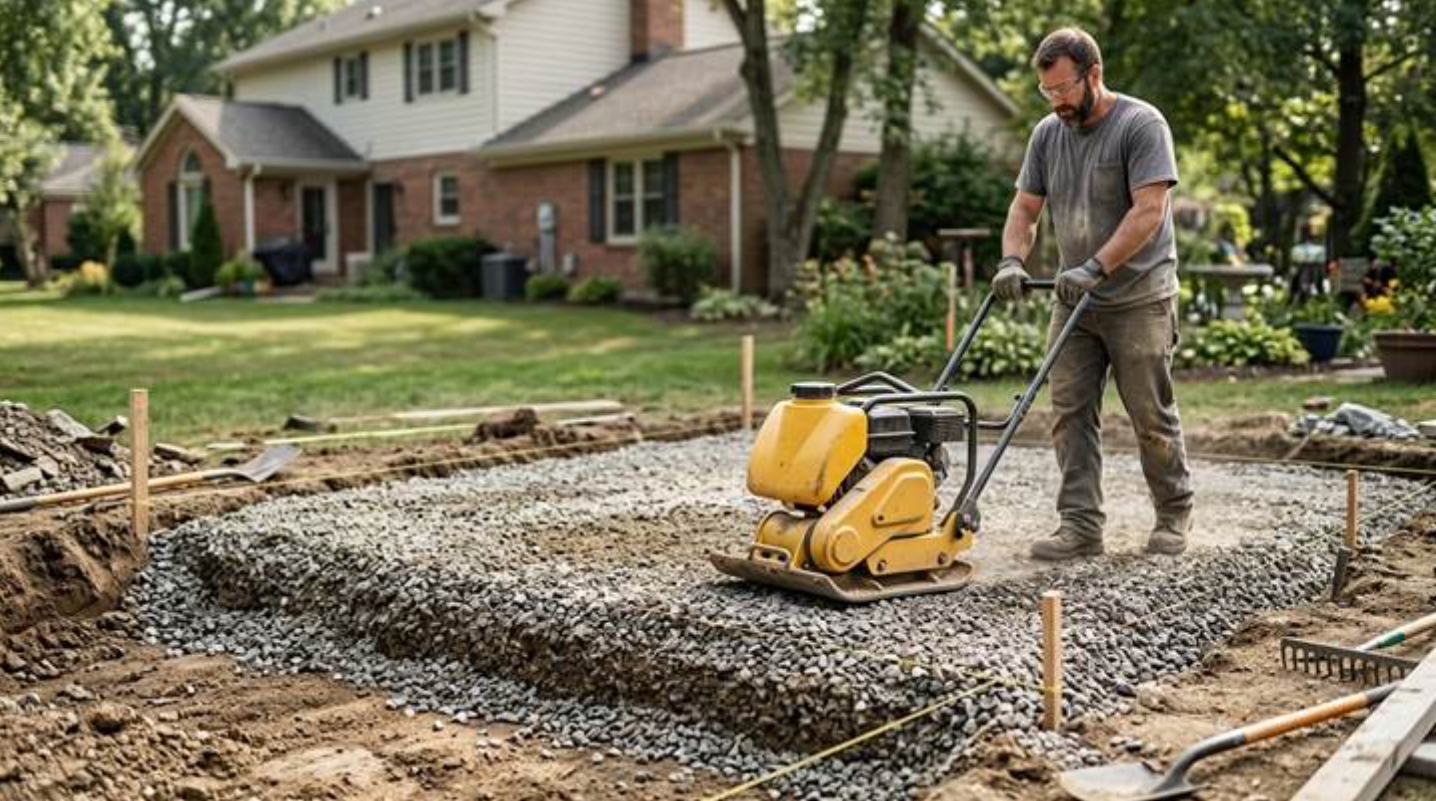
By a landscape design and construction industry contributor. You got the quote for your new patio, and the price is a lot higher than you expected based on the store’s price per square foot. This is a common moment of sticker shock. The cost of the pavers or stone is often less than half of the total price. Most of the budget pays for things you don’t see in the finished patio: digging out soil, shaping the land for drainage, and building a strong, layered base that will prevent cracks for many years.
The biggest single cost is skilled labor. According to the U.S. Bureau of Labor Statistics, the average hourly wage for construction jobs in the Denver area was $33.00. This skill is what makes the project last. A well-built hardscape installation denver project is more about moving earth and controlling water than it is about looks. Without a solid, well-drained foundation, even the most expensive materials will fail.
Nationally, the median annual wage for construction laborers and helpers was $46,680 in May 2025, per the Bureau of Labor Statistics. Local prices, the difficulty of your site, and the materials you choose all add to this cost. Understanding these parts is the first step to planning a project that fits your goals without surprise costs.
Quick answer: The cost of a hardscape project comes mostly from skilled labor and the work done to prepare the ground, not just the surface materials. Proper digging, grading, and packing down the base are key for a long-lasting project in Colorado’s climate and make up most of the work.
What’s inside
- How do I create a realistic hardscape budget?
- What questions should I ask a contractor about base preparation?
- Which materials work best for the Colorado climate?
- Frequently Asked Questions
How do I create a realistic hardscape budget?
Your budget should set aside more money for labor and the base than for the stones you see on top. This is especially true in Colorado because of its tough soil and weather. A common mistake is to budget based on the store price of pavers or stone, which is often less than half of the final project cost. The real investment is in the skilled work needed to make that surface last.
There’s a big cost difference between general workers and skilled construction workers, and it’s because they have very different skills. For example, the U.S. Bureau of Labor Statistics reports that the average hourly wage for building and grounds cleaning and maintenance jobs in the Denver area is $21.87. In contrast, the average wage for construction and extraction occupations is $33.00. That higher wage pays for the knowledge needed to run heavy machines, pack the ground down tightly, and create the right slope for drainage. These are the things that stop your patio from sinking, cracking, or sending water toward your house.
❝ A good rule of thumb for planning is the 40/60 split. Plan for about 40% of your total budget to go to the surface materials (the stone, pavers, or concrete) and 60% to everything else: digging, base preparation, labor, and equipment. For difficult sites with steep slopes or poor access, this can be closer to 30/70.
This focus on site work is very important along the Front Range. The area’s clay soil, which expands and shrinks, and the cycle of freezing and thawing put a lot of stress on any paved surface. A shallow or poorly packed base will move, shift, and fail within a few seasons. A professional job involves digging deep enough to build a stable, multi-layer gravel base that can drain water and handle ground movement. This skilled workforce is a key part of the local economy; construction and extraction jobs make up 4.4% of all employment in the Denver metro area, per the Bureau of Labor Statistics.
What questions should I ask a contractor about base preparation?
You should ask for their specific plan for how deep they will dig, what materials they will use for the base, and how they will pack it down. A contractor’s detailed answer to these questions is the best way to know if the project will last. The quality of a patio or walkway is decided almost completely by the unseen foundation built underneath the surface.
In places like Colorado with big temperature swings and soil that expands, a shallow base will always fail over time. The ground moves when it freezes and thaws, and a thin layer of gravel will just move with it. This leads to low spots, cracked pavers, and bad drainage. Groups like the Interlocking Concrete Pavement Institute (ICPI), now part of the Concrete Masonry & Hardscapes Association, provide guidelines for these projects, which good local contractors often go beyond to handle local conditions.
A strong base in the Denver area needs a different approach than one in a milder climate. The key differences are the depth and the layering of materials.
| Feature | Standard Base (Milder Climates) | Colorado-Specific Base (Freeze-Thaw) |
|---|---|---|
| Excavation Depth | 4 to 6 inches for a patio | 8 to 12 inches for a patio or walkway |
| Base Material | Single layer of 3/4-inch crushed stone | Multiple layers for a stronger base |
| Compaction Method | Packed down in 3 to 4-inch layers | Packed down in thin 2-inch layers to make it solid |
| Drainage Focus | Standard slope away from buildings | A carefully planned slope, sometimes with underground pipes for drainage |
❝ Ask a potential contractor how they check that the base is packed down correctly. A fuzzy answer is a red flag. An experienced crew will talk about packing the gravel in thin “lifts” of two to three inches at a time. They can explain why this makes the base stronger than trying to pack a thick six-inch layer all at once. This detail alone shows the difference between a pro and a beginner.
To check a contractor’s plan, ask these direct questions:
1. How deep do you plan to dig for this project? (It should be deeper for areas that hold more weight, like a driveway).
2. What specific type and size of gravel or crushed stone will you use for the base?
3. How will you make sure the soil underneath the base is packed down before adding gravel?
4. What is the planned slope for drainage, in percentage or inches per foot?
The answers will show if a contractor understands local building needs. A clear, confident answer about the base is much more important than the brand of paver they suggest.
Which materials work best for the Colorado climate?
The best materials are dense and don’t soak up much water. This helps them stand up to the constant freezing and thawing and the strong sun we get along the Front Range. Your choice of material is less about looks and more about science. The wrong stone or paver can start to flake apart in just a few seasons, no matter how well the base was built.
The main enemy of any hardscape here is expanding ice. When water gets inside a material with tiny holes and freezes, it expands. This can break the material from the inside out. This is called spalling, and it makes the surface flake and crumble. Because of this, the most important quality of a paver or stone is that it is dense and not porous.
High-quality, dense concrete pavers are often a great choice. They are made in a factory to meet specific standards for strength and how much water they absorb. Dense natural stones like granite, quartzite, or local Lyons Sandstone also hold up well to weather. In contrast, materials with more pores, like some types of flagstone or slate, can be a problem if they soak up too much moisture. The words “natural stone” don’t mean it will last in this climate; its properties are what matter.
❝ Ask your supplier how a material does in freeze-thaw testing, such as ASTM C1645 for concrete pavers or ASTM C67 for clay brick. These standard tests check how well materials survive being frozen and thawed. A good supplier will know the answer, and their confidence tells you a lot.
The high altitude also means strong ultraviolet (UV) light, which can fade the color in lower-quality concrete pavers over time. Lighter-colored materials not only look good for longer but also soak up less heat, making the surface cooler in the summer. In the end, picking the right material is a technical choice that balances how long it will last with your design goals.
Frequently Asked Questions
How long does a typical hardscape installation take? The project timeline depends more on preparing the ground than on laying the final stones. For a standard patio, expect the digging, grading, and base work to take several days before any pavers are placed. The whole project can take one to three weeks, depending on the size, difficulty, and weather. Spring projects in Denver can be delayed by late snows, which can pause work.
What is the best time of year to install hardscaping in Denver? Late summer and early fall are often perfect. The ground is usually dry and stable, and the temperatures are mild, which is best for the workers and the materials. Spring can be difficult because of wet, muddy ground from melting snow, which can make digging and packing the ground harder. Work can be done in the summer, but high heat can affect the crew and materials.
Do I need a permit for a new patio in the Denver area? It depends on what your project includes. A simple patio at ground level often does not need a permit. However, you usually need permits for things like retaining walls over a certain height (often four feet), changing the way water flows on your property, or building a roof over the patio. The rules are different in each city, like Denver, Aurora, and Lakewood, so your contractor must check the specific local codes.
Will a new hardscape installation affect my property’s drainage? Yes, and it should make it better. A well-designed patio or walkway is a system for managing water. It should collect water and guide it safely away from your house. A bad installation can do the opposite, trapping water or sending it toward places where it could cause damage. This is why the first steps of grading and creating a slope are so important. The goal is to fix drainage problems, not create new ones.
Can I put a wood-burning fire pit directly on a paver patio? You should not place a fire pit directly on standard pavers. The strong, focused heat can cause the pavers to crack, flake, or lose their color. A safe setup uses a special fire-proof area, like a steel ring or a pad made from fire-rated bricks. This contains the heat and protects your patio from damage.
The Real Foundation of Your Project
A good hardscape project is more about what you take away before it’s about what you add. The most important work involves removing soil and building a strong base before you see any finished surface. The long-term value of your investment is not decided by the color of the pavers you choose, but by the unseen engineering of the base beneath them. This is where most of the skilled labor and project costs are, and it is the only real defense against a tough climate.
When you look at a contractor’s proposal, you should keep this in mind. The most important talks you have with a contractor will not be about design, but about the technical details. A detailed plan for digging depth, a multi-layer base, and exact drainage slopes is the sign of a true professional. These things prevent the sinking, shifting, and water damage that cause projects to fail early.
In the end, you are not just buying a patio or walkway. You are paying for a small engineering project. By focusing your questions on the base and the contractor’s knowledge of local soil and weather, you become an informed owner, not just a customer. This is the best way to create an outdoor space that is as long-lasting as it is beautiful.
About the author
This article is contributed by the team of landscape architects and construction professionals at Lifescape Colorado, a Denver-based design-build firm. Since 1976, they have handled large home projects from the first idea through long-term care. The firm specializes in blending custom patios and walkways with smart planting and home design, developing complete outdoor living spaces that are built to last in Colorado’s tough, high-altitude climate.

Team Home Spacess shares simple, practical design ideas that work for real families. The team focuses on cozy décor, soft colors, and natural textures that make a space feel truly lived-in. From everyday decorating tips to creative home projects, Team Home Spacess is dedicated to helping readers create warm, comfortable, and inviting spaces with a fresh and personal touch.