

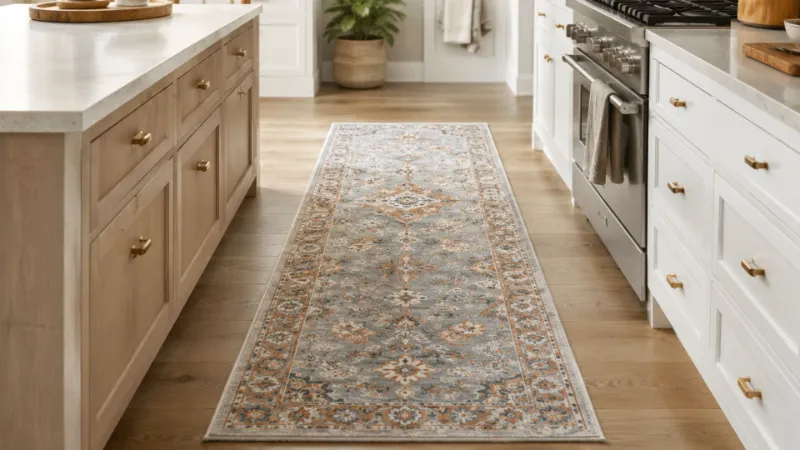
Standing at the stove for an hour on bare tile leaves your feet aching before dinner is even served. That’s the problem most people never think to solve until their back starts complaining. The good news is that kitchen rugs ideas can fix comfort, style, and safety all at once, without a full renovation.
A well-chosen kitchen rug does more than fill empty floor space. It cushions your joints, muffles noise, protects flooring from spills, and ties your color scheme together. This guide walks through practical, design-forward kitchen rug ideas, plus the expert insights competitors skip, so you can choose with confidence.
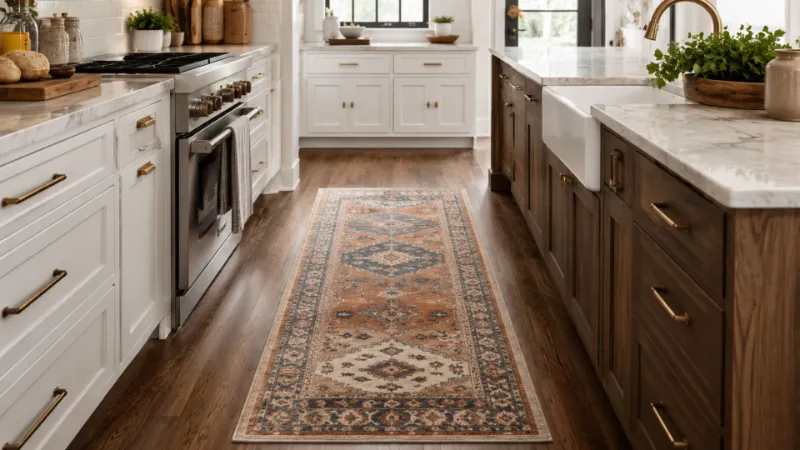
Whether you have a farmhouse kitchen, a tiny galley layout, or an open-plan island setup, there’s a kitchen area rug style here that fits. Let’s get into the ideas, the mistakes to avoid, and where kitchen rug design is headed next.
Anti-Fatigue Rugs for the Cooking Zone
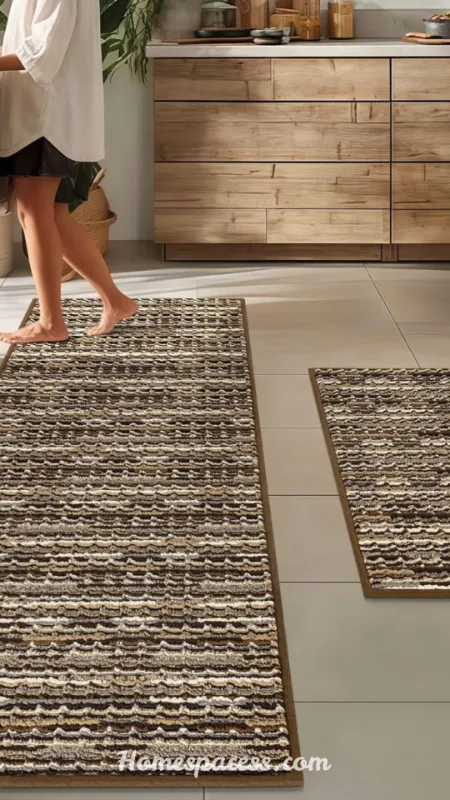
If you cook daily, an anti-fatigue kitchen mat in front of the stove is the single highest-impact upgrade you can make. These mats use dense foam or gel cores to reduce pressure on your feet, knees, and lower back during long prep sessions. Standing on hardwood or tile for 45 minutes suddenly feels manageable instead of painful.
Picture a home cook who bakes every weekend. After switching a bare tile stretch for a cushioned kitchen mat, she noticed she could finish a three-hour baking session without the usual foot soreness. That’s the real-world difference this single kitchen floor mat idea makes.
Look for mats rated for kitchen use specifically, since generic foam mats can degrade quickly from grease and heat near the stove.
Style Note:
Choose a low-profile anti-fatigue mat in a solid charcoal or espresso tone so it reads as intentional decor, not a gym accessory.
Pro Tip:
Place the mat so it extends about 6 inches beyond each side of your stance at the stove for full support coverage.
Explore More: Pantry Organization Ideas to Maximize Space and Keep Everything Neat
Washable Cotton Runner Rugs
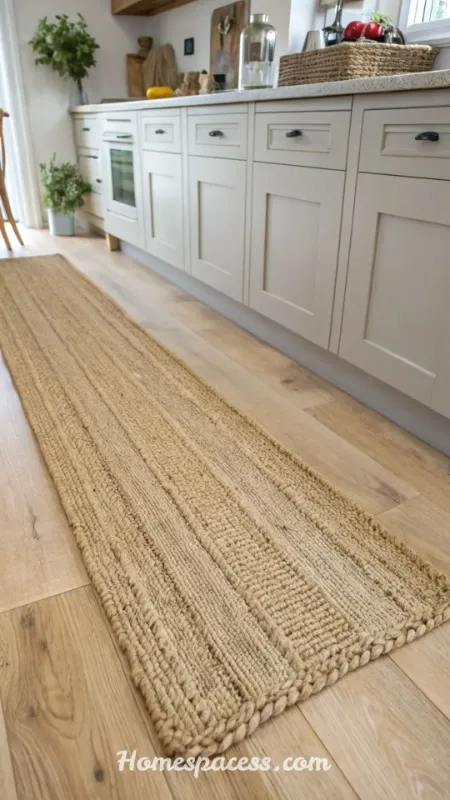
A machine-washable kitchen rug solves the biggest complaint about kitchen textiles: they get dirty fast. Cotton kitchen runner rugs are lightweight, absorb splashes, and can go straight into the washing machine, which makes them ideal for busy households with kids or pets underfoot.
These rugs work especially well in front of the sink, where water splashes are constant. A cotton weave dries faster than wool or synthetic blends, reducing the chance of lingering odors or mildew in a humid kitchen.
Because they’re inexpensive relative to wool or natural fiber options, cotton runners are also easy to rotate seasonally without guilt over the cost.
Style Note:
Striped or checkered cotton runners in navy, red, or mustard bring classic bistro charm to a farmhouse or cottage kitchen.
Pro Tip:
Wash on a gentle cycle and air-dry flat to prevent shrinkage, especially with thicker woven cotton rugs.
See Related Articles: Colorful Kitchen Ideas: Bold Ways to Brighten Your Cooking Space
Layered Rugs for Farmhouse Kitchens
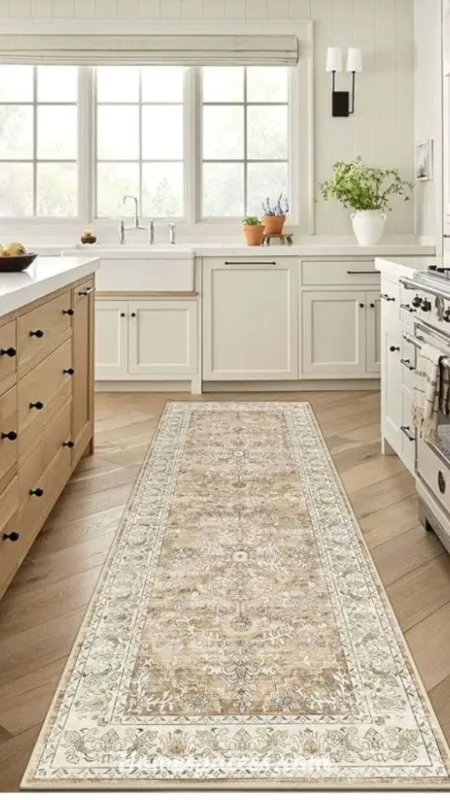
Layered kitchen rugs a jute or sisal base topped with a smaller patterned runner add texture and depth that a single rug can’t achieve. This idea has grown popular in farmhouse kitchen rugs styling because it mimics the layered-rug trend already common in living rooms.
A layered approach also solves a practical problem: the base rug protects the floor and adds cushioning, while the top rug handles the high-traffic spill zone and can be swapped out for cleaning without disturbing the whole setup.
For a kitchen with warm wood cabinetry and open shelving, this combination creates a lived-in, curated look rather than a matched showroom feel.
Style Note:
Keep the base rug neutral (natural jute or wheat tone) and let the top runner carry pattern or color.
Pro Tip:
Use rug tape or a thin non-slip pad between layers so the top rug doesn’t shift and become a tripping hazard.
You May Also Like: Island Kitchen Ideas: 13 Stunning Designs That Transform Your Kitchen in 2026
Vinyl and PVC Rugs for High-Spill Areas
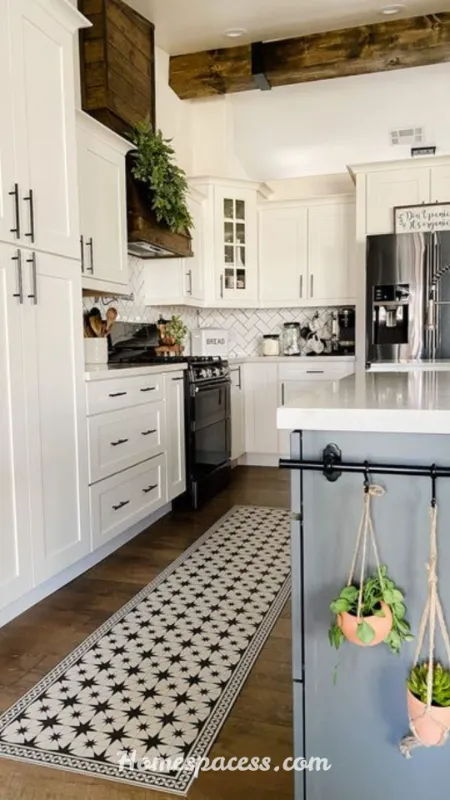
Vinyl kitchen mats, sometimes called PVC or oilcloth rugs, have surged in popularity because they wipe clean in seconds. Unlike woven textiles, spilled oil, sauce, or coffee sits on the surface rather than soaking in, making them the practical choice for the area directly in front of the sink or stove.
A busy family with toddlers is a perfect case for this idea: instead of scrubbing a fabric rug weekly, a quick wipe with a damp cloth keeps a vinyl mat looking fresh. Many now come in Scandinavian-inspired prints that don’t look purely utilitarian anymore.
The trade-off is texture. Vinyl mats feel less soft underfoot than foam-backed alternatives, so many homeowners pair a thin cushioned pad underneath for comfort.
Style Note:
Geometric or Moroccan-tile print vinyl rugs add pattern without introducing fabric maintenance headaches.
Pro Tip:
Avoid placing vinyl rugs directly over radiant floor heating unless the product label confirms heat compatibility.
Recommended for You: Best Spice Racks Ideas to Transform Your Kitchen Storage
Jute and Natural Fiber Rugs for Texture
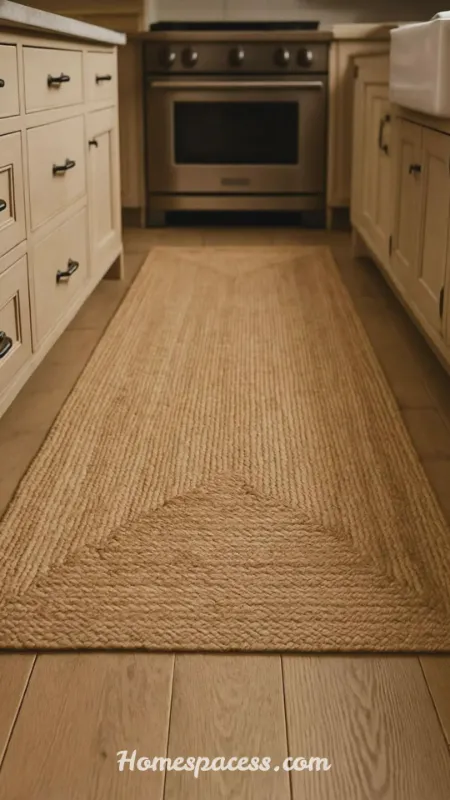
Natural fiber rugs made from jute, sisal, or seagrass bring warmth and organic texture to kitchens with a lot of hard, cool surfaces like quartz counters and stainless steel. They pair especially well with earthy, minimalist, or Japandi-style kitchens.
These rugs are naturally durable and resist crushing under foot traffic, which makes them a smart long-term choice for a busy kitchen walkway rather than just the sink zone.
One caveat: jute absorbs liquid rather than repelling it, so it isn’t the best fit for the exact spot in front of the sink unless paired with a protective mat underneath.
Style Note:
A jute runner down the center of a galley kitchen adds texture while keeping the palette neutral and calm.
Pro Tip:
Vacuum on a low suction setting weekly, since jute fibers can fray under aggressive brush-roll vacuums.
Discover More: Kitchen Lighting Ideas to Create a Cozy and Modern Cooking Space
Bold Patterned Rugs as a Statement Piece
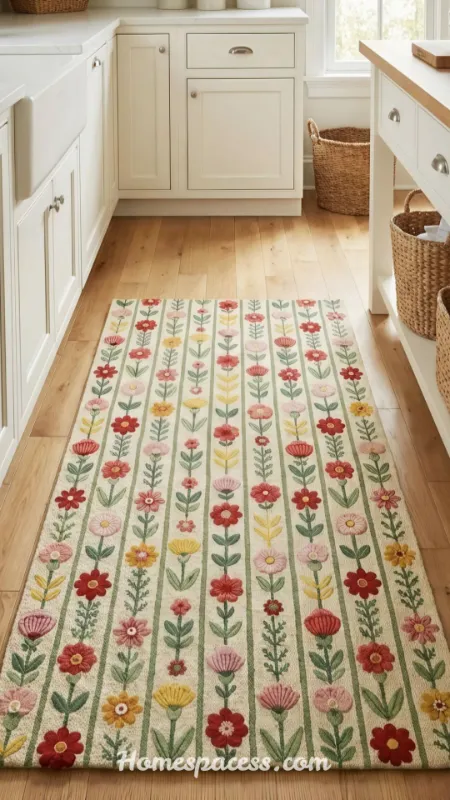
A bold patterned kitchen rug can act as the anchor piece for the entire room, especially in kitchens with white cabinets or plain subway tile backsplashes. Vintage Turkish, Moroccan Beni Ourain-inspired, or bold floral prints inject personality fast without repainting a single wall.
This idea works particularly well in open-concept kitchens that flow into a living or dining space, since a statement rug helps define the kitchen zone visually without a physical divider.
Because pattern hides stains better than solid colors, a busy print is also a smart practical choice for households that cook often and don’t want every splash to show.
Style Note:
Stick to two or three colors from your existing kitchen palette so a bold rug feels curated, not chaotic.
Pro Tip:
Test a rug sample against your lighting at different times of day before committing to a large, saturated pattern.
More on This Topic: Kitchen Nook Ideas: Transform Dead Corners Into Cozy, Functional Spaces
Neutral Striped Runners for Long Galley Kitchens
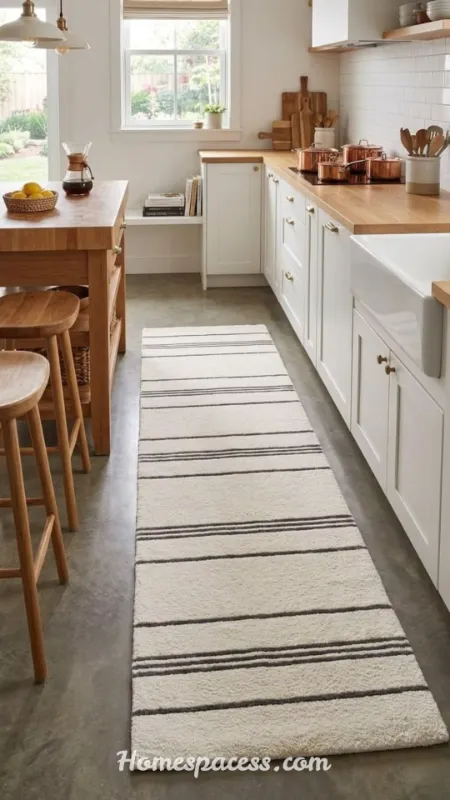
Narrow galley kitchens benefit from a kitchen runner rug that visually elongates the space rather than interrupting it. Thin horizontal stripes in soft neutrals can make a tight walkway feel wider and more intentional.
This is one of the most requested kitchen rugs ideas for renters and small-space homeowners because a single well-placed runner can transform a purely functional corridor into a styled space.
Choose a low-pile weave so the runner doesn’t catch on cabinet doors or appliance feet in a tight footprint.
Style Note:
Taupe, oatmeal, and soft gray stripes read as timeless and won’t clash with future cabinet or appliance changes.
Pro Tip:
Measure your walkway width and leave at least 4 inches of visible floor on each side of the runner for a balanced look.
Must Read This Topic: 21 Kitchen Decor Ideas That Transform an Ordinary Kitchen Into a Space You Actually Love
Kitchen Island Rugs for Zoning
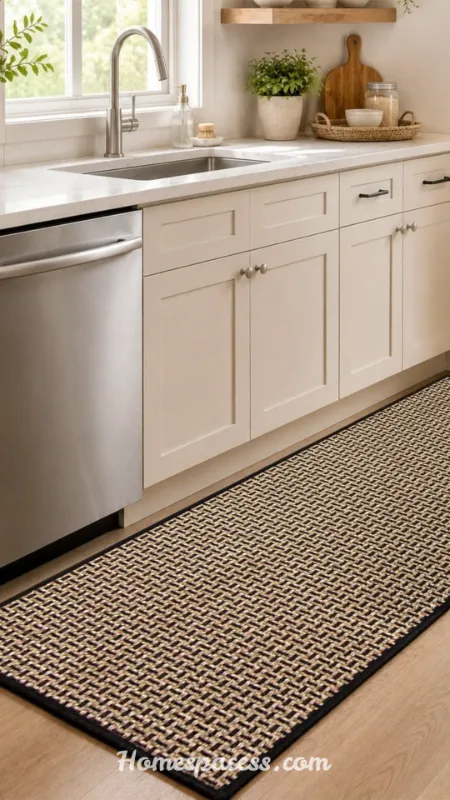
In open-plan homes, a rug placed under or around a kitchen island helps define the cooking zone as distinct from the dining or living area. This zoning trick is one of the most underused kitchen rugs ideas in open-concept design.
A round or oval rug under barstools softens the hard lines of an island and adds warmth to what is often the most photographed spot in the home.
Because island rugs see heavy chair movement, durability matters more here than in most other kitchen zones.
Style Note:
A round jute or flatweave rug under a rectangular island creates pleasant visual contrast instead of matching shapes exactly.
Pro Tip:
Size the rug so barstools stay fully on it even when pulled out, preventing chair legs from catching the rug edge.
Don’t Miss: Garden Lighting Ideas: Inspired Ways to Illuminate Your Outdoor Space
Sink-Side Mats for Comfort and Protection
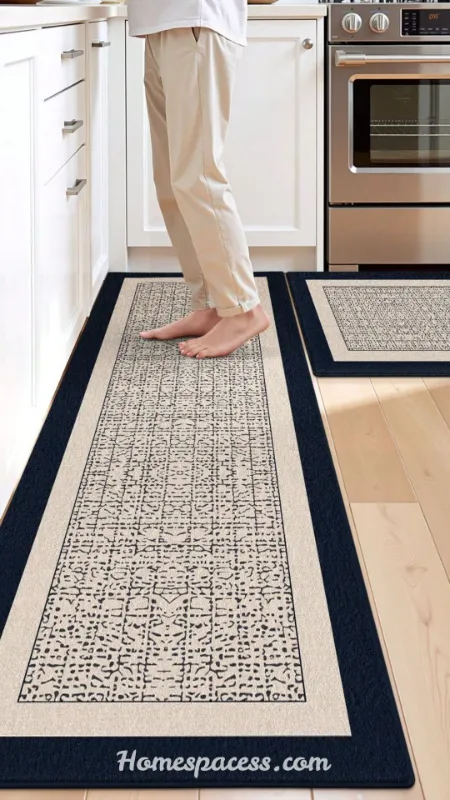
The sink area sees the most standing time after the stove, making a dedicated kitchen sink rug a practical priority. Look for a mat with a non-slip rubber backing, since this zone is also the most likely to get wet and become a slipping hazard.
Quick-dry, low-pile mats designed specifically for sink zones outperform decorative rugs here, since decorative weaves tend to trap moisture and develop odor over time.
A dark or patterned mat in this exact spot also hides water spots and food residue better than a plain white or pastel option.
Style Note:
Match the sink mat’s undertone to your cabinet hardware finish for a subtly coordinated look.
Pro Tip:
Lift and air-dry the mat fully at least once a week to prevent mildew building up underneath.
Seasonal and Swappable Rugs
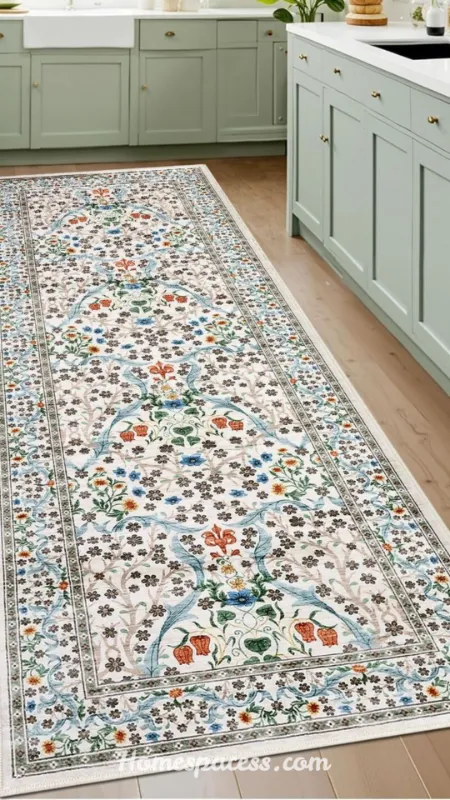
Treating kitchen rugs as a seasonal accessory, similar to throw pillows, is a low-cost way to refresh a room several times a year. Warm spice tones in fall, crisp stripes in summer, and deep greens for winter holidays all fall under this flexible kitchen decor rug approach.
A family that rotates two or three affordable runners throughout the year gets more visual variety than one expensive rug that stays put permanently, and the rotation also extends the lifespan of each individual piece.
This idea pairs well with budget-conscious shoppers, since inexpensive cotton or flatweave rugs make frequent swapping financially realistic.
Style Note:
Keep a consistent size and shape across your seasonal rotation so the space always feels proportionate.
Pro Tip:
Store off-season rugs rolled, not folded, to prevent permanent crease lines from forming.
Vintage-Inspired and Persian-Style Rugs
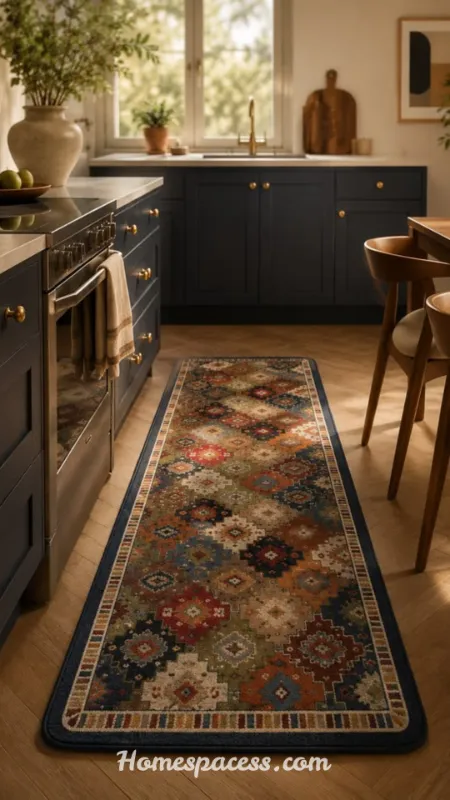
Vintage-style kitchen rugs, including faded Persian and Oushak-inspired prints, have become one of the most searched kitchen rugs ideas in recent seasons. Their muted, distressed color palettes hide daily wear far better than crisp, bright patterns.
These rugs work especially well in kitchens aiming for a collected-over-time, European-inflected look, often paired with brass fixtures and open wood shelving.
Many are now made with washable, printed constructions rather than genuine hand-knotted wool, which keeps the vintage look achievable on a real-world kitchen budget.
Style Note:
Pair a vintage-print rug with simple, unfussy cabinetry so the rug’s pattern remains the visual focal point.
Pro Tip:
Check the product description for ‘washable’ or ‘printed’ construction if spills are a daily reality in your kitchen.
Final Thoughts
Choosing the right kitchen rugs ideas comes down to matching material and placement to how you actually use your kitchen. An anti-fatigue mat by the stove, a washable runner by the sink, or a vintage-style rug under the island can each transform comfort and style at once. Start with one high-traffic zone, pick a durable, easy-to-clean option, and build from there. Your feet, your floors, and your kitchen’s look will all thank you.
Going Deeper: Expert Perspective on Kitchen Rugs
Trend Analysis: Kitchen Rug Trends Heading Into 2026 and Beyond
The biggest shift in kitchen rug trends this year is the move toward washable, printed rugs that mimic the look of expensive vintage or wool pieces at a fraction of the price and maintenance. Brands have invested heavily in low-pile, machine-washable constructions that hold pattern and color through hundreds of wash cycles.
Warm, earthy palettes terracotta, olive, and warm oatmeal are replacing the cool grays that dominated kitchen design for the past decade. This mirrors a broader shift toward warmer, more textured interiors across the home.
Looking ahead, expect more modular rug systems: interlocking mat tiles that let homeowners replace a single worn section instead of the entire rug, cutting waste and replacement cost over time.
Expert Insights: How to Choose and Place Kitchen Rugs Like a Pro
Professional kitchen designers consistently recommend measuring your actual standing and walking zones before buying, rather than guessing at a size. A rug that’s too small looks like an afterthought, while one that’s too large can bunch under cabinet doors or appliances.
A frequently overlooked detail: rug pile height affects appliance clearance. A thick, plush rug can prevent a dishwasher or oven door from opening fully, a mistake that only becomes obvious after installation. Always check pile height against door swing clearance first.
Layering a thin non-slip pad under every kitchen rug, even ones sold as non-slip, adds meaningful extra grip on tile and hardwood, especially in households with young children or older adults.
Sustainability and Long-Term Value of Kitchen Rugs
Natural fiber rugs like jute and sisal are biodegradable and typically produced with fewer synthetic inputs than polypropylene alternatives, making them a stronger long-term choice for environmentally minded households. They also tend to outlast synthetic rugs in high-traffic zones when properly maintained.
Buying one durable, well-made rug instead of replacing a cheap one every year is often the better financial and environmental decision, even though the upfront cost is higher. Cost-per-use drops significantly over a rug’s multi-year lifespan.
Look for certifications like GoodWeave or OEKO-TEX when buying wool or cotton kitchen rugs, since these indicate safer dyes and more ethical manufacturing practices.
Future Predictions: Where Kitchen Rug Design Is Headed
Expect antimicrobial fiber treatments to become standard on kitchen-specific rugs within the next few years, addressing the moisture and food-residue exposure this room uniquely faces compared to living rooms or bedrooms.
Smart home integration is also emerging, with early prototypes of pressure-sensing mats that can trigger smart lighting or alert elderly residents’ families if a fall is detected near the stove or sink.
On the design side, expect a continued blending of performance materials with high-end aesthetics, closing the gap between a rug that’s practical and one that looks genuinely designer-quality.
Common Mistakes and Overlooked Factors in Kitchen Rug Selection
The most common mistake is choosing a plush, high-pile rug for the entire kitchen floor. High pile traps crumbs, resists easy cleaning, and can create a tripping hazard near appliance doors. Reserve thicker piles for anti-fatigue mats only.
Another overlooked factor is skipping a rug pad entirely. Even rugs marketed as non-slip benefit from an added pad, both for grip and to prevent the rug’s backing from degrading the floor finish underneath over time.
Finally, many buyers ignore color transfer risk: cheap, deeply dyed rugs can bleed color onto light flooring when wet. Always check for colorfast or dye-lock labeling before placing a rug on light tile, hardwood, or vinyl plank flooring.

Team Home Spacess shares simple, practical design ideas that work for real families. The team focuses on cozy décor, soft colors, and natural textures that make a space feel truly lived-in. From everyday decorating tips to creative home projects, Team Home Spacess is dedicated to helping readers create warm, comfortable, and inviting spaces with a fresh and personal touch.