

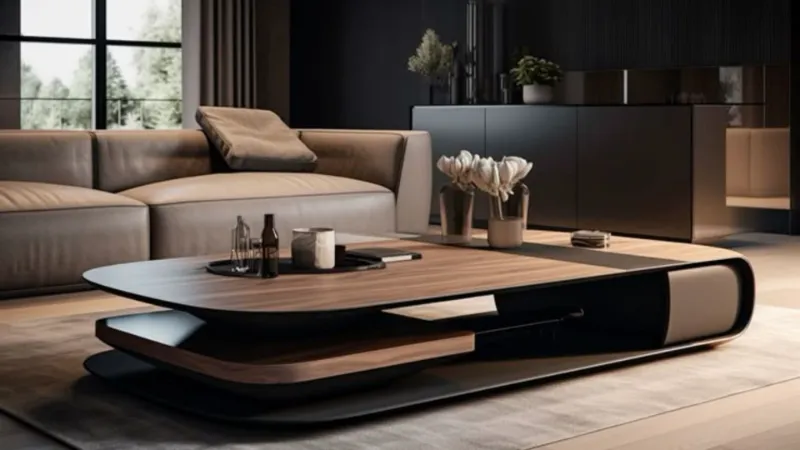
Walk into almost any living room, and your eyes land on the coffee table before anything else. Yet most coffee tables end up cluttered with remote controls, mail, and random clutter instead of looking intentional. If your coffee table decor feels more like a catch-all than a centerpiece, you are not alone and the fix is simpler than you think.
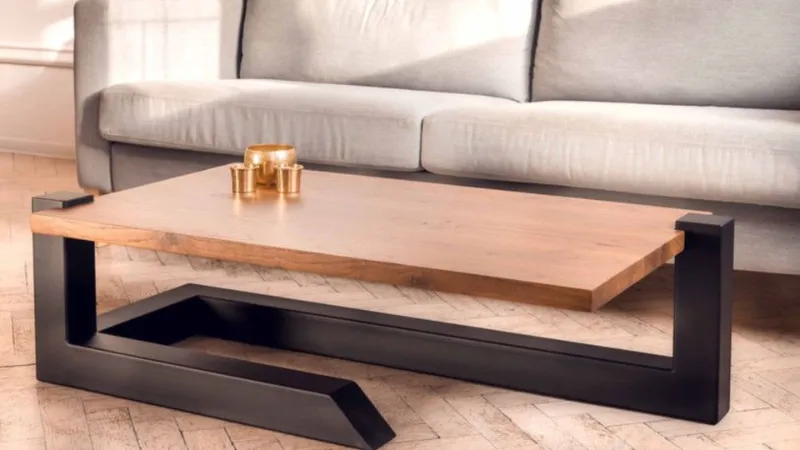
This guide breaks down coffee table decor ideas you can apply this weekend, regardless of your budget or style. From layered trays to seasonal swaps, every idea includes real coffee table styling guidance, a quick pro tip, and a style note so you understand not just what to do, but why it works. By the end, you will know exactly how to style a coffee table that looks curated, not cluttered.
Start With Layered Tray Styling
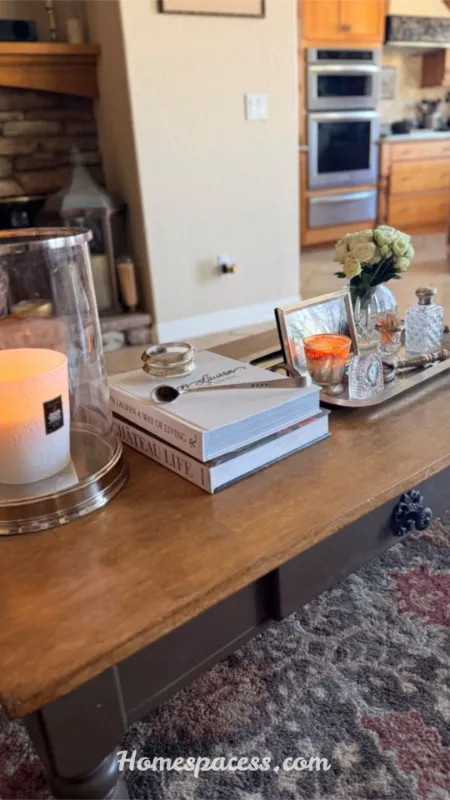
A tray is the single most transformative coffee table decor idea because it instantly creates order. Instead of random objects scattered across the surface, a tray groups items into one visual zone, making even a busy table look composed. Choose a tray in wood, woven rattan, or matte metal depending on your room’s overall aesthetic.
Layering means stacking a few tray items at different heights a candle, a small stack of books, one decorative object. For example, a round wooden tray holding a ceramic vase, two coffee table books, and a small dish of trinkets reads as styled, not staged. Keep the tray itself easy to lift, since it should still be functional for actual coffee cups.
Style Note:
Trays work best when their shape echoes the table round trays for round coffee tables, rectangular trays for rectangular or oval ones, maintaining visual harmony across the surface.
Pro Tip:
Limit yourself to one tray per coffee table unless the table is oversized; two trays on a standard-size table create visual competition instead of order.
See Related Articles: Stunning Living Room Carpet Ideas: Transform Your Space with Style, Comfort & Expert Insight
Stack Coffee Table Books for Instant Height and Color
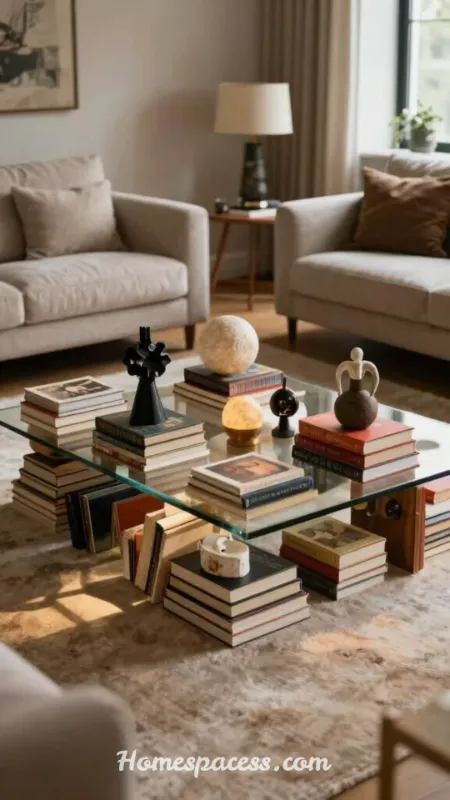
Coffee table books remain one of the most reliable coffee table decoration ideas because they add height, color, and personality in seconds. Choose 2-4 books with covers that complement your color palette rather than grabbing whatever is on your shelf cover design matters more than content here.
Stack books by size, largest on the bottom, and angle the top book slightly or top it with a small object like a smooth stone or miniature sculpture. A stack of art and travel books topped with a brass paperweight, for instance, instantly signals curated taste rather than random clutter.
Style Note:
Odd-numbered stacks (3 books rather than 2 or 4) tend to look more intentional and less symmetrical-stiff, a principle borrowed directly from professional home staging.
Pro Tip:
Rotate your book stack seasonally lighter, brighter covers in spring and summer, deeper tones in fall and winter to keep the table feeling current without buying anything new.
You May Also Like: Living Room Curtain Ideas for a Cozy and Modern Home Look
Add a Statement Centerpiece
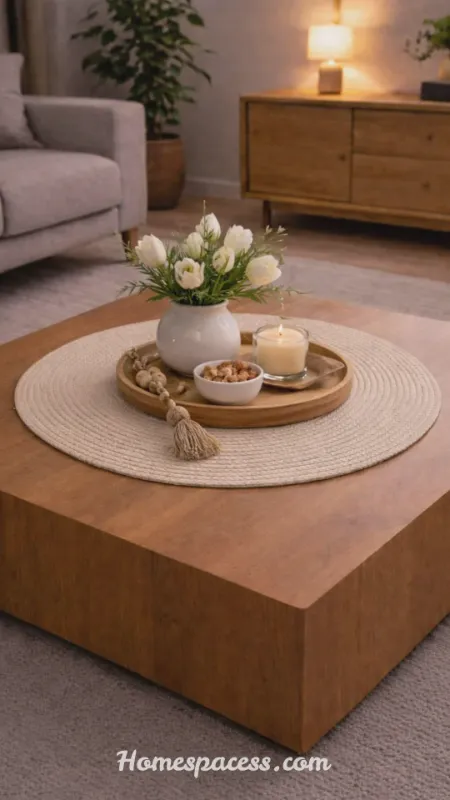
Every well-styled coffee table needs one anchor piece that draws the eye first. This could be a sculptural vase, an oversized bowl, or a small piece of art glass. The centerpiece sets the tone for everything else you place around it, so choose it before adding smaller accessories.
Scale matters significantly. A centerpiece that’s too small disappears on a large table, while an oversized piece can overwhelm a petite one. A general guideline real stylists use: the centerpiece should occupy roughly one-third of the table’s surface area, leaving room to breathe.
Style Note:
Organic, irregular shapes (asymmetrical vases, freeform bowls) photograph and read better in person than perfectly symmetrical objects, since they create visual movement.
Pro Tip:
If your centerpiece is a vase, leave it empty for at least part of the year an architectural empty vase often looks more intentional than one stuffed with artificial flowers.
Recommended for You: 22 Living Room Decor Ideas That Transform Any Space
Bring in Greenery and Botanicals
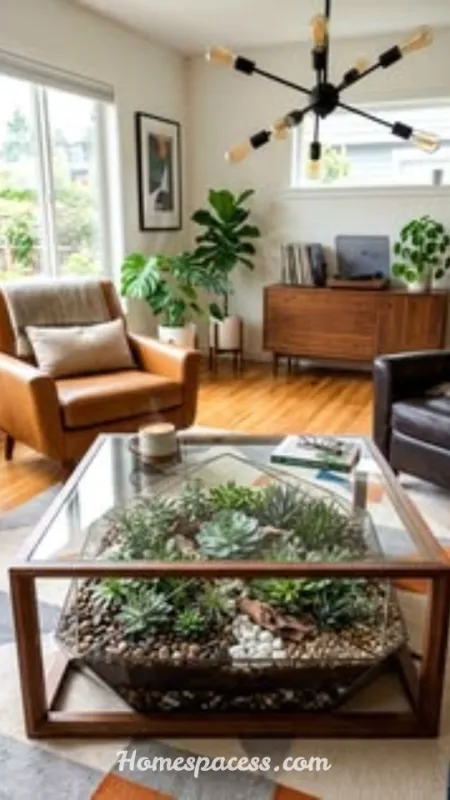
Greenery instantly softens a coffee table and adds life to an otherwise static surface. A small potted succulent, a single eucalyptus stem in a bud vase, or a trailing pothos cutting all work well. Live plants also improve indoor air quality, giving this idea function alongside form.
If maintaining live plants feels daunting, high-quality faux greenery has improved dramatically and can be nearly indistinguishable up close. A mixed arrangement of dried pampas grass or preserved eucalyptus in a textured ceramic vessel requires zero watering and still delivers organic texture.
Style Note:
Keep greenery low and contained on coffee tables tall arrangements block sightlines across the room and interrupt conversation, which defeats the table’s social purpose.
Pro Tip:
Match your plant’s pot to the room’s existing metal finishes (brass, matte black, or brushed nickel) so it feels coordinated rather than randomly placed.
Must Read This Articles: Colorful Living Room Ideas That Instantly Transform a Boring Space Into a Stunning One
Mix Textures for Depth
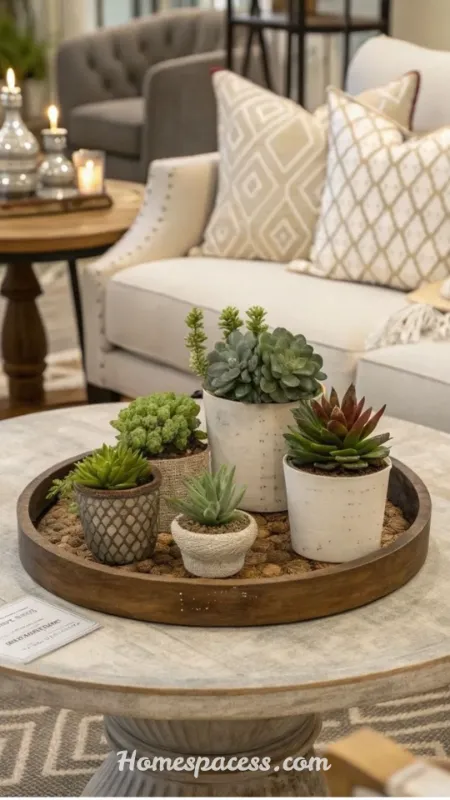
Texture is the most overlooked element in coffee table styling, yet it is what separates a flat, boring table from one that feels rich and layered. Combine at least three textures smooth ceramic, rough woven rattan, cool marble, warm wood to create visual depth without adding clutter.
A practical example: a marble coaster set, a woven rattan tray, and a smooth glass candle holder together create contrast that’s far more interesting than three matching ceramic pieces. Texture variety does the visual heavy lifting that color alone cannot.
Style Note:
Avoid matching every material on the table; a fully matched set (all wood, all marble) tends to look like a showroom display rather than a lived-in home.
Pro Tip:
If your coffee table itself is wood, introduce at least one cool material (glass, marble, or metal) on top to balance the warmth and prevent the surface from feeling monotone.
Don’t Miss This Topic: Western Bedroom Ideas: 12 Stunning Ways to Create a Rustic Retreat
Use Candles and Ambient Lighting
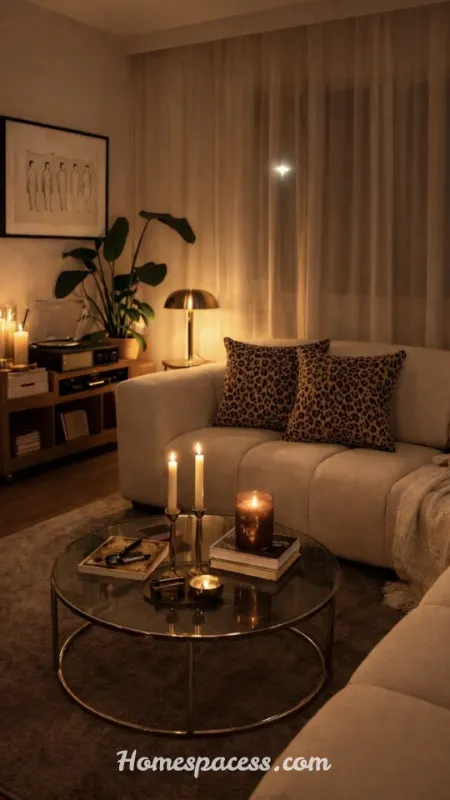
Candles bring warmth, scent, and soft light, making them a favorite tool among professional home stagers. Group 2-3 candles of varying heights on a small tray rather than scattering single candles across the table, which tends to look disorganized.
Unscented or lightly scented candles are safer choices for shared living spaces, since strong fragrances can overwhelm guests with allergies or sensitivities. Pillar candles on a mirrored or metal tray also reflect light, adding a subtle ambient glow during evening hours.
Style Note:
Match candle holder finishes to your existing lighting fixtures (brass candles with brass lamps, for example) for a cohesive, designer-level look throughout the room.
Pro Tip:
Battery-powered flameless candles are a practical alternative if you have pets or young children, offering the same ambient glow without the safety concern.
Also Read This Info: Colorful Kitchen Ideas: Bold Ways to Brighten Your Cooking Space
Rotate Decor Seasonally
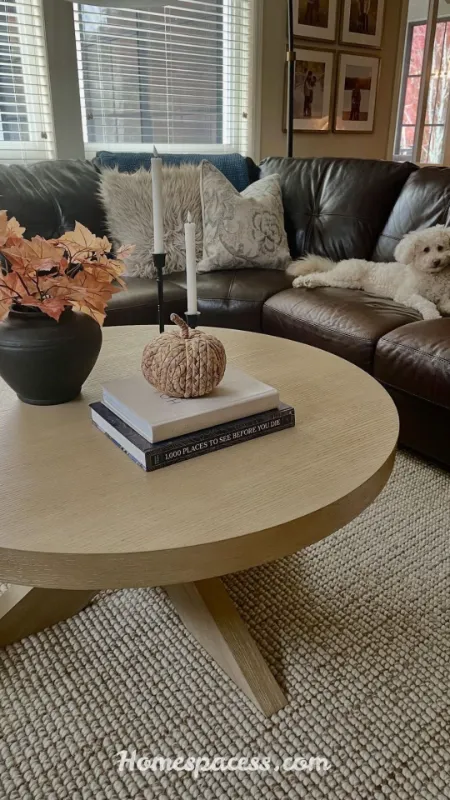
Seasonal coffee table decor keeps a living room feeling fresh without a full redesign. Swap a few small elements a pinecone and pine bough arrangement in winter, fresh tulips in spring, citrus in a bowl during summer while keeping your base pieces (tray, books) constant year-round.
This approach is budget-friendly because you are only changing 20-30% of the table’s contents each season rather than starting over. A simple swap of a ceramic pumpkin for fall, replaced by a pinecone arrangement for winter, keeps the table relevant without major spending.
Style Note:
Keep your “base layer” (tray and books) neutral so seasonal accents can carry the seasonal color without clashing with permanent pieces.
Pro Tip:
Store seasonal decor items in labeled bins by season so swapping takes minutes rather than becoming a dreaded chore each quarter.
Keep It Minimal for Small Living Rooms
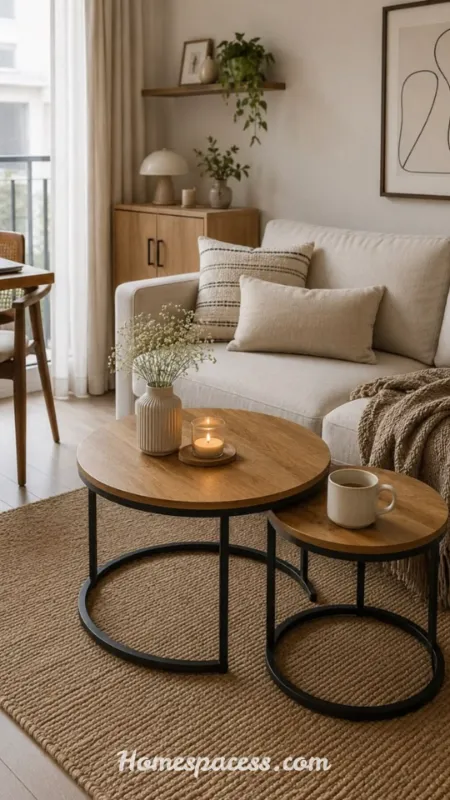
Small living rooms benefit from restrained coffee table styling, since an overcrowded table makes a compact space feel even smaller. For tight footprints, stick to one tray, one small plant, and a single stack of 2 books fewer pieces, but more intentional ones.
Light colors and reflective materials (glass, mirrored trays) help small coffee tables feel less visually heavy. A round glass coffee table with a single white ceramic vase and one stack of books reads as airy rather than empty, ideal for studio apartments or small dens.
Style Note:
Negative space is a design tool, not a gap to fill leaving 40-50% of a small coffee table empty makes the room feel larger overall.
Pro Tip:
Choose multi-functional pieces, like a tray that doubles as a serving surface, so small tables stay decorative and practical at once.
Try Rustic and Farmhouse Coffee Table Styling
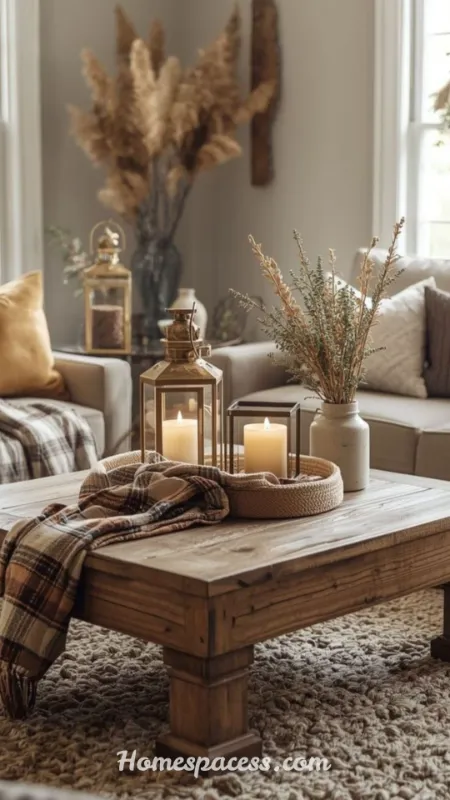
Rustic coffee table decor leans on natural materials reclaimed wood trays, woven baskets, and stoneware vessels paired with warm, earthy tones. This style suits living rooms with exposed wood beams, leather furniture, or farmhouse-inspired interiors.
A galvanized metal tray holding a small lantern, a stack of linen-bound books, and a sprig of dried wheat or wildflowers captures the farmhouse look without feeling like a theme park. Authenticity comes from using genuinely aged or textured materials rather than overly polished reproductions.
Style Note:
Rustic styling relies on imperfection slightly uneven pottery or visibly grained wood reads as authentic, while flawless, glossy pieces undercut the aesthetic.
Pro Tip:
Vintage or thrifted pieces often achieve a more convincing rustic look (and lower cost) than new “farmhouse style” decor manufactured to look old.
Style Glass and Round Coffee Tables Differently
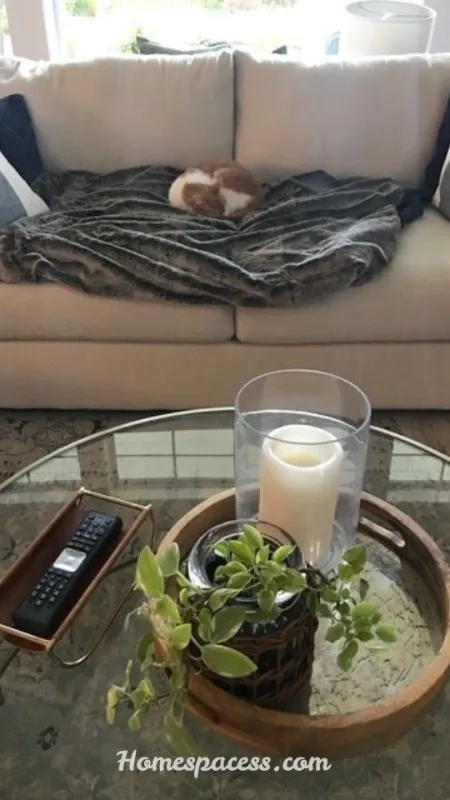
Glass and round coffee tables need a slightly different approach than rectangular wood tables. Because glass surfaces are reflective and see-through, what’s underneath the table (a rug, a shelf) becomes part of the visual composition, so keep the area below intentional too.
Round tables benefit from centered, symmetrical arrangements since there is no obvious “front” or “back” the way rectangular tables have. A single round tray placed dead-center, topped with a candle and small plant, makes the most of a circular table’s 360-degree visibility from any seat.
Style Note:
On glass tables, choose decor with solid, opaque bases (ceramic, wood, stone) so objects do not visually disappear against the transparent surface beneath them.
Pro Tip:
Add subtle texture, like a woven trivet, under decor on glass tables to prevent scratching and to soften the otherwise hard, cold look of glass.
Add Personal, Sentimental Touches
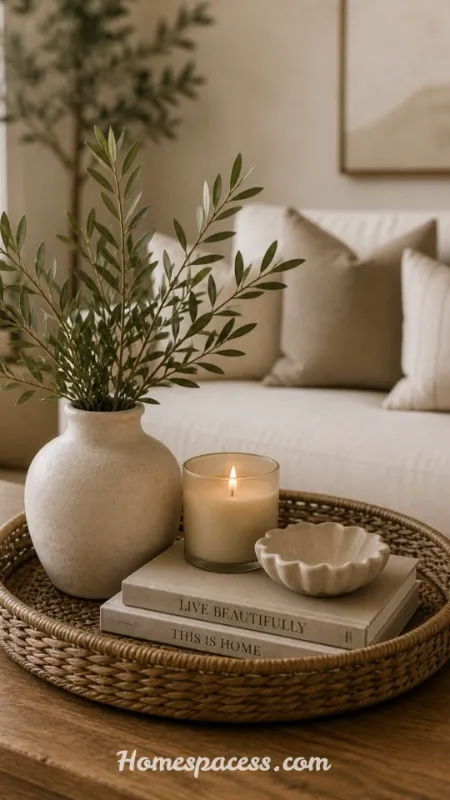
The most memorable coffee tables include at least one personal item a small dish from a meaningful trip, a coaster set gifted by a friend, a small framed photo. These details are what separate a magazine-perfect table from one that actually feels like your home.
A real-life example: pairing a designer ceramic bowl with a hand-painted trinket dish from a family vacation creates a styled-yet-personal look that’s hard to replicate with store-bought decor alone. Mix one sentimental piece per table for character without sacrificing cohesion.
Style Note:
Limit sentimental items to one or two per table; too many personal objects can tip a curated look back into clutter.
Pro Tip:
If a sentimental piece does not match your color palette, place it on a small neutral coaster or tray to visually “ground” it within the broader styling.
Balance Function With Style
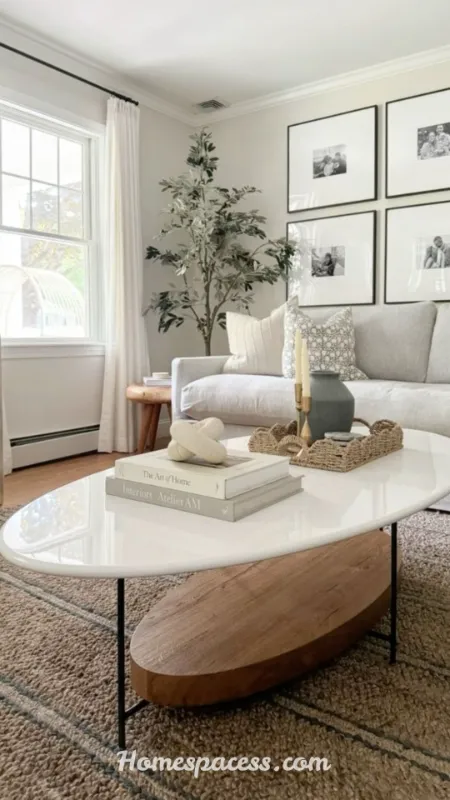
A coffee table still needs to work holding drinks, remotes, and the occasional laptop so decor should never fully block its function. Choose pieces that can be quickly moved aside rather than elaborate displays that discourage actual use.
Coffee tables with built-in storage (drawers, shelves, or lift-tops) let you hide remotes, chargers, and coasters out of sight, keeping the surface clear for styling. A table with a lower shelf, for instance, can hold neatly stacked baskets while the top stays decorative.
Style Note:
Reserve roughly half of the table’s surface for actual use, especially in households with frequent guests, kids, or pets, and treat the other half as the styled zone.
Pro Tip:
Keep a small coaster stack within the styled area itself, so function and decor share the same visual zone instead of competing for space.
Coordinate Colors With the Rest of the Room
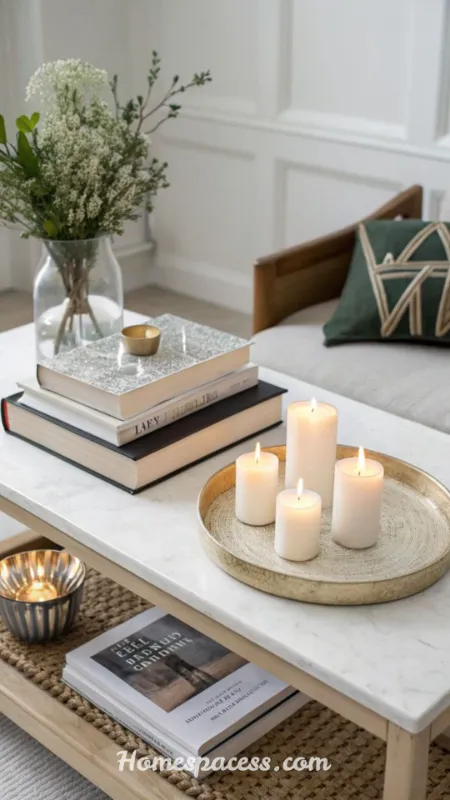
A coffee table that ignores the room’s existing color palette will always look disconnected, no matter how nice each individual piece is. Pull 2-3 colors directly from your rug, throw pillows, or artwork and repeat them in your coffee table styling for a cohesive vignette.
For example, if your living room features a navy and mustard color scheme, a mustard ceramic vase paired with a navy-bound book stack ties the table directly into the room’s broader story instead of looking like an afterthought. This single trick instantly elevates a space.
Style Note:
Repeating just one accent color from elsewhere in the room (rather than three or four) often looks more sophisticated and less “matchy.”
Pro Tip:
Photograph your living room and check it in black and white if your coffee table styling disappears into the background, it likely needs a stronger color or contrast moment.
Final Thoughts
A well-styled coffee table does more than fill empty space it ties your entire living room together. With these coffee table decor ideas, from layered trays and seasonal swaps to sustainable, long-term choices, you have everything needed to create a table that feels both curated and genuinely yours.
Start small: pick one or two ideas, like adding a tray or a stack of books, and build from there. The goal isn’t perfection overnight, but a coffee table decor style that reflects your taste, evolves with the seasons, and works as hard as it looks. Try one idea today and watch the whole room shift.
Going Deeper: Expert Insights & Future Outlook
Coffee Table Decor Trends for 2026 and Beyond
In 2026, coffee table styling is shifting away from the maximalist, heavily layered look that dominated the past few years toward a more curated, “quiet luxury” approach. Fewer objects, higher-quality materials, and intentional negative space are replacing crowded trays packed with trinkets.
Natural and tactile materials unlacquered brass, raw travertine, hand-thrown ceramics are outperforming mass-produced metallics in search interest and retail data this year. Sustainable and artisan-made pieces are also gaining traction as buyers shift away from fast-furniture decor toward longer-lasting, story-rich objects.
Looking ahead, expect continued growth in modular tray systems that let homeowners rearrange components seasonally without buying new decor, alongside warmer, earth-toned palettes replacing the cool grays and whites of the past decade. Coffee table styling is increasingly treated as an extension of personal identity rather than a generic trend to copy.
Expert Styling Tips and Real-World Insights
Professional stagers consistently use the “rule of three” odd-numbered groupings of objects at varying heights because the eye finds asymmetry more naturally pleasing than perfectly even arrangements. This single principle applies across nearly every idea in this guide, from book stacks to centerpiece groupings.
Another expert insight: scale your decor to your table’s height, not just its surface area. A low-profile coffee table needs shorter, wider objects, while a taller table can handle slightly more vertical pieces without feeling top-heavy. Many home decorators skip this step and end up with proportions that feel off, even when individual pieces are beautiful.
A common real-world scenario: a homeowner buys several trendy pieces individually online, only to find they clash once placed together. The fix experienced stylists use is buying one “anchor” item first (the tray or centerpiece), then shopping for everything else in person against that anchor to confirm color and material harmony before purchasing.
Sustainability and Long-Term Value in Coffee Table Decor
Sustainable coffee table decor is no longer a niche preference it’s increasingly the smarter financial choice too. Well-made wood trays, solid ceramic vases, and natural fiber baskets cost more upfront but last for years, compared to cheap, trend-driven decor that often ends up discarded within a single season.
Choosing secondhand or vintage pieces for coffee table styling reduces environmental impact while often delivering more character than new mass-produced items. A thrifted brass bowl or estate-sale vase, for example, typically costs less than a comparable new piece while carrying genuine patina that’s difficult to manufacture.
Long-term value also comes from choosing a flexible base layer a neutral tray and book stack that works across multiple style updates over the years. Instead of replacing the entire table’s decor every time trends shift, only the small seasonal accents need updating, dramatically reducing both cost and waste over time.
The Future of Coffee Table Decor: Emerging Innovations
Smart home integration is beginning to influence coffee table design itself, with wireless charging surfaces built directly into tabletops and app-controlled ambient lighting trays entering the market. Over the next few years, expect more coffee tables that blend decorative styling with discreet technology rather than treating tech as a separate, visible add-on.
Modular and convertible coffee tables, ones that lift, expand, or reconfigure for dining and work-from-home needs, are also gaining ground as living spaces continue to serve multiple functions. Decor for these tables will likely shift toward lightweight, quickly-movable pieces that don’t interfere with the table’s mechanical features.
AI-assisted interior design tools, including AI search and visual styling apps, are also changing how people plan their coffee table decor, letting homeowners preview arrangements virtually before buying. This shift toward planning tools suggests future buyers will make fewer impulse purchases and build more cohesive, intentional table styling from the start.
Common Coffee Table Styling Mistakes to Avoid
The most common mistake is overcrowding the surface with too many small objects, which reads as clutter rather than curated style, no matter how nice each individual piece is. A good rule: if you can’t easily set down a coffee mug without rearranging items, the table has too much on it.
Another frequent error is ignoring scale, placing tiny decor on an oversized table (leaving it looking sparse and unfinished) or oversized pieces on a small table (making the room feel cramped). Matching every single material and color too closely is a third common mistake, since it tends to look staged rather than authentically styled.
Finally, many homeowners style their coffee table once and never update it, allowing decor to become invisible background clutter over time. Revisiting your coffee table styling every season, even with small five-minute swaps, keeps the space feeling intentional rather than stagnant or forgotten.
Frequently Asked Questions About Coffee Table Decor
What is the best thing to put on a coffee table?
A tray, a small stack of coffee table books, and one centerpiece (vase, bowl, or candle) form the simplest, most reliable combination for any coffee table decor style.
How do you style a coffee table without it looking cluttered?
Limit yourself to 3-5 grouped items, use a tray to contain them, and leave at least 30-40% of the surface empty so the table still feels functional.
What size should coffee table decor be?
Decor should scale to the table a centerpiece occupying roughly one-third of the surface, with smaller supporting pieces (candles, books) filling the remaining space without crowding it.
How often should you change coffee table decor?
Most stylists recommend small seasonal swaps (every 3 months) rather than full overhauls, refreshing 20-30% of the table’s contents to keep it current.

Team Home Spacess shares simple, practical design ideas that work for real families. The team focuses on cozy décor, soft colors, and natural textures that make a space feel truly lived-in. From everyday decorating tips to creative home projects, Team Home Spacess is dedicated to helping readers create warm, comfortable, and inviting spaces with a fresh and personal touch.