
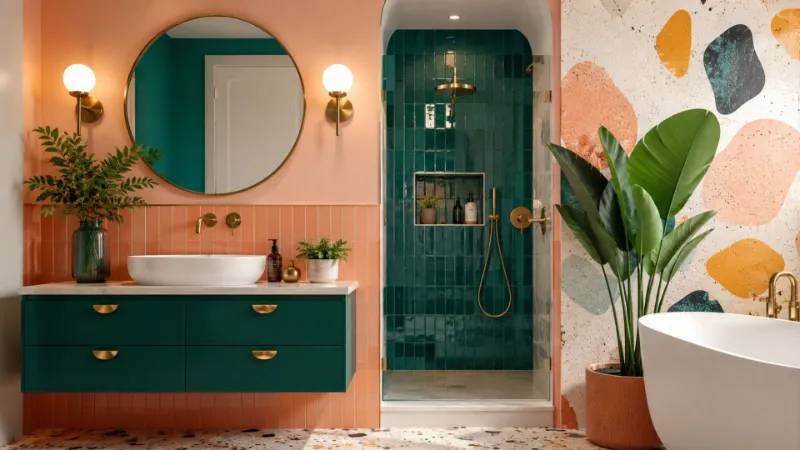
Is your bathroom feeling dull, lifeless, and uninspiring? You’re not alone. Most homeowners settle for plain white walls and beige tiles and miss the incredible transformation a splash of color can bring. The truth is, colorful bathroom ideas can completely change how your space looks and feels, making it more inviting, energizing, or relaxing depending on the palette you choose.
In this expert guide, we’ve compiled of the best colorful bathroom ideas covering everything from bold accent walls to pastel tile patterns, two-tone vanities, and maximalist wallpaper. Each idea comes with real-world styling tips, pro insights, and practical advice that you won’t find in generic listicles. Whether you’re planning a full bathroom renovation or just a weekend refresh, there’s something here for every taste and budget.
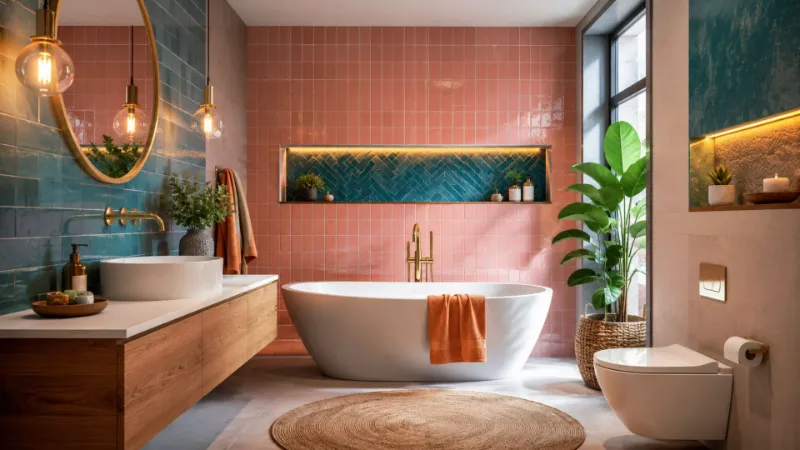
Color in bathrooms is no longer a design risk it’s a smart strategy. Studies in color psychology confirm that the right hues can influence your morning energy, reduce stress, and even increase your home’s perceived value. Let’s dive in and discover how to use color like a professional interior designer.
Bold Teal Accent Walls for a Spa-Like Atmosphere
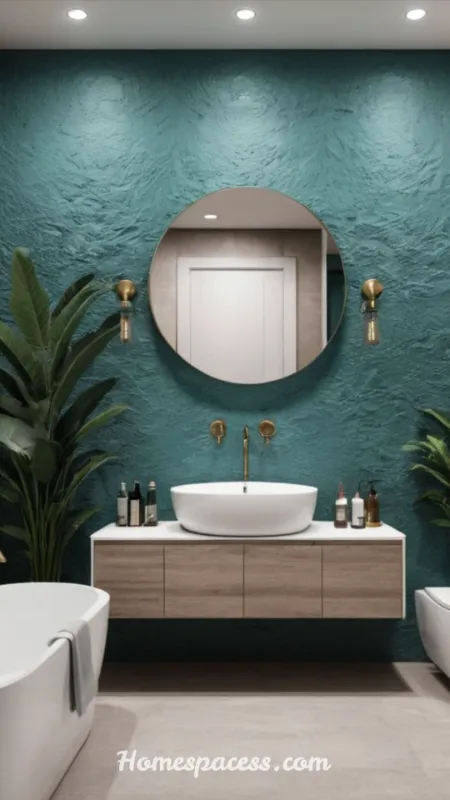
A teal accent wall is one of the most transformative moves you can make in a bathroom. Teal sits beautifully between blue and green, creating a sense of calm depth that mimics natural water tones. When paired with white fixtures and natural wood accents, it produces a spa-inspired bathroom aesthetic that feels both luxurious and welcoming. This color works especially well in medium-sized bathrooms where a single feature wall can serve as the visual centerpiece.
Take the example of a narrow en-suite bathroom with limited natural light painting the back wall in a deep peacock teal and adding a frameless mirror immediately makes the room feel more expansive. The color reflects ambient light rather than absorbing it, creating a luminous effect that brightens the entire space. Add brass or gold hardware for a warm contrast that elevates the look from simple to sophisticated.
For renters or those hesitant to commit to paint, removable teal peel-and-stick wallpaper offers the same dramatic impact without the permanence. Brands like Tempaper and Graham & Brown now offer moisture-resistant options specifically designed for bathroom wall decor. This makes teal walls accessible to almost any budget and lifestyle.
🎨 Style Note:
Pair teal walls with matte white subway tiles, brass towel bars, and eucalyptus plants for a complete spa-bathroom look.
✅ Pro Tip:
Choose a teal with blue undertones for north-facing bathrooms and one with green undertones for south-facing rooms to optimize how natural light renders the color throughout the day.
See Related Articles: Bathroom Tile Ideas That Transform Any Space (2026 Guide)
Warm Terracotta Tiles for Earthy Bathroom Color Schemes
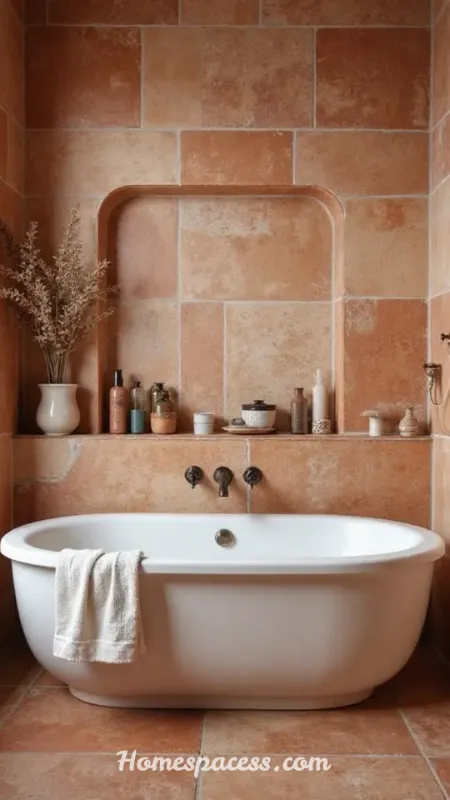
Terracotta bathroom tiles have made a massive comeback in 2026–2027 interior design trends, and for good reason. Their warm, earthy tones connect your bathroom to the natural world, reducing sensory overload and creating a grounded, organic atmosphere. Unlike cooler palettes that can feel sterile, terracotta brings warmth even in windowless bathrooms. It pairs beautifully with cream, warm white, rust orange, and sage green.
A popular scenario involves using large-format terracotta floor tiles combined with creamy limewash walls to create a Moroccan-inspired bathroom. Add a rattan mirror, linen hand towels, and terracotta-glazed soap dishes to complete the look. The layered warm tones create a cohesive, editorial quality that photographs well and holds up beautifully over time. This style is especially popular in guest bathroom renovation projects where homeowners want maximum visual impact.
One often-overlooked advantage of terracotta: it’s forgiving with aging. Unlike white tiles that show yellowing or grout discoloration easily, terracotta’s natural tonal variations hide everyday wear. In high-traffic family bathrooms, this translates to a space that looks intentional and curated even after years of use a genuine long-term design investment.
🎨 Style Note:
Layer terracotta floor tiles with cream zellige wall tiles and unlacquered brass fixtures for a timeless, Moroccan-meets-California aesthetic.
✅ Pro Tip:
Seal terracotta tiles with a penetrating sealer before grouting to prevent staining. Re-seal annually in humid climates to maintain their rich color and water resistance.
You May Also Like: Trendy Funky Bathroom Ideas for a Cool and Modern Bathroom Makeover
Navy Blue Bathroom Design for a Dramatic, Modern Look
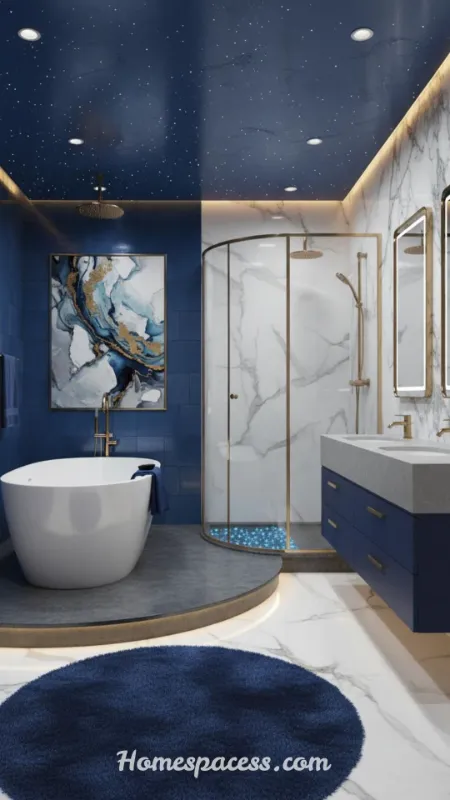
Navy blue bathrooms deliver instant drama and sophistication that few other colors can match. This deep, rich hue works in both small powder rooms and large master baths, creating a sense of intimate luxury that designers often refer to as the “jewel box” effect. When used on all four walls with high-gloss white trim, navy transforms an ordinary bathroom into a bold statement space that feels curated and intentional.
Consider the case of a small half-bath where the homeowner painted all surfaces ceiling included in Benjamin Moore’s Hale Navy. The result was a dramatically cocooning space that guests consistently described as their favorite room in the house. Pairing it with a pedestal sink, vintage nickel fixtures, and a large antique mirror created the perfect balance between moody and functional. This approach turns a neglected bathroom into a conversation-worthy design feature.
Navy and white bathroom combinations are also timeless channeling a nautical or preppy aesthetic that never feels dated. Adding chrome or polished nickel accessories keeps the palette crisp and modern, while wood tones add warmth. For those concerned about making a small space feel smaller, remember that dark colors actually create depth rather than shrinking a room when balanced with adequate lighting.
🎨 Style Note:
Install backlit LED mirror lighting in navy bathrooms to counter the color’s light-absorbing quality warm white (2700K) keeps the mood cozy while ensuring visibility.
✅ Pro Tip:
Use a satin or semi-gloss finish for navy bathroom walls rather than matte it reflects moisture better, resists mildew, and makes the deep color appear richer and more vibrant.
Recommended for You: Bathroom Mirror Ideas to Create a Spa-Like Feel in Your Bathroom
Sage Green Bathroom Ideas for a Calming, Nature-Inspired Retreat
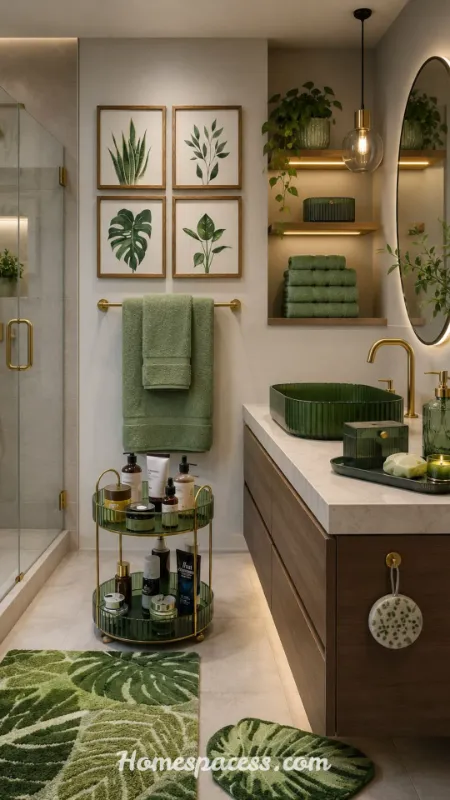
Sage green bathrooms are dominating bathroom color trends in 2026, and this quiet, muted green is earning its place as the new neutral. Unlike brighter greens that demand attention, sage recedes gently into the background, creating a restful, almost meditative environment. It pairs effortlessly with warm white, off-white, warm grays, blush, and natural stone making it one of the most versatile bathroom color schemes available today.
Imagine a primary bathroom done entirely in sage sage wall paint, sage green zellige tiles in the shower, and white oak cabinetry. The result is a space that feels like a forest retreat within your own home. Interior designers frequently recommend this palette for homeowners who want biophilic bathroom design spaces that feel connected to nature without requiring actual plants or outdoor access. It’s also proven to reduce morning cortisol levels, making it ideal for your daily routine.
From a practical standpoint, sage green is forgiving with water stains and soap scum compared to stark white tiles a genuine advantage in everyday use. In the resale bathroom staging world, sage green is consistently rated as one of the highest-impact colors for improving buyer perception. It signals sophistication without being polarizing, which is the holy grail of investment-minded decorating.
🎨 Style Note:
Combine sage green walls with unlacquered brass fixtures, white marble countertops, and linen window treatments for a serene, organic bathroom sanctuary.
✅ Pro Tip:
When painting bathrooms sage green, test at least three samples in different lighting conditions over 48 hours sage can shift dramatically between warm daylight and artificial evening light.
Explore More: 29 Bathroom Decor Ideas That Transform Any Space
Two-Tone Bathroom Vanity Colors to Add Depth and Personality
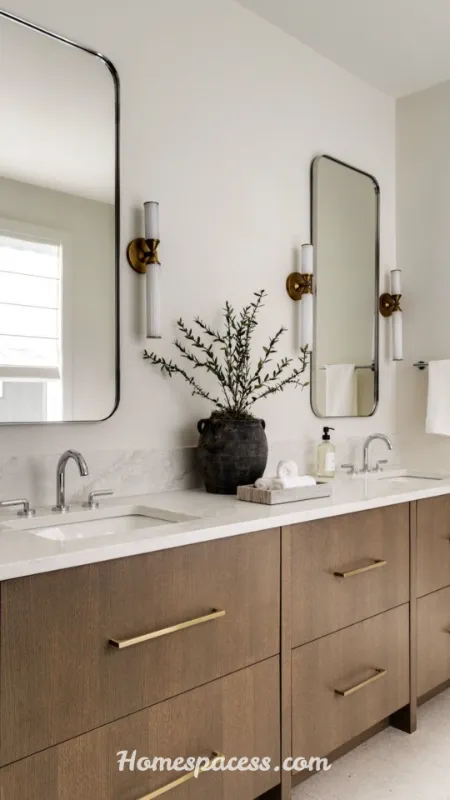
Two-tone bathroom vanities are one of the most impactful and underused design strategies in residential bathrooms. The concept is simple: paint or finish the upper section of the wall one color and the lower half a contrasting or complementary shade. This technique creates instant visual structure, makes ceilings feel taller, and introduces color without the commitment of a single dramatic hue. It’s particularly effective in transitional and contemporary bathroom styles.
A classic approach pairs a deep navy lower half with a crisp white upper section and ceiling. The dividing line often a picture rail, chair rail, or painted stripe acts as an architectural detail that adds visual richness. For modern bathrooms, try terracotta on the bottom third with warm putty above, divided by a thin brass rail. This mirrors Moroccan riad architecture and creates an elegant, layered look that’s incredibly photogenic.
The strategic benefit of two-tone walls in bathrooms is their ability to define zones without physical barriers. In an open-plan bathroom with separate bathing and vanity areas, different color combinations on each section can zone the space visually a technique borrowed from commercial interior design. It’s also a cost-effective upgrade: you’re using paint creatively rather than tiles or expensive fixtures to achieve a designer-level result.
🎨 Style Note:
Use a chair rail at 32–36 inches to divide your two tones this classic proportion flatters both small and large bathrooms and creates a polished, finished look.
✅ Pro Tip:
When selecting two tones, use different values of the same color family (e.g., dusty rose and deep burgundy) rather than two completely different hues this keeps the look cohesive and avoids a jarring contrast.
Learn More: Small Bathroom Ideas:25 Clever Ways to Make Every Inch Count
Colorful Bathroom Wallpaper for Instant Pattern and Drama
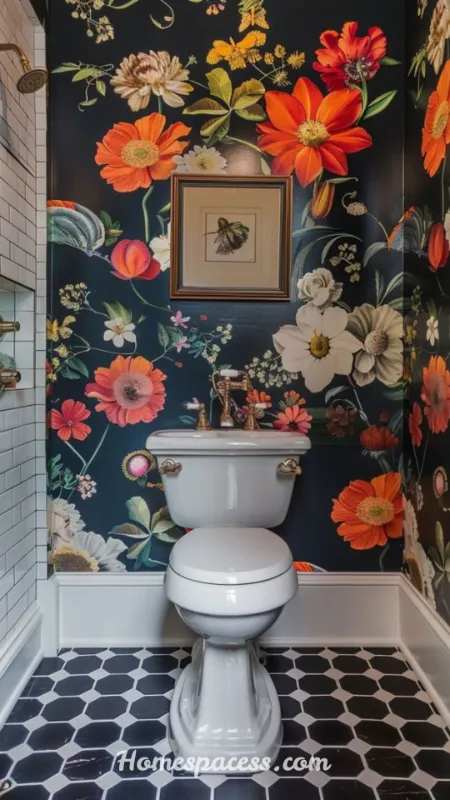
Colorful bathroom wallpaper is one of the fastest-growing trends in bathroom interior design and for good reason. Modern moisture-resistant wallpapers allow even the most pattern-phobic homeowners to experiment with bold botanicals, abstract prints, and vivid geometric designs. Unlike paint, wallpaper adds both color and texture, creating a more layered, editorial feel that’s hard to replicate with any other material.
A wildly popular application right now involves applying a large-scale tropical botanical wallpaper in a powder room the smallest room in the house and letting it become a miniature gallery-like experience for guests. Designers from New York to Dubai are using this approach to give powder rooms outsized personality. Since powder rooms see no shower steam, even standard wallpaper can work, though vinyl-coated versions are always safer for any bathroom environment.
For those hesitant about commitment, removable peel-and-stick wallpaper from brands like Spoonflower, Chasing Paper, and Tempaper has made this design move completely reversible. These products now come in thousands of patterns, and many have moisture-resistant coatings. The key is proper surface preparation: ensure walls are clean, dry, and primed before application for maximum adhesion and longevity in a humid bathroom environment.
🎨 Style Note:
In small bathrooms, use wallpaper on just one feature wall typically behind the vanity or toilet for a curated focal point that doesn’t overwhelm the space.
✅ Pro Tip:
When installing traditional wallpaper in bathrooms, use a vinyl-coated paper with a moisture-resistant adhesive and ensure your ventilation fan is properly sized (1 CFM per square foot of floor area) to prevent peeling over time.
See Also: Bathroom Towel Hanging Ideas to Transform Your Space
Pastel Bathroom Colors for a Soft, Airy, and Timeless Feel
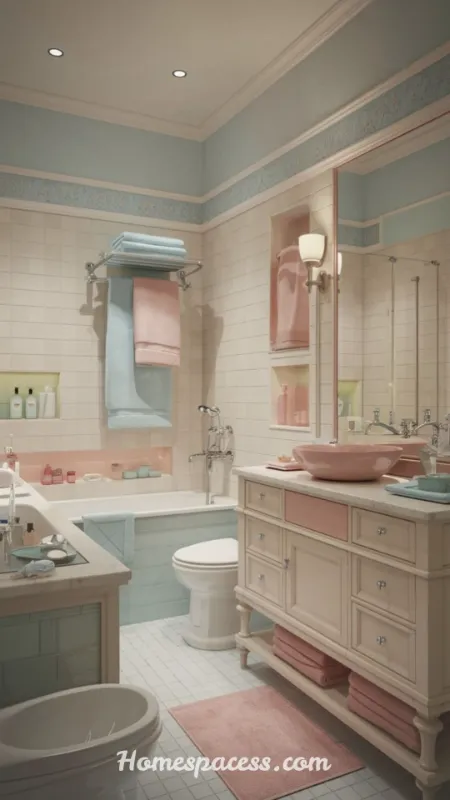
Pastel bathroom color ideas are making a strong comeback, moving well beyond their 1950s associations into fresh, contemporary applications. Dusty pink, baby blue, mint green, and lavender are all appearing in high-end bathroom renovations, presented with modern restraint and sophisticated material pairings. The key to making pastels feel current rather than dated is the quality of materials around them concrete, brushed metals, and textured ceramics all modernize a pastel palette immediately.
Consider a bathroom finished in blush pink Venetian plaster walls paired with a white fluted vanity, unlacquered brass fixtures, and creamy Calacatta marble. The result is a space that’s simultaneously romantic, modern, and utterly timeless. This palette photographs beautifully in natural light and appeals to a wide demographic making it popular in both personal residences and Airbnb bathroom design where visual appeal directly impacts booking rates.
From a color psychology standpoint, pastel blue and mint green bathrooms are particularly effective in creating calm morning routines. These hues trigger serotonin release at lower levels than stimulating primary colors, making them genuinely supportive of wellbeing not just aesthetically appealing. For families with children or anyone struggling with morning anxiety, designing a bathroom around calming pastels is a research-backed decision, not just a decorative one.
🎨 Style Note:
Ground pastel bathroom walls with darker grout lines on white tile floors and matte black or bronze fixtures the contrast prevents the palette from feeling too saccharine.
✅ Pro Tip:
Avoid pure white with pastels it washes them out and makes the palette look institutional. Instead, pair pastels with warm off-whites like Benjamin Moore OC-17 White Dove or Sherwin-Williams Alabaster for a creamier, more luxurious contrast.
Must Read This Post: Bedroom Bookshelf Ideas | Smart, Stylish & Space-Saving Ideas to Transform Your Bedroom
Emerald Green Bathroom Tiles for a Rich, Jewel-Toned Statement
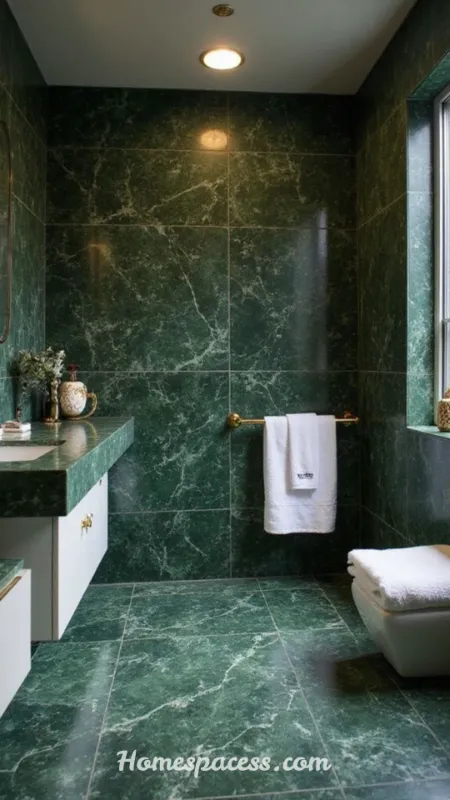
Emerald green bathroom tiles represent the pinnacle of jewel-toned bathroom design bold, glamorous, and permanently in vogue. Unlike trend-driven colors that fade in and out of fashion, emerald green carries the timeless weight of precious stones and botanical abundance. When used in zellige, subway, or mosaic tile formats, it adds both color and dimensional texture that makes walls and floors feel alive with movement.
One standout application is the full emerald green shower surround floor to ceiling in small-format zellige or handmade tiles. This creates what interior designers call a “jewel box shower” an experience that transforms a daily ritual into something genuinely luxurious. The irregular surface of handmade tiles catches light differently throughout the day, so the shower reads differently in the morning versus the evening. Pair with a brass rainfall showerhead and a teak shower bench for maximum effect.
For those who want emerald impact without a full tile investment, emerald green paint on bathroom cabinetry is a lower-cost alternative with equally dramatic results. Painting a standard builder-grade vanity in emerald green instantly elevates it to look like a custom piece. This color also pairs beautifully with natural stone countertops in white marble or creamy limestone, creating a color story that feels expensive regardless of the actual budget.
🎨 Style Note:
Emerald green tiles pair best with white grout use unsanded grout for thin joints in small-format tiles and ensure thorough sealing to keep the white grout from discoloring.
✅ Pro Tip:
Request tile samples in both natural and artificial light before committing emerald glazes can shift significantly between warm incandescent lighting and cool daylight, so verify the color reads consistently across both conditions.
Don’t Miss This Article: Indoor Plants Ideas to Bring Life, Color, and Freshness to Your Home
Yellow and Mustard Bathroom Accents for an Energizing, Optimistic Space
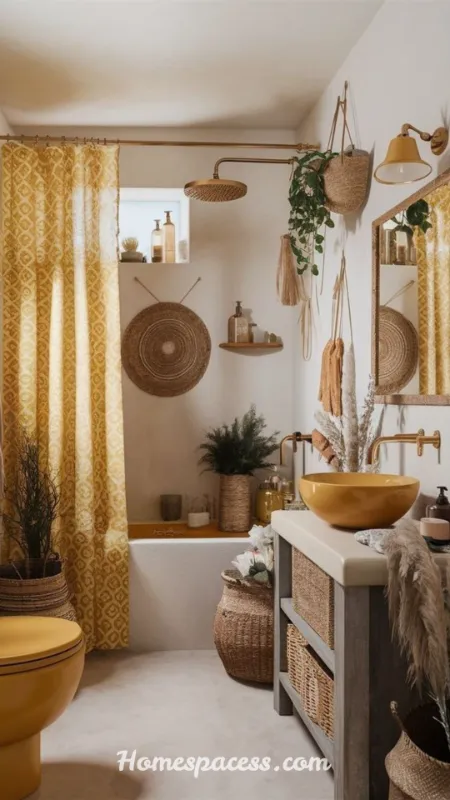
Yellow and mustard bathroom accents are underrated powerhouses in bathroom design. While yellow is often dismissed as too intense for small spaces, used as an accent rather than a dominant color, it creates a mood-lifting atmosphere that no other color can match. Think mustard yellow towels against a white tile background, sunshine yellow soap dispensers, or a warm butter-yellow ceiling in an otherwise neutral bathroom. The effect is immediate and uplifting.
A thoughtful application involves using mustard yellow penny tiles as a floor accent border just a two-inch band running the perimeter of an otherwise white tile floor. This single detail transforms an ordinary bathroom into a custom-feeling space that looks intentional and curated. This approach is particularly popular in mid-century modern bathroom design, where vintage color palettes are being reinterpreted for contemporary sensibilities.
The color psychology case for yellow in bathrooms is compelling: it’s one of the few colors that reliably triggers dopamine responses even in small doses. For east-facing bathrooms that receive morning sunlight, a warm amber yellow amplifies that natural glow and makes the space feel brilliantly lit even on overcast days. For those working from home with early starts, this kind of chromotherapy effect can meaningfully improve morning energy a wellness benefit that goes beyond aesthetics.
🎨 Style Note:
Balance bright yellow accents with cool gray or crisp white backgrounds the contrast prevents overstimulation while letting the yellow do its mood-lifting work effectively.
✅ Pro Tip:
Choose warm, golden yellows with red undertones rather than cool, lemony yellows for bathrooms warm yellows are forgiving under artificial lighting while cool yellows can appear greenish under incandescent bulbs.
Colorful Bathroom Ceiling Ideas: The Fifth Wall Opportunity
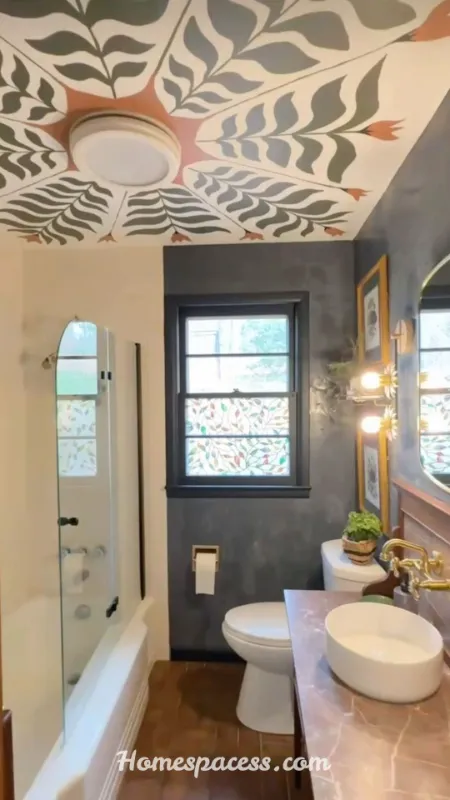
The ceiling is the most ignored surface in bathroom design and the most exciting opportunity for a colorful bathroom transformation. Designers now call it the “fifth wall,” and painting it an unexpected color creates a sense of enclosure, intimacy, and luxury that’s hard to achieve through any other means. A deep dusty blue ceiling over white walls feels like stargazing from a bathtub. A warm terracotta ceiling in a neutral bathroom adds an overhead warmth that floods the entire room with golden light.
One particularly effective scenario: a powder room with deep forest green ceiling continuing down about 12 inches onto the top of each wall creating what designers call a “tent effect.” Combined with a pendant light, grasscloth wallpaper, and a marble vanity top, this produces an experience that feels like stepping into a high-end boutique hotel restroom. It’s a design move that costs very little but delivers enormous visual payoff.
For those nervous about commitment, consider painting just the bathroom ceiling it’s one of the lowest-risk design experiments you can try. If you don’t like it, a single coat of white ceiling paint reverses it completely. The technique also works brilliantly in bathrooms with architectural features like beam details, vaulted ceilings, or decorative moldings color amplifies their presence and makes the architecture feel intentional.
🎨 Style Note:
Match ceiling color to the darkest tone in your wallpaper or tile pattern for a pulled-together, design-forward look that feels curated rather than accidental.
✅ Pro Tip:
Use flat or matte finish on colorful ceilings to minimize reflections and imperfections ceiling paint with a matte finish also absorbs light evenly, making the color appear richer and more saturated from below.
Colorful Freestanding Bathtubs as a Statement Piece
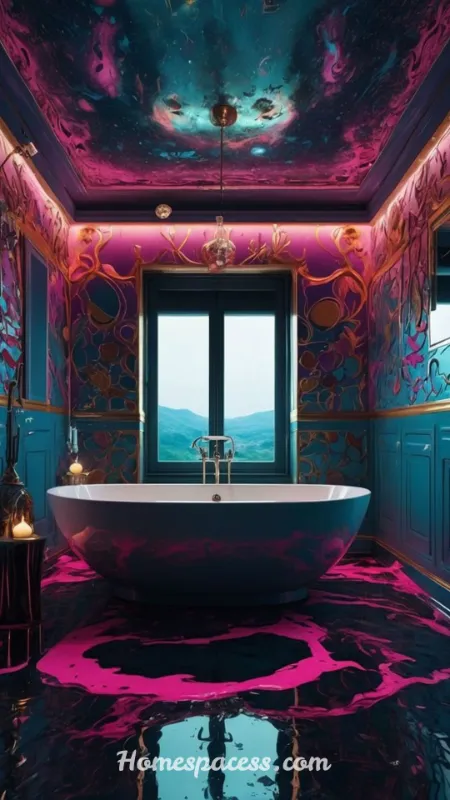
Colorful freestanding bathtubs are one of the boldest and most rewarding investments in bathroom design. Gone are the days when tubs came only in white today’s market offers freestanding tubs in matte black, deep navy, dusty sage, and even custom RAL colors for bespoke commissions. A colored statement bathtub instantly transforms the bathroom into a design-focused space where the tub becomes art as much as a functional fixture.
Imagine a primary bathroom with all-white walls and Carrara marble floors anchored by a matte sage green freestanding soaker tub. The tub becomes the room’s soul the focal point that every other design decision revolves around. This approach is increasingly popular in luxury bathroom remodels where homeowners want one dramatic element that does all the visual heavy lifting without requiring complex pattern or color throughout the rest of the room.
From a practical standpoint, colored freestanding tubs hold their finish well when properly maintained most modern acrylic and stone resin tubs use pigmented materials throughout, not just surface finishes, meaning chips and scratches are less visible and more manageable. Brands like Victoria + Albert, KOHLER, and Bette now offer extensive color programs. However, for budget-conscious renovators, companies like AKDY and Kingston Brass provide dramatic colored options at a fraction of the luxury price.
🎨 Style Note:
Place a colored freestanding tub against a simple, solid-color or subtly textured wall the tub needs visual breathing room to command attention as the room’s centrepiece.
✅ Pro Tip:
When choosing a colored tub, request a physical finish sample rather than relying on catalog photos the difference between matte and gloss finishes, and how they photograph versus how they appear in person, can be dramatic.
Maximalist Bathroom Color: Go Bold With Patterned Floors and Walls
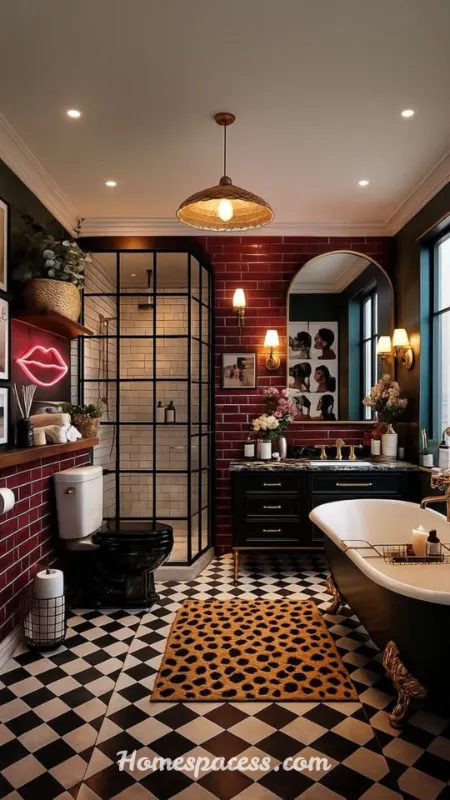
Maximalist bathroom design is having a major moment, driven by a cultural backlash against the minimalist all-white aesthetic that dominated the 2010s. In a maximalist bathroom, layered patterns, rich colors, and abundant decorative elements coexist in intentional harmony. Think encaustic cement tiles in vibrant geometric patterns underfoot, colorful hand-painted tiles on the walls, and an eclectic collection of art, mirrors, and textiles layered throughout the space.
A well-executed maximalist bathroom follows what designers call the 60-30-10 color rule: 60% dominant color (often a neutral or muted tone), 30% secondary color, and 10% accent color in the most saturated or unexpected hue. This keeps the palette cohesive even when individual elements are bold. A Mediterranean-inspired maximalist bathroom might feature white limewash walls (60%), cobalt blue encaustic floor tiles (30%), and hand-painted yellow ceramic soap dishes and accessories (10%) creating a vibrant but harmonious environment.
The key to maximalism that works rather than maximalism that overwhelms is repetition of color across different objects and surfaces. If you introduce a particular shade of terracotta in the floor tile, echo it in the towels, a ceramic vase, and a piece of framed art.
This color repetition creates rhythm and intentionality, distinguishing curated maximalism from clutter. The best maximalist bathrooms feel like they were assembled by someone with a very clear point of view not just someone who bought everything they liked.
🎨 Style Note:
Anchor a maximalist bathroom with a single dominant neutral and use it throughout creamy white, warm gray, or aged linen work best as the calming base for layered color and pattern.
✅ Pro Tip:
When mixing patterns in a maximalist bathroom, vary the scale: combine one large-scale print (like a botanical wallpaper) with medium-scale tile patterns and small-scale textiles to create visual hierarchy without chaos.
Monochromatic Bathroom Color Schemes for Sophisticated Simplicity
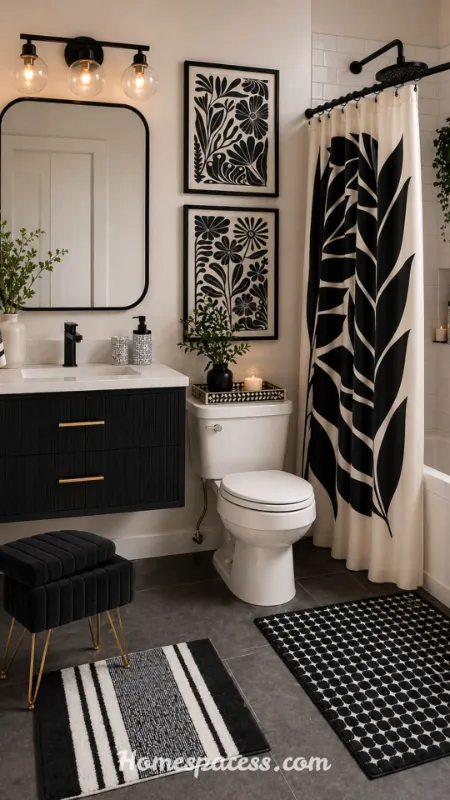
Monochromatic bathroom design is one of the most powerful yet misunderstood approaches to bathroom color. Rather than using a single flat color everywhere, true monochromatic design layers multiple shades, tints, and tones of one color family creating a space that feels deeply cohesive, effortlessly sophisticated, and visually restful. An all-blue bathroom, for example, might include navy floor tiles, powder blue walls, sky blue towels, and a chambray shower curtain unified by the color family but richly varied in intensity.
Consider a monochromatic green bathroom that includes sage plaster walls, forest green encaustic floor tiles, a deep hunter green vanity, and frosted mint glass accessories. The space reads as harmonious and intentional without being repetitive.
Texture becomes the primary source of visual interest matte plaster versus glossy tile versus brushed metal creates differentiation within the palette. This approach is particularly effective in spa bathroom design because the unified color scheme reduces visual noise and promotes relaxation.
A monochromatic bathroom also offers strategic advantages from a design longevity perspective. Because all elements share the same color DNA, swapping out accessories towels, soap dispensers, art, mirrors is simple and inexpensive. You’re essentially within the same color family, so new purchases are unlikely to clash with existing elements. This makes monochromatic design one of the most sustainable and adaptable bathroom styles from a long-term decorating perspective.
🎨 Style Note:
In a monochromatic bathroom, use three distinct values of your chosen color light, medium, and dark to create the layering effect that makes the palette look designed rather than accidental.
✅ Pro Tip:
When building a monochromatic palette, start with your tile choice tiles are the hardest and most expensive element to change then pull wall paint and accessories from the same color family to match.
Colorful Bathroom Accessories and Decor for Easy, Budget-Friendly Updates
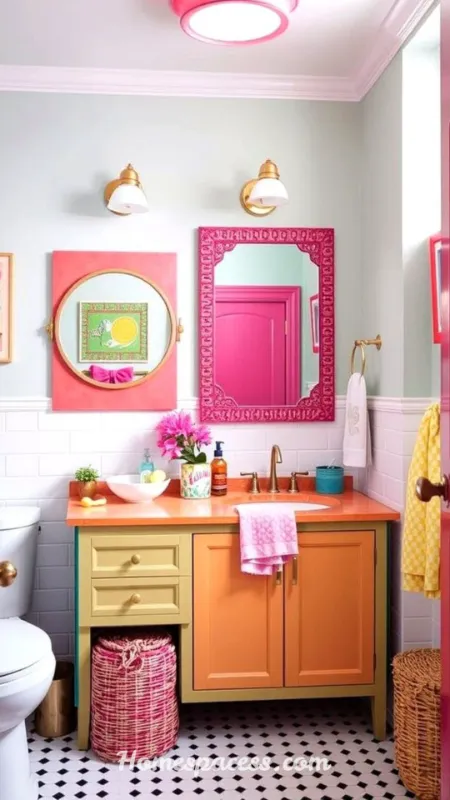
Not every colorful bathroom transformation requires a renovation. One of the most accessible and budget-friendly strategies is introducing color through carefully selected accessories and decor items that can be swapped seasonally or refreshed without any major commitment. A set of cobalt blue Turkish towels, a set of terracotta-glazed ceramic canisters, a collection of emerald green glass bottles, and a botanical print framed in warm brass can add significant color impact to an otherwise neutral bathroom.
The layering approach works beautifully here: start with a colorful bath mat as your foundation and build upward from there towels, candles, soap dispensers, and art all in the same or complementary palette. Etsy sellers and brands like Anthropologie, H&M Home, and CB2 have made it remarkably easy to find colorful bathroom accessories at various price points, from high-end ceramic to affordable mass-market pieces that photograph beautifully.
Seasonal color rotation is an underrated strategy in this category. Many homeowners keep their bathroom decor neutral year-round and miss the opportunity to rotate colorful accessories seasonally amber and gold tones in autumn, crisp blue and white in summer, warm berry and plum in winter.
This approach keeps the space feeling fresh and dynamic throughout the year without requiring any structural changes, and it aligns with the growing consumer trend of conscious, intentional decorating buying fewer but more meaningful items.
🎨 Style Note:
Organize bathroom accessories by color family rather than by function grouping all terracotta-toned items together creates an instant vignette that looks styled rather than stored.
✅ Pro Tip:
Invest in one or two high-quality colorful ceramic or glass pieces rather than many cheap plastic accessories the material quality of a single beautiful soap dish or glass vase transforms the perceived value of the entire space.
Conclusion
Adding color to your bathroom is one of the highest-return investments you can make in your home transforming a purely functional space into a place of daily joy, self-expression, and genuine wellbeing. Whether you’re drawn to the earthy warmth of terracotta tiles, the drama of navy blue walls, or the serenity of sage green bathroom design, these 14 colorful bathroom ideas prove that color is always the most powerful tool in a designer’s kit.
The key is approaching color with intention understanding your light, your fixed elements, your lifestyle, and your long-term goals rather than simply chasing trends. With the expert insights, sustainability considerations, and practical tips shared throughout this guide, you have everything you need to make confident, informed decisions.
Ready to transform your bathroom? Start with one idea that genuinely excites you whether it’s painting an accent wall this weekend or saving up for a statement tile project and let the color work its magic. Your bathroom is waiting to become the most beautiful room in your home.
ADVANCED SECTIONS
Colorful Bathroom Trends 2026 and Beyond: What’s Rising and What’s Fading
The colorful bathroom trend landscape for 2026 is defined by a decisive pivot away from clinical minimalism toward warmth, personality, and chromatic richness. According to the Pantone Color Institute and WGSN’s annual home trend forecasting, the dominant color stories for bathrooms in 2026 center on baked earth tones (terracotta, sienna, warm red-clay), botanical greens (sage, olive, moss), and mineral blues (slate, denim, cobalt). These palettes reflect a broader cultural desire for connection to the natural world a trend that accelerated significantly post-pandemic and shows no signs of slowing.
What’s rising: unexpected color pairings are becoming increasingly mainstream. Combinations like terracotta and deep teal, warm rust and dusty pink, or olive green and pale lavender are appearing in high-end design publications and filtering down into accessible home improvement contexts.
Also rising: color drenching the practice of painting all surfaces (walls, ceiling, trim, even the door) the same color. Once considered daring, it’s now recognized as one of the most effective techniques for making small bathrooms feel luxuriously immersive.
What’s fading: the all-white bathroom is rapidly losing its dominance as the default choice for both new builds and renovations. While white will never disappear entirely its timelessness is real the trend has shifted toward warm off-whites and tinted whites (creamy, biscuit, blush-tinted) that provide the cleanliness of white without the starkness.
Simultaneously, gray continues its slow decline; the cool, neutral grays that dominated the 2010s are being replaced with warmer, more chromatic alternatives. Looking ahead to 2027–2028, forecasters predict a surge in deep wine and burgundy tones entering the bathroom space a continuation of the jewel-tone trajectory.
📊 Trend Insight:
Color drenching painting all bathroom surfaces including ceiling and trim in one color is projected to be the #1 DIY bathroom upgrade trend in 2026 according to Houzz renovation surveys.
Expert Insights: How Interior Designers Use Color in Bathrooms Like Professionals
Professional interior designers approach bathroom color selection differently from most homeowners they start with the light, not the palette. The direction a bathroom faces (north, south, east, or west) determines how colors will render under natural light throughout the day. A north-facing bathroom bathed in cool, blue-cast light will make cool colors feel colder and can make warm colors appear muted. For north-facing bathrooms, designers consistently recommend colors with warm undertones peachy corals, warm greens, amber yellows to counteract the natural light deficit.
Another key professional insight: the 60-30-10 rule for bathroom color distribution. This means 60% of the visual space should be your dominant color (typically the largest surfaces: walls or floor tile), 30% a secondary color (vanity, major fixtures), and 10% the accent color (accessories, grout, hardware).
This ratio creates balance without monotony. Designers at firms like Studio McGee and Arent & Pyke consistently apply this framework in their high-end bathroom renovations, producing spaces that feel layered and intentional regardless of how many colors are in play.
One insight that competitors’ articles consistently miss: grout color is a primary color decision, not an afterthought. Dark grout in an earthy brown or charcoal can completely transform how tile reads shifting a standard white subway tile from clean and clinical to moody and artisanal.
Tinted grouts in terracotta, sage, or warm gray can unify an entire bathroom color palette, making individual tiles feel like a connected surface rather than separate pieces. This single decision colored grout versus white grout is one of the highest-impact, lowest-cost color choices in any bathroom renovation.
💡 Designer Secret:
Always buy 10-15% more colored tile than you need. Dye lots vary between production batches, and matching tiles purchased months later for repairs or additions is extremely difficult especially with handmade or specialty tiles.
Sustainable Colorful Bathrooms: Long-Term Value, Eco-Friendly Materials, and Smart Choices
Sustainable bathroom design and colorful aesthetics are increasingly complementary rather than competing priorities. The rise of low-VOC and zero-VOC paints from brands like Benjamin Moore Natura, Farrow & Ball, and Clare has made it possible to achieve rich, deep bathroom colors without the health and environmental concerns associated with traditional solvent-based paints. In humid bathroom environments, these formulations actually outperform older alkyd formulas in moisture resistance making the sustainable choice also the practical one.
Natural tile materials offer another intersection of sustainability and color. Terracotta tiles are made from natural clay using traditional methods, have extremely low embodied energy compared to engineered stone or porcelain, and are fully biodegradable at end of life.
Zellige tiles those gorgeous Moroccan handmade tiles appearing in jewel tones across contemporary bathroom design are also made from natural materials using traditional artisan techniques, meaning their production supports craft communities while delivering exceptional aesthetic results.
From a long-term value perspective, choosing timeless colorful bathroom palettes over trend-driven ones reduces the renovation cycle and associated resource consumption. Colors with proven design longevity deep navy, emerald green, terracotta, sage will still feel current in 10–15 years, while hyper-trendy choices may feel dated within five.
This consideration is increasingly important as the design industry grapples with its environmental footprint: the most sustainable bathroom renovation is the one you only have to do once.
🌿 Eco Tip:
Choose recycled glass tiles for colorful bathroom accents they offer vibrant, translucent color that rivals any conventional tile while diverting glass from landfills. Brands like Fireclay Tile offer beautiful options with third-party environmental certifications.
Future of Colorful Bathroom Design: Innovations and Predictions for 2027–2030
The future of colorful bathroom design is being shaped by two converging forces: advances in materials technology and the growing sophistication of AI-assisted design tools. Within the next three to five years, we’ll see widespread availability of photochromic bathroom tiles materials that shift color in response to light intensity.
Imagine tiles that are a soft blush in morning light and deepen to terracotta red as evening light falls. Early prototypes from materials research labs in the Netherlands and South Korea are already demonstrating this capability, and commercialization is expected by 2028.
AI bathroom design tools are already transforming how homeowners select and visualize color. Apps like Houzz’s Visual Match, Benjamin Moore’s Personal Color Viewer, and emerging AR tools from manufacturers allow real-time visualization of color choices on actual uploaded photos of your bathroom eliminating the guesswork from the bathroom color selection process. By 2027, these tools will integrate with e-commerce platforms, allowing users to purchase the exact products they see in their AR simulation with a single tap.
Looking further ahead, biophilic color science is emerging as a formal discipline that will influence bathroom design significantly. Researchers at institutions including the Copenhagen School of Design are developing evidence-based frameworks for how specific colors in specific environments affect stress hormones, sleep quality, and cognitive performance.
Future bathroom design will likely incorporate chromotherapy-informed color palettes not as a wellness gimmick but as a scientifically grounded design discipline. Homeowners will choose bathroom colors the way they might choose supplements: based on specific, measurable outcomes.
🔮 Future Watch:
Smart chromatic paint color-shifting wall coatings controlled via smartphone app is currently in beta testing by three major paint manufacturers. Expected commercial launch: 2027-2028, with bathroom-rated moisture-resistant formulations to follow.
Common Mistakes in Colorful Bathroom Design (And How to Avoid Them)
The most common mistake homeowners make when adding color to bathrooms is selecting paint based on how it looks in the store or on a digital screen. Bathroom lighting typically a mix of natural daylight, overhead artificial light, and task lighting at the mirror is uniquely complex.
Colors that look perfect in a hardware store under fluorescent lighting can appear completely different in your bathroom under warm LED bulbs. Always test a large painted swatch (at least A4 size) in your actual bathroom and observe it across multiple times of day and under all your lighting conditions before committing.
Another overlooked mistake: ignoring the color of existing fixed elements. Toilets, bathtubs, and sinks are rarely replaced during cosmetic renovations meaning their color becomes part of your palette whether you planned for it or not. A bisque-toned toilet (an off-white with yellow undertones) will clash with cool, blue-toned gray walls. A cream-colored bathtub will look dingy against stark white wall tiles. Always pull undertones from your fixed elements first and build your color palette around them, not the other way around.
Perhaps the most expensive mistake is confusing accent colors with dominant colors. Many homeowners see a beautiful jewel-toned bathroom in a design magazine and order enough tile to cover every surface only to find the color overwhelming at full scale.
In professional design photography, bold colorful bathrooms are carefully art-directed: the camera angle, the lighting, and the cropping create an impression of color intensity that doesn’t reflect the full 360-degree experience of standing in the room. Before committing to full-coverage color in a bathroom, create a physical mockup using large poster boards painted in your chosen color to simulate the immersive experience.
⚠️ Avoid This:
Never choose bathroom tile color from a 4×4 inch sample alone. Colors tile behavior changes dramatically at scale order a minimum of a square foot sample board or temporarily affix multiple tiles to your wall to evaluate the true color impact before purchasing full quantity.
Team Home Spacess shares simple, practical design ideas that work for real families. The team focuses on cozy décor, soft colors, and natural textures that make a space feel truly lived-in. From everyday decorating tips to creative home projects, Team Home Spacess is dedicated to helping readers create warm, comfortable, and inviting spaces with a fresh and personal touch.