

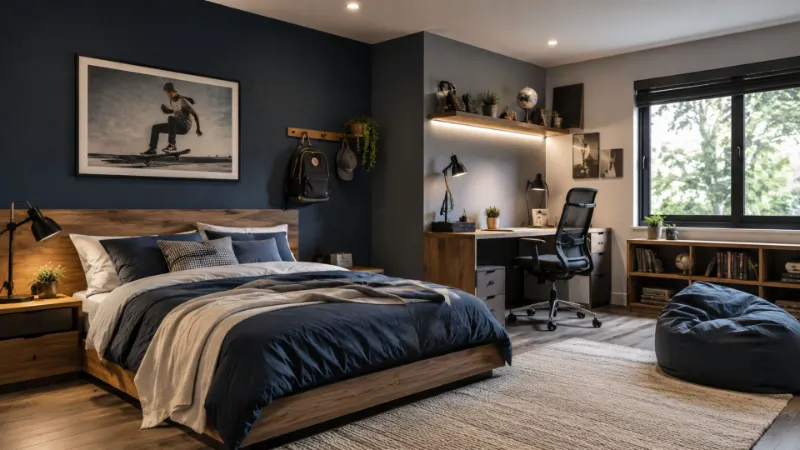
Struggling to design a bedroom your son will genuinely love? From space-saving bunks to adventurous themes, this expert guide covers every boys bedroom idea you need practical, stylish, and built to grow with him.
Most boys bedroom ideas you’ll find online are either too generic (“just paint it blue!”) or completely impractical for real families. You want a room that sparks your son’s imagination, gives him space to study and play, and doesn’t look tired six months after you finish it.
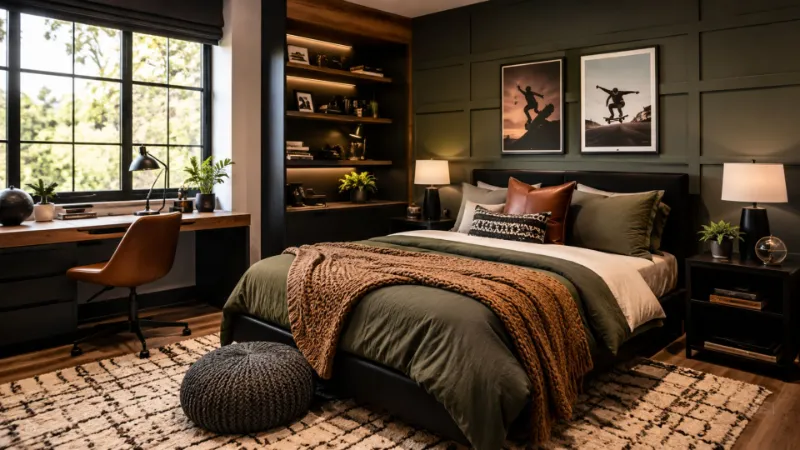
Here’s the truth: the best boys bedroom design isn’t just about aesthetics. It’s about creating a space that supports his development, reflects his personality, and adapts as he grows. After researching hundreds of real-world designs and consulting interior designers who specialize in children’s spaces, we’ve identified 13+ ideas that genuinely deliver from toddlers through teens.
Whether you’re working with a tiny box room or a spacious bedroom, on a tight budget or with room to invest, you’ll find actionable ideas below. Each one includes a style note, a pro tip, and a real-life scenario to bring it to life.
Space & Galaxy Theme Bedroom
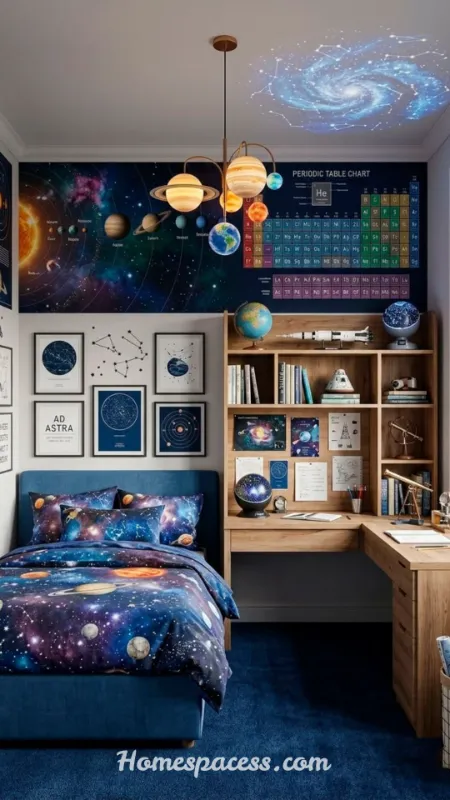
A space-themed boys bedroom is one of the most enduringly popular ideas and for good reason. The cosmos is naturally awe-inspiring, offering an unlimited design canvas that works beautifully from age 4 right through to 12. Deep navy or charcoal walls paired with constellation decals, glowing planet mobiles, and meteor-shower string lights create a genuinely immersive atmosphere that feels like a world of its own.
The magic of this theme lies in its layering. Start with a dark feature wall a hand-painted galaxy mural or a premium peel-and-stick alternative then build outward with metallic silver accents, rocket-shaped shelving units, and a lunar phase print above the bed. For a practical touch, opt for a bunk bed styled to look like a space capsule, giving your son a private “launch pad” that doubles as storage.
Real-life scenario:
Seven-year-old Zaid has a small bedroom in Karachi with one external wall and limited natural light. His parents installed a deep navy peel-and-stick mural, added a constellation projector lamp, and used white and silver accents on shelves. The dark wall paradoxically made the room feel larger and more dramatic and Zaid now insists on doing his homework in his “spaceship.”
Style Note:
Use a 70-20-10 color rule: 70% deep navy or charcoal, 20% metallic silver/white, 10% vivid accent (electric blue or neon green). Avoid making the whole room dark keep bedding and floor coverings light for balance.
💡 Pro Tip:
Choose a Bluetooth star projector that doubles as a Bluetooth speaker. It eliminates the need for a separate nightlight, adds to the atmosphere, and becomes a practical sleep aid with white noise or calming sounds.
Check Out This: Bedroom Curtain Ideas That Make Any Room Look Bigger and Brighter
Sports-Themed Boys Bedroom
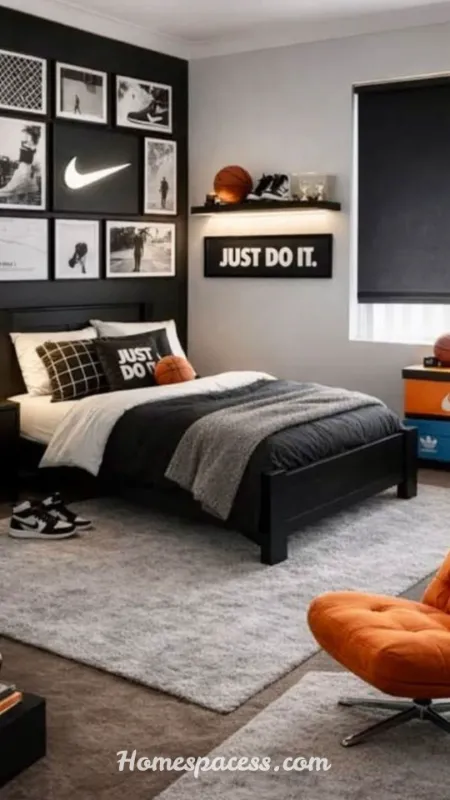
A sports-themed bedroom is a classic boys bedroom idea, but the execution makes all the difference between a timeless design and something that looks dated within a year. The key is to celebrate the energy and spirit of sport rather than plaster the walls with a single team’s branding. This approach keeps the room relevant even if his favourite team changes (and it will).
Focus on bold graphic elements: a typographic “game day” wall mural, stadium-seating-style shelving for trophies and medals, astroturf carpet strips for texture, and a colour palette drawn from classic sportswear kelly green, cobalt blue, or charcoal with vivid accents. A pegboard display wall works brilliantly here, letting your son showcase his actual kit, medals, and equipment in a way that’s organized and pride-worthy.
Mini case study:
An 11-year-old cricket enthusiast had his room redesigned around a pitch-green accent wall and a gallery wall of framed vintage cricket posters. His bat and pads hang on wall hooks by the door. The room is sporting without being cluttered and it already has space to evolve as his interests do.
Style Note:
Avoid licensing trap: buying too much branded merchandise creates a room that feels like a souvenir shop. Instead, invest in one or two high-quality framed prints and let the palette and textures do the heavy lifting.
💡 Pro Tip:
Install a wall-mounted foldable basketball hoop or target board. It adds interactivity to the room without permanently occupying floor space, and doubles as a conversation-starter for friends.
Explore Now: Creative Twin Bedroom Ideas with Modern Decor and Storage
Loft Bed with a Built-In Study Zone
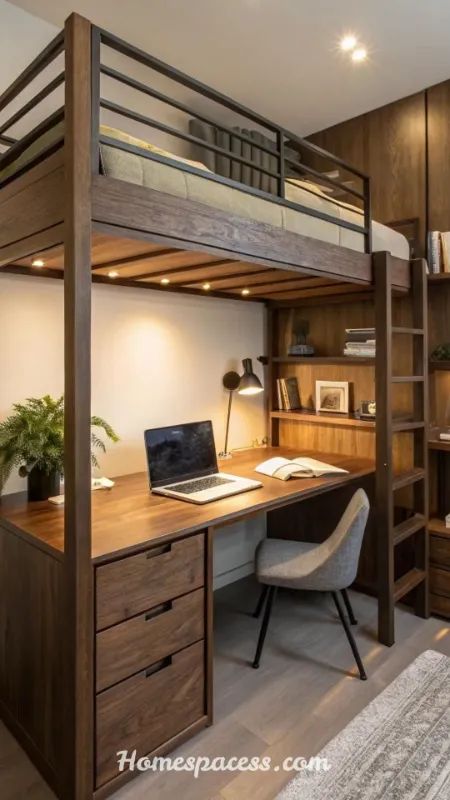
The loft bed concept is one of the smartest space-saving boys bedroom ideas ever devised and modern versions have elevated it far beyond the basic raised platform. By lifting the sleeping area, you free up an entire footprint beneath it for a functional study zone, reading corner, or even a small gaming station. In small bedrooms common in urban homes, this single intervention can transform the feel of the entire room.
The best loft bed designs integrate a built-in desk with cable management, integrated shelving, and a cozy under-bed area lit with warm LED strips. Add a cork pin-board or whiteboard surface on the underside of the bed frame, transforming the study space into a personal headquarters. Use the vertical space above the desk for floating shelves accessible from the loft but clearly organized below.
Real-life scenario:
In a 10×12ft bedroom, an 8-year-old’s loft bed setup includes a 120cm desk underneath, two rows of floating shelves, and a reading lamp clamped to the bed frame. The floor-to-ceiling solution transformed what was a cramped room into a space that genuinely supports focused work and restful sleep two things that require separation.
Style Note:
Paint the wall behind the under-desk area in a deep, contrasting colour (charcoal or forest green) to visually “frame” the study zone. This makes it feel intentional and immersive rather than an afterthought.
💡 Pro Tip:
Install a bed-rail mounted USB hub and charging dock at loft level. It eliminates the need for charging cables trailing to the floor and keeps devices out of reach after bedtime a small design decision with big behavioural benefits.
See the Full Guide: Simple Bedroom Decor Ideas to Make Your Room Look Modern and Fresh
Adventure & Nature Explorer Theme
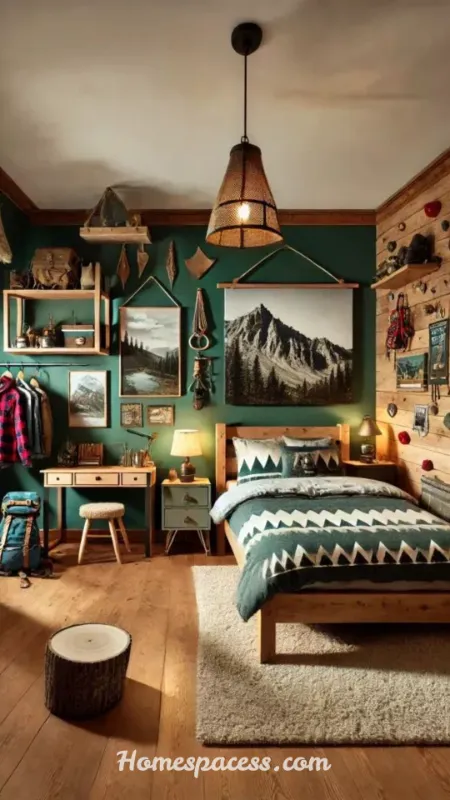
The adventure theme taps into one of the most universal aspects of boyhood: the desire to explore. Unlike single-topic themes, an adventure-and-nature concept is broad enough to encompass mountains, forests, maps, and the outdoors giving you enormous creative latitude. A topographic feature wall, compass-rose rug, and vintage map print collection can create a sophisticated explorer’s den that feels aspirational rather than childish.
Consider a teepee or tent-style canopy around the bed not the plastic kind, but a properly constructed fabric canopy suspended from the ceiling with warm Edison bulbs inside. Pair it with plank-style wooden shelves, potted succulents or snake plants (for a touch of real nature), and a world map with push pins marking places the family has visited or dreams of going. This gives the room a living, evolving character.
Real-life scenario:
A father redesigned his 9-year-old son’s room around their shared love of hiking. A relief map of their favourite national park forms the feature wall. Boots, rope, and a small backpack hang on antler hooks. The room doesn’t just look adventurous it tells their actual story, giving it an emotional depth no catalogue room can match.
Style Note:
Earth tones are your foundation warm terracotta, forest green, sandy beige, and deep brown. Use raw wood textures (reclaimed timber shelves, rattan baskets) to add organic warmth. A single bright accent in burnt orange or turquoise keeps it from feeling too muted.
💡 Pro Tip:
Use a hanging rope ladder as a decorative element near the loft or top bunk. It adds tactile interest and genuine utility, and reinforces the adventure aesthetic in a way that’s structurally sound and fun to use.
Unlock More Ideas: Bedroom Interior Ideas That Actually Work in Real Homes
Tech & Gaming Setup Bedroom
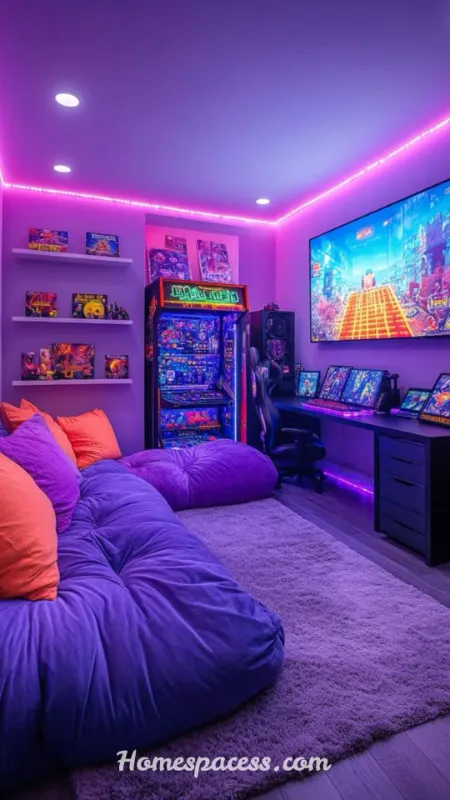
For boys aged 10 and above, a well-designed gaming and tech bedroom can be both a motivating study environment and a legitimate creative space. The key design challenge is making it feel grown-up and intentional rather than chaotic. A dedicated gaming desk positioned against a single wall with monitor(s), console, and accessories arranged with deliberate care acts as the room’s focal point and signals that this space takes gaming seriously.
LED strip lighting behind the monitor and under furniture creates the atmospheric “battlestation” glow without looking tacky. Use cable management sleeves and desktop cable boxes to eliminate visual clutter this single step is the difference between a bedroom that looks impressive and one that looks messy. Complementary acoustics matter too: a fabric headboard and soft furnishings reduce echo for better audio during gameplay and clearer voice calls.
Mini case study:
A 13-year-old who is both a passionate gamer and a student has his desk set up with dual monitors one for gaming, one for school. A physical separation (the monitors themselves) creates a mental boundary between “work mode” and “play mode.” His parents report improved focus during homework time since the redesign.
Style Note:
Restrain the RGB. Use a single, consistent lighting accent colour rather than cycling rainbow effects. A deep blue or warm amber is less visually fatiguing for extended sessions, and the room looks more sophisticated when the lights are off.
💡 Pro Tip:
Mount a pegboard panel beside the desk for controllers, headsets, and accessories. It provides accessible storage, looks intentionally designed, and prevents the desktop from becoming a dumping ground for peripheral cables.
Continue Reading: Stunning Living Room Carpet Ideas: Transform Your Space with Style, Comfort & Expert Insight
Clean Minimalist Boys Bedroom
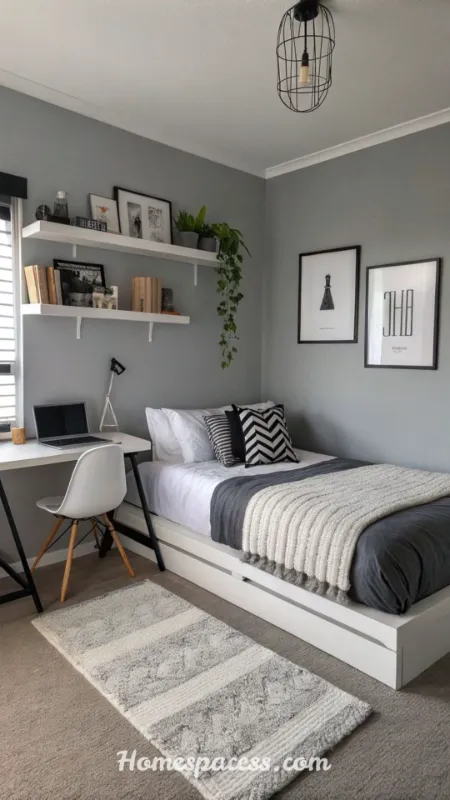
Minimalism in a boys bedroom isn’t about stripping away character it’s about curating with intention. A well-executed minimalist room actually provides better conditions for creative thinking, restful sleep, and focused study than a visually busy space. For boys who feel overstimulated easily, this approach isn’t just aesthetic; it’s genuinely supportive of their wellbeing.
The minimalist boys bedroom works with a neutral base (warm white, soft grey, or warm off-white walls), clean-lined furniture in natural oak or matte white, and a limited but deliberate selection of personal items displayed on open shelving. One or two bold, large-format artworks create visual interest without visual noise. Integrated storage built-in wardrobes, under-bed drawers, and furniture with hidden compartments keeps the floor area completely clear.
Real-life scenario:
A family with two active boys shared one bedroom. After adopting a minimal approach streamlined bunk beds, a single toy storage system, and a strict “one in, one out” rotation for toys parents reported that arguments over tidying decreased significantly and the boys spent more time playing imaginatively in the cleared space.
Style Note:
Use texture rather than pattern to add visual warmth. A chunky knit throw, a woven cotton rug, and a linen duvet add tactile richness to a neutral palette without disrupting the calm, ordered feel.
💡 Pro Tip:
Invest in a proper toy rotation system store 70% of toys in labeled boxes out of sight, rotating monthly. The room stays minimal and “tidy-adjacent,” while the novelty of rotated toys extends their play value dramatically.
Get Inspired Here: Best Gaming Chair Ideas for Comfortable and Stylish Gaming Rooms
Cozy Reading Nook for Boys
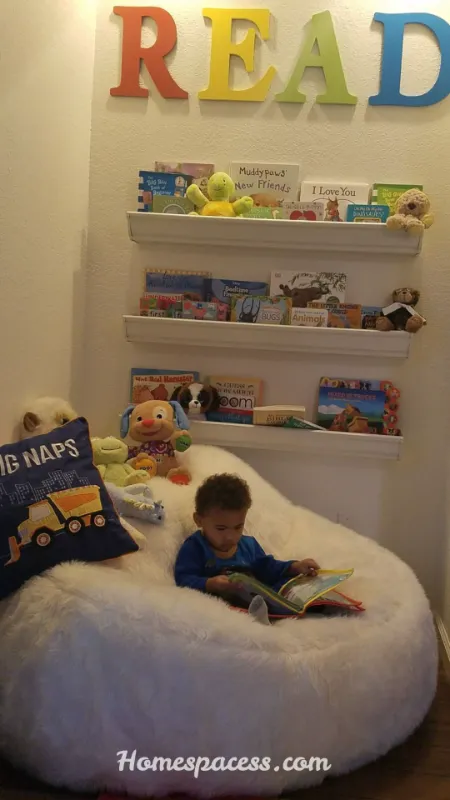
Building a dedicated reading nook into a boys bedroom is one of the highest-value design decisions you can make and it’s often overlooked. A reading nook signals to your son that reading is a valued, enjoyable activity, not just a school obligation. When the space itself is inviting and just for him, the habit forms naturally.
The best reading nooks are semi-enclosed to create a sense of privacy and focus. Consider converting an alcove, a space under the stairs, or the area under a loft bed. Add a low, cushioned bench with storage inside, surround it with bookshelves at accessible height, and install warm focused lighting. A small pull-down blind or curtain at the entrance makes it feel like a genuine private retreat boys love having a “secret” corner.
Real-life scenario:
One parent converted the understairs space in her son’s attic bedroom into a reading cave with a 6-inch foam cushion, 30 books at eye level, and a rechargeable book light velcro’d to the wall. Her previously reluctant reader now requests extra reading time before bed. The physical environment changed the behaviour.
Style Note:
Keep the nook palette separate from the main bedroom to psychologically distinguish the activity zone. Rich jewel tones emerald green, deep teal, or warm terracotta work beautifully in a small, contained space and make it feel special and chosen.
💡 Pro Tip:
Use a “book face out” display method for at least a third of books. Books displayed face-forward (cover visible) are three times more likely to be selected than spine-only books a technique borrowed from children’s libraries and bookshops.
You’ll Love This Next: Cozy Basement Bar Ideas for the Perfect Entertainment Space
Nautical & Ocean-Inspired Bedroom
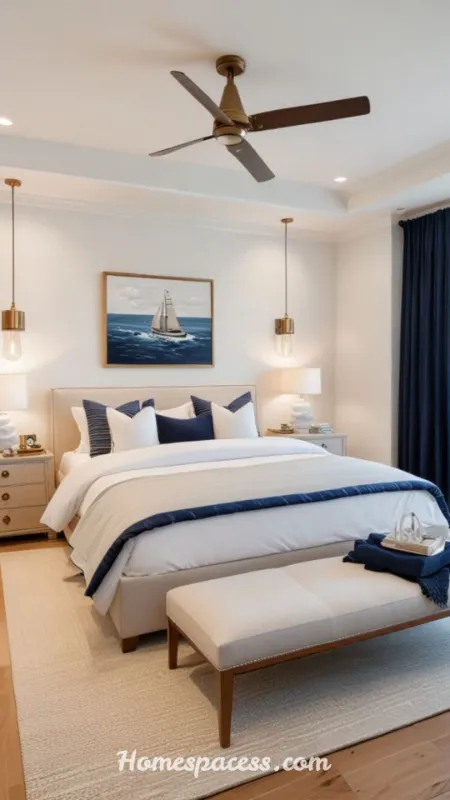
The nautical theme remains one of the most sophisticated and versatile boys bedroom ideas, far beyond the stereotypical blue-and-white stripes. A modern nautical bedroom draws from the textures and materials of the sea rope, weathered timber, canvas, and natural fibre as much as from the colour palette. The result is a room that feels grounded, calm, and genuinely connected to something larger than a design trend.
A shiplap or board-and-batten feature wall in muted white or natural wood provides texture without effort. Rope-wrapped lights, a ship’s wheel mirror, and map-print bedding establish the theme with subtlety. For boys interested in marine biology, ocean conservation, or sailing, this theme can become an expression of genuine identity rather than a borrowed aesthetic which makes all the difference to how long he’ll love it.
Real-life scenario:
A coastal family in Karachi designed their son’s room around the ocean not cartoonish fish and boats, but a deep-blue abstract water mural, a reclaimed wood floating shelf displaying his shell collection, and a proper tide-chart print from a local harbour. The room feels like a museum of his interests.
Style Note:
For a modern nautical look, swap classic navy-and-white for a more nuanced palette: Aegean blue, sandy beige, bleached driftwood, and warm white. Reserve true navy for accents only the colour of deep water, not the whole ocean.
💡 Pro Tip:
Install a glass-fronted display box (like a shadow box) on the wall as a “specimen” frame for found objects shells, sea glass, coral fragments. It teaches natural curiosity and adds a genuinely unique, personal element no shop-bought room has.
Jungle Explorer Bedroom Theme
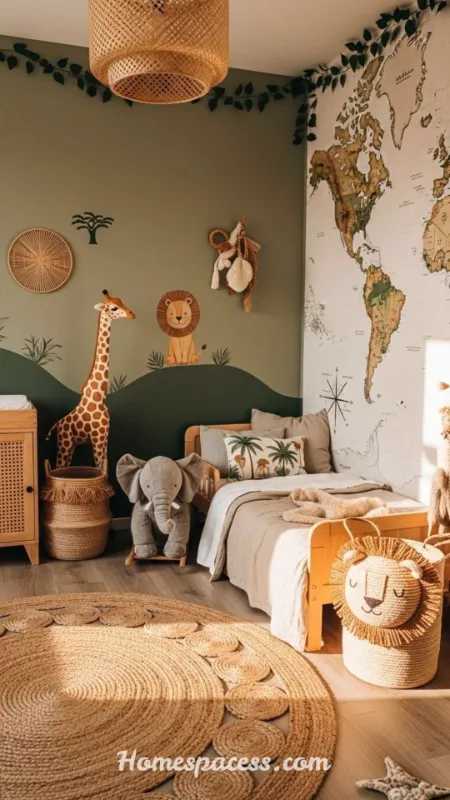
The jungle theme has evolved well beyond safari prints and cartoon animals. A contemporary jungle bedroom creates a genuinely lush, immersive environment through layered greens, organic textures, and real or faux botanicals. For boys who respond to sensory richness who love being surrounded by life, colour, and texture this theme is unmatched in its ability to create a feeling of discovery every time they walk in.
Start with a deep botanical green accent wall paint or a tropical leaf wallpaper. Integrate actual low-maintenance plants (pothos, ZZ plant, or a small monstera) at various heights. Layer woven rattan furniture, jute rugs, and bamboo-effect blinds for natural texture. Overhead, a macramé canopy or hanging fern gives the room a forest canopy feel. The earthy greens are naturally calming while also exciting a rare combination in interior design.
Mini case study:
A 7-year-old who struggles with bedtime anxiety had his room redesigned with a jungle theme specifically for its calming psychological properties. Greenery and organic materials are proven stress-reducers. His parents report measurably improved sleep and a much more positive bedtime routine within three weeks.
Style Note:
Mix plant types at three heights floor, mid-level, and hanging to mimic the layered structure of a real jungle. A single plant on a shelf looks decorative; three plants at different heights look ecological and lush.
💡 Pro Tip:
Use washable botanical wallpaper on one wall only the wall behind the bed. It creates a dramatic backdrop without overwhelming the space, and when his tastes change, one wall is far easier and cheaper to update than four.
Industrial Cool Aesthetic for Boys
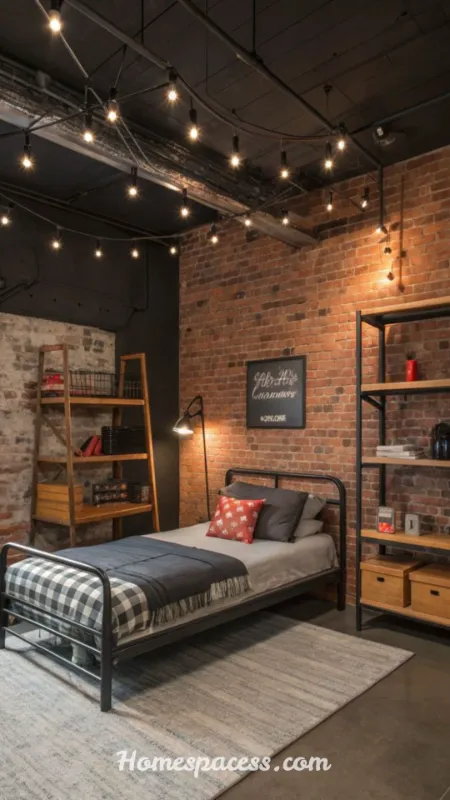
The industrial aesthetic is a sophisticated choice for older boys and teens a design language borrowed from converted warehouses and makers’ workshops that communicates maturity, creativity, and edge. When executed well, it produces one of the most stylistically compelling boys bedroom ideas in this guide: all exposed brick (or brick-effect wallpaper), raw metal, dark wood, and utilitarian accessories that feel genuinely cool rather than merely trendy.
Key elements include: exposed-effect ceiling pipes or cable conduit used as design features rather than hidden, Edison bulb fixtures on metal wall brackets, a reclaimed timber floating desk, and open shelving on metal pipe brackets. Dark concrete-effect paint on one wall, combined with warm-toned wood flooring or a large area rug, prevents the space from feeling cold. The key distinction from grimy to great is warmth always balance raw materials with soft furnishings.
Real-life scenario:
A 14-year-old who is interested in engineering and design convinced his parents to try an industrial redesign. A single brick-effect wallpaper feature wall, pipe-bracket shelves he built himself, and an Edison bulb string light over his desk created a room that feels genuinely like him. The DIY element added significant personal pride to the space.
Style Note:
Limit the industrial palette to 3 materials: one raw (brick, concrete, or metal), one warm wood, one soft textile. Industrial rooms fail when everything is hard and cold a chunky throw blanket and a warm-toned rug are non-negotiable.
💡 Pro Tip:
Let your son participate in one DIY project for this theme building the pipe shelves, painting a wall, or selecting and mounting prints. Ownership of the process creates lasting pride in the space, which directly improves how he maintains and respects it.
Chalkboard & Interactive Art Wall
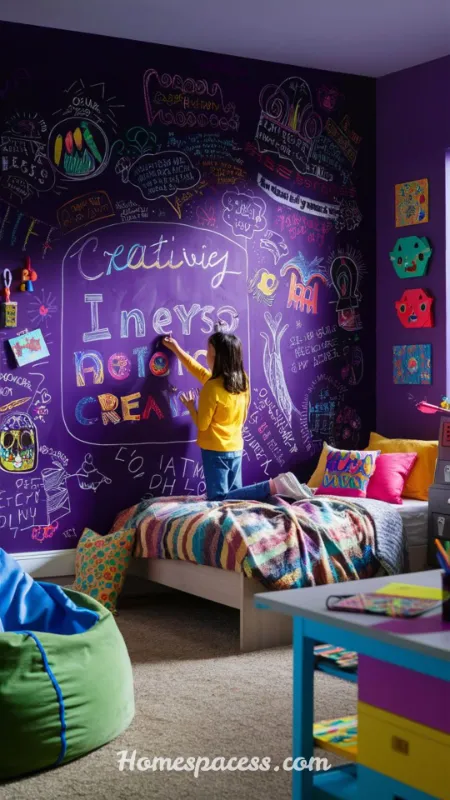
An interactive art wall transforms a boy’s bedroom from a passive space into an active creative environment. Chalkboard paint applied to a full wall or even a dedicated section gives your son an ever-changing canvas for drawing, writing, and expressing himself without a single piece of paper. For naturally creative boys who constantly run out of paper or cover books in doodles, this idea is nothing short of liberating.
Beyond classic chalkboard paint, magnetic chalkboard panels combine magnetic and writing surfaces, allowing notes, art, and displayed items to coexist. Pair with a built-in chalk ledge (a narrow shelf along the bottom of the wall) for storing chalks and erasers neatly. Add a framed section with dry-erase paint for a whiteboard element useful for schoolwork, mind-mapping, and to-do lists as he gets older.
Real-life scenario:
A 6-year-old who expressed frustration at being told not to draw on walls had a chalkboard wall installed in his bedroom. Within a month, parents described him as visibly calmer — his need to mark his environment was met constructively. He now creates elaborate maps, stories, and diagrams that he photographs before erasing, building a creative archive.
Style Note:
Chalkboard walls work best on a single feature wall in a contrasting frame (e.g. a painted timber border). Floor-to-ceiling chalkboard on all four walls overwhelms the senses. One wall of creative chaos, three walls of calm order — that’s the balance.
💡 Pro Tip:
Apply 3–4 coats of chalkboard paint for a smooth, high-quality writing surface. Season the wall properly before first use by rubbing the flat side of chalk across the entire surface and erasing this prevents “ghosting” of the first marks drawn.
Superhero Command Center Bedroom
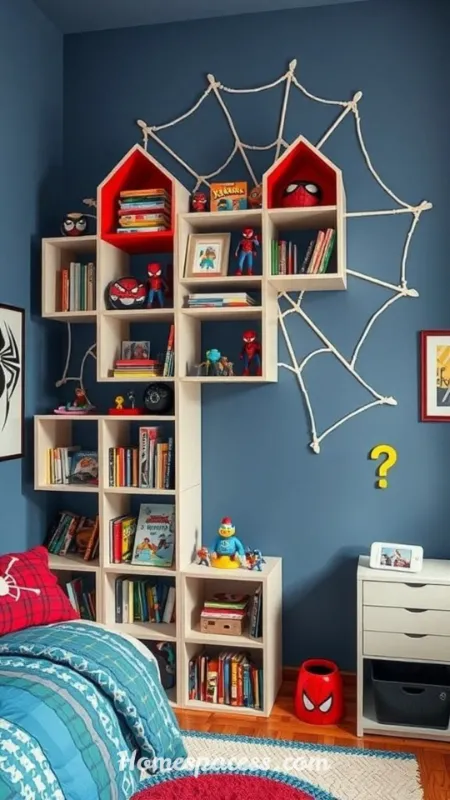
The superhero bedroom is one of the most requested boys bedroom ideas and the most commonly executed badly. The key is to move beyond licensed character wallpaper into the concept of heroism: strength, justice, protecting others, and rising to challenges. This shift produces a room with genuine depth that resonates into teenage years rather than aging out at 8.
A “command center” framing works beautifully: the study desk becomes “mission control” with a pegboard command panel, the wardrobe gets superhero costume hooks, and a bold typographic print (“With great power…” or “Be the hero of your story“) anchors the room philosophically. The color palette deep cobalt, bold red, and metallic gold or silver communicates heroism without relying on a single franchise.
Mini case study:
Parents of a shy 8-year-old used a superhero room redesign as part of a confidence-building project. A personalised “hero name” plaque by his door, a strength-themed quote print, and a “mission log” notebook on his desk helped frame his own identity through the superhero concept. Within weeks, teachers noted increased classroom participation.
Style Note:
Personalise over licensing: a custom superhero name, initial, or emblem specific to your son is far more powerful (and durable) than off-the-shelf character branding. A graphic designer can create a personalised superhero crest for under a modest budget.
💡 Pro Tip:
Add a cape hook by the bedroom door a simple, beautiful wooden hook at his height. The ritual of hanging his “cape” when he returns home and putting it on when he leaves adds playful ceremony to daily routines without requiring any other changes to the room.
Dual-Purpose Small Room Design
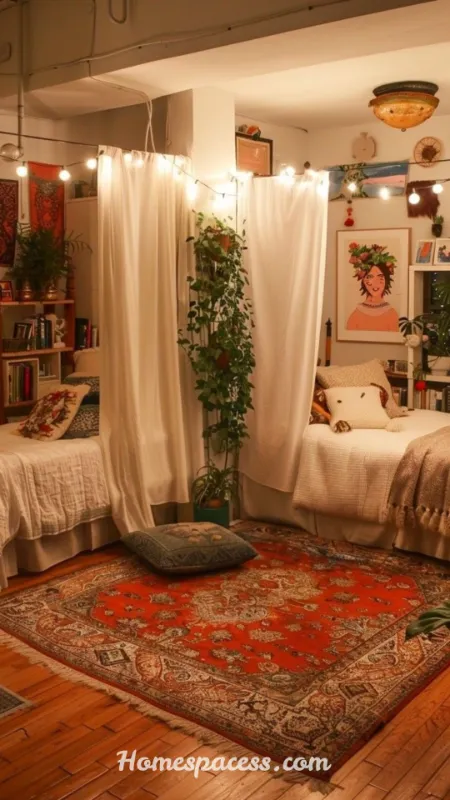
Many families face the reality of designing a boys bedroom in a space smaller than they’d like a box room, a narrow layout, or a shared room. The dual-purpose small room approach is specifically engineered for this challenge, treating every square foot as a multi-functional investment. When done well, a small room can actually feel more purposeful and curated than a larger room filled loosely with furniture.
The fundamental principle: vertical space is your most underused resource. Floor-to-ceiling storage, wall-mounted desks that fold away, loft beds with integrated workstations, and bunk beds with built-in shelving all add functional square footage without expanding the floor plan. Mirrored surfaces, light-coloured walls, and well-placed artificial lighting amplify the sense of space significantly. Pull-out trundle beds and Murphy-style fold-down beds are increasingly well-designed options for rooms that need to serve multiple purposes.
Real-life scenario:
A family converted a 7×9ft box room into a functional boys bedroom using a floor-to-ceiling wardrobe system, a loft bed with desk underneath, and a wall-mounted fold-down play table. The room holds everything an 8-year-old needs without feeling cramped because nothing is stored on the floor and every piece of furniture serves at least two purposes.
Style Note:
In small rooms, commit to ONE colour family throughout walls, furniture, and textiles. Visual coherence makes a space feel intentionally designed rather than compressed. A busy mix of colours in a small room makes it feel smaller; a unified palette opens it up.
💡 Pro Tip:
Measure your son’s actual usage patterns before buying furniture. If he genuinely never uses a full-size wardrobe, replace it with a narrow open rail and a shallow drawer unit you’ll recover 14 inches of floor space that makes a material difference in a small room.
Teen-Transition Boys Bedroom
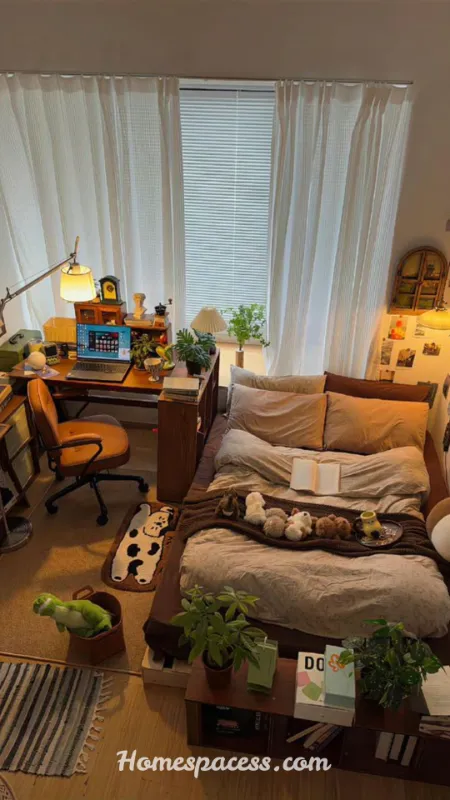
One of the most overlooked boys bedroom ideas is designing deliberately for growth creating a room that can evolve gracefully as your son moves from childhood through adolescence. Too many parents invest in a specific theme aged 7 and face a full redesign by 12. The teen-transition bedroom is engineered to age forward with targeted updates rather than complete overhauls.
The strategy: invest in high-quality, theme-neutral furniture (bed, wardrobe, desk) that will last through the teen years and beyond, then use removable, lower-investment elements wallpaper, cushions, prints, and accessories for the personality and theme. As his interests evolve, you update the removables rather than the structural elements. A bed bought at age 8 should still be appropriate at 17; a rocket mural painted at 8 should not be.
Real-life scenario:
A father planned his son’s room at age 6 using this exact approach. He bought a quality single-to-king extendable bed frame (now used as a full-size single), a modular shelving unit, and a solid-wood desk. Over the past decade, only prints, bedding, and a painted wall have changed total savings on furniture replacement over a conventional approach run into thousands.
Style Note:
Choose furniture in classic natural oak, matte white, or charcoal these translate across boyhood into teenage years without compromise. Avoid themed furniture (rocket-shaped beds, car-frame beds) no matter how much your son loves them now. The lifespan is 3–4 years maximum.
💡 Pro Tip:
Involve your son in the design process from age 9 or 10. Give him two or three aesthetic directions to choose between, then let him make meaningful decisions within a structured framework. He’ll take better care of a room he helped design, and his ownership makes the space genuinely his.
Conclusion
The best boys bedroom ideas share one quality: they’re designed around a specific boy, not a generic one. Whether you choose a space theme, a loft bed setup, or a minimalist sanctuary, the ideas in this guide give you the creative foundation, practical strategy, and design intelligence to create a room your son will genuinely love.
Start with what your son cares about most right now, invest in quality where it lasts, and build flexibility into everything else. A great boys bedroom isn’t finished in a weekend it evolves with him. That evolution, handled well, is part of its magic. Pick one idea from this guide that resonates most and take the first step today.
Advanced Insights: Beyond the Basics
These sections give you what most articles leave out trend analysis, sustainability, expert insights, and the mistakes that quietly ruin boys bedroom designs.
2026–2027 Boys Bedroom Trend Analysis
The boys bedroom design landscape is shifting in genuinely interesting ways in 2026–2027. The era of rigid, single-theme rooms is giving way to something more nuanced: layered, adaptive spaces that reflect complexity rather than a single interest. Understanding these trends helps you make design investments that stay relevant longer and feel more authentically modern.
Trending Now (2026–2027)
Biophilic Design
Real plants, natural materials, and organic forms integrated into bedroom design for proven cognitive and emotional benefits.
Adaptive Zoning
Rooms deliberately zoned by activity (sleep, study, play, create) using furniture arrangement, lighting, and colour rather than walls.
Dark Academia Palette
Deep forest greens, warm navies, and cognac leathers replacing the previously dominant “bright primary colours” for boys’ spaces.
Handcrafted Uniqueness
Custom murals, handmade furniture, and artisan accessories replacing off-the-shelf themed sets rooms that feel genuinely one-of-a-kind.
Sustainable Materials
FSC-certified wood, recycled cotton bedding, and low-VOC paint chosen for health and environmental reasons, not just aesthetics.
Minimalist Gaming Setup
Clean, organized gaming stations that look sophisticated rather than chaotic gaming culture growing up.
Declining Trends (Moving Out)
Rainbow-coloured “everything bright” approaches, single-franchise character bedrooms (full Marvel or gaming brand wallpaper), and overly cluttered maximalism are all trending downward. Parents and boys alike are gravitating toward rooms that feel more considered and individual. The Instagram aesthetic of perfectly curated, magazine-ready boys rooms is also losing ground to more authentic, personalised spaces.
Emerging Future Directions
The next wave in boys bedroom design is being shaped by two forces: technology integration and mental health awareness. Smart lighting systems (controllable by voice or schedule, not just remote), circadian rhythm-supporting light temperatures, and dedicated offline/screen-free zones within bedrooms are all emerging as design priorities.
Designers are also increasingly incorporating acoustic treatment into boys rooms sound-absorbing panels that improve concentration and sleep quality, particularly in multi-storey urban homes.
Trend Insight to Remember:
The most forward-thinking boys bedroom designs of 2026–2027 aren’t defined by a theme they’re defined by a function philosophy. “How does this room support how my son thinks, learns, rests, and creates?” is the question driving the best contemporary children’s interior design.
Expert Insights: What Interior Designers Actually Do Differently
When children’s interior designers approach a boys bedroom, their thinking differs fundamentally from how most parents approach the same challenge. Understanding these professional mental models can dramatically improve your outcomes even on a limited budget. The differences are more philosophical than technical.
Design for the Child You Have, Not the Pinterest Image
Professional designers start with an extended conversation with the child not the parents. What does he do when no one is watching? Where does he go when he needs to calm down? What does he care about this week that he didn’t care about last year? This intelligence shapes every design decision.
A boy who loves Lego needs fundamentally different storage and display than one who loves drawing or one who loves sport. Generic “boy bedroom” designs fail because they design for a demographic, not a person.
The 3-Light Rule for Boys Bedrooms
Designers never rely on a single overhead light. A boys bedroom needs at least three distinct light sources: ambient (the main room light, ideally dimmable), task (a desk lamp or reading lamp positioned specifically for the activity), and accent (LED strips, bedside lamp, or wall lights that create atmosphere).
Each has a different colour temperature warm for sleep, cooler white for work. This three-light rule is one of the highest-impact, lowest-cost upgrades available to any bedroom, and it’s the one most commonly skipped.
Invest in the Mattress and Bedding First
Interior designers consistently report that parents under-invest in sleep surfaces while over-investing in visual elements. A child who sleeps on a poor mattress is cognitively and emotionally compromised in measurable ways and no amount of clever theming or great storage compensates for poor sleep. The interior design industry’s rule of thumb: spend 30% of your bedroom budget on the mattress and bedding, then allocate the rest. Most families invert this ratio and regret it.
💡 Designer Secret:
The single most transformative change you can make to an existing boys bedroom without buying anything is clearing the floor completely. Floor space is play space. A bedroom floor buried under toys, discarded clothes, and pulled-out drawers destroys a room’s function and atmosphere. If your son’s bedroom doesn’t work, the floor is usually where to start.
Sustainability, Long-Term Value & Strategic Design Thinking
The boys bedroom is one of the most frequently redesigned rooms in a family home and this comes at significant financial and environmental cost. A more strategic approach to the boys bedroom not only saves money across a child’s growing years but produces better design outcomes and substantially reduces the material waste associated with frequent redecoration. This is a perspective that the design industry is increasingly advocating for.
The “Buy Once, Buy Right” Principle
The boys bedroom furniture that families most frequently replace is theme-specific: rocket beds, racing car frames, character-branded wardrobes, and novelty desk sets. These items are typically made from lower-quality materials (to justify the licensing premium), age out of relevance quickly, and have limited resale value.
The economically and ecologically superior approach is to invest in high-quality, design-neutral furniture from sustainable sources solid wood beds, modular storage, and durable desks that last 15+ years and can be repurposed or resold. The lifetime cost is dramatically lower.
Low-VOC Paint: Not Just an Environmental Choice
Children spend more time in their bedrooms than in any other room sleeping, playing, studying. The air quality in that room directly affects their health. Conventional paint releases volatile organic compounds (VOCs) for months after application. Low-VOC and zero-VOC paints (now widely available from major manufacturers) eliminate this exposure with no meaningful difference in finish quality or durability. For a room occupied by a growing child, this isn’t a luxury consideration t’s a straightforward health decision.
The Modular Investment Strategy
Design the bedroom as a system rather than a fixed installation. Modular shelving units that can be reconfigured, beds that extend, and desks that adjust in height all extend the functional life of furniture investments. Some European modular systems are specifically designed to grow from age 3 through 18, with conversion kits sold separately. The upfront cost is higher, but the total cost of ownership over 15 years is a fraction of the conventional “replace every 4–5 years” cycle.
Long-Term Value Calculation:
A family that spends a moderate amount on quality modular furniture at age 5 and uses it through age 18 will spend far less than a family who replaces themed furniture sets at ages 5, 8, 11, and 14. The thematic investment approach typically costs more in total while delivering lower quality and greater environmental impact.
Future Innovations in Boys Bedroom Design (2026–2030)
The boys bedroom of 2030 will look and function significantly differently from today’s designs and understanding what’s coming helps you make smarter design decisions now. Several emerging technologies and design movements are converging to reshape children’s spaces in ways that go well beyond aesthetics. Here’s what interior designers, child psychologists, and technology companies are already developing.
Circadian Lighting Systems
Smart lighting that automatically adjusts colour temperature and intensity throughout the day mimicking natural daylight cycles is already available at consumer price points and will become standard in children’s bedrooms within five years. These systems improve sleep onset time, morning wake quality, and sustained attention during homework hours.
Early adopters are already reporting significant improvements in children’s sleep patterns and mood. When designing a boys bedroom today, installing smart switch infrastructure (even if you don’t immediately buy smart bulbs) future-proofs the room for this upgrade.
Acoustic-First Design
As urban density increases and home working becomes normalised, acoustic design is moving from a luxury (sound studios, home cinemas) to an everyday consideration in children’s spaces. Acoustic panels designed specifically for children in playful shapes, covered in fabric, functioning as art are an emerging product category.
By 2027, acoustic ceiling and wall treatment in boys bedrooms (particularly for gaming and study zones) is expected to be as standard as blackout curtains are today. The performance benefit reduced noise fatigue, improved concentration, better sleep is well-documented and significant.
Augmented Reality Integration
AR-enabled bedroom design is already in early deployment: apps that let parents and children virtually “try” colours, furniture arrangements, and themes in their actual room before committing to purchases. Within five years, this technology will extend to AR wall projections surfaces that can display interactive educational content, dynamic art, or gaming environments when activated, and revert to neutral walls when not in use.
The boys bedroom of 2030 may have one physical wall and three dynamic ones a design consideration that’s worth keeping in mind when choosing which walls to paint statement colours today.
Future-Proof Design Principle:
When making any design investment in a boys bedroom today, ask: “Will this still work if the room needs to accommodate technology that doesn’t exist yet?” Flexible infrastructure (accessible wall sockets, conduit-ready ceilings, modular furniture) ages far better than fixed installations designed around today’s technology.
Common Boys Bedroom Mistakes (And How to Avoid Them)
After reviewing hundreds of boys bedroom redesigns and talking with parents and designers, a consistent set of avoidable mistakes emerges. These aren’t rare errors they’re the mistakes most families make because the conventional wisdom around boys bedroom design is incomplete. Understanding them upfront saves significant time, money, and frustration.
✕ Designing for “boys in general” rather than your specific boy.
Blue walls and sports prints suit some boys perfectly and feel completely alienating to others. A boy who loves reading, science, or art is not well served by a football-themed bedroom. Always start from your son’s actual personality, not gender assumptions.
✕ Choosing themed furniture over quality furniture.
Rocket-shaped beds, racing car frames, and character wardrobes are almost always made from lower-quality materials at a higher price point. They age out of relevance within 3–4 years while quality plain furniture lasts 15+. The financial and environmental cost of this mistake is significant.
✕ Ignoring lighting.
A single overhead bulb on a dimmer is one of the most common boys bedroom setups and one of the most limiting. Without task lighting at the desk and ambient lighting near the bed, the room cannot support both focused work and restful wind-down. Two additional light sources and a basic smart dimmer fix this completely.
✕ Over-storing visible clutter.
Open shelving is fashionable but punishing in practice a shelf of organized books and a few displayed items looks great; a shelf of accumulated miscellany looks chaotic. Closed storage for 70–80% of possessions (with open display for only curated items) creates a room that’s easier to maintain and more pleasant to be in.
✕ Not involving the boy in the design.
A room designed entirely by parents for a child is a room the child has no ownership of. Studies in environmental psychology consistently show that children take better care of spaces they helped create. From age 6 or 7, meaningful involvement in design decisions improves room maintenance, pride, and wellbeing.
✕ Prioritising aesthetics over acoustics and air quality.
How the room sounds and how the air in it smells and feels directly affects sleep quality, concentration, and mood. VOC-emitting paints, synthetic carpets, and hard echo-prone surfaces all degrade the room’s function in ways no visual design compensates for. Always check material certifications and consider ventilation.
💡 The Correction Framework:
Before any redesign, answer three questions honestly: (1) What does my son actually do in this room? (2) What specific problem is this redesign solving? (3) What’s the quality hierarchy where is it worth spending more? This three-question framework prevents impulse-driven purchases and produces rooms that genuinely work.

Team Home Spacess shares simple, practical design ideas that work for real families. The team focuses on cozy décor, soft colors, and natural textures that make a space feel truly lived-in. From everyday decorating tips to creative home projects, Team Home Spacess is dedicated to helping readers create warm, comfortable, and inviting spaces with a fresh and personal touch.