


Plain platform beds can feel like something is missing: height, drama, that finished “designer” look magazines seem to capture so effortlessly. If your bedroom feels flat no matter how many throw pillows you add, the problem usually isn’t your furniture. It’s the missing vertical layer above it. That’s exactly what a canopy bed solves.

From soft, billowing drapes to sculptural iron frames, canopy bed ideas turn an ordinary sleeping space into a cocoon-like retreat that feels both luxurious and personal. This guide walks through proven canopy bed designs covering every budget, room size, and style preference, from bohemian and coastal to industrial and Scandinavian. Each idea includes practical styling notes and pro tips drawn from real bedroom makeovers, so you can choose a look that actually works in your space, not just in a photo.
Classic Four-Poster Wood Canopy Bed

A solid wood four-poster frame is the most timeless version of a canopy bed, and it works because the structure does the heavy lifting. Oak, walnut, or mango wood posts add warmth and weight to a room, anchoring the space even without drapery. In a recent renovation of a 1920s farmhouse bedroom, designers kept the posts bare and simply added a linen runner across the top rail, proof that wood alone can carry the look.
This style suits bedrooms with at least 9-foot ceilings, since the posts typically rise 80 to 90 inches and need breathing room above. Pair the frame with a low, simple headboard so the wood columns stay the visual focus. Darker stains like espresso or walnut read more formal, while whitewashed or natural oak feels relaxed and farmhouse-inspired, so choose based on your existing furniture’s undertones.
Because solid wood is heavy and largely fixed in style, this is a long-term investment rather than a seasonal refresh. Many homeowners keep the same four-poster frame for 15 to 20 years, simply changing bedding and drapery to update the look. That makes it one of the few canopy bed frame options where the upfront cost actually pays off over time.
STYLE NOTE:
Pair raw or lightly stained wood posts with woven jute rugs and linen bedding to keep the look grounded and texture-rich rather than heavy.
PRO TIP:
Measure your ceiling height before buying. A four-poster frame needs at least 12 inches of clearance above the post tops, or the room will feel cramped instead of grand.
See Related Articles: Western Bedroom Ideas: 12 Stunning Ways to Create a Rustic Retreat
Sheer Draped Canopy for a Romantic Bedroom
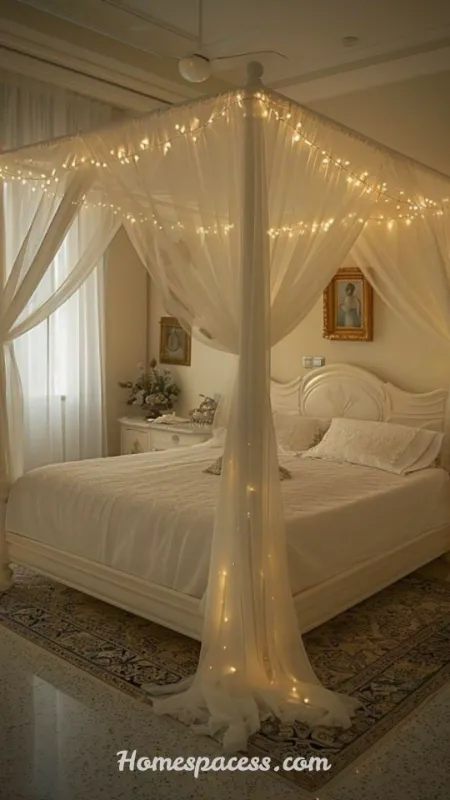
Nothing softens a bedroom faster than sheer fabric drifting from a canopy bed frame. Lightweight voile or chiffon panels diffuse light, blur hard corners, and add gentle movement whenever a window is cracked open. This is the look most people picture when they hear “romantic bedroom,” and it’s achievable with as little as two fabric panels and a basic frame.
For best results, use fabric that’s at least double the height of your bed frame so it pools slightly on the floor rather than hanging stiff and short. White, ivory, and blush sheers are the most popular choices because they reflect light rather than absorbing it, keeping the room from feeling dim. One small-space apartment renovation found that adding sheer canopy bed curtains alone, without changing any other furniture, made the room feel noticeably larger simply because the eye was drawn upward instead of across cluttered surfaces.
Sheer drapery does require more maintenance than solid fabric, since it shows dust and wrinkles more visibly. Plan to wash or steam panels every 4 to 6 weeks if you live in a dusty climate or have pets in the home.
STYLE NOTE:
Layer two sheer panels in slightly different shades, like ivory and soft champagne, to add depth without losing the airy, weightless effect.
PRO TIP:
Use curtain rings instead of a fixed rod sleeve so you can easily push the drapes back during the day for natural light and airflow.
You May Also Like: Bedroom Bookshelf Ideas | Smart, Stylish & Space-Saving Ideas to Transform Your Bedroom
Modern Minimalist Metal Canopy Bed
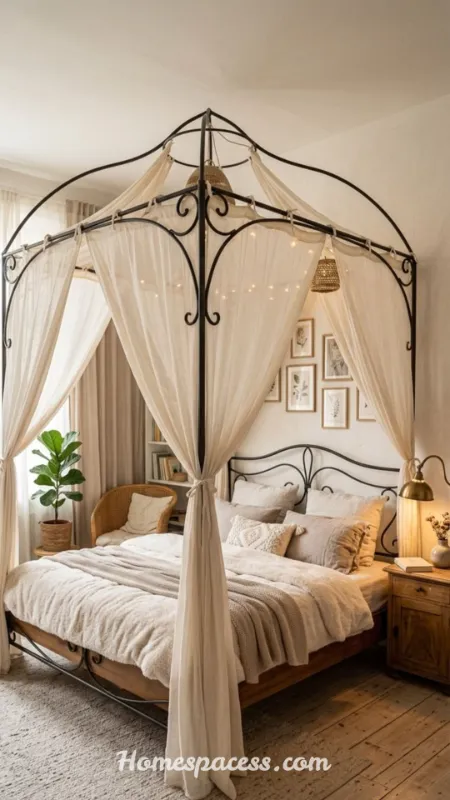
A black or matte bronze metal canopy bed strips the style down to clean geometric lines, making it a favorite in modern and contemporary bedrooms. Unlike bulky wood posts, slim metal rails read as architectural rather than decorative, which is why this option works well in smaller rooms where a heavier frame would feel overwhelming.
Because the frame itself is the statement, minimalist styling works best here. Skip the heavy drapery and instead use the open canopy structure as a visual frame around the bed. Matte black finishes pair naturally with concrete, walnut, and brass accents, while brushed gold or brass canopy frames lean more glam and work well in jewel-toned rooms.
Metal frames are also more affordable to ship and assemble than solid wood, often arriving flat-packed with simple bolt assembly. That makes this one of the more accessible canopy bed designs for renters or first-time buyers who want the look without the investment of custom wood furniture.
STYLE NOTE:
Keep bedding minimal, just one or two solid-color layers, so the geometric frame stays the visual centerpiece instead of competing with patterned textiles.
PRO TIP:
Check the weight rating before adding string lights or hanging decor to the frame; thin metal rails can bend under more than 3 to 4 pounds of added weight.
Recommended for You: Stunning Cowgirl Bedroom Ideas to Create Your Perfect Western Retreat
Bohemian Macramé Canopy Bed
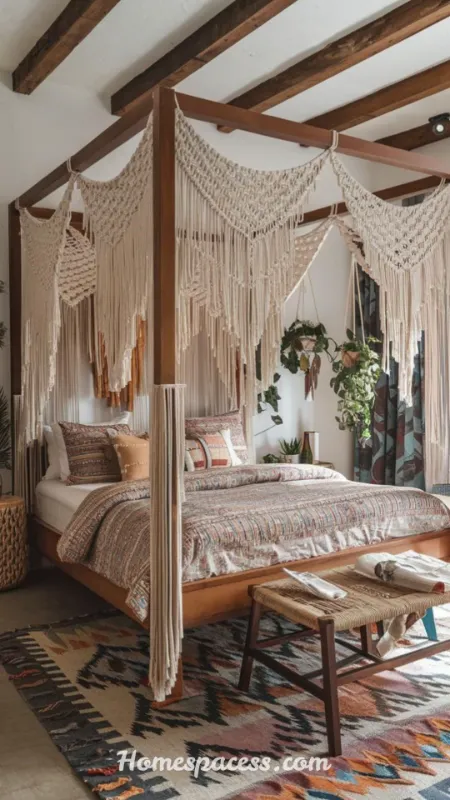
For a bedroom with warmth and texture, a hand-knotted macramé canopy hung above the bed creates a soft, woven focal point without needing a full frame. This bohemian canopy bed style pairs naturally with rattan furniture, layered textiles, and warm wood tones, making it popular in eclectic and earthy bedroom designs.
Most macramé canopies hang from a single ceiling hook rather than a frame, which keeps the installation simple and renter-friendly. A 2-foot diameter circular macramé canopy is the most common size for a queen bed, draping fabric or fringe down each side without overwhelming the room.
This style works especially well in rooms that already lean neutral or beige, since the natural cotton or jute cording adds visual interest without introducing new color. It’s a low-cost way to add a handcrafted, artisanal feel to an otherwise simple canopy bed setup.
STYLE NOTE:
Combine the macramé canopy with woven wall hangings or a rattan headboard to build a cohesive boho theme rather than an isolated accent.
PRO TIP:
Use a ceiling anchor rated for at least 20 pounds, even though macramé itself is lightweight. Added fabric drape and any clipped-on lights increase the total load.
More on This Topic: Neutral Bedroom Ideas to Create a Calm, Stylish, and Timeless Space
Black Iron Canopy Bed for Dramatic Contrast
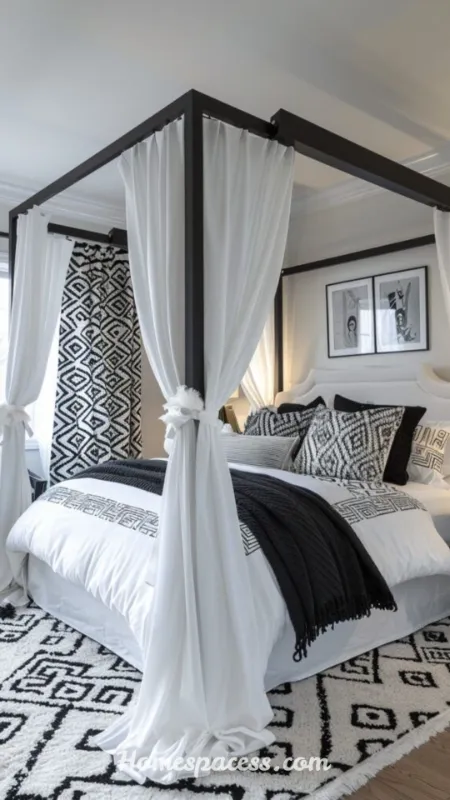
A black wrought-iron frame brings gothic-romantic drama to a bedroom, especially when paired with light walls and bedding for contrast. This canopy bed design tends to suit bedrooms with bold, moody color palettes, such as deep greens, burgundies, or charcoal, where the frame becomes part of the room’s overall statement rather than a separate accessory.
Iron frames are typically more ornate than minimalist metal designs, often featuring scrollwork or finials at the post tops. Because of this detail, they pair best with simpler bedding and fewer competing patterns. Let the frame’s silhouette do the visual work instead of layering it under heavy textiles.
One overlooked advantage of iron over wood: it doesn’t warp, crack, or expand with humidity changes, which makes it a more stable long-term choice in coastal or humid climates where wood furniture can shift over time.
STYLE NOTE:
Pair black iron with brass or gold hardware elsewhere in the room, such as lamps, mirror frames, and drawer pulls, to tie the metal tones together intentionally.
PRO TIP:
If the frame has decorative finials, measure your doorway width before purchase; many ornate iron canopy frames don’t disassemble as easily as flat-pack metal or wood versions.
See Also Post: Bedroom Lamp Ideas That Transform Your Space in 2026
Industrial Pipe Canopy Bed Frame
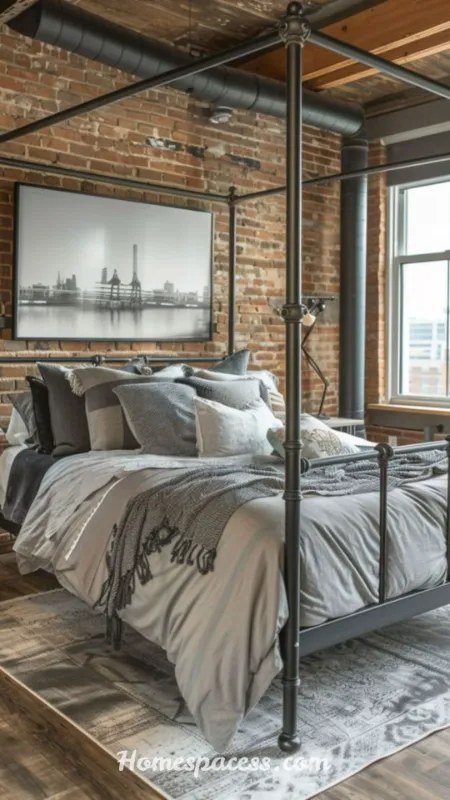
Built from black plumbing pipe and flange fittings, a DIY industrial pipe frame is one of the most budget-conscious ways to get a custom canopy bed frame without buying furniture at all. Many home improvement stores sell pre-cut pipe and fittings, meaning a basic frame can be assembled in an afternoon for a fraction of retail prices.
This style naturally suits loft apartments, exposed-brick bedrooms, and modern industrial interiors, where raw materials are already part of the design language. Because the pipe is matte black and unfinished-looking by design, scuffs and small imperfections actually add to the aesthetic rather than detracting from it.
The trade-off is weight distribution: pipe frames need to be securely flange-mounted to the floor or wall studs, not just resting against the mattress frame, or the structure can wobble over time with regular use.
STYLE NOTE:
Mix the black pipe frame with leather, denim, or canvas textiles for an authentic industrial palette rather than soft, romantic fabrics that clash with the raw materials.
PRO TIP:
Use threaded pipe and flanges rather than press-fit connectors. Threaded joints hold tension far better over months of daily use and won’t loosen as quickly.
Must Read This Post: Sitting Room Ideas: Stylish Ways to Design a Cozy, Functional Sitting Room
DIY PVC or Curtain Rod Canopy Bed (Budget-Friendly)
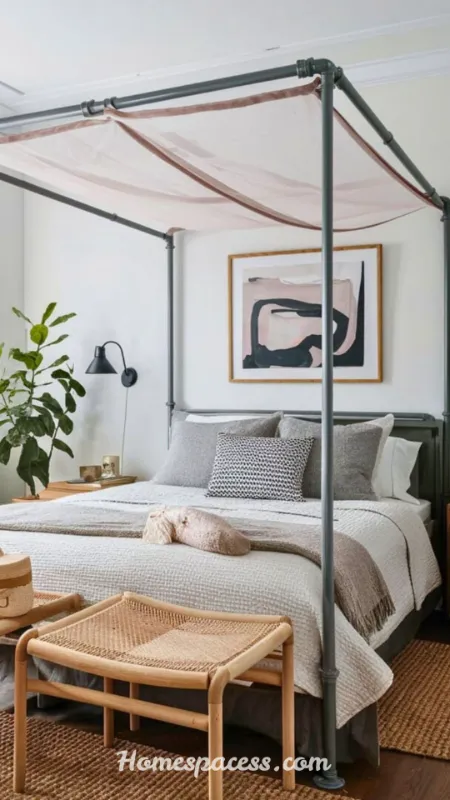
For renters or anyone testing the look before committing, a DIY frame built from PVC pipe or tension curtain rods is one of the lowest-cost ways to try canopy bed ideas without permanent installation. A basic four-post PVC frame, painted and wrapped in fabric, can be built for under the price of a single throw pillow set at most home retailers.
Tension rods mounted to the ceiling corners, with no drilling required, are an even simpler option for apartments where wall and ceiling modifications aren’t allowed. This approach has become especially popular among first-apartment renters who want a designer look without violating lease terms.
The visible trade-off is durability: PVC and tension-rod setups generally aren’t built for more than 2 to 3 years of regular use before fabric sagging or rod slippage becomes noticeable, so treat this as a starter version rather than a forever solution.
STYLE NOTE:
Paint PVC pipe in a matte black or brass-toned spray paint and wrap it in ribbon or fabric tape; bare white PVC instantly reads as unfinished.
PRO TIP:
Use adhesive-backed ceiling hooks rated for at least 10 pounds rather than nails, especially in rental units where wall damage isn’t an option.
Don’t Miss This Article: Coffee Table Decor Ideas That Instantly Upgrade Your Living Room Style in 2026
Kids’ Canopy Bed With Fairy Lights and Soft Drapes
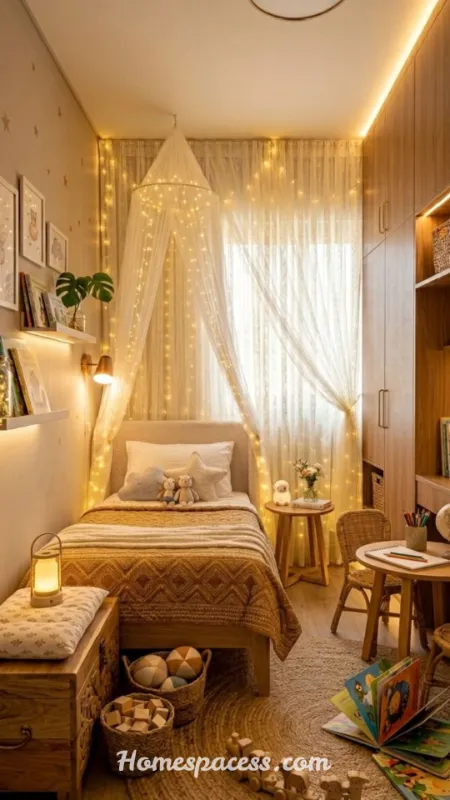
A canopy bed for kids turns an ordinary bedroom into a tent-like hideaway, which is consistently one of the most requested upgrades for children’s rooms. Soft cotton or tulle drapes paired with warm string lights create a cozy reading-nook effect that kids tend to use well beyond bedtime.
Safety matters more here than in adult bedrooms: always choose LED string lights rather than incandescent ones, since they run cooler and reduce fire risk around fabric. Battery-operated or USB-powered lights are safer than ones requiring a nearby outlet with a trailing cord a child could pull.
Because children’s taste and room needs change quickly, this is one of the few canopy styles worth keeping intentionally inexpensive and easy to swap. A simple ceiling-mounted hoop with detachable fabric lets parents update colors or themes every year or two without replacing the entire setup.
STYLE NOTE:
Stick to one or two soft colors, like pale pink, sage, or sky blue, rather than busy patterns, so the canopy stays soothing rather than visually overstimulating at bedtime.
PRO TIP:
Mount the canopy hoop to a ceiling joist, not just drywall, since kids tend to grab and tug on hanging fabric during play.
Coastal White Canopy Bed With Linen Curtains
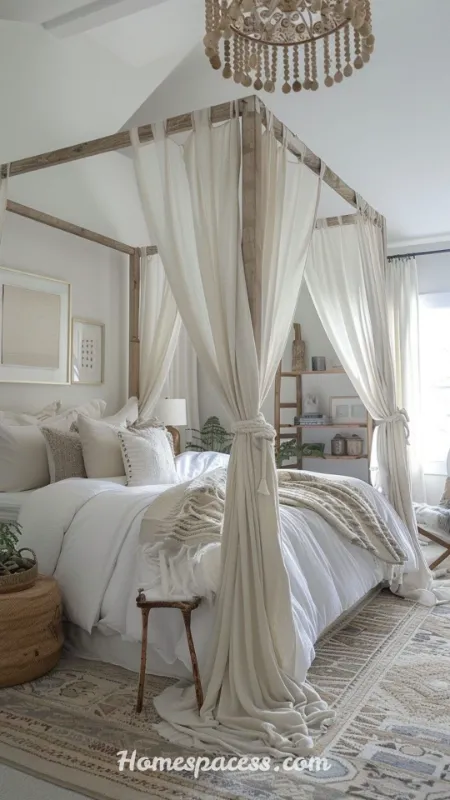
A white-painted wood or rattan frame paired with natural linen curtains brings a relaxed, beachy feel that works particularly well in bright, sunlit bedrooms. This canopy bed style leans on texture rather than color, using nubby linen weave and light wood grain to create visual interest in an otherwise neutral palette.
Linen is a practical choice for coastal climates because it breathes well in humidity and doesn’t trap heat the way heavier velvet or cotton sateen can. It also wrinkles naturally, which actually works in this style’s favor; the slightly relaxed, lived-in look is part of the coastal aesthetic rather than a flaw to fix.
This combination pairs naturally with rattan furniture, woven baskets, and light oak flooring, making it one of the easier styles to build a full room around without needing to source unusual or expensive accent pieces.
STYLE NOTE:
Choose curtains with a subtle slub texture rather than perfectly smooth fabric. The imperfection is what gives linen its coastal, relaxed character.
PRO TIP:
Wash linen curtains before hanging them; pre-washed linen drapes more naturally and avoids the stiff, boxy look fresh-off-the-bolt fabric tends to have.
Canopy Bed Without a Frame (Ceiling-Mounted Canopy)
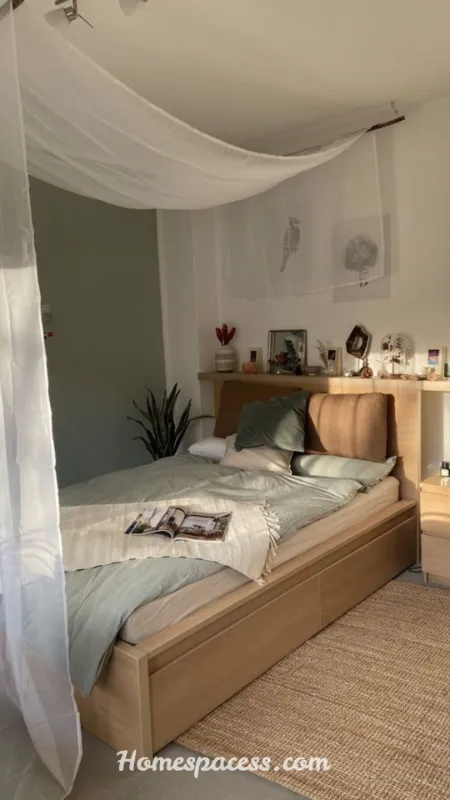
Not every canopy bed needs a frame at all. A single ceiling-mounted canopy, sometimes called a bed crown, hangs fabric directly above the headboard area using one or two anchor points, skipping the four-post structure entirely. This is one of the most overlooked options for small bedrooms where a full frame would eat up too much floor space.
Bed crowns work especially well over existing beds that already have a headboard you like, letting you add the canopy effect without replacing furniture you’ve already invested in. They’re also significantly easier to install in apartments, since most only need one or two ceiling anchors rather than four floor-to-ceiling posts.
The visual effect is more subtle than a full four-poster canopy, draping fabric down the sides of the headboard rather than fully enclosing the bed, which some homeowners actually prefer since it adds softness without making the room feel smaller.
STYLE NOTE:
Position the crown canopy slightly higher than expected, roughly 18 to 24 inches above the headboard, so the fabric drapes in soft curves rather than bunching at the top.
PRO TIP:
Use a half-moon or D-shaped mounting bracket rather than a full circular hoop; it sits flatter against the ceiling and is easier to hide behind the draped fabric.
Velvet and Jewel-Tone Canopy Bed for Luxury Bedrooms
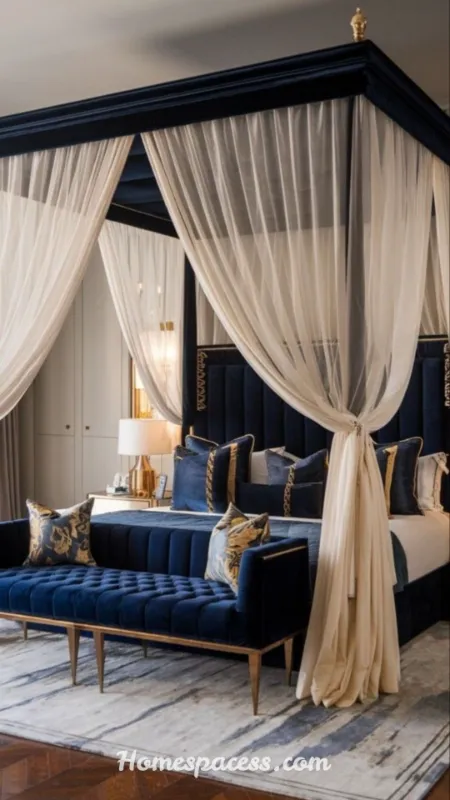
Heavy velvet drapery in emerald, sapphire, or deep burgundy transforms a canopy bed into a hotel-suite-style focal point. Unlike sheer fabric, velvet absorbs rather than reflects light, which gives the room a richer, more enclosed feeling, ideal for bedrooms used primarily at night or in colder climates where extra fabric also adds warmth.
Because velvet is a heavier fabric, it requires a sturdier frame and stronger mounting hardware than sheer or linen versions. Wood or solid iron frames handle the added weight better than slim metal rails, which can bow under a fully drawn velvet curtain over time.
This style pairs naturally with brass hardware, marble side tables, and warm ambient lighting rather than bright overhead fixtures, since velvet’s depth shows best in softer, layered light rather than harsh daylight.
STYLE NOTE:
Choose a single saturated jewel tone rather than mixing multiple bold colors. One rich color reads as luxurious, while several competing tones can feel busy.
PRO TIP:
Look for velvet with a cotton or polyester blend backing rather than 100% rayon velvet, which crushes and shows watermarks far more easily during cleaning.
Scandinavian Light Wood Canopy Bed With Sheer Panels
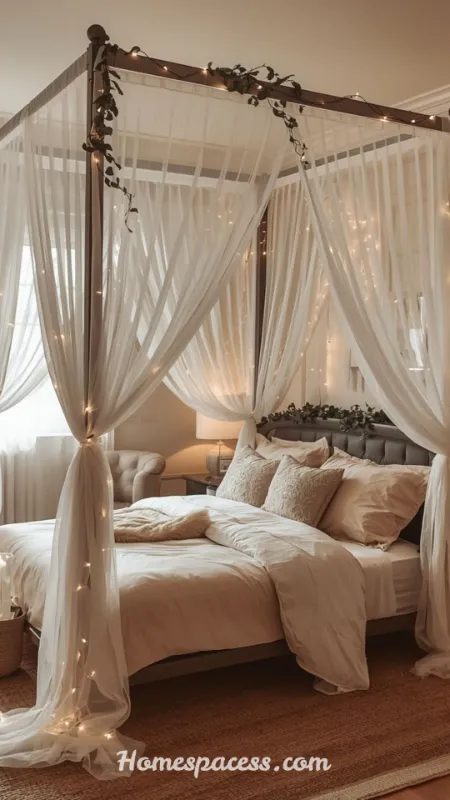
Pairing a pale ash or birch wood frame with simple white sheer panels creates the calm, uncluttered look associated with Scandinavian interior design. This canopy bed design relies on light, natural materials rather than ornamentation, keeping sightlines clean and the room feeling airy even with the added height of a frame.
Scandinavian styling typically favors function alongside form, so this is a practical choice for bedrooms that double as a reading or work nook. The sheer panels can be tied back during the day and lowered at night, adapting to different uses without extra furniture.
Because the palette stays so neutral, this style ages well and rarely feels dated, making it a smart pick for anyone who doesn’t want to redecorate around trend cycles every few years.
STYLE NOTE:
Keep hardware and frame finishes matte rather than glossy. Scandinavian design favors understated texture over shine.
PRO TIP:
Add one small natural texture, like a woven wool throw, to prevent the all-white-and-light-wood palette from feeling sterile.
Final Thoughts
Choosing the right canopy bed really comes down to matching the frame, fabric, and styling to how you actually use your bedroom, whether that’s a romantic sheer-draped retreat, a budget-friendly DIY frame, or a sturdy wood four-poster built to last decades.
The best canopy bed ideas aren’t about copying a photo exactly; they’re about adapting one of these proven styles to your room’s size, climate, and lifestyle. Start small if you’re unsure: a single ceiling-mounted canopy or affordable curtain-rod frame lets you test the look before investing in a full frame. Your bedroom’s most dramatic upgrade might be simpler than you think.
ADVANCED SECTION:
Trend Analysis: Canopy Bed Trends in 2026 and Beyond
Retail and design data through 2026 show a clear shift away from heavy, fully-enclosed canopy styles toward what designers are calling “open-frame” canopy beds: visible structure with minimal or no drapery. This mirrors a broader trend toward architectural furniture that adds visual height without making rooms feel smaller, especially as average bedroom sizes in new construction continue to shrink.
Brass and warm bronze finishes have also overtaken matte black as the fastest-growing canopy bed frame finish, reflecting a wider move away from the all-black, all-white palettes that dominated the early 2020s. Expect more mixed-metal frames, such as brass posts with black hardware accents, as the “one finish per room” rule continues to relax.
On the fabric side, sheer and gauze panels are pulling ahead of heavier velvet and blackout drapery for canopy use specifically, even as velvet remains popular elsewhere in bedroom decor. The reason is practical as much as aesthetic: sheer fabric requires less frequent cleaning and doesn’t trap heat, which matters more as buyers prioritize low-maintenance materials.
Expert Tips and Practical Insights for Styling a Canopy Bed
One detail most articles skip: canopy height should scale with ceiling height, not just bed size. As a working rule, leave at least 12 to 18 inches of clearance between the top of the frame and the ceiling. Anything tighter makes even a beautifully styled canopy bed feel cramped rather than grand, regardless of how nice the fabric is.
Lighting placement matters more than most buyers expect. A canopy frame can actually block overhead light if positioned directly under a central ceiling fixture, leaving the bed itself dim. Designers commonly solve this with two adjustable wall sconces flanking the headboard instead of relying on the room’s main overhead light.
For drapery, the most common mistake is buying fabric panels that are too short. As a working formula, multiply your frame height by 1.5 if you want the fabric to pool slightly at the floor, which reads as far more intentional than fabric that stops a few inches short.
Sustainability and Long-Term Value of Canopy Beds
Solid wood and iron canopy bed frames consistently outperform pressed-wood or particleboard alternatives in long-term value, both financially and environmentally. A well-made wood frame can last 15 to 20 years and often gets resold or passed down, while particleboard versions typically need replacement within 5 to 7 years as joints loosen and laminate begins to peel.
From a sustainability standpoint, look for frames labeled FSC-certified (Forest Stewardship Council), which indicates the wood was sourced from responsibly managed forests rather than unregulated logging. This certification has become more visible on furniture retailer listings in recent years, making it easier to compare options at the point of purchase.
Fabric choice also affects long-term sustainability: natural fibers like linen and organic cotton biodegrade and can be repurposed or donated, while synthetic sheers and polyester velvet typically end up in landfills once worn out. Choosing natural fiber drapery, even at a slightly higher upfront cost, tends to reduce long-term replacement waste.
Future Predictions: Where Canopy Bed Design Is Headed
Smart-home integration is starting to reach canopy bed design, with a small but growing number of manufacturers building LED channels directly into the frame’s top rail rather than relying on clipped-on string lights. Expect app-controlled, dimmable ambient lighting built into the canopy structure itself to become a more mainstream offering over the next few product cycles.
Modular canopy systems, frames that let you swap fabric panels, lighting, and even post height without replacing the entire structure, are also gaining traction, particularly among renters and younger buyers who move more frequently than previous generations. This shift toward adaptable, reconfigurable furniture is likely to expand beyond canopy beds into bedroom furniture more broadly.
Expect continued growth in space-saving canopy options, like the ceiling-mounted bed crown style, as average home and apartment sizes in many markets continue to shrink. Manufacturers are already responding with slimmer, lower-profile mounting hardware designed specifically for smaller rooms and rental properties.
Common Mistakes and Overlooked Factors
The single most common mistake is buying a canopy frame before measuring ceiling height and door width. Many ornate or oversized frames simply won’t fit through standard doorways assembled, and improperly measured frames can leave too little clearance once installed, making a beautiful design feel oppressive rather than elegant.
A second overlooked factor is mattress access. Tall four-poster frames with low side rails can make it harder to change sheets or access under-bed storage, something showroom displays rarely demonstrate. Test this in-store if possible, or check return policies carefully before buying online.
Finally, many buyers underestimate ongoing maintenance: drapery collects dust at a noticeably higher rate than standard window curtains, simply due to proximity to bedding and regular airflow disruption. Budget for washing or steaming fabric panels every 4 to 6 weeks to keep the canopy bed looking intentional rather than dated.

Team Home Spacess shares simple, practical design ideas that work for real families. The team focuses on cozy décor, soft colors, and natural textures that make a space feel truly lived-in. From everyday decorating tips to creative home projects, Team Home Spacess is dedicated to helping readers create warm, comfortable, and inviting spaces with a fresh and personal touch.