

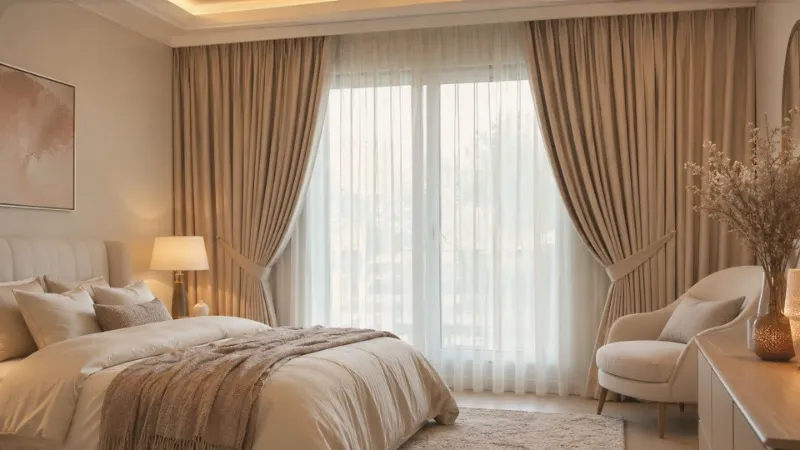
our bedroom curtains do far more heavy lifting than most homeowners realise. They block early-morning light that disrupts sleep cycles, insulate against winter cold and summer heat, dampen street noise, and perhaps most importantly define the visual personality of your most private space. Yet many people choose curtains as an afterthought, picking whatever matches the duvet cover.
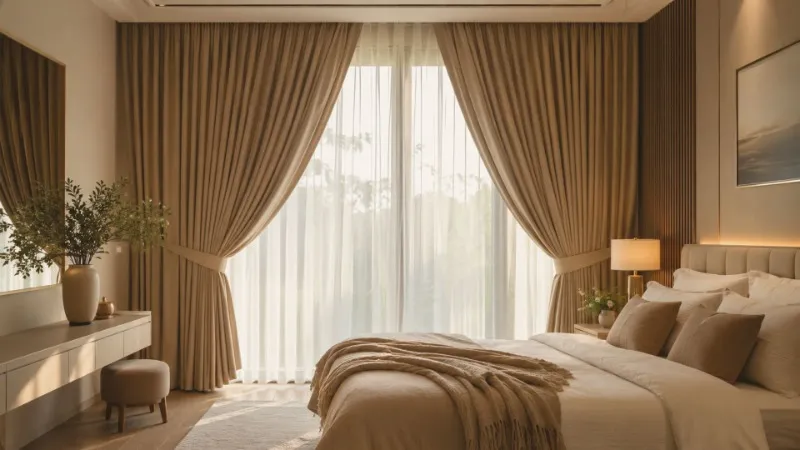
This guide cuts through the noise. Instead of vague advice like “choose neutral tones,” you’ll find eight specific bedroom curtain ideas, each grounded in how real rooms work their proportions, their light conditions, and the way humans actually move and sleep in them. Whether you’re starting from scratch or updating a tired room, these ideas give you a clear path forward
Floor-to-Ceiling Curtains That Make Any Room Feel Taller
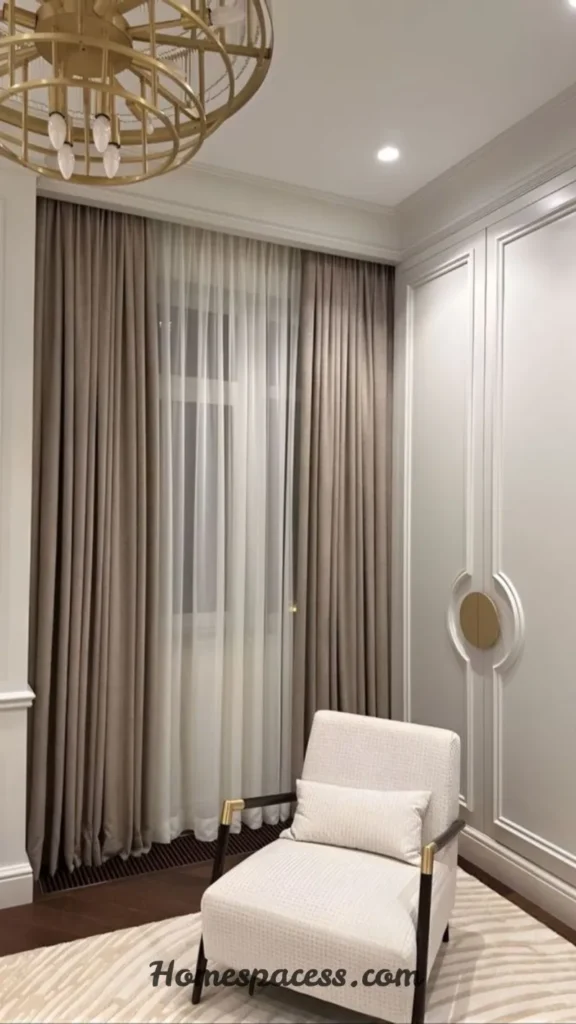
If there is one single bedroom curtain idea that interior designers rely on more than any other, it is this: hang your curtain rod as close to the ceiling as possible and let the fabric fall all the way to the floor. This simple technique tricks the eye into reading the wall as taller than it actually is a visual sleight of hand that works even in rooms with standard 8-foot ceilings.
The key mistake most people make is hanging the rod at window height. When curtains only cover the window itself, they frame the glass but do nothing for the room’s proportions. Instead, mount the rod 4–6 inches below the ceiling cornice, choose a panel length that skims or gently puddles on the floor, and watch how the bedroom’s scale shifts dramatically. A 10-foot drop of solid-colour fabric can make a small bedroom feel like a boutique hotel suite.
For bedroom applications specifically, heavier fabrics like cotton velvet or dense polyester blends work best because they hang with natural weight and don’t billow when a window is cracked open at night. If you’re using this approach in a smaller room, stick to curtains that are the same shade as or only slightly darker than the walls. This keeps the vertical illusion intact without visually narrowing the space.
Pro Measurement Tip
Hang rod 4–6 inches below ceiling. Panel length = ceiling height minus 0.5 inches for a clean float, or add 1–3 inches for a soft puddle. Width of panels = 2–2.5× window width for a full, gathered look.
Must Read: Bookshelf Decor Ideas to Add Personality and Charm to Any Space
Blackout Bedroom Curtains That Genuinely Improve Your Sleep
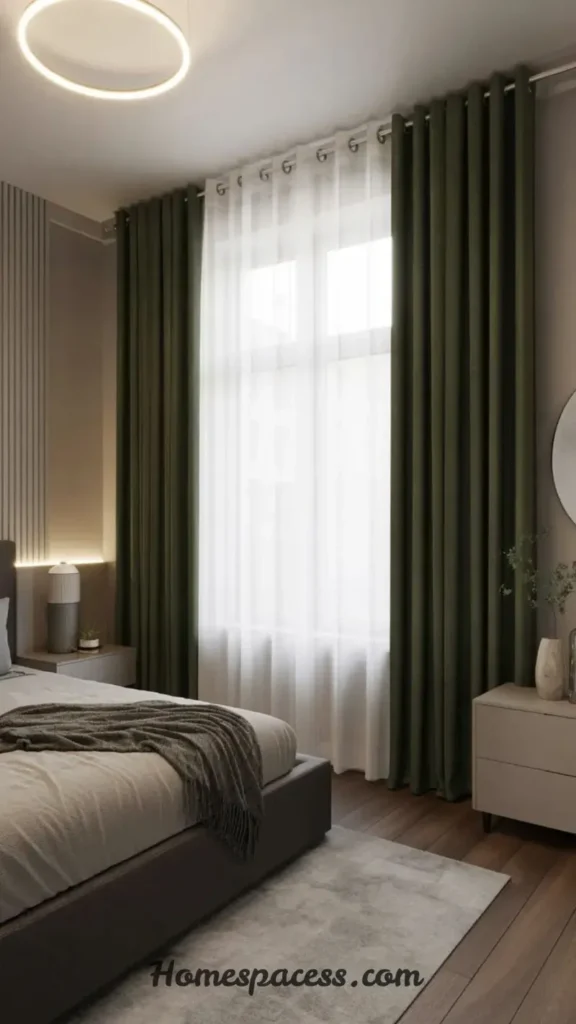
Blackout curtains are not just for shift workers or people who hate mornings. Research published in sleep science journals consistently shows that even low-level ambient light the kind that seeps through thin curtain fabric at 5 a.m. in summer suppresses melatonin production and reduces sleep quality for most people. A true blackout curtain eliminates this problem entirely, and the design options available today make it easy to get the look right at the same time.
The word “blackout” is genuinely misunderstood by many shoppers. A label alone doesn’t guarantee light-blocking performance; the test is holding the fabric up to a bright light source. Three-pass blackout linings where the blackout layer is woven directly between two fabric layers perform significantly better than single-pass linings. Look for this detail when shopping. Also critical: the curtain’s side returns. A beautiful blackout panel hung on a standard rod will still flood the room with light around the edges. Wrap-around rods that return to the wall, or simple L-shaped brackets, close these gaps.
From a style perspective, blackout curtains no longer mean clunky institutional drapes. Brands now offer blackout performance in clean linens, slubbed textures, and even sheer-look fabrics that achieve darkness only when fully closed. A popular bedroom curtain approach is a dual-track system a sheer on the front for daytime ambiance and a blackout panel behind for sleep. This gives you full control of the room’s mood across the entire day.
Sleep-Focused Insight: A bedroom with effective blackout curtains can reduce early waking by 30–40 minutes in summer months equivalent to one full REM sleep cycle. The design investment pays off in daily energy levels, not just aesthetics.
Read More: Front Garden Ideas for Every Style From Classic to Modern Homes
The Layered Curtain Look: Maximum Flexibility and Richness
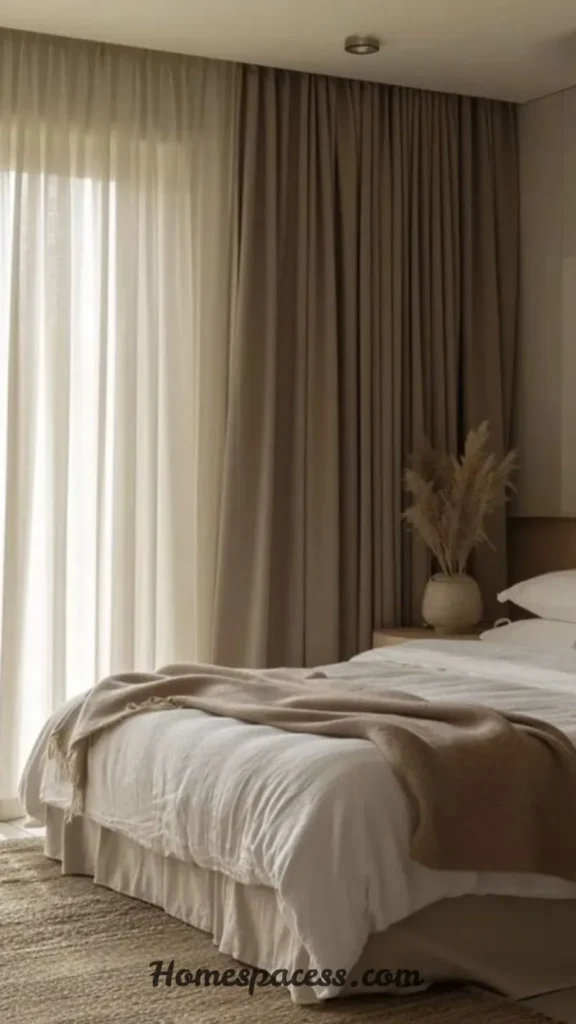
Layering curtains is the technique that separates rooms that look “designed” from rooms that merely look furnished. The principle is simple: pair a lightweight sheer or voile with a heavier, more opaque outer panel on a double track or double rod. During the day you draw back the outer panel to flood the room with diffused, gentle light through the sheer. At night you close both layers for privacy, warmth, and darkness. The result is a room that looks and functions differently across the day a dynamic quality that single-layer bedrooms simply cannot achieve.
The most successful layered bedroom curtain ideas mix fabric weight, texture, and even subtle colour contrast. For example: ivory linen sheers paired with deep slate-blue velvet panels create a rich, layered effect that feels both cozy and sophisticated. The sheer softens the colour of the outer panel seen from the street during the day, while the velvet adds thermal mass that genuinely keeps the room warmer on cold nights. Another effective pairing is a white cotton voile with natural jute-blend panels a choice that works especially well in bedrooms with a warm, organic aesthetic.
One practical tip that competitors rarely mention: when layering, install the sheer track 2–3 inches in front of the window frame and the outer panel track another 3–4 inches beyond that. This staggering of depths creates actual visual depth shadow lines that make the window treatment look architectural rather than flat. It also means the outer panels can be drawn back fully without bunching against the sheer, giving the window a clean look even when both layers are open.
Sheer Layer Options
White voile, ivory linen gauze, soft-weave cotton muslin, semi-transparent silk organza
Outer Layer Options
Velvet, thick cotton drill, linen-blend, blackout-lined jacquard, textured wool
Best Rod Setup
Double traverse rod or two separate single rods at staggered depths 3–4 inches apart
Also Read: Birthday Party Ideas for a Personal and Creative Touch
Relaxed Linen Curtains for a Calm, Breathable Bedroom Feel
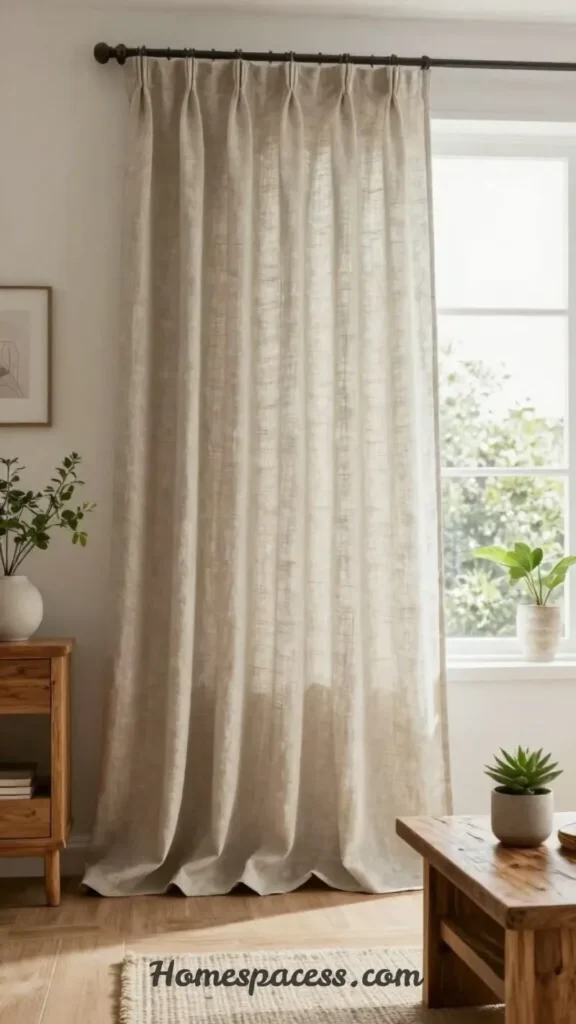
Linen has had a remarkable resurgence in interior design over the past three years, and with good reason. As a bedroom curtain fabric, it occupies a unique position: it filters light beautifully casting the room in a warm, golden-hour glow even on overcast mornings while also being one of the most breathable and temperature-regulating fabrics available. In warmer climates or south-facing bedrooms, linen’s natural thermal properties make it a genuinely practical choice, not just a stylistic one.
The defining quality of linen curtains is their intentional imperfection. The slight variations in weave density, the natural slubbing, and the way the fabric relaxes with use give a linen bedroom curtain an organic quality that polyester blends can never replicate. Designers often recommend pre-washed linen sometimes called “stonewashed” or “enzyme-washed” linen because it has already relaxed into its gentle drape without the initial stiffness. This is particularly important in bedrooms because linen curtains that are too structured can feel at odds with the room’s intended softness.
Colour matters enormously with linen. The fabric’s natural texture means it reads differently in different lights: a pale oat linen looks almost white in direct sun but reveals warm beige and caramel tones in evening light. This mutability is part of the appeal. For bedroom curtain colour schemes, the most versatile linen shades are undyed natural (warm beige), stone grey, dusty sage, and rust-tinged terracotta all of which work across a wide range of furniture tones without ever feeling forced.
Don’t Miss: Creative Twin Bedroom Ideas with Modern Decor and Storage
Rich Velvet Curtains That Add Drama and Acoustic Comfort
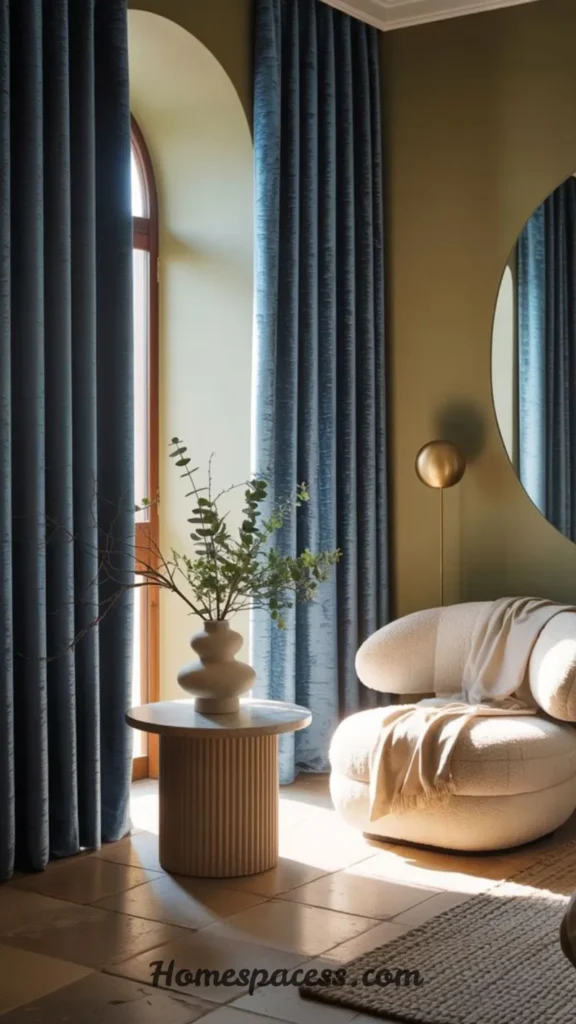
Velvet curtains occupy a position of genuine design authority in the bedroom. Few other fabric choices can simultaneously deliver light control, thermal insulation, acoustic absorption, and a sense of luxurious depth. The pile of velvet fabric absorbs sound waves rather than reflecting them a genuinely practical benefit in urban bedrooms where street noise is an issue, and one that most home décor articles completely overlook when discussing bedroom curtain ideas.
The key to using velvet curtains successfully in a bedroom is understanding how the fabric interacts with light. Velvet has a directional pile meaning the colour shifts as you move around the room, from rich jewel tones to almost-black depending on the viewing angle and light source. This light-responsive quality makes velvet curtains feel different at different times of day. A deep forest green velvet looks lush and saturated in afternoon sun but takes on a moody, almost-black quality in the evening, changing the bedroom’s atmosphere without any effort on your part.
One underused styling approach: velvet in an unexpected neutral. While jewel tones (emerald, sapphire, plum) get most of the attention, velvet in warm grey, deep camel, or aged ivory has a quietly luxurious quality that works in more bedroom colour schemes. These are easier to live with long-term and tend to feel more sophisticated than the often-instagrammed bold jewel tone. For care, note that velvet curtains require steaming rather than ironing, and should be vacuumed with a soft brush attachment monthly to maintain their pile quality.
Acoustic Bonus: A full drop of velvet curtains on a street-facing wall can reduce mid-frequency traffic noise by 3–5 decibels roughly equivalent to the difference between a quiet library and normal conversation levels. In urban bedrooms, this alone justifies the fabric choice.
Sheer Curtains That Give Privacy Without Sacrificing Natural Light
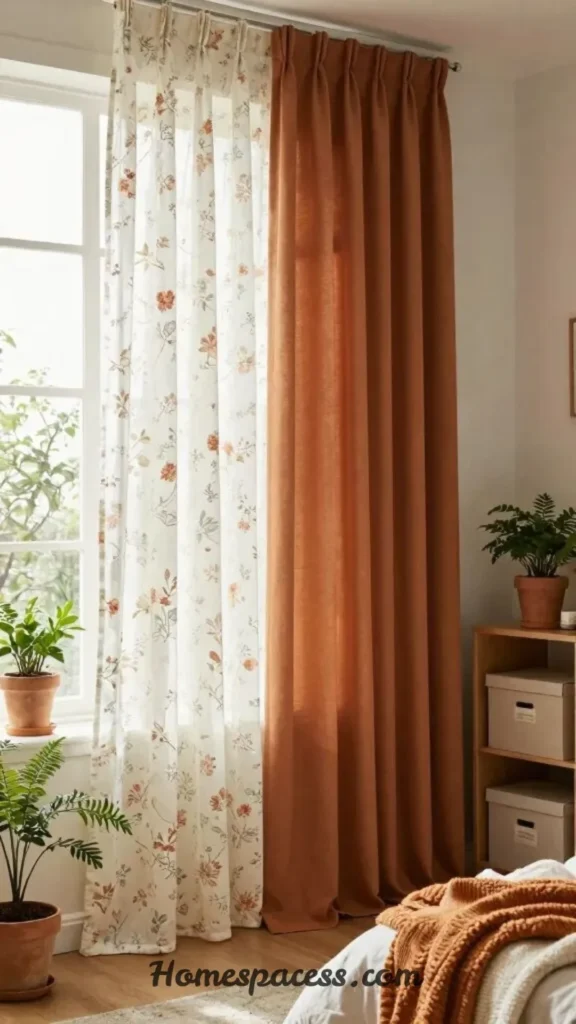
The persistent belief that bedroom curtains must choose between privacy and natural light is simply wrong. Modern sheer weaves particularly high-density voiles and privacy sheers developed for contract interiors can provide excellent daytime privacy while transmitting 40–60% of available natural light. The science is simple: from outside during the day, the relative brightness makes it impossible to see detail through a well-chosen sheer even without lining. From inside, the room feels open, bright, and connected to the garden or street view in a way that opaque curtains can never achieve.
Bedroom sheer curtains work best when treated as a design element in their own right rather than a background fabric. Extra-wide sheers hung in a single continuous panel across an entire wall rather than two panels that split in the middle give the room a serene, enveloping quality. This “wall of light” approach is particularly effective in bedrooms with multiple adjacent windows or wide window bays, where the continuous horizontal line of fabric unifies the wall into a single architectural gesture.
From a practical standpoint, sheer bedroom curtains are significantly easier to maintain than heavy lined drapes. Most cotton and polyester voiles are machine washable and dry quickly an important consideration in a room where daily use and proximity to sleeping occupants means more frequent laundering than other areas of the home. Look for panel widths of at least 150% of the track width to ensure the sheer looks full and gathered rather than stretched and flat.
Bold Patterned Curtains Used as the Room’s Focal Point
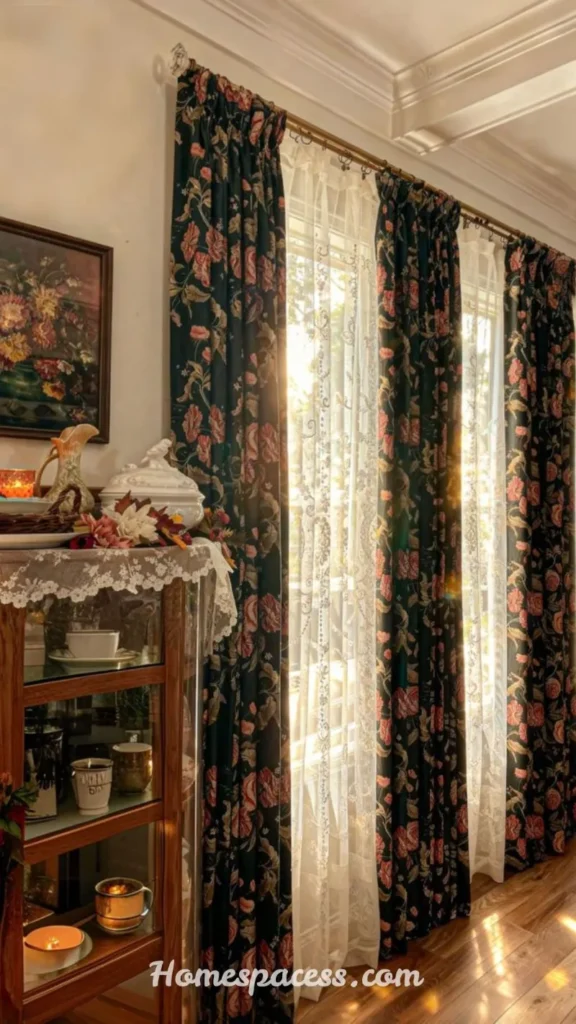
There is a strong case for using bedroom curtains as the single statement piece that anchors the entire room’s colour story. In rooms where the furniture is neutral white bed linens, natural wood frames, simple nightstands a pair of boldly patterned curtains gives the eye a focal point and provides the palette from which every other accent colour in the room is pulled. This approach requires confidence but produces results that feel genuinely cohesive rather than assembled.
The patterns that work best as bedroom curtain statements fall into a few clear categories. Large-scale botanical prints oversized palm leaves, abstract floral forms, trailing botanical branches translate beautifully to full-length panels because the scale of the pattern is only legible when the fabric is fully extended. Geometric patterns in sophisticated colourways (ochre and navy, rust and sage, charcoal and cream) offer bold presence without the feminine associations that florals can carry. Globally inspired prints block-printed Indian cotton, Japanese shibori-dyed panels, African mud-cloth inspired weaves give a bedroom genuinely individual character that mass-market designs cannot replicate.
A practical note:
when choosing patterned curtains, always request a large cutting or borrow a sample panel before committing. Pattern repeat affects both how the curtain looks when hung and how much fabric you’ll need a large-scale pattern with an 18-inch repeat requires significantly more fabric to match panels at the heading than a small allover print. Factor this into your budget from the start rather than discovering it at the point of purchase.
Minimalist Curtains That Let Architecture and Light Do the Work

For bedrooms with strong architectural features interesting ceiling angles, wide modern windows, exposed beams, or beautiful natural views the best bedroom curtain idea is often the least. Minimalist curtains in a single, undemanding fabric allow the room’s bones to speak without competition. This is an approach that takes genuine restraint but consistently produces bedrooms that look professionally designed rather than styled by committee.
Executed well, minimalist bedroom curtains use fabric, hardware, and installation method as precise tools. A single panel of heavyweight white cotton hung from a concealed track flush with the ceiling no visible rod, no decorative rings creates a seamless, almost architectural window treatment that looks more expensive than it is. Alternatively, Roman blinds in a textural fabric like grasscloth or woven jute fill the recess of a deep window without any fabric falling to the floor at all, keeping the room clean and uncluttered. Both approaches read as considered minimalism rather than underinvestment.
The hardware choice is crucial in a minimalist bedroom curtain scheme. Brass or black metal slim-profile rods with barely-there brackets have almost entirely replaced chunky wooden rods in contemporary interior design. Ceiling-mounted tracks especially white-painted or plaster-finished tracks that disappear into the ceiling take this further, making the curtain appear to emerge from the ceiling itself. This is particularly effective in rooms where the goal is a calm, restorative environment rather than a visually stimulating one.
Minimalist Hardware Guide
Ceiling-mounted tracks (white or plaster finish), slim-profile 19mm metal rods in brass or matte black, eyelet or ripple-fold headings, no visible rings all emphasise clean lines and elevate budget fabrics.
Conclusion
The best bedroom curtain ideas are those that solve real problems light management, thermal comfort, acoustic quality, and visual scale while adding genuine personality to the space. Whether you choose the dramatic simplicity of floor-to-ceiling linen, the warm enclosure of deep velvet, or the layered flexibility of a sheer-and-blackout combination, the fundamentals remain the same: hang high, gather generously, and choose fabric that suits both the room’s use and your long-term maintenance reality.
Bedroom curtains are one of the highest return-on-investment upgrades available to any home. Done well, they quietly transform how a room feels to live in improving sleep, regulating temperature, and creating an atmosphere of deliberate calm that cheaper fixes simply cannot provide.
Trend Analysis
Bedroom Curtain Trends in 2026 and What’s Coming Next
The dominant bedroom curtain trend of 2025 is the deliberate rejection of fast-fashion décor cycles. Where the early 2020s saw rapid turnover of viral colour choices (dusty rose, everything sage, burnt orange), 2025’s interior design landscape is characterised by a move toward timeless, long-lifecycle materials. Natural undyed linens, handwoven cottons, and curtains produced using traditional textile techniques are commanding premium prices and significant consumer interest not purely for ethical reasons but because they genuinely outlast synthetic alternatives in both physical durability and design longevity.
Technically, the most significant 2025 development is the mainstream arrival of motorised curtain systems that were previously only accessible in high-end custom installations. Several mid-market brands now offer motorised track systems at price points that make them viable for renovation rather than just new-build projects. These systems integrate with smart home platforms and can be programmed to open curtains gradually at sunrise a feature with real sleep health benefits, as slow light exposure supports more natural cortisol production and waking. Expect this technology to become standard in the bedroom within the next 3–5 years.
Heading into 2026 and beyond, the most forward-looking bedroom curtain trend is multi-functional textiles fabrics that combine acoustic absorption, thermal regulation, and light control into a single panel without the traditional weight penalty. Early versions of these engineered textiles are already available in contract interiors; residential versions are entering the market now. The visual signature of these materials is a slightly heathered, textural surface that reads as sophisticated rather than technical important for domestic acceptance.
Rising in 2025
Motorised systems, natural undyed linens, ceiling-flush tracks, earthy neutrals, handwoven textures
Fading Out
Chunky wooden rods, tab-top headings, sheer-only solutions, overly matched colour schemes
Coming 2026–27
Multifunctional engineered textiles, solar-responsive smart fabrics, bio-based dyes, recyclable panel systems
Expert Practical Insights
Practical Tips Interior Designers Actually Use on Client Projects
The first tip that consistently separates professional results from DIY approaches is the “double the width” rule. Almost all retail curtain panels are designed to look good in their product photography, which typically shows them at full extension. In reality, a properly gathered curtain panel requires fabric width of 2–2.5 times the track width. A 200cm window needs 400–500cm of total fabric across both panels. Under-gathered curtains look flat and cheap regardless of fabric quality or installation height getting the width right is the single most impactful thing you can do before spending money on expensive fabric.
Second, and rarely discussed in mainstream bedroom curtain guides: thermal lining versus blackout lining are not the same thing, and choosing incorrectly is a common expensive mistake. Thermal linings are heavy, multi-layer fabrics that significantly reduce heat loss through the glass genuinely useful in older, draughty homes or rooms with large, single-glazed windows. Blackout linings are primarily designed to block light, not insulate. You can, however, get both functions in a triple-pass blackout lining, which is thicker and has thermal properties. Knowing which problem you’re actually solving before choosing a lining saves money and prevents disappointment.
Third: always steam your curtains after installation rather than before. Fabric hangs differently once attached to a track, and a professional steamer used after hanging allows the panels to relax into their final drape with the weight of the heading pulling them straight. Steaming at this stage removes manufacturing fold lines, settles the fabric’s natural drape, and can add 10–15% apparent length to panels that arrive slightly short a useful trick that most curtain installation guides never mention.
Designer Formula: Budget split for a bedroom curtain project 40% fabric, 25% lining and interlining, 20% making-up (sewing/heading), 15% hardware and installation. Skimping on lining and making-up is the most common reason beautiful fabric produces disappointing results.
Sustainability & Long-Term Value
How to Choose Bedroom Curtains That Last 15+ Years and Cost Less Overall
The true cost of bedroom curtains is almost always underestimated because the purchase price is compared to replacement price at the same quality level rather than to the cumulative cost of replacing cheap curtains every 3–5 years. A set of well-made, fully lined bedroom curtains in quality natural fabric, correctly sized and properly installed, will last 15–25 years with basic care. Over that period, they typically cost less in total than two or three replacements of budget alternatives and they look dramatically better for the entire duration.
From a genuine sustainability perspective, the most important factor is fabric composition. Natural fibres cotton, linen, wool, silk biodegrade at end of life and can often be composted if untreated or responsibly dyed. Polyester and polyester-blend curtains, which dominate the mid-market, do not biodegrade and shed microplastics during washing and normal use. If cost is a constraint, 100% cotton is a better long-term choice than polyester even at a lower price point, both for the environment and because cotton retains its appearance better over time. GOTS (Global Organic Textile Standard) certified fabrics are the most reliable marker of responsible production.
One significantly underrated sustainability strategy for bedroom curtain ideas is investing in curtains designed to be re-lined rather than replaced. A quality hand-sewn curtain in classic proportions interlined for body, fully lined for light control can be re-lined every 8–10 years, renewing the functionality of the curtain while the face fabric continues for decades. This approach is common in traditional British interior design and represents a fundamentally different relationship with textiles than the disposable consumption model that currently dominates the market.
Future Innovations
The Future of Bedroom Curtains: Smart Textiles and Responsive Design
The most transformative near-future development in bedroom window treatments is photochromic glass integration smart glass that transitions from clear to opaque on demand, potentially replacing curtains entirely in some bedroom designs. However, the cost curve of this technology (currently £400–800 per square metre for residential applications) means it will remain a premium option through the late 2020s. What is arriving much sooner is the complementary technology: curtain fabrics embedded with phase-change materials (PCMs) that absorb heat during the day and release it at night, providing passive thermal regulation without any mechanical system.
Solar-responsive fabrics technically called thermochromic textiles are moving from laboratory demonstrations toward commercial availability. These materials change their solar reflectance in response to temperature, automatically becoming more reflective when the room heats up and more transmissive when it cools. For bedroom applications, this means a curtain that adapts to changing seasonal conditions without any user input. Early commercial versions are expected in the residential market by 2027, initially as premium add-ons to existing curtain systems rather than standalone products.
Perhaps most significantly for the everyday homeowner, AI-integrated smart home systems are rapidly improving their ability to automate curtain behaviour in genuinely useful ways. Rather than simple time-based schedules, next-generation systems will use sleep tracking data, weather forecasts, occupancy sensing, and circadian health models to manage bedroom curtains dynamically opening them to maximise natural light exposure during the day for vitamin D synthesis and alertness, and closing them at precisely the right moment in the evening to support melatonin production and healthy sleep onset. The curtain, in other words, is becoming a health device.
Common Mistakes
Bedroom Curtain Mistakes That Are Quietly Ruining the Room
Even experienced home decorators make these errors. Knowing them before you shop or install will save significant time, money, and the frustration of redoing work that looked right in theory but failed in practice.
- Hanging the rod at window height: The single most common curtain mistake. It makes ceilings look low and windows small. Always mount 4–6 inches below the ceiling cornice, regardless of window height.
- Under-purchasing fabric width: One panel per side of a window produces a flat, stretched look. Always use 2–2.5× the track width in total fabric. For a 2m window, that’s 4–5m of fabric minimum.
- Choosing blackout labels without testing blackout performance: Hold the fabric to light before buying. True blackout should transmit zero visible light through the panel itself gaps at edges are a separate hardware issue.
- Ignoring fabric care requirements: Velvet, silk, and certain linens cannot be machine washed. In a bedroom with regular use, choosing a fabric you can’t easily clean is a practical mistake that creates real problems over time.
- Matching curtains too precisely to the wall colour: Tonal harmony works; exact matching flattens the room. Choose curtains 1–2 shades deeper than the wall for a layered, three-dimensional look rather than a flat one.
- Forgetting about light-gap returns: Curtains hung on a standard rod with no side returns allow light to flood in around the edges. For a bedroom, add return brackets or choose a wrap-around track to close the side gaps completely.
- Buying curtains before measuring for puddle or float: Decide on your desired hem finish before ordering: a clean float (0.5cm clearance), a break (2–4cm on floor), or a soft puddle (10–15cm of excess). Each requires a different panel length and looks completely different once installed.

Team Home Spacess shares simple, practical design ideas that work for real families. The team focuses on cozy décor, soft colors, and natural textures that make a space feel truly lived-in. From everyday decorating tips to creative home projects, Team Home Spacess is dedicated to helping readers create warm, comfortable, and inviting spaces with a fresh and personal touch.