

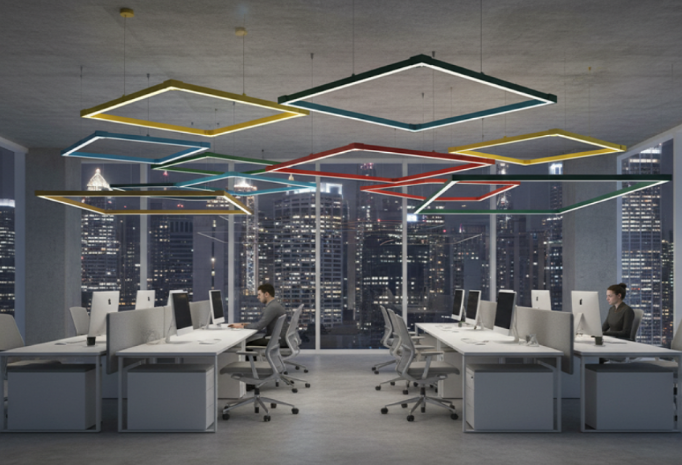
Good lighting rarely comes from one central ceiling fixture. In most homes, people use different parts of a room for different tasks: preparing food, reading, working at a desk, getting dressed, watching television or simply moving through the space in the evening. Each of these activities benefits from a different type of light.
For that reason, modern interiors are increasingly planned in layers. General lighting provides overall visibility, task lighting concentrates light where it is needed, and decorative lighting helps shape the atmosphere of the room. Furniture lighting sits between these layers. It can make a work surface more practical, illuminate the inside of a cabinet or create a soft visual accent without adding another visible ceiling lamp.
Start with the furniture rather than the lamp
Furniture often determines where additional lighting is actually needed.
A kitchen wall cabinet blocks part of the ceiling light from reaching the worktop below it. A deep wardrobe creates dark areas behind hanging clothes. Open shelving may look flat in the evening if all the light comes from the centre of the room.
These problems are easier to solve when lighting is planned together with the furniture layout.
Under-cabinet lighting can illuminate a kitchen worktop directly. A narrow light inside a wardrobe can make shelves and drawers easier to see. Lighting installed beneath a floating cabinet can create a soft line close to the floor and make the piece appear visually lighter.
This is where dedicated Interior lighting becomes useful. Furniture lighting can be integrated into cabinets, shelves, niches and work areas instead of relying on another freestanding or ceiling-mounted fixture.
The key is to decide what each light is expected to do before choosing the product.
Kitchen lighting needs more than one layer
The kitchen is probably the clearest example of why a single light source is rarely enough.
A ceiling fixture can illuminate the room, but a person standing at the worktop often blocks some of that light. The result is a shadow exactly where food is being prepared.
A separate light under the wall cabinets solves the problem at the source. It places the light above the work surface and directs it toward the area where knives, ingredients and utensils are used.
The location under the cabinet matters. A light installed very close to the backsplash tends to illuminate the rear part of the worktop more strongly. Moving the light closer to the front of the cabinet spreads more useful light over the central working area.
The type of fitting depends on the furniture design. Some kitchens use recessed profiles cut into the underside of the cabinet. Others use surface-mounted profiles that can be added after the furniture has already been installed.
Corner profiles are useful where the light needs to be directed forward and downward.
The result should be practical first and decorative second.
Wardrobes and cabinets need light inside the volume
Wardrobe lighting solves a different problem.
A room may already have good general lighting, but the interior of a wardrobe is surrounded by side panels, shelves and doors. These elements block part of the light entering from outside.
A narrow linear light placed inside the wardrobe improves visibility without increasing the brightness of the whole bedroom.
The exact position depends on the cabinet. A vertical light near the front edge can illuminate hanging clothes from top to bottom. A horizontal light beneath a shelf works well for drawers or folded clothing. Individual shelf lighting is useful in display cabinets where each level should remain visible independently.
It is also worth thinking about glare. A bright strip mounted directly in the normal line of sight can be uncomfortable. Recessing the light slightly or using a diffuser usually creates a cleaner result.
Shelves and display furniture are more about presentation
Open shelving is often used as a decorative feature rather than purely for storage.
Lighting can give these pieces more depth in the evening. A strip installed toward the rear of a shelf can illuminate the wall behind objects. A strip near the front edge directs more light onto the objects themselves.
The two positions create noticeably different effects.
Rear lighting creates a softer background glow. Front lighting produces stronger highlights and is better when the items on the shelf need to be clearly visible.
Glass shelving introduces another option. Light can be directed through or across the glass, creating a narrow luminous edge. This approach is often used in display cabinets, bars and decorative storage units.
Furniture lighting therefore needs to be chosen according to the material as well as the dimensions of the cabinet.
Colour temperature should follow the room
The same furniture light can feel very different depending on its colour temperature.
Warm white light around 2700–3000 K usually works well in bedrooms, living rooms and decorative shelving. It supports a softer atmosphere and works particularly well with timber, warm fabrics and beige or brown finishes.
Neutral white around 4000 K is often selected for kitchens, home offices, wardrobes and utility furniture where clear visibility is more important.
Higher colour temperatures create a cooler appearance and are more common in technical or commercial environments.
Using several very different white tones in one small room can make the lighting look inconsistent. A practical approach is to choose one main colour temperature for the room and use it across the furniture lighting unless a specific zone requires something different.
Profiles and diffusers change the final appearance
The LED source itself is only part of the finished result.
When strip lighting is installed in visible furniture, an aluminium profile gives the strip a straight mounting surface and provides a place for a diffuser. The profile also creates a more finished edge than sticking the strip directly onto the furniture.
The diffuser controls how visible the individual LEDs are.
A transparent cover keeps the light more direct. A frosted or opal diffuser softens the points and produces a more uniform line. The distance between the LEDs and the diffuser also matters. A deeper profile gives the light more space to mix before it reaches the cover.
COB strips are often used when a particularly continuous line is wanted, especially in shallow furniture profiles where there is little distance between the strip and diffuser.
Hidden lighting can also shape the room
Furniture lighting does not always have to illuminate an object directly.
A strip hidden beneath a cabinet, behind a headboard or inside a recessed shelf can reflect light from a nearby surface. Reflected light is softer because the wall, ceiling or furniture panel becomes part of the lighting system.
This works particularly well in living rooms and bedrooms where strong direct light is often unnecessary in the evening.
A floating TV cabinet, for example, can be illuminated from below. The light reflects from the wall and floor rather than shining directly into the room. A bed headboard can use the same principle to create a gentle background glow.
The effect is subtle, but it can change how the proportions of the room are perceived after dark.
Power and wiring should be planned before the furniture is closed
Furniture lighting looks simple when finished, but the wiring is easiest to install before the final panels are fixed.
The cable route, power supply location and connection points should be decided early. This is especially important when several shelves or cabinets are illuminated independently.
A wardrobe may require separate wires for two vertical sections. A kitchen may have several lighting zones under different cabinet groups. A display unit may have an individual connection to every shelf.
Running these cables through prepared holes and hidden channels during installation produces a much cleaner result than adding visible wiring later.
The power supply should also remain accessible for inspection or replacement. Hiding it permanently behind a fixed panel creates unnecessary work if service is ever required.
Lighting controls should match the way the furniture is used
Different pieces of furniture benefit from different control methods.
A kitchen work light may be connected to a wall switch, a touch sensor or a dimmer. Wardrobe lighting can be linked to a door sensor so the light switches on when the cabinet is opened. Decorative shelf lighting may be controlled together with the room’s ambient lighting.
The control method should be chosen before the final wiring layout is completed.
For furniture used many times every day, convenient switching matters almost as much as brightness.
Think about the room as one lighting system
Furniture lighting works best when it supports the main lighting rather than competing with it.
A kitchen may combine ceiling fixtures, pendant lights over an island and under-cabinet illumination. A bedroom may use ceiling light, bedside lamps and a soft line behind a headboard. A living room may combine general light with illuminated shelving and indirect light around a media cabinet.
The individual fittings do not need to look identical, but they should work together in brightness, colour temperature and purpose.
For anyone planning a broader lighting project, the LEDUA catalogue at https://leduastore.com/ brings together different lighting components and solutions that can be combined for furniture, decorative and general interior applications.
The most successful interiors usually do not have the greatest number of lights. They have light in the right places.
A well-positioned furniture light can make a kitchen worktop easier to use, a wardrobe easier to navigate and a shelf more visually interesting. When those smaller lighting decisions are coordinated with the rest of the room, the entire interior feels more comfortable without becoming overlit.

Team Home Spacess shares simple, practical design ideas that work for real families. The team focuses on cozy décor, soft colors, and natural textures that make a space feel truly lived-in. From everyday decorating tips to creative home projects, Team Home Spacess is dedicated to helping readers create warm, comfortable, and inviting spaces with a fresh and personal touch.