

A loading dock looks ordinary until someone steps backward off the edge. The platform sits roughly four feet above the ground, trailers pull in and out throughout the shift, and workers carry boxes, push pallet jacks, and drive forklifts within arm’s reach of an open drop. Falls from dock edges account for a steady stream of injuries in logistics and warehousing, and the consequences range from sprains to fractures and head trauma. The hazard rarely announces itself, because the same edge that workers cross a hundred times a day becomes dangerous only at the moment attention slips or a trailer moves. Safety managers need controls that work even when people are distracted. The sections below cover where the hazards sit, which physical protections apply, how regulations shape the choices, and how training and inspection keep the system dependable.
Where Falls Happen at the Dock
The dock edge is the obvious hazard, but several situations around it produce most incidents. An open dock door with no trailer backed against it leaves a raw drop to the ground or pit below. A trailer that has pulled away early, a condition often called trailer creep or premature departure, can leave a gap where a forklift or worker expects a solid surface. Dock levelers and plates that shift or fail add further risk.
Warehouses present a wider set of edges. Mezzanines, raised platforms, pallet rack work areas, open pits, and roof access points all create fall exposure. Workers stepping onto order picker lifts or climbing racks to retrieve items face height hazards that differ from dock edges but share the same logic.
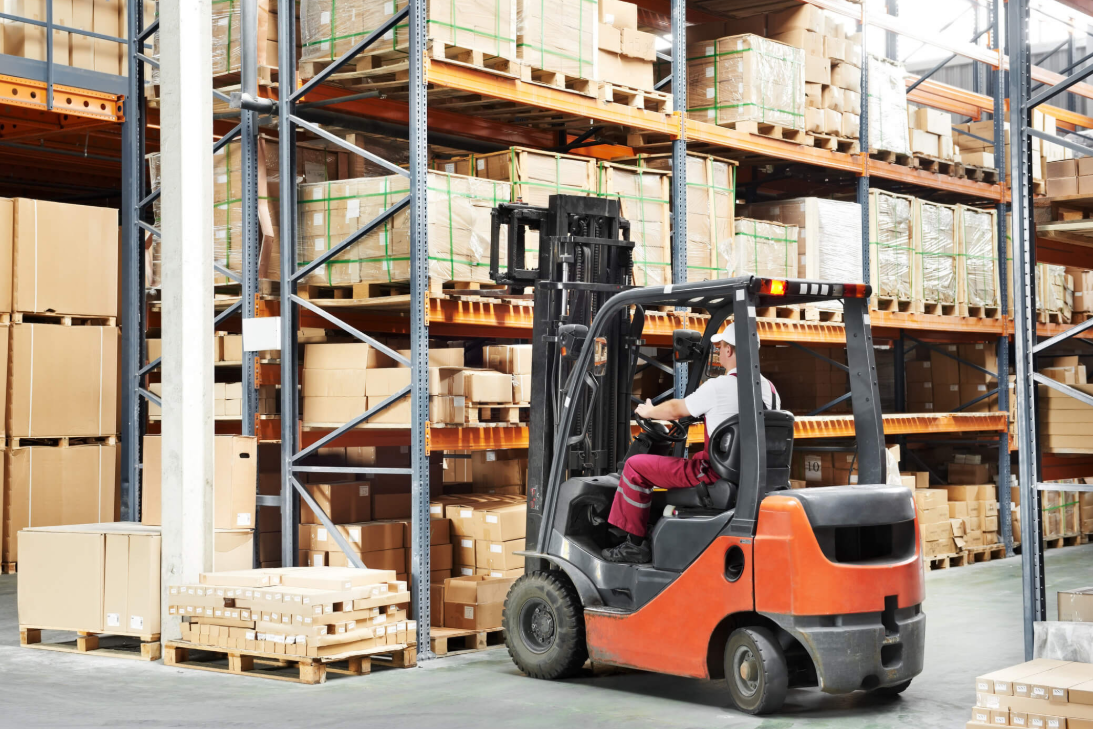
Human factors turn these hazards into injuries. Time pressure, congestion, poor lighting, wet or icy surfaces, and fatigue each reduce attention. Forklift traffic complicates the picture, since both drivers and pedestrians focus on moving vehicles rather than the edge. A forklift driving off an unprotected edge can cause severe injury to the operator and bystanders. Walking the site during a busy shift, and watching how people actually move, usually reveals exposures that a static review of drawings misses.
Physical Protection: Guardrails, Gates, and Barriers
The strongest controls change the physical environment so that a fall cannot happen without deliberate effort. Permanent guardrails along platform edges, with a top rail, midrail, and toeboard, provide continuous protection where access is not needed. Under general industry standards in the United States, a standard guardrail top rail is generally set at about 42 inches above the walking surface, with a midrail at roughly half that height, and the system must resist a substantial outward force. Details vary by jurisdiction, and designs should be verified against the regulations that apply.
Docks present a special challenge because the edge must open for loading. Several solutions address that conflict. Swing gates and sliding barriers close the opening when no trailer is present. Chain or bar barriers across dock doors give a visible but less sturdy boundary. Self-closing gates, interlocked with vehicle restraints, open only when a trailer is secured in place. Engineered fall protection systems for dock openings can combine these elements with signage and lighting.
Vehicle restraints and wheel chocks address the trailer-creep problem. A restraint that hooks the trailer’s rear impact guard prevents premature departure, and indicator lights tell drivers and dock workers when it is safe to enter. Dock levelers and bridge plates should be rated for the loads and maintained in good order. Providers that specialize in this work, such as Title 8 Builders, design and install fall protection systems for dock environments, and an engaged safety manager can compare options against site layout and traffic patterns. Any system needs to account for forklift loads, since barriers that cannot withstand impact give false confidence.
Regulations and Standards That Shape the Program
Regulation sets the minimums, and responsible programs aim higher. In general industry in the United States, OSHA’s walking-working surfaces rules require protection from falls where an employee is exposed to an unprotected edge four feet or more above a lower level. Construction and maritime work carry different thresholds, and states with their own approved plans may impose additional or stricter requirements. California’s Cal/OSHA rules, found in Title 8 of the state’s regulations, are one example of a state program with its own detail.
Several elements appear repeatedly across standards: guardrail design, opening protection, ladder and stair requirements, personal fall protection systems where guarding is not feasible, and employee training. Loading docks come with specific rules and guidance on how to protect dock edges, plates, and openings, and employers should review current requirements for their jurisdiction.
Compliance also draws on consensus standards. Guidance from organizations such as ANSI and professional safety groups offers design details and good practice that complement legal minimums. Documentation counts, since inspectors and insurers look for written programs, training records, and inspection logs. Because rules change and exceptions depend on circumstances, safety managers should consult the regulator’s published guidance, qualified safety professionals, or legal counsel for questions about a particular site. A program built to meet the standard on paper but ignored in practice does not protect workers, so enforcement and culture matter as much as the text. Some sites bring in outside specialists, such as Title 8 Builders, during the design stage to translate local requirements into a specific layout, though responsibility for compliance stays with the employer.
Training, Procedures, and Daily Habits
Equipment protects only when people use it correctly. Training should cover the specific hazards of the site: where the edges are, how gates and restraints work, what to do when a barrier is missing or broken, and what the signals mean. New employees, temporary workers, and visiting drivers need the same briefing, since many incidents involve people unfamiliar with the dock.
Procedures should be specific and short. Examples include verifying that the trailer is restrained before entering, keeping gates closed when no trailer is present, and never working near an open edge without protection. Clear rules for forklift operation near edges, such as speed limits, spotters, and marked travel paths, reduce collisions and falls. Floor markings, signs, and lighting reinforce the message.
Personal fall protection has a place where guarding cannot be used. Harnesses, lanyards, and anchor points need proper selection, fit, inspection, and rescue planning, and workers must be trained to use them. Protective equipment should be a backup to physical barriers rather than the first choice, since it relies on human behavior.
Culture drives compliance. Supervisors who stop work to correct unsafe conditions, reward reporting, and follow the rules themselves set the tone. Workers who feel free to point out a broken gate without fear of blame become an early warning system. Short toolbox talks and recognition for good catches keep attention high between formal training sessions.
Inspection and Maintenance Routines
Fall protection degrades. Guardrails loosen, gates stick, chains wear, restraints malfunction, and lights burn out. Routine inspection catches these problems before an incident does. A practical program includes:
- Daily pre-shift checks of gates, barriers, restraints, and lights at active doors
- Weekly checks of guardrails, dock levelers, bridge plates, and floor condition
- Periodic formal inspections by a competent person, with written records
- Prompt tagging and repair of defective equipment, with the door taken out of service if needed
- Annual review of the program, including incident and near-miss data
Maintenance should follow manufacturer instructions and the schedule in the written plan. Replacement parts should match the original rating. Impact damage from forklifts deserves a close look, since bent rails or loosened anchors may look minor but have lost much of their strength.
Data improves the program over time. Logging near misses, such as a forklift striking a barrier or a trailer creeping, highlights weak points before an injury occurs. Audits that compare practice with procedure show where training or equipment needs attention. Keeping records organized supports regulatory inspections and insurer reviews and demonstrates diligence if an incident occurs.
End Note
Fall safety at loading docks and warehouses depends on layers: physical protection that does not rely on attention, regulations that set minimum expectations, training that prepares workers for real conditions, and inspections that keep the system intact. Gates, guardrails, and vehicle restraints address the most common exposures, while procedures and culture handle the gaps.
Safety managers can start by walking the site during peak activity, listing each unprotected edge and trailer interface, and ranking the hazards by likelihood and severity. Fixing the biggest exposures first, and keeping the system under regular review, produces a workplace where the edge stays a boundary and not a hazard waiting for a bad moment.

Team Home Spacess shares simple, practical design ideas that work for real families. The team focuses on cozy décor, soft colors, and natural textures that make a space feel truly lived-in. From everyday decorating tips to creative home projects, Team Home Spacess is dedicated to helping readers create warm, comfortable, and inviting spaces with a fresh and personal touch.