


Money BetterThisWorld is a mindset, not a magic trick. It treats your income as a tool for building a stable, meaningful life instead of a number to chase for its own sake. If you’ve ever felt like your paycheck disappears before the month ends, or you’re not sure where to start with saving and investing, this guide breaks it down into steps you can actually use.
You don’t need a finance degree or a six-figure salary to apply the Money BetterThisWorld approach. You need a plan, a little consistency, and honest numbers. This article walks you through budgeting, saving, debt management, and investing basics in plain English, with real, actionable steps for beginners and useful refreshers for people who already know the basics.
What Does Money BetterThisWorld Mean?
Money BetterThisWorld means managing your finances with intention instead of habit or impulse. It’s the idea that every dollar should have a job whether that’s paying rent, building savings, or funding something you enjoy.
This concept has grown popular because it doesn’t promise overnight wealth. Instead, it focuses on realistic habits: knowing what you earn, knowing what you spend, and making deliberate choices with the difference. That’s a far more sustainable foundation than chasing get-rich-quick schemes, and it lines up with what certified financial planners and consumer protection agencies like the Consumer Financial Protection Bureau consistently recommend.
At its core, this is about financial awareness first, financial growth second.
The Core Pillars of the Money BetterThisWorld Approach

The Money BetterThisWorld mindset rests on four pillars:
- Awareness – Knowing exactly where your money goes each month.
- Intention – Giving every dollar a specific purpose before you spend it.
- Consistency – Small, repeatable habits instead of occasional big efforts.
- Balance – Managing money in a way that supports your wellbeing, not just your bank balance.
These pillars work together. Awareness without consistency fades after a few weeks. Intention without balance can lead to burnout or over-restriction. You need all four to build something that lasts.
Must Read: Hosted Event PBLGameEvent: The Complete Beginner-to-Pro Guide
Step 1: Track Your Money Before You Budget It
Direct answer: You can’t build a working budget until you know your actual income and spending patterns, so tracking comes first.
Most budgets fail because people guess at their numbers instead of checking them. Spend one to two weeks writing down every expense coffee, subscriptions, groceries, bills, everything. You can use a notebook, a spreadsheet, or a banking app that categorizes transactions automatically.
Look for two things once you have the data:
- Fixed costs — rent, insurance, loan payments, subscriptions.
- Variable costs — groceries, entertainment, transport, impulse buys.
This step alone often reveals leaks you didn’t notice, like forgotten subscriptions or how quickly small purchases add up.
Step 2: Build a Budget That You’ll Actually Follow
Direct answer: The best budget is the simplest one you’ll stick with, not the most detailed one you’ll abandon after two weeks.
A popular and beginner-friendly framework is the 50/30/20 rule:
| Category | Percentage of Income | What It Covers |
|---|---|---|
| Needs | 50% | Rent, utilities, groceries, minimum debt payments |
| Wants | 30% | Dining out, entertainment, hobbies |
| Savings & Debt Payoff | 20% | Emergency fund, retirement, extra debt payments |
This isn’t a rigid rule. If you live in a high-cost area, needs might take up 60–65% of your income, and that’s okay. The goal is a structure, not perfection.
Zero-Based Budgeting as an Alternative
Some people prefer zero-based budgeting, where every dollar of income is assigned a job until your balance hits zero on paper. This works well if you like detail and want tighter control over spending.
Pick whichever method matches your personality. A budget you’ll actually use beats a “perfect” one you abandon after a month.
Related Post: Geometry Learn V3: What We Actually Know (2026 Fact-Check)
Step 3: Build an Emergency Fund First
Direct answer: Before investing or aggressively paying off low-interest debt, build a starter emergency fund of at least $500–$1,000, then grow it to cover 3–6 months of essential expenses.
An emergency fund protects you from going into debt when your car breaks down or you face a medical bill. Financial experts, including those at the Federal Reserve and nonprofit credit counseling agencies, consistently point to a lack of emergency savings as one of the top reasons households fall into high-interest debt.
Keep this money in a high-yield savings account separate from your checking account so it’s accessible but not too tempting to spend.
Step 4: Pay Down Debt With a Clear Strategy
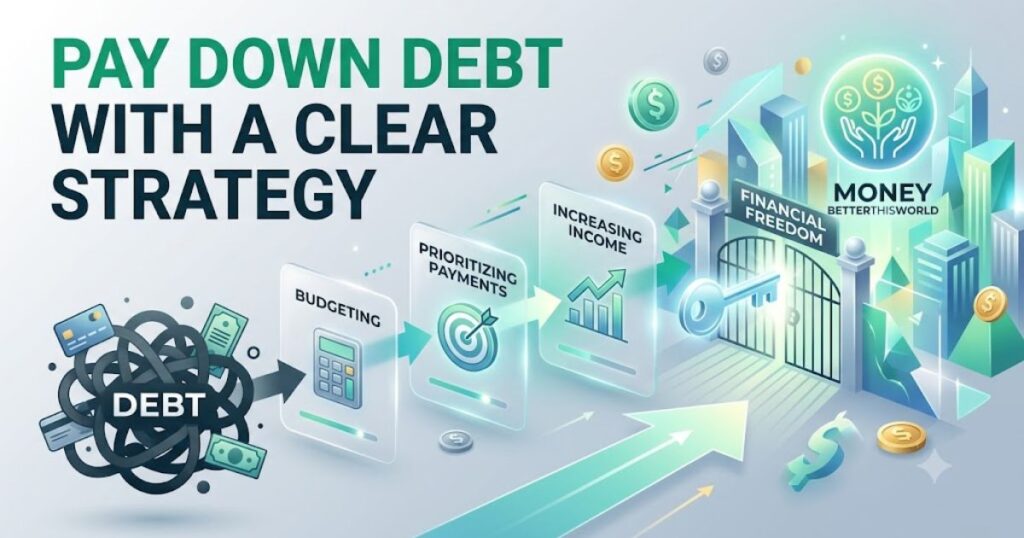
Direct answer: Choose either the debt snowball (smallest balance first) or the debt avalanche (highest interest rate first) method, and stick with it consistently.
| Method | How It Works | Best For |
|---|---|---|
| Debt Snowball | Pay off smallest balances first for quick wins | People who need motivation and momentum |
| Debt Avalanche | Pay off highest interest rate first to save money | People focused on minimizing total interest paid |
Both methods work if you’re consistent. The snowball method tends to have better psychological results because early wins keep you motivated. The avalanche method saves more money mathematically over time.
Always keep making minimum payments on every debt while focusing extra payments on your target debt.
Read More: Tubefalire Explained: Why This Word Has No Real Definition (And Why That’s the Real Story)
Step 5: Start Investing, Even With Small Amounts
Direct answer: You don’t need a lot of money to start investing many brokerages allow you to begin with $10–$100 through fractional shares or low-cost index funds.
For beginners, a reasonable order of operations looks like this:
- Get any employer 401(k) match first it’s free money.
- Pay off high-interest debt (typically anything above 7–8% APR).
- Fully fund your emergency fund.
- Invest in low-cost, diversified index funds or ETFs for long-term goals.
- Consider a Roth IRA or traditional IRA depending on your tax situation.
Investing is a long-term game. Historically, diversified stock market index funds have returned around 7–10% annually before inflation over multi-decade periods, though past performance never guarantees future results, and markets can lose value in any given year.
If you’re unsure about tax rules, contribution limits, or investment choices, a licensed financial advisor or a resource like the IRS website or SEC’s Investor.gov can help you avoid costly mistakes.
Tools and Habits That Support This Mindset
- Budgeting apps – Automatically categorize spending and flag overspending.
- Automatic transfers – Move money to savings the day you get paid, so you’re not tempted to spend it first.
- Monthly money check-ins – Spend 15–20 minutes each month reviewing your budget against actual spending.
- Sinking funds – Small dedicated savings pots for irregular expenses like car repairs or holiday gifts.
- Financial goal tracking – Write down specific, measurable goals like “save $3,000 for emergency fund by December.“
Common Mistakes to Avoid
- Skipping the tracking step and jumping straight to a budget based on guesses.
- Setting an unrealistic budget that leaves no room for fun, which usually leads to giving up.
- Ignoring high-interest debt while trying to invest at the same time.
- Not having any emergency fund, which forces you into credit card debt during unexpected expenses.
- Comparing your finances to others, especially based on what you see on social media, which rarely reflects real financial pictures.
- Waiting for the “perfect time” to start saving or investing instead of starting small today.
Pros and Cons of the Money BetterThisWorld Approach
Pros:
- Simple enough for financial beginners to start immediately.
- Encourages sustainable habits instead of risky shortcuts.
- Flexible enough to adapt to different income levels and life situations.
- Builds long-term financial resilience, not just short-term wins.
Cons:
- Requires consistency, which can be hard to maintain without routine check-ins.
- Doesn’t offer fast results, so it may feel slow compared to riskier strategies.
- Success depends heavily on personal discipline and realistic goal-setting.
Expert Tips for Staying Consistent
- Automate what you can. Willpower runs out; automatic transfers don’t.
- Review your budget monthly, not daily. Daily tracking can create anxiety and burnout.
- Give yourself a small “guilt-free spending” category so the budget feels sustainable.
- Revisit your goals every few months. Life changes, and so should your numbers.
- Celebrate small milestones, like your first $1,000 saved, to stay motivated.
Frequently Asked Questions
What is Money BetterThisWorld?
Money BetterThisWorld is a financial mindset that focuses on managing money with awareness, intention, and consistency rather than chasing quick wealth.
Is Money BetterThisWorld a specific app or company?
No single official tool defines this concept. It’s best understood as a financial philosophy that combines budgeting, saving, and mindful investing habits, similar to ideas found across mainstream personal finance education.
How do I start with Money BetterThisWorld if I have no savings?
Start by tracking your spending for two weeks, then build a small emergency fund of $500–$1,000 before focusing on other financial goals.
What is the 50/30/20 rule?
It’s a budgeting framework where 50% of income covers needs, 30% covers wants, and 20% goes toward savings and debt repayment.
Should I pay off debt or save money first?
Build a small starter emergency fund first, then focus on high-interest debt, then grow your emergency fund further before investing aggressively.
How much should I have in an emergency fund?
Most experts recommend 3–6 months of essential living expenses, though even $500–$1,000 provides meaningful protection when you’re starting out.
Is investing with a small amount of money worth it?
Many brokerages allow investing with as little as $10–$100 through fractional shares, and starting early lets compound growth work in your favor over time.
What’s the difference between the debt snowball and debt avalanche methods?
The snowball method pays off the smallest balance first for motivation, while the avalanche method targets the highest interest rate first to save more money overall.
Can Money BetterThisWorld principles work on a low income?
The framework is percentage-based and habit-based, so it scales to any income level, though the specific dollar amounts will differ.
How often should I review my budget?
A monthly check-in works well for most people, balancing accountability without creating unnecessary stress.
Do I need a financial advisor to follow this approach?
Not necessarily for basic budgeting and saving, but a licensed advisor can help with complex decisions like investment allocation, tax strategy, or retirement planning.
Conclusion
Money BetterThisWorld isn’t about complicated formulas or risky shortcuts. It’s about knowing your numbers, giving every dollar a purpose, and building habits you can actually keep up over time. Start small: track your spending, build a starter emergency fund, and choose one debt or savings strategy to focus on this month.
Financial stability doesn’t happen overnight, but consistent, intentional steps add up. That’s the real principle behind Money BetterThisWorld steady progress over perfection.

Team Home Spacess shares simple, practical design ideas that work for real families. The team focuses on cozy décor, soft colors, and natural textures that make a space feel truly lived-in. From everyday decorating tips to creative home projects, Team Home Spacess is dedicated to helping readers create warm, comfortable, and inviting spaces with a fresh and personal touch.