

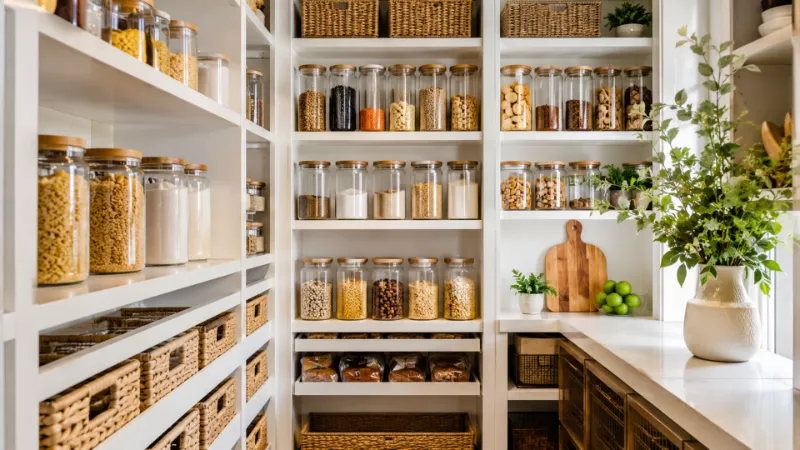
Every cook knows the frustration of a chaotic pantry expired cans buried in the back, mismatched containers falling out, and no idea what’s actually in stock. A disorganized pantry doesn’t just waste food; it wastes money, time, and mental energy every single day. The good news? You don’t need a kitchen renovation or a designer’s budget to fix it. The right pantry organization ideas can completely transform how your kitchen functions, making meal prep faster, grocery shopping smarter, and cooking genuinely enjoyable.
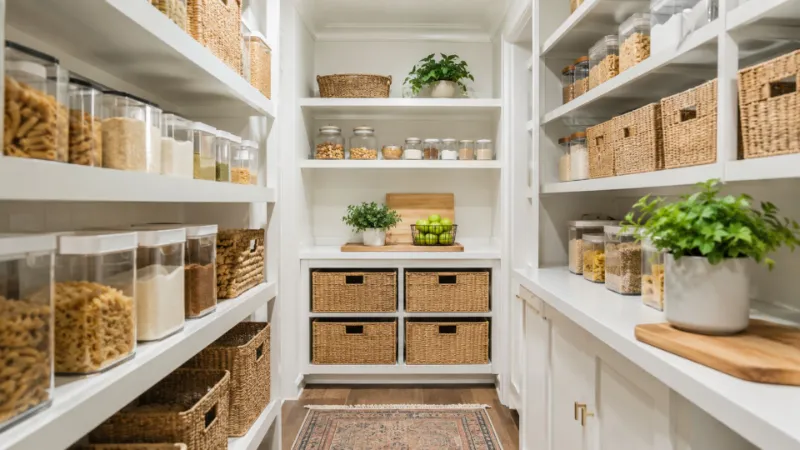
Research shows that the average household throws away nearly $1,500 worth of food per year, with poor storage visibility being one of the leading causes. When your pantry is structured and logical, you naturally buy only what you need and use what you have. In this guide, we cover 13 expert-backed pantry organization strategies from zero-cost decluttering moves to smart storage investments so you can build a system that actually sticks.
Declutter First: The Foundation of Every Great Pantry
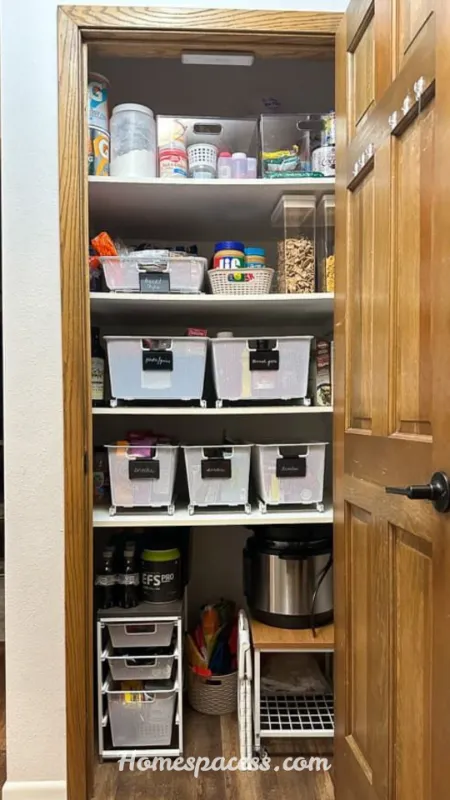
Before a single bin or label touches your shelves, the most powerful pantry organization idea is a ruthless declutter. Pull everything out, check expiration dates, and group like items together on your counter or kitchen table. This gives you an honest inventory of what you own and often reveals shocking duplicates and forgotten items. A decluttered pantry is a blank canvas, and without this step, even the prettiest storage system will fail within weeks.
The ‘in-and-out’ rule is a game-changer here: for every new item that enters your pantry, an old one must leave or be used up. Many professional organizers recommend doing a quarterly pantry audit a 30-minute session to pull expired items, rotate stock, and re-evaluate your storage needs. Think of it less like a chore and more like a kitchen reset that saves you money automatically. Households that practice regular pantry audits report spending 15–20% less on groceries simply because they know exactly what they have.
🎨 Style Note:
Keep your pantry aesthetic neutral white, cream, or clear containers create visual calm and make the space feel larger even in compact kitchens.
💡 Pro Tip:
Photograph your pantry contents before your next grocery run. A quick phone scan at the store prevents duplicate buys and cuts impulse spending.
See Related Articles: Colorful Kitchen Ideas: Bold Ways to Brighten Your Cooking Space
Zone-Based Organization: Assign Every Item a Home
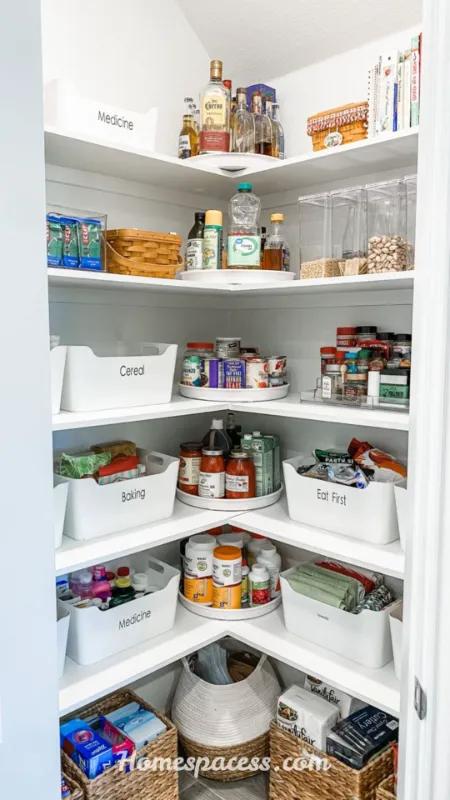
One of the most effective kitchen pantry organization strategies borrowed from professional chefs is zone-based storage. Divide your pantry into dedicated zones: baking supplies, canned goods, snacks, breakfast items, condiments, and so on. When every category has a clearly defined space, both restocking and finding items become effortless. This pantry zoning method eliminates the habit of ‘just putting things anywhere,’ which is the root cause of most pantry chaos.
For example, a family of four might dedicate the top shelf to rarely used appliances and bulk items, the eye-level zone to everyday staples like pasta, rice, and canned tomatoes, and lower shelves to kid-friendly snacks and lunchbox items. This isn’t just convenient it’s strategic. Eye-level placement subconsciously encourages you to reach for the healthier, frequently-used ingredients first. The lower zones can safely hold heavier items like large cans, bottles, and bulk bins without creating a safety hazard.
🎨 Style Note:
Use colored labels or washi tape to visually separate zones on your shelves a subtle but effective way to make the system self-reinforcing.
💡 Pro Tip:
Create a ‘use-first’ zone at the front of each category for items nearing their expiration date. This alone can halve your food waste.
You May Also Like: Island Kitchen Ideas: 13 Stunning Designs That Transform Your Kitchen in 2026
Clear Airtight Containers: The Non-Negotiable Storage Upgrade
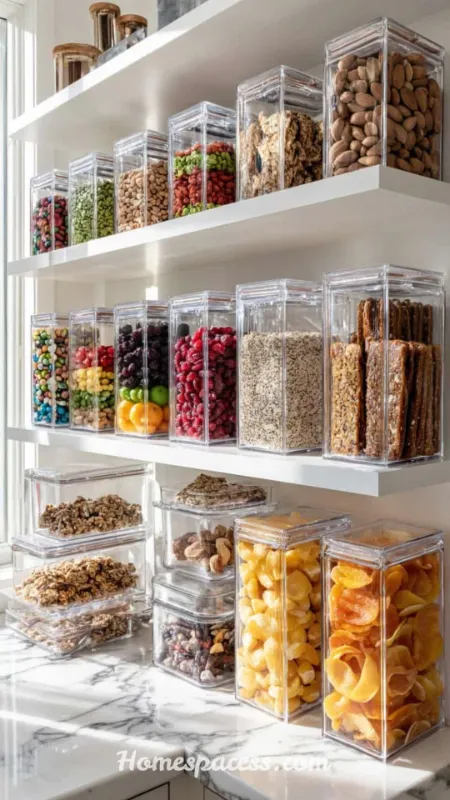
Transferring dry goods into clear airtight containers is perhaps the single highest-impact pantry storage idea on this list. Not only do they protect grains, flours, and legumes from pests, moisture, and air degradation they instantly transform a cluttered shelf of mismatched bags into a clean, editorial-worthy display. Brands like OXO, Rubbermaid Brilliance, and the viral Cambro containers have made this upgrade accessible and affordable. Square or rectangular shapes maximize shelf space far more efficiently than round canisters.
From a practical standpoint, airtight food storage containers extend shelf life significantly white rice stored in a sealed container can last 25–30 years versus 6–12 months in an open bag. That’s not a minor detail; it’s a long-term food safety and waste-reduction strategy. A mini case study: a home cook in Austin switched to clear containers and reduced her grocery spend by $80/month simply by finally seeing how much flour, sugar, and oats she already had before shopping.
🎨 Style Note:
Stick to one container brand for a cohesive, magazine-worthy look. Mixing shapes and brands creates visual clutter even when items are technically ‘organized.’
💡 Pro Tip:
Label containers on the lid AND the front side. When stacked, you’ll see the category from the top; when shelved upright, you’ll see it from the front.
Recommended for You: Best Spice Racks Ideas to Transform Your Kitchen Storage
Tiered Shelf Risers: Double Your Visibility Instantly
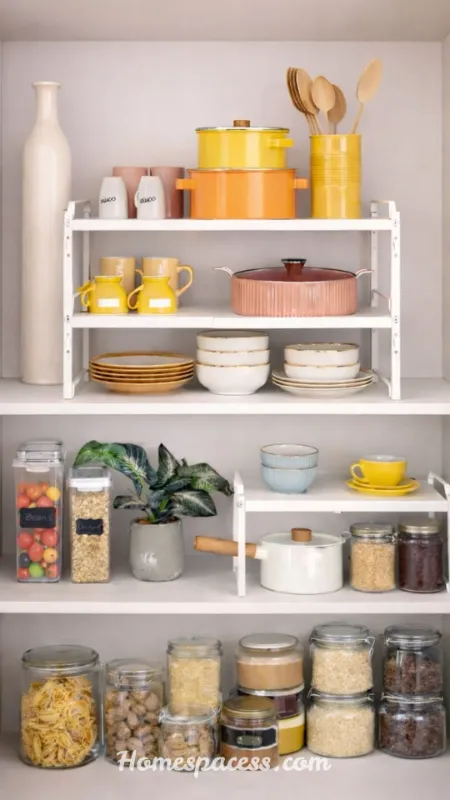
One of the most overlooked pantry shelf organization ideas is the tiered riser a simple, inexpensive accessory that doubles your usable shelf space by stacking items at different heights. Instead of one flat row of canned goods where the back row is perpetually invisible, risers create a stadium-style display where every item is immediately visible. This is especially transformative in deep pantries and kitchen cabinets where items routinely disappear into the back.
Tiered risers work brilliantly for canned goods organization, spice storage, and even jars and bottles. Bamboo risers offer a natural aesthetic; acrylic versions create an ultra-modern look; and expandable metal risers work well for irregular shelf heights. A real-life scenario: a single-parent household with a deep cabinet stopped buying duplicate spices after installing a three-tier riser a $15 investment that saved roughly $40/year in accidental repurchases.
🎨 Style Note:
Pair bamboo risers with kraft-paper labels for a warm, farmhouse pantry aesthetic that photographs beautifully and feels inviting.
💡 Pro Tip:
Measure your shelf height AND depth before buying risers. A riser that’s too tall blocks the shelf above; one that’s too shallow still hides items behind the first row.
More on This Topic: Kitchen Lighting Ideas to Create a Cozy and Modern Cooking Space
Over-the-Door Organizers: The Secret Wall of Storage
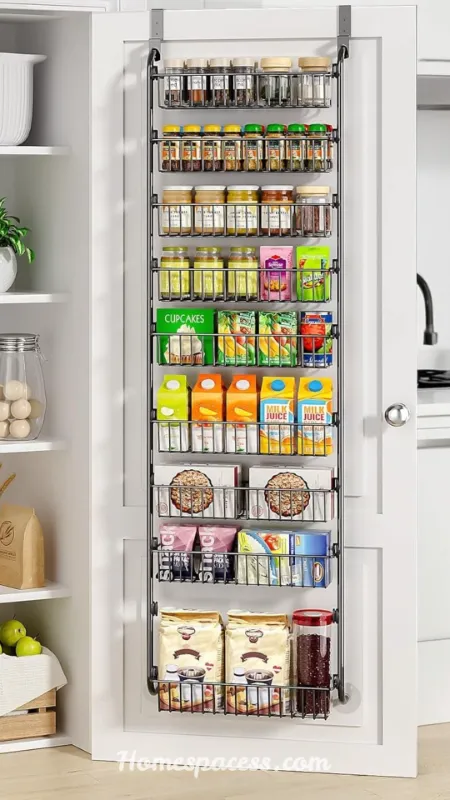
The back of your pantry door is prime, completely unused real estate in most kitchens. Over-the-door pantry organizers whether pocket-style shoe organizers repurposed for snacks, or purpose-built spice racks and magazine holders can add dozens of square inches of accessible storage without occupying a single inch of shelf space. This is one of the smartest small pantry organization ideas for apartments, galley kitchens, or any space where shelving is limited.
Popular configurations include: clear-pocket organizers for snacks, condiment packets, and seasoning mixes; wire basket door organizers for produce like onions and garlic; and mounted spice grids with magnetic spice tins for a sleek, space-saving herb display. One kitchen design blogger documented tripling her pantry’s effective storage by combining over-the-door storage with zone-based shelving all without spending more than $60 total.
🎨 Style Note:
White or chrome over-the-door organizers blend seamlessly with most pantry interiors. Avoid dark-colored racks in small spaces as they can make the area feel cramped.
💡 Pro Tip:
Check your pantry door’s weight limit before loading a full-length organizer. Reinforce hinges if needed to prevent sagging over time.
See Also: Kitchen Nook Ideas: Transform Dead Corners Into Cozy, Functional Spaces
Lazy Susans (Turntables): Eliminate the ‘Back of Shelf’ Problem Forever
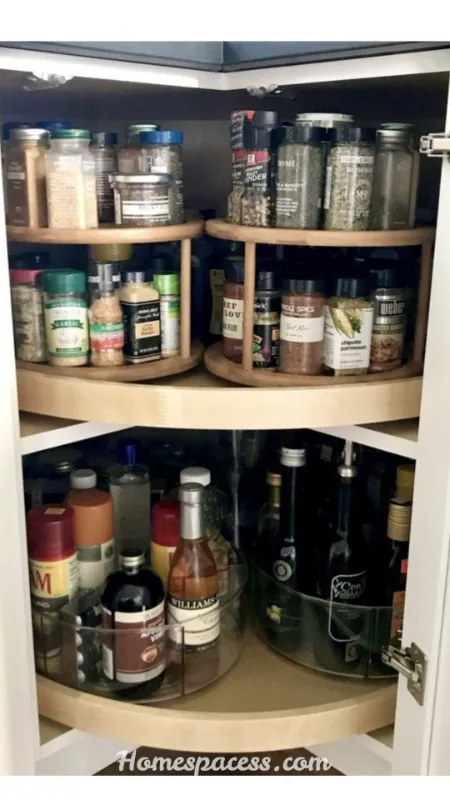
The lazy Susan turntable is a timeless pantry organization tool that solves a very specific and maddening problem: items trapped at the back of deep shelves. A spinning turntable brings everything within reach with a single rotation, making it ideal for oils, vinegars, sauces, nut butters, and spices. Corner pantries in particular benefit enormously from multi-tier lazy Susans that exploit otherwise wasted triangular space.
Modern lazy Susans have evolved well beyond the classic wooden restaurant version. Today’s options include clear acrylic turntables with raised lips (to prevent bottles from sliding off), bamboo two-tier versions for stacked spice storage, and heavy-duty stainless steel models for oils and bulk items. Scenario: a home cook with a corner pantry installed a 12-inch two-tier lazy Susan and reduced her dinner prep time by 4 minutes per session because she no longer had to excavate the back of the shelf to find her fish sauce.
🎨 Style Note:
Clear acrylic lazy Susans work in any pantry aesthetic modern, farmhouse, or minimal without visually disrupting the space.
💡 Pro Tip:
Group lazy Susan items by usage frequency: daily-use items on top tier, weekly-use items below. This adds a second layer of intelligent organization.
Discover More: 21 Kitchen Decor Ideas That Transform an Ordinary Kitchen Into a Space You Actually Love
Pull-Out Drawers and Slide-Out Shelves: The Upgrade Worth Every Penny
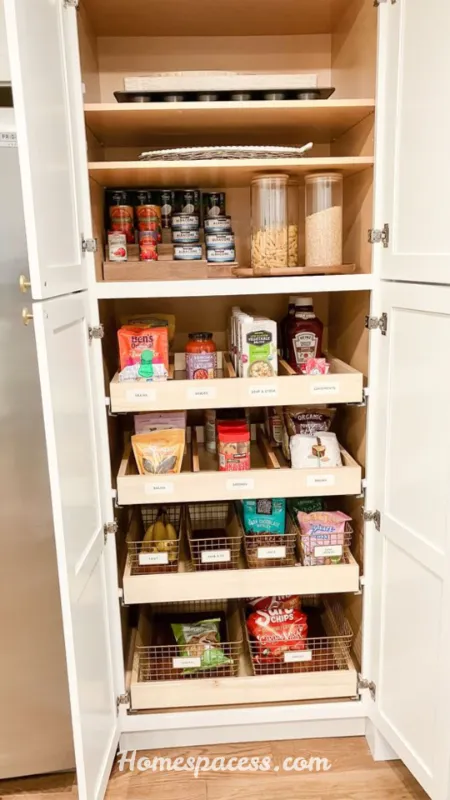
If you’re organizing a built-in pantry or kitchen cabinet, retrofitting with pull-out drawers or slide-out shelves is the most transformative structural upgrade you can make. Unlike fixed shelves where rear access requires removing everything in front, pull-out drawers bring the entire shelf contents forward in a single smooth motion. This is especially critical for lower pantry shelves where bending and reaching to the back is both inconvenient and often physically challenging for older users.
DIY pull-out shelf kits from brands like Rev-A-Shelf, IKEA’s PAX system, and Knape & Vogt make this upgrade achievable without a contractor. A medium-skill DIYer can retrofit a standard cabinet in under two hours. The ROI is significant: professional organizers consistently cite pull-out drawers as the feature clients most often wish they’d added sooner. They’re particularly effective for heavy canned goods, root vegetables, and baking equipment that are awkward to shuffle through on static shelves.
🎨 Style Note:
Full-extension soft-close drawer slides add a premium, quiet feel to any pantry. The soft-close mechanism also protects fragile glass jars from slamming.
💡 Pro Tip:
Install pull-out drawers at two heights: a shallower drawer for cans and bottles, and a deeper one below for bulky items like mixer bowls and large pots.
Must Read This Topic: Front Door Entryway Ideas: Stunning Ways to Create a Welcoming Home Entrance
A Labeling System That Actually Sticks (Literally and Figuratively)
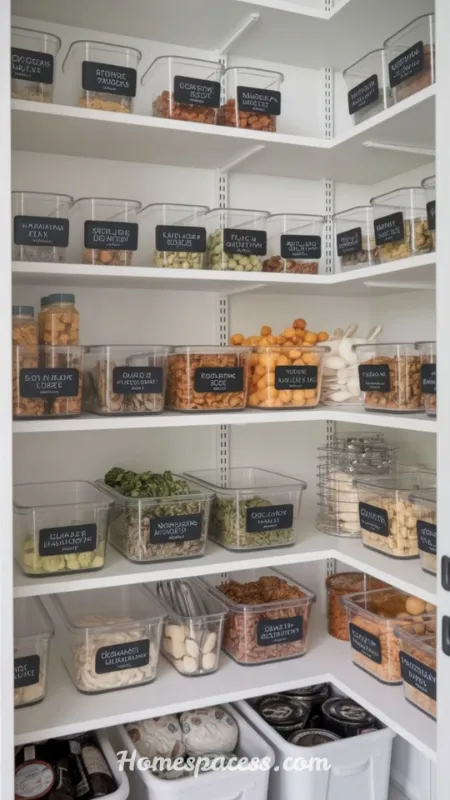
Labels are the pantry organization idea most people try and most people abandon because they choose the wrong labeling approach. The key is matching your label system to your lifestyle. Chalkboard labels work beautifully for frequent changers (families who rotate what’s in containers seasonally). Printed labels from a label maker like the DYMO or Brother P-touch offer clean permanence for stable categories. And printable label sheets with a consistent font create a cohesive, editorial look for those who want their pantry Pinterest-worthy.
Beyond container labels, consider shelf-edge labels strips of label tape along the front edge of each shelf zone identifying the category (“Grains,” “Canned Goods,” “Baking”). These ‘zone anchors’ make it immediately clear where returning items belong, and dramatically improve how well the system maintains itself when multiple family members use the pantry. A label system isn’t about aesthetics alone it’s a communication tool that keeps everyone in the household on the same organizational page.
🎨 Style Note:
Use a single font across all labels for visual coherence. Botanical or modern sans-serif fonts (like Futura or Montserrat) read cleanly and photograph well.
💡 Pro Tip:
Label the CATEGORY first, then the item name. ‘Baking: Almond Flour‘ is easier to scan than ‘Almond Flour‘ when you’re looking across a full shelf.
Don’t Miss This Post: Under Stairs Storage Ideas: Smart Ways to Transform Wasted Space into Functional Storage
FIFO Rotation: The Grocery Store Method for Your Home
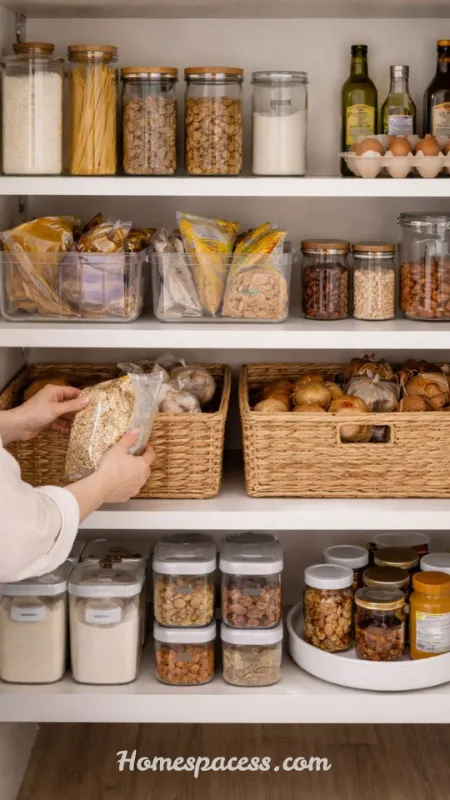
Grocery stores operate on First In, First Out (FIFO) a stock rotation principle where the oldest items are always placed at the front. Applying this to your home pantry is one of the most impactful food storage organization ideas you’ll ever implement, and it costs nothing. When you bring home new groceries, new items go behind existing stock. Older items come forward and get used first. It’s a simple system, but it almost completely eliminates food spoilage from forgotten items.
Purpose-built can dispensers and FIFO can organizers take this a step further by automatically feeding cans from the back as you pull from the front a gravity-fed system that requires zero mental effort once it’s installed. These are especially useful for households that stock up on canned goods, soups, and beverages. Scenario: a meal-prep-focused family of five reported saving $1,200 annually on groceries after implementing FIFO rotation combined with a weekly pantry inventory habit a two-part system that virtually eliminated food waste.
🎨 Style Note:
Clear or chrome FIFO can organizers look especially clean on pantry shelves. Some are stackable, allowing multiple varieties to be organized in a small footprint.
💡 Pro Tip:
Write the purchase date on the top of canned goods with a marker. For a household with multiple shoppers, this eliminates guesswork about what was bought first.
Dedicated Snack Bins and Lunchbox Stations
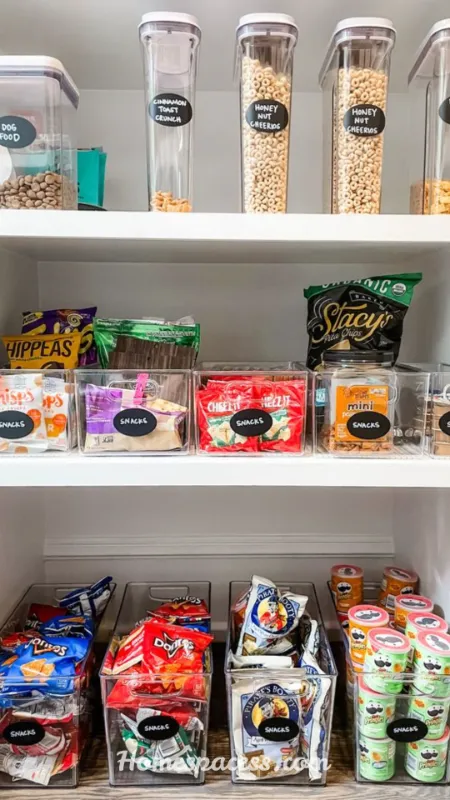
Creating a dedicated snack station in your pantry is both a practical organization win and a surprisingly effective parenting tool. A clearly labeled basket or open bin at a child-accessible height containing pre-approved snacks means kids can self-serve without ransacking the whole pantry. It also makes school lunchbox packing dramatically faster everything needed is in one spot, clearly visible, without shuffling through shelves. This is one of the most-requested family pantry organization ideas from professional organizers who work with busy households.
For adults, a ‘weeknight essentials’ basket stocked with frequently-used staples like pasta, rice, olive oil, and canned tomatoes creates a fast-dinner shortcut that saves decision fatigue at 6pm. The concept is borrowed from mise en place, the French culinary principle of having everything in its place before cooking begins. When your most-used ingredients are always together and visible, weeknight cooking becomes intuitive rather than exhausting. Many families report this single change reducing takeout spend noticeably because home cooking feels easier.
🎨 Style Note:
Wire baskets or linen-lined storage bins add a soft, inviting texture to snack zones, making the area feel intentional rather than utilitarian.
💡 Pro Tip:
Rotate the snack bin seasonally summer calls for lighter, cooler-storage snacks; winter for heartier options. It keeps the pantry fresh and prevents snack fatigue.
Magnetic Spice Racks and Wall-Mounted Storage
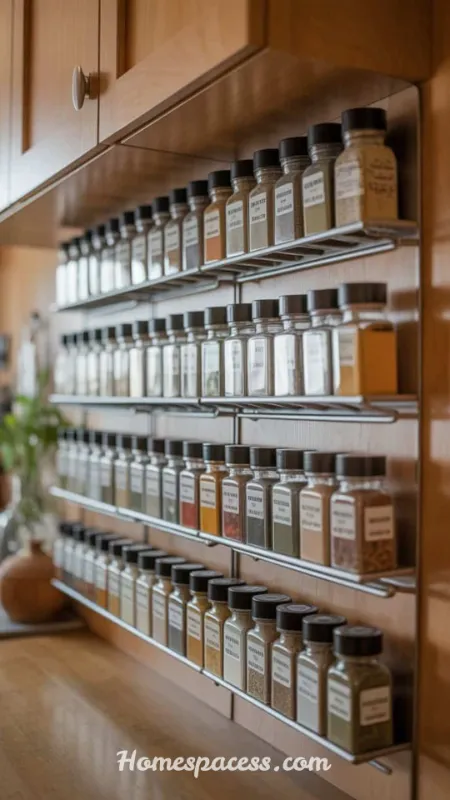
Spices are the most disorganized element in the average pantry, and magnetic spice organization solves the problem elegantly. Magnetic tins mounted to a metal strip or refrigerator-side panel keep spices visible, accessible, and completely off the shelf freeing up significant space for other categories. Leading brands like Kamenstein, Häfele, and IKEA’s GRUNDTAL system offer sleek, scalable magnetic spice storage that works in both large walk-in pantries and tight kitchen walls.
Wall-mounted storage isn’t limited to spices. Pegboard pantry walls are having a major moment in kitchen design a pegboard panel installed on a pantry wall or inside a cabinet door can hold hooks, baskets, jars, and even small utensils in a fully customizable, rearrangeable configuration. It’s the organizational equivalent of a blank canvas. A Brooklyn apartment dweller documented using a 24×48 inch pegboard to organize her entire pantry wall for under $45 including hooks, baskets, and mounting hardware.
🎨 Style Note:
Matte black magnetic tins on a black metal rail create a sleek, modern aesthetic perfect for contemporary kitchens. White tins on white boards suit Scandinavian or farmhouse styles.
💡 Pro Tip:
Fill magnetic tins with premeasured spice blends (taco seasoning, curry powder, Italian herb mix) rather than individual spices a meal prep time-saver hiding in plain sight.
Stackable Baskets and Bins for Deep Pantry Shelves
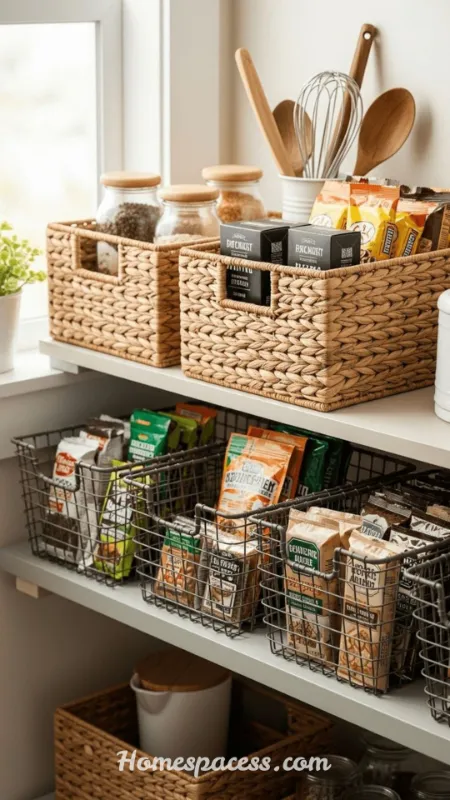
For deep pantry shelves and walk-in pantry organization, stackable bins and baskets are the workhorse of the system. Unlike containers with lids (which require you to open each one), open-top stackable bins let you see and grab contents instantly while still keeping categories contained and shelves tidy. The stacking function means you’re using vertical space efficiently a critical factor in pantries where shelf height is generous but floor space is limited.
The best pantry storage bins have handles for easy removal from deep shelves and a slight lean-forward angle so you can see contents from above. Brands like M Design, Made smart, and Inter Design offer highly-rated options across price points. A real-world scenario: a meal prep enthusiast reorganized her 10-shelf pantry entirely with stackable bins, reducing her Sunday prep time from 90 minutes to 60 minutes simply because she could grab every ingredient category without searching.
🎨 Style Note:
White stackable bins create a bright, clinical organization aesthetic. Natural rattan or seagrass baskets warm up a farmhouse or boho kitchen pantry beautifully.
💡 Pro Tip:
Label bins on the front AND place a paper list of contents inside each bin. When the category shifts seasonally, the inside list is easy to update without relabeling.
A Weekly Pantry Reset: The Habit That Maintains the System
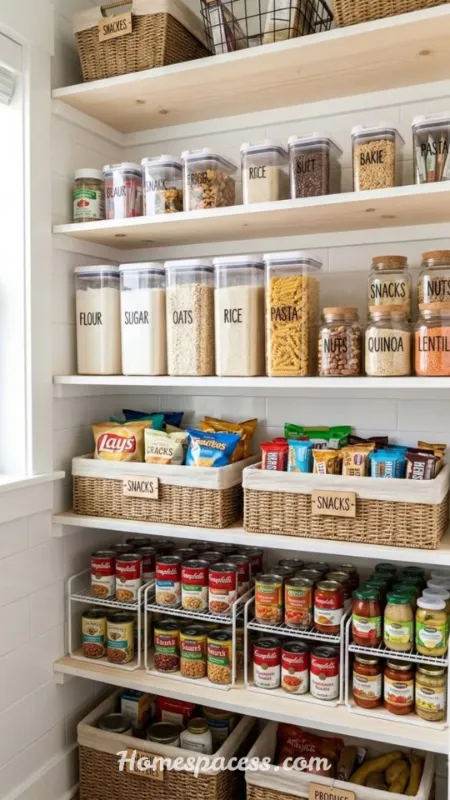
Even the most beautifully organized pantry will become chaotic without a maintenance habit. The secret that most pantry organization guides miss entirely is this: organization is not a one-time event it’s a weekly practice. A 10-minute Sunday pantry reset, done before grocery shopping, transforms your pantry from a ‘project’ into a living, self-sustaining system. Pull forward items that need to be used, check your stock against your meal plan, and return any misplaced items to their zones.
Link your pantry reset to an existing habit for the best chance of consistency right after your morning coffee, or while listening to a podcast. Professional organizers call this habit stacking, and it dramatically improves follow-through. The payoff compounds: households with a regular reset habit waste less food, spend less on groceries, and report significantly lower stress around mealtime. Think of the weekly reset not as upkeep, but as 10 minutes of investment that pays back hours of mental clarity throughout the week.
🎨 Style Note:
Keep a small notepad or whiteboard inside your pantry to jot items as they run out. This running list becomes your grocery list automatically, eliminating the ‘I thought we had that’ moment.
💡 Pro Tip:
Do your pantry reset on the same day you plan your weekly meals. The two activities reinforce each other and make both faster and more accurate.
Conclusion
A well-organized pantry is one of the most impactful yet underestimated upgrades you can make to your daily life. These pantry organization ideas from decluttering and zoning to smart storage tools and weekly resets work together as a complete system rather than isolated tips.
Start with just two or three changes and build from there. The takeaway is simple: when your pantry works for you, cooking becomes less stressful, groceries cost less, and your home feels more under control. Pick one idea from this guide today and take that first step toward a pantry you’ll actually love using.
Advanced Insights & Expert Analysis
Pantry Organization Trends in 2026 and Beyond
The pantry organization industry is experiencing a fascinating convergence of aesthetics and function. The ‘decanted pantry’ trend popularized by home organization influencers and platforms like TikTok and Pinterest has pushed clear container adoption to all-time highs, with Google searches for “pantry organization containers” growing over 210% since 2021. What’s particularly interesting is that this trend isn’t just cosmetic; decanting genuinely reduces food waste, improves meal planning accuracy, and creates a more mindful relationship with food consumption. The aesthetic outcome is a byproduct of a fundamentally functional system.
Looking forward to 2026 and 2027, the dominant trend is tech-integrated pantry management. Smart pantry systems where QR-coded containers link to digital inventory apps like Pantry Check, OurGroceries, or the AI-powered Whisk are moving from early adopter territory into mainstream use.
These tools allow homeowners to know exactly what’s in their pantry from their smartphone, generate AI-assisted meal plans based on current stock, and receive low-stock alerts automatically. This represents a fundamental shift from visual organization to data-driven pantry management a change that will redefine what ‘organized’ means in the kitchen within five years.
Another emerging direction is modular pantry systems customizable, reconfigurable storage units designed to evolve with a household’s changing needs. Unlike fixed cabinetry, modular systems (think IKEA KALLAX adapted for pantry use, or purpose-built systems from The Container Store’s Elfa line) allow homeowners to add, remove, and rearrange shelving without tools or contractors. This trend aligns with broader shifts toward adaptable, sustainable home design and reflects a generation of homeowners who prioritize flexibility over permanent renovation.
Expert Insights: Real-World Pantry Optimization Strategies
Professional home organizers consistently identify decision fatigue reduction as the most overlooked benefit of pantry organization. When your pantry is well-structured, you stop making micro-decisions about where to look, what to move, or whether you have enough of something.
This cognitive overhead small per incident but substantial in aggregate is what makes a disorganized pantry feel so exhausting. The best organized pantry systems are designed to make the right choice the obvious choice, reducing the mental load of daily cooking to almost zero.
From a behavioral psychology perspective, visibility is the single most powerful driver of consumption choices. Items placed at eye level and in clear containers are consumed up to three times more frequently than identical items stored in opaque containers at lower heights.
This has profound implications for both nutrition and food waste: placing healthy staples in clear containers at eye level (whole grains, legumes, nuts) and keeping ultra-processed snacks in opaque containers on lower shelves can meaningfully shift your household’s eating habits without willpower or restriction.
The most sophisticated pantry organization approach used by professional chefs and meal preppers is inventory-driven shopping a practice where your shopping list is generated entirely from a current pantry audit rather than habit or memory. This approach, combined with a two-week pantry challenge (cooking only from existing pantry stock for two weeks), reveals which ingredients your household actually uses regularly versus which items sit perpetually in the back of a shelf. The result is a leaner, more strategic pantry stocked only with items your family genuinely uses, reducing average grocery spend by 20–35% in documented cases.
Sustainability and Long-Term Value: The Green Pantry Perspective
A well-organized pantry is inherently a sustainable pantry. When you can see everything you own, track what’s nearing expiration, and shop only for what you need, food waste drops dramatically. The USDA estimates that 30–40% of the US food supply is wasted much of it at the household level, and much of that driven directly by poor pantry visibility and organization. Implementing even three of the ideas in this guide clear containers, FIFO rotation, and weekly resets can meaningfully reduce your household’s contribution to that statistic.
From a materials perspective, sustainable pantry storage choices are increasingly the mainstream choice rather than the niche one. Bamboo organizers, glass storage jars, beeswax wraps, and reusable silicone bags offer comparable performance to plastic equivalents with a fraction of the environmental footprint.
Importantly, glass and bamboo are also more durable over time a well-made glass storage jar can last 20+ years compared to 3–5 years for a typical plastic container. The higher upfront cost is easily offset by longevity and the elimination of microplastic concerns in food storage.
The long-term value calculation of pantry organization is often underestimated. A $200 investment in quality storage containers and organizers amortized over 10 years costs $20 per year. Set against documented savings of $500–$1,500 annually from reduced food waste and more strategic grocery shopping, the ROI is extraordinary.
Households that maintain organized pantries also report needing to purchase fewer ’emergency’ takeout meals because they can always quickly identify and execute a meal from their well-stocked, visible pantry a subtle but significant financial benefit that compounds monthly.
Future Predictions: The Next Evolution of Pantry Organization
The intersection of artificial intelligence and kitchen management is accelerating faster than most homeowners realize. By 2027, we expect to see widespread adoption of AI-powered pantry cameras compact devices installed inside pantry shelves that use computer vision to automatically track inventory levels, detect expiring items, and push shopping list suggestions to your smartphone in real time. Pilot versions from startups like Hapi and Smarter already exist; mainstream adoption is a matter of price reduction and consumer awareness, both of which are advancing quickly.
A more immediate development is the rise of smart labels and RFID-enabled food packaging. Several major CPG companies are already piloting packaging that communicates freshness data to connected home apps, allowing your pantry inventory to update automatically as items are consumed.
When this technology scales expected by 2028–2030 the concept of a self-managing pantry will shift from science fiction to household reality. Your pantry will know what it contains, what’s expiring, and what you need to buy before you consciously notice.
On the design side, biophilic pantry design integrating natural materials, light, and plant elements into storage spaces is emerging as a significant interior design trend. Far from a superficial aesthetic choice, biophilic design has been shown in workplace research to reduce stress and improve decision-making.
Applied to kitchen and pantry spaces, this means natural wood shelving, living herb walls near the pantry entrance, and natural light optimization (via skylights or improved artificial lighting) that makes the space feel genuinely pleasant to spend time in which in turn encourages regular maintenance and thoughtful use.
Common Pantry Organization Mistakes (And How to Avoid Them)
The most common pantry organization mistake is organizing for aesthetics rather than function. A pantry that looks beautiful in photographs but doesn’t support your actual cooking habits will be chaotic within three weeks. Before buying a single bin or label, map out how your household actually uses the pantry: who accesses it, how often, what they reach for most, and at what height they can comfortably reach. Your system should be built around your real behavior, not an idealized version of it.
Another frequently overlooked mistake is over-organizing creating a system so complex and rigid that only one person in the household understands and can maintain it. The best pantry systems are intuitive enough that any family member, including children, can both find what they need and return items correctly without instruction. If your organization system requires a manual to follow, it’s too complex. Simplify the zones, reduce label specificity, and prioritize ease of return over perfect categorization.
Finally, many people make the mistake of buying all their storage solutions at once before understanding what they actually need. The smart approach: declutter first, live with empty shelves for a week while paying attention to your actual pantry usage patterns, and then invest in targeted storage solutions for the specific problems you’ve identified.
This prevents the common scenario of buying 24 matching containers only to discover your pantry layout actually needs risers and door organizers, not more bins. Measure your shelves, assess your habits, and then shop in that exact order.

Team Home Spacess shares simple, practical design ideas that work for real families. The team focuses on cozy décor, soft colors, and natural textures that make a space feel truly lived-in. From everyday decorating tips to creative home projects, Team Home Spacess is dedicated to helping readers create warm, comfortable, and inviting spaces with a fresh and personal touch.