

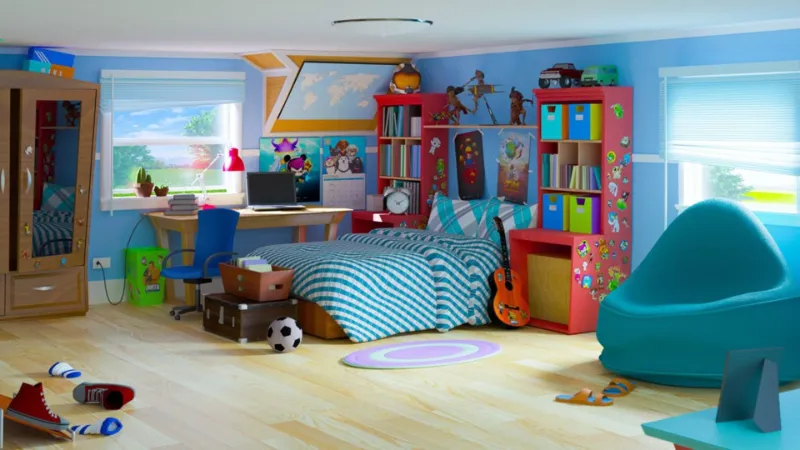
Does your child’s bedroom feel dull, uninspiring, or just plain boring? A colorful kids room isn’t just about pretty walls it’s about creating an environment that fuels imagination, supports development, and makes your child genuinely excited to spend time there. Research from the American Institute of Architects shows that thoughtfully designed children’s spaces directly impact mood, focus, and emotional regulation.
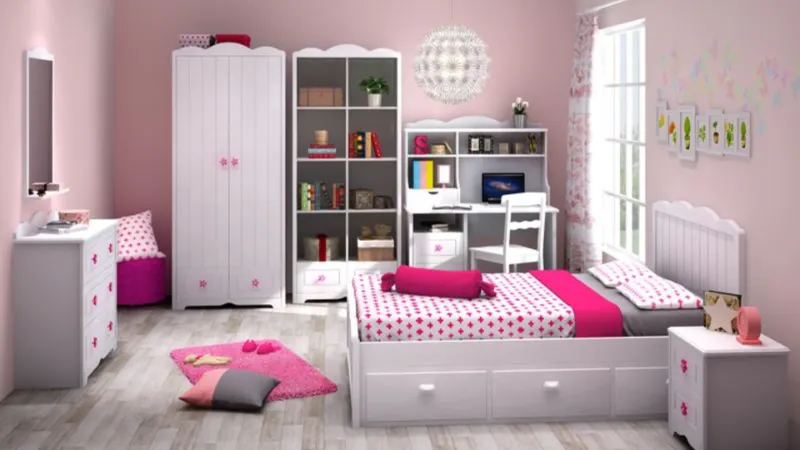
The challenge most parents face isn’t a lack of ideas it’s knowing which kids room color ideas actually work in real homes, on real budgets, and for real children who grow and change quickly. From bold accent walls to playful themed decor, this guide walks you through proven, design-expert-backed approaches that transform any child’s bedroom into a vibrant, functional, and deeply personal space.
Rainbow Accent Walls That Spark Imagination
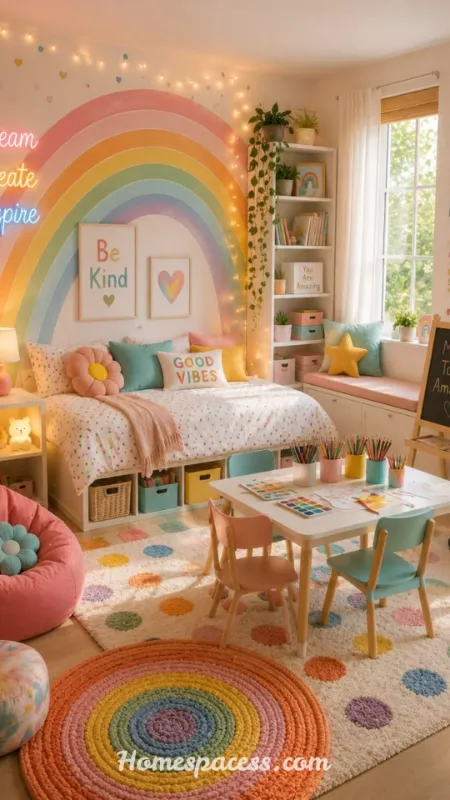
A rainbow accent wall is one of the most powerful design moves you can make in a colorful kids bedroom. Rather than painting all four walls in a single tone, focus your energy on one statement wall behind the bed or play area. This concentrates color impact without overwhelming the senses a key principle endorsed by child-focused interior designers. Popular techniques include horizontal color blocking, ombre gradients from yellow to violet, or hand-painted arch shapes in stacked rainbow hues.
For example, imagine a seven-year-old’s bedroom where a sunset-inspired wall painted in layers of coral, tangerine, and golden yellow becomes the backdrop for a reading nook. The child naturally gravitates to that corner, subconsciously energized by the warm tones. This scenario is backed by color psychology research showing warm hues increase alertness and enthusiasm in younger children. Cooler tones like lavender or sky blue near sleep zones create calm balance.
If DIY painting feels intimidating, removable wallpaper murals offer a renter-friendly and mistake-proof alternative. Brands like Tempaper and Chasing Paper now offer rainbow and ombre options specifically designed for children’s room decor. They peel off cleanly and can be updated as your child’s tastes evolve a smart investment in a fast-changing stage of life.
🎨 Style Note:
Pair a rainbow accent wall with white or neutral furniture to let the color shine without visual clutter. This creates a balanced, magazine-worthy look.
💡 Pro Tip:
Use painter’s tape to create clean geometric sections before applying multiple colors this gives a professional finish even for DIY beginners.
See Related Articles: Baby Room Ideas That Make Small Nurseries Look Bigger and Brighter
Bold Primary Colors for Energetic Play Spaces
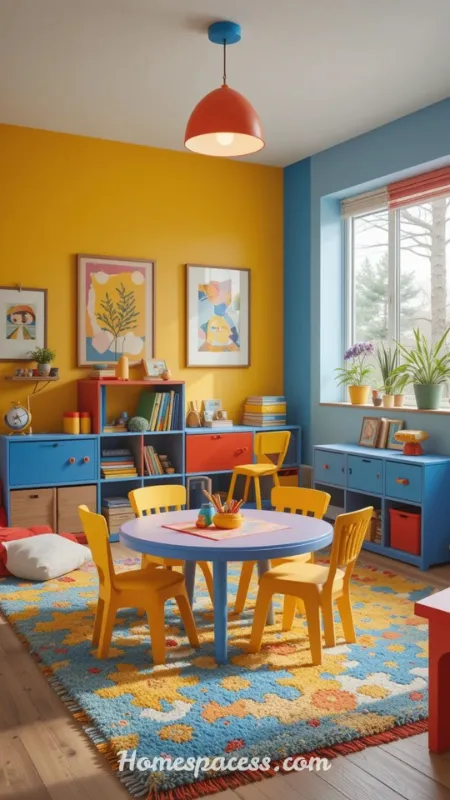
Bold primary colors classic red, yellow, and blue remain a timeless foundation for bright kids room decor. These hues aren’t just visually stimulating; Bauhaus-era educational research showed that children as young as eighteen months respond most naturally to primary colors, making them ideal for spaces where active play and learning happen simultaneously.
Consider a scenario where a child’s playroom uses Lego-red shelving, sunshine-yellow curtains, and a cobalt blue rug. Each element is bold on its own, but when grounded on white walls and natural wood flooring, the space feels curated rather than chaotic. This is the 60-30-10 color rule in action 60% neutral base (walls/floor), 30% dominant color (furniture), and 10% accent color (accessories). Designers consistently recommend this framework for kids room color schemes.
One overlooked strategy is using primary colors in rotating, modular pieces rather than permanent paint. Colorful storage bins, interchangeable cushion covers, and bold area rugs allow parents to shift the room’s energy seasonally or as the child ages. This approach makes the investment go further and keeps the room feeling fresh without a full renovation.
🎨 Style Note:
Avoid using all three primaries at equal intensity in the same room. Let one color lead and use the others as supporting players for visual harmony.
💡 Pro Tip:
Red stimulates energy and focus but can become overpowering use it in small doses on accent pieces rather than large walls.
You May Also Like: Trendy Baby Nursery Ideas for Boys That Make Your Room Look Amazing
Pastel Color Palettes for Soft, Dreamy Bedrooms
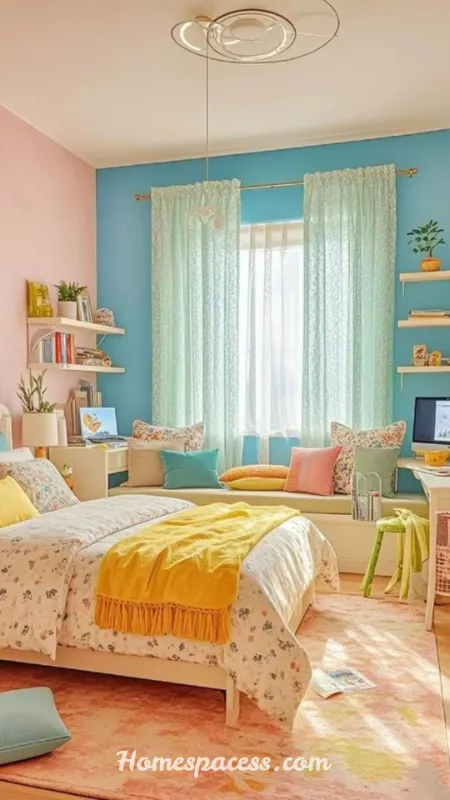
Pastel color palettes think mint green, blush pink, lavender, and baby blue offer a gentler approach to color in a kids bedroom color palette. These soft tones are particularly well-suited for sleep and relaxation zones, as they reduce visual stimulation while maintaining a cheerful, age-appropriate aesthetic. Child sleep experts at the National Sleep Foundation note that low-saturation colors in bedroom environments help signal wind-down time for children’s brains.
A real-world example: a nursery designed in layered pastels sage walls, cream furniture, and dusty rose bedding consistently receives feedback from parents that their babies sleep longer and more calmly than in brighter rooms. While this isn’t clinical proof, it aligns with what environmental psychologists have observed about the link between soft, muted tones and relaxation response in young children.
The beauty of a pastel kids room is its versatility these colors work beautifully for toddlers through tweens with minimal updates. Swap pastel rainbow bedding for a subtler stripe duvet as your child grows, and the room transitions gracefully. Pair pastels with warm wood tones and woven textures to avoid the space feeling too clinical or cold.
🎨 Style Note:
Layer two or three pastel tones rather than using just one this creates depth and dimension that a single pastel can’t achieve alone.
💡 Pro Tip:
Use a pastel color on the ceiling to create a cocoon-like effect it’s a designer trick that makes the room feel cozy without shrinking it.
Recommended for You: 15 Baby Nursery Ideas That Are Beautiful, Safe & Built to Grow With Your Child
Nature-Inspired Green Kids Rooms for Calm and Focus
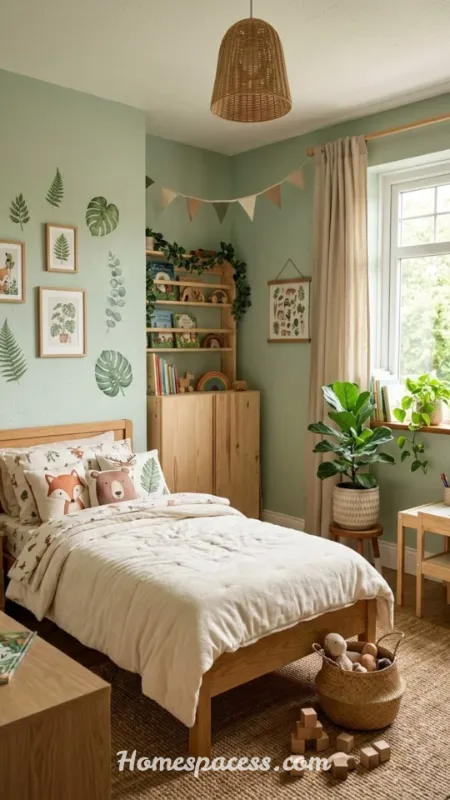
Green is one of the most versatile and psychologically beneficial colors for a colorful kids room. From forest green to sage and olive, green hues are associated with nature, growth, and mental calm all qualities you want embedded in a child’s personal space. Studies published in the Journal of Environmental Psychology have linked green-dominated environments with improved concentration and reduced anxiety in school-aged children.
A well-executed nature-themed green room might feature a botanical wallpaper on one wall, a sage painted ceiling, and live potted plants on open shelving. For older children, this aesthetic translates into a study-friendly environment the visual connection to nature has been shown to restore mental fatigue after homework sessions. It’s an evidence-based design choice that also looks stunning.
For a creative twist, combine jungle-themed decor with green tones think leafy canopy bed drapes, animal-print cushions, and moss-colored rugs. This works especially well for children aged 3–10 who are in a peak phase of nature curiosity and imaginative play. The room becomes a storytelling tool as much as a sleep space.
🎨 Style Note:
Balance deep greens with plenty of natural light and white or cream accents to prevent the room from feeling dark or heavy.
💡 Pro Tip:
Incorporate real plants like spider plants or pothos they purify the air and deepen the nature theme while teaching children basic responsibility.
Must Read This Post: Stunning Canopy Bed Ideas to Create a Dreamy Bedroom Retreat
Themed Color Rooms: Space, Ocean, and Fantasy Worlds
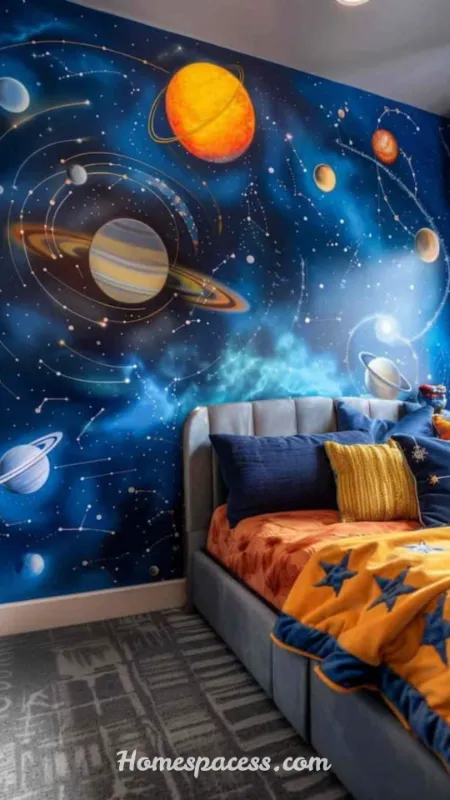
Themed colorful kids bedrooms take color beyond aesthetics they create complete worlds that children inhabit emotionally. A space-themed room in deep navy, black, and metallic silver with glow-in-the-dark ceiling stars becomes an adventure every single night. An ocean-themed bedroom in aqua, coral, and sandy beige makes a child feel like an underwater explorer. These immersive environments are proven to support creative play and reduce screen dependency.
The key to a successful themed room is committing to the color story. An ocean room works because every element the teal walls, the rope-knot textiles, the sand-dollar wall art speaks the same visual language. When one element breaks that language (like a bright red bookshelf in a blue ocean room), the immersive quality collapses. Interior designers specializing in children’s spaces recommend creating a tight three-color palette for themed rooms and sticking to it across every purchase decision.
Fantasy themes like enchanted forests, fairy tale castles, or wizard academies offer the broadest creative range and age the best a forest-themed room with emerald, gold, and deep brown can evolve from a toddler’s whimsical escape into a tween’s sophisticated retreat with minimal changes. Focus on timeless theme elements rather than trend-specific characters or licensed IP that children will outgrow quickly.
🎨 Style Note:
Use ceiling treatment as part of the theme starry galaxy prints, cloud murals, or wooden plank effects add unexpected dimension without requiring a room makeover.
💡 Pro Tip:
Avoid using licensed character bedding or decals as the room’s foundation themes built around characters date quickly. Build with color and shape, then add character accessories that can be swapped.
More on This Topic: Bedroom Bookshelf Ideas | Smart, Stylish & Space-Saving Ideas to Transform Your Bedroom
Colorful Bunk Bed Setups for Shared Kids Rooms
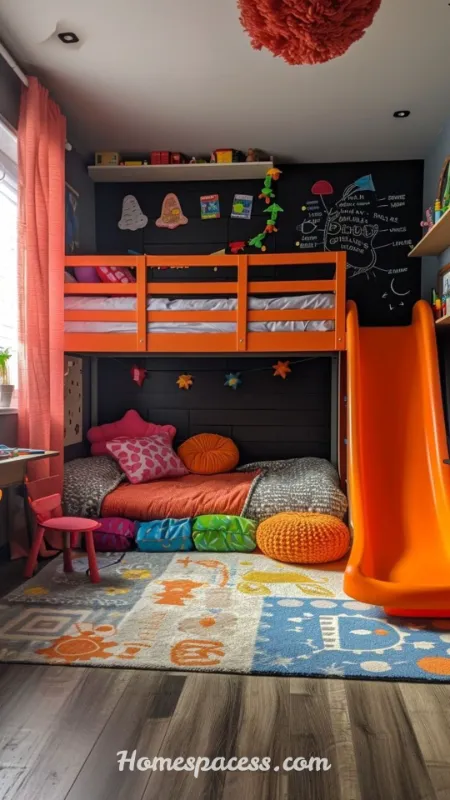
Designing a colorful shared kids room around a bunk bed requires both design skill and diplomatic thinking. Each child deserves a sense of personal territory within the shared space, and color is the most effective tool for creating this division without physical barriers. A popular approach is assigning each child a signature color one child gets a teal zone above, the other gets coral below unified by a shared neutral wall color.
Take this mini case study: two sisters aged 6 and 9 shared a 10×12 room with a custom bunk bed. The younger sister loved purple; the older loved yellow-green. A designer solved the conflict by painting the wall beside each bunk in the child’s preferred hue, using a white bunk frame as the neutral connector. Matching bedding, small curtain panels for privacy, and personal LED string lights completed each child’s zone. Both children felt ownership without the room looking like two competing spaces.
The structure of a bunk setup also opens creative opportunities for under-bed play tents or canopies in bold colors, turning the bottom bunk into a fort by day and a cozy sleep space by night. This maximizes the play value of limited square footage a critical concern in modern homes where children’s rooms are often smaller than in previous generations.
🎨 Style Note:
Use color-coordinated storage baskets, bins, and shelves in each child’s signature color to reinforce their personal zone without requiring painted zones.
💡 Pro Tip:
Install clip-on reading lights in each child’s signature color on their bunk functional, personal, and a small detail that makes them feel genuinely seen.
See Also: Neutral Bedroom Ideas to Create a Calm, Stylish, and Timeless Space
Colorful Study Corner Ideas for Kids Who Love Learning
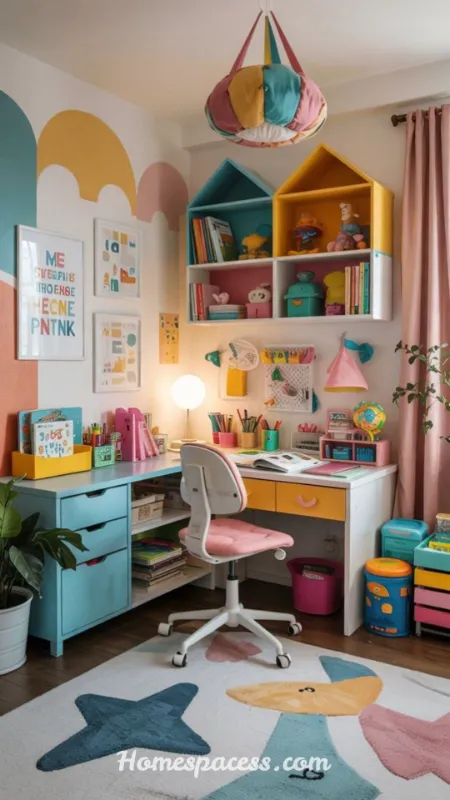
A dedicated colorful study corner within a kid’s bedroom can dramatically improve homework compliance and academic engagement. Research from the Society for Environmental Graphic Design shows that children perform better on focus tasks in environments with intentional color zoning where the study area looks and feels clearly different from the sleep and play areas. Use a distinct wall color, a bold rug, or a statement desk to define this zone.
For a practical example: a 10-year-old’s study corner featuring a yellow accent wall (yellow is associated with analytical thinking and mental energy), a teal pegboard for supplies, and a bright coral desk chair creates a visually stimulating but organized space. The child associates the corner’s color identity with ‘work mode’ a form of environmental anchoring that productivity experts use in adult home offices too.
Don’t underestimate the power of colorful organizational systems in the study zone. Color-coded binders, art supply organizers, and magnetic boards in coordinated hues teach children organizational skills while keeping the space energetic and inviting. Studies show that children with organized, visually appealing study spaces spend an average of 20% more time on homework voluntarily compared to those with cluttered, color-neutral desks.
🎨 Style Note:
Keep the study corner color scheme to two dominant colors plus one accent to avoid visual distraction that could undermine focus.
💡 Pro Tip:
Add a colorful wall clock to the study zone it teaches time management and becomes a functional design element that reinforces the zone’s identity.
Colorful Storage Solutions That Keep Kids Rooms Tidy
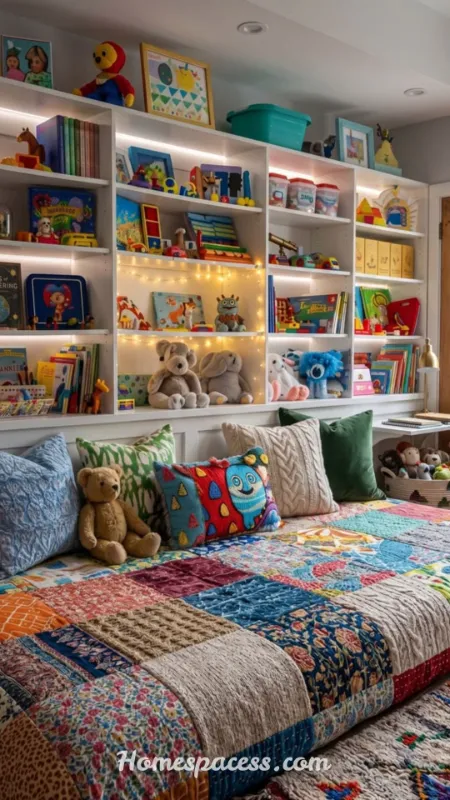
In any colorful kids room, storage is the unsung hero. The most beautifully designed space falls apart if there’s no clear home for every toy, book, and belonging. Smart colorful storage ideas for kids solve the functionality problem while enhancing the room’s visual identity. Think beyond basic white IKEA shelves consider bold-colored open cubbies, rainbow-stacked book ledges, and color-sorted toy bins that children can independently manage.
A color-sorted storage system is particularly powerful for toddlers and early school-age children. When every toy bin is a different color and each color has a category (red = cars, blue = blocks, green = art supplies), tidying becomes a game rather than a chore. Child development specialists confirm this approach aligns with how young children process categorical information through color before shape or label.
For older children aged 8 and up, pegboard storage systems in bold colors create both storage and display opportunities. A teal pegboard on a bedroom wall with multicolored hooks for headphones, bags, and accessories turns everyday items into part of the room’s decor. This approach, borrowed from creative studio design, makes organized kids rooms feel like personal, curated spaces rather than imposed tidiness.
🎨 Style Note:
Choose storage in two to three colors from your room’s palette rather than every color under the sun cohesion makes storage look intentional, not chaotic.
💡 Pro Tip:
Label bins with both text and a color swatch this dual coding system helps pre-readers maintain the organization system independently.
Gender-Neutral Colorful Kids Room Ideas
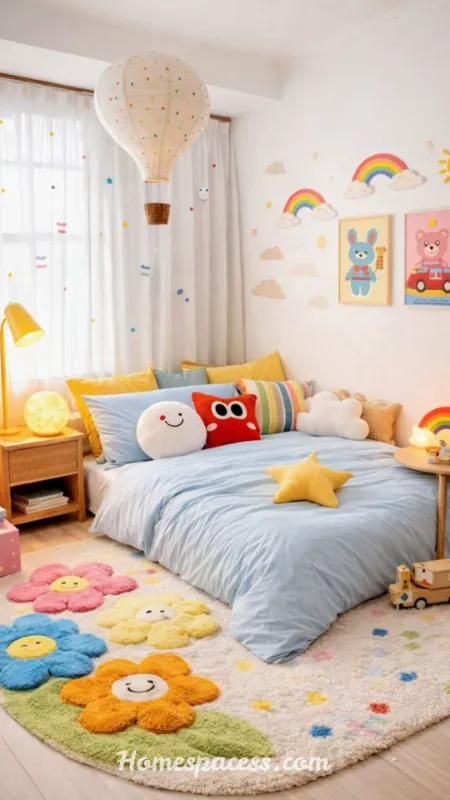
The era of pink for girls and blue for boys is firmly in the past and design is richer for it. Gender-neutral colorful kids rooms have emerged as one of the fastest-growing interior design trends, embracing palettes that are bold, vibrant, and completely free from stereotype. Think terracotta and mustard, teal and lime, or deep purple and sunshine yellow combinations that feel fresh, current, and welcoming to any child.
A gender-neutral room also makes practical sense for families expecting siblings. Designing in a terracotta and forest green palette, for example, creates a warm, adventurous space that works beautifully for a child of any gender. Accessories can be personalized a blue dinosaur lamp, a pink ballerina mobile without the room’s foundation needing to change. This adaptability saves significant time, money, and design energy over the long term.
Some of the most celebrated children’s room designs of recent years have embraced earthy, jewel-toned, or nature-inspired palettes that transcend gender norms entirely. Deep rust paired with cream linen and botanical prints, for example, creates a sophisticated, cozy room that feels curated rather than childish and that the child can grow into for years without feeling like they’ve aged out of their space.
🎨 Style Note:
Ground gender-neutral palettes in a warm neutral (cream, off-white, warm grey) to prevent jewel or earthy tones from feeling too masculine or too bold.
💡 Pro Tip:
Let the child choose one strong accent color they love even if it’s pink or blue within a gender-neutral foundation. Their ownership of that choice matters enormously for room attachment.
DIY Colorful Wall Art and Murals for Kids
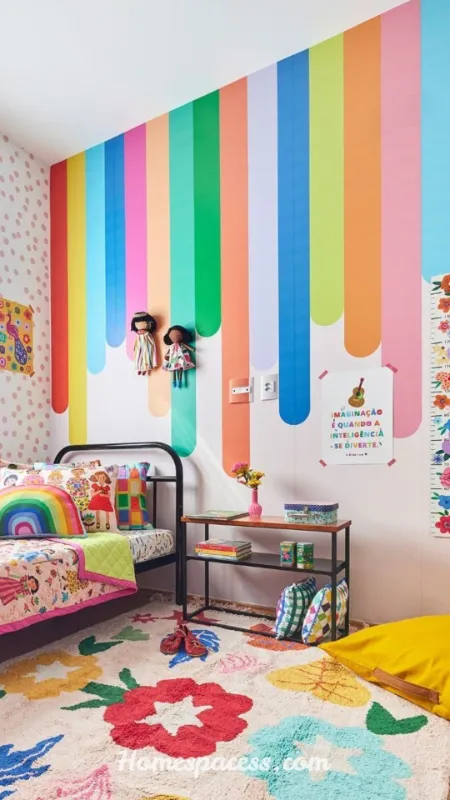
Hand-painted DIY wall art for kids rooms is one of the most impactful and personalized approaches to creating a colorful children’s bedroom. You don’t need to be a professional artist to execute a stunning mural geometric shapes, abstract color blocks, large-scale number or letter paintings, or simple horizon landscapes are all achievable with basic tools and beginner-level painting skills.
One inspiring approach: involve your child in creating the mural. A 5-year-old can paint the sky section of a rainbow landscape with a wide brush; a 9-year-old can stencil geometric shapes; a 12-year-old might design their own mural concept. This collaborative process creates a piece of art that has genuine personal meaning and children who co-create their room environment show stronger room pride and tidiness behaviors according to occupational therapists specializing in pediatric environments.
For parents who prefer a no-paint solution, peel-and-stick wall murals, oversized art prints, and framed children’s illustrations achieve a similar visual impact. Companies like Society6, Desenio, and Minted offer art specifically scaled for children’s rooms. Grouping three to five prints in complementary colors creates a gallery wall effect that anchors the room’s color palette and adds an artistic, high-design element with minimal effort.
🎨 Style Note:
Use chalk paint or chalkboard paint on a portion of one wall this creates an ever-changing art surface and makes the room feel interactive and alive.
💡 Pro Tip:
Before committing to a full mural, test your colors with large painted swatches (at least 12×12 inches) and observe them in morning, afternoon, and evening light colors shift dramatically throughout the day.
Colorful Textiles and Bedding as the Room’s Color Anchor
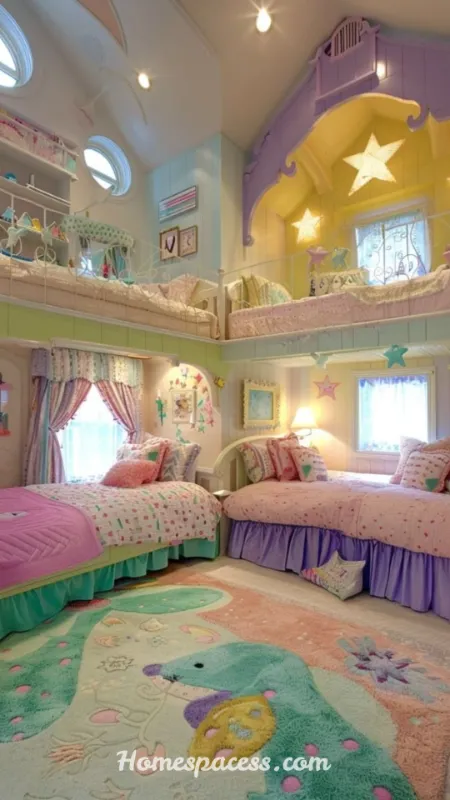
Textiles are the quickest, most cost-effective way to introduce or shift the color story of a colorful kids bedroom. A bold duvet cover, vibrant curtains, or a patterned area rug can transform a neutral room in an afternoon with no tools required. This flexibility is especially valuable in children’s rooms where color preferences can change almost seasonally as the child grows and discovers new interests.
The most design-savvy approach to kids room bedding and textiles is to use the bedding as the room’s color anchor choosing a multi-color bedding set first, then pulling individual colors from it for walls, curtains, and accessories. This guarantees everything coordinates without requiring a design degree. For example, a bedding set in navy, terracotta, and mustard becomes the key that unlocks every other color decision in the room.
Layer different textile types a knit throw, velvet cushions, a woven rug in coordinating colors to add tactile dimension to the visual palette. Sensory-rich rooms with varied textures alongside bold color combinations are linked to higher creativity and emotional regulation in children. Occupational therapists frequently recommend textured environments as part of sensory processing support, making this design approach both beautiful and genuinely beneficial for child development.
🎨 Style Note:
Layer a plain base sheet with a printed duvet and a textured throw this three-layer approach adds visual richness without overwhelming patterns.
💡 Pro Tip:
Buy curtains in a bold solid color that matches your accent rather than matching your wall this creates a layered, sophisticated look that keeps the eye moving around the room.
Conclusion
Designing a colorful kids room is one of the most meaningful home projects a parent can undertake it directly shapes your child’s daily emotional experience, creative development, and sense of personal identity. From rainbow accent walls and bold primary colors to sustainable design choices and future-forward technology, the ideas in this guide give you a complete toolkit for creating a space that truly serves your child.
The best approach is always one that centers the child’s preferences, respects their developmental stage, and builds in flexibility for the inevitable changes ahead. Start with one idea that excites you both and transform that room today.
Advanced Sections:
Colorful Kids Room Trends in 2026 and Beyond
The defining kids room color trends of 2026 reflect a broader cultural shift toward authenticity, biophilia, and child-centered design. Gone are the mass-produced pastel nurseries of the 2010s today’s most forward-thinking children’s room designers are embracing earthy tones, maximalist color stories, and handcrafted elements that prioritize individual personality over generic cuteness.
A particularly significant 2026 trend is the reggio-emilia inspired room design philosophy borrowed from progressive early education that emphasizes natural materials, open-ended color environments, and spaces that respond to the child’s evolving interests.
In practice, this looks like walls painted in muted, complex tones (think aged terracotta rather than flat orange), shelves displaying natural objects and art supplies, and color introduced through curated, meaningful objects rather than generic decor.
Looking ahead, the biggest emerging trend is adaptive color environments rooms designed to shift color and mood through smart lighting, modular painted panels, and technology-assisted features. Philips Hue and similar smart lighting brands are already making this accessible for residential spaces.
Within five years, experts predict that programmable color environments will become standard in new construction children’s spaces, allowing parents to set warm amber tones for bedtime and energizing cool-daylight tones for study all from a smartphone.
🎨 Style Note:
Invest in timeless natural materials (wood, linen, rattan) alongside your chosen color palette they provide the visual grounding that prevents trendy colors from feeling dated as design language evolves.
💡 Pro Tip:
Follow children’s room design accounts on Pinterest and Instagram (not just home decor ones) the children’s design niche often predicts broader interior trends by 12–18 months.
Expert Insights: How Child Psychologists and Designers Use Color Intentionally
Leading child psychologists and pediatric interior designers share a consistent insight that most DIY room guides miss: color doesn’t just decorate a child’s room it actively participates in the child’s developmental experience. Dr. Magda Moghaddam, a specialist in environmental psychology at the University of London, notes that children between ages 2 and 8 are in a heightened phase of visual sensitivity, where color associations form foundational emotional memories.
This insight has practical implications for how to choose kids room colors. Rather than defaulting to what looks Instagram-worthy, expert designers recommend starting with the child’s known preferences and temperament. A highly sensitive child prone to overstimulation may thrive in a predominantly sage green room with terracotta accents beautiful and stimulating, but not overwhelming. A physically energetic child who struggles to self-regulate may benefit from blue-dominant spaces, which empirically reduce heart rate and activity levels in young children.
Another expert insight consistently missed by online guides: ceiling color matters as much as wall color in a child’s room because children spend significant time lying on their backs especially in cribs and on play mats. A ceiling painted in a soft, warm color or featuring a gentle mural is one of the highest-impact interventions you can make for a child under 3. For older children, a ceiling in a deep, calming blue functions as a ‘sky’ that promotes daydreaming and imaginative thinking an underrated but evidence-supported design choice.
🎨 Style Note:
Consult a color consultant who specializes in educational or pediatric spaces if you’re designing a multi-child or complex room their expertise often prevents costly color mistakes.
💡 Pro Tip:
Document your child’s reaction to color samples pinned at their eye level (not yours) their perspective is literally different and their visceral responses will guide better choices than adult aesthetic preferences alone.
Sustainable and Long-Term Value in Colorful Kids Room Design
Sustainability in a kids room color design context means two things: environmental sustainability and design longevity. On the environmental side, the paints, textiles, and materials chosen for children’s rooms deserve extra scrutiny children spend more time at home and closer to surfaces than adults, making them more vulnerable to off-gassing from conventional paints and synthetic textiles. Look for zero-VOC or low-VOC paint options from brands like ECOS Paints, Clare, or Benjamin Moore Natura, which offer the full spectrum of bold, vivid colors without the toxic chemical load of conventional formulas.
Design longevity the other dimension of sustainability is often sacrificed in favor of trend-chasing. A room designed around a character license (Frozen, Paw Patrol, Spider-Man) typically requires a complete overhaul within 2–3 years as the child’s interest moves on.
By contrast, a room designed with color as its foundation rather than characters can be refreshed with new accessories as the child ages without structural changes. This approach saves an average family an estimated $2,000–$3,500 over the childhood years in avoided redecoration costs.
The most future-proof colorful kids room strategy is the ‘bones and accessories’ model: invest in high-quality, neutral-toned or classically colored furniture (the ‘bones’) and use lower-cost, swappable textiles, art, and lighting (the ‘accessories’) for personality and trend responsiveness. A solid oak bookshelf in its natural color will work in a toddler’s pirate room and the same teenager’s reading nook a decade later. The sustainable design choice is almost always the one that ages gracefully.
🎨 Style Note:
Source secondhand furniture for kids’ rooms whenever possible quality vintage pieces often outperform modern flat-pack alternatives in durability, and the natural patina adds authentic warmth.
💡 Pro Tip:
When repainting a child’s room, chip off a small section of existing paint to check for lead if your home was built before 1978 this safety step is routinely skipped and critically important.
Future Predictions: What Colorful Kids Rooms Will Look Like in 2030
The next five years will bring profound changes to how families design children’s bedroom spaces. Three forces are converging: advances in smart home technology, a growing body of neuroscience-backed design research, and changing family structures that are creating more multi-purpose, adaptable spaces.
The children’s room of 2030 will almost certainly incorporate circadian-responsive lighting systems that automatically shift from energizing cool-white tones in the morning to warm amber hues in the evening actively supporting the child’s sleep-wake cycle through light-color management.
Materials science is also advancing rapidly in ways relevant to kids room design innovation. Chromatic paint technologies already commercially available in automotive applications are beginning to appear in residential contexts. These paints shift color based on temperature or light angle, creating walls that are literally alive with changing hue. For children’s rooms, this technology promises spaces that feel truly magical without requiring permanent commitment to any single color story.
Perhaps the most exciting prediction: AI-assisted design tools will make personalized, developmentally appropriate color planning accessible to every family, not just those who can afford a designer. Tools already in beta development can analyze a child’s personality assessments, age, and sensory profile to generate a customized room color recommendation backed by developmental psychology data. This democratization of expert-informed design will fundamentally change how parents approach the colorful kids room design process within the decade.
🎨 Style Note:
Invest in quality wall paint with excellent coverage and durability now a room that requires repainting every two years from low-quality paint is neither cost-effective nor sustainable.
💡 Pro Tip:
Look into biophilic design principles now incorporating natural light, organic shapes, and living elements alongside color is the design direction all cutting-edge children’s spaces are moving toward.
Common Mistakes Parents Make When Designing Colorful Kids Rooms
The most common and costly mistake in colorful kids room design is choosing colors based on the parent’s aesthetic preferences rather than the child’s actual responses. A mother who loves elegant dusty blue may paint her energetic, red-loving 7-year-old’s room in blue and then wonder why the child never wants to be there. The room should serve the child’s developmental and emotional needs first. Involving children in the color selection process, even in small ways, dramatically improves their room satisfaction and ownership.
Another overlooked mistake: ignoring lighting when selecting paint colors. A color that looks perfect on a swatch in a brightly lit paint store may appear dramatically different in a north-facing children’s room with limited natural light. Always test paint colors by applying large swatches directly to the wall and observing them at different times of day and with artificial lighting on. This step is skipped by the majority of parents and accounts for the largest proportion of ‘I hate how this turned out’ repaints.
Finally, many parents make the mistake of prioritizing visual complexity over functional simplicity. A room can be vibrantly colorful and deeply stimulating while still being functionally organized and easy for a child to navigate independently.
When color is used purely decoratively without serving the room’s organizational logic it can actually increase cognitive load for children and contribute to mess and stress rather than reducing it. The most successful bright kids room designs are those where color and function work together rather than in competition.
🎨 Style Note:
Avoid painting every wall a different bold color this creates visual chaos rather than excitement. Use the statement wall principle and let one element carry the color story.
💡 Pro Tip:
Before finalizing any design, sit on the floor of the room at your child’s eye level and look around this perspective reveals issues with color placement, visual clutter, and zone definition that standing adults consistently miss.

Team Home Spacess shares simple, practical design ideas that work for real families. The team focuses on cozy décor, soft colors, and natural textures that make a space feel truly lived-in. From everyday decorating tips to creative home projects, Team Home Spacess is dedicated to helping readers create warm, comfortable, and inviting spaces with a fresh and personal touch.